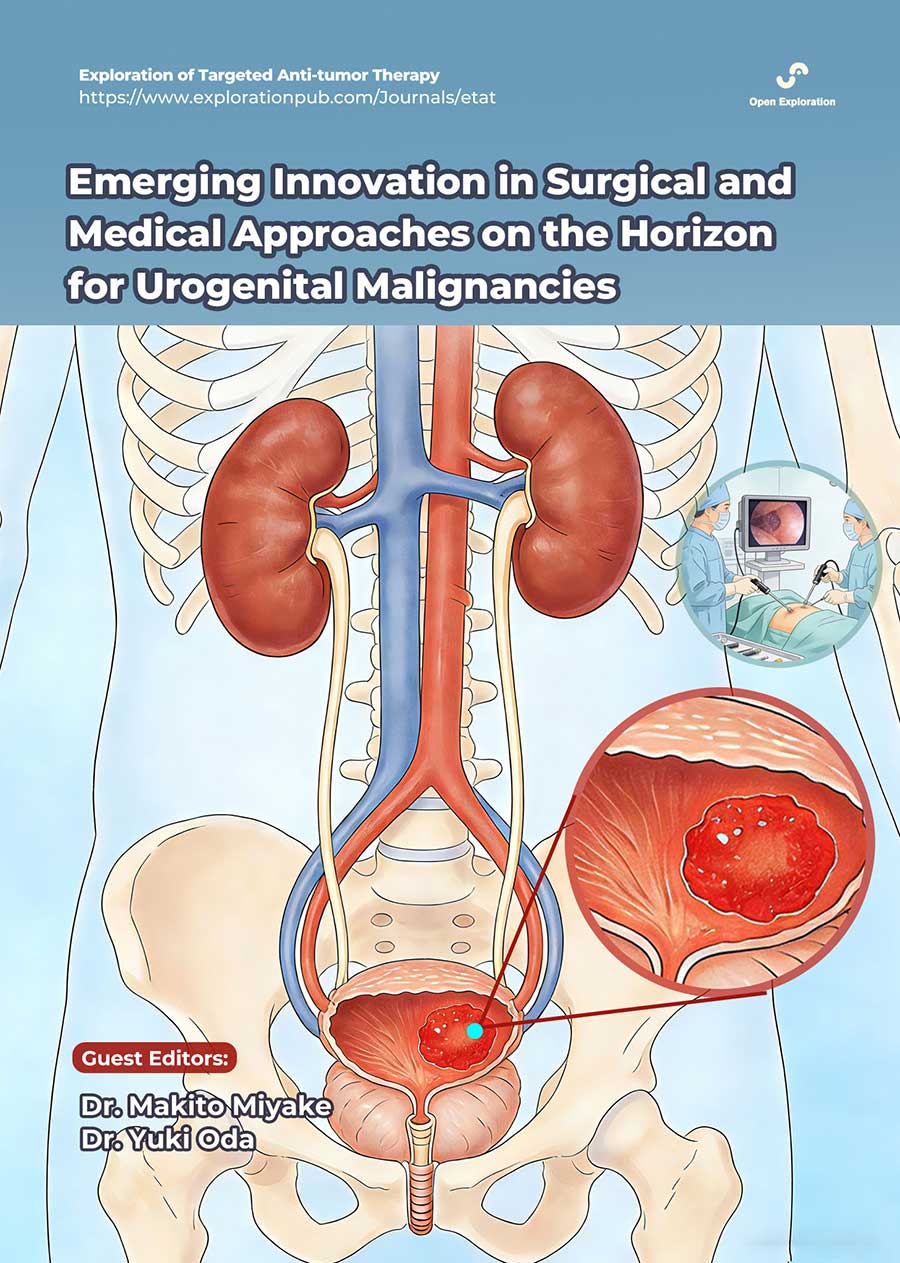
Emerging Innovation in Surgical and Medical Approaches on the Horizon for Urogenital Malignancies
Guest Editors
About the Special lssue
Urogenital malignancies comprise a diverse group of cancers, including urothelial carcinoma, renal cell carcinoma, prostate cancer, and testicular cancer, as well as other tumors arising from the kidney, urinary tract, and adjacent retroperitoneal organs. Their clinical behavior ranges from aggressive, life-threatening disease to indolent tumors for which active surveillance may be appropriate. Despite major advances, important challenges remain in early detection, accurate risk stratification, treatment selection, and the implementation of precision medicine across these malignancies.
This Special Issue aims to provide an up-to-date overview of the clinical and biological features of urogenital cancers, with a focus on factors that inform real-world decision-making. We particularly encourage contributions that clarify mechanisms underlying progression and treatment resistance, improve prediction of treatment benefit, and translate emerging biomarkers into clinically actionable strategies.
We welcome original research, translational studies, systematic reviews, and clinically oriented perspectives that address unmet needs in screening, diagnosis, prognostication, and therapy—including immunotherapy and tumor microenvironment (TME) biology—across urogenital malignancies.
Topics of interest include, but are not limited to:
Morbidity risk factors and modifiable determinants of outcomes;
Non-invasive detection biomarkers for early detection, including strengths and limitations;
Novel DNA, RNA, and protein biomarkers (tissue-based and liquid biopsy approaches);
Novel radiographic and imaging-derived markers;
Histological variants and their clinical implications;
Predictors of treatment response and resistance across systemic and local therapies;
Precision medicine strategies, including molecular classification and treatment decision support;
Immunotherapy, including immune checkpoint inhibitors and rational combinations;
Strategies to reduce morbidity, recurrence, and progression risks;
Upstaging at surgery and the gap between clinical and pathological staging;
Interpretation of cancer screening trials (e.g., PSA screening for prostate cancer and urinalysis-based screening for bladder cancer);
TME composition and function, and associations with clinical outcomes in each urogenital malignancy.
Keywords: Urothelial cancer, renal cell cancer, prostate cancer, testicular cancer, surgery, radiation, immunotherapy, tumor microenvironment
Published Articles