Original Article


Affiliation:
1Eagles’ Scientific Laboratory Limited, Ladoke Akintola University of Technology, Ogbomoso 210214, Oyo, Nigeria
2Departments of Biochemistry and Molecular Biology, Usmanu Danfodiyo University, P.M.B. 2346, Sokoto 840004, Nigeria
ORCID: https://orcid.org/0009-0009-8365-8126

 ,
Affiliation:
1Eagles’ Scientific Laboratory Limited, Ladoke Akintola University of Technology, Ogbomoso 210214, Oyo, Nigeria
3Faculty of Nursing Science, Ladoke Akintola University of Technology, Ogbomoso 210214, Oyo, Nigeria
ORCID: https://orcid.org/0009-0008-0056-6983
,
Affiliation:
1Eagles’ Scientific Laboratory Limited, Ladoke Akintola University of Technology, Ogbomoso 210214, Oyo, Nigeria
4Department of Anatomy, Ladoke Akintola University of Technology, Ogbomoso 210214, Oyo, Nigeria
ORCID: https://orcid.org/0009-0002-4002-937X
,
Affiliation:
1Eagles’ Scientific Laboratory Limited, Ladoke Akintola University of Technology, Ogbomoso 210214, Oyo, Nigeria
4Department of Anatomy, Ladoke Akintola University of Technology, Ogbomoso 210214, Oyo, Nigeria
ORCID: https://orcid.org/0009-0007-7250-8275
,
Affiliation:
1Eagles’ Scientific Laboratory Limited, Ladoke Akintola University of Technology, Ogbomoso 210214, Oyo, Nigeria
5Department of Biochemistry, Ladoke Akintola University of Technology, Ogbomoso 210214, Oyo, Nigeria
ORCID: https://orcid.org/0009-0001-2157-0729
,
Affiliation:
1Eagles’ Scientific Laboratory Limited, Ladoke Akintola University of Technology, Ogbomoso 210214, Oyo, Nigeria
6Department of Pure and Applied Physics, Ladoke Akintola University of Technology, Ogbomoso 210214, Oyo, Nigeria
ORCID: https://orcid.org/0009-0002-7645-3463
,
Affiliation:
1Eagles’ Scientific Laboratory Limited, Ladoke Akintola University of Technology, Ogbomoso 210214, Oyo, Nigeria
7Departments of Biochemistry, Kwara State University, P.M.B. 1530, Ilorin Malete 240103, Nigeria
ORCID: https://orcid.org/0009-0001-7204-0576
,
Affiliation:
1Eagles’ Scientific Laboratory Limited, Ladoke Akintola University of Technology, Ogbomoso 210214, Oyo, Nigeria
8Department of Pharmacology, Olabisi Onabanjo University, Ago-Iwoye 120107, Ogun, Nigeria
ORCID: https://orcid.org/0009-0002-5044-5094
,
Affiliation:
1Eagles’ Scientific Laboratory Limited, Ladoke Akintola University of Technology, Ogbomoso 210214, Oyo, Nigeria
4Department of Anatomy, Ladoke Akintola University of Technology, Ogbomoso 210214, Oyo, Nigeria
Email: ooadeleye@lautech.edu.ng
ORCID: https://orcid.org/0000-0003-1398-9180

Explor Neurosci. 2026;5:1006152 DOI: https://doi.org/10.37349/en.2026.1006152
Received: May 06, 2026 Accepted: August 24, 2026 Published: October 26, 2026
Academic Editor: Ryszard Pluta, Medical University of Lublin, Poland
The article belongs to the special issue Progress in Alzheimer's disease research: etiology, molecular mechanisms involved in disease progression, and advances in therapies aimed at slowing or reversing neurodegeneration
Aim: Neurodegenerative diseases, particularly Alzheimer’s disease (AD) and Parkinson’s disease (PD), represent a major global health burden due to their progressive nature and lack of disease-modifying therapies. Increasing evidence suggests that these disorders frequently coexist and share overlapping molecular mechanisms, including oxidative stress, mitochondrial dysfunction, neuroinflammation, and abnormal protein aggregation. Thus, this study aimed to elucidate the neuroprotective mechanistic potential of Phyllanthus amarus in influencing the shared genes in both AD and PD.
Methods: This study employed a network pharmacology approach to investigate the neuroprotective potential of P. amarus in the management of AD-PD comorbidity. Bioactive compounds were identified using gas chromatography-mass spectrometry (GC-MS), followed by in silico screening for drug-likeness and pharmacokinetic properties using ADMETlab 3.0 and ProTox-3.0. Target prediction was conducted using SwissTargetPrediction and SuperPred, while disease-associated genes were retrieved from GeneCards. Overlapping targets were analyzed using protein-protein interaction (PPI) networks, with hub genes identified based on topological parameters. Functional enrichment analyses (GO and KEGG) were performed to elucidate underlying biological pathways.
Results: A total of 55 compounds were identified, of which a significant proportion demonstrated favorable drug-likeness properties. Sequential Absorption, Distribution, Metabolism, Excretion, and Toxicity (ADMET) screening narrowed these to a single lead compound, bicyclo[3.3.1]non-6-en-3-ol, which exhibited acceptable absorption, distribution, metabolism, excretion, and toxicity profiles. Network analysis revealed 137 shared targets between AD and PD, with key hub genes including STAT3, PPARG, HSP90AB1, and HIF1A, etc. indicating their central roles in disease progression. Enrichment analyses highlighted critical pathways related to inflammation, oxidative stress, and signal transduction, including insulin resistance, sphingolipid, and calcium signaling pathways, among others.
Conclusions: These findings suggest that P. amarus may exert neuroprotective effects through a multi-target mechanism, supporting its potential as a therapeutic candidate for AD-PD comorbidity. However, experimental validation is required to confirm these in silico predictions and facilitate clinical translation.
Neurodegenerative diseases pose a significant global health challenge, characterised by the gradual deterioration of neuronal structure and function. The most common age-related neurodegenerative disease is Alzheimer’s disease (AD), followed by Parkinson’s disease (PD) [1]. Current treatments do not significantly alter the progression of these conditions; therefore, effective therapeutic and preventive interventions are urgently needed [2]. AD is primarily associated with cognitive decline driven by the accumulation of amyloid-beta plaques and neurofibrillary tangles, whereas PD is characterised by motor dysfunction resulting from the degeneration of dopaminergic neurons in the substantia nigra and the accumulation of α-synuclein proteins [3, 4]. Although AD and PD have distinct clinical manifestations and disease-associated proteins, recent evidence indicates that they may coexist in some individuals and share several pathological mechanisms, including oxidative stress, mitochondrial dysfunction, neuroinflammation, and abnormal protein aggregation. These overlapping mechanisms highlight the complexity of neurodegenerative disease progression and suggest the potential value of therapeutic strategies capable of simultaneously modulating multiple biological processes [5].
The biological overlap between AD and PD extends beyond the accumulation of pathological proteins and involves interconnected molecular processes that contribute to neuronal dysfunction and degeneration. Oxidative stress and impaired mitochondrial function can promote neuronal injury and amplify neuroinflammatory responses [6], while chronic activation of microglia and astrocytes can further increase oxidative and inflammatory damage [7, 8]. Furthermore, dysregulation of protein homeostasis and abnormal protein aggregation may interact with mitochondrial and inflammatory pathways, creating a self-reinforcing cycle of neuronal damage [9]. Thus, although AD and PD are distinct disorders, their convergent molecular mechanisms suggest that some biological pathways may contribute to neurodegeneration across both conditions. Understanding these shared mechanisms may provide opportunities for identifying therapeutic candidates capable of modulating multiple disease-relevant pathways simultaneously. This systems-level perspective provides a rationale for applying network pharmacology to investigate potential multi-target interventions for AD and PD.
Plants have consistently remained an important foundation of conventional therapeutic practices and have long served as sources of biologically active compounds. Medicinal herbs contain diverse compounds with potential therapeutic properties, including antitumor, anti-inflammatory, antiviral, and antimalarial activities [10]. Thus, scientific interest in plants as sources of new therapeutic substances for neurodegenerative diseases has increased significantly [10]. Various phytochemicals obtained from plants may influence different stages of neurodegenerative processes, potentially through their roles in maintaining the chemical environment of the brain and modulating the functions of several receptors and signalling pathways [11]. The diverse secondary metabolites present in medicinal plants therefore provide an important source for the discovery of novel therapeutic candidates for specific disorders [10].
The medicinal plant P. amarus is well-known for its many therapeutic uses. Modern medicine is interested in it because of its hepatoprotective, antioxidant, anti-inflammatory, and neuroprotective properties, as well as the presence of several bioactive substances such as saponins, lignans, flavonoids, tannins, and alkaloids [12, 13]. According to research, P. amarus has strong antioxidant activity, with DPPH inhibition reaching 74.4% at optimal doses [14]. Its potential as a natural antioxidant source is further indicated by its significantly high total phenolic content (TPC) and total flavonoid content (TFC) [14]. By potentially reducing oxidative stress, neuroinflammation, and other processes associated with neurodegeneration, P. amarus may contribute to the mitigation of neurodegenerative processes [15]. These multi-target properties suggest its potential relevance to the shared molecular mechanisms underlying AD and PD. Despite these encouraging findings, little is known about the precise molecular pathways underlying its potential benefits, particularly in relation to the shared molecular mechanisms of these neurodegenerative disorders. Therefore, this study explored the potential mechanisms of action of P. amarus in mitigating neurodegenerative processes by investigating shared genes and molecular pathways associated with AD and PD.
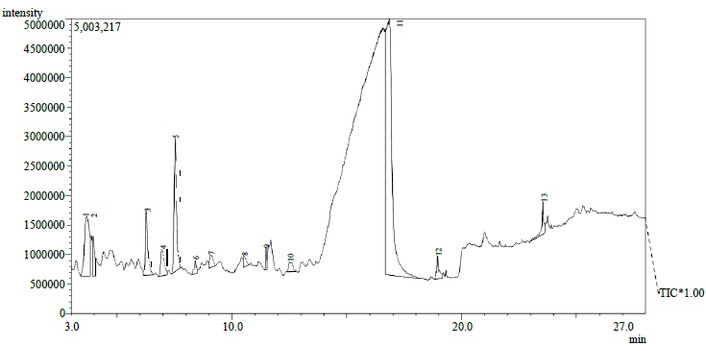
Bioactive compounds of P. amarus were identified using gas chromatography-mass spectrometry (GC-MS) analysis. GC-MS analysis produced 13 chromatographic peaks. For each peak, the five highest-confidence candidate compounds were retrieved from the NIST mass spectral library. Following manual curation and removal of duplicate identifications across peaks, a total of 55 unique phytochemicals were retained for downstream Absorption, Distribution, Metabolism, Excretion, and Toxicity (ADMET) screening and network pharmacology analyses. Following identification, detailed compound information, including molecular structures, canonical SMILES, and Structure Data Files (SDF), was retrieved from the PubChem database (https://pubchem.ncbi.nlm.nih.gov/).
Sample collection and extract preparation: Fresh leaves of P. amarus were plucked from the vicinity of the Faculty of Chemical and Life Sciences, Usmanu Danfodiyo University, Sokoto, Nigeria. The plant sample was thoroughly washed two times with tap water, and then air-dried under shade at room temperature for five (5) days. The air-dried leaves were pulverized and weighed. Thereafter, 226 g of the powdered leaves were soaked in 2,260 mL of distilled water for 24 hours. The extract was first filtered using a muslin cloth to get rid of leaf particles and then filtered again using Whatman filter paper, and the filtrate was subjected to evaporation using an oven.
Characterization of the plant extract: GC-MS analysis was carried out on GCMS-QP2010 PLUS SHIMADZU. The column used was a PerkinElmer Elite-5 capillary column measuring 30 m × 0.25 mm with a film thickness of 0.25 mm composed of 95% dimethyl polysiloxane. The carrier gas used was Helium at a flow rate of 0.5 mL/min. 1 μL sample injection volume was utilized. The inlet temperature was maintained at 250°C. The oven temperature was programmed initially at 80°C for 4 min, then increased to 200°C. And then programmed to increase to 280°C at a rate of 20°C, ending with a 5 min. Total run time was 25 min. The MS transfer line was maintained at a temperature of 200°C. The source temperature was maintained at 180°C. GCMS was analyzed using electron impact ionization at 70 eV, and data were evaluated using total ion count (TIC) for compound identification and quantification. The spectra of the components were compared with the database of spectra of known components stored in the GC-MS library.
The pharmacokinetic suitability of the curated P. amarus bioactives was evaluated using an in silico ADMET framework. Drug-likeness was assessed based on Lipinski’s Rule of Five. Absorption, distribution, metabolism, excretion, and toxicity profiles were predicted using ADMETlab 3.0 (https://admetlab3.scbdd.com/), while acute toxicity (LD50) was estimated using ProTox-3.0 (https://tox.charite.de/protox3/). The compounds demonstrating favorable oral bioavailability, acceptable toxicity classes, and satisfactory ADMET parameters were shortlisted for downstream target prediction and network analysis [16, 17]. Screening cutoffs: molecular weight (MW) 100–500 Da; HBD 0–7; HBA 0–12; LogP ≤ 5; topological surface area (TPSA) 0–140 Å2; SA score ≤ 6. Absorption criteria included Caco-2 permeability > –5.15, P-gp inhibitor/substrate, HIA, and oral bioavailability (F20), with probability scores of 0–0.7. Distribution parameters were blood-brain barrier (BBB) (0–0.7), plasma protein binding (PPB) ≤ 90%, logVDss 0.04–20, and Fu ≥ 5%. Metabolism screening considered CYP substrate/inhibitor probability ≤ 0.3. Excretion criteria were medium half-life (T½ = 1–8 h) and plasma clearance (CL = 5–15 mL/min/kg), according to ADMETlab cutoffs.
Potential protein targets of the selected P. amarus bioactive compound were predicted using the SuperPred (https://prediction.charite.de/subpages/target_prediction.php) and SwissTargetPrediction (https://www.swisstargetprediction.ch/) platforms [17]. The target files generated by both platforms were downloaded in CSV format, and the target names were subsequently standardized using STRING (https://string-db.org/) by selecting Homo sapiens and the multiple protein entry option to obtain preferred protein names. SuperPred initially generated 139 targets, of which 114 were successfully standardized, while SwissTargetPrediction generated 100 targets, of which 85 were successfully standardized. The standardized target lists were subsequently combined in Microsoft Excel, yielding 199 target entries. Duplicate entries were identified and removed using the Excel duplicate-removal function, resulting in the removal of 12 redundant entries and retention of 187 unique human protein targets for downstream analysis. No prediction-score cutoff was applied during target retrieval.
AD- and PD-associated targets were independently retrieved from the GeneCards (https://www.genecards.org/) database using “Alzheimer’s disease” and “Parkinson’s disease” as the respective search terms. After restricting the retrieved results to protein-coding genes and without applying a relevance-score cutoff, 12,369 and 8,987 targets were obtained for AD and PD, respectively. Venny 2.0 (https://bioinfogp.cnb.csic.es/tools/venny/index2.0.2.html) was subsequently used to identify the targets shared between the two diseases, yielding 7,735 shared AD-PD targets. The 7,735 shared targets were then imported into a newly opened Venny 2.0 interface and annotated as “AD & PD”, while the 187 unique human protein targets predicted for the selected P. amarus compound were imported and annotated as “P.A”. The intersection between the shared AD-PD targets and the compound-associated targets yielded 137 common gene targets, representing potential targets through which the compound may influence AD and PD-associated molecular processes.
AD and PD-related genes were systematically retrieved from GeneCards databases using “Alzheimer’s disease” and “Parkinson’s disease” as the search keywords. The outputs were limited to protein-coding genes alone without any cutoff mark set, and Venny 2.0 database was used to find the shared genes between AD and PD. The intersection between predicted compound targets and AD and PD shared genes was identified using Venn diagram analysis, yielding candidate therapeutic targets mediating the neuroprotective effects of P. amarus bioactives [17].
The 187 unique protein targets predicted for bicyclo[3.3.1]non-6-en-3-ol were used to construct a compound-target interaction network in Cytoscape. The compound was represented as the central node, while the predicted protein targets were represented as interconnected target nodes. The network was arranged using the yFiles Circular Layout to provide a clear visualization of the relationship between the selected compound and its predicted protein targets, and the resulting network was exported as a PNG image for presentation [16].
The overlapping AD- and PD-related targets were imported into the STRING database to construct a protein-protein interaction (PPI) network using a high-confidence interaction score of 0.700. The resulting PPI network was subsequently imported into Cytoscape for visualization and network analysis. Network topological parameters, including degree, betweenness centrality, and closeness centrality, were computed to identify highly connected proteins and key regulatory targets potentially implicated in AD and PD-associated molecular processes [16, 17]. Molecular Complex Detection (MCODE) implemented in Cytoscape was further used to identify highly interconnected nodes within the PPI network. MCODE parameters were maintained at the default settings, including a degree cutoff of 2, node score cutoff of 0.2, K-core of 2, and maximum depth of 100 [18]. The resulting clusters were evaluated based on their connectivity and MCODE scores to identify densely interconnected functional modules within the PPI network.
Gene Ontology (GO) enrichment and Kyoto Encyclopedia of Genes and Genomes (KEGG) pathway analyses were performed using ShinyGO (https://bioinformatics.sdstate.edu/go/) to elucidate the biological processes, molecular functions, cellular components, and signaling pathways modulated by P. amarus bioactives [17]. The analysis was performed using Homo sapiens as the reference organism. Enriched terms were filtered using a false discovery rate (FDR) cutoff of 0.05, with the pathway display limited to the top 20 pathways. Pathways containing fewer than 2 genes or more than 5,000 genes were excluded. Redundant pathways were removed to minimize overlap among closely related terms, and pathway names were abbreviated for concise visualization and presentation.
Table 1 below shows the identified compounds present in the leaf aqueous extract of P. amarus. Fifty-five different compounds were identified and represented in the table below with their respective PubChem ID, IUPAC name, and SMILES.
GC-MS-identified compounds present in P. amarus.
| S/N | PubChem CID | IUPAC name | SMILE |
|---|---|---|---|
| 1 | 26970 | 2-butyl-3-methyloxirane | CCCCC1C(O1)C |
| 2 | 538757 | 2,4-dihydroxy-2,5-dimethylfuran-3-one | CC1=C(C(=O)C(O1)(C)O)O |
| 3 | 119838 | 3,5-dihydroxy-6-methyl-2,3-dihydropyran-4-one | CC1=C(C(=O)C(CO1)O)O |
| 4 | 569521 | ethyl 3-[1-benzoyl-3-(2-chloroethyl)piperidin-4-yl]propanoate | CCOC(=O)CCC1CCN(CC1CCCl)C(=O)C2=CC=CC=C2 |
| 5 | 5362893 | (E)-4-methylhept-4-en-3-one | CC/C=C(\\C)/C(=O)CC |
| 6 | 332 | 4-ethenyl-2-methoxyphenol | COC1=C(C=CC(=C1)C=C)O |
| 7 | 137829 | 1-cyclohexylethanol | CC(C1CCCCC1)O |
| 8 | 26396 | 6-ethenyl-2,2,6-trimethyloxan-3-ol | CC1(C(CCC(O1)(C)C=C)O)C |
| 9 | 536968 | 3-methyl-4-methylidenehexan-2-one | CCC(=C)C(C)C(=O)C |
| 10 | 573554 | 8a-(4-hydroxyphenoxy)-5,6,7,8-tetrahydro-3H-chromen-2-one | C1CCC2(C(=CCC(=O)O2)C1)OC3=CC=C(C=C3)O |
| 11 | 8973 | (2R,3S,4R,5R)-2,4,5,6-tetrahydroxy-3-methoxyhexanal | CO[C@H]([C@H](C=O)O)[C@@H]([C@@H](CO)O)O |
| 12 | 5364432 | methyl (E)-octadec-11-enoate | CCCCCC/C=C/CCCCCCCCCC(=O)OC |
| 13 | 5364412 | (3Z,13Z)-2-methyloctadeca-3,13-dien-1-ol | CCCC/C=C\\CCCCCCCC/C=C\\C(C)CO |
| 14 | 29775 | 5-ethylheptan-2-ol | CCC(CC)CCC(C)O |
| 15 | 31260 | 3-methylbutan-1-ol | CC(C)CCO |
| 16 | 68165 | 1-(propoxymethoxy)propane | CCCOCOCCC |
| 17 | 7884 | 4-methoxy-4-methylpentan-2-one | CC(=O)CC(C)(C)OC |
| 18 | 538762 | ethyl 2-(acetyloxymethyl)-3-hydroxypropanoate | CCOC(=O)C(CO)COC(=O)C |
| 19 | 14818495 | (2R,4R)-2-ethenyl-2,4-dimethyl-1,3-dioxolane | C[C@@H]1CO[C@@](O1)(C)C=C |
| 20 | 102967 | 2,4,5-trimethyl-1,3-dioxolane | CC1C(OC(O1)C)C |
| 21 | 18632 | 2,3-dimethyloxirane | CC1C(O1)C |
| 22 | 536113 | 4,5-dimethyl-1,3-dioxolan-2-one | CC1C(OC(=O)O1)C |
| 23 | 243 | benzoic acid | C1=CC=C(C=C1)C(=O)O |
| 24 | 569842 | [[1-(benzoyloxycarbamoyl)cyclobutanecarbonyl]amino] benzoate | C1CC(C1)(C(=O)NOC(=O)C2=CC=CC=C2)C(=O)NOC(=O)C3=CC=CC=C3 |
| 25 | 10866899 | [(2R)-1-oxopropan-2-yl] benzoate | C[C@H](C=O)OC(=O)C1=CC=CC=C1 |
| 26 | 519408 | 4,5-dimethylhex-4-en-3-one | CCC(=O)C(=C(C)C)C |
| 27 | 237332 | 5-(hydroxymethyl)furan-2-carbaldehyde | C1=C(OC(=C1)C=O)CO |
| 28 | 5364923 | (E)-5-methylhept-4-en-3-one | CC/C(=C/C(=O)CC)/C |
| 29 | 249941306 (SID) | 1,2-Bis(2,6-dimethylphenyl)diazene 1,2-dioxide | |
| 30 | 555485 | 2,7-dioxatricyclo[4.4.0.03,8]deca-4,9-diene | C1=CC2C3C=CC(C1O3)O2 |
| 31 | 69275 | (4-nitrophenyl)methanol | C1=CC(=CC=C1CO)[N+](=O)[O-] |
| 32 | 8390 | 4-methyl-3-nitroaniline | CC1=C(C=C(C=C1)N)[N+](=O)[O-] |
| 33 | 542280 | 2-(oxan-2-yloxy)propanoic acid | CC(C(=O)O)OC1CCCCO1 |
| 34 | 542173 | undec-10-enyl 2-methoxyacetate | COCC(=O)OCCCCCCCCCC=C |
| 35 | 542172 | oct-7-en-2-ol | CC(CCCCC=C)O |
| 36 | 547752 | [4-(2-hydroxypropan-2-yl)cyclohexen-1-yl]methyl acetate | CC(=O)OCC1=CCC(CC1)C(C)(C)O |
| 37 | 547974 | [6-(2-hydroxypropan-2-yl)-3-methylcyclohex-2-en-1-yl] acetate | CC1=CC(C(CC1)C(C)(C)O)OC(=O)C |
| 38 | 10975 | 2-methyl-6-methylideneoct-7-en-2-ol | CC(C)(CCCC(=C)C=C)O |
| 39 | 361986 | bicyclo[3.3.1]non-6-en-3-ol | C1C=CC2CC1CC(C2)O |
| 40 | 7989 | hex-5-en-2-one | CC(=O)CCC=C |
| 41 | 564977 | 1,2,3,5,6,7,8,8a-octahydroborolo[1,2-a]borinine | B12CCCCC1CCC2 |
| 42 | 418 | cyclohexa-3,5-diene-1,2-diol | C1=CC(C(C=C1)O)O |
| 43 | 533436 | 3-oxatricyclo[3.3.2.02,4]dec-7-en-6-one | C1CC2C3C(C1C=CC2=O)O3 |
| 44 | 12174 | 3-(furan-2-yl)prop-2-enal | C1=COC(=C1)C=CC=O |
| 45 | 247323 | 6-(hydroxymethyl)-4-methoxyoxane-2,3,5-triol | COC1C(C(OC(C1O)O)CO)O |
| 46 | 143402 | 2-(1,2-dihydroxyethyl)-5-methoxyoxolane-3,4-diol | COC1C(C(C(O1)C(CO)O)O)O |
| 47 | 70151778 | (2S,3S,4S,5R)-2-[(1R)-1,2-dihydroxyethyl]-5-methoxyoxolane-3,4-diol | CO[C@H]1[C@H]([C@@H]([C@@H](O1)[C@@H](CO)O)O)O |
| 48 | 5364425 | methyl (E)-octadec-10-enoate | CCCCCCC/C=C/CCCCCCCCC(=O)OC |
| 49 | 637517 | (E)-octadec-9-enoic acid | CCCCCCCC/C=C/CCCCCCCC(=O)O |
| 50 | 5364507 | methyl (E)-octadec-14-enoate | CCC/C=C/CCCCCCCCCCCCC(=O)OC |
| 51 | 5364506 | methyl (E)-octadec-13-enoate | CCCC/C=C/CCCCCCCCCCCC(=O)OC |
| 52 | 5364471 | (Z)-tetradec-9-enal | CCCC/C=C\\CCCCCCCC=O |
| 53 | 5364495 | (Z)-hexadec-11-enal | CCCC/C=C\\CCCCCCCCCC=O |
| 54 | 5364497 | (Z)-octadec-13-enal | CCCC/C=C\\CCCCCCCCCCCC=O |
| 55 | 5364465 | (3E,11E)-tetradeca-3,11-dien-1-ol | CC/C=C/CCCCCC/C=C/CCO |
Table 2 below shows the drug-likeness of the identified compounds using the Lipinski rule of 5 as the main criterion for selection. Of all the fifty-five (55) identified compounds, only fifty-four could be further screened using other screening criteria, the other compound (with SID in Table 1) could not be proceeded with because of irretrievable SMILE. Based on the ADMETlab definition and cutoff for selection, MW is between 100–500 Dalton, number of hydrogen donor (nHD) is 0–7, number of hydrogen acceptor (nHA) is 0–12, LogP (partition coefficient) is less than or equal to 5, TPSA is 0–140, and synthetic accessibility score (SA score) is less than or equal to 6. No compound listed in Table 2 below violated any of the mentioned rules, making them ideal compounds for drug development research.
Physicochemical and medicinal chemistry properties.
| S/N | PubChem ID | MW | nHA | nHD | TPSA | LogP | Lipinski | SA score |
|---|---|---|---|---|---|---|---|---|
| 1 | 26970 | 114.1 | 1 | 0 | 12.53 | 2.34987 | 0 | 2.979 |
| 2 | 538757 | 144.04 | 4 | 2 | 66.76 | –0.52385 | 0 | 3.896 |
| 3 | 119838 | 144.04 | 4 | 2 | 66.76 | –0.73039 | 0 | 3.861 |
| 4 | 569521 | 351.16 | 4 | 0 | 46.61 | 3.33484 | 0 | 2.964 |
| 5 | 5362893 | 126.1 | 1 | 0 | 17.07 | 2.051006 | 0 | 2.787 |
| 6 | 332 | 150.07 | 2 | 1 | 29.46 | 2.052078 | 0 | 1.931 |
| 7 | 137829 | 128.12 | 1 | 1 | 20.23 | 2.028364 | 0 | 2.47 |
| 8 | 26396 | 170.13 | 2 | 1 | 29.46 | 1.290629 | 0 | 3.978 |
| 9 | 536968 | 126.1 | 1 | 0 | 17.07 | 2.065607 | 0 | 3.519 |
| 10 | 573554 | 260.1 | 4 | 1 | 55.76 | 2.364306 | 0 | 3.579 |
| 11 | 8973 | 194.08 | 6 | 4 | 107.22 | –1.25017 | 0 | 4.082 |
| 12 | 5364432 | 296.27 | 2 | 0 | 26.3 | 7.346255 | 0 | 2.068 |
| 13 | 5364412 | 280.28 | 1 | 1 | 20.23 | 6.801909 | 0 | 3.015 |
| 14 | 29775 | 144.15 | 1 | 1 | 20.23 | 2.698027 | 0 | 2.854 |
| 15 | 31260 | 88.09 | 1 | 1 | 20.23 | 1.279429 | 0 | 2.157 |
| 16 | 68165 | 132.12 | 2 | 0 | 18.46 | 1.842801 | 0 | 2.24 |
| 17 | 7884 | 130.1 | 2 | 0 | 26.3 | 0.932836 | 0 | 2.742 |
| 18 | 538762 | 190.08 | 5 | 1 | 72.83 | 0.202298 | 0 | 2.825 |
| 19 | 14818495 | 128.08 | 2 | 0 | 18.46 | 1.462201 | 0 | 4.538 |
| 20 | 102967 | 116.08 | 2 | 0 | 18.46 | 1.037459 | 0 | 3.863 |
| 21 | 18632 | 72.06 | 1 | 0 | 12.53 | 0.628328 | 0 | 2.918 |
| 22 | 536113 | 116.05 | 3 | 0 | 35.53 | 0.578609 | 0 | 3.867 |
| 23 | 243 | 122.04 | 2 | 1 | 37.3 | 1.844459 | 0 | 1.055 |
| 24 | 569842 | 382.12 | 8 | 2 | 110.8 | 1.827167 | 0 | 2.605 |
| 25 | 10866899 | 178.06 | 3 | 0 | 43.37 | 2.264092 | 0 | 2.452 |
| 26 | 519408 | 126.1 | 1 | 0 | 17.07 | 2.150579 | 0 | 2.768 |
| 27 | 237332 | 126.03 | 3 | 1 | 50.44 | 0.405887 | 0 | 2.491 |
| 28 | 5364923 | 126.1 | 1 | 0 | 17.07 | 2.258636 | 0 | 2.892 |
| 29 | 555485 | 136.05 | 2 | 0 | 18.46 | 0.460053 | 0 | 5.415 |
| 30 | 69275 | 153.04 | 4 | 1 | 63.37 | 1.270888 | 0 | 1.607 |
| 31 | 8390 | 152.06 | 4 | 2 | 69.16 | 1.940868 | 0 | 1.904 |
| 32 | 542280 | 174.09 | 4 | 1 | 55.76 | 0.288044 | 0 | 3.066 |
| 33 | 542173 | 242.19 | 3 | 0 | 35.53 | 3.894312 | 0 | 2.124 |
| 34 | 542172 | 128.12 | 1 | 1 | 20.23 | 2.170569 | 0 | 2.743 |
| 35 | 547752 | 212.14 | 3 | 1 | 46.53 | 1.96621 | 0 | 3.283 |
| 36 | 547974 | 212.14 | 3 | 1 | 46.53 | 2.087811 | 0 | 3.694 |
| 37 | 10975 | 154.14 | 1 | 1 | 20.23 | 1.949876 | 0 | 3.077 |
| 38 | 361986 | 138.1 | 1 | 1 | 20.23 | 1.809238 | 0 | 5.008 |
| 39 | 7989 | 98.07 | 1 | 0 | 17.07 | 1.057635 | 0 | 2.383 |
| 40 | 564977 | 122.13 | 0 | 0 | 0 | 1.758498 | 0 | 4.799 |
| 41 | 418 | 112.05 | 2 | 2 | 40.46 | -0.32717 | 0 | 3.914 |
| 42 | 533436 | 150.07 | 2 | 0 | 29.6 | 0.527088 | 0 | 5.043 |
| 43 | 12174 | 122.04 | 2 | 0 | 30.21 | 1.204182 | 0 | 2.648 |
| 44 | 247323 | 194.08 | 6 | 4 | 99.38 | –2.11184 | 0 | 3.751 |
| 45 | 143402 | 194.08 | 6 | 4 | 99.38 | –1.83698 | 0 | 3.903 |
| 46 | 70151778 | 194.08 | 6 | 4 | 99.38 | –1.59605 | 0 | 3.903 |
| 47 | 5364425 | 296.27 | 2 | 0 | 26.3 | 7.284222 | 0 | 2.068 |
| 48 | 637517 | 282.26 | 2 | 1 | 37.3 | 6.638892 | 0 | 2.033 |
| 49 | 5364507 | 296.27 | 2 | 0 | 26.3 | 7.252152 | 0 | 2.117 |
| 50 | 5364506 | 296.27 | 2 | 0 | 26.3 | 7.383196 | 0 | 2.092 |
| 51 | 5364471 | 210.2 | 1 | 0 | 17.07 | 4.971615 | 0 | 2.307 |
| 52 | 5364495 | 238.23 | 1 | 0 | 17.07 | 5.809891 | 0 | 2.275 |
| 53 | 5364497 | 266.26 | 1 | 0 | 17.07 | 6.728405 | 0 | 2.264 |
| 54 | 5364465 | 210.2 | 1 | 1 | 20.23 | 4.323136 | 0 | 2.536 |
Table 3 below shows the absorption properties of each of the compounds identified in the aqueous leaf extract of P. amarus. Only thirty-six (36) compounds out of the fifty-four compounds that satisfied the physicochemical and medicinal chemistry properties passed the screening of absorption, as shown in Table 3. Absorption criteria were based on their abilities to cross Caco-2, P-glycoprotein (P-gp) inhibitor and substrate potential, HIA and their bioavailability (expected to have at least 20% of the orally administered drug to be available in the systemic circulation after absorption; F20). Caco-2 value was taken as greater than –5.15 and all other criteria shown in Table 3 were considered between the values of 0–0.7. These values were based on the conditions set by ADMETlab3.
Absorption.
| S/N | PubChem ID | Caco-2 | P-gp inhibitor | P-gp substrate | HIA | F20 |
|---|---|---|---|---|---|---|
| 1 | 26970 | –4.91692 | 0.506035 | 0.453835 | 0.130786 | 0.337263 |
| 2 | 538757 | –4.58667 | 0.031898 | 0.283576 | 0.103385 | 0.31135 |
| 3 | 119838 | –4.63054 | 0.047404 | 0.699422 | 0.061999 | 0.242071 |
| 4 | 569521 | –4.63073 | 0.326623 | 0.002526 | 0.000258 | 0.027004 |
| 5 | 137829 | –4.78276 | 0.437001 | 0.044625 | 0.0359 | 0.040214 |
| 6 | 536968 | –4.62449 | 0.531487 | 0.019897 | 0.003222 | 0.128571 |
| 7 | 573554 | –4.65035 | 0.04902 | 0.00817 | 0.002036 | 0.08497 |
| 8 | 8973 | –5.06839 | 0.000599 | 0.527373 | 0.641476 | 0.638851 |
| 9 | 29775 | –4.85237 | 0.061809 | 0.315019 | 0.147846 | 0.11865 |
| 10 | 31260 | –4.9408 | 0.049431 | 0.185502 | 0.057565 | 0.077856 |
| 11 | 68165 | –4.68714 | 0.356785 | 0.446496 | 0.088581 | 0.095654 |
| 12 | 7884 | –4.72624 | 0.072895 | 0.321348 | 0.004368 | 0.008132 |
| 13 | 538762 | –4.97157 | 0.446541 | 0.010968 | 0.123754 | 0.369889 |
| 14 | 14818495 | –4.63716 | 0.448093 | 0.508415 | 0.000399 | 0.11527 |
| 15 | 102967 | –4.67784 | 0.549146 | 0.115956 | 0.011051 | 0.036225 |
| 16 | 18632 | –4.51273 | 0.519347 | 0.310718 | 0.077114 | 0.127536 |
| 17 | 536113 | –4.49542 | 0.185111 | 0.098039 | 0.023363 | 0.147535 |
| 18 | 243 | –3.9969 | 0.002589 | 0.191664 | 0.057402 | 0.018149 |
| 19 | 569842 | –4.93789 | 0.004658 | 3.11E-05 | 1.17E-05 | 0.000296 |
| 20 | 10866899 | –4.50862 | 0.351914 | 0.239918 | 0.002181 | 0.135434 |
| 21 | 519408 | –4.49845 | 0.48402 | 0.530153 | 0.070005 | 0.199272 |
| 22 | 5364923 | –4.53857 | 0.341789 | 0.273713 | 0.071465 | 0.123894 |
| 23 | 555485 | –4.73694 | 0.033727 | 0.442947 | 0.216055 | 0.102074 |
| 24 | 69275 | –4.72676 | 0.279591 | 0.037793 | 0.031292 | 0.0655 |
| 25 | 8390 | –4.40037 | 0.017006 | 0.029411 | 0.000926 | 0.008216 |
| 26 | 542173 | –4.97635 | 0.012524 | 0.015364 | 0.023056 | 0.163634 |
| 27 | 542172 | –4.94061 | 0.147919 | 0.024932 | 0.089424 | 0.112078 |
| 28 | 547752 | –4.57741 | 0.310443 | 0.297325 | 0.072284 | 0.121186 |
| 29 | 547974 | –4.59355 | 0.557676 | 0.539588 | 0.12346 | 0.217929 |
| 30 | 10975 | –4.86772 | 0.13327 | 0.056342 | 0.00692 | 0.066806 |
| 31 | 361986 | –4.97256 | 0.027072 | 0.401648 | 0.33755 | 0.27611 |
| 32 | 564977 | –4.43907 | 0.148721 | 0.038275 | 0.004756 | 0.008511 |
| 33 | 533436 | –4.83576 | 0.17724 | 0.080831 | 0.195407 | 0.044866 |
| 34 | 12174 | –4.54272 | 0.482673 | 0.140507 | 0.285048 | 0.615153 |
| 35 | 637517 | –5.08013 | 0.001252 | 0.001289 | 0.109114 | 0.547337 |
| 36 | 5364506 | –5.01246 | 0.40957 | 0.009203 | 0.024098 | 0.641314 |
Table 4 below shows the distribution properties of compounds that satisfied the set criteria (according to ADMETlab) in order to predict their potential to reach the targeted site (the brain). BBB was evaluated at 0–0.7, PPB at less than or equal to 90%, volume of distribution (logVDss) at 0.04–20, and finally Fu at greater than or equal to 5%. Only six (6) compounds passed the set criteria among the 36 compounds that satisfied the absorption properties criteria, as shown in Table 3.
Distribution.
| S/N | PubChem ID | BBB | PPB | logVDss | Fu |
|---|---|---|---|---|---|
| 1 | 26970 | 0.642326 | 86.55411 | 0.405645 | 12.29753 |
| 2 | 14818495 | 0.007953 | 64.63222 | 0.314791 | 34.82334 |
| 3 | 10866899 | 0.250055 | 83.49849 | 0.152703 | 17.10215 |
| 4 | 69275 | 0.062818 | 76.88698 | 0.269387 | 19.42481 |
| 5 | 8390 | 0.452802 | 70.91531 | 0.265197 | 25.66415 |
| 6 | 361986 | 0.685569 | 27.73373 | 0.110696 | 66.3239 |
Only one (1) compound meets the criteria for the metabolism stage of the ADMET screening. Also, according to the criteria set by ADMETlab, either a CYP substrate or inhibitor was taken at 0.3 for an excellent metabolizable drug (Table 5).
Metabolism.
| PubChem ID | CYP1A2-inh | CYP1A2-sub | CYP2C19-inh | CYP2C19-sub | CYP2C9-inh | CYP2C9-sub | CYP2D6-inh | CYP2D6-sub | CYP3A4-inh | CYP3A4-sub | CYP2B6-inh | CYP2B6-sub | CYP2C8-inh |
|---|---|---|---|---|---|---|---|---|---|---|---|---|---|
| 361986 | 0.000805 | 0.001348 | 0.014183 | 0.027821 | 0.004565 | 0.266134 | 0.016715 | 0.151847 | 0.030122 | 6.53E-05 | 0.006491 | 0.347437 | 0.249261 |
Table 6 below shows the excretion profile of the compound that passed the metabolism ADMET screening stage and also shows medium excretion potential as classified by the ADMETlab cutoff for screening (T1/2: 1–8 medium; and cl-plasma: 5–15 medium).
Table 7 presents toxicity predictions for compound 361986, including LD50 (2,830 mg/kg), and various toxicity probabilities.
Toxicity.
| Toxicity | ||||||||
|---|---|---|---|---|---|---|---|---|
| Part A | PubChem ID | LD50 (mg/kg) | hERG | Ames | SkinSen | Carcinogenicity | EC | EI |
| 361986 | 2,830 | 0.02446 | 0.1126 | 0.18911 | 0.38222 | 0.99626 | 0.99747 | |
| Part B | PubChem ID | Respiratory | H-HT | Neurotoxicity-DI | Ototoxicity | Hematotoxicity | Nephrotoxicity-DI | Genotoxicity |
| 361986 | 0.37235 | 0.23968 | 0.20536 | 0.32094 | 0.08468 | 0.21829 | 6.98E-05 | |
The PPI analysis of the 137 common targets generated a network comprising 115 protein nodes and 538 interaction edges. Topological analysis identified STAT3 as the most highly connected protein, with a degree of 50, followed by PPARG and HSP90AB1, each with a degree of 34, while HIF1A and ESR1 each had a degree of 32. Other highly connected proteins included GRB2 (degree = 28), PTGS2 (degree = 26), FYN and NFKB1 (degree = 24), and TLR4 (degree = 22). MCODE analysis further identified eight densely connected molecular clusters within the network (Table S1). Cluster 1 was the largest and had the highest MCODE score of 6.00, comprising 10 proteins, with MTOR identified as the seed protein. Cluster 2 comprised seven proteins with an MCODE score of 4.29 and PTPN6 as the seed protein, while Clusters 3–8 contained three to five proteins with MCODE scores ranging from 2.00 to 4.00. These results identified highly connected proteins and densely interconnected modules within the shared target network.
The present study provides integrative insights into the shared molecular landscape underlying the comorbidity of AD and PD, with a particular emphasis on the network pharmacology of P. amarus and its potential multi-target therapeutic relevance. The findings reinforce the growing consensus that neurodegenerative disorders are not isolated pathologies but rather interconnected conditions driven by overlapping molecular cascades, including oxidative stress, mitochondrial dysfunction, protein misfolding, and chronic neuroinflammation. These converging pathways have been extensively documented as central to both amyloid-beta and tau pathology in AD, as well as α-synuclein aggregation and dopaminergic neuronal loss in PD, thereby validating the rationale for exploring shared therapeutic targets [19–21].
The identification of bioactive constituents in P. amarus via GC-MS revealed a chemically diverse profile, with fifty-five unique compounds retrieved after deduplication. The GC-MS chromatogram (Figure 1) showed thirteen different peaks, each correlated with five (5) different compounds (Table S2 and S3, Supplementary material). While the P. amarus contains a broad spectrum of bioactive compounds, the application of physicochemical and medicinal chemistry properties, and ADMET screening was essential to narrow these candidates down to those with genuine therapeutic potential for the central nervous system (CNS). Many phytochemicals identified, such as those with low bioavailability (F20), low potential to cross the intestinal wall as indicated by Caco-2, and those that failed to meet the stringent criteria required for crossing the BBB permeability. Specifically, the distribution analysis showed that only six compounds possessed the requisite BBB- and plasma protein-binding properties to potentially reach neurodegenerative target sites. Ultimately, bicyclo[3.3.1]non-6-en-3-ol emerged as the most promising lead candidate, being the only compound to satisfy all metabolism, excretion, and toxicity parameters, including a favorable LD50 of 2,830 mg/kg and no predicted neurotoxicity. This study supports and extends existing CNS drug discovery rules rather than replacing them. Traditional rules emphasize that brain drugs must combine adequate exposure in the CNS (oral absorption, BBB penetration, suitable plasma/brain unbound fractions) with acceptable safety and ADMET profiles [22, 23].
The selection of bicyclo[3.3.1]non-6-en-3-ol was based on systematic computational prioritization rather than previously established neuroprotective activity. Among the 56 curated phytochemicals identified from P. amarus, bicyclo[3.3.1]non-6-en-3-ol demonstrated the most favourable integrated pharmacokinetic profile, satisfying the predefined criteria for oral bioavailability, BBB permeability, intestinal absorption, acceptable metabolic behaviour, clearance, and toxicity. These characteristics were considered particularly important because AD and PD primarily affect the CNS, requiring candidate molecules capable of reaching brain tissue following systemic administration. Accordingly, bicyclo[3.3.1]non-6-en-3-ol was prioritised as the most suitable compound for subsequent network pharmacology analysis. The ADMET criteria were selected to prioritise compounds with favourable oral pharmacokinetic characteristics and predicted CNS exposure, with BBB permeability considered essential for therapeutic candidates targeting neurodegenerative disorders. Human intestinal absorption, CYP-mediated metabolism, systemic clearance, and toxicity predictions were incorporated to reduce the likelihood of selecting compounds with poor drug-like properties (Tables 2–6). Importantly, these criteria served as a prioritization strategy rather than definitive evidence of biological efficacy. Furthermore, the therapeutic activity of P. amarus is unlikely to be attributable to a single constituent, as herbal extracts typically exert their pharmacological effects through multiple bioactive compounds acting on interconnected molecular targets. Therefore, the prioritisation of bicyclo[3.3.1]non-6-en-3-ol should not be interpreted as excluding potential contributions from other phytochemicals. Rather, it represents a computationally prioritised candidate for further investigation, while synergistic interactions among the remaining constituents warrant future experimental evaluation.
Bicyclo[3.3.1]non-6-en-3-ol has a total of 187 target genes that code for specific target proteins, and 7,735 common genes shared between AD and PD were obtained from the GeneCards database. From the list of genes, we created a Venn diagram (Figure 2) using the Venny 2.0 application. The intersection corresponds to the genes that code for proteins potentially targeted by bicyclo[3.3.1]non-6-en-3-ol. These 137 genes were matched with bicyclo[3.3.1]non-6-en-3-ol, and a compound-target network was constructed using Cytoscape as shown in Figure 3. We also constructed the PPI network to determine important proteins in AD & PD that can be targeted by the compound. The PPI network (Figure 4) was constructed from the 137 targets using the STRING database. The MCODE plug-in of Cytoscape was also utilized to determine protein clusters. The results of the ranking of each node based on centrality measures are summarized in Table 8. The top genes that are pivotal to the comorbidity of AD and PD targeted by bicyclo[3.3.1]non-6-en-3-ol include STAT3, PPARG, HSP90AB1, HIF1A, ESR1, GRB2, PTGS2, FYN, NFKB1, and TLR4. The centrality gives an estimate of how important a particular node is and is commonly measured using degree, betweenness, and closeness centrality. The degree gives a rough estimate of the centrality, but is only a local measure and does not take into consideration the rest of the network. Hence, betweenness and closeness centralities were also included in the ranking of the pivotal proteins. The closeness centrality measures the average of all the shortest distances of the other nodes from a given node, whereas the betweenness centrality measures the number of shortest paths passing through a node. The higher the value of these centrality measures, the more important the node is [24, 25].
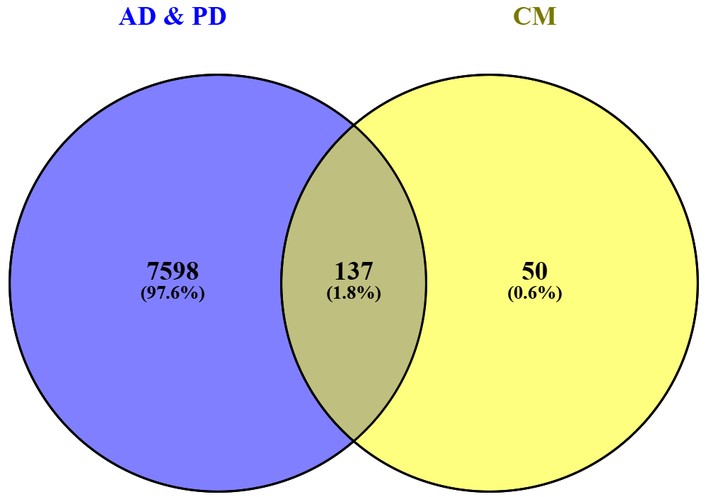
Venn diagram showing the 50 targets of P. amarus reported compound (yellow) and the 7,598 AD & PD shared-related genes (blue). The intersection shows that 137 AD & PD shared related genes are possible targets of the Phyllanthus amarus compound (bicyclo[3.3.1]non-6-en-3-ol).
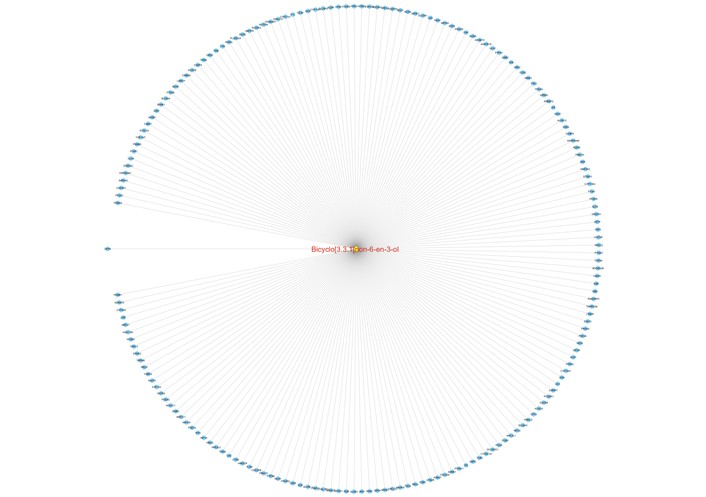
The compound-target network of P. amarus compound (red) and AD & PD shared genes (Blue).
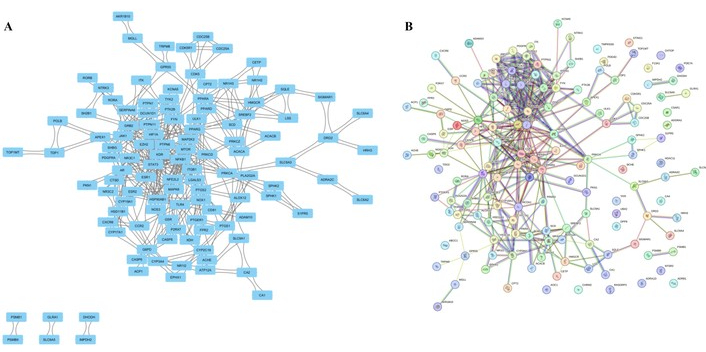
Protein-protein interaction (PPI) network generated through Cytoscape and the STRING tool. Figure (A) represents the PPI generated by the Cytoscape tool based on experimental databases of the genomes; the ash line represents the interaction of the edges with nodes screened from experimental sources. Figure (B) represents the PPI network generated by the STRING database. The red nodes indicated in Figure A represent the first 15 genes with the highest degree.
Protein-protein interaction network and hub analysis.
| Rank | Protein | Degree | Betweenness centrality | Closeness centrality | MCODE cluster |
|---|---|---|---|---|---|
| 1 | STAT3 | 50 | 0.2236 | 0.4408 | Cluster 1 |
| 2 | PPARG | 34 | 0.2310 | 0.4390 | Cluster 1 |
| 3 | HSP90AB1 | 34 | 0.0918 | 0.4000 | Cluster 1 |
| 4 | HIF1A | 32 | 0.1380 | 0.4202 | Cluster 1 |
| 5 | ESR1 | 32 | 0.0793 | 0.4000 | Cluster 1 |
| 6 | GRB2 | 28 | 0.0534 | 0.3364 | Cluster 2 |
| 7 | PTGS2 | 26 | 0.1524 | 0.4030 | Unclustered |
| 8 | FYN | 24 | 0.0558 | 0.3553 | Cluster 2 |
| 9 | NFKB1 | 24 | 0.0544 | 0.4138 | Cluster 1 |
| 10 | TLR4 | 22 | 0.0668 | 0.3857 | Unclustered |
Functional enrichment of the 137 shared AD-PD genes targeted by bicyclo[3.3.1]non-6-en-3-ol revealed a convergent molecular profile involving inflammation, oxidative/nitrosative stress, intracellular signaling, neuronal function, and metabolic regulation (Figure 5A–D). The biological-process analysis was dominated by cellular responses to nitrogen- and oxygen-containing compounds, inflammatory responses, chemical stimuli, and regulation of cell communication and signal transduction (Figure 5A). This pattern is biologically relevant because oxidative stress and chronic neuroinflammation are interconnected mechanisms implicated in both AD and PD [26], where persistent inflammatory signaling can exacerbate oxidative injury, synaptic dysfunction, and neuronal loss [24, 27]. The enrichment of receptor complexes, membrane microdomains, neuronal cell bodies, axons, somatodendritic compartments, synapses, and vesicular structures in the cellular-component analysis (Figure 5B) further indicates that the predicted targets are distributed across neuronal signaling and membrane-associated systems, rather than being confined to inflammatory pathways alone.
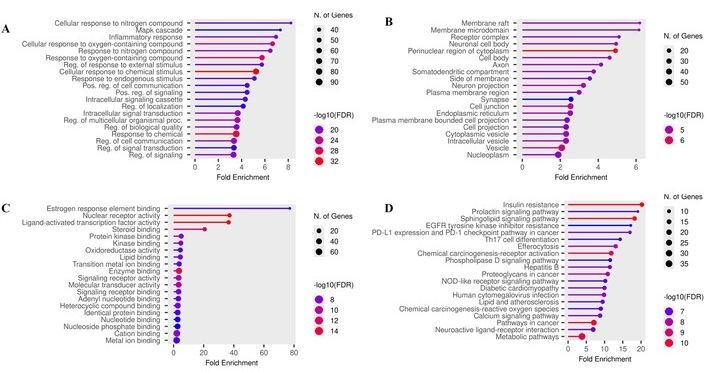
Dotplot of the top 20 biological processes (A), cellular component (B), molecular functions (C), and KEGG pathways (D) associated with the 137 shared genes in AD & PD that are targeted by bicyclo[3.3.1]non-6-en-3-ol. The size of each dot corresponds to the number of genes whereas the intensity of the color corresponds to the p-value. The lower the p-value, the greater is the association.
The molecular-function profile further supports this interpretation, with strong enrichment of estrogen response element binding, nuclear receptor activity, ligand-activated transcription factor activity, protein/kinase binding, oxidoreductase activity, and signaling receptor functions (Figure 5C). These findings suggest that the shared targets participate in transcriptional regulation, redox homeostasis, and receptor-mediated signaling, providing potential links between cellular stress and neuronal responses. Of particular interest is the enrichment of oxidoreductase-related functions and responses to oxygen- and nitrogen-containing compounds, which collectively point toward redox dysregulation as an important component of the shared AD-PD molecular landscape [28].
The KEGG analysis provided additional evidence for a metabolic-inflammatory-neuronal axis, with insulin resistance, prolactin signaling, sphingolipid signaling, Th17-cell differentiation, NOD-like receptor signaling, phospholipase D signaling, calcium signaling, neuroactive ligand-receptor interaction, and metabolic pathways among the most enriched pathways (Figure 5D). The particularly high enrichment of insulin resistance and sphingolipid signaling is noteworthy because impaired brain insulin signaling and altered sphingolipid metabolism have been implicated in both AD and PD, where they may influence glucose utilization, mitochondrial function, inflammation, synaptic integrity, and neuronal survival [29, 30]. Thus, these findings extend the potential mechanism of bicyclo[3.3.1]non-6-en-3-ol beyond conventional neuroinflammation and suggest that metabolic and lipid dysregulation may constitute an important component of the shared molecular pathology targeted by the compound. The enrichment of calcium signaling and neuroactive ligand-receptor interaction additionally supports possible involvement of neuronal communication and excitability [31].
The inflammatory component of the enrichment profile is reinforced by the representation of NOD-like receptor, Th17-related, and other immune pathways, together with the high connectivity of inflammatory hub proteins in the PPI network. The ten most highly connected proteins were STAT3, PPARG, HSP90AB1, HIF1A, ESR1, GRB2, PTGS2, FYN, NFKB1, and TLR4, with STAT3 showing the highest degree of 50 (Figure 6). These hubs collectively connect inflammatory transcription, metabolism, cellular stress, receptor signaling, prostaglandin production and innate immune recognition. STAT3 is particularly relevant because JAK2/STAT3 signaling integrates inflammatory cytokine signaling with cellular survival and has been implicated in neurodegenerative disease mechanisms [32]. Similarly, PPARG provides a potential connection between metabolic regulation and inflammation, while HIF1A is consistent with the enrichment of oxygen- and metabolic-stress responses [33, 34]. PTGS2, NFKB1 and TLR4 further reinforce the inflammatory component, with TLR4-mediated signaling capable of converging on NF-κB and other inflammatory pathways implicated in neurodegeneration [35, 36]. The presence of FYN and GRB2 additionally links the hub network to receptor-associated and tyrosine-kinase signaling [37, 38], whereas ESR1 and HSP90AB1 suggest involvement of transcriptional regulation and cellular protein-stress responses [39].
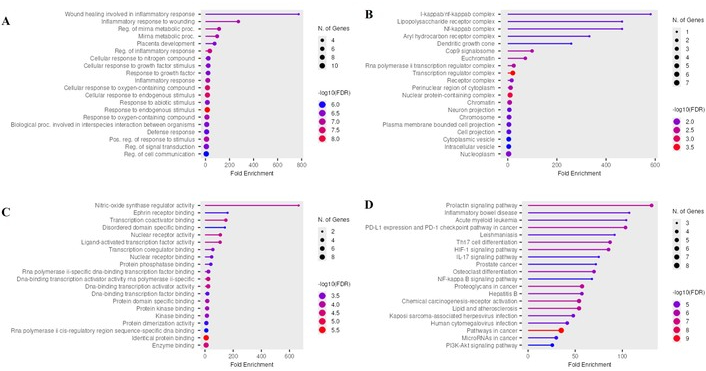
Dotplot of the top 20 biological processes (A), cellular component (B), molecular functions (C), and KEGG pathways (D) associated with the top 10 shared genes (cluster 1) in AD & PD that are targeted by bicyclo[3.3.1]non-6-en-3-ol. The size of each dot corresponds to the number of genes whereas the intensity of the color corresponds to the p-value. The lower the p-value, the greater is the association.
Integratively, the enrichment and PPI analyses suggest that the potential relevance of bicyclo[3.3.1]non-6-en-3-ol in AD-PD comorbidity may arise from its predicted intersection with interconnected inflammatory, oxidative, metabolic, lipid, receptor-signaling, and neuronal processes, rather than from modulation of a single target. The convergence of insulin resistance and sphingolipid signaling with inflammatory hubs such as STAT3, PTGS2, NFKB1, and TLR4 is particularly compelling because metabolic dysfunction, lipid abnormalities and neuroinflammation can interact to promote neuronal dysfunction in both diseases. Nevertheless, these findings remain hypothesis-generating: enrichment and PPI analyses demonstrate statistical and network associations but do not establish that bicyclo[3.3.1]non-6-en-3-ol directly activates or inhibits the identified pathways or hub proteins. Experimental target-engagement, cellular, and in vivo studies will therefore be required to validate the proposed multi-target neuroprotective mechanism.
Although direct experimental evidence for the neuroprotective activity of bicyclo[3.3.1]non-6-en-3-ol is currently unavailable, the compound belongs to the bicyclo[3.3.1]nonane family, a privileged structural scaffold found in numerous bioactive natural products and synthetic molecules with broad pharmacological activities, including anti-inflammatory, antioxidant, antimicrobial, and anticancer effects [40]. Importantly, several bicyclo[3.3.1]nonane derivatives have demonstrated neuroprotective efficacy in experimental models of AD, cerebral ischemia, and oxidative stress through mechanisms involving activation of the Nrf2/HO-1 pathway, suppression of inflammatory signalling, modulation of cholinergic neurotransmission, and AMPA receptor potentiation [41, 42]. These observations support the biological plausibility of investigating bicyclo[3.3.1]non-6-en-3-ol as a novel candidate while recognising that its specific neuroprotective activity remains to be established experimentally.
Despite providing valuable insights into the shared molecular mechanisms underlying AD and PD and identifying bicyclo[3.3.1]non-6-en-3-ol as a promising multi-target candidate, this study has several limitations. First, the findings are based entirely on computational approaches, including network pharmacology, target prediction, and ADMET analyses, and therefore require validation through molecular docking, molecular dynamics simulations, in vitro assays, and in vivo studies to confirm the predicted target interactions and therapeutic effects. Second, the identified protein targets and disease-associated genes were obtained from publicly available databases, which are dependent on existing annotations and predictive algorithms and may contain incomplete or inaccurate information. Third, the pharmacokinetic and toxicity profiles, including BBB permeability, oral bioavailability, and metabolic properties, were derived from in silico predictions and should be experimentally verified before therapeutic translation. Finally, although multiple phytochemicals were identified in P. amarus, the present study focused primarily on bicyclo[3.3.1]non-6-en-3-ol and did not evaluate potential synergistic interactions among the plant’s bioactive constituents, which may contribute to its overall neuroprotective activity. Accordingly, further experimental and preclinical investigations are warranted to validate these findings and establish their translational relevance.
While initial screening has identified bicyclo[3.3.1]non-6-en-3-ol as a lead candidate, future studies should employ molecular docking and simulation to validate its potential to modulate the suggested proteins.
While this computational evidence establishes bicyclo[3.3.1]non-6-en-3-ol as a potent neuroprotective lead, further in vitro and in vivo experimental validation is required to confirm the inhibition of pro-inflammatory markers (like PTGS2 and TLR4) and the stabilization of survival markers (like HIF1A).
This study provides an understanding of the therapeutic potential of P. amarus in the case of AD and PD comorbidity. By integrating computational modeling, the findings demonstrate that the neuroprotective effects of P. amarus are mediated through a complex, multi-target mechanism rather than a single molecular pathway. ADMET screening indicates bicyclo[3.3.1]non-6-en-3-ol as a computationally predicted promising lead compound with favorable pharmacological properties. Significantly, the identification of 137 shared disease targets and the centrality of hub genes such as STAT3, PPARG, HSP90AB1, HIF1A, ESR1, GRB2, PTGS2, FYN, NFKB1, and TLR4 reinforce the idea that AD and PD share interconnected molecular pathways. These targets are implicated in important biological processes, including neuroinflammation, oxidative stress response, cell survival, and signal transduction, which are widely recognized as key drivers of neurodegeneration. The enrichment of pathways such as insulin resistance, sphingolipid, and calcium signaling pathways, PI3K-Akt, MAPK, and HIF-1 signaling, etc., further supports the hypothesis that modulation of these pathways may confer neuroprotection and slow disease progression. Nevertheless, the findings are limited by their reliance on computational predictions, which may not fully capture the dynamic biological environment in vivo. Therefore, future studies should prioritize experimental validation through molecular docking, in vitro assays, and in vivo models to confirm target engagement and therapeutic efficacy.
AD: Alzheimer’s disease
ADMET: Absorption, Distribution, Metabolism, Excretion, and Toxicity
BBB: blood-brain barrier
CNS: central nervous system
GC-MS: gas chromatography-mass spectrometry
KEGG: Kyoto Encyclopedia of Genes and Genomes
MCODE: Molecular Complex Detection
MW: molecular weight
PD: Parkinson’s disease
PPB: plasma protein binding
PPI: protein-protein interaction
TPSA: topological surface area
The supplementary tables for this article are available at: https://www.explorationpub.com/uploads/Article/file/1006152_sup_1.pdf. Other supplementary material for this article is available at: https://www.explorationpub.com/uploads/Article/file/1006152_sup_2.pdf.
MNM: Conceptualization, Methodology, Writing—original draft, Writing—review & editing, Formal analysis. NIA: Investigation, Writing—original draft, Writing—review & editing. OMA: Investigation, Writing—original draft, Writing—review & editing. OHA: Investigation, Writing—original draft, Writing—review & editing. ATO: Investigation, Writing—original draft, Writing—review & editing. YAA: Investigation, Writing—original draft, Writing—review & editing. AOR: Writing—review & editing. MFO: Investigation, Writing—original draft, Writing—review & editing. OOA: Conceptualization, Writing—review & editing, Supervision, Project administration. All authors read and approved the submitted version.
The authors declare that they have no conflicts of interest.
Not applicable.
Not applicable.
Not applicable.
The datasets (the associated disease genes and the compound targets) used for this study can be found in GeneCard, SwissTargetPrediction, and Superpred.
This research received no external funding.
© The Author(s) 2026.
Open Exploration maintains a neutral stance on jurisdictional claims in published institutional affiliations and maps. All opinions expressed in this article are the personal views of the author(s) and do not represent the stance of the editorial team or the publisher.
Copyright: © The Author(s) 2026. This is an Open Access article licensed under a Creative Commons Attribution 4.0 International License (https://creativecommons.org/licenses/by/4.0/), which permits unrestricted use, sharing, adaptation, distribution and reproduction in any medium or format, for any purpose, even commercially, as long as you give appropriate credit to the original author(s) and the source, provide a link to the Creative Commons license, and indicate if changes were made.



View: 91
Download: 8
Times Cited: 0
Atif Salim Khatib ... Daniya Tasnim
Octavio García ... Jesús Antonio Villegas-Piña
Graziella Martins Guimarães ... Márcia Maria de Souza
Zsolt G. Venkei, Masha G. Savelieff
Abraham Olufemi Asuku, Peace Ayo Olaoluwa