Original Article


Affiliation:
1Department of Pharmacology and Therapeutics, Faculty of Basic Medical Sciences, College of Medicine, University of Ibadan, Ibadan NG-200005, Oyo State, Nigeria

Affiliation:
2Department of Pharmacology, Faculty of Basic Medical Sciences, College of Medicine, Federal University of Health Sciences Ila-Orangun, Ila-Orangun NG-234101, Osun State, Nigeria
Email: usman.yusuf@fuhsi.edu.ng
 ,
,
Affiliation:
1Department of Pharmacology and Therapeutics, Faculty of Basic Medical Sciences, College of Medicine, University of Ibadan, Ibadan NG-200005, Oyo State, Nigeria
Email: agbakre@com.ui.edu.ng
,
Affiliation:
1Department of Pharmacology and Therapeutics, Faculty of Basic Medical Sciences, College of Medicine, University of Ibadan, Ibadan NG-200005, Oyo State, Nigeria
Affiliation:
1Department of Pharmacology and Therapeutics, Faculty of Basic Medical Sciences, College of Medicine, University of Ibadan, Ibadan NG-200005, Oyo State, Nigeria
Affiliation:
1Department of Pharmacology and Therapeutics, Faculty of Basic Medical Sciences, College of Medicine, University of Ibadan, Ibadan NG-200005, Oyo State, Nigeria
Explor Neurosci. 2026;5:1006151 DOI: https://doi.org/10.37349/en.2026.1006151
Received: June 17, 2026 Accepted: August 19, 2026 Published: October 12, 2026
Academic Editor: Ayan Mohamud Yusuf, University Hospital Essen, Germany
Aim: Childhood stress can alter adolescent stress responses, predisposing individuals to neurochemical imbalances associated with psychosis later in life. Antipsychotic treatments are limited by extrapyramidal and metabolic side effects with insignificant impact on stress-related abnormalities in schizophrenia. Flavonoids such as apigenin may offer a safer therapeutic alternative with broader neuroprotective effects. This study evaluated the effects of apigenin on serotonin and noradrenaline (NA) systems and psychotic-like behaviours in a two-hit neurodevelopmental rat model of psychosis.
Methods: Sixty-four male rats at postnatal day (PND) 21 were assigned to either group-housed or isolation-reared conditions from PND 23–85 and divided into eight groups (n = 8). From PND 28–85, animals received saline (0.9% NaCl) or ketamine (16 mg/kg, i.p.). Apigenin (8 mg/kg, i.p.) or risperidone (0.5 mg/kg, i.p.) was administered from PND 60–85. Anxiety-like behaviour and working memory were assessed using the Elevated Plus Maze (EPM) and Y-Maze on PND 82 and 83, respectively. On PND 86, animals were sacrificed, and the amygdala, hippocampus, and prefrontal cortex were analyzed for serotonin and NA levels using ELISA (enzyme-linked immunosorbent assay).
Results: Apigenin increased time spent and entries into the closed arms of the EPM, indicating anxiogenic effects. Although ketamine and isolation rearing produced no significant difference in the Y-maze test compared to vehicle, apigenin improved spontaneous alternation in both housing conditions. In group-housed rats, apigenin significantly (p < 0.05) increased serotonin and NA levels in the amygdala and hippocampus, while in the prefrontal, it increased serotonin levels with no significant effect on NA levels when compared to ketamine only control. In isolation-reared rats, it produced a marked increase in serotonin levels in all the examined brain regions, including increased NA levels in the amygdala with differential reduction in NA levels in both hippocampus and pre-frontal cortex when compared with ketamine control.
Conclusions: Apigenin exerted anxiogenic effects while improving working memory and enhancing monoaminergic neurotransmission, suggesting potential therapeutic benefits for negative symptoms associated with schizophrenia.
Childhood adversity in the form of social neglect and deprivation can disrupt normal brain maturation and increase vulnerability to psychiatric disorders, particularly schizophrenia and other psychotic disorders [1]. Deprivation-related experiences have been associated with neurodevelopmental abnormalities that resemble those observed in schizophrenia [2].
Ketamine, a non-competitive antagonist of the N-methyl-D-aspartate (NMDA) glutamate receptor, is widely recognized for its ability to induce transient schizophrenia-like symptoms in both humans and experimental animals. It reliably produces a range of psychotomimetic effects, including positive, negative, and cognitive symptom domains that closely resemble aspects of schizophrenia, thereby making it a valuable pharmacological tool for modeling the disorder in preclinical research [3]. In addition to pharmacological models, developmental and environmental approaches such as the post-weaning social isolation paradigm are combined to induce a broad spectrum of behavioural, neurochemical, and structural abnormalities that are consistent with the disorder [4, 5].
Alterations in dopaminergic and glutamatergic neurotransmission [6–8] together with abnormalities in serotonergic and noradrenergic systems remain central to neurochemical theories of schizophrenia pathogenesis [9, 10]. Disturbances in serotonin transmission have been linked to negative symptoms of schizophrenia, including emotional dysregulation and impaired social functioning [9]. Altered serotonergic signaling disrupts the serotonin-dopamine balance, thereby influencing neuronal function and increasing susceptibility to psychotic disorders [11].
Dopaminergic systems influence noradrenergic neurotransmission and disturbances in their interaction contribute to the psychotic disorder's pathophysiology [12, 13]. Moreover, α2-adrenergic receptor agonists have been shown to improve positive symptoms, cognitive impairments, and neurophysiological deficits associated with schizophrenia [13, 14]. The locus coeruleus–noradrenergic system has also been implicated in schizophrenia pathogenesis [15–17]. This system regulates key cognitive functions, including attention, learning, working memory, and memory consolidation [18, 19], domains that are markedly impaired in schizophrenia. Clinical studies have reported elevated noradrenaline (NA) levels in the blood, cerebrospinal fluid, and post-mortem brain tissue of individuals with schizophrenia [18]. While hyperactivity of the noradrenergic system has been associated with positive symptoms, hypofunction of this system appears to contribute to negative symptoms and cognitive deficits [16, 18]. Typical antipsychotics, such as haloperidol, primarily exert their therapeutic effects through modulation of dopaminergic pathways and are generally effective against positive symptoms [20]. However, their use is often limited by extrapyramidal adverse effects [21, 22]. In contrast, atypical antipsychotics, including clozapine and risperidone, possess additional serotonergic and noradrenergic activity and demonstrate improved efficacy against negative and cognitive symptoms [20], although they are frequently associated with significant metabolic complications [23]. These limitations underscore the need for safer and more effective therapeutic alternatives capable of targeting multiple neurotransmitter systems involved in schizophrenia.
Apigenin, a naturally occurring flavone abundant in vegetables such as: parsley, spinach, and celery; fruits including apples, grapes, and oranges; and herbs such as chamomile, thyme, and peppermint, has emerged as a promising neuroactive compound [24, 25]. Its ability to cross the blood–brain barrier facilitates its pharmacological actions within the central nervous system [26]. Previous studies have demonstrated antidepressant, anxiolytic, and neuroprotective effects of apigenin, mediated in part through modulation of serotonergic, dopaminergic, and noradrenergic neurotransmission [27–29]. Furthermore, apigenin has been reported to restore altered serotonin, dopamine, and NA levels in experimental models of depression [30, 31].
The present study investigated the modulatory effects of apigenin on altered serotonin and NA pathways in a two-hit neurodevelopmental model of psychosis induced by social isolation and ketamine exposure in rats. Schizophrenia, being a complex disease of multiple pathologies, has been studied using acute or repeated single exposure to ketamine and apomorphine without taking into consideration other factors such as environmental or polygenetic, hence the need for additional stressors or environmental toxicants, neurodevelopmental vulnerability factors combined with the ketamine to mimic the three symptoms of schizophrenia. The first hit, which is social isolation, produced a vulnerable brain that can be susceptible to the second hit. The second hit occurred during adolescence, producing oxidative stress, neuroinflammation and dysfunction in central neurotransmitters [32, 33]. It is the stage that transforms adolescent vulnerability into real schizophrenia, leading to positive, negative and cognitive symptoms of schizophrenia. The first hit mimics the negative symptoms characterized by social impairment, anhedonia, flat affect, and cognitive symptoms, which involve deficits in learning and memory. The second hit involves positive symptoms such as hallucination-like behaviors such as delusion, hyperactivity [34]. The combination of several risk factors in animal models offers a stronger face validity for all groups of positive, negative, and cognitive symptoms of schizophrenia, as it induces a broad range of behavioural abnormalities.
Male Sprague-Dawley rats (21 days old) were obtained from the Central Animal House, College of Medicine, University of Ibadan. The animals were housed in plastic cages in a controlled environment at 25 ± 1℃ with a 12:12 light/dark cycle. They were fed standard rodent pellet food and water ad libitum throughout the experimental period. They were allowed to get acclimatized for one week before commencement of the experiments; thereafter, each animal was randomly distributed according to experimental design. All treatment and experimental procedures were approved by the University of Ibadan, Animal Care and Use Research Ethics Committee (UI-ACUREC/183-1124/29) and also in strict compliance with the National Institute of Health Guide for Care and Use of Laboratory Animals (8th Edition 2011).
Ketamine hydrochloride (Sigma-Aldrich, St. Louis, MO, USA), apigenin (Sigma-Aldrich, St. Louis, MO, USA), Risperidone (Sigma-Aldrich, St. Louis, MO, USA), and dimethyl sulfoxide (DMSO) (Sigma-Aldrich, St. Louis, MO, USA) were used in this study.
Apigenin (8 mg/kg) was dissolved in 5% DMSO (Vehicle), while risperidone (0.5 mg/kg) was dissolved and diluted with distilled water before being administered intraperitoneally. Ketamine (16 mg/kg) was administered intraperitoneally (i.p.). The dose of apigenin (8 mg/kg) used in this study was based on the result obtained from the preliminary results obtained on the ketamine induced stereotypical behaviour. DMSO at 5% has been shown to have no central effect on the brain of rats [35]. The drugs were stored in the refrigerator.
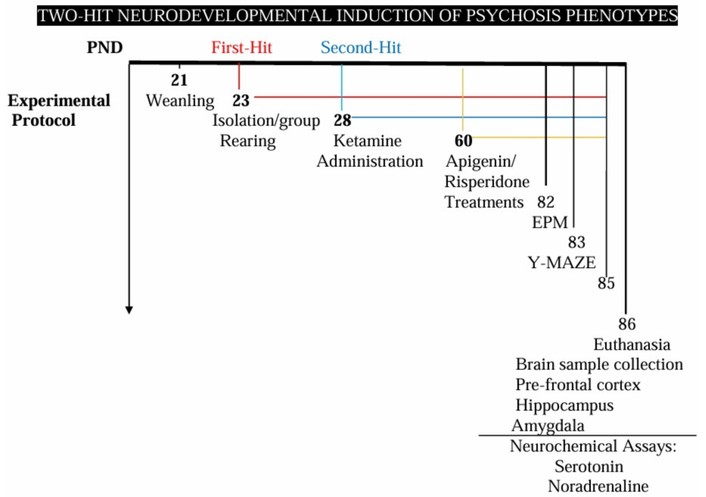
The effect of apigenin on a two-hit model of psychosis (neurodevelopmental stage) as described with little modification [5]. A total of 64 male Sprague Dawley rats (21 days old) were randomly divided into 8 different groups as follows (n = 8/group): group 1 consisted of 8 group housed rats that received saline (10 ml/kg, i.p.) (Group Housed + Vehicle; GHV) and group 2 consisted of 8 socially isolated rats that received saline (10 ml/kg, i.p.) (Socially Isolated + Vehicle; SIV), group 3 consisted of 8 grouped housed rats that received ketamine (16 mg/kg, i.p.) (Group Housed + Ketamine; GHK), group 4 consisted of 8 socially isolated rats that received ketamine (16 mg/kg, i.p.) (Socially Isolated + Ketamine; SIK), group 5 consisted of 8 grouped housed rats that received ketamine (16 mg/kg, i.p.) + apigenin (8 mg/kg, i.p.) (Group Housed + Ketamine + Apigenin; GHKAPG ) and group 6 consisted of 8 socially isolated rats that received ketamine (16 mg/kg, i.p.) + apigenin (8 mg/kg, i.p.) (Socially Isolated + Ketamine + Apigenin; SIKAPG), and group 7 consisted of 8 grouped housed rats that received ketamine (16 mg/kg, i.p.) + risperidone (0.5 mg/kg, i.p.) (Group Housed + Ketamine + Risperidone; GHKRISP) and group 8 consisted of 8 socially isolated rats that received ketamine (16 mg/kg, i.p.) + risperidone (0.5 mg/kg, i.p.) (Socially Isolated + Ketamine + Risperidone; SIKRISP).
On postnatal day (PND) 23, animals that were isolated in the socially isolated group were housed singly in transparent cages with dimensions (40 cm long × 25 cm wide × 35 cm high) for 62 days (animals were able to hear, smell and see other animals but physical contact was not allowed), group housed animals were housed 8 per group in standard group cages with dimensions 55 cm long × 35 cm wide × 20 cm high. A repeated single dose of ketamine (16 mg/kg, i.p.) [5] was given from PND 28 to PND 85 and was done as follows: animals that received ketamine were injected intraperitoneally 3 times a week (Monday, Wednesday, and Friday) for 4 weeks [36]. Thereafter, on PND 57, the animals were injected 2 times a week (Monday and Friday) until the end of the experimental period (PND 85). Animals that were not injected with ketamine were injected with the same volume of saline (0.9% NaCl).
Animals in groups 5 and 6 received apigenin (8 mg/kg) and groups 7 and 8 received risperidone (0.5 mg/kg) respectively from PND 60 until the end of the experiment. The animals were then subjected to behavioural assessment as follows: Elevated Plus Maze (EPM) (PND 82) and Y-Maze (PND 83). The animals were sacrificed on PND 86.
Anxiety was measured by using an EPM test during the behavioral studies. The maze was built with two open and two closed arms (50 cm × 10 cm × 40 cm) mounted 50 cm above the smooth floor. On PND 82, rats were placed in the intersection of the four arms of the EPM and their behaviour was recorded for five minutes by using a camera placed above the arena. The recorded behaviours were the time spent in open arms; time spent in the closed arms and number of entries made in the closed arms [37, 38].
Behavioural evaluation using the Y-Maze is a paradigm described as a tool for assessment of spatial working memory using the principle of spontaneous alternation [39]. The Y-Maze is an elevated wooden stand at a height of 15 cm, and the stand supports its three arms that were spaced at 120 degrees to give a Y-shape orientation. Each arm has a length of 41 cm and a width of 5 cm, labeled A, B and C, respectively and they converged at a center connecting to the floor stand. On PND 83 spontaneous memory alternation performance of rats in the neurodevelopmental protocol was assessed by introducing the animals individually at arm A and allowed to freely explore all three arms for 5 minutes and sequence of entry was recorded. When the whole body of the animal enters an arm, with or without the tail area, this was taken as an entry and that arm was recorded. A consecutive entry into the three arms in direct triple order was taken as an alternation and the total number of alternations observed in 5 minutes was taken as the actual alternation, while the total number of entries minus two was taken as the possible alternation. The overall alternation behaviour of the animals was reported in percentage using the formula:
Twenty hours after the last treatment (PND 86), an anaesthetic agent (isoflurane; 3%) was administered via inhalation prior to cervical dislocation. Subsequently, the animals were decapitated using a guillotine and brain tissues were collected. Harvested brain tissues were rinsed with ice-cold 1.15% KCl and parched with tissue paper. The brain segments, amygdala, prefrontal cortex, and hippocampus were individually placed in specimen bottles containing ice-cold phosphate buffer solution adjusted to a pH of 7.4. The brain regions were minced and then homogenized completely with a Teflon homogenizer. The homogenates were afterwards centrifuged in a 4°C cold centrifuge for 10 minutes at 10,000 g. The resulting supernatant from the centrifuged homogenate was decanted into Eppendorf tubes and this supernatant was used in the respective neurochemical analysis.
Brain levels of 5-hydroxytryptamine (5-HT) and NA were determined in the amygdala, prefrontal cortex, and hippocampus using ELISA (enzyme-linked immunosorbent assay) according to manufacturer instructions. The concentrations of 5-HT and NA were expressed as ng/g tissue.
The data were expressed as mean ± standard error of mean (SEM) and analysed using one-way analysis of variance (ANOVA) and Tukey’s post hoc test for multiple comparisons where appropriate using GraphPad Prism version 8 (San Diego, CA, USA). A level of p < 0.05 was considered statistically significant for all tests.
In the EPM test, the period spent in the closed arm of the maze was not significantly different between the vehicle group housed and ketamine group housed treated animals F (3, 28) = 8.916, and no significant difference was obtained with the intervention with apigenin and risperidone in ketamine house group when compared to ketamine group alone. More so, in the isolated rearing animals, F (3, 28) = 40.27, there was no significant difference in the time spent in closed arm of the EPM by ketamine treated isolated rats when compared to control isolated rearing animals. There was a significant increase in time spent in the closed arm * p < 0.0001 between the ketamine treated isolated animals compared to apigenin and risperidone treated isolated group (Figure 1A and 1B).
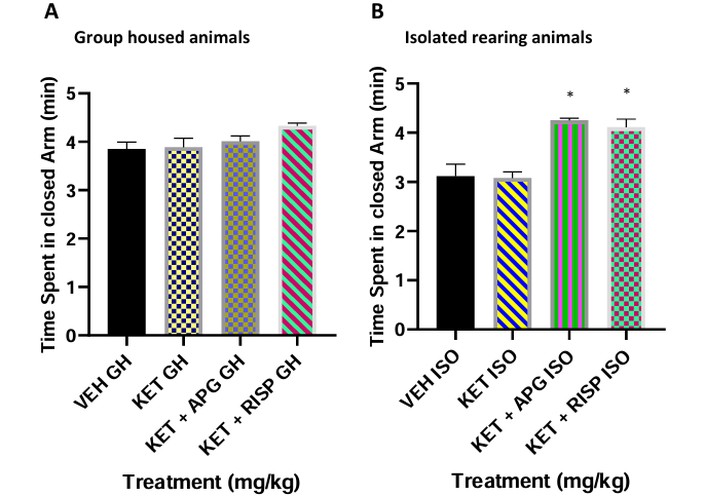
Effect of APG on anxiety in weanling rats subjected to the two-hit model of neurodevelopmental psychosis in EPM (time, closed arm). * p < 0.0001 compared to ketamine only treated group in the isolated rearing animals. VEH: vehicle; GH: group housed; ISO: isolated; KET: ketamine; APG: apigenin; RISP: risperidone.
In the EPM test, the time spent in the open arm of the maze was not significantly different between the ketamine group housed and vehicle treated group housed F (3, 28) = 5.913, and no significant difference with ketamine group housed animals compared to apigenin and risperidone treated rats were observed. More so, in the isolated rearing animals, there is no significant difference between F (3, 28) = 65.09 the time spent in open arms for ketamine isolated treated animals as compared to vehicle treated isolated rats. A significant decrease in time spent in open arm * p < 0.0001 in the apigenin and risperidone intervention in isolated treated group compared with ketamine treated isolated animals (Figure 2A and 2B).
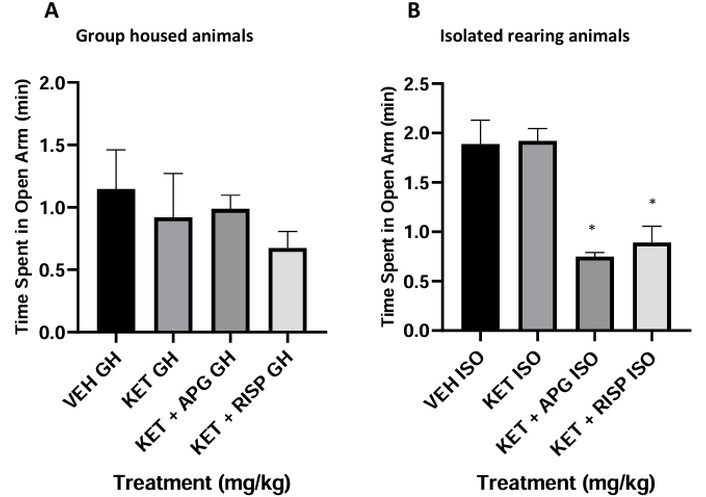
Effect of APG on anxiety in weanling rats subjected to the two-hit model of neurodevelopmental psychosis in EPM (time, open arm). * p < 0.0001 compared to the ketamine-only-treated group in the isolated rearing animals. VEH: vehicle; GH: group housed; ISO: isolated; KET: ketamine; APG: apigenin; RISP: risperidone.
In the EPM test, the number of entry of animals into the closed arm of the maze by the ketamine treated group housed rats was significantly reduced compared to the vehicle group housed F (3, 28) = 14.26, p < 0.0001, more so, there was an insignificant increase in the number of entry by the group housed apigenin treated animals while the treatment with risperidone showed significant increase in the number of entry respectively compared to the ketamine group housed animals. Furthermore, the number of entries by ketamine-treated isolated rearing animals was significantly reduced F (3, 28) = 8.862, p = 0.0003 compared to the control isolated rearing animals while the intervention of apigenin and risperidone significantly increased the number of entry in the isolated rearing animals (Figure 3A and 3B).
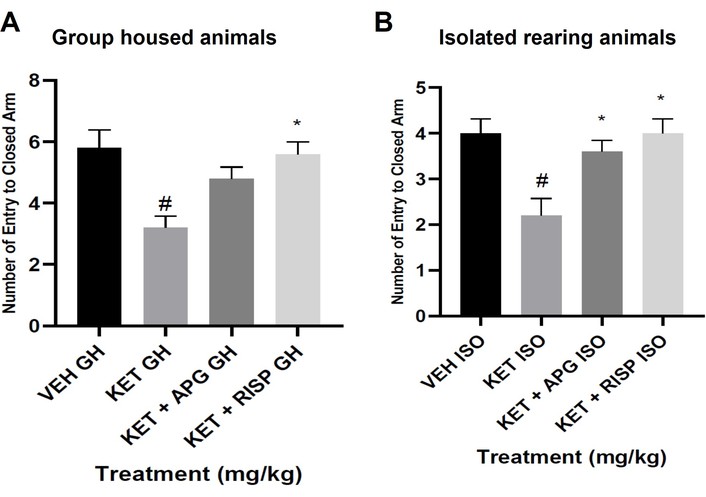
Effect of APG on anxiety in weanling rats subjected to the two-hit model of neurodevelopmental psychosis in EPM (number, closed arm). # p < 0.05 compared with vehicle and * p < 0.05 compared with the ketamine-treated group only in the group-housed and isolated rearing groups, respectively. VEH: vehicle; GH: group housed; ISO: isolated; KET: ketamine; APG: apigenin; RISP: risperidone.
Effect of apigenin on working memory on weanling group housed rats exposed to administration of ketamine, and ketamine exposure to isolated-reared rats impaired memory in the Y-Maze test. In the group housed animals, the percentage alternation was not significantly different between the vehicle and ketamine treated group housed animals, but there was a significant increase in percentage alternation * p < 0.0001, F (3, 28) = 19.32 between ketamine treated weanling rats with apigenin and risperidone compared to ketamine alone treated group housed rats. Also, in isolated rearing animals, there was no significant difference between the vehicle and ketamine treated isolated animals, but the percentage alternation significantly increased * p < 0.0001, F (3, 28) = 78.47 in the apigenin and risperidone treated weanling rats compared to ketamine treated isolated animals alone as graphically depicted in Figure 4 below.
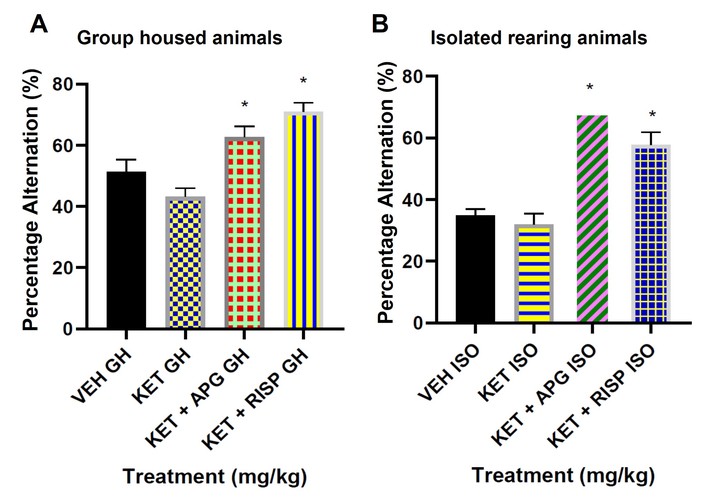
Effect of APG on memory of weanling rats subjected to two-hit models of ketamine, housed group and isolated rearing group in Y-Maze. Values represent the mean ± SEM of 8 animals per group. * p < 0.0001 with APG, and risperidone treated group housed and isolated rearing group compared with ketamine treated group housed and isolated rearing group compared. VEH: vehicle; GH: group housed; ISO: isolated; KET: ketamine; APG: apigenin; RISP: risperidone.
The concentration of 5-HT in the animals that received ketamine in group housed animals was significantly reduced # p < 0.0001, F (3, 28) = 29.90, compared to vehicle treated group housed while the intervention of apigenin and risperidone in the ketamine treated weanling rats significantly increased * p < 0.0001 5-HT concentration when compared with the group housed animals. More so, ketamine treated isolated rearing rats slightly increased 5-HT concentration but not significantly different when compared to vehicle treated isolated group but administration of apigenin and risperidone significantly increased F (3, 28) = 127.8, * p < 0.0001 5-HT concentration in the ketamine treated isolated rearing weanling rats compared to the ketamine alone isolated treated rats (Figure 5A and 5B).
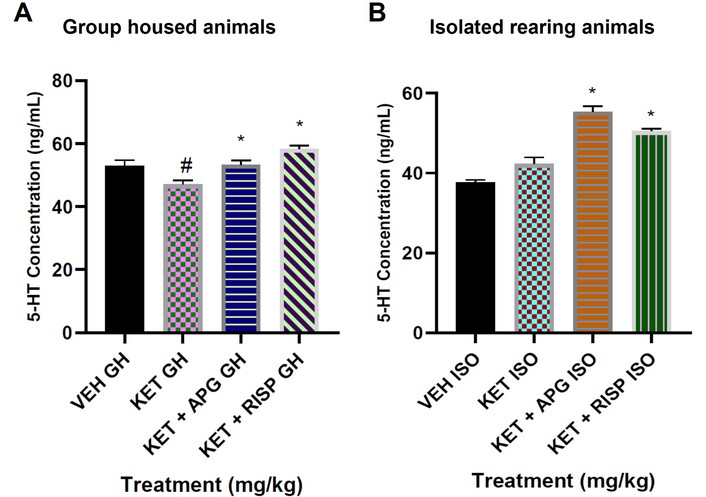
Effect of APG on 5-HT levels in amygdala of weanling rats subjected to the two-hit model of psychosis. (A) # p < 0.0001 compared to vehicle, and * p < 0.0001 compared with the ketamine-only treated group in the group housed; and in (B) * p < 0.0001 compared with ketamine-only treated group in the isolated rearing group. VEH: vehicle; GH: group housed; ISO: isolated; KET: ketamine; APG: apigenin; RISP: risperidone.
Hippocampal concentration of 5-HT in the animals that received ketamine alone in group housed animals was significantly reduced # p < 0.0001, F (3, 28) = 155.2 compared to vehicle treated group housed while the intervention of apigenin and risperidone in the ketamine treated weanling rats significantly increased * p < 0.0001 5-HT concentration when compared with the group housed animals. More so, ketamine treated isolated rearing rats significantly increased, # p < 0.0001, F (3, 28) = 111.5 serotonin concentration in weanling rats compared with vehicle treated isolated rearing rats, intervention of apigenin and risperidone further increased significantly * p < 0.0001 5-HT concentration in ketamine treated rats compared with isolated rearing animals (Figure 6A and 6B).
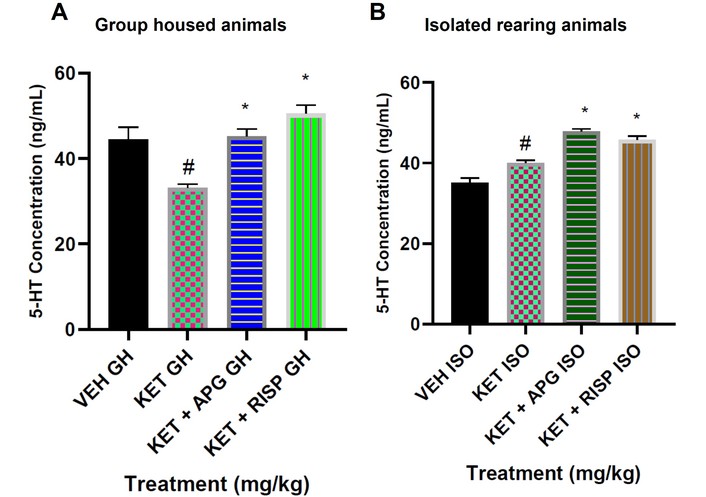
Effect of APG on 5-HT levels in hippocampus of weanling rats subjected to the two-hit model of psychosis. (A) # p < 0.0001 compared to vehicle and * p < 0.0001 compared with the ketamine-only treated group in the group housed and in (B) # p < 0.0001 compared to vehicle and * p < 0.0001 compared with the ketamine-only treated group in the isolated rearing group. VEH: vehicle; GH: group housed; ISO: isolated; KET: ketamine; APG: apigenin; RISP: risperidone.
The prefrontal cortex concentration of 5-HT in the animals that received ketamine alone in group housed animals was significantly reduced # p < 0.0001, F (3, 28) = 112.6 compared to vehicle treated group housed while the intervention of apigenin and risperidone in the ketamine treated weanling rats significantly increased * p < 0.0001 5-HT concentration when compared with the group housed animals. More so, ketamine treated isolated rearing rats significantly increased, # p < 0.0001, F (3, 28) = 166.4 5-HT concentration in weanling rats compared with vehicle treated isolated rearing rats, intervention of apigenin further increased significantly * p < 0.0001 5-HT concentration in ketamine treated rats compared with isolated rearing animals that received ketamine only but risperidone intervention was not significant when compared with ketamine only treated isolated weanling rats (Figure 7A and 7B).
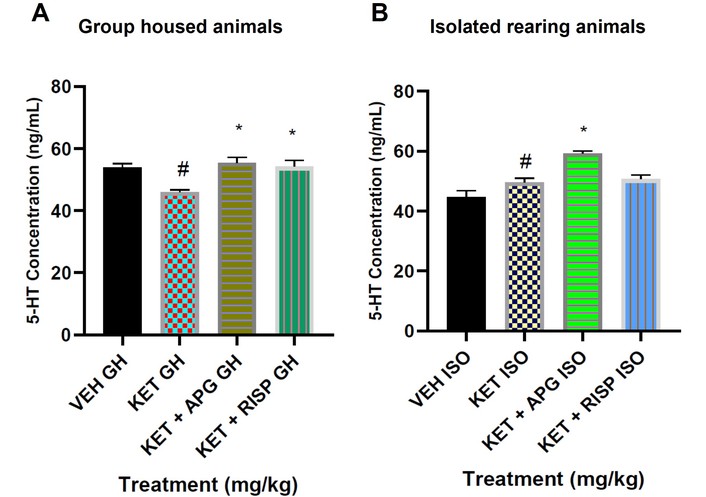
Effect of APG on 5-HT levels in prefrontal cortex of weanling rats subjected to the two-hit model of psychosis. (A) # p < 0.0001 compared to vehicle and * p < 0.0001 compared with the ketamine-only treated group in the group housed and in (B) # p < 0.0001 compared to vehicle and * p < 0.0001 compared with the ketamine-only treated group in the isolated rearing group. VEH: vehicle; GH: group housed; ISO: isolated; KET: ketamine; APG: apigenin; RISP: risperidone.
The concentration of NA in the animals that received ketamine alone in group housed animals was significantly reduced # p < 0.0001, F (3, 28) = 281.3 compared to vehicle treated group housed while the intervention of apigenin and risperidone in the ketamine treated weanling rats significantly increased * p < 0.0001 NA concentration when compared with the group housed animals. More so, ketamine treated isolated rearing rats significantly increased, # p < 0.0001, F (3, 28) = 106.1 NA concentration in weanling rats compared with vehicle treated isolated rearing rats, intervention of apigenin and risperidone further increased significantly * p < 0.0001 NA concentration in ketamine treated rats compared with isolated rearing animals that received ketamine only (Figure 8A and 8B).
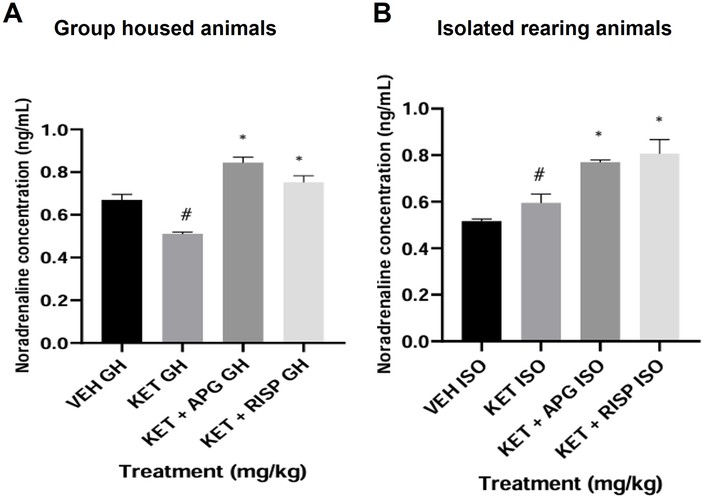
Effect of APG on NA levels in amygdala of weanling rats subjected to two hit model of psychosis. (A) # p < 0.0001 compared to vehicle and * p < 0.0001 compared with ketamine only treated group in the group housed and in (B) # p < 0.0001 compared to vehicle and * p < 0.0001 compared with ketamine only treated group in the isolated rearing group. VEH: vehicle; GH: group housed; ISO: isolated; KET: ketamine; APG: apigenin; RISP: risperidone.
The concentration of NA in the animals that received ketamine alone in group housed animals was significantly reduced, # p = 0.0002, F (3, 28) = 9.147, compared to vehicle treated group housed while the intervention of apigenin and risperidone in the ketamine treated weanling rats significantly increased * p < 0.05 NA concentration when compared with the group housed animals. More so, ketamine treated isolated rearing rats significantly increased, p < 0.0001, F (3, 28) = 218.5 NA concentration in weanling rats compared with vehicle treated isolated rearing rats, intervention with apigenin and risperidone decreased significantly * p < 0.0001 NA concentration in ketamine treated rats compared with isolated rearing animals that received ketamine only (Figure 9A and 9B).
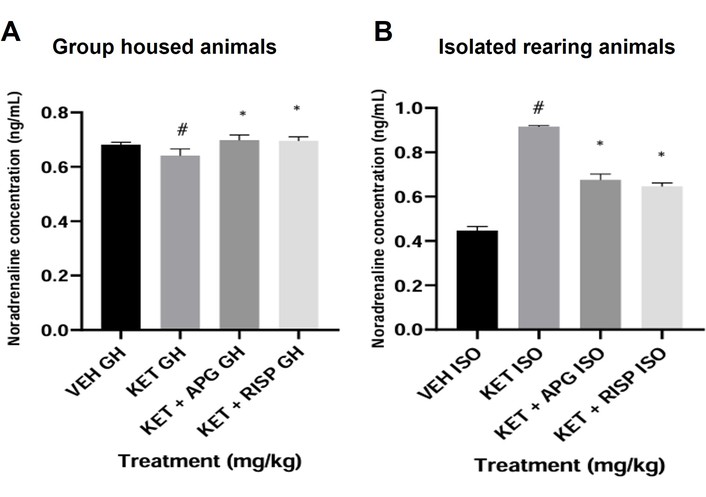
Effect of APG on noradrenaline (NA) concentrations in hippocampus of rats subjected to two-hit model of psychosis. (A) # p < 0.05 compared to vehicle and * p < 0.05 compared with the ketamine-only treated group in the group housed and in (B) # p < 0.0001 compared to vehicle and * p < 0.0001 compared with the ketamine-only treated group in the isolated rearing group. VEH: vehicle; GH: group housed; ISO: isolated; KET: ketamine; APG: apigenin; RISP: risperidone.
Animals in the ketamine-only treated group housed showed a significant increase # p < 0.0001, F (3, 28) = 119.7, compared to the vehicle-treated group housed. Also, there was an insignificant decrease in the intervention of apigenin on ketamine treated group housed animals, while risperidone intervention showed a significant decrease * p < 0.0001 in ketamine treated group compared with ketamine only treated group housed weanling rat. Furthermore, there was a significant increase in NA concentration in animals treated with ketamine only isolated group housed compared with control isolated group housed animals. Intervention with apigenin significantly decreased * p < 0.0001, F (3, 28) = 341.4 NA concentration, while risperidone treatment significantly increased * p < 0.0001 NA concentration in ketamine treated weanling rats, respectively, when compared with ketamine treated isolated rearing animals (Figure 10A and 10B).
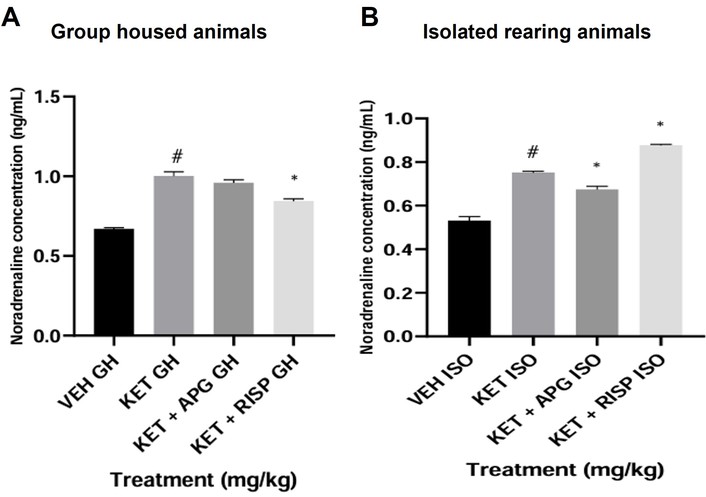
Effect of APG on NA levels in prefrontal cortex of weanling rats subjected to two-hit model of psychosis. (A) # p < 0.0001 compared to vehicle and * p < 0.0001 compared with ketamine only treated group in the group housed and in (B) # p < 0.0001 compared to vehicle and * p < 0.0001 compared with ketamine only treated group in the isolated rearing group. VEH: vehicle; GH: group housed; ISO: isolated; KET: ketamine; APG: apigenin; RISP: risperidone.
EPM is a robust behavioural paradigm for the assessment of anxiety-like behaviour in rodents. It is based on the natural aversion of rodents to open and elevated spaces, creating an approach avoidance conflict between exploration and fear-driven avoidance. Typically, rodents exposed to a novel environment exhibit a preference for the closed arms of the maze, reflecting anxiety-related behaviour [38]. In the context of this study, no significant differences was observed in the time spent in the open or closed arms between vehicle-treated and ketamine-treated animals in both group-housed and socially isolated conditions. Similarly, apigenin and risperidone administration in ketamine-treated group-housed animals did not significantly alter time spent in either arm in group-housed rats. However, they significantly increased time spent in closed arms and reduced time spent in open arms compared to vehicle or ketamine control in isolated animals, suggesting enhanced anxiety-like behaviour or reduced exploratory activity under social isolation conditions. Notably, ketamine reduced the number of closed arm entries in both group-housed and isolated animals, indicating decreased locomotor activity and exploratory drive. This finding is consistent with previous reports by Castillo-Gómez et al. [40] (2017) and Estaphan et al. [41] (2021), which demonstrated that combined ketamine administration and social isolation significantly reduce open-arm exploration in the EPM, reflecting impaired behavioural flexibility and increased behavioural inhibition. Apigenin administration significantly increased closed arms entries in isolated animals, while treatment with risperidone significantly increased closed arm entries in both experimental conditions.
In the Y-Maze task, ketamine exposure did not significantly alter percentage alternation compared to vehicles in ketamine-treated group-housed and isolated animals; however, both apigenin and risperidone significantly improved alternation behaviour in both housing conditions, indicating an improvement in working memory. This suggests their cognitive enhancing effect in a neurodevelopmental model of psychosis. These findings align with Estaphan et al. [41] (2021), who reported that antipsychotic treatment improved cognitive performance in both low-dose ketamine administration and social isolation in an animal model of schizophrenia. Collectively, these results showed both apigenin and risperidone improved cognitive function, particularly in working memory domains. These behavioural changes are likely mediated via modulations in key neurotransmitter systems following chronic NMDA receptor antagonism. NMDA receptor hypofunction has been widely implicated in schizophrenia-like cognitive deficits, including impaired information processing and executive dysfunction [42, 43]. Spontaneous alternation behaviour in the Y-Maze is a validated measure of spatial working memory, requiring animals to recall previously visited arms, thereby reflecting short-term memory integrity [39].
Schizophrenia is a complex neuropsychiatric disorder characterized by dysregulation of multiple neurotransmitter systems, including dopaminergic, serotonergic, glutamatergic, GABAergic, and cholinergic pathways [41]. Ketamine, a non-competitive NMDA receptor antagonist, is widely used to induce schizophrenia-like behaviours in animal models due to its ability to disrupt glutamatergic signaling and produce positive, negative, and cognitive symptom domains of psychosis [34, 44]. NMDA receptor blockade has been shown to induce widespread alterations in dopaminergic, serotonergic, and GABAergic transmission, contributing to behavioural and cognitive deficits characteristic of schizophrenia [45, 46]. Also, findings from this study showed that ketamine administration significantly reduced serotonin (5-HT) levels in the amygdala, hippocampus, and prefrontal cortex compared with vehicle control in group-housed animals. In isolated-reared animals, ketamine had no significant effect on 5-HT in the amygdala, but increased its levels in both hippocampus and pre-frontal cortex. Consistent with this, the present findings suggest that ketamine-induced disruptions in monoaminergic systems, particularly serotonin signaling in corticolimbic regions, may underlie observed behavioural impairments. Apigenin treatment following ketamine exposure significantly increased 5-HT levels across these brain regions, while risperidone also elevated serotonin levels in the amygdala and hippocampus, though in isolation-rearing its effect in the prefrontal cortex was not statistically significant. The pathologic mechanism that underlies ketamine-induced schizophrenia-like behaviours has been shown to be mediated through blockade of NMDA receptors [44, 45, 47]. In this context, ketamine induced alterations in central dopaminergic, glutamatergic, serotonergic, GABAergic and cholinergic transmissions that correlate with the corresponding behavioural (positive, negative, and cognitive symptoms) phenotypes [45]. These findings further support previous studies, which showed that ketamine, induced alteration in 5-HT transmission in the striatum, pre-frontal cortex (PFC) and hippocampus, and caused behavioural deficits due to altered sensorimotor gating mechanisms [45, 47, 48]. Thus, ability of apigenin to significantly abate these alterations in amygdala, prefrontal cortical and hippocampal 5-hydroxytryptaminergic transmission in a similar manner to risperidone in the two-hit model of ketamine and isolation-treated rats may further suggest its atypical, related antipsychotic-like activity, particularly against negative and cognitive symptoms in weanling rats. These findings suggest that apigenin may exert broader serotonergic modulatory effects compared with risperidone in this model.
Noradrenergic alterations observed in this study further support the involvement of stress-related neurotransmission in the two-hit model. NA dysregulation is increasingly recognized as a key component of stress-related cognitive dysfunction in schizophrenia models, particularly in brain regions involved in executive function, emotional regulation, and memory processing [49]. The locus coeruleus–noradrenergic system plays a critical role in stress responsiveness and attentional modulation. Elevated NA in the hippocampus may enhance stimulus detection and environmental monitoring, particularly during novel or stressful exposures [50–52]. However, excessive noradrenergic activity in the prefrontal cortex can impair executive function by disrupting optimal dopaminergic–noradrenergic balance. Previous studies have also shown that combined stressors such as social isolation and psychostimulant exposure may produce region-specific neurotransmitter alterations, with dopamine systems being more consistently affected than NA in some paradigms [53, 54]. The pre-frontal cortex receives strong noradrenergic input from the locus coeruleus, which is implicated in responses to anticipatory stressors. Stress-enhanced NA release affects the pre-frontal cortex. NA is also proposed to play an inhibitory role in the pre-frontal cortex under life-threatening circumstances, possibly favouring rapid instinctual responses over more complicated ones. Furthermore, previous studies also showed that combined social isolation rearing with methamphetamine injection found no synergistic effect on NA or serotonin levels in the striatum or frontal cortex, although changes in dopamine were noted. This suggests that the combined "hits" may preferentially affect the dopamine system over NA in some brain regions, depending on the specific hits used [53, 55–58]. Interestingly, findings from this study revealed that in group-housed rats, ketamine administration reduced the levels of NA in the amygdala and hippocampus, while its levels in the prefrontal cortex increased compared to vehicle control. On the other hand, apigenin and risperidone increased the levels of NA in the amygdala and hippocampus except in the prefrontal cortex when compared with ketamine control in the group-housed animals. Also, combined effects of ketamine administration and isolation-rearing increased NA levels across the brain regions. Apigenin treatment increased NA levels in the amygdala, but significantly reduced its levels in both hippocampus and prefrontal cortex, while risperidone produced mixed effects with increased NA levels in the amygdala and the prefrontal cortex and reduced levels in the hippocampus. It can be established from these findings that repeated administration of ketamine in the group housed and isolated rearing animals in a two-hit neurodevelopmental psychosis relatively express negative and cognitive schizophrenia-like symptoms, which were abated with the intervention of apigenin and risperidone, which could be associated with the ability of apigenin to improve the deregulated excitatory neurotransmitter. Apigenin demonstrated modulatory effects on these neurotransmitter systems, partially normalizing ketamine-induced alterations in a manner comparable to risperidone. These findings suggest that apigenin may exert antipsychotic-like effects, particularly on negative and cognitive symptoms, potentially through restoration of monoaminergic balance. This is in corroboration with the work of Olayinka et al. [27].
5-HT: 5-hydroxytryptamine
DMSO: dimethyl sulfoxide
ELISA: enzyme-linked immunosorbent assay
EPM: Elevated Plus Maze
NA: noradrenaline
NMDA: N-methyl-D-aspartate
PND: postnatal day
The Authors appreciate all the staff of the Department of Pharmacology and Therapeutics, Faculty of Basic Medical Sciences, University of Ibadan for the moral and logistical support towards the successful completion of this study.
ANA: Conceptualization, Investigation, Methodology, Formal analysis, Writing—original draft. YU: Methodology, Writing—original draft, Validation. AGB: Conceptualization, Investigation, Methodology, Formal analysis, Writing—review & editing, Supervision, Validation. WA: Investigation, Methodology. RMO: Investigation, Methodology. AOA: Conceptualization, Investigation, Methodology, Formal analysis, Writing—review & editing, Supervision, Validation. All authors read and approved the submitted version.
The authors declare that they have no conflicts of interest.
The use of laboratory animals and the experimental protocol were approved by University of Ibadan, Animal Care and Use Research Ethics Committee with registration number UI-ACUREC/183-1124/29.
Not applicable.
Not applicable.
The datasets supporting the findings of this study are available from the corresponding authors upon reasonable request.
The authors did not receive financial support for the research, authorship or publication of this article.
© The Author(s) 2026.
Open Exploration maintains a neutral stance on jurisdictional claims in published institutional affiliations and maps. All opinions expressed in this article are the personal views of the author(s) and do not represent the stance of the editorial team or the publisher.
Copyright: © The Author(s) 2026. This is an Open Access article licensed under a Creative Commons Attribution 4.0 International License (https://creativecommons.org/licenses/by/4.0/), which permits unrestricted use, sharing, adaptation, distribution and reproduction in any medium or format, for any purpose, even commercially, as long as you give appropriate credit to the original author(s) and the source, provide a link to the Creative Commons license, and indicate if changes were made.



View: 116
Download: 7
Times Cited: 0