Review


Affiliation:
1Department of Obstetrics and Gynecology, National Institute of Unani Medicine, Bengaluru 560091, Karnataka, India
ORCID: https://orcid.org/0000-0002-1030-840X

 ,
,
Affiliation:
2Department of Moalajat, National Institute of Unani Medicine, Bengaluru 560091, Karnataka, India
3Current address: Hayat Unani Medical College, Lucknow 226101, Uttar Pradesh, India
Email: frafique786.fr@gmail.com
ORCID: https://orcid.org/0000-0002-0251-6698

Explor Foods Foodomics. 2026;4:1010183 DOI: https://doi.org/10.37349/eff.2026.1010183
Received: May 15, 2026 Accepted: July 05, 2026 Published: August 17, 2026
Academic Editor: Ivana Cacciatore, “G. d’Annunzio” University of Chieti-Pescara, Italy
The article belongs to the special issue Food-Derived Bioactive Compounds: From Foodomics to Therapeutic Applications
Pomegranate has long been used in Greco-Arab medicine for gastrointestinal, cardiovascular, metabolic, and inflammatory disorders. It has been described to relieve nausea, vomiting, abdominal pain, diarrhoea, palpitations, etc. Modern scientific studies have validated these uses, attributing them to a rich phytochemical profile of polyphenols, flavonoids, anthocyanins, tannins, punicalagins, and ellagitannins. However, the precise mechanism of action and optimal application strategies for pomegranate in systemic diseases remain an area of investigation. Metabolomics provides a robust platform for elucidating the intricate relationships between pomegranate bioactives and human physiology. Therefore, to evaluate the therapeutic potential of pomegranate (Punica granatum L.) and find out how metabolomics can enhance its pharmacological applications, a literature review was conducted using ancient & modern pharmacology books, PubMed, Scopus, Web of Science, and Google Scholar. Human clinical trials were prioritized, followed by in vivo and in vitro studies. Evidence was synthesized qualitatively with emphasis on metabolomic findings. The research question was framed to determine whether metabolomics can enhance and optimize the therapeutic potential of pomegranate. Metabolomic studies demonstrated that pomegranate exhibits all its biological activities through gut microbiota-derived metabolites, particularly urolithins, which play a key role in mediating these effects. Therefore, it was concluded that integration of metabolomics with traditional pharmacology can enhance pomegranate-based therapeutics and support its role in precision nutrition.
Pomegranate (Punica granatum L.) is one of the oldest known edible fruits belonging to the family Lythraceae [1, 2]. Its origin dates back to the Middle East, from where further cultivation led to the proliferation of its seeds in different regions of the world, resulting in a broad genetic diversity [3, 4]. The term pomegranate comes from the Latin word ‘pomum’, meaning apple, and ‘granatus’ meaning full of seeds [5]. The family Punicaceae contains a single genus, Punica, and two species, the most predominant one being Punica granatum L. (edible), and the less predominant Punica protopunica (inedible). It is often called ‘the fruit of paradise’ in the Middle East, due to its mention in the holy scriptures of the Bible and the Quran, with remarkable healing and medicinal properties. Classical texts document its use in gastrointestinal disorders, cardiovascular conditions, metabolic disturbances, and inflammatory diseases. These traditional claims have been supported by pharmacological research [6]. Despite this, a comprehensive understanding of how these compounds are metabolized and exert their effects in the human body is still evolving.
Metabolomics, a systems-level analytical approach, offers a powerful tool to elucidate these metabolic pathways, identify biomarkers of response, and enable personalized therapeutic strategies. It provides a snapshot of the metabolome and offers a holistic view of the biochemical changes occurring within a biological system in response to internal or external stimuli, such as dietary interventions [7]. Integrating metabolomic insights with traditional pharmacological studies of pomegranate has the potential to move beyond correlative observations to mechanistic understanding, thereby optimizing its therapeutic application.
This review aims to integrate Unani (Greco-Arab) knowledge with modern metabolomic insights to understand the therapeutic potential of pomegranate in systemic diseases.
Existing literature on pomegranate was collected and compiled from classical Unani as well as modern pharmacology books such as Mufradat Azeezi, Qarabadeen Sarkari, Khazainul Advia, Wealth of India, Indian Materia Medica, Trease and Evans’ Pharmacognosy, etc. After that, a comprehensive literature search was conducted using PubMed, Scopus, Web of Science, and Google Scholar up to March 2026 using the keywords “Punica granatum”, “pomegranate”, “metabolomics”, “ellagitannins”, and “urolithins”.
Studies reporting pharmacological or clinical effects of pomegranate or investigating metabolomic mechanisms were included. Human clinical trials were prioritized, followed by in vivo and in vitro studies. Data were synthesized narratively with emphasis on mechanistic insights and clinical relevance.
Papers having negative or neutral outcomes on pomegranate studies, or not focusing on pomegranate metabolomics, were excluded.
Punica granatum L. is an evergreen deciduous spiny shrub that reaches up to 20 metres, mainly found in Persia, Arabia, Afghanistan, Baluchistan, and cultivated all over India [8, 9]. It has multiple irregular thorny branches with dark grey to brown colored bark. It has a red, leathery rind, in which seeds are encased in a pulp, sectioned by walls [8].
The leaves are bright green, 3–7 cm long, and 2 cm broad, glabrous, glossy, and leathery in appearance [2]. The flowers are 1–5 in quantity, and all of them are marginal except the one that grows terminally. These are short in size and are present without a peduncle. Flowers are funnel-shaped, bisexual, and actinomorphic [3]. Fruits are large, round, brownish-yellow to red with a diameter of 5–12 cm, weighing 200 g to 800 g. It has an outer hard pericarp and an inner spongy mesocarp. Seeds are present in the mesocarp, usually of red or white color, entirely covered by arils, which are edible, juicy portions [2]. The plant grows in a wide range of climatic conditions, the most favourable one being hot, dry summers with deep sandy clay and high altitudes. The fruit is very sensitive to cold farming conditions, with the sweet ones more sensitive than the sour ones [3]. “Bustani sheerin bedana” from Kabul, Afghanistan, is described as the best variety, because its fruits are sweet (‘sheerin’) and without seeds (‘bedana’) [2, 3, 8]. Table 1 describes its taxonomical classification & vernaculars, whereas Table 2 describes its dosage as described in classical texts.
Taxonomical classification & vernaculars of pomegranate.
| Botanical name | Punica granatum L. | Dialect | Vernacular names |
|---|---|---|---|
| Kingdom | Plantae (Angiosperms) | English | Pomegranate [5, 9] |
| Division | Tracheophyta | Unani | Anar, Rumman, Gulnar, Gulnarfarsi [9] |
| Class | Magnoliopsida | Arabic | Rumman [4] |
| Order | Myrtales | Persian | Anar Tursa, Dulim, Dulima [1] |
| Family | Lythraceae [1, 5]Punicaceae [2, 3, 9] | Urdu | Anar [4] |
| Genus | Punica | Hindi | Anar [2] |
| Species | Granatum [2] | Sanskrit | Dadima [5], Raktabija, Madhubija, Suphala [4] |
| Part | Dose |
|---|---|
| Seeds | 30–100 g |
| Juice | 24–60 mL |
| Distillate | 50–100 mL |
| Leaves | 5–10 g |
Pomegranate has been described to have various biological functions in Unani literature such as anti-emetic [4, 8, 11], anti-bile [8], digestive [8], appetizer [8], coolant [4, 8], cleansing [8], laxative [8], stomach, liver and heart tonic [4, 8, 10], anti-inflammatory [8], astringent [4, 8], hematinic [8], resolvent [10], mild diuretic [8, 10], aphrodisiac [8], anti-helminthic [8, 12], etc., details of which are given in Table 3 along with various compound formulations (murak’kabat) of pomegranate described in Unani literature.
Functions of pomegranate are described in Unani literature & formulations.
| S. No. | Af’aal | Action(s) | Use(s) | Part(s) used | Formulation |
|---|---|---|---|---|---|
| 1 | Daaf-e-qay wa matli, daaf-e-qay’al-hamal [8, 11, 13] | Antiemetic [4] | Nausea vomiting of pregnancy (NVP) | Fresh fruit juice | Sharbat-e-Anar Sheerin |
| 2 | Daaf-e-hiddate safra | Anti bilious [2, 9] | Bilious disorders | Juice, syrup | Rubb e Anar |
| 3 | Hadim | Digestive [2, 5, 9] | Dyspepsia, acidity | Fruit rind, juice, flowers | Safoof-e-habb-ur-rummaan [4] |
| 4 | Muhallil-e-aurām | Anti-inflammatory [2, 9] | Stomatitis, gastritis, colitis, ulcers | Leaves, seeds’ juice, fruit rind | Barud-e-rummaan |
| 5 | Qabid | Astringent [2, 5, 9] | Diarrhea, dysentery, uterine disorders, leucorrhea, urinary incontinence | Fruit rind, seeds’ juice, flowers, bark | Safoof-e-habb-ur-Rumman [4] |
| 6 | Mudir-e-baul khafeef [8, 10] | Mild diuretic | Urinary infections | Seeds | Sharbat-e-Anar Sheerin |
| 7 | Dafe-attash | Anti-thirst [2, 4, 9] | Excessive thirst | Fresh juice | Sharbat-e-Anar Sheerin |
| 8 | Mubarrid, daafe bukhar | Refrigerant, antipyretic [2, 9] | Night sweats, malaria and seasonal fevers | Stem & root bark, juice, syrup | Sharbat Anar Tursh |
| 9 | Mukhrij-e-balgham | Expectorant [2, 5, 9] | Cough, bronchitis, whooping cough | Powdered flower & buds | Habb-e-Hindi Suaal [4] |
| 10 | Muqawwi-e-bah | Aphrodisiac [5] | Sexual debility [14] | Flowers | Jawarish anar murakkab |
| 11 | Mudammil e qurooh | Cicatrizing [5, 15] | Wounds | Flowers | Barud-e-rummaan |
| 12 | Muqawwi-e-aam | General tonic, antioxidant [5, 15] | Greying of hairs, anxiety, Alzheimer’s disease [16] | Flowers, seeds | Mufarrah Azam Jawahar |
| 13 | Daafe afoonat | Antimicrobial [2, 9, 15, 17] | Infections [18, 19] | Flowers | Safoof Gulnar |
| 14 | Muwallide-khoon [8] | Hematinic [15] | Anemia | Fruit | Sharbat Anar Sheerin |
| 15 | Qatil kirm-e-shikam | Anti-helminthic [9] | Helminthiasis | Root bark | Dawae anar |
| 16 | Habis ud dam | Hemostatic [4] | Bleeding disorders [15, 20, 21] | Rind, flowers | Sufoof Istehaza [22] |
| 17 | Mushtahi [8] | Appetizer | Anorexia | Fruit | Jawarish Anarain [23] |
| 18 | Muqawwi meda, jigar wa qalb [4, 8, 10] | Stomach, liver & heart tonic [2, 5, 9] | Diabetes [24], hypertension [25], palpitations [26] | Fruit, flowers, plants | Safoof-e-Ziabetus Dolabi [27] |
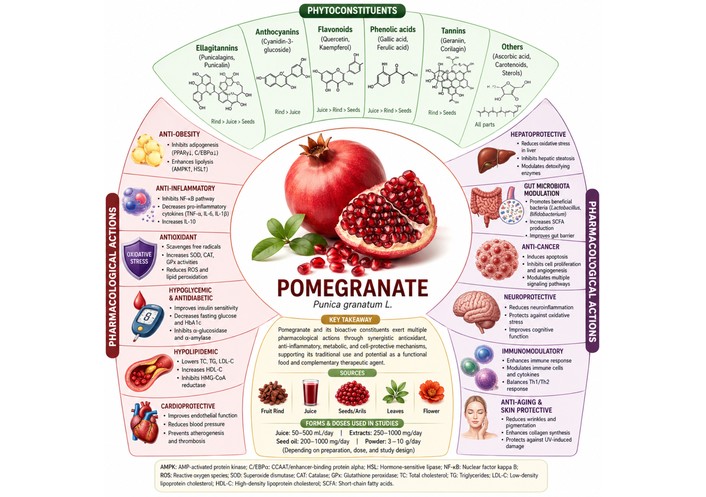
One hundred grams of raw pomegranate fruit provides approximately 68–83 calories, 17–19 g of carbohydrates, 4 g of fiber, 1.7 g of protein, and various other vitamins and minerals [15] as listed in Table 4. It contains a diverse array of bioactive compounds, including ellagitannins (punicalagin, punicalin), flavonoids (quercetin, kaempferol), anthocyanins, alkaloids, and organic acids [15]. These constituents are distributed across different plant parts, including peel, seeds, juice, flowers, and bark, as shown in Table 5.
Pomegranate’s nutrient values for 100 g of raw edible portion.
| Composition | Value/100 g | Units | Composition | Value per 100 g | Units |
|---|---|---|---|---|---|
| Water | 77.93 | g | Magnesium | 12 | mg |
| Energy | 83 | kcal | Copper | 0.158 | mg |
| Protein | 1.67 | g | Selenium | 0.5 | mg |
| Total lipid | 1.17 | g | Vitamin K | 16.4 | mcg |
| Carbohydrates | 18.7 | g | Vitamin C | 10.2 | mg |
| Fiber | 4.0 | g | Folate | 38 | mcg |
| Phosphorus | 36 | mg | Pantothenic acid | 0.377 | mg |
| Iron | 0.3 | mg | Vitamin B1 | 0.067 | mg |
| Potassium | 236 | mg | Vitamin B2 | 0.053 | mg |
| Calcium | 10 | mg | Vitamin B3 | 0.293 | mg |
| Sodium | 3.0 | mg | Vitamin B6 | 0.075 | mg |
Adapted from United States Department of Agriculture (USDA) national nutrient database for standard reference (https://fdc.nal.usda.gov/food-details/2727588/nutrients).
Chemical constituents of Punica granatum L.
| Chemical constituents | |
|---|---|
| Peel [2, 3, 9, 15, 28–32] | Juice [15, 28–31, 33] |
| Ellagic acid, caffeic acid, ellagitannins, isopelletierine, methylpelletierine, chlorogenic acid, cinnamic acid, pseudopelletierine, o-coumaric acid, p-coumaric acid, luteolin, kaempferol, quercetin, gallic acid, punicalin, punicalagin, catechins, hydroxy benzoic acid, tannin (26%), anthocyanidins, flavonols, rutin, polyphenols, flavonoids. | Ellagic acid, flavonols, aliphatic organic acids, gallic acid, amino acids, epigallocatechin gallate (EGCG), polyphenols, flavonoids, ascorbic acid, quinic acid, anthocyanins, organic acids, caffeic acid, quercetin, rutin, catechin, glucose, fructose, sucrose, iron. |
| Root and bark [2, 9, 15, 28–32] | Flower [9, 15, 28, 29, 31, 33] |
| Ellagitannins, pelletierine, isopelletierine, tannin (22–25%), punico-tannic acid (20–25%), mannite, sugar gum, pectin, ash (15%), piperidine alkaloids, pyrrolidine alkaloid, punicalin, alkaloids, polyphenols, flavonoids. | Gallic acids, ursolic acid, triterpenoids, fatty acids, pelargonidine-3,5-di-glucoside, sitosterol, sitosterol-beta-D-glucoside, maslinic acid, asiatic acid, polyphenols, fatty acids, punicalagin, punicalin. |
| Leaves [3, 9, 15, 28, 29, 31, 33] | Seeds [2, 4, 9, 15, 28–32] |
| Tannins (11%), carbohydrates, sterols, saponins, ellagitannins, flavonoids, piperidine alkaloids, glycosides, ellagitannins (granatins A, B and punicafolin), luteolin, fatty acids, punicalagin, punicalin, ellagic acid, resins, iron, magnesium sulfate, potassium, sodium. | Tannin (28%), punicic acid, methylellagic acid, Tri-o-methylellagic acid, oleic acid, palmitic acid, stearic acid, linoleic acid, linolenic acid, sterols, tocopherol, malvidin pentose glycoside, ellagic acid, fatty acids, carbohydrates, iron, chloride, calcium, sodium, potassium, phosphate. |
Pomegranate has been extensively studied for its cardioprotective effects, including reducing blood pressure, improving lipid profiles, and attenuating atherosclerosis [34].
Human clinical trials: A randomized, double-blind, placebo-controlled trial investigated the effect of pomegranate juice consumption on cardiovascular risk factors in patients with type 2 diabetes. Metabolomic analysis of plasma revealed significant changes in lipid metabolism, including a reduction in oxidized low-density lipoprotein (LDL) and an increase in beneficial high-density lipoprotein (HDL) cholesterol subfractions, alongside alterations in amino acid profiles indicative of improved endothelial function [35]. Another study using metabolomics in hypertensive subjects showed that pomegranate extract supplementation led to changes in pathways related to nitric oxide synthesis and arginine metabolism [36].
In vivo studies: Animal models of atherosclerosis have demonstrated that pomegranate supplementation alters circulating lipid species and inflammatory markers [37], as identified by metabolomics, suggesting a multi-targeted approach to reduce plaque formation [38].
In vitro studies: Urolithins derived from pomegranate modulate cellular metabolic pathways involved in inflammation and oxidative stress, thereby protecting against endothelial dysfunction by inhibiting the growth of pathogenic Clostridia and Staphylococcus aureus and maintaining a healthy gut microbiome [39].
Pomegranate has shown promise in managing metabolic syndrome, including insulin resistance, dyslipidemia, and obesity [40].
Human clinical trials: A clinical trial investigating the effects of pomegranate extract in obese individuals found improvements in insulin sensitivity and glucose metabolism. Plasma metabolomics identified changes in fatty acid metabolism, branched-chain amino acids, and bile acid profiles, suggesting a role for pomegranate in modulating key pathways related to insulin signaling and energy homeostasis [41]. Another study in patients with type 2 diabetes reported that pomegranate consumption reduced total cholesterol, LDL-cholesterol, and total cholesterol, which reduces the risk of heart disease in hyperlipidemic and diabetic patients [42].
In vivo studies: In diet-induced obese mice, pomegranate administration led to alterations in hepatic lipid metabolism and systemic inflammation, revealing a normalization of several metabolic pathways, including fatty acid synthesis and oxidation [43].
In vitro studies: Studies on adipocytes and hepatocytes have shown that pomegranate bioactives influence glucose uptake, lipogenesis, and mitochondrial function, with metabolomics confirming shifts in key metabolic intermediates [44].
The antioxidant and anti-inflammatory properties of pomegranate suggest its potential in neuroprotection, particularly against Alzheimer’s and Parkinson’s disease [45].
In vivo studies: In animal models of Alzheimer’s disease, pomegranate extract supplementation improved cognitive function and reduced amyloid plaque burden. Brain metabolomic analysis revealed changes in neurotransmitter levels, energy metabolism, and oxidative stress markers, suggesting a direct neuroprotective effect [46]. Similarly, in Parkinson’s models, pomegranate intervention modulated dopamine metabolism and attenuated neuroinflammation, as evidenced by metabolomic shifts in brain tissue [47].
In vitro studies: Neuronal cell lines have shown that urolithins protect against oxidative damage and apoptosis by modulating mitochondrial function and intracellular signaling pathways, identifiable through metabolomic changes [48].
Pomegranate has demonstrated anti-cancer properties across various cancer types, including prostate, breast, and colon cancer, primarily through mechanisms involving cell cycle arrest, apoptosis induction, and inhibition of angiogenesis [49].
Human clinical trials: A phase II clinical trial in prostate cancer patients reported that pomegranate extract consumption significantly prolonged prostate-specific antigen doubling time [50].
In vivo studies: In xenograft models of prostate cancer, pomegranate extract inhibited tumor growth and metastasis. The tumor tissue and plasma revealed that pomegranate extracts reduced tumor cell volume, weight, viability, migration, and proliferation. The antitumor effects of the extracts and hydrolysates may be attributed not only to intact proteins and peptides but also to the co-extracted phenolic compounds [51].
In vitro studies: Various cancer cell lines have shown that pomegranate compounds induce apoptosis and inhibit proliferation by modulating key metabolic pathways, such as glycolysis and fatty acid synthesis, as revealed by targeted and untargeted metabolomics [52].
Table 6 summarizes various traditional remedies using pomegranate in different diseases and their clinical correlation. Figure 1 depicts the phytoconstituents and pharmacological actions of Punica granatum L. in a concise manner.
Applications of pomegranate in various traditional medicines with clinical correlation.
| Disease | Remedies in traditional medicine | Related studies | Reference(s) |
|---|---|---|---|
| Diseases of the head, neck and throat |
| Wound healing activity: Punica granatum L. flower extract, when applied to skin injuries induced by burns in rats, effectively decreased the wound size and induced fast healing. | Nasiri et al. (2017) [53] |
| Cardiovascular disorders |
| Cardioprotective activity: Punica granatum L. extract reduces inflammatory markers and blood pressure among older adults and promotes healthy aging. | Farhat et al. (2025) [55] |
| Diseases of the eye | Anti-inflammatory activity: Topical application of pomegranate rind extract had significant anti-inflammatory effects on the skin, ameliorating cold sores and herpetic stromal keratitis. | Houston et al. (2017) [56] | |
| Gastro-intestinal disorders |
| Anti-emetic activity: Pomegranate and spearmint syrup have been found effective in NVP. Peel extract of Punica granatum L. exhibited antiemetic activity.Antidiarrheal activity: Punica granatum L. peels showed similar efficacy as loperamide in an in vitro study.Anti-helminthic activity: Extracts of bark and root of Punica granatum L. showed potential anthelmintic activity in an in vitro study. | Abdolhosseini et al. (2017) [57]Ishtiyaq and Abbas (2018) [58]Qnais et al. (2007) [59]Baravkar et al. (2020) [60] |
| Diseases of the reproductive system | Hypo androgenic activity: Pomegranate juice improves insulin resistance, BMI & WC in PCOS.Neuroprotective property: Pomegranate juice helps protect against brain injury in IUGR babies. | Esmaeilinezhad et al. (2019) [61]Ross et al. (2021) [62] | |
| Skin diseases | Hemopoietic activity: Pomegranate juice improved the erythrocytes & mean corpuscular hemoglobin levels.Antioxidant activity: Pomegranate peel extract acts as a potent free radical scavenger in albino rats. | Manthou et al. (2017) [63]Chidambara et al. (2002) [64] | |
| Bleeding disorders |
| Anti-hemorrhagic activity: Punica granatum flower is as effective as tranexamic acid in heavy menstrual bleeding. | Es-Haghee Ashteany et al. (2023) [65]Goshtasebi et al. (2015) [66] |
NVP: nausea vomiting of pregnancy; BMI: body mass index; WC: waist circumference; PCOS: polycystic ovarian syndrome; IUGR: intra-uterine growth retardation.
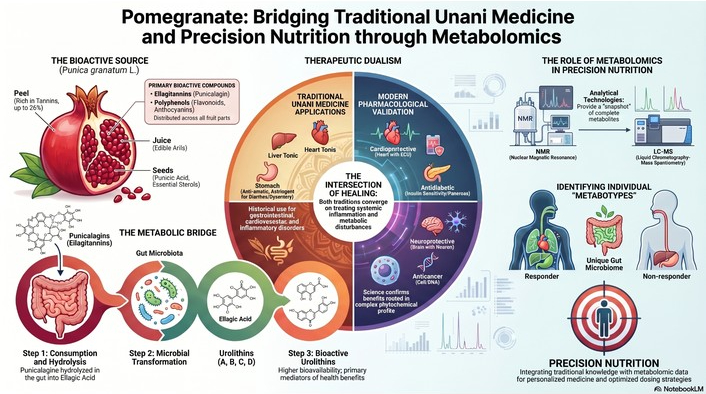
The therapeutic effects of pomegranate are closely linked to its unique phytochemical composition and metabolism. Punicalagins, the most abundant ellagitannins, are hydrolyzed in the gut into ellagic acid, which is further metabolized by gut microbiota into urolithins (e.g., urolithin A, B, C, D) [67]. These urolithins are considered key bioactive metabolites responsible for many of pomegranate’s observed health benefits [68], including anti-inflammatory and antioxidant activities [69]. They exhibit higher bioavailability than the parent compounds, possess anti-inflammatory and antioxidant properties, and influence cellular metabolism and signaling pathways.
The bioavailability and subsequent biological activity of these metabolites are highly dependent on individual gut microbiome composition, highlighting a critical area where metabolomics can provide personalized insights [70].
Other important compounds include anthocyanins (e.g., delphinidin, cyanidin, petunidin glycosides), which contribute to the fruit’s vibrant color and possess significant antioxidant capacities [6]. Flavonoids, such as quercetin and kaempferol, and ellagitannins also play a role in its overall bioactivity. Metabolomic studies have identified alterations in lipid metabolism, modulation of amino acid pathways, and changes in gut microbiota-derived metabolites. Importantly, inter-individual variability in gut microbiota leads to different “metabotypes”, influencing therapeutic outcomes.
Table 7 compiles key studies on metabolomics applied to pomegranate (Punica granatum L.), focusing on metabolite profiling, identification of bioactive compounds (e.g., ellagitannins, urolithins, polyphenols), and their pharmacological implications. Metabolomics techniques such as proton nuclear magnetic resonance (1H-NMR), liquid chromatography-mass spectrometry (LC-MS), ultra-high performance liquid chromatography-quadrupole time-of-flight mass spectrometry (UHPLC-QTOF-MS), and gas chromatography-mass spectrometry (GC-MS) are highlighted.
Compilation of studies on pomegranate metabolomics.
| S. No. | Short study title | Key methods | Main findings | Relevance | Author/Year |
|---|---|---|---|---|---|
| 1 | Metabolic profiling and untargeted 1H-NMR-based metabolomics study of different Iranian pomegranate ecotypes | 1H-NMR and 2D-NMR spectroscopy for untargeted metabolomics; comparison across Iranian ecotypes. | Identified variations in anthocyanins, ellagic acid derivatives and other metabolites. Bajestan, Ferdows, and Yazd ecotypes showed higher anthocyanin & ellagic acid levels. | Demonstrates geographical & varietal differences in pomegranate metabolome, aiding breeding of bioactive-rich cultivars. | Hasanpour et al. (2020) [71] |
| 2 | Study of nutritional quality of pomegranate juice using 1H NMR-based metabolomic approach: A comparison between conventionally & organically grown fruits | 1H-NMR metabolomics coupled with multivariate analysis; comparison of conventional vs. organic juices. | Organic juices showed enhanced levels of bioactive molecules. Clear divergences in metabolomic profiles, with organic cultivation improving nutraceutical properties. | Highlights cultivation impacts on pomegranate juice metabolome, supporting organic farming. | Villa-Ruano et al. (2020) [72] |
| 3 | Development of a new extraction method for pomegranate and metabolite profiling by a LC-MS & 1H NMR combined approach | LC-ESI/MS and 1H-NMR; solid-liquid dynamic extraction (SLDE-Naviglio) with ethanol. | Extract from peel using SLDE-Naviglio was richest in hydrolysable tannins, flavonoids, ellagic acid & phenol glucosides. Ethanol-juice mixture yielded the highest phenolic, tannin, & flavonoid. | Optimizes green extraction for metabolomics, revealing bioactive enrichment in pomegranate by-products. | Polcaro et al. (2024) [73] |
| 4 | Evaluation of morphological, qualitative, and metabolomic traits during fruit ripening in pomegranate | NMR-based metabolomics; physico-chemical analysis during ripening stages. | Ripening altered anthocyanins, polyphenols, and sugars; NMR identified metabolic shifts linked to color, size, and flavor. | Maps temporal metabolomic dynamics, informing harvest timing for optimal bioactive content. | Cirillo et al. (2022) [74] |
| 5 | Metabolomic NMR analysis and organoleptic perceptions of pomegranate wines: Influence of cultivar and yeast on the product characteristics | NMR metabolomics; sensory analysis of wines from different cultivars and yeasts. | Cultivar-specific profiles in polyphenols and volatiles; yeast influenced urolithin precursors and flavor compounds. | Extends metabolomics to fermented pomegranate products, linking metabolites to sensory quality. | Girelli et al. (2023) [75] |
| 6 | Phytochemical composition of methanolic extract of pomegranate flower petals by GC-MS | GC-MS for methanolic extract of flower petals. | Identified squalene and gallic acid as major compounds; eight peaks revealed diverse secondary metabolites. | Early GC-MS profiling of floral metabolome for medicinal uses. | Hendre et al. (2012) [76] |
| 7 | Ultra-HPLC–MSn (Poly)phenolic profiling and chemometric analysis of juices from ancient Punica granatum L. cultivars: A nontargeted approach | UHPLC-MSn with chemometrics for ancient cultivar juices. | Diverse phenolic profiles; chemometrics clustered cultivars by metabolite patterns, including ellagitannins. | Nontargeted approach for biodiversity in pomegranate metabolome. | Calani et al. (2013) [77] |
| 8 | GC-MS analysis of phytochemical constituents in ethanolic extract of Punica granatum peel and Vitis vinifera seeds | GC-MS for ethanolic peel extract. | Detected ethyl acetate, pentanoic acid, succinamic acid; high antioxidant potential. | Focuses on peel metabolome, linking to antimicrobial properties. | Kumar and Vijayalakshmi (2011) [78] |
| 9 | Influence of drought stress on increasing bioactive compounds of pomegranate juice. Exploratory study using LC–MS-based untargeted metabolomics approach | UHPLC-QTOF-MS untargeted metabolomics under irrigation levels. | Drought increased secondary metabolites (e.g., ellagitannins); first UHPLC-QTOF study on irrigation effects. | Stress-induced metabolomic changes for resilient, bioactive-rich cultivars. | Gómez-Bellot et al. (2023) [79] |
| 10 | Antimicrobial activity and bio-active compounds analysis in ethanolic plant extract of Punica granatum using GC-MS | GC-MS for peel ethanolic extract; antifungal assays. | Identified major phytochemicals; strong inhibition against Candida and filamentous fungi. | Links metabolomics to antimicrobial bioactivity in peel. | Attia (2019) [80] |
| 11 | Profiling phenolic composition in pomegranate peel from nine selected cultivars. | UHPLC-QTOF-MS and UPLC-QQQ-MS for peel phenolics. | Comprehensive phenolic map across cultivars; high ellagitannin diversity. | Cultivar-specific peel metabolomics for bioactive selection. | Man et al. (2022) [81] |
| 12 | Liquid chromatography coupled with tandem MS for phenolic characterization of pomegranate fruit & flower extracts used as botanical dietary supplements | LC-TOF-MS/MS for fruit and flower extracts. | Identified 21 phenolics in fruit (including new ellagitannin pomellatannin) and 15 in flowers | Metabolomics for supplement standardization. | Liu et al. (2018) [82] |
| 13 | The main components identified by GC-MS in the petroleum ether extract of pomegranate peel | GC-MS for petroleum ether peel extract. | Key components linked to insecticidal activity; reduced enzyme activity in treated larvae. | GC-MS for bioactive screening in peel against pests. | Farag et al. (2021) [83] |
| 14 | A comprehensive study of pomegranate flower polyphenols and metabolites in rat biological samples by HPLC-QTOF-MS | HPLC-QTOF-MS for flower metabolites in rat plasma/urine. | Detected polyphenols and metabolites post-administration. | In vivo metabolomics of flowers. | Yisimayili et al. (2019) [84] |
| 15 | A review on phytochemicals, metabolic profiles & pharmacokinetic studies of the different parts of pomegranate. | Review of LC-HRMSn for multi-part metabolomics. | Comprehensive profiles across plant parts; pharmacokinetics of ellagitannins/urolithins. | Holistic review of pomegranate metabolome. | Yisimayili and Chao (2022) [85] |
| 16 | The gut microbiota metabolism of pomegranate ellagitannins yields two urolithin-metabotypes that correlate with cardiometabolic risk biomarkers | UPLC-ESI-QTOF-MS for urine metabolomics; intervention with pomegranate extract/nuts. | Two metabotypes (UM-A, UM-B); UM-B linked to higher cholesterol/LDL; UM-A protective. | Links urolithin production to cardiometabolic health via metabolomics. | Selma et al. (2018) [86] |
| 17 | Targeted metabolic profiling of pomegranate polyphenols & urolithins in plasma, urine & colon tissues from colorectal cancer (CRC) patients | HPLC-ESI-QTOF-MS/MS for ET/urolithin profiling post-pomegranate intake. | Detected EA conjugates and 12 urolithins in colon tissues; potential CRC biomarkers. | Tissue-specific urolithin metabolomics in cancer patients. | Nuñez-Sánchez et al. (2014) [87] |
| 18 | Urolithins: A comprehensive update on their metabolism, bioactivity, and associated gut microbiota | Review of metabolomics (LC-MS/NMR) on urolithin production. | Urolithins as pleiotropic bioactives; microbiota-dependent metabotypes. | Updates urolithin metabolomics from ET sources like pomegranate. | García-Villalba et al. (2022) [88] |
| 19 | Urolithins, intestinal microbial metabolites of pomegranate ETs, exhibit potent antioxidant activity in a cell-based assay | Cell-based antioxidant assays; LC-MS for urolithin identification. | Urolithin A/B showed strong antioxidant potency (IC50 ~13.6 μM). | Mechanistic metabolomics linking urolithins to pomegranate’s antioxidant effects. | Bialonska et al. (2009) [89] |
| 20 | Biological significance of urolithins, the gut microbial ellagic acid-derived metabolites: The evidence so far | Review of in vitro metabolomics on urolithin bioactivity. | Urolithins mediate anti-inflammatory/anticancer effects; better absorbed than EA. | Evidence for urolithins as key pomegranate metabolites. | Espín et al. (2013) [90] |
| 21 | Pomegranate’s ellagitannins: metabolism and mechanisms of health promoting properties | Review of urolithin pathways (Nrf2, HO-1 activation). | Urolithins localize in prostate/colon; anti-cancer via phase II conjugates. | Metabolic pathways of ellagitannins to urolithins. | Benedetti et al. (2023) [91] |
| 22 | Pomegranate ellagitannins | Pharmacokinetics via LC-MS; urolithin conjugation studies. | Urolithins persist in urine up to 48 h; prostate localization. | Bioavailability metabolomics of ETs. | Kmail (2006) [92] |
| 23 | EA recovery by solid state fermentation of pomegranate wastes by Aspergillus niger & Saccharomyces cerevisiae: A comparison | HPLC for EA post-fermentation; ultrasound/microwave extraction. | S. cerevisiae yielded 12% EA from wastes; fungal tannase hydrolyzes ETs. | Biotechnological metabolomics for EA/urolithin precursors. | Moccia et al. (2019) [93] |
| 24 | Pomegranate ET-gut microbial-derived metabolites, urolithins, inhibit neuroinflammation | In vitro assays with BV-2 microglia/SH-SY5Y neurons; LC-MS for urolithins. | Urolithins reduced neuroinflammation; potential AD protection. | Urolithin metabolomics in neuroprotection. | DaSilva et al. (2019) [94] |
| 25 | Urolithins, the rescue of “old” metabolites to understand a “new” concept: Metabotypes as a nexus among phenolic metabolism, microbiota dysbiosis, & host health status | Review of metabotypes via LC-MS interventions | Three urolithin metabotypes; dysbiosis links to health risks. | Metabotype classification in pomegranate consumption. | Tomás-Barberán et al. (2017) [95] |
| 26 | Direct supplementation with urolithin A overcomes limitations of dietary exposure & gut microbiome variability in healthy adults to achieve consistent levels across the population | Intervention with urolithin A; plasma/urine LC-MS. | Supplementation ensures consistent levels despite microbiome variability; 40% produce UA from diet. | Bypassing gut metabolomics variability. | Singh et al. (2022) [96] |
| 27 | Absorption and metabolism of Urolithin A and ellagic acid in mice and their cytotoxicity in human colorectal cancer cells | Comparative metabolomics (LC-MS); in vivo mouse model. | Urolithin A derivatives cytotoxic to CRC cells; gut microbiota key for transformation. | Mouse metabolomics of urolithins. | Lin et al. (2023) [97] |
| 28 | Pomegranate ETs stimulate the growth of Akkermansia muciniphila in vivo | 16S rRNA sequencing; urolithin LC-MS post-extract. | 70% participants produced urolithin A, which correlated with A. muciniphila abundance. | Microbiota-metabolite interactions. | Henning et al. (2017) [98] |
| 29 | Urolithins: The gut-based metabolites of ellagitannins in cancer prevention. | Review of LC-MS on urolithins in cancer models. | Urolithins arrest cell cycle/induce apoptosis in bladder/prostate cancers. | Anticancer urolithin metabolomics. | Al-Harbi et al. (2021) [99] |
| 30 | Pomegranate extract induces ellagitannin metabolite formation & changes stool microbiota in healthy volunteers | 4-week 1,000 mg pomegranate extract; urinary/fecal urolithin A profiling. | Three metabotype groups; microbiota modulation in responders. | Intervention metabolomics and microbiota shifts. | Li et al. (2015) [100] |
| 31 | Neuroprotective effects of pomegranate juice against Parkinson’s disease & presence of ellagitannins-derived metabolite-urolithin A in the brain | Rotenone PD rat model; LC-MS for brain urolithin A. | Pomegranate juice reduced motor deficits/α-synuclein; urolithin A in midbrain. | Brain metabolomics in PD. | Kujawska et al. (2019) [101] |
| 32 | Pomegranate juice & extracts provide similar levels of plasma & urinary ET metabolites in humans | Crossover with pomegranate juice, liquid extract, & powder extract; LC-MS for metabolites. | Equivalent urolithin-A glucuronide (~1,000 ng/mL); powdered extract showed delayed peak. | Comparative metabolomics of juice vs. extracts. | Seeram et al. (2008) [102] |
| 33 | Ellagitannins | Review of ET digestion/metabolism to urolithins via LC-MS/NMR. | ETs hydrolyzed to EA, then urolithins; three phenotypes in trials. | Overview of ET metabolomics pathways. | Nasef et al. (2023) [103] |
1H-NMR: proton nuclear magnetic resonance; 2D: 2 dimensional; LC-MS: liquid chromatography-mass spectrometry; ESI: electrospray ionization; SLDE: solid-liquid dynamic extraction; GC-MS: gas chromatography-mass spectrometry; UHPLC-MSn: ultra-high performance liquid chromatography-multistage mass spectrometry; UHPLC-QTOF-MS: ultra-high performance liquid chromatography-quadrupole time-of-flight mass spectrometry; QQQ: triple quadrupole; ET: ellagitannins; EA: ellagic acid; IC: inhibitory concentration; Nrf2: nuclear factor erythroid 2-related factor 2; HO-1: heme oxygenase 1; BV-2: immortalized murine cell line; SH-SY5Y: human derived neuroblastoma cell line; AD: Alzheimer’s disease; rRNA: ribosomal ribonucleic acid; PD: Parkinson’s disease.
Recent studies have highlighted the therapeutic potential of pomegranate-derived exosome-like nanoparticles as natural nanocarriers capable of delivering bioactive molecules. These vesicles contain a diverse array of phytochemicals, lipids, proteins, and regulatory RNAs that can modulate multiple cellular pathways [104]. Experimental evidence suggests that these exosomes exhibit anti-inflammatory, antioxidant, and immunomodulatory activities [105], making them promising for the management of inflammatory bowel disease, liver disorders, metabolic syndrome, and cardiovascular diseases. Furthermore, pomegranate exosomes have demonstrated the ability to influence macrophage polarization, reduce oxidative stress, promote tissue repair, and inhibit the progression of certain cancers through the regulation of cell proliferation, apoptosis, and angiogenesis [105]. Although most findings remain at the preclinical stage, pomegranate-derived exosomes represent an emerging and innovative approach in nanomedicine, offering a novel platform for the prevention and treatment of diverse pathological conditions.
Punica granatum L. represents a valuable intersection between traditional Unani medicine and modern pharmacology. While its therapeutic potential is well established in traditional Unani medicine, variability in metabolism and bioavailability limits its clinical translation. Metabolomics can help overcome these challenges by enabling mechanistic understanding, biomarker discovery, and personalized therapeutic strategies. Future research integrating multi-omics approaches and well-designed clinical trials is essential to fully harness their potential in precision medicine. Table 8 enlists the level of evidence provided by various sources used in this paper for the ethnopharmacological, phytochemical, and metabolomic research on pomegranate. Figure 2 illustrates the entire gist of this paper.
Level of evidence of various studies of Punica granatum L.
| Evidence level | Key findings | Strength of evidence |
|---|---|---|
| Traditional use | Cardiovascular and gastrointestinal benefits | Historical/Ethnomedicinal |
| In vitro studies | Antioxidant, anti-inflammatory, antiproliferative effects | Mechanistic |
| In vivo studies | Hepatoprotective, cardioprotective, neuroprotective effects | Moderate |
| Clinical studies | Improvements in blood pressure, lipid profile, glycemic markers | Strongest available but still limited for some outcomes |
The metabolome is highly dynamic and sensitive to age, sex, diet, circadian rhythm, environmental exposures, medication use, and gut microbiota composition, making it difficult to distinguish treatment-specific effects. Sample collection, storage, extraction procedures, and analytical workflows can introduce substantial analytical variability, affecting reproducibility across studies. Furthermore, no single analytical platform can comprehensively capture the entire metabolome. Nuclear magnetic resonance (NMR) spectroscopy offers high reproducibility and minimal sample preparation but has relatively low sensitivity, whereas mass spectrometry (MS)-based approaches, including LC-MS and GC-MS, provide greater sensitivity but are susceptible to ion suppression, matrix effects, and instrument-dependent variability. Data processing and interpretation are also challenging, as untargeted metabolomics generates large, complex datasets that require sophisticated tools and approaches, increasing the risk of false-positive discoveries.
In the context of pomegranate research, inter-individual differences in gut microbial metabolism further complicate interpretation, as the conversion of ellagitannins into bioactive urolithins varies considerably among individuals. Additionally, most studies are cross-sectional or short-term with relatively small sample sizes, limiting the establishment of causal relationships between metabolomic alterations and clinical outcomes. Future advances in standardized protocols, high-resolution analytical platforms, integrated multi-omics approaches, improved metabolite databases, and large-scale longitudinal studies will be essential to overcome these limitations and fully realize the potential of metabolomics in optimizing pomegranate-based therapeutics.
1H-NMR: proton nuclear magnetic resonance
GC-MS: gas chromatography-mass spectrometry
LC-MS: liquid chromatography-mass spectrometry
LDL: low-density lipoprotein
UHPLC-QTOF-MS: ultra-high performance liquid chromatography-quadrupole time-of-flight mass spectrometry
The authors are thankful to Professor Abdul Wadood, former director, National Institute of Unani Medicine, Bengaluru, for giving us the opportunity to explore this medicinal fruit plant, and Mr. Ehtesham Ahmed, librarian, National Institute of Unani Medicine, Bengaluru, for providing all the required classical Unani textbooks for the literature review. During the preparation of this work, the author(s) used ChatGPT to generate Figure 1 and NotebookLM for creating Figure 2. After using the tool/service, the author(s) reviewed and edited the content as needed and take(s) full responsibility for the content of the publication.
MN, FR: Conceptualization, Data curation, Visualization, Formal analysis. MN: Writing—original draft. FR: Writing—review & editing. Both authors read and approved the submitted version.
The authors declare that they have no conflicts of interest.
Not applicable.
Not applicable.
Not applicable
Not applicable.
Not applicable.
© The Author(s) 2026.
Open Exploration maintains a neutral stance on jurisdictional claims in published institutional affiliations and maps. All opinions expressed in this article are the personal views of the author(s) and do not represent the stance of the editorial team or the publisher.
Copyright: © The Author(s) 2026. This is an Open Access article licensed under a Creative Commons Attribution 4.0 International License (https://creativecommons.org/licenses/by/4.0/), which permits unrestricted use, sharing, adaptation, distribution and reproduction in any medium or format, for any purpose, even commercially, as long as you give appropriate credit to the original author(s) and the source, provide a link to the Creative Commons license, and indicate if changes were made.



View: 875
Download: 26
Times Cited: 0