 Review


Affiliation:
1School of Biotechnology & Bioengineering, Institute of Advanced Research, Gandhinagar 382426, Gujarat, India
Email: nishipatel297@gmail.com; nishi.patel@iar.ac.in
ORCID: https://orcid.org/0000-0002-4412-510X


 ,
,
Affiliation:
2Bhagwan Mahavir College of Basic & Applied Sciences, Bhagwan Mahavir University, Surat, 395007, Gujarat, India
ORCID: https://orcid.org/0000-0002-1907-7097
Explor Foods Foodomics. 2026;4:1010182 DOI: https://doi.org/10.37349/eff.2026.1010182
Received: January 29, 2026 Accepted: July 08, 2026 Published: August 13, 2026
Academic Editor: Josep Rubert, Wageningen University, Netherlands
The human gut microbiota plays a critical role in regulating host health and disease, making it a key target for the development of targeted microbial therapies. This review focuses on designer probiotics and synbiotics, which are genetically engineered microorganisms used in combination with prebiotics to modulate the gut microbiota and support personalised health outcomes. Unlike conventional probiotics, these engineered strains are designed to perform specific metabolic or signalling functions, thereby enhancing colonisation efficiency and functional efficacy. The article summarises recent advancements in systems biology, synthetic biology, and omics technologies (including genomics, proteomics, and metabolomics) that facilitate the design and optimisation of next-generation microbial formulations. Their significance lies in enabling precision nutrition and the development of functional foods tailored to individual host requirements. This review also discusses strategies for microbial strain engineering, synbiotic formulation, and the application of high-throughput omics approaches to better understand host-microbe interactions. Furthermore, it highlights applications in managing gut-related disorders and improving food quality. While addressing challenges such as biosafety concerns, regulatory limitations, and environmental implications, the review emphasises the potential of designer probiotics and synbiotics as innovative tools for precision-guided health through dietary interventions. Overall, this emerging field provides a sustainable approach to advancing nutrition and microbiome-based therapies by bridging precision health with food science.
It is increasingly recognised that the gut microbiota plays a crucial role in human health, influencing a range of physiological functions, including immune response, digestion, and metabolic control [1]. People are starting to agree more and more that the gut microbiota is a “virtual organ” that is always changing and metabolically active and that it plays a big role in keeping the host’s homeostasis [1]. It helps make important metabolites like vitamins, short-chain fatty acids (SCFAs), and the building blocks of neurotransmitters. It is also very important for keeping the gut barrier and immune tolerance intact [1]. Dysbiosis, or changes in the composition of microbes, has been strongly linked to long-term illnesses like obesity, diabetes, inflammatory bowel disease, and neurological disorders [1]. These findings have shifted the emphasis of research from merely characterizing microbial communities to actively altering them for therapeutic benefit. Traditional probiotics have long been used to support gut health, but their advantages are often vague and lack the specificity required for focused therapeutic outcomes [1]. Furthermore, the majority of conventional probiotic strains are not made to carry out specific biochemical or signaling tasks, which restricts their use in precision medicine. These drawbacks emphasize the need for next-generation microbial therapies that can produce therapeutic effects that are regulated, targeted, and repeatable. Recent developments in microbial biotechnology and genetic engineering have made it possible to create designer probiotics, which are microbes created to carry out specific tasks in the gastrointestinal tract [2]. Additionally, synbiotics—defined as combinations of probiotics and prebiotics that act synergistically to confer health benefits on the host—have shown promise in enhancing microbial colonisation and metabolic synergy [3]. Modern omics techniques, such as metabolomic profiling and high-throughput sequencing, along with synthetic biology, have significantly improved the ability to modify microbial strains with desired functional characteristics [4, 5]. In this regard, the development of precision microbiome-based therapies is being accelerated by developments in artificial intelligence and computational biology. Multi-omics datasets can be integrated by machine learning models to forecast host reactions, microbial behavior, and the best strain combinations for customized applications. The gap between microbiome research and clinical translation is closed by this data-driven method, which makes it possible to rationally build microbial consortia and synbiotic medications customized to specific health problems.
The development of functional meals that are customised for individualised nutrition and health is made possible by these advancements, which have great potential for the field of food science [6]. In this context, precision nutrition refers to dietary strategies tailored to an individual’s genetic, metabolic, and microbiome profile to optimise health outcomes, while individualised nutrition focuses on adapting diet based on personal health status and lifestyle factors. Functional foods are defined as foods that provide health benefits beyond basic nutrition through bioactive components or beneficial microorganisms. Regulatory compliance, safety evaluations, and comprehending the long-term ecological impact of modified microorganisms on the native microbiota remain crucial topics of continuing research despite the intriguing promise [7]. Despite rapid progress in microbiome engineering, there remains a lack of comprehensive synthesis of how designer probiotics and synbiotics can be integrated with food systems to achieve precision health outcomes. Many existing studies focus either on microbial engineering or clinical applications in isolation, with limited emphasis on their convergence within functional foods and personalised nutrition frameworks. Therefore, a critical evaluation of current strategies, technological advancements, and translational challenges is necessary to guide future research and application. However, the integration of these approaches within food systems for targeted and personalised health applications remains insufficiently explored. The goal of this review is to give a thorough overview of recent advancements in the engineering of designer probiotics and synbiotics, highlighting their significance in using food biotechnology to advance precision health.
The present review was conducted using a structured literature survey approach. Relevant scientific articles were retrieved from widely used databases, including PubMed, Scopus, and Google Scholar. The literature search was performed using combinations of keywords such as “designer probiotics,” “engineered probiotics,” “synbiotics,” “gut microbiota,” “precision nutrition,” and “functional foods.”
Studies published in peer-reviewed journals were primarily considered, with a focus on recent advancements in synthetic biology, metabolic engineering, and microbiome-based interventions. Articles were selected based on their relevance to the scope of the review, clarity of experimental design, and contribution to understanding the development and application of designer probiotics and synbiotics.
Both original research articles and review papers were included to provide a comprehensive overview of current knowledge. Emphasis was placed on studies addressing engineering strategies, functional applications, regulatory considerations, and challenges associated with microbiome-based therapies.
For many years, probiotics—traditionally described as live bacteria that, when given in sufficient quantities, provide health advantages to the host—have been a mainstay of gut health treatments. However, the specificity, functional efficiency, and colonisation stability of conventional probiotics—which are primarily naturally occurring bacteria from genera like Lactobacillus, Bifidobacterium, and Saccharomyces—are limited in the host gut environment [2, 3]. A sophisticated class of microbial treatments known as “designer probiotics” is purposefully created to carry out specific metabolic or signalling tasks that go beyond the typical probiotic capabilities [8]. In order to increase their therapeutic potential, designer probiotics are genetically modified strains whose genomes have been improved or optimised through metabolic engineering and synthetic biology. Compared to wild-type strains, these modified strains have greater selectivity and efficacy when it comes to sensing environmental signals, producing certain bioactive chemicals, or modifying host signalling pathways [9]. Based on their intended use, designer probiotics can be categorised as follows:
Metabolic engineers are strains created to produce or break down particular metabolites, including vitamins, neurotransmitters, or SCFAs.
Microbes designed to generate chemicals that affect host immunological responses or gut-brain axis communication are known as signal modulators.
Pathogen antagonists are strains designed to fight pathogens by secreting quorum-sensing inhibitors or antimicrobial peptides.
Delivery vehicles: Therapeutic compounds such as enzymes, antibodies, or vaccines can be delivered by engineered probiotics, where expression systems are carefully regulated to avoid metabolic burden or toxicity to the host strain. For example, recombinant Lactococcus lactis has been widely explored for the delivery of therapeutic proteins such as interleukin-10, demonstrating controlled expression without adverse effects on microbial viability [2, 3]. This classification highlights the transition from passive microbiota modification to active, programmable microbial therapies [10].
Designer probiotics can be differentiated by their degree of genetic modification and regulatory systems, in addition to their functional classification. Some strains use modest genome editing to improve native metabolic pathways, while others incorporate complex synthetic gene circuits that allow conditional gene expression in response to particular environmental stimuli, such as pH, bile salts, or host-derived metabolites [11, 12]. This classification is crucial for both regulatory evaluation and functional optimisation because strains with less complex changes might not raise as many biosafety issues as highly modified organisms. The way that designer probiotics interact with the host and resident microbiota is another new aspect of their classification. In order to provide therapeutic benefits while passing through the gastrointestinal tract without long-term colonisation, some engineered strains are made to act temporarily. Other designer probiotics, on the other hand, are optimised for stable or semi-stable engraftment, enabling prolonged functional activity [2, 13]. The intended use, safety concerns, and the requirement for long-term versus short-term intervention all influence the decision between transient and persistent colonisation tactics. The therapeutic scope of designer probiotics can also be used to classify them, ranging from more general wellness-oriented uses to disease-specific therapies. Disease-targeted strains are created to treat specific clinical problems, such as uncommon genetic abnormalities, metabolic disorders, or inflammatory bowel disease, frequently by addressing certain metabolic deficits or inflammatory pathways [14]. On the other hand, wellness-focused designer probiotics, which are more in line with functional food and preventive health frameworks, seek to improve overall gut function, immune resilience, and nutritional efficiency [15]. Additionally, the significance of strain-level specificity has been brought to light by developments in microbiome research, which emphasises the necessity of precisely classifying designer probiotics beyond species or genus-level identification. The significance of genomic characterisation and functional validation during development is highlighted by the fact that subtle genetic differences between strains can produce noticeably different functional results [16, 17]. This strain-centric perspective supports the logical development of probiotics with consistent and predictable effects in a range of host groups. In general, the increased complexity and maturity of this discipline are reflected in the growing classification structure of designer probiotics [18]. This multidimensional classification offers an organised framework for the creation, assessment, and use of next-generation microbial therapeutics in food and precision health systems by combining functional intent, genetic design, colonisation dynamics, and therapeutic scope. The classification and functional roles of designer probiotics are illustrated in Figure 1. As shown in Figure 1, designer probiotics can be categorised based on their functional attributes, including metabolic modulation, signalling interactions, pathogen inhibition, and therapeutic delivery. Representative examples of engineered probiotic strains, their engineering approaches, and functional significance are summarised in Table 1.
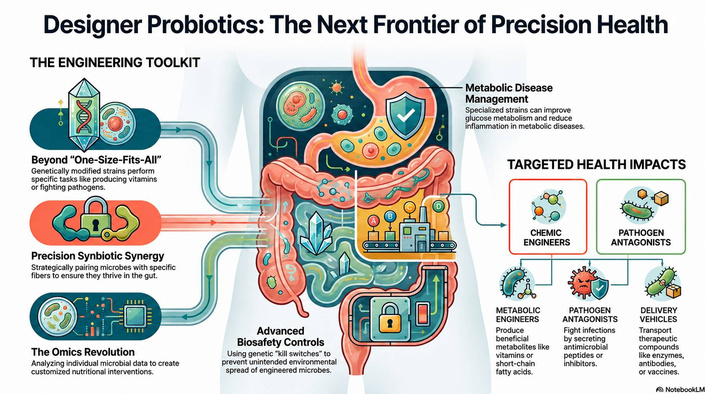
Designer probiotics and their aspects (conceptualised using NotebookLM and refined by the authors).
Examples of designer probiotics, engineering techniques, and their functional significance.
| Engineered strain | Engineering technique | Target function/application | Significance | References |
|---|---|---|---|---|
| Escherichia coli Nissle 1917 (engineered strains) | Gene insertion/metabolic engineering | Phenylketonuria, metabolic disorders | Reduces toxic metabolite accumulation | [2, 3] |
| E. coli Nissle (cytokine-expressing strains) | Recombinant protein expression | Inflammatory bowel disease | Anti-inflammatory activity | [2] |
| Lactococcus lactis (IL-10 producing) | Heterologous gene expression | Gut inflammation | Localised immune modulation | [2, 3] |
| Saccharomyces boulardii (engineered strains) | Fusion protein secretion | Pathogen toxin neutralisation | Enhances gut protection | [3] |
| Lactobacillus spp. (engineered metabolic strains) | Pathway engineering | Short-chain fatty acid (SCFA)/neurotransmitter production | Improves gut-brain axis signalling | [3, 11] |
| Biosensor probiotics (E. coli Nissle) | Synthetic gene circuits | Disease diagnostics | Detects gut biomarkers | [2, 11] |
| Engineered gut commensals | CRISPR-based editing | Metabolic and inflammatorydiseases | Precision microbiome modulation | [7, 11] |
Recent advances in synthetic biology and metabolic engineering have facilitated the development of designer probiotic strains with targeted therapeutic and diagnostic capabilities. These microorganisms are engineered using approaches such as gene insertion, heterologous expression, metabolic pathway modification, and synthetic gene circuit design, enabling them to perform specialised functions within the gastrointestinal tract. For example, engineered Escherichia coli Nissle strains have been investigated for their ability to modulate metabolic disorders and inflammatory conditions, while Lactococcus lactis has been widely explored as a delivery system for anti-inflammatory cytokines. Similarly, engineered Saccharomyces boulardii has demonstrated potential in neutralising bacterial toxins, and metabolically modified Lactobacillus strains contribute to the production of bioactive compounds influencing gut-brain communication. These developments highlight the transition of probiotics from conventional health supplements to programmable, function-specific microbial therapeutics with applications in precision medicine and nutrition [2, 3, 7, 11].
Modern genetic and metabolic engineering methods are essential to the creation of designer probiotics. Probiotic strains may now precisely modify their genomes to add or remove genes linked to metabolic pathways, stress resistance, and colonisation factors thanks to recent developments in CRISPR-Cas systems [3, 7]. Designer strains can react to environmental stimuli in the gut thanks to the modular building of genetic circuits that dynamically regulate gene expression made possible by synthetic biology frameworks. In order to increase the synthesis of advantageous metabolites like butyrate, propionate, or gamma-aminobutyric acid (GABA), metabolic engineering techniques concentrate on rerouting or improving metabolic fluxes inside bacteria [11]. Methods consist of:
Gene overexpression: improving the synthesis of advantageous metabolites.
Gene knockouts: eliminating mechanisms that produce toxic consequences.
Introducing new metabolic processes from different organisms is known as heterologous expression [19].
To control inflammation in models of IBD, for instance, Lactococcus lactis has been modified to manufacture interleukin-10. In a similar vein, strains of Escherichia coli Nissle have been altered to break down phenylalanine in order to target individuals with phenylketonuria [20]. For instance, engineered Escherichia coli Nissle 1917 strains have been developed to metabolise phenylalanine for the management of phenylketonuria, demonstrating the application of metabolic pathway engineering in disease-specific interventions. Similarly, Lactococcus lactis has been genetically modified to express interleukin-10 for localised treatment of inflammatory bowel disease, highlighting the use of probiotics as targeted therapeutic delivery systems. These examples illustrate how genetic engineering transforms probiotic strains into function-specific microbial therapeutics [2, 3, 11].
A key component in the creation of designer probiotics is the selection of food-grade microbial hosts. Generally Recognised As Safe (GRAS) organisms—such as Lactobacillus, Bifidobacterium, and Saccharomyces boulardii—that are non-pathogenic and have a track record of safe use in food are preferred for safety and regulatory acceptability [21]. By preventing the introduction of antibiotic resistance genes or the activation of virulence factors, engineering these strains must preserve their safety profile. To stop unchecked growth in the host or environment, containment techniques like auxotrophic dependencies and kill switches are used [22]. Comprehensive risk assessments that take into account immunogenicity, longterm ecological effects, and possible horizontal gene transfer are becoming more and more necessary under regulatory requirements. In conclusion, designer probiotics provide a revolutionary strategy by fusing food-grade safety frameworks with precision genetic engineering to create customised microbial treatments with improved functionality and regulated safety profiles [23, 24]. For example, Lactococcus lactis, a GRAS organism, has been extensively used as a delivery vehicle for therapeutic proteins due to its non-colonising nature and well-characterised safety profile. Similarly, Saccharomyces boulardii has been engineered for toxin neutralisation while maintaining its safety in gastrointestinal applications. These cases emphasise the importance of selecting food-grade hosts that balance functional efficiency with biosafety and regulatory compliance [2, 7].
Synbiotics consist of a combination of probiotics and prebiotics that function synergistically to improve the establishment, endurance, and metabolic performance of beneficial bacteria in the intestinal tract. On the other hand, precision synbiotics involve the intentional pairing of specific probiotic strains with tailored prebiotic substrates that are designed to specifically promote their growth and activity [25].
Functional results are maximised by this combination through:
Improving the survivability of microorganisms during gastrointestinal transit.
Supplying substrates to support specific metabolic processes.
Promoting the gut microbial ecosystem’s cross-feeding relationships [26].
For example, Bifidobacterium longum and fructo-oligosaccharides selectively increase Bifidobacterium populations and SCFA synthesis, both of which are important for immunological regulation and gut barrier integrity [27–30]. A well-documented example includes the combination of Bifidobacterium longum with fructo-oligosaccharides, which selectively enhances its growth and promotes SCFA production. This synergistic interaction improves gut barrier function and immune modulation, demonstrating how targeted synbiotic formulations can enhance probiotic efficacy [3].
Prebiotics intended for both targeted distribution and selective microbial nutrition are used in precision synbiotics. Prebiotic substrates can be delivered site-specifically to the colon, where probiotic fermentation is maximised, thanks to developments in encapsulating technology and controlled release formulations [29]. Human milk oligosaccharide mimetics, polyphenols, and resistant starches are examples of novel prebiotic possibilities that selectively affect particular microbial taxa [30]. Additionally, prebiotics are being chemically modified to maximise host compatibility and fermentability. The tailored substrate delivery strategy increases the localised generation of bioactive metabolites at the site of action and decreases unwanted fermentation in the upper intestine [31]. For instance, encapsulated resistant starch and inulin-based systems have been used to deliver prebiotics specifically to the colon, ensuring selective fermentation by beneficial microbes. Such targeted delivery systems enhance metabolite production at the desired site while minimising premature degradation in the upper gastrointestinal tract [3, 11].
The temporary nature of colonisation—many strains are unable to endure over the long term in the intricate and competitive gut environment—is one of the difficulties associated with probiotic administration [32]. Synbiotics improve colonisation in several ways:
Prebiotic substrates provide a competitive edge and a suitable niche.
Microbial adhesion to mucosal surfaces is supported by biofilm-promoting substances.
Local pH and redox conditions can be adjusted by co-delivery with a synbiotic matrix (such as fibres and polyphenols).
Additionally, by preserving the gene expression of important metabolic pathways in gut-like circumstances, synbiotics can enhance the functional stability of probiotics [33].
Therefore, precision synbiotics offer a sophisticated approach to guarantee long-term engraftment and therapeutic efficiency of designer probiotics, in line with individualised dietary objectives.
By offering thorough molecular profiles, omics technologies are transforming the selection and optimisation of probiotic strains. Comprehensive analysis of genetic potential, including functional genes, virulence factors, and antibiotic resistance markers, is made possible by whole-genome sequencing [34]. Finding naturally beneficial features or engineering objectives is guided by comparative genomics. By analysing the range of metabolites that bacteria create or consume, metabolomics connects genotype to phenotype and identifies bioactive substances that have an impact on health. Functional validation is informed, for instance, by measuring SCFAs, bile acid derivatives, or compounds that resemble neurotransmitters [35]. By evaluating protein expression and post-translational changes, proteomics provides insight into how microbes adapt to and interact with their host surroundings. When combined, these omics layers enable metabolic engineering and logical strain selection for improved probiotic effectiveness [36]. For example, whole-genome sequencing of Lactobacillus strains has enabled identification of genes involved in bile salt resistance and adhesion, guiding strain selection for improved gut colonisation. Metabolomic profiling has also been used to quantify SCFA production, linking microbial activity with host metabolic benefits [3, 11].
In order to understand the intricate host-microbe interactions that underlie both health and illness, systems biology incorporates multi-omics data. Gene expression changes in host tissues and microbiota in response to probiotic therapies are examined using transcriptomics and metatranscriptomics [37]. Microbial niche dynamics, immunological signalling regulation, and metabolic exchanges are all predicted by sophisticated computer models. Probiotics that can target particular host pathways, such as inflammatory cascades or metabolic diseases, can be designed thanks to this comprehensive understanding [38]. Additionally, matching probiotic strains to specific gut ecologies is made possible by personalised host microbiome profiles, which raises the possibility of favourable clinical results [39]. For instance, transcriptomic studies have demonstrated how probiotic strains can modulate host inflammatory pathways by influencing cytokine gene expression. Systems biology models have also been used to predict microbial interactions within the gut ecosystem, enabling the design of strains that target specific metabolic or immune pathways [3, 11].
The new discipline of precision nutrition, which creates designer probiotics and synbiotics based on a person’s microbiome makeup, genetics, and health state, is founded on the integration of omics and systems biology. When applied to multi-omics datasets, machine learning and artificial intelligence can optimise formulations and forecast host responses to microbial therapeutics [40]. Personalised food items that modify the microbiome for particular results, such as immunological boosting, metabolic management, or neuroprotection, are made possible by this predictive potential. These precision food systems go beyond the “one-size-fits-all” paradigm, opening the door for functional foods of the future that are customised to meet specific needs [41]. For example, machine learning models integrating microbiome and dietary data have been used to predict individual glycaemic responses, enabling personalised dietary recommendations supported by targeted probiotic interventions. Such approaches highlight the role of AI-driven analytics in precision nutrition [3].
Designer probiotics and synbiotics are being used more often as next-generation bioactive ingredients in functional meals and nutraceuticals intended to provide health advantages beyond basic nutrition. These include beverages, plant-based fermented meals, dairy products that have been fortified, and nutritional supplements that contain microbial strains that have been created or selectively increased. These designer strains can improve the bioavailability and physiological efficiency of vital micronutrients, bioactive metabolites, antioxidants, and immunomodulatory substances by directly manufacturing them in the gastrointestinal tract [42]. Probiotics designed to biosynthesise vitamin B12, folate, or riboflavin, for instance, provide a long-term approach to addressing common micronutrient deficiencies, especially in susceptible groups. Similar to this, strains that can produce neurotransmitter precursors or signalling molecules like GABA, serotonin intermediates, or SCFAs have demonstrated potential advantages in the management of mood disorders, stress, and anxiety via the gut-brain axis [43, 44]. Other designer probiotics may benefit general systemic health by improving mineral absorption, lowering oxidative stress, or modifying immune responses. By incorporating designer probiotics into widely consumed food matrices, common foods become preventive and supportive health agents, bridging the gap between diet and medicines. Compared to pharmaceutical interventions, this strategy not only increases long-term compliance and customer acceptance but also satisfies the increasing demand for natural, food-based health solutions [45, 46]. An example includes probiotic-fortified dairy products containing engineered strains capable of producing vitamins such as folate and riboflavin directly in the gut. These functional foods enhance nutrient bioavailability and provide health benefits beyond basic nutrition [3, 11].
A promising approach to the treatment of obesity, type 2 diabetes, and metabolic syndrome is the use of designer probiotics that are tailored to affect host metabolic pathways. These probiotics can affect energy balance, glucose metabolism, lipid profiles, and inflammatory responses by specifically altering microbial functions [47]. For example, strains designed to increase the generation of butyrate or propionate improve insulin sensitivity, maintain gut epithelial integrity, and lessen chronic low-grade inflammation linked to metabolic diseases [48, 49]. Other designer probiotics can alter bile acid metabolism to enhance cholesterol homeostasis and fat digestion, or they can break down dietary oxalates to reduce the incidence of kidney stones [50]. Additionally, enhanced liver and cardiovascular health may result from modified strains that decrease the synthesis of ammonia or trimethylamine. Intestinal permeability and endotoxemia, which are closely associated with insulin resistance and systemic inflammation, are decreased by probiotic-mediated restoration of gut barrier function [51]. By specifically encouraging strain survival, colonisation, and functional stability, precision synbiotic formulations, which combine designer probiotics with targeted prebiotics, further improve metabolic modulation. These individualised nutrition strategies enable customised interventions based on dietary patterns, metabolic requirements, and the composition of each person’s microbiome [52]. For instance, butyrate-producing engineered probiotics have been shown to improve insulin sensitivity and reduce inflammation in metabolic disorders. Similarly, strains designed to modulate bile acid metabolism contribute to improved lipid regulation and cardiovascular health [3, 11].
Designer probiotics are being investigated as novel food-based delivery systems for biopharmaceuticals, therapeutic enzymes, and vaccines in addition to traditional probiotic uses. The potential for edible vaccines is presented by engineered microbes that can express antigens, offering more affordable, needle-free immunisation methods with better accessibility, especially in low-resource environments [53]. Mucosal immune activation, which is essential for defence against numerous pathogens, is also made possible by these systems [54]. Additionally, designer probiotics are being created to improve food safety and host health by detoxifying dangerous food ingredients and environmental pollutants like mycotoxins, heavy metals, or pesticide residues [55]. For instance, those with celiac disease or non-celiac gluten sensitivity may find nutritional alleviation from strains that can break down immunogenic gluten peptides [56]. Others may increase dietary tolerance and lessen negative effects by neutralising lactose, histamine, or food-derived carcinogens. When taken as a whole, these new approaches demonstrate how microbiology, food science, systems biology, and medicine are all coming together [57]. Through safe, scalable, and consumer-friendly food-based interventions, designer probiotics are reinventing food as a therapeutic and functional platform, creating new opportunities for individualised nutrition and preventative healthcare. A notable example includes engineered probiotic strains designed as oral vaccine delivery systems, capable of expressing antigenic proteins and inducing mucosal immunity. Additionally, certain modified strains have demonstrated the ability to detoxify mycotoxins and degrade gluten peptides, offering therapeutic potential in food-related disorders [3, 7]. The integrated relationship between designer probiotics, synbiotics, omics technologies, and precision nutrition strategies is illustrated in Figure 2.
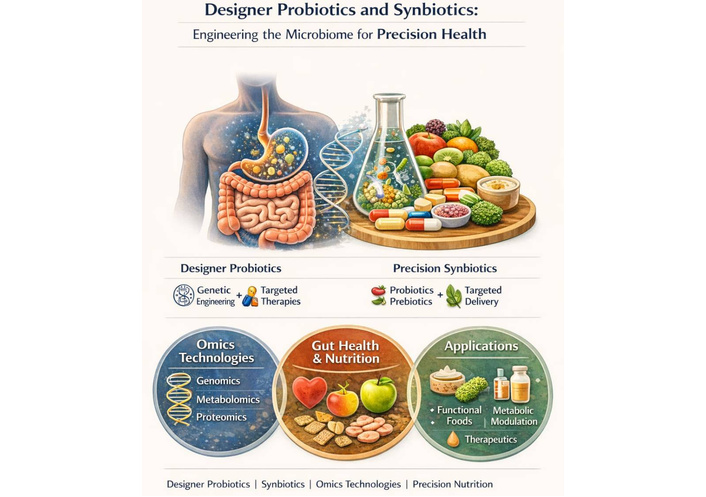
Integrated framework of designer probiotics, synbiotics, and omics-driven precision nutrition (conceptualised using NotebookLM and refined by the authors).
Understanding complex and region-specific regulatory frameworks is essential when incorporating genetically modified microorganisms into foods, nutraceuticals, and dietary supplements. Regulatory bodies such as the European Food Safety Authority (EFSA), the U.S. Food and Drug Administration (FDA), and various organisations in Asia and other areas enforce strict pre-market safety evaluations. Assessments typically include the characterisation of genetic modifications, evaluation of genomic stability over generations, absence of virulence factors and transferable antibiotic resistance genes, testing for allergenicity, and toxicological assessments [58]. Environmental risk evaluations are essential for identifying unanticipated ecological impacts and potential spread beyond the primary host. Legislation requiring the clear disclosure of genetic modifications, strain characterisation, and proposed health benefits is vital for ensuring transparency and traceability [7]. Discrepancies between classifications of food, supplements, and pharmaceuticals create challenges for manufacturers, while regulatory frameworks for live biotherapeutic products are still evolving. There is an increasing emphasis on post-market monitoring and the generation of real-world evidence to track long-term safety, effectiveness, and effects on the population. To align development strategies with regulatory requirements and to accelerate the approval and commercialisation processes, it is important to engage with regulatory bodies early and consistently throughout strain development, preclinical evaluation, and clinical validation [59, 60]. In recent decades, regulatory frameworks governing engineered microbes have evolved significantly across different regions. In the United States, regulatory oversight depends on the intended application of the microbial product. Engineered probiotics developed for therapeutic purposes are typically regulated under stringent clinical evaluation pathways, including preclinical safety assessments and phased human clinical trials, ensuring their safety, efficacy, and genetic stability prior to approval. In contrast, products positioned as dietary supplements are subject to comparatively less rigorous pre-market evaluation, highlighting the variability in regulatory stringency [2, 7]. In the European context, regulatory evaluation emphasises comprehensive safety assessment, including the absence of virulence factors, antibiotic resistance determinants, and genetic instability. Frameworks such as pre-market authorisation systems and safety qualification approaches have been developed to assess microbial strains intended for food and health applications. These frameworks also require substantiation of health claims through robust scientific evidence, particularly for engineered or non-traditional microbial strains [7]. Globally, regulatory approaches remain heterogeneous, with different countries adopting distinct classification systems for microbial products as foods, supplements, or therapeutic agents. This variability creates challenges in standardisation and global commercialisation of engineered probiotics. A typical regulatory approval pipeline includes strain characterisation, biosafety evaluation, and clinical validation, followed by post-market surveillance to monitor long-term safety and ecological impact [3, 7]. For example, engineered Escherichia coli Nissle-based strains developed for metabolic and inflammatory conditions have been evaluated under controlled clinical frameworks, demonstrating the translational pathway from laboratory-scale engineering to regulated therapeutic applications. Such cases highlight the importance of integrating biosafety, regulatory compliance, and functional validation in the development of designer probiotics [2, 3].
Concerns about long-term ecological and evolutionary effects are raised by the intentional introduction of modified microorganisms into the human digestive system and possibly the wider ecosystem. Long-term persistence or unchecked colonisation, inadvertent disturbance of native microbial ecosystems, and horizontal gene transfer to commensal or pathogenic microbes are important hazards. These impacts may have unanticipated implications on host-microbe balance, metabolic relationships, and the formation of microbial communities. Therefore, in order to evaluate microbial survival, genetic stability, and ecosystem-level interactions under real-world conditions, extensive long-term research is required. To reduce these concerns, sophisticated biocontainment techniques are being developed, such as self-limiting genetic circuits, inducible kill switches, engineered auxotrophy, and reliance on artificial or diet-specific nutrients that are not present in natural habitats [61–63]. After commercialisation, ongoing ecological and microbiome monitoring is essential for adaptive risk management and early adverse outcome detection. Designer probiotic deployment that is sustainable requires striking a balance between environmental stewardship, technical innovation, and precautionary considerations [64]. In addition, variability in individual genetic makeup and the complexity of host-microbe interactions can influence the efficacy of engineered probiotics, leading to inconsistent outcomes. Furthermore, the limited availability of long-term clinical evidence restricts a comprehensive understanding of their safety and sustained impact. There is also a potential risk of exacerbating health inequities due to differential access to personalised microbiome-based interventions [3, 7].
The effective acceptance of genetically engineered probiotics is largely dependent on consumer trust and public perception. Transparent and evidence-based communication tactics are required due to persistent concerns about safety, genetically modified organisms (GMOs), and perceived “unnaturalness.” Consumers can be empowered to make educated decisions by clear, consistent, and educational labelling that describes strain function, genetic alterations, safety evaluations, and scientifically proven health benefits. To debunk myths and advance microbiome literacy, educational programs aimed at regulators, healthcare professionals, and the general public are crucial [21, 65]. Beyond safety, ethical considerations include fair access to cutting-edge microbiome-based interventions, informed consent in clinical and personalised nutrition applications, and consideration of cultural, religious, and societal norms surrounding food and biotechnology. It is also becoming more and more crucial to address data privacy concerns related to microbiome profiling and customised synbiotic suggestions. Despite increasing interest in microbiome-based interventions, consumer acceptance of engineered probiotics remains a significant challenge. A primary concern is the perception of GMOs as unsafe or “unnatural,” which can negatively influence willingness to adopt such products. Limited public awareness and understanding of microbial engineering further contribute to hesitation and mistrust. In addition, concerns related to long-term health effects, potential ecological impact, and horizontal gene transfer raise apprehensions among consumers. Ethical considerations, including data privacy associated with personalised microbiome-based recommendations, also influence acceptance. Furthermore, lack of clear regulatory communication and inconsistent labelling standards across regions can create confusion, thereby affecting consumer confidence and market adoption of designer probiotics [7]. In the end, responsible innovation that combines strong ethical frameworks, community involvement, and open governance with scientific and technological advances will be necessary for the broad acceptance of designer probiotics [3, 23].
The creation of designer probiotics still faces a number of technological obstacles despite impressive advancements. Among them are:
Strict anaerobes that are common in the gut can be genetically modified effectively and stably.
Forecasting the relationships and behaviour of strains in intricate microbial ecosystems.
Maintaining constant viability and functionality throughout the gastrointestinal tract and in dietary matrices.
To get around these restrictions, advances in microfluidics, in vivo modelling, and synthetic biology technologies are required [3, 23].
In addition to technological constraints, regulatory restrictions imposed by standard authorities also limit the development and commercialisation of designer probiotics. Regulatory bodies require extensive safety validation, including demonstration of genetic stability, absence of virulence factors, and minimal risk of horizontal gene transfer. The use of genetically modified microorganisms in food systems is subject to strict guidelines, often necessitating multi-phase clinical trials and long-term monitoring before approval. Furthermore, inconsistencies in global regulatory frameworks create additional barriers for product standardisation and international market entry. These stringent requirements, while essential for ensuring safety, can significantly increase development time, cost, and complexity, thereby restricting the rapid translation of engineered probiotic technologies into practical applications [3, 7].
There are issues with large-scale fermentation, formulation stability, shelf-life, and cost-effectiveness when bringing designer probiotics from the lab to the market. It is crucial to preserve functional features and genetic stability at industrial scales. Another hot area of research is creating scalable delivery and encapsulation devices to shield strains until they get to the intended location. To support regulatory approvals and customer confidence, strong clinical trials proving safety and efficacy are crucial [18, 23].
Designer probiotics and synbiotics will be used in precision nutrition frameworks in the future. Combining developments in multi-omics, AI-driven analytics, and microbiome science will allow.
Customised microbial treatments based on microbiome, metabolic, and genetic characteristics.
Formulations are dynamically adjusted using long-term health data.
Integration with digital health monitoring and feedback technologies.
By utilising the microbiome for focused, long-lasting health interventions, these advancements ultimately hold the potential to transform diet and medicine [66–68].
Future perspectives and emerging trends in microbiome-driven precision health are summarised in Figure 3.
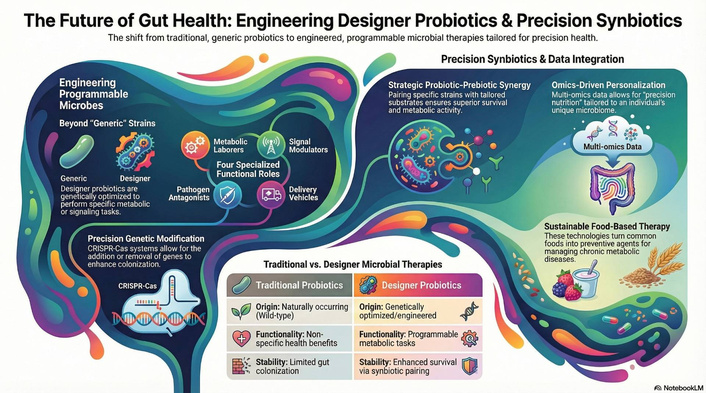
The future of gut health (conceptualised using NotebookLM and refined by the authors).
Designer probiotics and synbiotics represent a promising advancement in microbiome-based interventions, offering targeted and functional approaches to improve human health. The integration of synthetic biology, metabolic engineering, and omics technologies has enabled the development of precision strategies for modulating gut microbiota. Despite these advancements, challenges related to safety, regulatory approval, and long-term efficacy remain. Addressing these limitations through rigorous research and standardised frameworks will be essential for the successful translation of these approaches into clinical and food-based applications. Despite significant advancements, several limitations remain, including challenges in strain stability, limited clinical validation, scalability constraints, and incomplete understanding of long-term hostmicrobiome interactions. Regulatory complexities and biosafety concerns further restrict widespread application. Addressing these limitations through advanced in vivo studies, large-scale clinical trials, and integration of multi-omics with artificial intelligence will be essential for translating designer probiotics and synbiotics into practical precision nutrition solutions.
EFSA: European Food Safety Authority
FDA: Food and Drug Administration
GABA: gamma-aminobutyric acid
GMOs: genetically modified organisms
GRAS: Generally Recognised As Safe
SCFAs: short-chain fatty acids
The authors acknowledge the use of NotebookLM for the initial conceptualisation and visual structuring of Figures 1–3. The generated outputs were critically reviewed, modified, refined, and scientifically interpreted by the authors prior to inclusion in the manuscript.
NP: Conceptualisation, Investigation, Writing—original draft, Writing—review & editing. MH: Writing—review & editing. Both authors read and approved the submitted version.
The authors declare that they have no conflicts of interest.
Not applicable.
Not applicable.
Not applicable.
Not applicable.
Not applicable.
© The Author(s) 2026.
Open Exploration maintains a neutral stance on jurisdictional claims in published institutional affiliations and maps. All opinions expressed in this article are the personal views of the author(s) and do not represent the stance of the editorial team or the publisher.
Copyright: © The Author(s) 2026. This is an Open Access article licensed under a Creative Commons Attribution 4.0 International License (https://creativecommons.org/licenses/by/4.0/), which permits unrestricted use, sharing, adaptation, distribution and reproduction in any medium or format, for any purpose, even commercially, as long as you give appropriate credit to the original author(s) and the source, provide a link to the Creative Commons license, and indicate if changes were made.



View: 1037
Download: 36
Times Cited: 0


