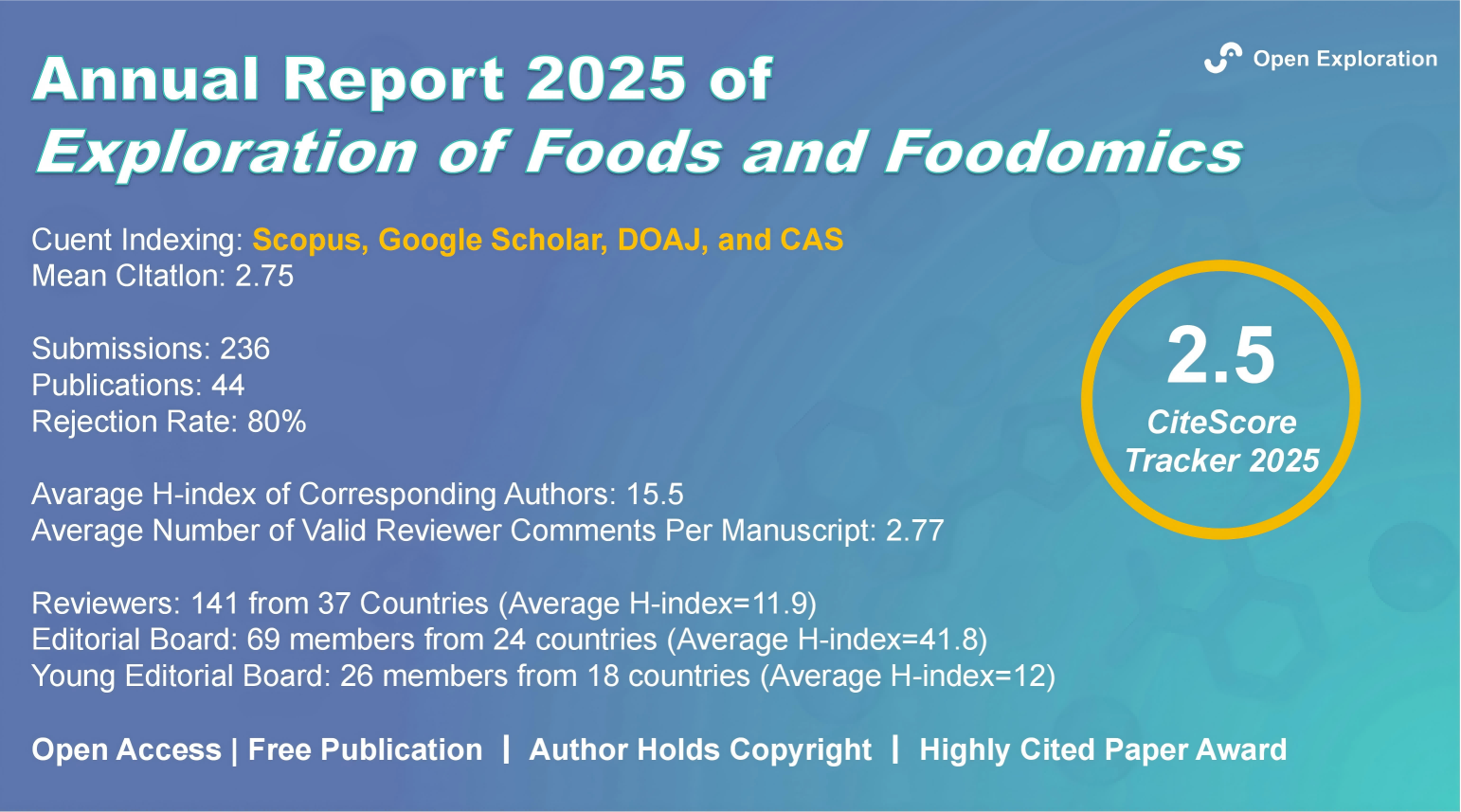
Exploration of Foods and Foodomics (EFF), an open access journal launched in April 2023, is dedicated to advancing high-quality research in food science, foodomics, and their interdisciplinary intersections. It emphasizes innovation and rigor in critical areas like food safety and nutrition, serving as a platform for global academic exchange.
EFF achieved significant milestones with its inclusion in Scopus and CAS in 2025, a testament to the quality of its content and its growing recognition within the scientific community. Over the past year, EFF has further solidified its academic standing by broadening its reach and strengthening its scholarly contributions globally. This report highlights key achievements and provides an outlook for 2026.
Key Achievements in 2025
Manuscript Submission and Publication
Submission Volume and Types
In 2025, EFF received 236 manuscript submissions, a substantial increase of nearly 200% from the 79 submissions in 2024. This significant growth reflects the journal's rapidly expanding influence and recognition as a leading platform for high-quality research in foodomics and food science. The submitted articles consisted of 149 Original Articles (63 %), 78 Review Articles (33 %) and 9 Others (9 %). The high proportion of Original Articles solidifies EFF's role as a key venue for novel research findings, while the substantial number of Review articles establishes it as an important resource for comprehensive knowledge synthesis. The inclusion of diverse article types further demonstrates the journal's maturation and its capacity to support a broader range of scholarly communication.
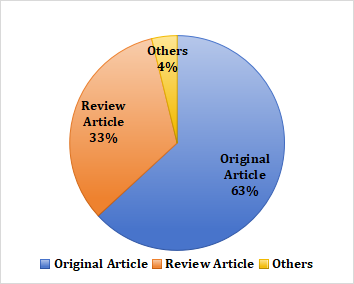
Figure 1. Article types of submission-2025
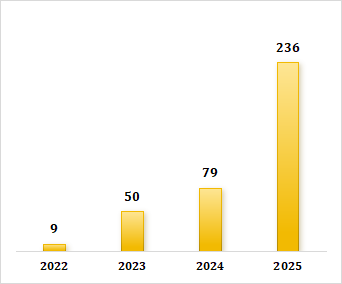
Figure 2. Number of Submissions per year
Total Publications
EFF published a total of 44 articles in 2025, maintaining a stable and consistent output compared to the 41 articles published in 2024. This steady publication volume underscores the journal's sustained productivity and its established role in disseminating impactful research. The breakdown of published article types was as follows: 30 Original Articles (68 %), 13 Review Articles (30 %), and 1 Commentary (2 %). This distribution demonstrates that EFF continues to publish significant reviews to synthesize knowledge within the field, while placing an increased emphasis on advancing original research findings. This balanced approach solidifies the journal's position as a key platform for both integration and innovation in foodomics and food science.
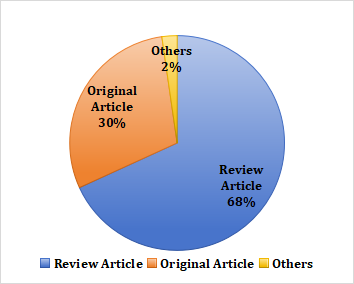
Figure 3. Article types of publication-2025
Average Impact of Authors
The average H-index of corresponding authors is 15.5, and that of first authors is 8.4. EFF will work harder to invite more high-quality manuscripts and increase the participation of first authors with rich experience to improve the quality and impact of publications.
Publication Article Corresponding Author Country Distribution
The published articles include 44 corresponding authors from 22 different countries and regions. This indicates EFF's strong appeal to researchers in regions with advanced academic development. To enrich content diversity and promote global inclusivity, the journal will make more efforts to engage with researchers from different countries and regions in the future.
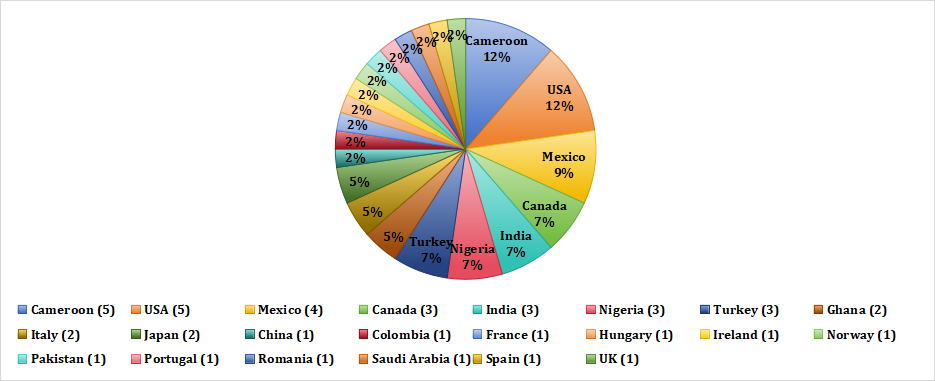
Figure 4. Country Distribution of EFF Publications 2025
Journal Article Data Highlights
EFF has seen 37 articles with over 1000 views and 100 downloads, reflecting strong reader engagement likely driven by relevant topics and novel findings. The journal’s articles recorded an average of 3,672.5 views and 181.7 downloads per article, indicating a consistently attentive readership. Building on this performance, we will continue to prioritize trending topics and actively promote high-impact content to further expand reach and contribution.
Table 1. Top 5 most viewed articles published in 2025
No. | Article Title | Corresponding Author |
1 | From botany to bedside: a review of the health benefits of Lycium barbarum as a functional food | Tao Zhang |
2 | Ravindra Verma | |
3 | Therapeutic effects of ketogenic diets on physiological and mental health | Alejandro Borrego-Ruiz |
4 | The challenges associated with a ketogenic diet: a narrative review | Xin Qi |
5 | Shahidul Islam |
Manuscript Processing
Rejection Rate
The rejection rate for submissions rose significantly to 80% in 2025, compared to 29.4% in 2024. This substantial increase reflects both the marked growth in manuscript submissions and a strengthened editorial commitment to upholding rigorous academic standards. The higher selectivity underscores the journal's focus on publishing only the highest-quality research, further solidifying its reputation as a competitive and reputable platform within the field.
Reviewers
In 2025, 141 reviewers from 37 different countries participated in our review process. This large and diverse group of reviewers ensures a broad range of perspectives and expertise, crucial for the quality and validity of published research. It also reflects the journal's international reach and recognition, contributing to its ability to publish high-quality, globally-relevant research.
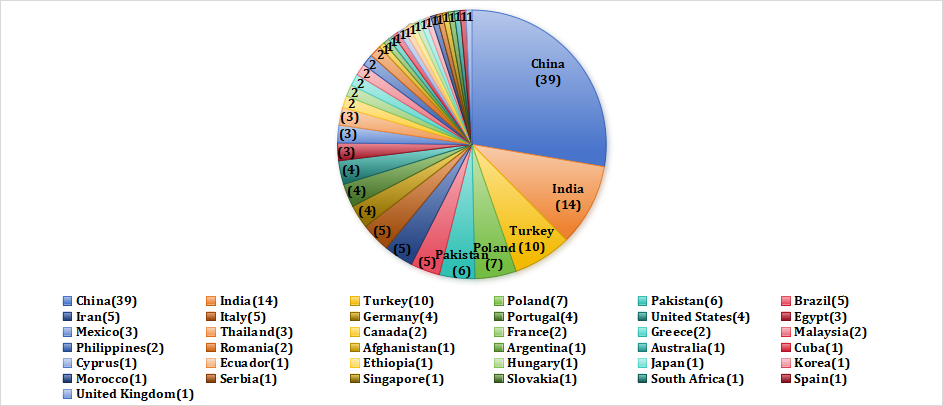
Figure 5. Country Distribution of EFF Reviewers 2025
Editorial Board
New Editorial Board Members in 2025
In 2025, EFF expanded its editorial board by welcoming 8 new members from diverse regions including the United States, Jamaica, China, Italy, Poland, Iraq, and an Arab country. This addition strengthens the journal's international representation and academic expertise, with the new members maintaining an average H-index of 39.25. Among their contributions, Prof. Noureddine Benkeblia has also submitted a high-quality manuscript for consideration, supporting the continued development of the journal.
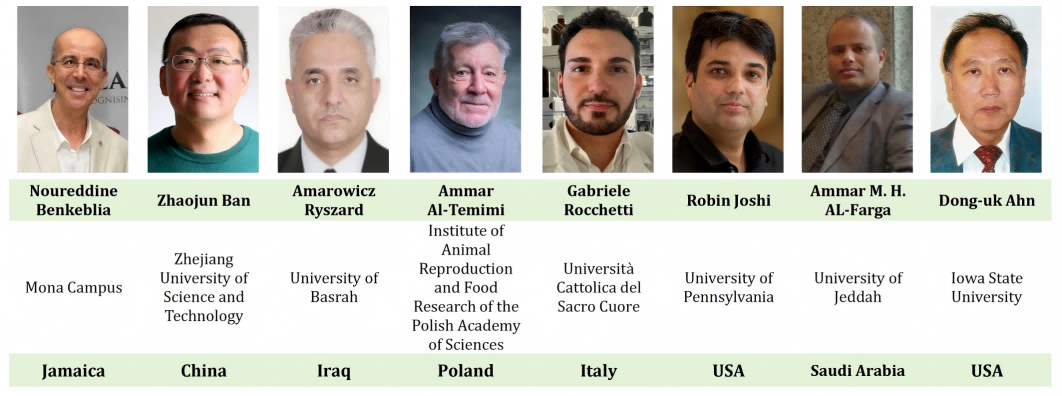 Figure 6. Newly Joined Editorial Board Members in 2025
Current Editorial Board
As of 2025, the editorial board of EFF consists of 69 members, including 24 Associate Editors and 47 Editorial Board Members, representing 24 countries/regions with an average H-index of 41.8. This highly qualified and globally diverse team has consistently supported the journal through organizing special issues, handling manuscripts, promoting EFF at academic conferences, and contributing to peer review. Their dedicated engagement has been essential to the journal's development and operational success. We sincerely thank all editorial board members for their valuable contributions and ongoing commitment. Looking ahead, we aim to further strengthen these collaborations as we continue to advance the mission of EFF in foodomics and food science.
Editorial Board Meeting
The second EFF editorial board meeting was held online on April 22, 2025, with the participation of the editors-in-chief, key editorial staff, and editorial board members. During the meeting, members engaged in in-depth discussions and actively provided constructive suggestions, focusing on how to better support and engage young researchers through targeted policies and initiatives. It was confirmed that the Young Editorial Board and the Best Young Researcher Paper Award, both officially launched in March 2025, will serve as key mechanisms to encourage young scholar involvement, foster academic exchange, and enhance the journal's developmental momentum. These efforts are expected to further drive the growth and success of EFF in the coming years.
Young Editorial Board
The Young Editorial Board (YEB) of EFF was formally established in March 2025, with 26 young researchers appointed as members, who maintain an average H-index of 12. Comprising promising young scholars in food science and foodomics, the YEB contributes to journal operations, introduces innovative perspectives, and offers valuable experience in academic publishing.
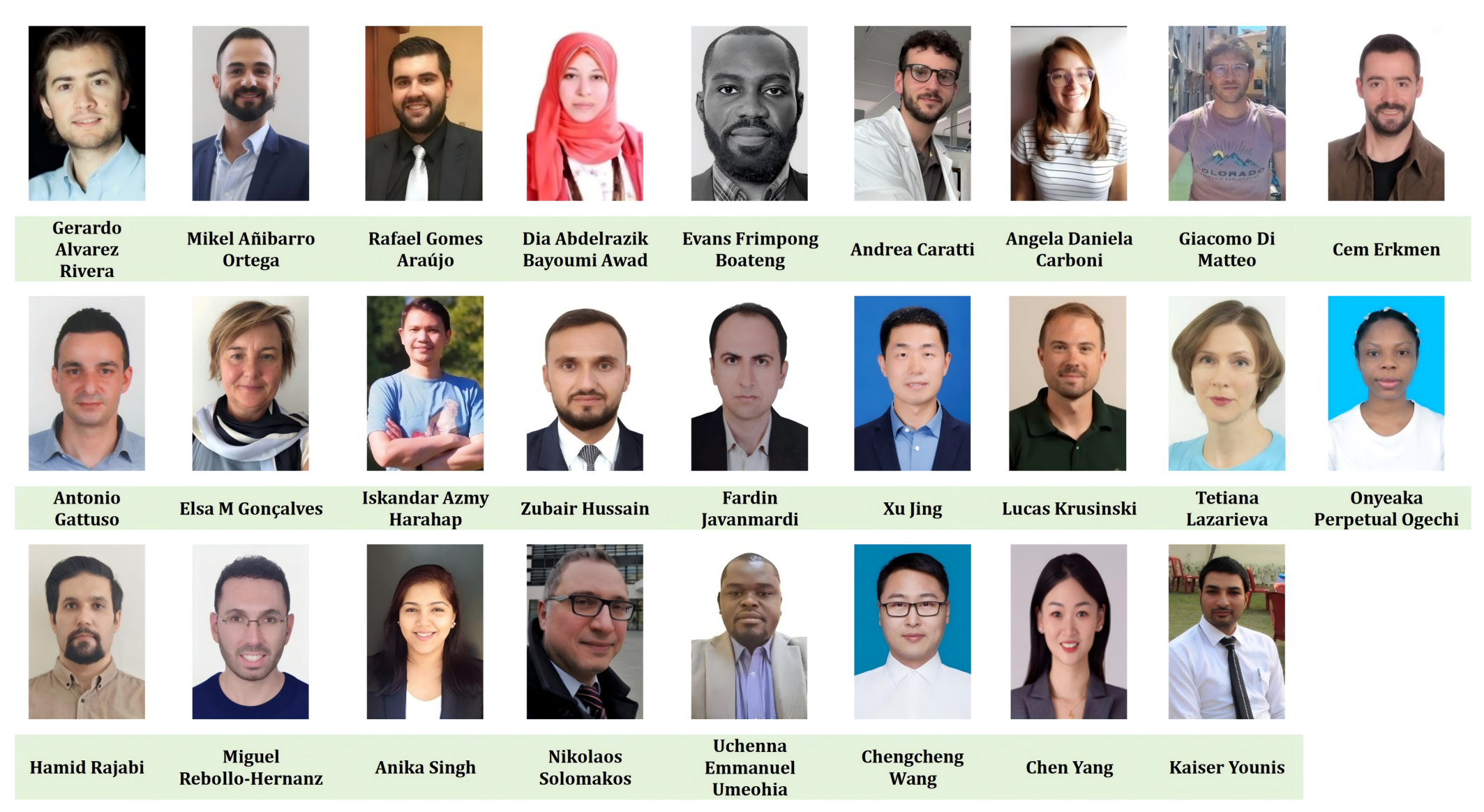
Figure 7. Young Editorial Board Members in 2025
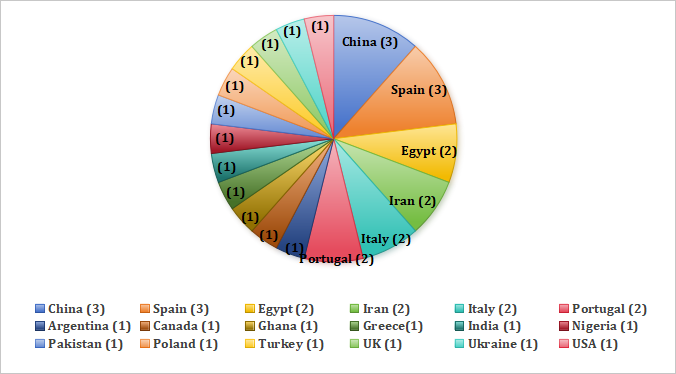
Figure 8. Country Distribution of EFF YEB
Special Issues
Completed Special Issue (2025)
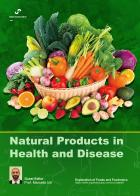
In 2025, EFF successfully completed 2 special issues focusing on natural products for health and ketogenic diet in clinical nutrition. Each issue exceeded 40,000 views, demonstrating strong academic interest and readership engagement. These collections were led by esteemed guest editors: Prof. Marcello Iriti (Milan State University, H-index 51), Prof. Luca Rastrelli (University of Salerno, H-index 48), and Prof. Giuseppe Castaldo (“San Giuseppe Moscati” National Hospital, H-index 39). We sincerely thank them for their expertise and dedication, which were essential to the success and impact of these issues.
Table 2. Completed Special Issues in 2025
Special issue | Guest Editor(s) | Country | Highlighted articles in this issue |
| Marcello Iriti | Italy | From botany to bedside: a review of the health benefits of Lycium barbarum as a functional food |
| Luca Rastrelli | Italy | Therapeutic effects of ketogenic diets on physiological and mental health |
Giuseppe Castaldo | Italy |

Newly Released Special Issues in 2025
In 2025, EFF published 5 special issues focusing on cutting-edge topics in foodomics, natural bioactive compounds, antioxidant strategies, and food authenticity. These issues were guest-edited by scholars with an average H-index of 39.3, further enhancing the journal’s coverage and impact in food science and foodomics.
Table 3. Newly Released Special Issues in 2025 (Open for Submission)
Topic | Guest Editor(s) | Country |
Natural Bioactive Compounds in Functional Foods: From Foodomics Insights to Clinical Relevance | Javad Sharifi Rad | Ecuador |
Ana Sanches Silva | Portugal | |
Muhammad Ajmal Shah | Pakistan | |
Esra Capanoglu | Turkey | |
Deniz Gunal-Koroglu | Turkey | |
Omics Techniques for the Comprehensive Characterization of Food | Luisa Mannina | Italy |
Giacomo Di Matteo | Italy | |
Innovative Genetic Approaches to Food Authenticity and Safety Control | Paula Martins-Lopes | Portugal |
Sara Barrias | Portugal |
Journal Impact
Database indexing
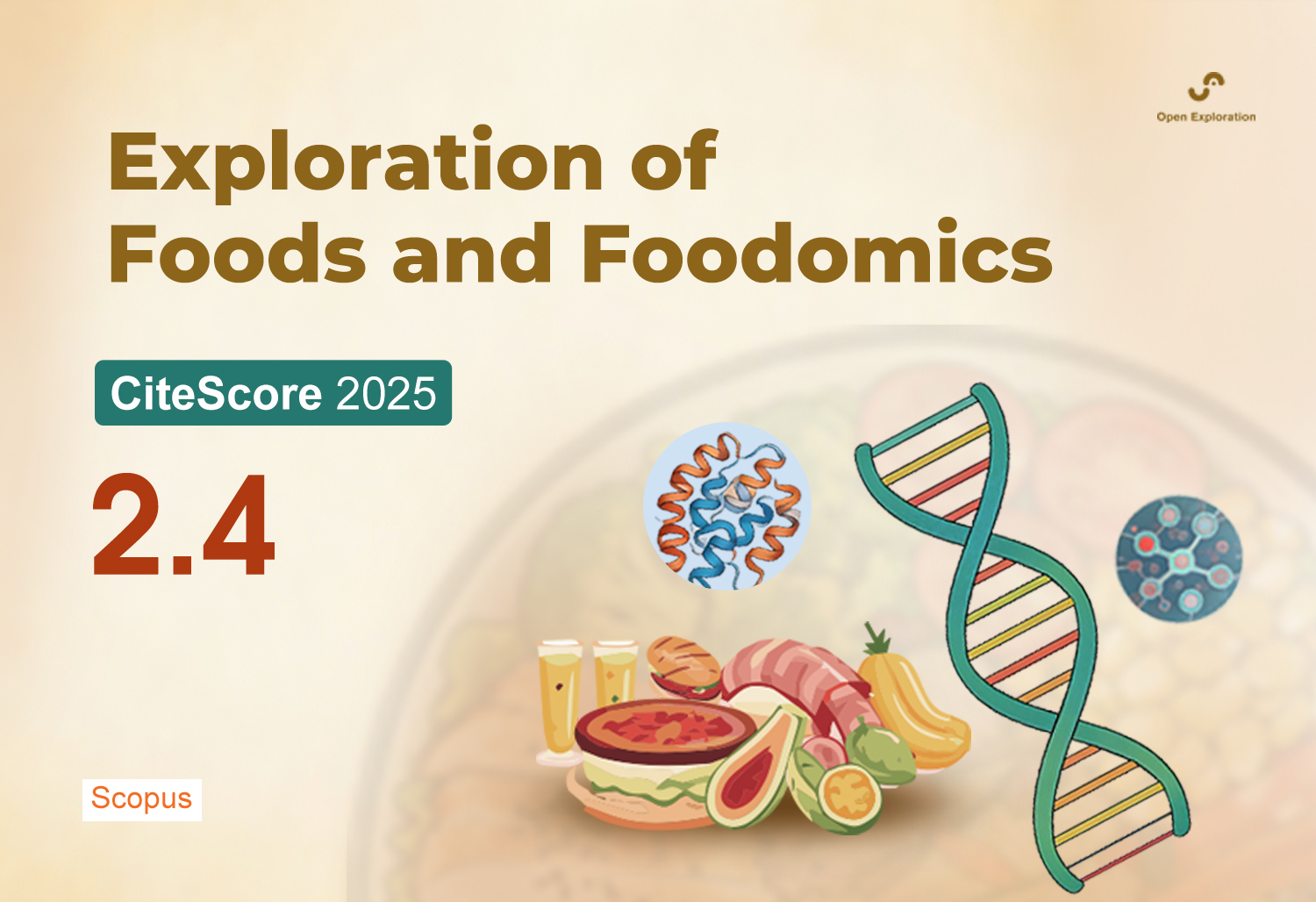
In 2025, EFF achieved a landmark milestone with its official inclusion in Scopus on June 25, underscoring the quality and growing academic standing of the journal. This recognition bythe world's largest curated abstract and citation database significantly enhances the international visibility and credibility of EFF. Additionally, the journal was also indexed in CAS (Chemical Abstracts Service) this year. This achievement builds upon the existing presence of EFF in Google Scholar (2023) and DOAJ (2024), reflecting its consistent development as a respected open-access platform in foodomics and food science. We extend our sincere gratitude to the researchers and professionals whose support has been instrumental to this progress. Building on this recognition, EFF will continue to advance its mission of publishing rigorous, impactful research that addresses pressing global challenges in food science and nutrition.
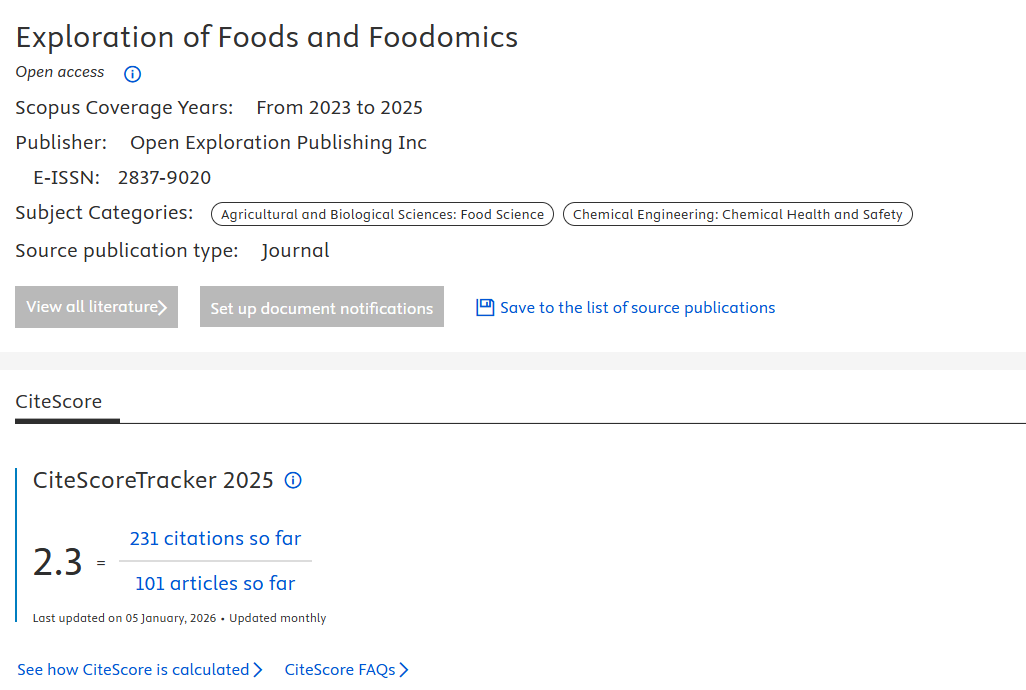
Figure 9. Scopus CiteScore of EFF
Citation Performance
As of 2025, EFF had achieved a total of 404 citations, representing an increase of 352 citations compared to the previous year, with an average of 2.75 citations per article. The journal’s published research continues to attract growing attention from the global scientific community, demonstrating meaningful and accelerating impact within food science and foodomics. As a relatively young journal, EFF has shown impressive momentum in building its academic influence, reflecting both the quality of its content and the engaged community that supports it. This growth trajectory positions EFF as an increasingly significant contributor to the advancement of food science and nutrition research worldwide.
Goals and Expectation
Looking ahead to 2026, EFF will continue to develop a strong editorial framework and expand its academic reach. We will further promote the Best Young Researcher Paper Award and advance collaborative publishing initiatives to encourage the active participation of early-career researchers. Additionally, we will enhance the visibility and impact of published articles through targeted dissemination and active engagement with the research community.
Building on our current indexing in Scopus, CAS, and other leading databases, EFF is committed to sustaining a rigorous and timely editorial process while supporting open science and interdisciplinary dialogue in foodomics and food science.
We invite researchers and institutions worldwide to join us in shaping the future of the field. Whether you contribute as an author, reviewer, special issue organizer, or conference partner, your expertise and collaboration are vital. By working together, we can amplify innovative research, foster meaningful academic exchange, and accelerate solutions for sustainable and nutritious food systems globally. We look forward to building lasting partnerships and co-creating a dynamic, influential future for food science research.
Best Regards,
EFF Editorial Office
Contact us: effjournal@explorationpub.com
EFF website: https://www.explorationpub.com/Journals/eff
Submission Link: https://eff.aressystem.com/
 Annual Report of Exploration of Foods and Foodomics—2025.pdf