Original Article


Affiliation:
1Faculty of Food Science and Nutrition, Universiti Malaysia Sabah, Jalan UMS, Kota Kinabalu 88400, Sabah, Malaysia

Affiliation:
2Institute for Tropical Biology and Conservation, Universiti Malaysia Sabah, Jalan UMS, Kota Kinabalu 88400, Sabah, Malaysia
ORCID: https://orcid.org/0000-0001-6483-1362
 ,
,
Affiliation:
3Department of Biomedical Sciences, Faculty of Medicine and Health Sciences, Universiti Malaysia Sabah, Jalan UMS, Kota Kinabalu 88400, Sabah, Malaysia
ORCID: https://orcid.org/0000-0003-0861-8828
,
Affiliation:
1Faculty of Food Science and Nutrition, Universiti Malaysia Sabah, Jalan UMS, Kota Kinabalu 88400, Sabah, Malaysia
4Food Security Research Laboratory, Faculty of Food Science and Nutrition, Universiti Malaysia Sabah, Jalan UMS, Kota Kinabalu 88400, Sabah, Malaysia
Email: ma.awang@ums.edu.my
ORCID: https://orcid.org/0000-0002-5976-2427

Explor Foods Foodomics. 2026;4:1010162 DOI: https://doi.org/10.37349/eff.2026.1010162
Received: February 08, 2026 Accepted: April 23, 2026 Published: June 08, 2026
Academic Editor: Deniz Gunal-Koroglu, Istanbul Technical University, Turkey
The article belongs to the special issue Oxidation and Antioxidant Strategies in Food Systems: From Mechanisms to Innovative Preservation Strategies
Aim: The limited utilisation of underexploited tropical fruits such as Mangifera pajang Kosterm. (bambangan) in confectionery products highlights the need for alternative formulations. This study aimed to develop and optimise a soft candy formulated with M. pajang juice and to evaluate its sensory, proximate, physical, and chemical characteristics, particularly its antioxidant potential and relevance to oxidative quality in confectionery systems.
Methods: Four formulations and one control were prepared and assessed through sensory evaluation involving 50 untrained panellists using a nine-point hedonic scale to identify the optimal formulation. Proximate composition, physical characteristics including colour and texture, total phenolic content (TPC), and antioxidant activity using 2,2-diphenyl-1-picrylhydrazyl (DPPH) and 2,2′-azino-bis(3-ethylbenzothiazoline-6-sulfonic acid) (ABTS) radical scavenging assays were subsequently evaluated for the selected formulation to determine its potential role in enhancing oxidative quality.
Results: Sensory evaluation involving all formulations, including the control, identified formulation F2 as the most preferred. Subsequent analyses comparing formulation F2 with the control showed that F2, containing 3.90% sugar and 1.00% pectin, exhibited acceptable proximate composition, favourable physical characteristics including colour and texture, and high TPC (8.58 ± 1.05 mg GAE/mL). In addition, formulation F2 demonstrated strong antioxidant activity based on DPPH and ABTS radical scavenging assays, indicating its potential contribution to antioxidant functionality in the confectionery matrix.
Conclusions: Soft candy formulated with M. pajang juice showed favourable sensory acceptance, acceptable quality characteristics, and enhanced antioxidant potential, supporting its value-added utilisation and potential contribution to oxidative quality attributes in confectionery applications.
Candy products represent a major segment of the global confectionery industry and are widely consumed across different age groups due to their convenience, sensory appeal, and extended shelf life. These products are commonly classified into hard and soft candies based on their textural characteristics, which are primarily influenced by formulation composition and processing conditions [1]. Soft candies, including gummies and jellies, are characterised by their elastic and chewy texture, which is typically achieved through the incorporation of gelling agents such as pectin, gelatine, or starch derivatives [2]. The functional role of these gelling agents lies in their ability to form a three-dimensional network within the aqueous phase, resulting in a colloidal system with sufficient structural integrity while maintaining softness and flexibility [3]. In addition, glucose syrup and sugars play a critical role in controlling crystallisation, viscosity, and moisture retention, thereby influencing product stability and mouthfeel [4]. Despite their popularity, many commercially available soft candies rely heavily on refined sucrose, artificial colourants, and flavouring agents. This has led to increasing consumer interest in confectionery products formulated with natural ingredients and fruit-based components [5]. Recent studies have further highlighted the importance of fruit-based ingredients in the development of functional food products with improved physicochemical, sensory, and antioxidant properties, while also supporting sustainable utilisation of fruit resources and reducing post-harvest losses [6, 7].
The incorporation of fruit-based ingredients into confectionery formulations represents a strategic approach to developing value-added products using natural raw materials [8]. Mangifera pajang Kosterm., locally known as bambangan, is an indigenous wild mango species native to the lowland rainforests of Borneo, including Sabah and Sarawak in Malaysia, Brunei, and Kalimantan in Indonesia. The fruit is characterised by its fibrous yellow flesh, brown outer skin, strong distinctive aroma, and sweet-sour flavour [9, 10]. Previous studies have reported that M. pajang juice contains appreciable levels of carbohydrates, dietary fibre, and proteins, as well as bioactive compounds such as phenolics, carotenoids, and ascorbic acid. These constituents contribute to its antioxidant capacity and may help improve oxidative quality in food systems [9, 11]. Despite these favourable compositional and sensory characteristics, the utilisation of M. pajang juice in processed food products remains limited, and its application in soft candy formulations has not been reported.
The development of a fruit-based soft candy therefore represents a practical approach to expanding the confectionery application of this underutilised fruit while maintaining consumer acceptance through a familiar product format. Accordingly, this study aims to develop a soft candy formulated with M. pajang juice, optimise its formulation based on sensory evaluation, and evaluate its proximate, physical, and bioactive characteristics, including total phenolic content (TPC) and antioxidant activity. The findings are expected to demonstrate the feasibility of incorporating M. pajang into confectionery products in accordance with the Food Regulations 1985 for sugar confectionery, while supporting value-added utilisation of this fruit and its potential contribution to oxidative quality attributes in confectionery applications.
M. pajang fruits used in the development of the soft candy were purchased from Anjung Kinabalu, Kota Kinabalu, Sabah, Malaysia. Only fully ripe fruits were selected, as indicated by brownish skin colour, soft texture, and a strong characteristic aroma, to ensure optimal flavour and pulp quality, while larger fruits were preferentially chosen to maximise flesh yield. Granulated sugar, pectin, agar, glycerine, sodium benzoate, and citric acid were obtained from local bakery supply stores in Kota Kinabalu. Chemicals and reagents used for the determination of TPC and antioxidant activity, including Folin–Ciocalteu reagent, sodium carbonate, gallic acid, methanol, 2,2-diphenyl-1-picrylhydrazyl (DPPH), 2,2′-azino-bis(3-ethylbenzothiazoline-6-sulfonic acid) (ABTS), and potassium persulfate, were obtained from Sigma-Aldrich (St. Louis, MO, USA). Following preparation, the flesh of M. pajang was stored in a chiller at 4°C prior to use, while all other ingredients were stored at room temperature under dry conditions.
The preparation of M. pajang juice began with washing the fruits thoroughly with tap water to remove surface dirt and impurities. The outer skin was then removed, and the flesh was separated from the kernel. The edible portion was cut into smaller pieces and blended with water using a blender (EBM-9182, Elba, Borso del Grappa, Italy) until a homogeneous mixture was obtained. The resulting juice was subsequently filtered to remove fibrous residues prior to use in the candy formulation.
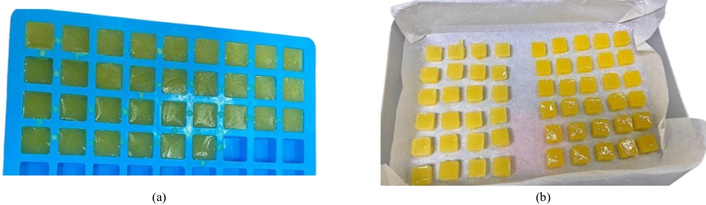
The formulation of soft candy containing M. pajang juice was developed based on the method reported by Rochmawati and Ermawati [12], with appropriate modifications to suit the objectives of the present study. Four formulations (F1–F4) and a control formulation containing only pectin without sugar were designed by varying the concentrations of sugar and pectin to determine their effects on the sensory attributes, acceptance, and quality characteristics of the soft candy, while the other ingredients were kept constant. All ingredients were weighed and measured using an analytical balance (GR-200, A&D, Tokyo, Japan) according to the specified formulations presented in Table 1, with quantities expressed as percentages (%, w/w). Pectin and agar were dissolved in M. pajang juice and heated at 100°C for 10 min using a hotplate stirrer (Isotemp, Fisherbrand, Waltham, MA, USA) at 300 rpm, with continuous stirring until a homogeneous mixture was obtained. The mixture was then cooled to 40°C and stirred until thickened. Sugar, glycerine, sodium benzoate, and citric acid were then added sequentially and mixed until homogeneous. The resulting mixture was poured into silicone moulds with uniform square cavities and placed in a chiller at 4°C until fully set, as shown in Figure 1a. The solidified candies were subsequently removed from the moulds and air-dried to remove excess surface moisture, as shown in Figure 1b. The candies were then coated with icing sugar to prevent sticking and stored in airtight glass containers under dry conditions until further analysis. The same procedure was applied to all formulations.
Formulations of soft candy prepared with Mangifera pajang juice (%, w/w).
| Ingredient | Control | F1 | F2 | F3 | F4 |
|---|---|---|---|---|---|
| Fruit juice | 87.00 | 87.00 | 87.00 | 87.00 | 87.00 |
| Sugar | 0.00 | 3.70 | 3.90 | 4.10 | 4.30 |
| Pectin | 4.90 | 1.20 | 1.00 | 0.80 | 0.60 |
| Agar | 1.70 | 1.70 | 1.70 | 1.70 | 1.70 |
| Glycerine | 6.00 | 6.00 | 6.00 | 6.00 | 6.00 |
| Sodium benzoate | 0.30 | 0.30 | 0.30 | 0.30 | 0.30 |
| Citric acid | 0.10 | 0.10 | 0.10 | 0.10 | 0.10 |
Sensory evaluation was conducted using a nine-point hedonic test with 50 untrained panellists, comprising students and lecturers from Universiti Malaysia Sabah, Kota Kinabalu, with a male-to-female ratio of 20:30. The evaluation was carried out in the Sensory Laboratory, Faculty of Food Science and Nutrition, Universiti Malaysia Sabah, under controlled laboratory conditions at 22°C and 45–55% relative humidity under warm white lighting, between 09:00 and 14:00. The objective of the sensory test was to identify the most acceptable formulation of soft candy prepared with M. pajang juice. Two pieces of each candy sample were provided to each panellist, and the samples were coded using random three-digit numbers prepared from a master sheet to minimise bias. Panellists were supplied with drinking water and instructed to rinse their mouths between samples. The attributes evaluated included appearance, aroma, texture, mouthfeel, taste, and overall acceptance. A nine-point hedonic scale ranging from 1 (extremely disliked) to 9 (extremely liked) was used to assess the degree of liking, and the results were expressed as mean scores [13].
Proximate analysis was conducted on the best-performing soft candy formulation selected from the sensory evaluation and on the control formulation for comparison. All analyses were performed according to standard AOAC methods [14]. Moisture content was determined using the oven-drying method at 105°C in an oven (ECOCELL, MMM, Prague, Czech Republic), while ash content was measured by incineration in a muffle furnace (Thermolyne, Thermo Scientific, Waltham, MA, USA) at 550°C for 6 h following preliminary charring. Crude fat content was analysed using a Soxhlet extractor (BST/SXM-3A, Bionics Scientific, Delhi, India) with petroleum ether as the solvent. Crude protein content was determined using the Kjeldahl method, which involves digestion, distillation, and titration to quantify total nitrogen and estimate protein content using a standard conversion factor. Crude fibre content was analysed through sequential acid and alkaline digestion to remove soluble components, followed by drying and ashing to quantify the insoluble fibre fraction. Carbohydrate content was estimated by difference, calculated as the remaining percentage after subtracting the measured values of moisture, ash, crude fat, crude protein, and crude fibre from 100%. The energy value of the soft candy was calculated using Atwater general conversion factors, where carbohydrates and proteins contribute 4 kcal/g and lipids contribute 9 kcal/g.
The physical characteristics of the best-performing soft candy formulation and the control formulation were evaluated through colour measurement and texture profile analysis. Colour parameters were measured using a colorimeter (CR-410, Konica Minolta, Tokyo, Japan), which was calibrated using standard black and white reference tiles prior to analysis. Samples were placed in transparent polyethylene plastic packaging to minimise surface contamination, and colour measurements were taken through the packaging, which does not interfere with the optical reading, using the optical head. Colour values were recorded in the CIELAB system as L*, a*, and b* parameters, where L* represents lightness from black (0) to white (100), a* represents redness (+) or greenness (−), and b* represents yellowness (+) or blueness (−), as described by Rushdy et al. [15].
Texture profile analysis was performed using a texture analyser (TA.XTplus, Stable Micro Systems, Surrey, UK) on ten randomly selected candy pieces cut into uniform dimensions of 1 cm × 1 cm × 0.5 cm. Measurements were conducted at 25°C, with samples pre-conditioned at 4°C prior to testing. Each sample was subjected to compression using a cylindrical probe (5 mm diameter) at a pre-test speed of 1 mm/s, test speed of 5 mm/s, and post-test speed of 5 mm/s, with compression adjusted to 75% strain. Texture parameters, including hardness, cohesiveness, springiness, and chewiness, were recorded following the method described by Renaldi et al. [16].
The bioactive properties of the best-performing soft candy formulation and the control formulation were evaluated based on TPC and antioxidant activity. TPC was determined using the Folin–Ciocalteu method based on Mohd Rosdan et al. [17], with minor modifications. Candy extracts were prepared by combining 5 g of sample with 50 mL of methanol–water solution (80:20, v/v), followed by extraction at 4°C for 24 h. The mixture was then centrifuged at 4°C and 4,000 rpm for 10 min, and an aliquot of the supernatant was reacted with Folin–Ciocalteu reagent and sodium carbonate solution. Distilled water was added to achieve the final reaction volume, and the mixture was incubated at room temperature for 2 h. Absorbance was measured at 765 nm using a UV–Vis spectrophotometer (Lambda 25, PerkinElmer, Waltham, MA, USA). Gallic acid was used as the calibration standard, and TPC was expressed as milligrams of gallic acid equivalents per millilitre of extract (mg GAE/mL).
Antioxidant activity was evaluated using both DPPH and ABTS assays. The DPPH assay was conducted according to Saini et al. [18] with modifications, in which the candy extract was mixed with DPPH solution and incubated in the dark at room temperature prior to absorbance measurement at 517 nm using a UV–Vis spectrophotometer. The ABTS assay was performed following Rushdy et al. [19] with modifications. ABTS radical cations were generated by reacting ABTS with potassium persulfate and incubating the mixture in the dark for at least 12 h. The candy extract was then reacted with the ABTS solution, incubated briefly in the dark, and absorbance was measured at 734 nm using a UV–Vis spectrophotometer. Radical scavenging activity for both assays was expressed as percentage inhibition (%), with DPPH and ABTS solutions without sample serving as the respective negative controls, to evaluate the antioxidant potential of the formulation.
Data obtained from the sensory evaluation conducted with 50 untrained panellists (n = 50) were analysed using one-way analysis of variance (ANOVA), followed by Tukey’s post hoc test when significant differences were observed. Results from proximate, physical, and bioactive characteristics, performed in triplicate (n = 3), were analysed using independent-samples t-tests to compare mean values between the control and the selected formulation. Data are presented as mean ± standard deviation, and all statistical analyses were performed using IBM SPSS Statistics version 29, with statistical significance set at p < 0.05.
All candy formulations were evaluated by 50 untrained panellists using a nine-point hedonic scale ranging from extremely disliked to extremely liked. The sensory attributes assessed were appearance, aroma, texture, mouthfeel, taste, and overall acceptance, and the mean scores for each attribute are presented in Table 2. Formulation F2 recorded significantly higher scores than the control, F1, F3, and F4 for appearance, texture, mouthfeel, taste, and overall acceptance (p < 0.05), whereas no significant difference was observed among formulations for aroma (p > 0.05). Based on overall acceptance scores, formulation F2 was identified as the most preferred formulation.
Sensory evaluation scores of soft candy formulations prepared with Mangifera pajang juice.
| Sensory attributes | Control | F1 | F2 | F3 | F4 |
|---|---|---|---|---|---|
| Appearance | 6.50 ± 1.43b | 6.60 ± 1.29b | 7.94 ± 0.84a | 7.06 ± 1.30b | 7.02 ± 1.50b |
| Aroma | 5.10 ± 1.92a | 5.35 ± 1.87a | 5.56 ± 1.63a | 5.32 ± 1.82a | 5.52 ± 1.63a |
| Texture | 5.62 ± 1.77b | 6.40 ± 1.46b | 7.94 ± 0.74a | 6.30 ± 1.56b | 5.90 ± 1.52b |
| Mouthfeel | 6.04 ± 1.37b | 6.54 ± 1.41b | 7.96 ± 0.78a | 6.18 ± 1.35b | 6.12 ± 1.46b |
| Taste | 7.02 ± 1.11b | 6.14 ± 1.41c | 8.14 ± 0.64a | 6.48 ± 1.51bc | 6.26 ± 1.60c |
| Overall acceptance | 6.18 ± 1.52c | 7.18 ± 1.30b | 8.22 ± 0.73a | 7.12 ± 1.32b | 7.10 ± 1.41bc |
Values are expressed as mean ± standard deviation (n = 50). Different superscript letters within the same row indicate significant differences (p < 0.05) as determined using one-way ANOVA followed by Tukey’s post hoc test.
Proximate analysis was performed on the control soft candy and the selected formulation, F2, to evaluate differences in nutritional composition. As presented in Table 3, most proximate parameters showed significant differences between the control and formulation F2 (p < 0.05), except for crude fat and crude protein, which were not significantly different (p > 0.05). Formulation F2 exhibited a significantly higher moisture content compared with the control. Ash content was also significantly higher in F2 than in the control, whereas crude fat content remained low in both formulations and showed no significant difference between samples. Crude protein content also showed no significant difference between the control and F2, despite slight numerical variation. In contrast, crude fibre content, as determined by the AOAC proximate method, was significantly higher in the control formulation, while formulation F2 exhibited a lower fibre content. These values represent crude fibre rather than total dietary fibre and may reflect the fibrous nature of M. pajang together with the formulation composition, which could also influence texture and mouthfeel. Carbohydrate content was significantly higher in the control than in formulation F2. Correspondingly, the energy value of the control was significantly higher than that of formulation F2. These differences correspond to variation in the formulation composition, particularly the sugar and pectin levels, which may have influenced the relative proportions of proximate components in the final product.
Proximate composition of control and F2 soft candy formulations prepared with Mangifera pajang juice.
| Proximate attributes | Control | F2 |
|---|---|---|
| Moisture (%) | 16.00 ± 0.14 | 19.78 ± 0.37* |
| Ash (%) | 0.35 ± 0.03 | 0.45 ± 0.05* |
| Crude fat (%) | 0.17 ± 0.05 | 0.23 ± 0.08 |
| Crude protein (%) | 0.36 ± 0.08 | 0.42 ± 0.03 |
| Crude fibre (%) | 0.12 ± 0.02 | 0.08 ± 0.01* |
| Carbohydrate (%) | 83.00 ± 0.17 | 79.04 ± 0.38* |
| Energy content (kcal/100 g) | 334.97 ± 0.63 | 319.91 ± 1.55* |
Values are expressed as mean ± standard deviation (n = 3). *: Indicates a statistically significant difference (p < 0.05) as determined using an independent-samples t-test.
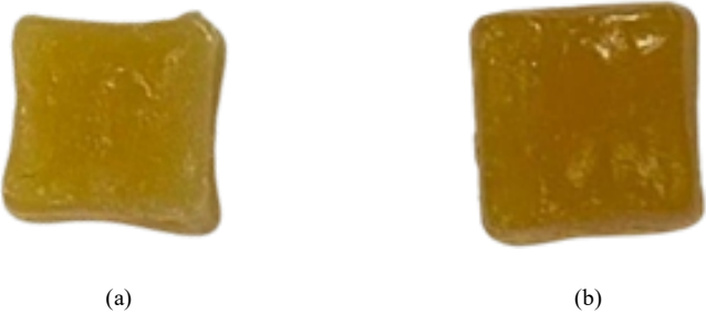
Physical characteristics analysis was conducted on the control soft candy and the selected formulation, F2, with significant differences (p < 0.05) observed in colour attributes. Colour measurements showed clear differences between the two formulations, as summarised in Table 4 and visually illustrated in Figures 2a and 2b. The control sample exhibited significantly higher L* values, indicating a paler and more opaque appearance, whereas formulation F2 displayed lower L* values and appeared darker. In addition, formulation F2 showed significantly higher a* and b* values compared with the control. These results indicate that formulation F2 possessed a more intense and saturated colour profile than the control formulation.
Colour attributes of control and F2 soft candy formulations prepared with Mangifera pajang juice.
| Colour attributes | Control | F2 |
|---|---|---|
| L* (lightness) | 30.93 ± 0.20 | 26.42 ± 0.30* |
| a* (redness) | 15.13 ± 0.35 | 18.67 ± 0.16* |
| b* (yellowness) | 39.87 ± 0.76 | 43.57 ± 0.65* |
Values are expressed as mean ± standard deviation (n = 3). *: Indicates a statistically significant difference (p < 0.05) as determined using an independent-samples t-test.
Texture profile analysis further revealed significant differences (p < 0.05) in chewiness, cohesiveness, hardness, and springiness between formulations, as shown in Table 5. The control formulation exhibited higher chewiness, cohesiveness, hardness, and springiness than formulation F2, while formulation F2 showed lower values for all measured textural parameters. These results indicate that formulation F2 possessed a softer and less elastic texture compared with the control formulation.
Texture attributes of control and F2 soft candy formulations prepared with Mangifera pajang juice.
| Texture attributes | Control | F2 |
|---|---|---|
| Chewiness (g) | 1,434.461 ± 140.136 | 797.083 ± 199.625* |
| Cohesiveness | 0.496 ± 0.014 | 0.372 ± 0.041* |
| Hardness (g) | 4,438.645 ± 113.592 | 3,802.676 ± 22.572* |
| Springiness | 0.652 ± 0.060 | 0.556 ± 0.082* |
Values are expressed as mean ± standard deviation (n = 3). *: Indicates a statistically significant difference (p < 0.05) as determined using an independent-samples t-test.
Bioactive properties of the control soft candy and the selected formulation, F2, were evaluated based on TPC and antioxidant activity using DPPH and ABTS radical scavenging assays, as presented in Table 6. Significant differences (p < 0.05) were observed between the two formulations. Formulation F2 exhibited a higher TPC compared with the control. Similarly, antioxidant activity measured by both DPPH and ABTS assays was significantly higher in formulation F2 than in the control, indicating enhanced radical scavenging capacity in the optimised formulation, which may contribute to improved bioactive quality in the confectionery system.
Bioactive properties of control and F2 soft candy formulations prepared with Mangifera pajang juice.
| Bioactive properties | Control | F2 |
|---|---|---|
| TPC (mg GAE/mL) | 2.11 ± 0.08 | 8.58 ± 1.05* |
| DPPH (%) | 68.52 ± 0.04 | 84.26 ± 0.02* |
| ABTS (%) | 59.87 ± 0.20 | 79.94 ± 0.10* |
Values are expressed as mean ± standard deviation (n = 3). *: Indicates a statistically significant difference (p < 0.05) as determined using an independent-samples t-test.
The superior sensory performance of formulation F2 reflects the influence of formulation composition on consumer perception. Although all formulations contained the same proportion of M. pajang juice, differences in appearance were evident, likely due to variations in pectin and sugar concentrations that affected gel clarity and surface uniformity during heating and cooling [20, 21]. The lower appearance score observed for the control formulation may be attributed to its higher pectin content, which can produce a more opaque or hazy gel structure. In contrast, the clearer and more uniform appearance of F2 suggests that an appropriate balance between gelling agent and sweetener enhances visual appeal, which is an important determinant of initial consumer acceptance [22]. The lack of variation in aroma among formulations may be explained by thermal processing during candy preparation. Heat treatment can reduce volatile aromatic compounds naturally present in M. pajang juice, leading to lower aroma intensity in the final product [23]. Additionally, hydrocolloids may partially mask fruit aroma, resulting in only subtle sensory differences perceived by panellists [24].
Texture-related attributes showed clearer differentiation among formulations, with F2 receiving higher scores. This finding is consistent with the role of pectin and sugar in determining gel firmness, elasticity, and cohesiveness [25]. Excessive pectin can produce a harder and less desirable texture, whereas insufficient pectin combined with high sugar levels may yield a softer and less structured gel [26]. The balanced texture of F2 likely contributed to its favourable mouthfeel and overall sensory performance. Taste and mouthfeel appeared to be the attributes most strongly influencing overall acceptance. The higher scores for F2 suggest that the formulation achieved a desirable balance between the natural sourness of M. pajang juice and the sweetness imparted by added sugar. In contrast, the control formulation showed a more pronounced sour taste, which may have reduced acceptance, while formulations with higher sugar content may have been perceived as overly sweet by some panellists [27]. Overall, the consistently higher sensory scores for formulation F2 indicate that consumer preference was driven by a balanced combination of appearance, texture, mouthfeel, and taste rather than by a single dominant attribute. These findings support the selection of formulation F2 for subsequent proximate, physical, and bioactive analyses.
The higher moisture content observed in formulation F2 reflects the influence of formulation composition, particularly the presence of added sugar and the reduced pectin concentration. Sugar exhibits hygroscopic properties that enhance water retention, while lower pectin levels result in a weaker gel network that is less effective at binding water [28]. However, the moisture contents of both formulations were within commonly reported values for soft candies. According to Gunes et al. [29], moisture levels typically range from 10% to 20% for jelly or gummy products, 7% to 8% for harder candies, and 3% to 6% for aerated toffee-type products. The moisture levels observed in the present study were therefore consistent with those commonly reported for jelly-type confectionery products. Ash content followed a similar trend, with formulation F2 exhibiting a slightly higher value than the control. This increase may be attributed to the combined contribution of minerals naturally present in M. pajang juice and those introduced through added ingredients such as sugar, pectin, and agar. Although ash content provides an estimate of total mineral content, the values obtained in this study were within the range reported for confectionery products. For comparison, Sahlan et al. [30] reported ash contents ranging from 0.04% to 0.54% in honey hard candy, while Meilianti et al. [31] reported values of 0.27% to 0.56% in beetroot jelly candy. The higher moisture and ash values in formulation F2 relative to the control may reflect the use of fruit juice as a major formulation component, which can contribute both water and naturally occurring minerals to the final product. These findings suggest that formulation adjustment may be required to align the product more closely with conventional confectionery quality expectations.
Crude fat content was low in both formulations, reflecting the naturally low lipid content of M. pajang pulp. This observation is consistent with previous reports indicating that lipids in M. pajang are primarily concentrated in the seed kernel rather than the fruit flesh [32, 33]. Similarly, crude protein content showed only minor differences between samples, which may be attributed to dilution during juice preparation and the effects of thermal processing during candy production, which can reduce protein stability at elevated temperatures [34, 35]. In contrast, crude fibre content, as determined by the AOAC proximate method, differed markedly between formulations, with the control exhibiting a substantially higher value than formulation F2. This difference is directly related to the higher pectin content in the control formulation. As pectin contributes to the measured crude fibre fraction, increased pectin levels may elevate the recorded fibre content while also influencing gel strength and texture, which may explain the firmer structure observed in the control sample [36]. Carbohydrate content and energy value were higher in the control formulation than in formulation F2. This may be associated with the lower moisture content of the control, as carbohydrate content was calculated by difference and is therefore influenced by the proportions of moisture, ash, fat, protein, and fibre. In contrast, the higher moisture level in F2 may have reduced its apparent carbohydrate proportion. The higher calculated carbohydrate content of the control likely contributed to its greater energy value, as energy is commonly estimated using Atwater conversion factors for macronutrients [37]. Despite these differences, both formulations exhibited caloric values that were comparable to or lower than those commonly reported for soft candy products, which often exceed 300 kcal/100 g [30, 38]. This suggests the potential for the development of confectionery products with moderate energy density while still incorporating fruit-based ingredients. Overall, these findings demonstrate that formulation composition plays a critical role in determining nutritional characteristics and highlight the importance of balancing sugar and hydrocolloid levels to achieve acceptable quality, stability, and nutritional profiles.
Colour differences between the control and formulation F2 can be attributed to formulation composition and thermal processing. The darker appearance of formulation F2 is likely associated with the presence of added sugar, which promotes non-enzymatic browning reactions during heating [39]. In addition, the higher redness and yellowness values observed in formulation F2 are consistent with the natural pigmentation of M. pajang flesh, which is rich in yellow pigments such as carotenoids [10]. The combined effects of fruit-derived pigments and heat-induced browning contributed to a more vivid and intense colour, which may enhance visual appeal and positively influence consumer acceptance, as colour is a primary determinant of initial product perception [40]. Textural differences further reflected the influence of formulation composition on gel structure. The higher chewiness and hardness observed in the control formulation indicate a firmer structure requiring greater energy during mastication. This behaviour is consistent with the higher pectin content in the control formulation, as pectin promotes the formation of a dense and well-organised gel network capable of trapping water and increasing rigidity [36]. In contrast, formulation F2 exhibited lower chewiness and hardness, resulting in a softer texture that may be preferred by consumers who favour easy-to-chew confectionery products [41]. Higher cohesiveness and springiness in the control sample suggest stronger internal bonding and greater resistance to deformation, while the reduced pectin content in formulation F2 produced a less rigid gel structure with lower elastic recovery [36]. Despite this reduction, the softer texture of formulation F2 aligns with the sensory preference observed earlier. The agreement between instrumental texture data and the sensory findings supports the selection of formulation F2 as the most balanced formulation in terms of physical and consumer-acceptable properties.
The higher TPC and antioxidant activity observed in formulation F2 indicate improved retention of phenolic compounds compared with the control formulation. Although both formulations contained the same proportion of M. pajang juice, differences in formulation composition, particularly sugar and pectin levels, may have influenced phenolic stability during processing. Sugar can contribute to the protection of phenolic compounds by limiting oxidative degradation, while excessive pectin may entrap phenolics within a denser gel matrix, reducing their extractability [36]. Previous studies have reported that M. pajang flesh, peel, and kernel are rich sources of phenolic compounds with strong antioxidant activity [42], supporting the elevated values observed in formulation F2. In addition, phenolic compounds are susceptible to oxidation and polymerisation reactions during processing and storage, which can lead to the formation of darker, high-molecular-weight pigments and a reduction in measurable phenolic content [43–45]. The present findings therefore suggest that formulation optimisation influenced not only sensory and physical quality but also the retention of bioactive compounds. Preservation of phenolic compounds is closely associated with antioxidant potential in fruit-based food products. These findings highlight the importance of formulation optimisation in preserving phenolic integrity and maximising antioxidant potential in fruit-based confectionery products, while also suggesting a possible contribution to oxidative stability within the confectionery matrix, although oxidation was not measured directly in this study.
This study has several limitations. First, sensory evaluation was conducted using untrained panellists, which reflects general consumer acceptance but may provide less detailed sensory discrimination than a trained panel. Second, oxidative stability was inferred from TPC and radical scavenging assays rather than being measured directly in the product. Third, shelf life or storage stability was not evaluated, and therefore the retention of bioactive compounds and antioxidant activity over time remains unclear. Furthermore, colour characterisation was limited to direct L*, a*, and b* measurements, and derived parameters such as ΔE, hue angle, and chroma were not calculated. In addition, antioxidant activity was reported as percentage inhibition for DPPH and ABTS assays, and Trolox-equivalent calibration was not performed, which limits direct comparison with studies reporting standardised units such as µmol·TE/g.
This study identified the optimal formulation of soft candy developed using M. pajang juice. Among the tested formulations, F2, containing 3.90% sugar and 1.00% pectin, showed the highest overall acceptance and demonstrated a favourable balance of sweetness, texture, and mouthfeel. The selected formulation also exhibited acceptable nutritional and physical characteristics, with high TPC and strong antioxidant activity. These findings demonstrate the potential of M. pajang juice as a value-added ingredient in fruit-based confectionery products. Future studies should focus on broader consumer evaluation, direct assessment of oxidative stability, shelf life and storage stability, expanded colour characterisation, and antioxidant standardisation using Trolox-equivalent units.
ABTS: 2,2′-azino-bis(3-ethylbenzothiazoline-6-sulfonic acid)
DPPH: 2,2-diphenyl-1-picrylhydrazyl
TPC: total phenolic content
The authors gratefully acknowledge the Faculty of Food Science and Nutrition, Universiti Malaysia Sabah, for providing facilities and financial support.
AUB: Software, Formal analysis, Investigation, Data curation, Writing—original draft. MAZB: Data curation, Writing—original draft. JJ: Validation, Visualization. MAA: Conceptualization, Methodology, Resources, Writing—review & editing, Supervision, Project administration, Funding acquisition. All authors read and approved the submitted version.
The authors declare that they have no conflicts of interest.
The sensory evaluation was conducted in accordance with the institutional guidelines in place at the time of the study at Universiti Malaysia Sabah, under which formal ethics approval was not required for this type of non-invasive study. Participation was voluntary, and written informed consent was obtained from all panellists prior to participation. The study was also conducted in compliance with the Declaration of Helsinki.
Written informed consent was obtained from all participants prior to their participation in the sensory evaluation.
Not applicable.
The raw data supporting the conclusions of this manuscript will be made available by the author, without undue reservation, to any qualified researcher.
This work was supported by Universiti Malaysia Sabah under the Skim Pensyarah Lantikan Baru (Grant No. [SLB2234]). The funders had no role in study design, data collection and analysis, decision to publish, or preparation of the manuscript.
© The Author(s) 2026.
Open Exploration maintains a neutral stance on jurisdictional claims in published institutional affiliations and maps. All opinions expressed in this article are the personal views of the author(s) and do not represent the stance of the editorial team or the publisher.
Copyright: © The Author(s) 2026. This is an Open Access article licensed under a Creative Commons Attribution 4.0 International License (https://creativecommons.org/licenses/by/4.0/), which permits unrestricted use, sharing, adaptation, distribution and reproduction in any medium or format, for any purpose, even commercially, as long as you give appropriate credit to the original author(s) and the source, provide a link to the Creative Commons license, and indicate if changes were made.



View: 1261
Download: 59
Times Cited: 0