Review


Affiliation:
1Department of Pharmacognosy, JSS College of Pharmacy, JSS Academy of Higher Education & Research, Ooty 643001, TN, India
ORCID: https://orcid.org/0000-0002-0292-048X

 ,
,
Affiliation:
2Department of Rasa Shastra & Bhaishajya Kalpana, Faculty of Ayurveda, Institute of Medical Sciences, Banaras Hindu University, Varanasi 221005, UP, India
Email: rohitsharma@bhu.ac.in
ORCID: https://orcid.org/0000-0002-3682-3573
 ,
,
Affiliation:
1Department of Pharmacognosy, JSS College of Pharmacy, JSS Academy of Higher Education & Research, Ooty 643001, TN, India
Explor Foods Foodomics. 2026;4:1010163 DOI: https://doi.org/10.37349/eff.2026.1010163
Received: July 26, 2025 Accepted: May 11, 2026 Published: June 09, 2026
Academic Editor: Antonio Di Stefano, “G. d’Annunzio” University of Chieti-Pescara, Italy
Scylla serrata (Forskål, 1775), or mud crab or mangrove crab, is an euryhaline edible crab belonging to the family Portunidae. This edible crustacean is used as a delicious foodstuff throughout the world and plays a role in traditional medicine for the treatment of various diseases such as tuberculosis, rheumatism, dropsy, bone fracture, asthma, insomnia, rickets, epilepsy, and convulsions. This review compiles and critically examines the reported ethnopharmacological uses, chemical constituents, and pharmacological activities of Scylla serrata. All data presented in this paper were collected by utilizing the online databases during 2015–2025. Chemical analysis on Scylla serrata resulted in the presence of proteins, amino acids, polyunsaturated fatty acids, monounsaturated fatty acids, and minerals. Chemical constituents will fluctuate depending on the sex, size, and season. Antioxidant, anti-anemic, anticancer, antimicrobial, and neuroprotective activities are reported from the crab. A significant study conducted on Scylla serrata evaluated its antimicrobial activity. Scylla serrata antimicrobial protein (SSAP), chitin, haemocyanin (HC), Scylla serrata beta-glucan binding protein (Ss-β-GBP), scygonadin, Scylla-anti-lipopolysaccharide (Sc-ALF), Scylla crustin (Sc-crustin), lectin, antibacterial haemocyanin (AB-Hcy), and Ss-arasin are the significant antimicrobial compounds isolated from the crab. In vitro research found substantial evidence that Scylla serrata has antioxidant, antianemic, anticancer, antibacterial, and neuroprotective properties. However, all described pharmacological activities were conducted in vitro, indicating a need for further pre-clinical and clinical research. Potential chemical compounds from different parts of the crab may need to be identified, and their pharmacological properties must be established.
Marine-derived natural products have received great attention today, and recent studies on molecules originating from marine sources have shown novel bioactive compounds with nutraceutical and pharmaceutical potential [1–5]. Compared to terrestrial ecosystems, marine ecosystems are more diverse in biodiversity and offer a wealth of supplies for human nutrition and health [6]. Recently, functional food, pharmaceutical, and nutraceutical industries have begun to focus on the extraction and identification of value-added products from marine sources such as bacteria, microalgae, macroalgae, bryozoans, mollusks, sponges, tunicates, and cyanobacteria. These organisms create compounds that have high selectivity for target molecules, typically enzymes, and are useful for treating both infectious and non-infectious diseases [7, 8]. Owing to the distinctive features of the marine environment, including variations in salinity, temperature, and exposure to light, a broad spectrum of marine bioactive substances can be obtained from diverse sources, each possessing a unique collection of biomolecules. These consist of proteins, peptides, hydrolysates of proteins, enzymes, polyunsaturated fatty acids, polysaccharides, phenolic compounds, natural pigments, vitamins, and minerals [9].
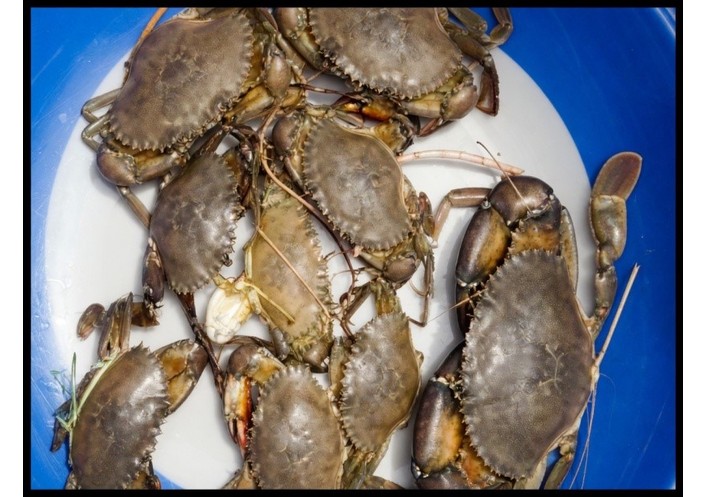
Mud crab genus Scylla (Scylla serrata, Scylla tranquebarica, Scylla olivacea, and Scylla paramamosain) is more significant than other crustaceans in mangrove ecosystems because of their primary roles in preserving and expanding mangrove forests, namely, biological burrowing and the production of bioturbations [10, 11]. Mud crabs are generally found in the mangrove forests of India, Japan, China, South Africa, Indonesia, and the Philippines of Indo-Pacific places. Likewise, Malaysia, Singapore, Western Samoa, Solomon Islands, Fiji, and New Caledonia are big mud crab habitats [11]. In the international market, mud crab, Scylla serrata (Figure 1), has a high demand among the coastal aquatic species due to its nutritional richness, size, and meat quality [12]. This review aims to critically assess a range of publications relevant to Scylla serrata to better understand the ethnopharmacological significance and supposed pharmacological properties of Scylla serrata, and this information will be useful in developing bioactive therapeutic strategies.
Since ancient times, remedies derived from animal sources have become a part of the traditional systems, among traditional healers. But in this modernized era, due to the lack of scientific validations, some of the effective traditional approaches have become dormant. To evaluate the claims of traditional healers, standardized methods for the evaluation of such treatments are essential. Some reported ethnomedicinal uses of Scylla serrata are tabulated below (Table 1).
Reported ethnopharmacological uses of Scylla serrata.
| S.L. No. | Part(s) used | Preparation(s) | Ethnomedicinal uses | Route of administration | Locale/Region | Source type | Plausible bioactive class | Proposed mechanistic rationale | Reference |
|---|---|---|---|---|---|---|---|---|---|
| 1. | Fleshy tissue | Cook with telakucha (Cephalandra indica) leaf juice. | Pulmonary tuberculosis | Oral | Sundarban, West Bengal, India | Ethnomedicinal survey among tribals | Not reported | Not reported | [13] |
| 2. | Fleshy tissue | Cook with the juice of tomato (Solanum esculentum). | Rheumatism of the elbow joint | Oral | Sundarban, West Bengal, India | Ethnomedicinal survey among tribals | Not reported | Not reported | [13] |
| 3. | Fleshy tissue juice | Boil for 15 minutes with gulancha (Tinospora cordifolia) stem bark juice. | Urticaria and skin burns | Oral | Sundarban, West Bengal, India | Ethnomedicinal survey among tribals | Not reported | Not reported | [13] |
| 4. | Fleshy tissue juice | Boil for 15 minutes with punarnava (Boerhavia diffusa) stem bark juice. | Dropsy and body swelling | Oral | Sundarban, West Bengal, India | Ethnomedicinal survey among tribals | Not reported | Not reported | [13] |
| 5. | Fleshy tissue juice | Boil for 15 minutes with ash sheora (Arista indica) root bark in the ratio of 3:1. | Stomatitis and abdominal pain | Oral | Sundarban, West Bengal, India | Ethnomedicinal survey among tribals | Not reported | Not reported | [13] |
| 6. | Carapace ash | Combine with kurchi (Hollerhena antidysenterica) stem bark dust and apply with cow ghee. | Dropsy | External application | Sundarban, West Bengal, India | Ethnomedicinal survey among tribals | Not reported | Not reported | [13] |
| 7. | Dried and powdered leg | Combine with kurchi (Hollerhena antidysenterica) stem bark dust. | Boils | External application | Sundarban, West Bengal, India | Ethnomedicinal survey among tribals | Not reported | Not reported | [13] |
| 8. | Ashes of legs and carapace | Combine with lajjabati (Mimosa pudica) and prepare like a paste. | Haemorrhoids pain, burns, and bleeding | External application | Sundarban, West Bengal, India | Ethnomedicinal survey among tribals | Not reported | Not reported | [13] |
| 9. | Fleshy tissue | Combined with the root of alkushi (Mucuna pruriens). | Dropsy | External application | Sundarban, West Bengal, India | Ethnomedicinal survey among tribals | Not reported | Not reported | [13] |
| 10. | Paste of the burned crab | Combine with leaves of alkushi (Mucuna pruriens). | Bone fracture | External application | Sundarban, West Bengal, India | Ethnomedicinal survey among tribals | Not reported | Not reported | [13] |
| 11. | Fleshy tissue juice | Combined with the halud (Lindenbergia indica). | Chronic bronchitis and asthma | Oral | Sundarban, West Bengal, India | Ethnomedicinal survey among tribals | Not reported | Not reported | [13] |
| 12. | Ashes of legs and carapace | Combined with the stem bark juice of am (Mangifera indica). | Haemorrhage and haemoptysis | Oral | Sundarban, West Bengal, India | Ethnomedicinal survey among tribals | Not reported | Not reported | [13] |
| 13. | Fleshy tissue juice | Combine with an equal quantity of leaf juice of susni shak (Marsilea minuta) and boil for 15 minutes. | Insomnia | Oral | Sundarban, West Bengal, India | Ethnomedicinal survey among tribals | Not reported | Not reported | [13] |
| 14. | Entire body content | Combine with unripe kala (Musa paradisiaca) and boil. | Skin burns | External application | Sundarban, West Bengal, India | Ethnomedicinal survey among tribals | Not reported | Not reported | [13] |
| 15. | Fleshy tissue | Cook with kulekhara (Hygrophila spinosa) leaves. | Rickets | Oral | Sundarban, West Bengal, India | Ethnomedicinal survey among tribals | Not reported | Not reported | [13] |
| 16. | Entire body content | Combine with karabi (Nerium indicum) leaf juice and boil for 15 minutes. | Ophthalmia and copious lachrymation | External application | Sundarban, West Bengal, India | Ethnomedicinal survey among tribals | Not reported | Not reported | [13] |
| 17. | Fat | Combine with the seed powder of nata (Caesalpinia bonducella). | Measles | External application | Sundarban, West Bengal, India | Ethnomedicinal survey among tribals | Not reported | Not reported | [13] |
| 18. | Fleshy tissue juice | Combine with piyara (Psidium guajava) leaf juice and prepare a paste. | Ulcer and wound | External application | Sundarban, West Bengal, India | Ethnomedicinal survey among tribals | Not reported | Not reported | [13] |
| 19. | Entire crab | Boil the carb with young shoots or leaves of piyara (Psidium guajava). | Epilepsy and chorea | Oral | Sundarban, West Bengal, India | Ethnomedicinal survey among tribals | Not reported | Not reported | [13] |
| 20. | Entire body content | Combine with the leaf paste of piyara (Psidium guajava) and prepare a paste. | Convulsion | External application | Sundarban, West Bengal, India | Ethnomedicinal survey among tribals | Not reported | Not reported | [13] |
| 21. | Entire body content | Not reported | Old age, diabetes, and skin diseases | Not reported | Mizoram & Arunachal Pradesh | Primary fieldwork (empirical learning with traditional knowledge holders), and secondary data were gathered through available literature and online sources | Not reported | Not reported | [14] |
| 22. | Entire crab | Cook or roast | Abdominal obesity in children | Oral | Rural Bangladesh—specifically floodplain freshwater (Maimals) and coastal (Jaladas) communities | Direct interviews and observations | Not reported | Not reported | [15] |
| 23. | Flesh soup | Mix with lime and green pineapple. | Manage hookworm | Oral | Rural Bangladesh—specifically floodplain freshwater (Maimals) and coastal (Jaladas) communities | Direct interviews and observations | Not reported | Not reported | [15] |
| 24. | Crab bone powder | Paste | Odeoma | Not reported | Rural Bangladesh—specifically floodplain freshwater (Maimals) and coastal (Jaladas) communities | Direct interviews and observations | Not reported | Not reported | [15] |
| 25. | Entire crab | Flesh soup | Dysentery, muscle aches, aphrodisiac, enhancing eyesight, children’s urinary incontinence at night, and slight arthritis | Not reported | Rural Bangladesh—specifically floodplain freshwater (Maimals) and coastal (Jaladas) communities | Direct interviews and observations | Not reported | Not reported | [15] |
| 26. | Flesh and bone | Ayurveda preparations (Karkataka bhasma-bone powder). | Constipation, rakta pitta, headache, tuberculosis, chronic cough, anemia, sexual debility, obstructed micturition, general debility, and neurological disorders | Not reported | Not reported | Not reported | Not reported | Not reported | [16] |
| 27. | Bone | “Arq-e-Sartan” and “Safuf-e-Sartan” (Unani medicine). | Chronic cough and tuberculosis | Not reported | Not reported | Not reported | Not reported | Not reported | [16] |
| 28. | Ash | Not reported | Biliousness, debility, haemoptysis, renal calculi, dysuria, and breast cancer | Not reported | Not reported | Not reported | Not reported | Not reported | [16] |
| 29. | Ash | Mix with ass milk | Scorpion and wasp stings | Not reported | Not reported | Not reported | Not reported | Not reported | [16] |
| 30. | Ash | Mix with honey | Dog bite wounds, vitiligo, piles, and inflammation | Not reported | Not reported | Not reported | Not reported | Not reported | [16] |
| 31. | Ash | Prepare an aqueous solution | Sore throat and diphtheria | Not reported | Not reported | Not reported | Not reported | Not reported | [16] |
| 32. | Entire crab | Soup | Reduce the symptoms of dengue fever | Oral | Not reported | Not reported | Not reported | Not reported | [17] |
| 33. | Crabmeat | Nutritious soup | Not reported | Not reported | Not reported | Not reported | Not reported | Not reported | [18] |
The databases, Web of Science, Scopus, PubMed, ScienceDirect, and SpringerLink were used to do an extensive literature search. Approximately 80% of the chosen research was published between 2015 and 2025, which is when the search was conducted. When supported by scientific evidence, earlier pertinent papers were included. The terms “Scylla serrata”, “ethnopharmacological uses”, “chemical constituents”, “antioxidant”, “anticancer”, and “neuroprotective” were all utilized.
Studies that satisfied the following requirements were included: peer-reviewed scholarly publications, published in English, concentrated on marine organisms, especially Scylla serrata, and chemical components, pharmacological actions, or reported ethnopharmacological applications.
The following were not included: abstracts of conferences, duplicates, research that only uses animal testing, and articles that are irrelevant and unrelated to the review’s goals.
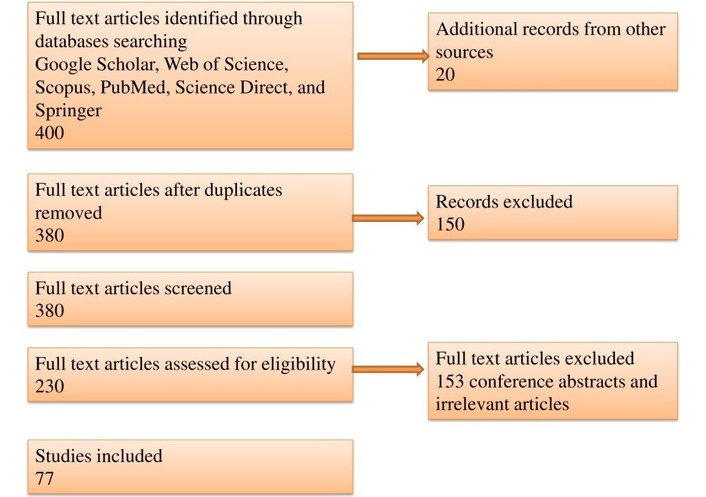
A total of 400 records were found. 380 studies were evaluated after duplicates were eliminated, and 150 of them were eliminated. After 230 articles’ full texts were evaluated, 153 were eliminated. The review ultimately comprised 77 studies (Figure 2). ToxRTool for in vitro studies and SYRCLE for animal studies were used to evaluate methodological quality and bias risk. Additionally, a simplified rubric was used to evaluate study design, data dependability, and reporting transparency.
Proteins, fatty acids, bioactive peptides, amino acids, carbohydrates, and minerals are a few value-added nutrients present in the muscle of Scylla serrata. The attention-grabbing fact is that their chemical constituents will fluctuate depending on the sex, size, and season. The reported biochemical constituents are tabulated (Table 2).
Biochemical constituents from crab Scylla serrata F.
| Study location/area | Protein | Lipid | Carbohydrates | Reference |
|---|---|---|---|---|
| Coringa mangroves | ♂ = 31.98%♀ = 31.97% | - | - | [19] |
| Pulicat Lake, Chennai | Haemolymph = 22.5%, thoracic muscle = 3.25%, claw muscle = 14.5% and leg muscle = 5.0% | Haemolymph = 0.10%, thoracic muscle = 0.20%, claw muscle = 0.25% and leg muscle = 0.20% | Haemolymph = 1.8%, thoracic muscle = 2.7%, claw muscle = 3% and leg muscle = 2.2% | [20] |
| Philippines | ♂ = 12.10%Intermediate sex = 13.0%♀ = 17.38% | - | - | [21] |
| Andhra Pradesh | 22.14 ± 1.25% | - | - | [22] |
| Gujarat and Maharashtra | 47. 7 ± 21.74% | 4.03 ± 2.83% | 11.72 ± 2.35% | [23] |
| Sundarban mangrove, Bangladesh | ♂ = 18.78 ± 0.22%♀ = 24.54 ± 1.32% | ♂ = 1.75 ± 0.42%♀ = 2.62 ± 0.12% | - | [24] |
| Vellar estuarine | 10.97% | - | - | [25] |
| Kovalam | ♂ = 18.26%♀ = 14.02% | - | - | [26] |
According to a study on Scylla serrata, its muscle tissue has a significant amino acid profile and high-quality protein, with substantial concentrations of glycine, lysine, serine, and tyrosine that significantly improve its nutritional value. Glycine was found to be a significant amino acid that gives crab flesh its distinctive sweet flavor. Scylla serrata was discovered to have significant levels of vitamins A, B-complex, and C in addition to being abundant in proteins and carbohydrates [27]. The shell of the crab from the Merauke mangrove contained basic bioceramic materials such as 19.78% carbon (C), 24.53% oxide (O), 4.81% magnesium oxide (MgO), 3.98% phosphorus pentaoxide (P2O5), and 71.42% calcium oxide (CaO). There was 6.27% carbon, 28.96% oxide, 5.78% MgO, 5.65% P2O5, and 82.3% CaO during the calcination phase at 1,000°C [28]. It was observed that the amount of carbon had reduced after calcination. About 53 compounds were identified from steamed mangrove crab meat by the GC-GC-Olfactometry method, and among them, 31 compounds were documented. The 5 important compounds were 2,3-butanedione (1), 2,5-dimethyl pyrazine (2), 3-methyl butanal (3), 2-acetyl-1-pyrroline (4), and 2-acetyl thiazole (5) (Figure 3) [29].
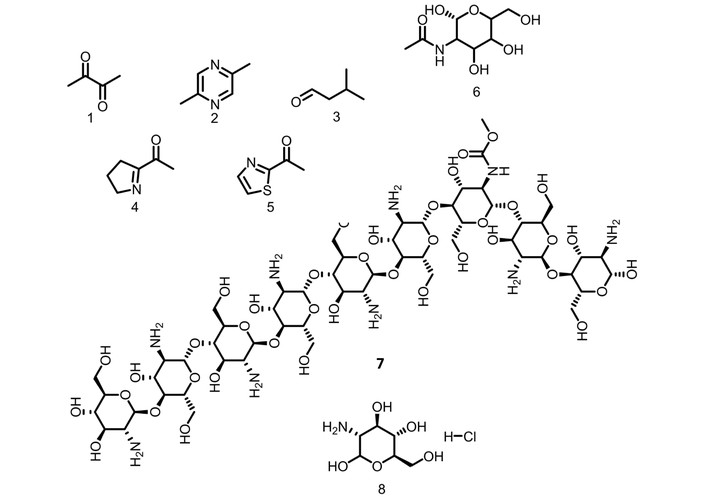
Structures of compounds 2,3-butanedione (1), 2,5-dimethyl pyrazine (2), 3-methyl butanal (3), 2-acetyl-1-pyrroline (4), 2-acetyl thiazole (5), chitin (6), chitosan (7), and glucosamine hydrochloride (8). Drawn using ChemDraw Professional 19.0.
Crab shell was found to contain chitin (6), chitosan (7), and submicron-sized chitosan particles, and the amount was calculated on a dry weight basis (Figure 3) [30–32]. Because of their cationic composition, chitin and chitosan have shown potent antibacterial effects [33] and have useful biomedical applications in tissue engineering, orthopedic and periodontal applications, drug delivery systems, and wound healing [34]. Also, chitin and chitosan compounds could be further used as derivatives for the production of glucosamine hydrochloride (8) (Figure 3) [35], which has anti-inflammatory, antioxidant, antiaging, cardioprotective, chondroprotective, hepatoprotective, and cytoprotective properties [36].
The polyunsaturated fatty acids present in the chelate leg (4.82%) and ovary (8.07%) of the mud crab were linolelaidic acid (9), linolenic acid (10), eicosadienoic acid (11), arachidonic acid (12), and eicosapentaenoic acid (13) (Figure 4).
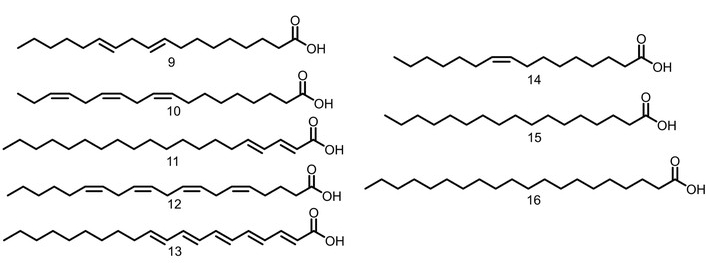
Structures of compounds linolelaidic acid (9), linolenic acid (10), eicosadienoic acid (11), arachidonic acid (12), eicosapentaenoic acid (13), palmitoleic acid (14), heptadecanoic acid (15), and arachidic acid (16). Drawn using ChemDraw Professional 19.0.
Palmitoleic acid (14), heptadecanoic acid (15), and arachidic acid (16) (Figure 4) were also found in the chelate leg (4%) and ovary (7%) as monounsaturated fatty acids [37]. The lipid content of wild Scylla serrata was 0.65 ± 0.1%, and it was slightly greater than cage fattened crab (0.56 ± 1%). Polyunsaturated fatty acids (39–43%) were the most common fatty acids in Scylla serrata, with oleic acid (17) being the most abundant (16–21%). At the stocking and harvest stages of the fattening process, the contents of oleic acid, gondoic acid (18), docosatetraenoic acid (19), and docosahexaenoic acid (20) varied greatly between crabs (Figure 5) [38].
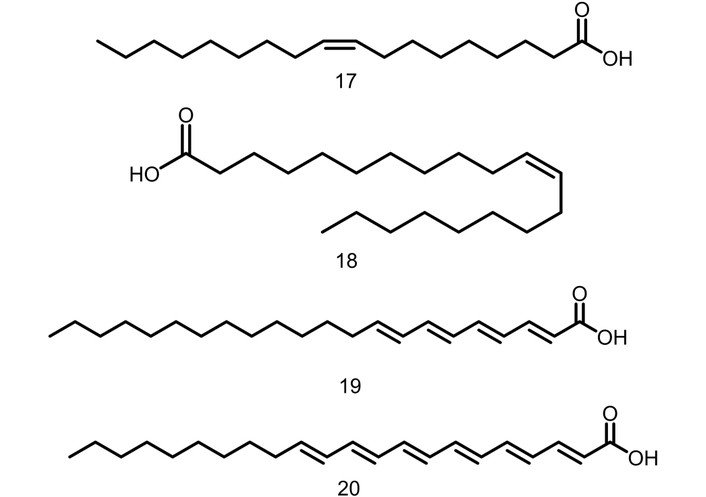
Structures of compounds oleic acid (17), gondoic acid (18), docosatetraenoic acid (19), docosahexaenoic acid (20). Drawn using ChemDraw Professional 19.0.
Reactive oxygen species like superoxide anion (O2–), perhydroxy radical (HOO•), hydrogen peroxide (H2O2), hydroxyl radical (•OH), alkoxy radical (RO•), and peroxy radicals (ROO•) can cause oxidative stress in cells. All organisms have either enzymatic or non-enzymatic antioxidant defensive systems for protecting the cells from various injuries [39]. Compared to terrestrial organisms, marine organisms are very sensitive to oxidative stress due to climate change in the sea, and the stress could be heat or ultraviolet radiation and this stress leads to the production of metabolites for their defense mechanism [40].
The antioxidant potential of Scylla serrata by DPPH (2,2-diphenyl-1-picrylhydrazyl) and ABTS [2,2’-azino-bis(3-ethylbenzothiazoline-6-sulphonic acid)] assay methods has been determined and was found as 35% and 41% for soluble chitosan, 19% and 33% for haemolymph, and 49% and 61% for muscle extract, respectively. The muscle extract exhibited the highest activity [41]. Using molecular modeling and docking techniques, a recent study revealed the molecular basis of the interactions between SOD (superoxide dismutase) inhibitors and extracellular-SOD in the Scylla serrata. According to the GOLD findings, Pro72, Asp102, and Thr103 are commonly the sites where SOD inhibitors and Ec-SOD of Scylla serrata interact [42]. In Scylla serrata, SOD is an important antioxidant enzyme that promotes innate immunity and guards against oxidative stress. The SOD gene’s crucial function in stress protection and evolutionary adaptation was established by its isolation and sequencing [43]. In a study, using Scylla serrata shell flour, the average output of astaxanthin produced with varying acetone concentrations was 3.29 g. The antioxidant activity at the optimal acetone concentration of 65% had the IC50 value of 805.837 μg/mL [44]. Scylla serrata extract had an IC50 value of 2.25 ppm, indicating very significant antioxidant activity. This finding suggests that 50% of DPPH radicals can be inhibited by a small amount of the extract [45]. A study revealed that soil and water characteristics like temperature, salinity, and mineral load had a significant impact on Scylla serrata’s oxidative stress and antioxidant enzyme activity. The highest antioxidant enzyme activity was found in the hepatopancreas, which rose in dry seasons and had a positive correlation with physicochemical stresses [46].
With an IC50 of 65.25 ppm, Scylla serrata ethanol extracts demonstrated dose-dependent antioxidant activity in the DPPH experiment, suggesting high antioxidant potential [47]. Allantoin, CAT, and GR were important regulators of oxidative stress, and allantoin plays a part in Scylla serrata’s seasonal antioxidant homeostasis [48]. Crab-derived antioxidants have shown potential activity in various in vitro models. In the future, oxidative stress-related diseases like cardiovascular, neurodegenerative, and metabolic disorders may be treated with the isolated compounds from the crab.
Many bioactive compounds from different marine sources have been found to inhibit the proliferation of several cancer cells. The mud crab soup Scylla serrata has shown antiproliferative and anticancer properties on the Jurkat leukemic T-cell line by MTT colorimetric technique with an inhibitory concentration of 35% (v/v) in a dose and time-dependent manner compared to the standard drug cisplatin [49]. Strong antibacterial activity and the formation of homogeneous spherical chitosan/silver nanocomposites were demonstrated by the chitosan derived from Scylla serrata shells, which also demonstrated anticancer potential against the MCF-7 cell line [50]. High molecular weight (HMW) chitosan and low molecular weight (LMW) chitosan have been found effective against breast cancer (MCF-7), cervical cancer (HeLa), and osteosarcoma (Saos-2) cell lines at IC50 values of 1.68, 1.0, 1.7 mg/mL for HMW and 1.76, 1.0, and 1.63 mg/mL for LMW chitosan, respectively [51]. Haemocyanin (HC) (95 kDa), a copper-containing respiratory protein, was isolated from the haemolymph of the mud crab Scylla serrata. The IC50 of HC was found at 80 µg/mL against lung cancer (A549) cell lines [52].
Lectins are a group of glycoproteins of non-immune origin, specific to carbohydrates, and have at least two carbohydrate-binding sites. They are found in plants, animals, and microorganisms. Lectins’ precipitating and agglutinating properties are similar to antibodies, but like antibodies, they do not synthesize immunoglobulins. Due to their specificity to a certain type of carbohydrate, they can be used as a target in the drug delivery system and as a cancer biomarker for recognizing malignant tumor cells for the diagnosis and prognosis of cancer [53, 54]. Scylliin-2 (calcium-dependent monomeric lectin; 75 kDa) from the haemolymph of mud crabs had high sensitivity towards polyvalent Tn/T containing glycoproteins, a type of antigen present on the surface of the tumor cells. The mitogenic property of isolated Scylliin-2 was tested against BALB/c splenocytes, and 10 μg/mL of Scylliin-2 showed significant activity against BALB/c splenocytes. The IC50 value of Scylliin-2 on HepG2 was 80 μg/mL [55]. Chitin was evaluated for cytotoxicity at doses of 1, 25, 50, 75, and 100 μg/mL. It has shown cytotoxicity with an IC50 of 64.39 ± 1.315 μg/mL against HepG2 cells [56].
In comparison to pravastatin (IC50 = 6.95 ± 0.189 μg/mL; 92.82% inhibition), chitin derived from mangrove crab shells demonstrated modest HMG CoA reductase inhibition (IC50 = 36.65 ± 0.082 μg/mL; 68.73% inhibition at 100 μg/mL). Enzyme inhibition was indicated by the decrease in mevalonate synthesis. Strong binding affinities (−3.6 to −5.8 kcal/mol) to important targets of lipid metabolism were found by in silico research. The blood-brain barrier permeability and non-toxicity were verified by ADMET analysis. Stable binding to HMG CoA reductase was demonstrated using molecular dynamics simulations [56].
In a three-week in vivo study, oral administration of Scylla serrata extract (7.0 mg protein/kg and 52 mg protein/kg) has shown an antianemic effect in Wistar rats through alleviation of RBC, Hb, haematocrit (HCT), and mean corpuscular haemoglobin (MCH) levels [57].
Crabs and other aquatic organisms have the property to release antimicrobial peptides, as part of their innate immune system, since they are exposed to various bacterial strains and live in numerous contaminated environments. These peptides are released not only from the crab haemolymph but also from the exoskeleton. Recently, many researchers have exclusively studied and reported the antibacterial properties of the mud crab Scylla serrata. Six crab species’ haemolymph extracts exhibited antibacterial efficacy against ten bacterial strains (n = 3). The most significant zone of inhibition (ZOI) was demonstrated by Scylla tranquebarica (10 mm, V. cholerae), Scylla serrata (6–6.5 mm, maximum against L. delbrueckii subsp. bulgaricus), and Macrophthalmus depressus (5 mm) [58]. An antibacterial protein, SSAP (Scylla serrata antimicrobial protein; 11 kDa), from granular hemocytes, was isolated, characterized, and evaluated against gram-negative and gram-positive bacterial strains. The inhibitory concentration (MIC) of SSAP was in the order P. aeruginosa (12.5–25 μg/mL), E. coli (25–50 μg/mL), S. pyogenes (25–50 μg/mL), and S. aureus (50–100 μg/mL) [59].
The natural polysaccharide chitin, which was extracted from the carapace, chelate legs, and walking legs of crabs, had antibacterial action against S. aureus (8.4–10.4 mm), S. epidermidis (7.9–9.7 mm), B. subtilis (7.5–9.1 mm), P. aeruginosa (5.6–7.2 mm), and P. mirabilis (5.3–6.8 mm). Disk diffusion was used to measure activity (4.5 mm discs, nutritional broth, 1 × 10⁸ CFU/mL, 37°C, 17 h, n = 3), with DMSO and penicillin serving as the negative and positive controls, respectively. Millimeters were used to measure the zones of inhibition [60]. After being extracted from Scylla serrata haemolymph (β-GBP: 100 kDa), β-GBP and HC were structurally confirmed using FTIR, XRD, CD, and HPLC. At 50–100 μg/mL, Scylla serrata beta-glucan binding protein (Ss-β-GBP) demonstrated dose-dependent antibiofilm effects and immunomodulatory action (yeast agglutination, phagocytosis, PO enhancement). When tested against both gram-positive (E. faecalis, S. aureus) and gram-negative (E. coli, P. aeruginosa) bacteria, its antibacterial activity revealed MICs < 60 μg/mL. At 100 μg/mL, HC also produced zones of inhibition against V. harveyi (17 mm), V. alginolyticus (16.5 mm), V. vulnificus (16 mm), and V. parahaemolyticus (14.5 mm), demonstrating bacteriostatic actions. Although in vivo and clinical validation are still needed, our results demonstrate the therapeutic potential of Scylla serrata haemolymph proteins [61].
Scygonadin (10.8 kDa) is an anionic antimicrobial peptide isolated and purified from the seminal plasma of Scylla serrata, which has shown potent activity against Micrococcus luteus at IC90 of 0.125 mg/mL [62]. Two antimicrobial peptides, Sc-ALF (Scylla-anti-lipopolysaccharide) and Sc-crustin (Scylla crustin), from the haemocytes of the mud crab with molecular weights of 11.17 kDa and 10.24 kDa, respectively have been reported for the first time [63]. Haemolymph was extracted from the dactylus area of the walking legs of Scylla serrata, allowed to clot, centrifuged (450 g, 10 min, 4°C), and the serum that resulted was used right away. Under controlled conditions, the MTT colorimetric test was used to measure the antibacterial activity against crustacean pathogens (V. harveyi, V. vulnificus, V. alginolyticus, V. parahaemolyticus, and V. anguillarum) and bacteria obtained from crabs (Bacillus sp., B. flexus, E. coli, and P. aeruginosa). Crab serum (1.224 mg protein) has shown potent antibacterial properties against Bacillus sp. N1, B. flexus N3, E. coli, and some of the pathogenic strains of crabs like V. harveyi, V. alginolyticus, and V. vulnificus, and found that a 14 kDa protein in the serum was responsible for the activity [64].
Chitosan derived from the shell of Scylla serrata showed significant antibacterial action against both gram-positive and gram-negative bacteria, such as Bacillus, Pseudomonas, E. coli, and Staphylococcus. Along with advantageous structural and physicochemical traits, the isolated chitosan demonstrated robust antibacterial qualities, especially against E. coli, indicating its possible uses in microbiology and medicinal science [65]. Antibacterial haemocyanin (AB-Hcy) from the serum of the mud crab Scylla serrata was characterized, and AB-Hcy (15 μg/mL) has shown bacteriolytic properties against Bacillus sp. N1, B. flexus N3, E. coli, P. aeruginosa, V. harveyi, V. parahaemolyticus, and V. vulnificus. The highest activity has been shown against V. harveyi (0.248 units·min−1·mg protein) and E. coli (0.202 units·min−1·mg protein). The growth of crustacean pathogenic bacteria was also significantly inhibited by AB-Hcy [66]. Some of the reported antimicrobial compounds from mud crab Scylla serrata are tabulated (Table 3).
Antimicrobial compounds from Scylla serrata F.
| Parts used | Name of antimicrobial compound | Molecular weight (kDa) | Reference |
|---|---|---|---|
| Haemolymph extract | - | - | [58] |
| Granular haemocytes | Scylla serrata antimicrobial protein (SSAP) | 11 | [59] |
| Shell | Chitin | - | [60] |
| Haemolymph | Haemocyanin (HC) | [61] | |
| Haemolymph | Scylla serrata beta-glucan binding protein (Ss-β-GBP) | 100 | |
| Seminal plasma | Scygonadin | 10.8 | [62] |
| Hemocytes | Sc-ALF (Scylla-anti-lipopolysaccharide) and Scylla crustin (Sc-crustin) | 11.17 & 10.24 | [63] |
| Serum | - | 14 | [64] |
| Shell | Chitosan | - | [65] |
| Serum | Antibacterial haemocyanin (AB-Hcy) | - | [66] |
| Haemolymph | Ss-arasin | 7 | [67] |
| Gill | MC-crustin | 10.164 | [68] |
Although these compounds have shown antibacterial activity in vitro, indicating the possibility of further investigation as therapeutic agents, their safety and efficacy in vivo have not been investigated, and translational applications should be handled carefully with additional preclinical validation.
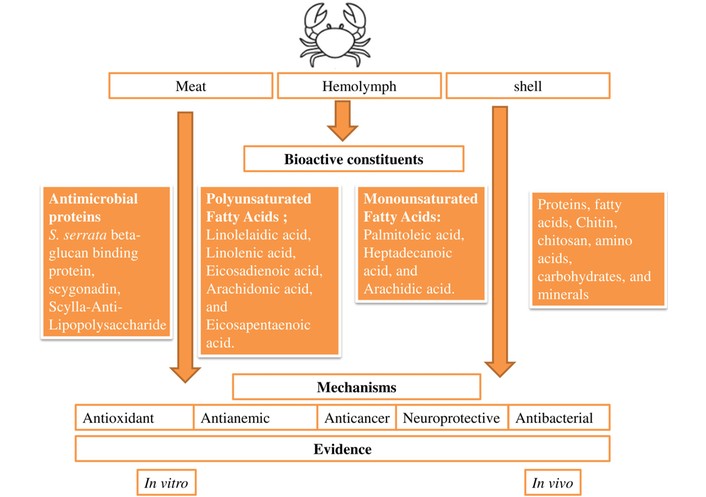
Traditional medicine has long utilized Karkataka Taila (KT), a classic Ayurvedic Rasayana made from Scylla serrata for neurological health and regeneration. It has long been thought to promote nervous system function and increase vitality. According to current experimental research, KT may have neuroprotective and anti-Parkinson’s benefits. In vitro experiments with human neuroblastoma (SH-SY5Y) cells showed that KT decreased oxidative stress (ROS and SOD) and neuroinflammatory markers (IL-6, IL-1β, TNF-α, and nitrite) while raising dopamine levels. Studies conducted in vivo on male Wistar rats showed protective effects on behavioral performance as well as improvements in oxidative stress, neuroinflammation, and dopamine levels [69]. However, it is too early to determine whether these findings are relevant to humans. Dosimetry issues and the formulation’s standardization caused by variations in the marine and herbal components present major obstacles to clinical translation. For KT to be safe, effective, and reproducible in possible therapeutic applications, strict pharmacological validation and consistent preparation procedures are required. The key pharmacological activities of Scylla serrata based on published scientific evidence are illustrated in Figure 6.
The lack of adequate toxicity studies on Scylla serrata has hindered its advancement toward medicinal application and clinical trials by failing to demonstrate its safety and effectiveness. A thorough toxicity evaluation is lacking in the majority of investigations, despite the fact that a number of pharmacological activities, including antioxidant, anti-anemic, and antibacterial properties, have been documented. While an acute oral toxicity study in Swiss albino mice at 2,000 mg/kg revealed no negative effects, a Rasayana preparation made from the crab (KT) demonstrated cytotoxicity toward human neuroblastoma (SH-SY5Y) cells at high dosages in an in vitro MTT assay [69, 70]. Further safety concerns have been raised by reports of environmental pollution of Scylla serrata habitats, with higher amounts of copper, chromium, and cadmium found in related sediments [71]. In carefully planned clinical trials, pharmacokinetic and pharmacodynamic profiles are also still mostly unknown. Furthermore, reproducibility and study comparison are jeopardized by the absence of standardized extraction and formulation preparation techniques. Therefore, before Scylla serrata-derived products can be evaluated for therapeutic uses, regulatory evaluation based on standardized production, verified toxicity testing, and quality control is necessary.
Concerns about food safety and health have been raised by reports that Scylla serrata can bioaccumulate heavy metals, including lead, mercury, and cadmium, from contaminated surroundings as well as microplastics, primarily polypropylene (PP) and high-density polyethylene (HDPE) [72]. Furthermore, the main causes of allergic reactions linked to eating crabs are the 36 kDa heat-stable protein tropomyosin and the 41 kDa heat-labile protein arginine kinase, both of which can cause IgE-mediated hypersensitivity in vulnerable people [73, 74]. Before Scylla serrata-derived products are produced for food or nutraceutical uses, regulatory evaluation is necessary to ensure safety, quality, and compliance. These findings further highlight the significance of standardized preparation procedures to limit impurities and allergen content.
Edible crustaceans such as shrimps, crabs, lobsters, and prawns are globally important both nutritionally and economically. Shrimps dominate global aquaculture and trade, contributing about 45% of Indonesia’s total fishery exports and nearly 80% of cultivated shrimp worldwide, mainly represented by Penaeus monodon and Litopenaeus vannamei. Crabs account for approximately 20% of the marine crustacean species captured and cultured globally, with Portunus pelagicus comprising nearly one-fifth of this production. Lobsters, particularly Panulirus versicolor, Homarus gammarus, and Homarus americanus, are among the most valuable crustaceans due to their higher market price compared with other animal protein sources. Freshwater prawns of the genus Macrobrachium (e.g., M. rosenbergii, M. nipponense, and M. malcolmsonii) represent the primary cultivated freshwater crustaceans.
Compared with these widely consumed crustaceans, smaller crustaceans such as krill, copepods, and branchiopods play a crucial ecological role by linking phytoplankton to higher trophic levels and are increasingly exploited for aquaculture feed and pharmaceutical applications. However, although extensive data exist on the production, nutritional value, and bioactive components of shrimp, crabs, and lobsters, mechanistic evidence explaining their pharmacological actions and robust clinical validation remains limited across crustacean groups [75].
In this context, the mud crab Scylla serrata has considerable potential for further exploration, particularly for the isolation and characterization of lead compounds using bioactivity-guided fractionation. Although several pharmacological activities have been reported, most findings are based on preliminary in vitro or in vivo studies, and the underlying molecular mechanisms of action remain largely unexplored. Moreover, systematic toxicity evaluation of extracts and isolated compounds in appropriate in vitro and in vivo models is necessary prior to clinical investigation and commercialization. The existing data are therefore insufficient to conclusively support the therapeutic effectiveness of Scylla serrata as a drug source. Additionally, only a limited number of qualitative and quantitative studies have characterized its chemical constituents. Consequently, comprehensive biochemical profiling, mechanistic studies, and well-designed pre-clinical investigations are essential to establish the therapeutic relevance of mud crab-derived compounds. There is a need for an extensive mechanistic investigation into pharmacological activities that have the ability to investigate the precise mechanism of these extracts or pure chemicals in the treatment of many ailments indicated in traditional knowledge. Prerequisites for clinical research and commercialization include toxicity assessment of the extract and isolated chemicals in various in vitro and in vivo models. Research on the chemical constituents, both qualitative and quantitative, is currently lacking. Therefore, the most crucial recommendations for examining the crab’s therapeutic efficacy are more biochemical analysis and pre-clinical research.
Based on traditional use and early scientific data, Scylla serrata has a rich biochemical composition that includes proteins, amino acids, and polyunsaturated fatty acids. This composition supports documented antibacterial, antioxidant, neuroprotective, anticancer, and antidyslipidemic effects. The preponderance of in vitro and preclinical data, the lack of molecular knowledge, and the lack of clinical safety and efficacy validation, however, continue to limit its translational potential. Major challenges include inadequate standardization of preparations, insufficient toxicological and pharmacokinetic data, and variability arising from environmental contamination and allergenicity. Prior to conducting clinical feasibility studies, future research should follow a structured translational framework that includes bioassay-guided fractionation → target identification → thorough pharmacokinetic and toxicological evaluation → validation in pertinent in vivo disease models → the creation of standardized extracts. To transform Scylla serrata from an ethnomedicinal resource into a scientifically proven marine-derived therapeutic candidate, these issues must be resolved.
AB-Hcy: antibacterial haemocyanin
HC: haemocyanin
HMW: high molecular weight
KT: Karkataka Taila
LMW: low molecular weight
Sc-ALF: Scylla-anti-lipopolysaccharide
Sc-crustin: Scylla crustin
SOD: superoxide dismutase
SSAP: Scylla serrata antimicrobial protein
Ss-β-GBP: Scylla serrata beta-glucan binding protein
The authors gratefully acknowledge JSS College of Pharmacy, JSS Academy of Higher Education and Research, Ooty, The Nilgiris, Tamil Nadu, India, for providing research facilities, institutional support, and academic resources that facilitated the completion of this work.
DN: Conceptualization, Data curation, Formal analysis, Methodology, Resources, Visualization, Writing—original draft, Writing—review & editing, Funding acquisition. RS and BD: Supervision, Writing—review & editing. All authors have read and agreed to the published version of the manuscript.
The authors declare that there are no conflicts of interest.
Not applicable.
Not applicable.
Not applicable.
Not applicable.
The financial assistance is provided by the JSS Academy of Higher Education and Research, Mysuru, Karnataka, India (REG/DIR(R)/JSSURF/29(1)/2010-11–05/12/201) with funding received by Deepika N.P. The funders had no role in study design, data collection and analysis, decision to publish, or preparation of the manuscript.
© The Author(s) 2026.
Open Exploration maintains a neutral stance on jurisdictional claims in published institutional affiliations and maps. All opinions expressed in this article are the personal views of the author(s) and do not represent the stance of the editorial team or the publisher.
Copyright: © The Author(s) 2026. This is an Open Access article licensed under a Creative Commons Attribution 4.0 International License (https://creativecommons.org/licenses/by/4.0/), which permits unrestricted use, sharing, adaptation, distribution and reproduction in any medium or format, for any purpose, even commercially, as long as you give appropriate credit to the original author(s) and the source, provide a link to the Creative Commons license, and indicate if changes were made.


View: 1650
Download: 35
Times Cited: 0