Review


Affiliation:
1International Centre for Biotechnology (ICB) Under the Auspices of UNESCO, University of Nigeria, Nsukka 410105, Nigeria

Affiliation:
2Department of Food Science and Technology, College of Food Technology and Human Ecology, Federal University of Agriculture, Makurdi 970101, Nigeria
Email: toteupstar@outlook.com
ORCID: https://orcid.org/0000-0002-5127-0815

 ,
,
Affiliation:
2Department of Food Science and Technology, College of Food Technology and Human Ecology, Federal University of Agriculture, Makurdi 970101, Nigeria
Affiliation:
2Department of Food Science and Technology, College of Food Technology and Human Ecology, Federal University of Agriculture, Makurdi 970101, Nigeria
Affiliation:
3Department of Food Science and Technology, University of Nigeria, Nsukka 410105, Enugu State, Nigeria
Email: chigozie.okoyeuzu@unn.edu.ng
ORCID: https://orcid.org/0000-0003-2987-5049
,
Affiliation:
3Department of Food Science and Technology, University of Nigeria, Nsukka 410105, Enugu State, Nigeria
Affiliation:
3Department of Food Science and Technology, University of Nigeria, Nsukka 410105, Enugu State, Nigeria
Affiliation:
3Department of Food Science and Technology, University of Nigeria, Nsukka 410105, Enugu State, Nigeria
Affiliation:
4Executive Assistant to the Governor, Delta State Government, Asaba 320241, Nigeria
Affiliation:
2Department of Food Science and Technology, College of Food Technology and Human Ecology, Federal University of Agriculture, Makurdi 970101, Nigeria
Affiliation:
5Department of Food Engineering, Kombolcha Institute of Technology, Wollo University, Wollo1145, Ethiopia
ORCID: https://orcid.org/0000-0003-3778-2192
,
Affiliation:
3Department of Food Science and Technology, University of Nigeria, Nsukka 410105, Enugu State, Nigeria
Explor Foods Foodomics. 2026;4:1010161 DOI: https://doi.org/10.37349/eff.2026.1010161
Received: August 20, 2025 Accepted: March 10, 2026 Published: June 08, 2026
Academic Editor: Ángel Ríos, University of Castilla, Spain
The intricate relationship between humans and plants is fundamental to understanding indigenous communities’ reliance on natural resources. This review critically examines the increasing global recognition of the significance of edible wild plants (EWPs), especially in low-income communities and during periods of food insecurity. This study provides a vital and comprehensive perspective for shaping policies and practices that ensure the sustained availability and utilization of these essential resources in an ever-changing world. It achieves this by combining ethnobotanical knowledge with an understanding of the biofunctional properties of EWPs. Published studies from 2007–2025 were retrieved from Google Scholar, Web of Science, Scopus, and Mendeley using a structured screening process involving identification, eligibility assessment, and full-text review. Articles were included if written in English, focused on EWPs in sub-Saharan Africa, and reported nutritional, medicinal, or socio-economic data. Studies lacking empirical evidence or addressing only cultivated crops were excluded. Data were extracted using predefined criteria, and study heterogeneity was addressed through thematic synthesis rather than quantitative pooling. The review shows that EWPs are rich in proteins, carbohydrates, vitamins, and minerals, and function as important supplements or alternatives to conventional plant-based diets, providing both nutritional and medicinal benefits. Among EWPs, fruits, leaves, and seeds are widely used for both consumption and medicinal purposes, often consumed raw. Despite their significance, EWPs face imminent threats such as agricultural expansion, logging, illegal exploitation, and deforestation in Nigeria and various parts of the world, endangering these invaluable resources. Urgency is imperative in adopting sustainable practices for the utilization of EWPs, emphasizing their pivotal role in ensuring nutritional security and preserving biological diversity. This review underscores the critical need for immediate action to safeguard these resources, promoting their sustainable utilization for the benefit of humanity and the environment.
The study of human-plant interactions is vital for understanding how indigenous populations utilize natural resources, particularly edible wild plants (EWPs), for food, health, and cultural practices. Across Nigeria and other parts of sub-Saharan Africa, EWPs play a significant role in supporting rural livelihoods and food security, especially during periods of scarcity and environmental stress [1, 2]. These plants are often rich in essential nutrients and bioactive compounds, and their use is deeply embedded in traditional knowledge systems. Ethnobotanical knowledge of EWPs is crucial, especially in rural areas where these plants serve as vital food sources during periods of scarcity. Passed down through generations and increasingly documented through modern research, this knowledge supports food security, biodiversity conservation, and sustainable agriculture [3, 4].
Although numerous ethnobotanical surveys and nutritional analyses have documented various species of EWPs in Nigeria, most existing literature remains largely descriptive, focusing on cataloging species, their proximate compositions, and ethnomedicinal uses [5, 6]. While these studies provide a foundational understanding, there is a noticeable lack of synthesis that critically examines the implications of such findings. For example, while many EWPs are identified as good sources of carbohydrates, proteins, or minerals, few studies compare their nutritional bioavailability or synergistic health benefits relative to conventional crops [7]. Similarly, the extent to which EWPs can sustainably contribute to national food systems, public health interventions, or biodiversity conservation is underexplored. Some studies suggest that certain EWPs, such as Dioscorea praehensilis in the north and Detarium microcarpum (D. microcarpum) in the west, offer nutritional profiles comparable to domesticated species like yams and cowpeas [6, 8]. However, there is limited comparative analysis on regional variations in species utilization or consumer acceptance. Moreover, while the Food and Agriculture Organization (FAO) estimates that over one billion people worldwide rely on wild plants for food [2, 9], there is insufficient data on how EWPs are integrated into broader food security strategies, particularly in the Nigerian context. Another significant gap in the literature is the lack of exploration into the economic and environmental potential of EWPs. Questions around their scalability, resilience to climate change, and role in reducing reliance on food imports remain inadequately addressed. Furthermore, increasing threats such as deforestation, overharvesting, and agricultural encroachment have not been critically linked to conservation or cultivation strategies in most studies [10–12]. Therefore, this review seeks not only to document the ethnobotanical significance and biofunctional properties of selected EWPs in Nigeria but also to provide a critical synthesis of existing literature. It aims to identify knowledge gaps, assess their potential contributions to nutrition, health, and sustainability, and propose strategic directions for future research and policy development.
Published literature from 2007 to 2025 was systematically retrieved from multiple electronic databases, including Google Scholar, Web of Science, Scopus, and Mendeley. The search strategy used a combination of keywords and Boolean operators to ensure comprehensive coverage, including terms such as “edible wild plants”, “ethnobotany”, “biofunctional properties”, “nutritional value”, “medicinal uses”, and “sub-Saharan Africa”. Only studies published in English and reporting empirical data on EWPs were considered eligible. Although records were initially retrieved for sub-Saharan Africa, only studies relevant to Nigeria were retained during the full-text screening stage. In addition, reference lists of eligible articles were manually screened to identify supplementary studies not captured during the database search.
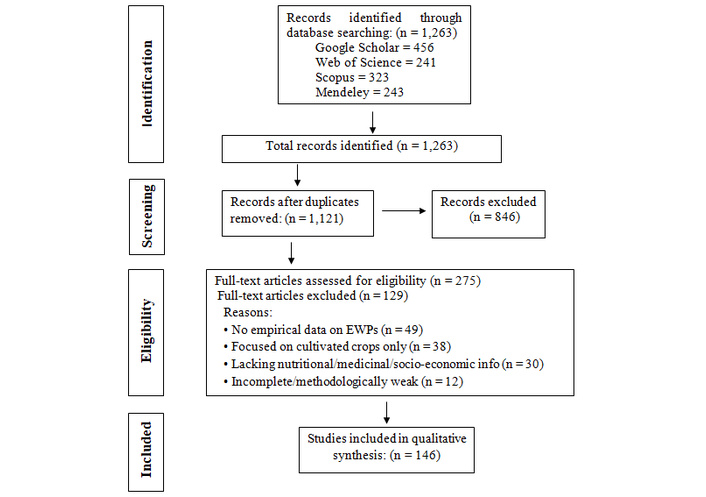
A structured literature screening process was followed, including identification, screening, eligibility assessment, and inclusion:
Identification: A total of 1,263 records were identified through database searches.
Screening: After removing duplicates, 1,121 records were screened by title and abstract. Of these, 846 records were excluded for irrelevance.
Eligibility: 275 full-text articles were assessed for eligibility. 129 articles were excluded for the following reasons: (1) No empirical data on EWPs (n = 49); (2) Focused on cultivated crops only (n = 38); (3) Lacking nutritional, medicinal, or socio-economic information (n = 30); (4) Incomplete or methodologically weak (n = 12).
Included: A total of 146 studies were included in the qualitative synthesis.
Data extraction was performed using predefined criteria, capturing: plant species and parts used. Nutritional composition (proteins, carbohydrates, vitamins, minerals), biofunctional or medicinal properties, and socio-economic relevance and consumption patterns. Heterogeneity among studies, arising from differences in study design, geographic locations, and reporting formats, was addressed through thematic synthesis, allowing the identification of consistent patterns and key insights across diverse studies.
The 146 included studies provided comprehensive information on the nutritional, medicinal, and socio-economic roles of EWPs in sub-Saharan Africa. Most studies highlighted the use of fruits, leaves, and seeds, often consumed raw or incorporated into local diets. EWPs were found to provide high nutritional value and medicinal benefits, complementing conventional diets. Despite these benefits, EWPs face threats from agricultural expansion, logging, illegal exploitation, and deforestation, emphasizing the urgent need for sustainable conservation and utilization strategies (Figure 1).
Some of these EWPs are found in different locations in Nigeria. For instance, Adansonia digitata L., Blighia sapida Akee, and Xylopia aethiopic are found in the northern, western, and eastern regions, respectively. The reason for their abundance in these regions is due to the indigenous knowledge and uses of these plants by the people in that location (Table 1). The local populations’ knowledge of their natural resources is mostly focused on how plants are used, how plant resources are disseminated throughout the system they manage, and how plants and animals interact in their ecosystem [1]. Wild plants that can be used for food if harvested at the right period of development and processed properly are known as EWPs [13]. Wild plants that are edible range from weeds that flourish in cities to native species that grow in remote places. Indigenous people who live in a region rely on using wild plants or plant parts to meet their needs, and they frequently have a thorough understanding of how to use them [14]. Apart from being used by poor communities, EWPs are also frequently taken as a dietary supplement in even the most developed parts of the world [13].
Culinary applications and traditional uses of selected edible wild plants (EWPs) in various regions of Nigeria [1, 5, 6, 8, 10, 15–38].
| S/N | Species | Locations | Local names | Common names | Parts of selected EWPs | Culinary use | Traditional medicinal use | References |
|---|---|---|---|---|---|---|---|---|
| 1 | Adansonia digitata L. | Northern/Western/Middle belt region | Kuka, Igiose | Baobab/lemonade tree | Fruit | The dried pulp can be eaten as is or added to porridge after it has cooled following cooking. It can also be ground to prepare a refreshing drink. | The fruit pulp is used in cases of dysentery. | [1, 15, 16] |
| Leaves | Hausas use the leaves for soup, e.g., miyankuka. | Leaves are used in traditional medicine as an antipyretic or febrifuge to overcome fevers. | [15, 17] | |||||
| Seed | The seeds serve as a thickening agent in soups and are also fermented for use as a flavoring agent. They can be roasted and eaten as snacks or processed into a valuable cooking oil. Additionally, the seeds can be ground into flour for bread making. | Powdered seeds are used to promote perspiration. | [15, 17] | |||||
| 2 | AfIzelia Africana | Northern/Western/Eastern region | Kawo/Apa/Aparata | African mahogany | Fruit | - | The pulp has been used to treat cough, cold, and bronchitis. | [6, 19] |
| Leaves | - | - | - | |||||
| Seed | Oil can be extracted from the seeds, which are also used as condiments in soups. | - | [19] | |||||
| 3 | Balanites aegyptiaca | Northern region | Aduwa | Desert date | Fruit | The fleshy fruit pulp is edible and can be consumed either fresh or dried. The sweet pulp is commonly used as food. | The fruit is used to treat bladder stones. | [5, 18, 21] |
| Leaves | The leaves are used in soup preparation, while the flowers can be eaten fresh or used as a flavoring in dawa. | Help prevent worm infections and aids in the treatment of liver and spleen disorders. | [5, 22] | |||||
| Seed | - | The kernel has traditionally been used to treat various ailments, including jaundice, intestinal worm infections, malaria, syphilis, epilepsy, dysentery, constipation, and hemorrhoids. | [5, 20] | |||||
| 4 | Detarium microcarpum | Northern/Western/Eastern region | Taura | Sweet dat tock | Fruit | The fruit is used as a seasoning for food. | The fruits are used to treat diarrhea. | [8, 10] |
| Leaves | The leaves are used for cooking. | Prevent infection and treat wounds. | [18] | |||||
| Seed | The seed flour is traditionally used as an emulsifier, flavoring, and thickening agent in the preparation of cakes, bread, couscous, body food, and local beer. | - | [8] | |||||
| 5 | Dialium guineense | Western/Eastern region | Awin/Icheku | Black velvet/velvet tamarind | Fruit | Fruit pulp is combined with local millet porridge or bread and consumed as a delicacy. Fresh fruit pulp is consumed as a snack in the northern parts of Nigeria. | The fruit pulp is used to treat swellings, sore throats, rheumatism, alcohol intoxication, and sunstroke. In southeastern Nigeria, it is also used to promote lactation and prevent genital infections. | [1, 23–25] |
| Leaves | The young leaves are chewed for their tangy taste and are also cooked as vegetables. | The leaves can be squeezed and applied to wounds. Additionally, they are used as a vitamin supplement by some tribes in southern Nigeria. | [23, 26] | |||||
| Seed | Seed powder is used as a coffee substitute. Dehulled seeds are soaked overnight in water and consumed, often with sugar or salt. | - | [24, 25] | |||||
| 6 | Parkia biglobosa | Northern/Western/Middle belt region | Dawa-dawa/lyere | Locust beans | Fruit | The pulp is traditionally eaten fresh, serves as a nutritious baby food, and is used to prepare a refreshing drink. | - | [1, 10, 27] |
| Leaves | The leaves can be boiled, combined with cereal flour, and consumed as a vegetable. | - | [27] | |||||
| Seed | The seeds are fermented to produce a seasoning condiment known as “soumbala”, “dawadawa”, “netetu”, or “afinti”, which is used to flavor sauces, stews, and soups. | The beans help strengthen the immune system, alleviate diseases such as diarrhea and diabetes, and lower the risk of heart attacks. They are also used as a remedy to counteract the effects of poisons, including snake bites and scorpion stings. | [27] | |||||
| 7 | Ageratum conyzoides | Northern/Western/Middle belt region | Miesu/Ula ujula/Ahenhen | Goat weed | Fruit | - | - | - |
| Leaves | - | The beans help strengthen the immune system, alleviate diseases such as diarrhea and diabetes, and lower the risk of heart attacks. They are also used as a remedy to counteract the effects of poisons, including snake bites and scorpion stings. | [28] | |||||
| Seed | - | - | - | |||||
| 8 | Blighia sapida | Western/Eastern region | Okpu/Isin | Akee apple | Fruit | The aril of the ackee fruit is eaten raw or sometimes cooked with vegetables. It can also be made into a paste and enjoyed with kenkey. | It has been proven effective in treating colds, fever, and various diseases such as edema and epilepsy. It also helps heal circulatory and heart diseases. | [29] |
| Leaves | - | - | - | |||||
| Seed | - | - | - | |||||
| 9 | Irvingia wombulu | Western/Eastern region/North Central | Ogbono/Goron/Apon | Bitter bush mango | Fruit | - | - | - |
| Leaves | - | The leaves are traditionally used in African medicine to treat fever. | [30] | |||||
| Seed | The seeds are popularly used as a condiment (soup thicker). | The seeds have been shown to help reduce cholesterol levels and body weight in obese individuals. | [30] | |||||
| 10 | Irvingia gaonensis | Western/Eastern region/North central | Ogbono/Goron/Apon | African wild mango | Fruit | The ripe fruit pulp is eaten fresh or processed into juice and wine. | The ripe fruit pulp is known for its anti-diarrheal, anti-diabetic, anti-ulcer, hepatoprotective, antimicrobial, and anti-inflammatory properties. | [31] |
| Leaves | - | The leaves support renal and hepatic functions, protecting these vital organs from the harmful effects of toxins. | [31] | |||||
| Seed | The seeds are commonly used as a condiment and thickening agent in soups. They are also pounded for soup preparation. | The seeds aid in weight reduction and the treatment of obesity. Traditionally, they have been used as blood thinners and anti-diabetic remedies. They are rich in ellagic acid and its glycosides, powerful antioxidants with anti-tumor effects. | [31] | |||||
| 11 | Chrysophyllum albidum | Northern/Western/Eastern region | Udara/Agbalumo/Agwaluma | African star apple | Fruit | The ripe fruit pulp is consumed fresh | The ripe fruits are consumed to relieve laryngitis due to their mucilaginous content and are also effective in treating diabetes mellitus. | [32] |
| Leaves | - | Leaf extracts are used to manage cardiovascular diseases. The leaves also serve as an emollient and are used to treat skin eruptions, stomach aches, and diarrhea. | [32] | |||||
| Seed | - | Seed extracts possess anti-inflammatory, antidiarrheal, and anti-hemorrhoidal properties, making them useful in home remedies and herbal treatments for various diseases. | [33] | |||||
| 12 | Datura stramonium | Northern/Western/Eastern region | Zaqami/Aparo/Myanku | Thorn Apple | Fruit | - | Young fruits are sucked to relieve tonsillitis and sore throat and applied to abscesses and swollen glands. The fruit is heated in hot ash, then cooled, and its juice is extracted for use as ear drops to treat earaches. Additionally, an infusion of fruit ash is consumed to alleviate stomach aches. | [34] |
| Leaves | - | Dried leaves, roots, or flowers are smoked to relieve asthma, cough, tuberculosis, and bronchitis. A decoction or infusion of leaves is used as a sedative for mental and schizophrenic patients, while leaf ash is consumed to treat whooping cough. | [34] | |||||
| Seed | - | Dried and ground leaves and seeds are mixed with fat and consumed to treat ringworm. Additionally, seeds are added to alcoholic beverages to enhance their intoxicating effect. | [34] | |||||
| 13 | Syzygium guineense | Northern/Western/Middle belt region | Malmo/Orinla/Nkwu-osa | Water berry or African rose apple | Fruit | The fruit pulp is fermented to make wine, vinegar, and flavoring for spirits | Fruit is eaten as a remedy for dysentery. Powdered fruit is used for diarrhea and diabetes. | [35] |
| Leaves | - | Leaf decoctions treat intestinal parasites, stomachaches, diarrhea, and ophthalmia, while flower buds relieve toothaches, gum inflammation, coughs, colds, neuralgic pain, and rheumatism. They are also used for bathing and massaging sprains. | [35, 36] | |||||
| Seed | - | - | - | |||||
| 14 | Strychnos spinosa | Northern/Western/Middle belt region | Kukar gagai/Iya/Nchi | Spiny monkey orange | Fruit | The fruits are primarily consumed fresh and also processed into jam, jelly, and other products. | The fruit is used to treat malaria, hypertension, warts, dysentery, and gonorrhea, while the unripe fruit supports child growth. | [37] |
| Leaves | The leaves are turned into a vegetable sauce. | The leaves possess anti-trypanosomal properties and are boiled to treat malaria, fatigue, fever, and respiratory congestion. | [37] | |||||
| Seed | - | The seeds are used as an emetic and as an antidote for snake bites. | [37] | |||||
| 15 | Saba comorensis | Northern/Western/Middle belt region/Eastern region | Gwanda/Omo/Utu | Wild loquat, Bungo fruit, or Saba fruit, | Fruit | Ripe fruits are eaten fresh for their sweet-acidic taste and can be used to make juice or as a seasoning for rice. | The fruit pulp aids digestion, boosts immunity, and is used to treat various conditions, including anemia, infections, skin diseases, gastrointestinal disorders, and postpartum recovery. | [38] |
| Leaves | - | The leaves are used to treat helminth infections and urinary tract disorders. | [38] | |||||
| Seed | - | - | - |
-: not available.
Over 7,000 plant species are grown in the wild and have been utilized as food at some point in human history, out of an estimated 75,000 kinds of plants that are believed to be edible worldwide. They have a prominent role in both early and modern societies [39]. Since they are effective and affordable sources of a number of crucial micronutrients, humans have relied on this resource for their livelihood for generations [40]. It has been suggested that some EWPs are nutritionally superior to certain farmed ones because they grow naturally without artificial fertilizers or selective breeding, often resulting in higher concentrations of vitamins, minerals, and phytochemicals.
In times of food shortages, rural people typically rely on wild resources, especially EWPs, to meet their dietary demands. EWPs encompass various familiar food categories, including fleshy fruits like berries, pomes, and drupes; root vegetables such as true roots; and underground storage organs like bulbs, corms, tubers, and rhizomes; as well as edible greens comprising leaves, stems, and shoots. Additionally, grains, seeds, and nuts are prevalent among wild edibles. Further edible products include the inner bark and cambium of trees, plant-based beverages, flavoring herbs, edible wild mushrooms, and lichens. Many of these wild foods are abundant, widely available, tasty, easy to gather, and naturally prolific [39]. EWPs have been a traditional source of food and medicine for many Nigerian communities, especially in rural areas. They serve as a valuable backup during food shortages, droughts, or other agricultural challenges. In times of crisis, these plants can supplement diets and help prevent hunger [6].
EWPs have been specifically mentioned as an important strategy for households in rural Africa to reduce their vulnerability to environmental change while also adapting to less optimum conditions. They can also significantly contribute to micronutrient intakes [10]. For instance, soup is made in Nigeria using the leaves of the baobab tree (Adansonia digitata) [15, 41]. The flower is consumed raw, and the seed yields flour that is exceptionally high in protein and vitamin B, and can be used to feed infants. In the northern region of the country, a wonderful sauce is made from Parkia biglobosa (P. biglobosa) seeds.
EWPs are rich in health-promoting natural components, particularly essential vitamins and minerals crucial for the well-being of rural populations. In many areas, they serve as the primary and readily available sources of ascorbic acid (vitamin C) [6]. They are also abundant in other phytochemicals that promote health and have specific bioactivities. They provide defense against a range of diseases and disorders, including cancer, coronary heart disease, hypertension, diabetes, inflammatory diseases, and serious microbial infections. Some EWPs are believed to have medicinal properties and health benefits [6]. Traditional herbal medicine often relies on these plants for their healing properties, such as Xylopiaaethiopic, Cucurbita pepo L., and Blighia sapida Akee [1, 10, 14]. The cultivation, processing, and sale of EWPs can create economic opportunities for rural communities. They can be a source of income for individuals and communities engaged in their collection, processing, and marketing.
The most utilized parts of these EWPs include their fruits, leaves, and seeds, with fruits and leaves serving both culinary and medicinal purposes, as outlined in Table 1. In addition to being edible in their natural state, certain fruits and seeds undergo processing to create a variety of products.
The seed of AfIzelia Africana is often used as a soup thickener, like melon seeds, in the southwestern part of Nigeria [19, 42]. This result agrees with [19], who stated that the seeds are generally used in Nigeria as soup thickeners in the same way melon and ogbono (Irvingia gabonensis, I. gabonensis) seeds are used. The fruit of balanite is usually eaten fresh or dried, and the sweet pulp is ground and used as a sweetener [5]. The fruit of Detarium microcarpum (D. microcarpum) is used as a seasoning for food. The seeds are used for cooking and are processed into flour used as a traditional emulsifying, flavouring, and thickening agent used to prepare cakes, bread, couscous, body food, and local beer [43–45]. The fruit pulp of Dialium guineense (D. guineense) is combined with local millet porridge or bread and consumed as a delicacy. It is also consumed as a snack in the northern parts of Nigeria [24]. The pulp may be eaten raw or soaked in water and consumed as a beverage. The bitter leaves are ingredients in a Ghanaian dish called domoda [44]. For instance, the raw fruit of the baobab tree is consumed, while its leaves are utilized in soup preparation [15]. The baobab flower is ingested in its raw form, and its seeds yield flour, which boasts high levels of vitamin B and protein, making it suitable for baby food [17]. Furthermore, the dried pulp of the baobab fruit is either consumed fresh or incorporated into gruels post-cooking. These findings align with those of [45], who highlighted that baobab seeds offer not only nutritional benefits but also serve as an ideal ingredient in the functional food market due to their favorable polyphenol content, amino acid profile, and antioxidant properties.
Apart from the culinary uses of these plants, they are also very useful medicinally. For instance, the fruit pulp of Adansonia digitata is used in cases of dysentery [17], while the leaves are used in traditional medicine as an antipyretic or febrifuge to overcome fevers [15]. The powdered seeds are used to promote perspiration; these results agree with those of Dhlakama et al. [45]. The pulp of Afzelia Africana (A. africana) has been used to treat coughs, colds, and bronchitis [19]. The leaves of Balanites are used to prevent worm infections and can be used to treat liver and spleen disorders [22]. While the seeds are used to treat tumours and wounds, as laxatives, and also in the treatment of stomachaches, yellow fever, hemorrhoids, jaundice, and syphilis [20], these findings agree with the report of Alhassan et al. [5]. The fruits of D. microcarpum are used to treat diarrhea. The leaves are used to prevent infection and treat wounds [8, 18]. The fruit pulp of D. guineense is used to remedy swellings, sore throats, rheumatism, alcoholic intoxication, and sunstroke [24]. It is also used to improve lactation and check genital infection in southeast Nigeria [25]. The leaves can be squeezed and applied to wounds. It is also used as a vitamin supplement among some tribes in southern Nigeria [23, 26]. Thus, D. guineense stem bark and fruit are excellent sources of essential oils, which may explain why it is used in the management of several diseases in traditional medicine [46] (Figure 2).
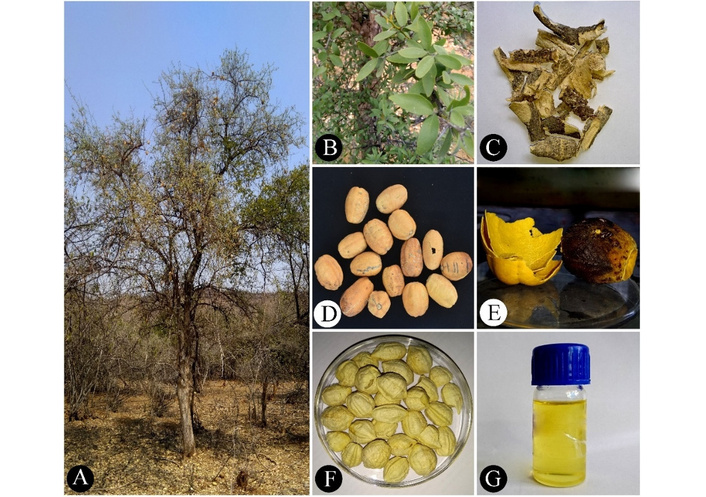
Morphology of Balanites aegyptiaca (L.). (A) habit, (B) leaves, (C) stem bark, (D) ripened fruits, (E) rind (left) and pulp (right), (F) seed kernels and (G) seed oil. Taken from [47] without modification. © 2020 The Authors. Licensed under a Creative Commons Attribution license 4.0 (CC BY).
EWPs in Nigeria possess a wide range of physico-chemical properties that make them valuable for both nutrition and traditional medicine. These properties can vary depending on the specific plant species, the region in which they are found, and environmental factors [48]. EWPs serve as a valuable source of bioactive compounds that contribute to human health and well-being. These plants are often rich in essential nutrients, phytochemicals, and antioxidants, which provide various biofunctional properties. Their significance extends beyond basic nutrition, offering medicinal and therapeutic benefits that have been recognized in traditional and modern medicine [49, 50] (Tables 2, 3, 4, 5, and 6, [15–19, 26, 37, 44, 45, 47, 50–81]).
Proximate values of some selected EWPs in Nigeria (% dry basis).
| S/N | Species | Parts of EWPs | Moisture | Fat | Protein | Fibre | Carbohydrate | References |
|---|---|---|---|---|---|---|---|---|
| 1 | Adansonia digitata L. | Fruit | 18.41 | 0.27 | 2.30 | 52.00 | 75.60 | [15] |
| Leaves | 9.86 | 3.72 | 19.84 | 4.16 | 53.78 | [51] | ||
| Seed | 5.40 | 31.42 | 14.26 | 7.86 | 42.32 | [17] | ||
| 2 | AfIzelia Africana | Fruit | - | - | - | - | - | - |
| Leaves | - | - | - | - | - | - | ||
| Seed | 6.68 | 16.10 | 13.89 | 4.57 | 59.20 | [19] | ||
| 3 | Balanites aegyptiaca | Fruit | 2.30 | 3.10 | 3.20 | 16.40 | 72.61 | [50] |
| Leaves | 2.96 | 4.60 | 22.94 | 12.00 | 28.12 | [52, 53] | ||
| Seed | 3.19 | 39.63 | 33.75 | 13.06 | 7.48 | [54] | ||
| 4 | Detarium microcarpum | Fruit | 13.86 | 9.40 | 21.20 | 4.32 | 47.50 | [18] |
| Leaves | - | - | - | - | - | - | ||
| Seed | 16.70 | 7.60 | 12.60 | 5.30 | 57.00 | [55] | ||
| 5 | Dialium guineense | Fruit | 10.53 | 5.34 | 3.94 | 1.05 | 58.65 | [26] |
| Leaves | - | 1.02 | 18.72 | 13.34 | 6.46 | [56] | ||
| Seed | 10.13 | 35.33 | 17.44 | 13.52 | 43.90 | [26] | ||
| 6 | Parkia biglobosa | Fruit | 10.59 | 1.80 | 6.56 | 11.75 | 67.30 | [57] |
| Leaves | - | - | - | - | - | - | ||
| Seed | 8.60 | 16.18 | 28.33 | 10.69 | 31.99 | [58] | ||
| 7 | Ageratum conyzoides | Fruit | - | - | - | - | - | - |
| Leaves | 10.02 | 2.27 | 14.73 | 23.50 | 36.84 | [59] | ||
| Seed | - | - | - | - | - | - | ||
| 8 | Blighia sapida | Fruit | 73.21 | 13.98 | 9.38 | 2.08 | 0.86 | [60] |
| Leaves | - | - | - | - | - | - | ||
| Seed | - | - | - | - | - | - | ||
| 9 | Irvingia wombulu | Fruit | - | - | - | - | - | - |
| Leaves | 9.40 | 3.10 | 7.70 | 18.10 | 38.80 | [61] | ||
| Seed | 6.50 | 37.90 | 8.40 | 20.00 | 20.90 | [61] | ||
| 10 | Irvingia gabonensis | Fruit | - | - | - | - | - | - |
| Leaves | 22.20 | 2.10 | 9.80 | 11.80 | 51.70 | [61] | ||
| Seed | 1.40 | 7.90 | 5.60 | 21.60 | 56.70 | [61] | ||
| 11 | Chrysophyllum albidum | Fruit | 64.00 | 8.50 | 0.24 | 4.00 | 20.26 | [62] |
| Leaves | - | - | - | - | - | - | ||
| Seed | - | - | - | - | - | - | ||
| 12 | Datura stramonium | Fruit | - | - | - | - | - | - |
| Leaves | - | - | - | - | - | - | ||
| Seed | 8.50 | 16.60 | 16.20 | 23.70 | 26.20 | [63] | ||
| 13 | Syzygium guineense | Fruit | 81.50 | 0.70 | 1.60 | 1.80 | 13.50 | [64] |
| Leaves | - | - | - | - | - | - | ||
| Seed | - | - | - | - | - | - | ||
| 14 | Strychnos spinosa | Fruit | 89.23 | 1.94 | 11.70 | 23.96 | 59.82 | [37] |
| Leaves | - | - | - | - | - | - | ||
| Seed | - | - | - | - | - | - | ||
| 15 | Saba comorensis | Fruit | 74.08 | 0.00 | 4.83 | 7.97 | 19.16 | [65] |
| Leaves | - | - | - | - | - | - | ||
| Seed | - | - | - | - | - | - |
-: not available; EWPs: edible wild plants.
Vitamin compositions of some selected EWPs in Nigeria (mg/100 g).
| S/N | Species | Parts of EWPs | Vit. A | Vit. B1 | Vit. B2 | Vit. B3 | Vit. B6 | Vit. B12 | Vit. C | Vit. E | Vit. K | References |
|---|---|---|---|---|---|---|---|---|---|---|---|---|
| 1 | Adansonia digitata L. | Fruit | - | - | - | - | - | - | 280 | - | - | [15] |
| Leaves | 270 | - | - | - | - | - | - | - | - | [16] | ||
| Seed | 5.26 | - | - | - | - | - | 6.71–8.80 | - | [45, 78] | |||
| 2 | AfIzelia Africana | Fruit | - | - | - | - | - | - | - | - | - | - |
| Leaves | - | - | - | - | - | - | - | - | - | - | ||
| Seed | 4.56 | - | - | - | - | - | 138.72 | 0.74 | - | [66] | ||
| 3 | Balanites aegyptiaca | Fruit | 64.84 | - | - | 1.74 | 0.21 | - | 105 | - | - | [47] |
| Leaves | 0.54 | 0.51 | - | - | 0.51 | - | 2.05 | 0.96 | 1.37 | [47] | ||
| Seed | - | - | - | - | - | - | - | - | - | - | ||
| 4 | Detarium microcarpum | Fruit | 0.313 | - | 4.2 | - | 4.2 | - | 55.1 | 12.44 | 0.312 | [44, 55] |
| Leaves | - | - | - | - | - | - | - | - | - | - | ||
| Seed | - | - | - | - | - | - | - | - | - | - | ||
| 5 | Dialium guineense | Fruit | 0.109–6.32 | - | - | 3.60 | - | 1.03–2.59 | 13.00–48.63 | 0.61–3.36 | - | [68, 69] |
| Leaves | - | - | - | - | - | - | - | - | - | - | ||
| Seed | - | - | - | - | - | - | - | - | - | - | ||
| 6 | Parkia biglobosa | Fruit | - | - | - | - | - | - | - | - | - | - |
| Leaves | - | - | - | - | - | - | - | - | - | - | ||
| Seed | 13.7 | - | - | - | - | - | 191.2 | - | - | [70] | ||
| 7 | Ageratum conyzoides | Fruit | - | - | - | - | - | - | - | - | - | - |
| Leaves | - | - | - | - | 95.56 | - | 108.11 | 36.67 | - | [59] | ||
| Seed | - | - | - | - | - | - | - | - | - | - | ||
| 8 | Blighia sapida | Fruit | - | - | - | - | - | - | 30 | - | - | [60] |
| Leaves | - | - | - | - | - | - | - | - | - | - | ||
| Seed | - | - | - | - | - | - | - | - | - | - | ||
| 9 | Irvingia wombulu | Fruit | - | - | - | - | - | - | - | - | - | - |
| Leaves | - | - | - | - | - | - | - | - | - | - | ||
| Seed | 1.13 | - | 0.017 | - | 0.018 | - | - | - | - | [71] | ||
| 10 | Chrysophyllum albidum | Fruit | - | - | - | - | - | - | 3.7 | - | - | [62] |
| Leaves | - | - | - | - | - | - | - | - | - | - | ||
| Seed | - | - | - | - | - | - | - | - | - | - | ||
| 11 | Syzygium guineense | Fruit | - | - | - | - | - | - | 11.9 | - | - | - |
| Leaves | - | - | - | - | - | - | - | - | - | - | ||
| Seed | - | - | - | - | - | - | - | - | - | - | ||
| 12 | Strychnos spinosa | Fruit | 1.27 | - | - | - | - | - | 88 | - | - | [37] |
| Leaves | - | - | - | - | - | - | - | - | - | - | ||
| Seed | - | - | - | - | - | - | - | - | - | - |
-: not available; EWPs: edible wild plants; Vit: vitamin.
Mineral contents of some selected EWPs in Nigeria (mg/100 g).
| S/N | Species | Parts of EWPs | Iron | Calcium | Magnesium | Zinc | Sodium | References |
|---|---|---|---|---|---|---|---|---|
| 1 | Adansonia digitata L. | Fruit | 1.7 | 341 | 209 | 1.04 | 5.46 | [16] |
| Leaves | - | 20 | 5.49 | - | 1.63 | [16] | ||
| Seed | 1.83 | 395 | 352 | 2.57 | 1.96 | [16] | ||
| 2 | AfIzelia Africana | Fruit | - | - | - | - | - | - |
| Leaves | - | - | - | - | - | - | ||
| Seed | 1.27 | 0.003 | 0.001 | - | - | [19] | ||
| 3 | Balanites aegyptiaca | Fruit | 4.94 | 141 | 73 | 0.65 | 48 | [47] |
| Leaves | - | 265 | 77 | - | - | [47] | ||
| Seed | 4.84 | 151 | 88.7 | 2.80 | 5.30 | [47] | ||
| 4 | Detarium microcarpum | Fruit | 78.71 | 70.97 | 113.5 | 31.7 | 15.09 | [67] |
| Leaves | - | - | - | - | - | - | ||
| Seed | 0.6 | 270 | 70 | 0.04 | 2.82 | [72] | ||
| 5 | Dialiumguineense | Fruit | 0.143 | 0.035 | 0.04 | - | 0.288 | [26] |
| Leaves | - | - | - | - | - | - | ||
| Seed | 15.28 | 0.54 | 268.00 | - | 40.16 | [26, 73] | ||
| 6 | Parkia biglobosa | Fruit | - | - | - | - | - | - |
| Leaves | - | - | - | - | - | - | ||
| Seed | 1 | 7.1 | 0.16 | 0.25 | 0.14 | [70] | ||
| 7 | Ageratum conyzoides | Fruit | - | - | - | - | - | - |
| Leaves | 48.35 | 10.75 | 0.08 | 118.5 | [59] | |||
| Seed | - | - | - | - | - | - | ||
| 8 | Blighia sapida | Fruit | 0.1 | 47.85 | 49.80 | 0.5 | 39.88 | [53] |
| Leaves | - | - | - | - | - | - | ||
| Seed | - | - | - | - | - | - | ||
| 9 | Irvingiawombulu | Fruit | - | - | - | - | - | - |
| Leaves | 0.047 | 0.522 | 0.298 | 2.05 | 0.64 | [61] | ||
| Seed | 0.0304 | 0.64 | 1.17 | 0.193 | 0.499 | [61] | ||
| 10 | Irvingiagabonensis | Fruit | - | - | - | - | - | - |
| Leaves | 0.974 | 0.523 | 2.05 | 0.298 | 0.634 | [61] | ||
| Seed | 0.004 | 0.35 | 2.79 | 0.29 | 0.72 | [61] | ||
| 11 | Chrysophyllum albidum | Fruit | 3.46 | 61.67 | 33.33 | 0.26 | 4 | [62] |
| Leaves | - | - | - | - | - | - | ||
| Seed | - | - | - | - | - | - | ||
| 12 | Datura stramonium | Fruit | - | - | - | - | - | - |
| Leaves | - | - | - | - | - | - | ||
| Seed | 0.3 | 23.4 | 25.11 | 0.1 | 42.76 | [63] | ||
| 13 | Syzygium guineense | Fruit | 7.9 | 67 | 34 | - | - | [64] |
| Leaves | - | - | - | - | - | - | ||
| Seed | - | - | - | - | - | - | ||
| 14 | Strychnos spinosa | Fruit | 0.11 | 0.335 | 0.257 | 0.22 | 0.316 | [37, 74] |
| Leaves | - | - | - | - | - | - | ||
| Seed | - | - | - | - | - | - | ||
| 15 | Saba comorensis | Fruit | 3.40 | 209.00 | 894.90 | 1.80 | 79.00 | [65] |
-: not available; EWPs: edible wild plants.
Phytochemical composition of some selected EWPs in Nigeria (%).
| S/N | Species | Parts of EWPs | Tannins | Alkaloids | Flavonoids | Phenolics | Glycosides | Phenol | References |
|---|---|---|---|---|---|---|---|---|---|
| 1 | Adansonia digitata L. | Fruit | 1.79 | 0.204 | 1.441 | - | [78] | ||
| Leaves | 0.031 | 0.010 | 0.066 | 0.124 | 0.016 | - | [51] | ||
| Seed | 0.203 | - | 0.018 | 0.196 | - | - | [78] | ||
| 2 | AfIzelia Africana | Fruit | - | - | - | - | - | - | - |
| Leaves | - | - | - | - | - | - | - | ||
| Seed | 0.025 | 0.209 | 8.067 | - | - | - | [19] | ||
| 3 | Balanites aegyptiaca | Fruit | 0.00004 | - | - | - | - | [47] | |
| Leaves | - | - | - | - | - | - | - | ||
| Seed | 0.0024 | 0.00142 | 0.001094 | 0.002 | [75] | ||||
| 4 | Detarium microcarpum | Fruit | 0.17 | - | - | - | - | - | [8] |
| Leaves | - | - | - | - | - | - | - | ||
| Seed | 0.47 | 0.37 | 2.28 | 0.35 | 0.00005 | - | [8, 55] | ||
| 5 | Dialium guineense | Fruit | - | - | 0.04 | 0.013 | 0.022 | - | [46] |
| Leaves | 0.00 | - | 0.01244 | - | 0.00 | 0.01544 | [49] | ||
| Seed | 0.023 | - | 0.037 | - | 0.046 | 0.013 | [49] | ||
| 6 | Parkia biglobosa | Fruit | 0.553 | 45.02 | 0.472 | - | 0.822 | - | [76] |
| Leaves | - | - | - | - | - | - | - | ||
| Seed | - | - | - | - | - | - | - | ||
| 7 | Ageratum conyzoides | Fruit | - | - | - | - | - | - | - |
| Leaves | 2.05 | 13.04 | 9.5 | - | 1.6 | - | [77] | ||
| Seed | - | - | - | - | - | - | - | ||
| 8 | Datura stramonium | Fruit | - | - | - | - | - | - | - |
| Leaves | - | - | - | - | - | - | - | ||
| Seed | 0.8 | - | - | - | - | - | [63] |
-: not available; EWPs: edible wild plants.
Functional properties of seed flour of selected EWPs in Nigeria.
| Species | Water absorption capacity (g/g) | Oil absorption capacity (g/g) | Bulk density (g/cm3) | Swelling index (mL) | Gelatinization temperature (°C) | References |
|---|---|---|---|---|---|---|
| Adansonia digitata L. | 3.83 | 3.55 | 0.48 | 5.10 | - | [79] |
| Afzelia africana | 5.64 | 2.89 | 0.68 | 1.80 | 76.00 | [48] |
| Balanites aegyptiaca | 26.00 | 0.30 | 75.00 | - | - | [75] |
| Detarium microcarpum | - | 3.12 | - | 12.13 | - | [80] |
| Dialium guineensis | 20.00 | 16.00 | - | - | - | [81] |
| Datura stramonium | 19.30 | 57.10 | 0.42 | - | - | [63] |
-: not available; EWPs: edible wild plants.
Adansonia digitata L., commonly known as the baobab tree, is a highly nutritious plant species widely consumed for its fruits, leaves, and seeds. It is valued for its rich nutrient composition, including macronutrients, vitamins, minerals, phytochemicals, and functional properties. Below is an overview of its chemical composition based on different plant parts. The fruit is rich in carbohydrates (75.60%) and dietary fiber (52.00%), making it a good energy source. Additionally, the fruits are an excellent source of vitamin C (280 mg/100 g), which is essential for immune function. Arowora et al. [51] reported similar high L-ascorbic acid (vitamin C) content in baobab pulp, reinforcing its importance as an antioxidant-rich fruit. Baobab fruit is also rich in calcium (341 mg/100 g), a crucial macronutrient for healthy bones and teeth formation. The flavonoid content (3.59%) is indicative of its strong antioxidant properties, comparable to findings by Zahra’u et al. [16]. The leaves have a high protein content (19.84%), making them a potential protein supplement, particularly in regions with limited protein sources. They are also an excellent source of vitamin A (270 mg/100 g), which supports vision and immune health. The sodium content (1.63 mg/100) may contribute to electrolyte balance, though variations exist between studies due to environmental factors [51]. The leaves also contain lower levels of alkaloids, phenolics, and tannins, which contribute to their medicinal properties. The seeds are notable for their high-fat content (31.42%), making them a viable source for oil extraction. Their exceptionally high vitamin C (522.5 mg/100 g) and vitamin E (429 mg/100 g) content contribute to their potent antioxidant properties. Additionally, seeds have the highest iron (1.83 mg/100 g) and zinc (2.57 mg/100 g) content among the plant parts, essential for cell division and red blood cell formation. The functional properties of baobab seed flour make it suitable for food processing. With a bulk density of 0.72 g/cm3, it can be used as a thickener in food formulations. Its swelling index (3.3 mL) and gelatinization temperature (81°C) indicate potential applications in baking and industrial food processing. Dhlakama et al. [45] reported similar functional properties in baobab seed flour, confirming its suitability for various food applications.
A. africana, a leguminous plant found in tropical regions, is widely utilized for its seeds, which hold significant nutritional, medicinal, and industrial value. The chemical composition of A. africana seeds reveals their potential as a valuable food source and functional ingredient. The macronutrient profile of A. africana seeds highlights their nutritional significance. They contain 6.68% moisture, 16.10% fat, 13.89% protein, 4.57% fiber, and 59.20% carbohydrates, indicating a high energy content [19]. These values suggest that the seeds could serve as an alternative protein source and an energy-dense food ingredient. A similar study by Ndulaka et al. [82] on indigenous seeds reported comparable macronutrient values, reinforcing their dietary importance. A. africana seeds contain vitamin A (4.56 mg/100 g), vitamin C (138.72 mg/100 g), and vitamin E (0.74 mg/100 g), with no recorded presence of vitamin B or K [66]. This contradicts [82], who reported 0.39 (mg/100 g) of vitamin B3. The high vitamin C content suggests strong antioxidant properties, aligning with the findings of Okeke et al. [66], who observed similar antioxidant potential in baobab seeds. Mineral analysis shows that A. africana seeds provide essential micronutrients, including iron (1.27 mg/100 g), calcium (0.003 mg/100 g), and magnesium (0.001 mg/100 g) [19]. However, zinc and sodium levels were not reported, but Ndulaka et al. [82] reported 28.88 mg/100 g of sodium level. These values are consistent with Ndulaka et al. [82], who found comparable mineral compositions in indigenous seeds, emphasizing their role in improving dietary micronutrient intake. A. africana seeds contain bioactive compounds that contribute to their medicinal properties. They have tannins (0.025%), alkaloids (0.209%), and flavonoids (8.067%) [19]. These phytochemicals enhance the plant’s antioxidant and antimicrobial activities. The functional attributes of A. africana seeds indicate their potential applications in food processing. They exhibit a water absorption capacity of 5.64 g/g, an oil absorption capacity of 2.89 g/g, a bulk density of 0.68 g/cm3, a swelling index of 1.80 mL, and a gelatinization temperature of 76.00°C [48]. These characteristics suggest that A. africana seed flour could be useful in formulations requiring moisture retention, fat-binding properties, and starch-based thickening. Similar findings by Keskin et al. [80] on leguminous seed flours further validate these functional attributes. A. africana seeds demonstrate significant nutritional, medicinal, and functional potential. Their high carbohydrate and protein content, rich vitamin and mineral profile, and bioactive compounds make them a valuable food and industrial resource. The consistency of these findings with similar studies affirms their importance in dietary applications, food processing, and medicinal research. Future studies could explore potential variations in composition due to environmental or processing factors, further expanding the utilization of A. africana in various industries.
Balanites aegyptiaca (B. aegyptiaca), commonly known as the desert date, is a drought-resistant tree widely distributed in arid and semi-arid regions. It is valued for its edible fruits, leaves, and seeds, which have significant nutritional, medicinal, and industrial applications. The chemical composition of B. aegyptiaca varies across its different parts, contributing to its diverse uses in food and medicine. The fruit of B. aegyptiaca is rich in carbohydrates (72.61%), making it a valuable energy source [50]. It also contains moderate protein (3.2%) and fiber (16.40%), which support digestive health. The leaves have the highest protein content (22.94%), suggesting their potential as a protein supplement [47]. The seeds have a high-fat content (39.63%), making them valuable for oil extraction. Additionally, their protein content (33.75%) highlights their potential as an alternative protein source [54]. The fruit contains essential vitamins such as vitamin A (0.65 mg/100 g) and vitamin C (1.05 mg/100 g), which contribute to immune function and vision support [47]. The vitamin composition reported by Murthy et al. [47] is comparable to that of Admassu et al. [83], who found vitamin B1 of 3.35 mg/100 g and vitamin E content of 0.84 mg/100 g in the pulp. Compared to the fruit, the leaves have higher vitamin concentrations, including vitamin B1/B6 (0.51 mg/100 g) and vitamin C (2.05 mg/100 g), which play key roles in metabolism and immune function. The presence of vitamin E (0.57 mg/100 g) and vitamin K (1.37 mg/100 g) further enhances the antioxidant and blood-clotting properties of the leaves. The mineral content of B. aegyptiaca varies across its plant parts. The fruit contains significant amounts of zinc (1.69 mg/100 g) and iron (0.69 mg/100 g), both essential for immune function and oxygen transport [84]. The seeds are particularly rich in zinc (2.80 mg/100 g), calcium (48.57 mg/100 g), and magnesium (14.52 mg/100 g), making them beneficial for bone health and enzymatic activities. In contrast, the leaves have lower mineral concentrations, with calcium at 265 mg/100 g and magnesium at 77 mg/100 g [47]. Phytochemicals in B. aegyptiaca enhance its medicinal value. The fruit is rich in tannins (0.007%) and alkaloids (1.51%), which are known for their antimicrobial and anti-inflammatory properties [84]. The seeds also contain tannin (0.0024%), alkaloids (0.00142%), flavonoids 0.001094%), and phenol (0.002%), contributing to their antioxidant and therapeutic properties [84]. Differences in flavonoid and phenolic content have been noted across studies. While Omale et al. [84] reported flavonoid content of 10.94 mg/100 g, Ogori et al. [75] found higher levels (36.60 mg/100 g), which may be due to variations in the extraction methods used during analysis. The functional properties of B. aegyptiaca make it useful for food processing applications. The seeds exhibit a high-water absorption capacity (0.08–0.26 g/mL) and bulk density (60–75 g/mL), which enhances their suitability for food formulation and processing [75]. Additionally, the oil absorption capacity (0.30%) suggests its potential use in fat-based food formulations. Given its rich nutrient profile, B. aegyptiaca has promising applications in food security, pharmaceuticals, and industrial processing.
D. microcarpum, commonly known as sweet detar, is a leguminous tree species widely found in tropical regions. Its fruits and seeds are highly valued for their nutritional, medicinal, and functional properties. The chemical composition of D. microcarpum varies across different parts of the plant, making it a versatile resource for food, pharmaceutical, and industrial applications. The proximate composition of D. microcarpum highlights its rich macronutrient content, making it a valuable food source. The fruit contains 13.86% moisture, 9.40% fat, 21.20% protein, 4.32% fiber, and 47.50% carbohydrates [18]. The high protein and fiber content suggest its potential as a nutritious food source, while its moderate fat content indicates a low lipid profile. The seeds, however, have a significantly higher carbohydrate content (57.00%), making them a potential source of energy. They also contain 12.60% protein, 5.30% fiber, and 16.70% moisture content, making them an excellent source of energy and essential nutrients [55]. D. microcarpum is rich in essential vitamins that support various physiological functions. The fruit contains vitamin A (0.313 mg/100 g), vitamin B2 (4.20 mg/100 g), vitamin C (55.10 mg/100 g), vitamin E (12.44 mg/100 g), and vitamin K (0.312 mg/100 g) [55, 67]. The high vitamin C content enhances immune function and provides antioxidant protection, while vitamin E contributes to skin health and cellular defense. The vitamin C levels reported by Oibiokpa et al. [67] contradict the findings of Tchatcha et al. [55], who found 4.7 µg/100 g in D. microcarpumfruit pulp. The protein content of D. microcarpumfruit pulp (21.20%) reported by Umar et al. [18] is higher than the 4.68% reported by Oibiokpa et al. [67]. This variation could be attributed to differences in fruit maturity and environmental factors affecting protein accumulation. The mineral composition of D. microcarpum varies significantly between its fruits and seeds, contributing to its health benefits. The fruit is particularly rich in iron (78.71 mg/100 g) and magnesium (113.50 mg/100 g), essential for oxygen transport and acts as a cofactor for enzymatic reactions. It also contains calcium (70.97 mg/100 g), iron (78.71 mg/100 g), and sodium (15.09 mg/100 g) [67]. The seeds contain iron (0.60 mg/100 g), calcium (270.00 mg/100 g), magnesium (70.00 mg/100 g), zinc (0.04 mg/100 g), and sodium (2.82 mg/100 g) [72]. The high calcium content in the seeds suggests their potential role in bone health. Phytochemicals in D. microcarpum contribute to its medicinal and therapeutic properties. The fruit contains tannins (0.17%), known for their antioxidant and antimicrobial effects [8]. The seeds have a more diverse phytochemical profile, including tannins (0.47%), alkaloids (0.37%), flavonoids (2.28%), phenolics (0.35%), and glycosides (0.00005%), which contribute to their bioactive properties, such as anti-inflammatory and antioxidant effects [8, 55]. The tannin content (0.17%) found by Dogara [8] closely matches the 0.00017% reported by Oibiokpa et al. [67], further reinforcing the plant’s antioxidant potential. The functional properties of D. microcarpum influence its application in food processing. It has an oil absorption capacity of 3.12%, which indicates its potential for moisture retention in food formulations. The swelling index is 12.13 mL, suggesting its suitability for improving food structure and texture. Additionally, its high swelling index makes it useful as a thickening and stabilizing agent in food products [80]. D. microcarpum is a nutrient-rich plant with significant potential in nutrition, health, and industrial applications. Its fruits and seeds serve as excellent sources of protein, fiber, essential vitamins, minerals, and bioactive compounds. Given its high phytochemical content and functional properties, it holds promise for applications in food, pharmaceuticals, and industrial product development. Future research could explore optimizing its processing methods and evaluating its potential in functional food formulations and nutraceuticals.
D. guineense, commonly known as velvet tamarind, is a tropical leguminous plant valued for its fruits, leaves, and seeds, which have significant nutritional, medicinal, and industrial applications. The chemical composition of its different plant parts influences its functional and health benefits. The proximate composition of D. guineense highlights its nutritional potential. The fruit contains 10.53% moisture, 5.34% fat, 3.94% protein, 1.05% fiber, and 58.65% carbohydrates, making it a good energy source [26]. The leaves exhibit higher protein (18.72%) and fiber (13.34%) contents, alongside (6.48%) carbohydrates [56]. Meanwhile, the seeds contain 10.13% moisture, 35.33% fat, 17.44% protein, 13.52% fiber, and 43.90% carbohydrates, suggesting their potential for oil extraction and dietary applications [26]. In addition to its macronutrient profile, D. guineense is also a significant source of essential vitamins. The fruits contain vitamin A (6.32 mg/100 g), vitamin B12 (2.67 mg/100 g), vitamin C (48.63 mg/100 g), and vitamin E (3.26 mg/100 g), with no recorded vitamin K content [85]. Similar studies by Rahul et al. [15] on other tropical fruits report comparable vitamin C values, reinforcing the antioxidant potential of D. guineense. The mineral composition of D. guineense varies significantly between fruits and seeds. The fruit contains 1.43 mg/100 g iron, 0.035 mg/100 g calcium, 0.04 mg/100 g magnesium, and 0.288 mg/100 g sodium, with no recorded zinc content [26]. The seeds contain 15.28 mg/100 g iron, 0.54 mg/100 g calcium, 268.00 mg/100 g magnesium, and 40.16 mg/100 g sodium [26, 73]. These values are higher compared with findings by Airaodion et al. [86], who observed different mineral distributions in D. guineense fruit pulp, emphasizing their role in human nutrition. Phytochemical analysis of D. guineense reveals its bioactive compound content, which contributes to its medicinal properties. The fruits contain flavonoids (0.04%), phenolics (0.013%), and glycosides (0.022%) [46]. The leaves contain tannins (0.00%), flavonoids (12.44%), phenol (15.44%), and glycosides (0.00%) [49]. Meanwhile, the seeds have tannins (0.023%), flavonoids (0.037%), phenolics (0.013%), and glycosides (0.046%) [49]. These findings contradict research by Adedokun et al. [87], which documented higher phytochemical compositions in different parts of D. guineense, further supporting the therapeutic significance of D. guineense. Beyond its phytochemical components, the functional properties of D. guineense also contribute to its potential applications in food processing. The seeds exhibit a water absorption capacity of 20.00% and an oil absorption capacity of 16.00%, enhancing their potential for moisture retention and fat-binding properties in food formulations [81]. Overall, D. guineense is a nutritionally rich plant with significant potential in food, medicinal, and industrial applications. Its fruits serve as a carbohydrate and vitamin source, while its seeds are valuable for oil extraction and protein supplementation. The presence of essential minerals and bioactive compounds further enhances its health benefits, making it a promising functional food ingredient. Additionally, its nutrient-dense composition suggests its potential role in promoting food security and sustainable agriculture, particularly in regions where access to diverse food sources is limited.
P. biglobosa, commonly known as the African locust bean, is a perennial leguminous tree indigenous to Africa (Figure 3). Various parts of the tree, including its seeds and fruit pulp, have been studied for their chemical composition, revealing significant nutritional and phytochemical properties. The fruit’s nutritional profile includes proximate composition, mineral content, vitamin values, and anti-nutritional factors. The seed contains significant levels of moisture, proteins, fats, carbohydrates, and fiber. Specifically, fruit pulp consists of moisture (10.59%), ash (4.18%), crude protein (6.56%), crude fat (1.80%), crude fiber (11.75%), carbohydrates (67.30%) [57]. The fruit is higher in fiber and carbohydrates, making it a better energy source and potentially beneficial for digestive health [70]. African locust bean contains essential minerals necessary for human nutrition, including magnesium (0.16 mg/100 g), calcium (7.10 mg/100 g), sodium (0.14 mg/100 g), potassium (2.15 mg/100 g), iron (1.00 mg/100 g), and zinc (0.25 mg/100 g) [70]. These values are below those reported by Elemo et al. [88], possibly due to variations in environmental conditions or processing methods. The high mineral content suggests African locust bean could be a beneficial dietary supplement. However, quantitative analysis of certain anti-nutritional factors in African locust bean found phytic acid (60.00 mg/100 g), crude saponins (17.80 mg/100 g), tannins (81.00 mg/100 g), total phenols (204.60 mg/100 g), and hydrocyanic acid (17.30 mg/100 g) [57]. Additionally, African locust beanfruit contains minimal anti-nutritional factors, making it suitable for human consumption. Given its health benefits, incorporating African locust bean into diets and promoting its cultivation alongside other legume trees is recommended [70]. The seed, which is mainly used, has a slightly higher moisture content (8.60%) compared to the fruit (10.59%) [58]. Lower moisture content in the fruit suggests better shelf stability, as higher moisture levels can promote microbial growth and spoilage. The seed is significantly richer in fat (16.18%) compared to the fruit (1.80%). This indicates that the seeds may serve as a good source of edible oil, while the fruit is a low-fat food option. The seed has a high protein content (28.33%), making it a valuable plant-based protein source. The fruit has a much lower protein content (6.56%), meaning it contributes less to dietary protein intake. The fruit has a higher fiber content (11.75%) compared to the seed (10.69%). Higher fiber in the fruit suggests benefits for digestion and gut health. The seed of P. biglobosa is nutritionally richer in fat and protein, making it more valuable for protein and oil-based diets [58]. The vitamin values of the seed of African locust bean show its nutritional significance, especially regarding vitamin A and C content [70]. African locust bean is widely used in traditional African diets and is valued for both its nutritional and medicinal benefits. The high vitamin A content makes it an important dietary source to improve vision, while its vitamin C content enhances immune response.
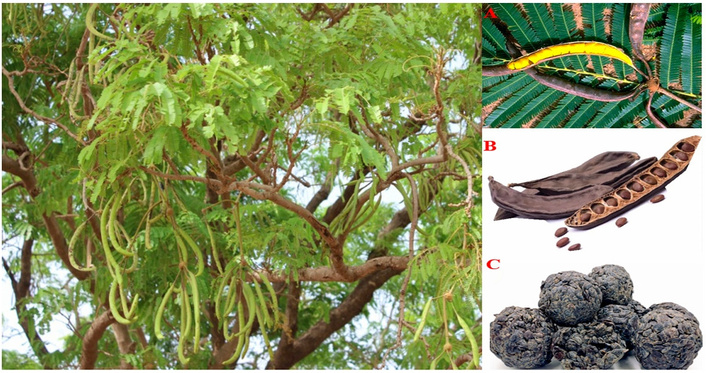
African locust bean tree (Parkia biglobosa). (A). African locust bean leaf with mature pod showing yellow pulp. (B). Dried pods and seeds. (C). Fermented, processed seeds (Dawadawa, iru, soumbala). Taken from [89] without modification. © 2024 The Authors. Licensed under a Creative Commons Attribution license 4.0 (CC BY).
The proximate composition analysis of Ageratum conyzoides leaves and roots revealed that the leaf sample contained ash (12.64%), fat (2.27%), fiber (23.50%), moisture (10.02%), protein (14.73%), and carbohydrate (36.84%). In contrast, the roots contained ash (16.95%), fat (2.01%), fiber (26.74%), moisture (13.35%), protein (9.89%), and carbohydrate (31.06%). The relatively high fiber and low fat contents may contribute to some of the medicinal applications of the plant [59]. Agbafor et al. [59] reported higher proximate composition values compared to those of Enerijiofi and Isola [90]. The leaves and roots contain essential minerals such as sodium, potassium, calcium, magnesium, phosphorus, zinc, manganese, and iron, with significantly higher (P < 0.05) concentrations in the roots compared to the leaves. Similarly, the concentrations of phytochemicals in the leaves were significantly higher (P < 0.05) than those in the roots [59]. The medicinal uses of Ageratum conyzoides may be attributed, at least in part, to its identified phytochemical constituents [59]. Enerijiofi and Isola [90] also identified similar phytochemicals in their study. The traditional applications of Ageratum conyzoides vary across regions and cultures, likely due to variations in its phytochemical composition. Notably, differences in the chemical composition of Ageratum conyzoides have been reported in various studies, which may be attributed to variations in collection site and time [77].
Blighia sapidais a nutritionally valuable fruit that provides essential macronutrients, minerals, and bioactive compounds [91]. It is particularly noted for its high lipid content and low caloric value [60]. The fruit’s nutritional profile includes proximate composition, mineral content, fatty acid profile, and anti-nutritional factors. The edible portion of ackee, known as the aril, contains significant levels of moisture, proteins, fats, carbohydrates, fiber, and ash. Specifically, ackee apple consists of moisture (73.21%), ash (1.49%), crude protein (9.38%), crude fat (13.98%), crude fiber (2.08%), carbohydrates (0.86%), and vitamin C (4.45%) [60]. Its high lipid content makes ackee distinct among fruits, serving as a valuable dietary fat source [60]. Ackee apple contains essential minerals necessary for human nutrition, including magnesium (49.80 mg/100 g), calcium (47.85 mg/100 g), zinc (0.50 mg/100 g), and iron (1.00 mg/100 g) [53]. These values surpass those reported by Dada et al. [92], possibly due to variations in environmental conditions or processing methods. The high mineral content suggests ackee could be a beneficial dietary supplement. Initial studies identified linoleic acid as the dominant fatty acid in ackee aril. However, subsequent research using improved analytical methods consistently found oleic acid as the primary fatty acid [73, 93, 94]. This highlights the importance of precise analytical techniques in determining fatty acid composition. Ackee seeds contain various essential amino acids, including hydroxy-proline, glutamic acid, serine, glycine, threonine, alanine, histidine, arginine, tyrosine, valine, methionine, isoleucine, phenylalanine, and lysine. This rich amino acid profile suggests that ackee seeds contribute to dietary protein intake. Qualitative screening of anti-nutrients showed the absence of phenols in ackee fruit. However, quantitative analysis of certain anti-nutritional factors in ackee apple found flavonoids (640 mg), phytic acid (340 mg), and oxalates (65 mg) [53]. These levels suggest that while ackee contains some anti-nutritional factors, they are not present in amounts that would significantly hinder nutrient bioavailability. The proximate and mineral composition of ackee apple indicates that it is a nutritious food rich in lipids, proteins, and essential minerals. Its high oleic acid content makes it a valuable dietary fat source, while its amino acid profile enhances its nutritional value. Additionally, ackee fruit contains minimal anti-nutritional factors, making it suitable for human consumption. Given its health benefits, incorporating ackee apple into diets and promoting its cultivation alongside other fruit-bearing trees like oranges, grapes, and lemons is recommended [92].
The proximate composition of Irvingia wombulu (I. wombulu) (bush mango) reveals significant variations across different plant parts, influencing their nutritional and industrial applications. Moisture content was highest in seed coats (9.80%) and lowest in seeds (6.50%), with high moisture levels in peels and seed coats making them more susceptible to microbial spoilage. Seeds had the highest ash content (6.30%), indicating a rich mineral composition, while peels had the lowest (0.75%). The lipid content was highest in seeds (37.9%), making them valuable for oil extraction and energy provision, whereas other parts contained minimal lipids. Crude fiber was most abundant in peels (22.50%), followed by seeds (20%) and seed coats (2.20%), suggesting their potential in digestive health and functional foods. The crude protein content in seed coat (9.45%) appears high, while seeds (8.40%), leaves (7.70%), and peels (6.30%) contained moderate levels [61]. These findings suggest that I. wombulu seeds are the most valuable for energy and mineral content, while peels and seed coats offer high fiber. The variations in composition indicate potential uses in food processing, oil extraction, and dietary supplementation, enhancing their economic and nutritional significance. The mineral composition of I. wombulu varies across its parts [61]. The highest iron concentration was found in seed coats (0.0565 mg/100 g), while seeds contained 0.304 mg/100 g, making fruits more preferred for consumption. Sodium levels varied, with seed containing the highest amount, followed by peels, leaves, and seed coat. Calcium was most concentrated in seed coats (0.3772 mg/100 g) compared to seeds (0.064 mg/100 g) [61]. The proximate composition showed the presence of carbohydrates, proteins, fibers, lipids, and moisture in varying amounts, making I. wombulu a valuable food source. Essential minerals such as magnesium, sodium, calcium, and zinc were detected, while iron had the lowest concentration. Leaves contained the highest overall mineral content. Phytochemical analysis confirmed the presence of alkaloids, flavonoids, tannins, glycosides, terpenoids, saponins, and steroids, reinforcing I. wombulu’s nutritional and medicinal significance [61].
The moisture content of I. gabonensis was recorded as follows: 1.4% in seeds, 22.2% in leaves, 38.7% in peels, and 57.6% in seed coats. The ash content in the peels and seed coats of I. gabonensis was 0.75% and 6.8%, respectively. The leaves and seed coats had identical ash content values of 2.4%. The ash content was higher than that reported by Adeyeye [95], where values ranged from 2.4% and 2.5%,. Additionally, the results are comparable to those reported by Efosa et al. [96]. Notably, the seed coats of I. gabonensis exhibited a high ash content, indicating a significant mineral composition. For dietary recommendations, it is advised that daily calorie intake from I. gabonensis should not exceed 30 calories to prevent obesity, diabetes, and heart disease. Crude fiber in the plant consists of indigestible cellulose, which aids in water absorption, provides roughage, and enhances the functioning of the digestive system. Protein content contributes to the synthesis of essential biomolecules required for tissue repair, maintenance, and hormone production [61]. The carbohydrate content was highest in the seeds of I. gabonensis, making them a valuable energy source. Regarding mineral composition, the highest iron (Fe) concentration was recorded in the seed coats (0.395 mg/kg), while the lowest was found in the seeds (0.040 ± 0.00 mg/kg). Due to its high iron content, the seed is recommended for consumption. Similarly, calcium levels were highest in the seed coats (4.912 mg/kg) and lowest in the seeds (3.278 mg/kg). These mineral concentrations were lower than those reported by Adeyeye [95]. Phytochemical analysis revealed the presence of alkaloids, flavonoids, tannins, glycosides, terpenoids, saponins, and steroids. The presence of these phytochemicals, along with essential minerals and other nutrients, underscores the nutritional value of Irvingia species. Therefore, the consumption of I. gabonensis is highly recommended for its health benefits and nutrient content [97]. Additionally, various parts of the plant, especially the leaves and peels, hold significant nutritional and medicinal potential and should be further explored for their applications [61].
The nutritional composition of Chrysophyllum albidum varies across its juice, pulp, and peel. The juice has the highest moisture content (69.9%), making it highly perishable, while the peel (57.2%) is more stable. The pulp is the most nutrient-dense, containing the highest protein (8.2%), fat (14.3%), and carbohydrate (68.2%) [58]. However, these findings differ from those reported by Musa et al. [62]. The peel has the highest fiber (14.2%) and ash content (5.1%), indicating a rich mineral profile. The juice is an excellent source of vitamin C (49.4 mg/100 mL) and reducing sugar (1.34%), with a pH of 3.3 aiding preservation [98]. A similar result was reported by Musa et al. [62]. The fruit contains vitamins K, B-complex, C, and D in small amounts. The juice is rich in sodium, potassium, calcium, and phosphorus, while the peel contains the highest iron (131 mg/100 g), copper (100 mg/100 g), and magnesium (251.7 mg/100 g). A similar result was reported by Ibrahim et al. [99]. Phytochemicals such as tannins (62.94 mg/100 g), flavonoids (18.69 mg/100 g), and phenols (45.85 mg/100 g) contribute to the fruit’s antioxidant and anti-inflammatory properties, potentially aiding in disease prevention [100].
The proximate composition of Datura stramonium (thorn apple) varies across the seed coat, seeds, and whole seed. The seed coat has the highest ash (15.7%) and protein (20%) content, indicating a rich mineral and nitrogen source. Seeds contain the highest carbohydrate (29.8%) and fat (19.9%), making them energy-dense. The whole seed composition shows balanced fiber (23.7%), fat (16.6%), and protein (16.2%) levels. Moisture content is highest in the seed coat (8.65%), suggesting lower stability. The high fiber content, particularly in seeds (25.1%), suggests potential dietary benefits but may require further evaluation for safety [63]. A similar result was reported by Sharma et al. [101]. The mineral composition of Datura stramonium (thorn apple) varies across the seed coat, seeds, and whole seeds. The seed coat contains the highest magnesium (399.2 mg/g) and zinc (8.25 mg/g), while seeds are richest in calcium (426.5 mg/g) and phosphorus (275 mg/g), essential for bone health. Whole seeds have high manganese (8.49 mg/g) and chromium (2.85 mg/g). Iron levels are relatively stable across all parts. Lead presence (0.95 mg/g in whole seeds) raises safety concerns. The potassium and sodium content is low, indicating minimal electrolyte contribution [63]. These variations highlight the nutritional and potential toxicological aspects of the plant. Similar result was reported by Batool et al. [102]. The antinutrient composition of Datura stramonium (thorn apple) varies across different seed components. Seeds have the highest phytic acid content (29.19 mg/g), which can reduce mineral bioavailability, while whole seeds contain the least (16.75 mg/g). Tannin levels increase from seed coat (4.00 µg/g) to whole seeds (8.00 µg/g), potentially affecting protein digestibility. Oxalate, which can contribute to kidney stone formation, is highest in whole seeds (7.77 mg/g) and lowest in the seed coat (3.75 mg/g). These findings suggest that while thorn apple contains beneficial nutrients, its antinutrients may limit its nutritional value and require processing to reduce toxicity [63]. The functional properties of Datura stramonium (thorn apple) seeds vary significantly. The seed coat has the highest water absorption capacity (87.67%), while whole seeds have the highest oil absorption (57.1%) and emulsion capacity (55.10%). Bulk density increases from the seed coat (0.30 g/cm3) to whole seeds (0.42 g/cm3) [63, 102].
Syzygium guineense (S. guineense), a widely consumed indigenous fruit, has a high water content (81.5%), making it an excellent hydrating fruit, particularly in hot climates. It provides 1.6 g of protein per 100 g, contributing a small but beneficial amount of protein to the diet. The fruit is naturally low in fat (0.7 g/100 g), making it a suitable option for individuals on low-fat diets while still delivering essential nutrients. With 13.5 g of carbohydrates per 100 g, S. guineense serves as a moderate energy source. Additionally, its 1.8 g fiber content promotes digestive health by supporting bowel regularity and aiding in blood sugar regulation. The ash content (1.0 g/100 g) indicates the presence of important minerals such as calcium, phosphorus, potassium, magnesium, iron, and zinc, which play key roles in bone health, metabolic processes, and overall physiological functions. Furthermore, the fruit contains 11.9 mg of vitamin C per 100 g, contributing to immune function, antioxidant defense, and collagen synthesis [64]. Beyond its nutritional profile, S. guineense is rich in bioactive compounds, including polyphenols, flavonoids, flavanones, tannins, saponins, and alkaloids, which have potential health benefits. The bark and leaves are widely used in traditional medicine to treat ailments such as malaria, diarrhea, epilepsy, asthma, cough, and wound healing [103]. Additionally, the plant is utilized for food and construction purposes. Given its rich composition and health-promoting properties, S. guineense plays a crucial role in food security and nutrition, particularly in regions where indigenous fruits are vital dietary components.
The proximate composition of Strychnos spinosa (S. spinosa) highlights its nutritional significance. The fruit has a moisture content of 40.80%, indicating a relatively high water content, which contributes to its juiciness and perishability. The ash content (16.50%) reflects the presence of essential minerals, which may include calcium, magnesium, phosphorus, and potassium. This suggests that S. spinosa is a good source of micronutrients necessary for various physiological functions, including bone health and enzyme activity. With a crude protein content of 5.70% and crude lipid content (19.80%), the fruit provides a moderate amount of protein, which contributes to dietary protein intake, particularly in regions where alternative protein sources may be limited. S. spinosa may serve as a good source of dietary fats. The crude fiber content (4.17%) supports digestive health by promoting bowel movement and reducing the risk of constipation. The carbohydrate content (11.80%) provides an energy source, although it is lower compared to many other fruits [74]. A similar result was reported by Tittikpina et al. [37]. The fruit contains significant amounts of potassium (0.407 mg/100 g), manganese (0.380 mg/100 g), phosphorus (0.390 mg/100 g), calcium (0.335 mg/100 g), magnesium (0.257 mg/100 g), and sodium (0.316 mg/100 g) [74]. Calcium and magnesium contribute to bone development, muscle contraction, and enzymatic activities. Magnesium also plays a key role in energy metabolism and nerve function. Sodium, though present in moderate amounts, helps maintain fluid balance and supports nerve and muscle function. However, excessive sodium intake can lead to high blood pressure, making S. spinosa a preferable fruit for balanced mineral intake. The presence of manganese indicates potential antioxidant benefits, as manganese plays a crucial role in enzymatic reactions and the prevention of oxidative stress [37, 74]. The total phenolic content (TPC) is 0.356 mg GAE/g, indicating the presence of phenolic compounds known for their antioxidant and anti-inflammatory properties. These compounds play a role in reducing oxidative stress and may help in disease prevention. Similarly, the total flavonoid content (TFC) is 0.031 mg CE/g, suggesting a lower flavonoid concentration [104]. The fruit is exceptionally rich in ascorbic acid (73.00 mg/g), making it a potent source of vitamin C. The DPPH radical scavenging activity (50.32%) suggests moderate antioxidant potential, indicating the fruit’s ability to neutralize free radicals and reduce cellular damage. Additionally, the ferric reducing antioxidant power (FRAP) is 1.40 mg GAE/g, further confirming the fruit’s antioxidant capacity by demonstrating its ability to reduce oxidative stress [104].
Saba comorensis (S. comorensis) is a nutritionally valuable fruit that provides essential macronutrients, minerals, and bioactive compounds. The fruit contains 74.08 g/100 g moisture, 1.93 g/100 g total ash, 4.83 g/100 g crude protein, 7.97 g/100 g dietary fiber, 0.00 g/100 g crude fat, 19.16 g/100 g total carbohydrates, 1.27 mg/100 g beta-carotene, and an energy content of 97.78 kcal [96]. A similar result was reported by Charles and Mgina [105]. Notably, it has a high concentration of vitamin C (430.50 mg/100 g), making it a potent antioxidant source that supports immune function, collagen synthesis, and skin health. The absence of fat suggests that the fruit is a healthy option for individuals looking to minimize fat intake [106]. Additionally, the significant dietary fiber content is beneficial for digestion, gut health, and glucose metabolism, making it suitable for individuals seeking high-fiber diets. In terms of mineral composition, S. comorensis provides essential minerals crucial for maintaining various physiological functions. The fruit contains 79.0 mg/100 g sodium, 1,493.75 mg/100 g potassium, 209.0 mg/100 g calcium, 3.40 mg/100 g iron, 0.19 mg/100 g copper, 1.80 mg/100 g zinc, and 894.9 mg/100 g magnesium [65]. These minerals contribute to electrolyte balance, bone health, enzymatic activities, and overall metabolic function [105]. Regarding antioxidant activity, studies have shown that S. comorensis exhibits considerable free radical scavenging capacity. At a concentration of 1,000 μg/mL, the antioxidant activity ranged between 56.26% and 56.30% for fruit samples, indicating the fruit’s potential as a natural antioxidant source [105].
Phytochemicals are naturally occurring compounds found in plants, and they play a crucial role in promoting health and preventing various diseases. While they are not essential nutrients like vitamins and minerals, they have been shown to have numerous beneficial effects on the human body [73, 107]. A balanced diet rich in these EWPs is the best way to ensure an adequate intake of phytochemicals. The phytochemical contents are displayed in Table 7. D. microcarpumseed had a high content of tannin (0.47%) as compared to the fruit of Balanite, which is the lowest (0.00004%). Tannins possess the capacity to precipitate specific proteins, binding with digestive enzymes and rendering them inaccessible for digestion. These anti-nutritional factors can be effectively minimized to acceptable levels through appropriate processing methods like soaking, cooking, and frying [67].
Mode of propagation of edible wild plants.
| S/N | Species | Mode of propagation | References |
|---|---|---|---|
| 1 | Adansonia digitata L. | Seed and vegetative | [108, 109] |
| 2 | Afzelia africana | Seed and vegetative | [110, 111] |
| 3 | Balanites aegyptiaca | Seed and vegetative | [112, 113] |
| 4 | Detarium microcarpum | Seed and vegetative | [114, 115] |
| 5 | Dialium guineense | Seed | [116] |
| 6 | Ageratum conyzoides | Seed and vegetative | [117] |
| 7 | Blighia sapida | Seed (primarily) and vegetative | [91] |
| 8 | Irvingia wombolu | Seed and vegetative | [118] |
| 9 | Chrysophyllum albidum | Seed (primarily) and vegetative | [119] |
| 10 | Datura stramonium | Seed and vegetative | [120] |
| 11 | Parkia biglobosa | Seed and vegetative | [121] |
| 12 | Syzygium guineense | Seed and vegetative | [122] |
| 13 | Strychnos spinosa | Seed and vegetative | [123] |
| 14 | Saba comorensis | Seed and vegetative | [124] |
| 15 | Irvingia gabonensis | Seed and vegetative | [125] |
The fruit and seed of Adansoniaand D. microcarpum exhibit a notably high alkaloid content (0.89% and 0.37%, respectively), in contrast to Adansonia leaf (0.010%). Alkaloids, renowned for their diverse physiological effects, are frequently utilized in medicinal applications. Even at lower doses, alkaloids can mediate crucial pharmacological functions, including analgesia, blood pressure reduction, tumor cell destruction, and enhancement of circulation and respiration [28]. A. Africana seed boasts a higher flavonoid content (8.067%) compared to Balanite (0.011%). Flavonoids, chemical compounds renowned for their role as flavor enhancers in spices and vegetables, offer a spectrum of protective effects, including anti-inflammatory, antioxidant, antiviral, and anticarcinogenic properties. In vitro studies have further demonstrated their effectiveness in combating allergies, microbial infections, cancers, and diarrhea [28].
The seed of D. microcarpum exhibits a lower percentage of phenolics (0.35%). This finding aligns with the research of Fredrick et al. [126], which emphasized that phenolics constitute the most abundant group of phytochemicals, particularly prevalent in D. guineense, where they contribute significantly to its antioxidant activity. The scavenging ability of a plant against free radicals correlates with its phenol content, indicating higher antioxidant potential with increased phenolic presence. Additionally, the Adansonia fruit demonstrates elevated phenol levels (1.441%) compared to the fruit of D. guineense (0.013%). Moreover, the seed of Adansonia showcases a higher tennins content (0.203%) than D. guineense (0.023%). The leaves of D. guineense (0.1544%) also have lower phenol content [46, 49, 51, 78]
Vegetative propagation involves the regeneration of specific plants from vegetative organs like roots, stems, leaves, buds, and even individual cells or tissues. This process is classified into two main groups: macro-propagation and micro-propagation. Macro-propagation techniques, such as cuttings, layering, and grafting, are well-known [109]. Micro-propagation primarily utilizes in vitro culture methods, which are currently the most effective for producing true-to-type plants [108]. Seed propagation is the process of growing new plants from seeds. It is one of the most common and natural methods of plant propagation [127]. Table 7 depicts that the selected EWPs are all propagated vegetatively and by seed as well. When propagated from seed, Adansonia digitata typically takes 8–23 years to produce its first flowers, and the resulting young trees often exhibit variations from the parental ones due to cross-pollination. Therefore, vegetative propagation becomes the preferred choice when preserving the characteristics of mother trees is desired [109]. Agbohessou et al. [108] demonstrated in vitro propagation using various explants from twenty-day-old sterile seedlings, including cotyledonary nodes, axillary nodes, and the terminal apex. After 30 days of acclimatization in a mini-greenhouse with a sand/compost substrate mixture, survival rates were 77.77% for mini plants from the apex, 72.72% for those from axillary nodes, and 57.14% for those from cotyledonary nodes. Kelly et al. [107] investigated two grafting methods on 76 grafted trees from two mother trees, each with 38 rootstocks. The results indicated successful application of both methods and rootstock ages in baobab domestication. Additionally, Mukhtar et al. [128] conducted a study examining the influence of rooting media and hormone concentrations on the vegetative propagation of Adansonia digitata using juvenile stem cuttings, with indole-3-butylic acid cuttings exhibiting the most promising results. A. africana can be propagated through both seeds and vegetative techniques, such as budding. However, natural regeneration is hindered by high seed predation by animals, leading to poor outcomes [111]. The seeds of A. africana are dormant and become recalcitrant upon storage [110]. In the wild, the rate of seed germination is low, and seedlings seldom progress into saplings, resulting in a significant decline in the stock of the A. africana species. The widespread use of A. africana in West Africa, particularly its seeds, has exerted continuous pressure on natural populations. Nonetheless, propagation through stem cuttings offers a rapid regeneration method and aids in conserving its germplasm [102, 111]. Ogbimi et al. [111] outlined a propagation method for A. africana by utilizing stem cuttings from both mature trees (20 years old) and saplings (2 years old). Massaoudou et al. [113] documented the natural propagation mechanisms of B. aegyptiaca in its native habitat, indicating that seed dispersion accounts for 81.2% of propagation, with strain rejection and suckering contributing 13.5% and 5.2%, respectively. Air-layering is more effective with stems of larger diameters (53.3%) due to their thicker bark and higher sap storage, which aid in rhizogenesis compared to smaller diameter stems (46.6%). Stem segment cuttings emerged as the most viable alternative for B. aegyptiaca propagation, offering simplicity, affordability, and a noteworthy success rate. Habou et al. [112] assessed the vegetative propagation potential of B. aegyptiaca through air layering, examining different diameter classes (1–2 cm, 2–3 cm, and 3–4 cm) and substrates (sand + manure, sand + sawdust, and sand). Their findings revealed an average survival rate of 68.5% one month after layer weaning, with seedlings of 2–3 cm diameter exhibiting the highest survival rate at 83.1%. Dachung et al. [114] explored the impact of varying sulphuric acid concentrations (20%, 40%, and 60%) on D. microcarpum pretreatment and subsequent seedling growth. Seeds treated with 40% H2SO4 and planted in river sand demonstrated the highest germination rates, indicating river sand as the optimal growth medium, thus affirming the viability of seed propagation for D. microcarpum. Ky-Dembele et al. [115] conducted experiments investigating the regeneration potential of root segments collected from field-grown D. microcarpum trees under different propagation environments. They found that lateral roots from mature trees could be utilized to produce rootlings in a nursery, suggesting the vegetative propagation potential of D. microcarpum.
Furthermore, Ky-Dembele et al. [115] developed efficient clonal propagation methods for D. microcarpum and Khaya senegalensis. For D. microcarpum, root cuttings of 20 cm length and 15–60 mm diameter exhibited the highest success rates among the tested methods. The cultivation history of D. guineense remains unclear, as it has never been intentionally cultivated. However, it is believed to have naturally propagated from seeds in forest environments [116]. Fredrick et al. [126] investigated the impact of various sowing depths on the germination and growth of D. guineense seedlings. Their findings indicated that as the sowing depth increased, seedling growth tended to decline overall.
Nigeria boasts a rich diversity of EWPs, integral to various ethnic groups’ diets and cultural practices. However, their sustainable utilization faces numerous challenges and threats that demand urgent attention and strategic interventions [6, 22, 129–134].
Insufficient baseline information on nutritional properties: Currently, there is a lack of organized baseline data regarding the nutritional qualities of native plants, hindering informed decision-making on their cultivation and consumption [22]. Comprehensive research efforts are imperative to fill this knowledge gap and promote the nutritional value of EWPs across diverse geographic locations [22].
Indiscriminate and illegal logging: Rampant tree felling, driven by factors like youth unemployment and food insecurity, poses a grave threat to native fruit trees and their habitats [132]. Efforts to curb illegal logging and promote sustainable forestry practices are essential to safeguard EWP populations.
Limited acceptability and accessibility: EWPs face challenges in gaining acceptance and accessibility due to a general lack of interest and investment in their cultivation [129]. Addressing barriers to production and distribution, including inadequate funding and infrastructure, is crucial to enhancing their availability and utilization [133].
Population growth and biodiversity loss: Nigeria’s rapid population growth exacerbates pressure on natural resources, leading to biodiversity loss and habitat destruction [131]. Sustainable population management strategies and conservation initiatives are needed to mitigate these adverse impacts on EWP ecosystems [6].
Poverty and biodiversity degradation: Poverty perpetuates biodiversity degradation as marginalized communities resort to unsustainable practices for meager financial gains [6]. Empowering rural populations through education, alternative livelihoods, and sustainable resource management can alleviate poverty-driven threats to EWPs.
Inadequate policy support: The absence of focused policies and research support hampers conservation efforts and undermines the protection of EWP species. Strengthening regulatory frameworks and investing in scientific research are essential to promote the sustainable management of EWPs [134].
Lack of standardization and documentation: Insufficient documentation of EWP knowledge contributes to their underrepresentation and potential extinction [130]. Standardizing data collection and documentation procedures can enhance our understanding of EWP diversity and support conservation efforts.
To address the threats to edible wild plants and realize their long-term utilization, a set of comprehensive conservation and management strategies are proposed as follows [22, 52, 135–146].
Collaborative identification and prioritization: Collaborative identification and prioritization of EWPs through active engagement with indigenous communities are essential for effective conservation and sustainable utilization [135, 136]. Sustainable use of EWPs emphasizes selective and seasonal harvesting of usable plant parts, such as fruits, leaves, and seeds, while avoiding destructive practices (e.g., uprooting whole plants) that hinder natural regeneration and long-term population stability. Integrating EWPs into managed systems, including agroforestry and home gardens through domestication, enrichment planting, and nursery propagation, can reduce pressure on wild populations [135]. Agroforestry systems offer significant potential for biodiversity conservation when local communities are motivated to integrate indigenous forest species, particularly those with edible value, into farming landscapes [136]. However, the successful integration of EWPs into agroforestry systems depends not only on their nutritional and socio-economic benefits but also on their allelopathic potential. Allelopathy plays a critical role in determining species compatibility within agroforestry systems, as allelochemicals released by plants can exert inhibitory or stimulatory effects on neighboring crops and associated species [139]. These biochemical interactions influence ecosystem dynamics and regulate plant-plant, plant-insect, and plant-herbivore relationships, thereby shaping productivity and stability in agricultural and natural ecosystems [140]. Crop performance may be enhanced or suppressed through synergistic or antagonistic interactions, including weed suppression or growth inhibition of companion or subsequent crops [139, 141]. Empirical evidence indicates that several agroforestry tree species exhibit notable allelopathic effects on crop growth. Aleem et al. [142] reported that Neem (Azadirachta indica), locust bean (P. biglobosa), and shea butter (Vitellaria paradoxa) significantly inhibited the germination and growth of cowpea, with possible implications for other arable crops. Consequently, farmers are advised to adopt adequate spacing, thinning, or selective retention of such trees, particularly where volunteer species occur in dense clusters, to minimize negative crop-tree interactions. Similarly, Suleimana et al. [143] demonstrated that extracts from Adansonia digitata inhibited seed germination and seedling growth of Lactuca sativa, Hibiscus sabdariffa, and Sorghum bicolor, with lettuce and sorghum being more sensitive. Root growth was more adversely affected than shoot growth, suggesting the presence of root-derived allelochemicals responsible for the restricted growth of neighboring plants near baobab trees. From a practical agroforestry perspective, understanding the allelopathic behavior of EWPs is essential for species selection, spatial arrangement, and system design. Integrating EWPs with neutral or beneficial allelopathic interactions can enhance crop productivity and ecosystem services, whereas species with strong inhibitory effects require strategic placement, wider spacing, or controlled integration. One practical approach involves raising promising EWPs in nurseries before field establishment, allowing for compatibility assessments prior to large-scale planting. Community engagement remains critical throughout this process to ensure transparency, shared decision-making, and local acceptance of agroforestry interventions, thereby enhancing the long-term sustainability and effectiveness of EWP-based agroforestry systems.
Reviewing Endangered Species Acts: Strengthening endangered species legislation through regular review and enforcement of Endangered Species Acts is essential for the long-term conservation of threatened plant species and their habitats [137, 138]. Effective legal protection should be complemented by methodologically sound supplementary regeneration strategies, particularly where natural regeneration is insufficient. As emphasized by Nguru [138], the combined application of in situ and ex situ conservation approaches provides a robust framework for preserving plant biodiversity. Supplementary regeneration can be achieved through several established techniques, including grafting, budding, cuttings, and the propagation of nursery-grown seedlings. Grafting and budding are particularly valuable for conserving rare genotypes and enhancing survival rates of endangered woody species, while cuttings offer a cost-effective means of clonal propagation. Nursery-based propagation allows for controlled growth conditions, improving seedling vigor prior to field establishment and increasing the likelihood of successful reintroduction [146]. However, the reintroduction of nursery-grown or vegetatively propagated plants into natural habitats requires careful consideration of ecological and genetic compatibility. Potential risks include poor adaptation to local environmental conditions, disruption of existing plant communities, and reduced genetic diversity if propagation materials are sourced from limited populations. Therefore, regeneration efforts should prioritize the use of locally adapted plant material, gradual acclimatization, and post-introduction monitoring to ensure successful establishment and ecosystem integration [144]. Overall, integrating strengthened legal protection with scientifically guided regeneration methods enhances the effectiveness and applicability of conservation strategies for endangered plant species, ensuring both ecological integrity and long-term sustainability.
Promoting nutritional awareness: Raising public awareness about the nutritional value and cultural significance of EWPs can foster appreciation and conservation efforts [145]. Seasonal food availability booklets and calendars, and simple, locally appropriate picture posters can serve the dual purpose of revitalizing the use of EWPs and imparting basic nutrition information derived from national nutrition guidelines [145]. The institute’s future plans include establishing an herb garden on the school premises where EWPs will be grown and harvested for use in cooking courses. School gardens serve as an effective means to stimulate interest in biodiversity and can play a vital role in enhancing the nutrition, well-being, and education of students and their families. Furthermore, these gardens act as conservation networks for tree genetic resources and help revive traditional food systems and cultural practices [146].
Domestication programs and sustainable collection guidelines: Depending on the conservation status and utilization level of wild food plants (WFPs), domestication programs may be necessary to encourage the cultivation of these wild species, alleviate pressure on their natural populations, and revitalize lost genetic diversity. Turkey offers a successful model in its efforts to mitigate the overexploitation of golden thistle (Scolymus hispanicus L.). This flowering plant holds significant cultural and economic value in Turkey, where its roots and immature leaves are traditionally harvested from the wild and sold in local markets [52]. Similarly, Omotayo et al. [22] advocate for the domestication of indigenous fruit trees as a means to support land management systems, offering a viable approach for climate change adaptation and mitigation strategies. By promoting domestication initiatives, countries can foster sustainable practices while safeguarding the genetic diversity and ecological balance of their natural habitats.
Addressing the multifaceted challenges facing Nigerian EWPs requires a concerted effort from policymakers, researchers, and local communities. By implementing integrated conservation strategies and promoting sustainable practices, we can safeguard Nigeria’s rich botanical heritage for future generations.
This study revealed that the intricate relationship between humans and plants is fundamental to understanding indigenous communities’ reliance on natural resources. EWPs can act as beneficial substitutes for traditional human diets, not just nutrition, but also medicinal attributes. Among EWPs, fruits, leaves, and seeds, both for consumption and medicinal purposes, are often consumed raw.
EWPs contain vitamins, minerals, and phytochemicals that are good for the proper functioning of the human body. They also possess good functional properties that play a crucial role in determining the overall quality and acceptability of food products. EWPs are mainly propagated vegetatively and by seeds. But D. guineense had never been cultivated, so the process of propagation is not clearly known, but it is estimated to have grown from the seeds in the forests.
EWPs, vital for nutrition and biodiversity preservation, are under threat from factors such as agricultural expansion and deforestation in Nigeria and globally. The conservation strategy for ethnobotanically important wild plants (EWPs) emphasizes the active involvement of indigenous and local communities, ensuring alignment with their needs and values. This includes integrating traditional knowledge into documentation and protection efforts. The strategy extends beyond in situ methods to ex situ measures, involving collaboration among diverse stakeholders. Domestication programs, exemplified by Turkey’s success with the golden thistle, are identified as a solution for overexploitation and climate change resilience. The integration of conservation into national policies, as seen in Brazil, is deemed crucial for long-term success, emphasizing the importance of supporting family farmers and recognizing the societal value of native biodiversity to enhance the market value of EWPs. Therefore, the need to adopt sustainable practices to safeguard these resources is urgent to ensure nutritional security and protect biological diversity.
A. Africana: Afzelia africana
B. aegyptiaca: Balanites aegyptiaca
D. guineense: Dialium guineense
D. microcarpum: Detarium microcarpum
EWPs: edible wild plants
I. gabonensis: Irvingia gabonensis
I. wombulu: Irvingia wombulu
P. biglobosa: Parkia biglobosa
S. comorensis: Saba comorensis
S. spinosa: Strychnos spinosa
We would like to thank the International Centre for Biotechnology (ICB) under the Auspices of UNESCO, University of Nigeria, Nsukka 410105, Nigeria, for support.
OEO: Conceptualization, Writing—original draft. CSN: Visualization, Writing—original draft. JTM, AAB, CFO, OSO, SJI, and JIE: Writing—review & editing. CME, ECO, TAA, MUA: Visualization, Writing—review & editing. All authors read and approved the submitted version.
The authors declare that they have no conflicts of interest.
Not applicable.
Not applicable.
Not applicable.
Not applicable.
Not applicable
© The Author(s) 2026.
Open Exploration maintains a neutral stance on jurisdictional claims in published institutional affiliations and maps. All opinions expressed in this article are the personal views of the author(s) and do not represent the stance of the editorial team or the publisher.
Copyright: © The Author(s) 2026. This is an Open Access article licensed under a Creative Commons Attribution 4.0 International License (https://creativecommons.org/licenses/by/4.0/), which permits unrestricted use, sharing, adaptation, distribution and reproduction in any medium or format, for any purpose, even commercially, as long as you give appropriate credit to the original author(s) and the source, provide a link to the Creative Commons license, and indicate if changes were made.



View: 2119
Download: 46
Times Cited: 0