 Review


Affiliation:
1Department of Clinical Pharmacy and Pharmacy Practice, Faculty of Pharmacy, Misr International University, Cairo 19648, Egypt
ORCID: https://orcid.org/0009-0004-8686-6290

 ,
,
Affiliation:
2Nour Therapeutics LLC, Augusta, GA 30907, USA
ORCID: https://orcid.org/0009-0000-0402-1077
,
Affiliation:
2Nour Therapeutics LLC, Augusta, GA 30907, USA
3Department of Pharmacy, Doctors Hospital of Augusta, Augusta, GA 30909, USA
Email: aelremessy@outlook.com
ORCID: https://orcid.org/0000-0003-4386-1989

Explor Drug Sci. 2026;4:1008169 DOI: https://doi.org/10.37349/eds.2026.1008169
Received: April 02, 2026 Accepted: May 26, 2026 Published: July 19, 2026
Academic Editor: Ralf Weiskirchen, RWTH University Hospital Aachen, Germany
The article belongs to the special issue Innovations in Hepatology: Bridging Drug Development and Biomarker Discovery
Hepatitis C virus (HCV) remains a major global health burden, causing significant morbidity, mortality, and economic costs. Direct-acting antivirals (DAAs) have become the primary treatment for patients with hepatitis C. Since the first approval in 2011, more effective agents have entered the market. Different guidelines for hepatitis treatment are implemented worldwide. The American Association for the Study of Liver Diseases (AASLD) and the European Association for the Study of the Liver (EASL) recommend using DAAs in combination to achieve better outcomes and reduce resistance. The guidelines include regimens for treatment-naive and -experienced patients. They also include treatment recommendations for cirrhotic patients and unique populations. With mass screening, treatment over the last few years, and possible vaccination, eradication is attainable.
Hepatitis C virus (HCV) is a blood-borne pathogen that poses a public health challenge and an economic burden. It causes acute and chronic liver infections that may persist and progress into life-threatening conditions [1]. According to the World Health Organization (WHO), about 47 million people are living with HCV worldwide, with 0.9 million new cases in 2024 [2]. Approximately 50–70% of patients with acute hepatitis C develop a chronic liver infection [3]. About 20–30% of chronic cases advance to cirrhosis over multiple decades, with an increased annual risk of 1–4% for hepatocellular carcinoma (HCC) [4]. In 2024, the estimated HCV-related mortality was approximately 240,000, mostly from cirrhosis and HCC [2]. The prevalence of HCV infection varies by geographical region. In 2024, the highest prevalence was in the Eastern Mediterranean region (1.4%), followed by the African region (0.7%), with the top 3 countries being Pakistan, India, and China, accounting for a total of 39% of HCV patients worldwide [2, 5]. The presence of numerous subtypes, as well as continuous mutations, has made vaccine development challenging. Various therapies have been proposed even before the virus was fully understood. In the last decade, direct-acting antivirals (DAAs) have been a breakthrough in the treatment of hepatitis C. These relatively new agents have evolved to enhance efficacy, eliminate resistance barriers, and reduce side effects. By the end of 2019, about 66% of patients diagnosed with HCV (10 million) were treated with DAAs, among whom 36% (~3.5 million) were in Egypt. It’s estimated that the prevalence of HCV in Egypt has plummeted from around 15% in the late 1970s and early 1980s to 0.38% in 2023, as reviewed in [6]. This review outlines the different types of DAAs, the efficacy and safety profiles of selected combinations, and the current guidelines. Further, it will highlight the efforts to treat and eradicate HCV in Egypt.
HCV is primarily transmitted through blood, placing IV drug users, healthcare professionals, and recipients of unscreened blood and blood products at the highest risk. Other routes include vertical transmission from mother to baby and sexual intercourse [7]. HCV RNA is detectable within 7 to 21 days of transmission [8], while alanine aminotransferase (ALT) rises within 4–12 weeks to more than 10 times the upper limit of normal [9–11], along with bilirubin, indicating hepatic injury. This acute phase is usually silent, with only 20% of patients developing clinical symptoms within 2–12 weeks [12, 13]. Symptoms are nonspecific and include fatigue, nausea, vomiting, mild fever, loss of appetite, and jaundice [12, 14]. Jaundice, the only liver-specific symptom, appears in about 50–84% of clinically symptomatic patients [13]. Acute hepatitis can be self-limiting, resolving spontaneously in 10–45% of cases [3], with HCV levels undetectable after 3–4 months [15, 16]. Several factors may influence the clearance of acute infection; however, it cannot be reliably predicted. Infections at a young age may help in HCV clearance [17]. Pre-menopausal women can clear the virus 2 times more often than men, highlighting the role of estrogen in the process [18, 19]. The presence of symptoms during the acute phase, particularly jaundice, may reflect a stronger immune response and thus better clearance [18].
In most cases, acute HCV progresses to chronic HCV, defined as the persistence of HCV RNA for 6 months after transmission [20]. During this phase, clearance is rare, and continuous liver injury occurs [21–23]. Patients may report symptoms; however, these are nonspecific and do not correlate with disease severity. Liver-related symptoms usually indicate progression to cirrhosis. Moreover, extrahepatic manifestations, such as mixed cryoglobulinemia, arthralgia, cardiovascular diseases, renal insufficiency, insulin resistance, diabetes mellitus, serum lipid abnormalities, atherosclerosis, fatigue, and depression, may develop [11, 24–31].
HCV is a small, enveloped RNA virus, classified in the Flaviviridae family and the Hepacivirus genus [32]. After developing diagnostic tools for hepatitis A and B, Feinstone et al. [33] discovered a new type of hepatitis virus, and in 1975, the RNA virus was named non-A, non-B hepatitis (NANBH). More than ten years later, Choo et al. [1] identified the NANBH and named it HCV. Their work was officially published in 1989. Hepatitis C is classified into eight genotypes (GTs) and over 90 subtypes, with distinct global distributions [34, 35]. The GTs differ by more than 30% in the RNA sequence [36]. GTs 1, 3, and 4 are the most common worldwide, with a prevalence of 50%, 30%, and 8%, respectively. The most prevalent GT in Egypt is GT4, accounting for nearly 94% of all cases [37]. GT4 cases are more common in low-income regions, including sub-Saharan Africa, North Africa, and the Middle East [37].
Advances in understanding HCV structure, genome, and life cycle enabled the discovery of DAAs. As illustrated in Figure 1, in the early stage, HCV enters hepatocytes via receptors such as CD81, SR-B1, claudin-1, occludin, and EGFR. Upon entry, the viral genetic material is released into the hepatocyte cytoplasm. The uncoated positive-sense RNA is translated into a single polyprotein, which is then cleaved by viral and host proteases into structural proteins (SPs), such as core, E1, and E2, and non-SPs (NSPs). The NSPs, including NS2, NS3/4A protease, NS4B, nonstructural protein 5A (NS5A) phosphoprotein, and nonstructural protein 5B (NS5B) RNA-dependent RNA polymerase (RdRp), play critical roles in viral replication, immune evasion, and liver injury [38, 39]. Therefore, they can serve as targets for anti-HCV agents. The approved DAAs inhibit NS3/4A, NS5A, or NS5B [34].
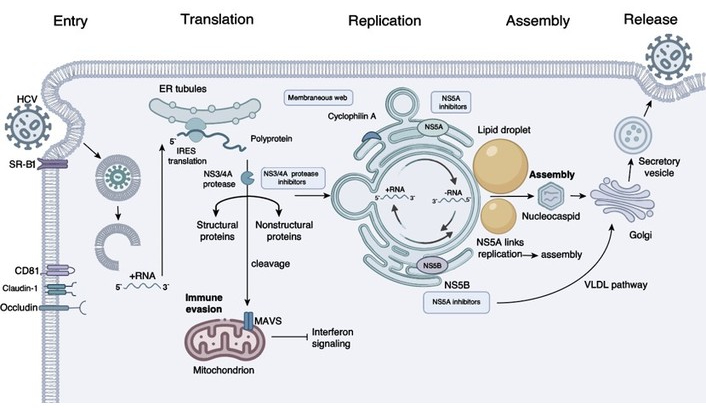
Schematic representation of the HCV reproduction cycle within hepatic cells. Major stages include: entry, translation of viral proteins, RNA replication, assembly, and release of new virions. A better understanding of the structure and life cycle of HCV enabled the development of direct-acting antivirals. HCV: hepatitis C virus; ER: endoplasmic reticulum; VLDL: very low density lipoprotein.
As depicted in Figure 2, efforts to find a treatment for NANBH began with the same hepatitis B regimen: interferon-α2 b (IFN-α2b). Clinical trials began in 1986. Despite the poor safety profile of the injections and the high relapse rates, IFN was approved for the treatment of NANBH infection. In 1989, the structure and genome of the mystery virus were discovered, and it was finally named hepatitis C. An attempt to use ribavirin (RBV) as monotherapy for HCV showed very high relapse rates. In 1999, combination therapy with IFN-α2b injections and RBV became the standard of care. Although the cure rate increased, side effects remained high, and patients found it difficult to administer their medications three times per week. To address this challenge, IFN was pegylated (PEG-IFN). PEG-IFN showed better efficacy and fewer side effects due to its once-weekly administration. For the next 10 years, PEG-IFN plus RBV became the standard treatment for patients with hepatitis C [40].
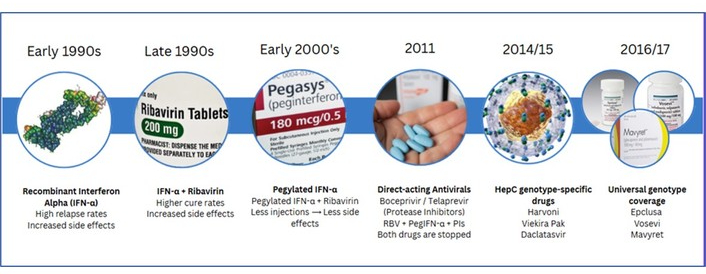
Timeline of the evolution of HCV treatment: use of recombinant interferon alpha, ribavirin, pegylated IFN-α, direct-acting antivirals, hep C genotype-specific designs, and now universal genotype coverage medication.
Table 1 lists the DAAs released on the market in chronological order. In 2011, the two DAAs, boceprevir and telaprevir, became available for HCV treatment. The new regimen consisted of a DAA in addition to PEG-IFN and RBV. It demonstrated improved outcomes and a higher sustained virologic response (SVR) rate [41]. However, the downsides underscored the need for newer agents. Both boceprevir and telaprevir are NS3/4A protease inhibitors that act only against GT1. This narrow scope has led to a lower barrier to resistance. Moreover, adding a DAA increased drug-drug interactions within the regimen and reduced compliance because they are taken three times per day with meals [42]. In subsequent years, more effective agents emerged, including simeprevir and sofosbuvir (SOF). In 2014, the FDA approved the first all-DAA regimens: ledipasvir (LDV)/SOF and SOF/simeprevir. Production of telaprevir and boceprevir stopped in 2014 and 2015, respectively, in response to the emergence of newer, more effective agents [40]. Between 2015 and 2016, the market shifted to NS5A inhibitor plus NS5B inhibitor combinations with the approval of drugs such as daclatasvir (DCV) (Daklinza®) [43], elbasvir, which is marketed exclusively in a fixed-dose combination with grazoprevir (Zepatier®) [44], and velpatasvir (VEL), which is only available in a fixed-dose combination with SOF (Epclusa®) [45]. In 2017, HCV treatment was revolutionized with the approval of pan-genotypic options with shorter treatment durations, such as glecaprevir/pibrentasvir (G/P) (Mavyret®) [46] and SOF/VEL/voxilaprevir (VOX) (Vosevi®) [47]. Pediatric formulations, for example, G/P granules, were introduced in 2019 [6, 48].
List of direct-acting antivirals released in the market.
| Generic name | Brand name | Approval year | Mechanism of action | Notes |
|---|---|---|---|---|
| Boceprevir | Victrelis | 2011 | NS3/4A inhibitor | Withdrawn in 2015 |
| Telaprevir | Incivek/Incivo | 2011 | NS3/4A inhibitor | Withdrawn in 2015 |
| Asunaprevir | Sunvepra | 2014 | NS3/4A inhibitor | Withdrawn |
| Simeprevir | Olysio | 2013 | NS3/4A inhibitor | Withdrawn in 2018 |
| Sofosbuvir | Sovaldi | 2013 | NI NS5B inhibitor | |
| Daclatasvir | Daklinza | 2014 EMA2015 FDA | NS5A inhibitor | |
| Ledipasvir + sofosbuvir | Harvoni | 2014 | NS5A inhibitor + NI NS5B inhibitor | |
| Ombitasvir + paritaprevir, + ritonavir, + dasabuvir | Viekira Pak/Viekira XR | 2014 | NS5A inhibitor + NS3/4A inhibitor + HIV-1 protease inhibitor + NNI NS5B inhibitor | Withdrawn |
| Elbasvir + grazoprevir | Zepatier | 2016 | NS5A inhibitor + NS3/4A inhibitor | |
| Sofosbuvir + velpatasvir | Epclusa | 2016 | NI NS5B inhibitor + NS5A inhibitor | |
| Sofosbuvir + velpatasvir + voxilaprevir | Vosevi | 2017 | NI NS5B inhibitor + NS5A inhibitor + NS3/4A inhibitor | |
| Glecaprevir + pibrentasvir | Mavyret | 2017 | NS3/4A inhibitor + NS5A inhibitor | |
| Ravidasvir | Ravida | 2020 | NS5A inhibitor | Not approved by the FDA |
| Coblopasvir | Kailiwei | 2020 | NS5A inhibitor | Approved in China only |
NI: nucleotide inhibitors; NNI: non-nucleoside inhibitors.
By 2019, the HCV therapeutic market had reached saturation, with highly effective, well-tolerated, pan-genotypic DAAs available to both adult and pediatric patients. The approval of the pediatric G/P formulation marked the transition to simplified, all-oral regimens across all age groups and disease stages. Since then, updates to the international guidelines have focused primarily on optimizing therapy rather than introducing new antiviral agents. These updates include shorter treatment durations, expanded eligibility criteria, and a simplified pretreatment assessment, all of which have improved SVR [49].
NS3/4A is a noncovalent enzyme complex composed of the nonstructural protease NS3 and NS4A as a cofactor [50]. It plays an important role in viral RNA replication and viral particle assembly [50, 51]. It cleaves the HCV polyprotein, generating NSPs [52]. Moreover, it plays a crucial role in HCV persistence by disrupting innate immune responses [52]. It cleaves host factors, including the mitochondrial antiviral-signaling protein (MAVS) and Toll/IL-1 receptor domain-containing adapter inducing IFN-β (TRIF) [52–54]. Cleavage of TRIF disrupts IFN regulatory factor 3 (IRF3), thereby triggering IFN-β production and subsequently stimulating IFN-α and the production of antiviral cytokines and chemokines [53, 55]. NS3/4A protease inhibitors include glecaprevir, grazoprevir, paritaprevir, and VOX. These drugs block the NS3 catalytic site or the NS3/NS4A interactions. The use of NS3/4A inhibitors, such as glecaprevir, may have a dual effect by halting HCV polyprotein processing and MAVS cleavage, thereby restoring IFN production and the human innate response, in addition to its antiviral effects [53].
NS5A is a multifunctional phosphoprotein with zinc-finger domains that lacks intrinsic enzymatic activity. However, it is involved in multiple stages of viral replication [56] and in other cellular pathways, including the cell cycle and lipid metabolism [57]. Domains I and II are required for the replication complex [51], whereas domain III is essential for virion assembly [55]. The NS5A protein coordinates replication, packaging, and assembly by recruiting apolipoprotein E [56]. Moreover, it is involved in complex interactions with cellular functions. For example, NS5A inhibits apoptosis, thereby promoting tumorigenesis [56, 58] and triggering hepatocarcinogenesis [58]. Several mechanisms have been reported, including inhibition of TNF-mediated apoptosis and interactions with Bcl-2, PI3K, and the Wnt/β-Catenin pathways [57]. Domain II interacts with cyclophilin A, a host protein required for replication [59]. NS5A inhibitors were first introduced in 2014, with DCV as the first-in-class. The EMA approved DCV in August 2014, and the FDA approved it in July 2015 [60]. Several agents in the class followed, with LDV approved in 2014 and ombitasvir, elbasvir, and VEL in 2016. In 2020, China approved a new NS5A inhibitor, coblopasvir [61]. In 2021, the Drug Control Authority (DCA) Malaysia granted ravidasvir (RDV) conditional approval, followed by full approval in 2024 [62].
HCV NS5B is a conserved RdRp that is not expressed in normal human cells [63]. Like other polymerases, the enzyme has the right-hand polymerase architecture with three main domains. These domains resemble the fingers, the thumb, and the palm [64, 65]. The palm contains the highly conserved active site, which includes the GDD motif [66]. During infection, NS5B localizes to the membranous web, where it interacts with other NS proteins to form the replication complex [67]. NS5B is responsible for de novo initiation of RNA synthesis, a hallmark of the Flaviviridae family [68, 69]. It uses the positive-sense RNA strand to initiate synthesis of the complementary negative-strand RNA, which then serves as a template for positive-strand RNA synthesis. The newly synthesized positive strands are either used as templates for further negative-strand synthesis or packaged into virions [70, 71]. NS5B lacks proofreading; therefore, the likelihood of mutation is high, leading to the presence of quasi-species within a single host [72].
NS5B inhibitors are classified as nucleotide inhibitors (NI) and non-nucleoside inhibitors (NNI). NI are structural analogs of natural nucleotides. During viral replication, NS5B incorporates them into the RNA chain, terminating RNA synthesis [73]. SOF, the first and only approved medication in this class, is a uridine analog [74, 75]. It was first approved in 2013 under the name Sovaldi™ [76] and was considered a turning point in HCV treatment. Unlike other DAAs, SOF’s mechanism and its targeting of the conserved catalytic site have lent it pan-genotypic activity and a high genetic barrier. Moreover, it enabled IFN-free regimens with high cure rates and shorter durations [77]. In contrast, non-nucleoside polymerase inhibitors, such as dasabuvir, bind to an allosteric site. This binding induces conformational changes and disrupts residues [78]. The allosteric binding sites are less conserved, leading to GT-specific efficacy and a lower resistance barrier [79]. Consequently, NNIs are not used in pan-genotypic regimens.
HCV exhibits substantial genetic heterogeneity due to its lack of a proofreading mechanism, leading to the emergence of quasispecies. This heterogeneity facilitates the emergence of RAS [80]. RAS are defined as substitutions in the reference amino acid sequence of wild-type HCV that confer increased resistance to one or more DAAs. Each RAS is described by a capital letter indicating the reference amino acid, a number indicating the position of the amino acid, and a letter indicating the amino acid that is found in the sequence after substitution [81]. RAS can be present at baseline in DAA-naïve patients, but more commonly they emerge after DAA exposure [81]. Their clinical implications vary according to the target protein, the substitution, and the viral regimen used. Most studies focus on RAS in GT1 and GT3.
Common NS3 substitutions include Q80K, R155, A156T, and D168, V36. The most common resistance mechanisms involve R155 and D168 residues. The R155 mutation occurs mainly in GT1b and confers resistance to older-generation PIs (reviewed in [82]). Newer drugs such as glecaprevir and VOX use different binding modes; therefore, they can be used even in patients with baseline mutations. The D168 mutation acts indirectly by destabilizing the binding pocket and shifting the orientation of surrounding residues, making it harder for the drug to anchor. This mutation is common in GT1, GT3, and GT5. Unlike the R155 mutation, D168 may reduce the efficacy of newer-generation PIs [83]. The A156T/V mutations are found in GT1 and, to a lesser extent, in GT2, GT4, and GT6. They can cause resistance to almost all PIs due to steric hindrance. However, A156T/V mutants have low viral fitness. Q80K is found almost exclusively in GT1 and causes low-level resistance [84]. The resistance is limited to simeprevir, which has significantly lower cure rates when taken with PEG-IFN and RBV [82, 85]. Q80K has no significant impact on newer PIs such as glecaprevir and VOX [82].
A prior report demonstrated a direct interaction between NS3 and NS5B that is primarily mediated through the protease domain of NS3 [86]. NS5B is the RdRp of HCV, responsible for synthesizing new viral RNA genomes. NS5B is also a key target for DAAs, known as NS5B inhibitors, which can be nucleoside or non-nucleoside analogs that block RNA synthesis and halt viral replication. NS5A is an essential component of the HCV replication complex. NS5A also modulates host cell signaling, IFN response, and viral assembly [87]. NS5B inhibitors are often used in combination with NS5A inhibitors to enhance antiviral efficacy and reduce the risk of resistance. A recent study examined the efficacy of NS5A inhibitors against some of the less common HCV subtypes found in sub-Saharan Africa and Southeast Asia. The results showed that NS5A inhibitors had variable levels of efficacy, possibly due to inherent resistance, with only pibrentasvir effective against all tested subtypes [88]. Therefore, RAS testing before HCV treatment may be useful to guide the selection of the regimen, especially for those who need urgent retreatment and who have failed a combination including an NS5A inhibitor [89].
SVR is the most common efficacy endpoint for HCV treatment, indicating viral eradication [90]. It is defined as undetectable HCV RNA 12 weeks (SVR12, SVR 12 weeks post-treatment) or 24 weeks (SVR24) post-treatment. SVR has been clinically accepted, supported by several studies establishing the link between IFN-induced SVR or DAA-induced SVR to clinical outcomes [91]. Studies have shown that achieving SVR is associated with reduced all-cause mortality and a lower risk of HCC. Moreover, SVR has been linked to higher survival rates and fewer liver-related deaths in treated HCC patients [92]. Another study found that achieving SVR12 was associated with a reduced risk of liver-related events in patients with decompensated HCV cirrhosis and a MELD score < 15 [93].
Historically, SVR24 was the gold standard for defining success after the PEG-IFN and RBV regimen because recurrence was detected in fewer than 1% of patients. In later years, following the introduction of DAAs, studies have shown concordance between SVR12 and SVR24 [94]. In recent years, studies have examined the potential of SVR4 as an alternative to SVR12, since most patients on pan-genotypic regimens achieve SVR12 [95]. This raised the question of whether such a long follow-up duration was needed. Data from 20 phase 2 and phase 3 trials of patients taking glecaprevir/pibrentasvir showed that more than 99% of those who achieved SVR4 also achieved SVR12 [96]. In another prospective pilot study involving patients with all GTs, high concordance between SVR12 and SVR4 was observed among those receiving pan-genotypic regimens. A 100% sensitivity, positive predictive value, and negative predictive value were observed. However, a significant difference between SVR4 and SVR12 was observed in patients taking EBR/GZR (93.3% vs. 90%) [97]. In another study involving people who inject drugs, SVR4 results predicted SVR12 results with 100% positive predictive value and negative predictive value [95]. According to the available data, SVR4 may be used as an alternative to SVR12 in younger patients with less-advanced fibrosis receiving pan-genotypic regimens [95].
Alongside the rapid development of DAA, international HCV treatment guidelines have evolved. Over the past decade, major guidelines such as the American Association for the Study of Liver Diseases/Infectious Diseases Society of America (AASLD/IDSA), the European Association for the Study of the Liver (EASL), and WHO have shifted from complex, GT-specific recommendations towards simplified, pan-genotypic treatment strategies. The newer guidelines have shifted from introducing new agents to optimizing the use of existing drugs. Key changes include shorter regimens for selected patients, reduced pretreatment testing, simplified monitoring, and expanded eligibility for treatment.
Although all guidelines agree on treating chronic HCV with pan-genotypic DAAs, they differ in how they address service provision. The WHO is more elimination-oriented, with a focus on equity and access to treatment in low-resource settings. AASLD/IDSA and EASL are more specialized, offering detailed recommendations for screening, treatment, and monitoring in more complex clinical scenarios. These differences in guidelines complement each other in shaping HCV management.
Recent guidelines have shifted from GT-specific to simplified pan-genotypic regimens. For treatment-naïve, non-cirrhotic patients, the 2023 AASLD/IDSA guidelines recommend either glecaprevir 300 mg/pibrentasvir 120 mg for 8 weeks or SOF 400 mg/VEL 100 mg for 12 weeks. However, the SOF/VEL regimen requires baseline NS5A RAS testing for patients with GT3. Patients without Y93H can then be treated with SOF/VEL [98]. The 2020 EASL guidelines recommend the same regimens; however, they recommend initiating treatment without baseline NS5A RAS testing [99]. According to the WHO 2022 guidelines, a third regimen of SOF 400 mg/DCV 60 mg (SOF/DCV) for 12 weeks is recommended [49].
While recent guidelines emphasize standardized, pan-genotypic regimens as the first line for most patients with chronic HCV, specific clinical factors may still influence regimen selection. However, these factors no longer serve as routine decision points for all patients. These factors may influence the selection of regimen, duration, and prioritization.
Although pan-genotypic regimens are considered the standard for HCV treatment, the AASLD/IDSA still recommends GT-specific regimens. To select a GT-specific regimen, genotyping, subtype testing (if possible), and RAS testing are required. Initial treatment options are listed in Table 2.
Recommendations for initial treatment of HCV-infected treatment-naïve adults according to the AASLD/IDSA 2023.
| Regimen | Duration | Genotypes ± compensated cirrhosis | Considerations |
|---|---|---|---|
| G/P (300 mg/120 mg) | 8 weeks | GT1–GT6 | Taken with food |
| SOF/VEL (400 mg/100 mg) | 12 weeks | GT1–GT6 | If GT3 + NS5A RAS Y93H is present, add weight-based RBV or choose another regimen |
| LDV/SOF (90 mg/400 mg) | 12 weeks | GT1/GT4/GT5/GT6 | Not recommended for genotype 6e infection if subtype is known |
| LDV/SOF (90 mg/400 mg) | 8 weeks | GT1 without cirrhosis | In non-cirrhotic patients with no HIV and whose HCV RNA is < 6 million IU/mL |
| ELB/GZR (50 mg/100 mg) | 12 weeks | GT1/GT4 | For GT1a, if NS5A baseline RASs are present, choose another regimen |
| SOF/VEL (400 mg/100 mg) + weight-based RBV | 12 weeks | GT3 with cirrhosis | For GT3, with cirrhosis and baseline NS5A Y93 RAS |
| SOF/VEL/VOX (400 mg/100 mg/100 mg) | 12 weeks | GT3 with cirrhosis | For GT3, with cirrhosis and baseline NS5A Y93 RAS |
G/P: glecaprevir/pibrentasvir; LDV/SOF: ledipasvir/sofosbuvir; VOX: voxilaprevir; GT: genotype; RAS: resistance-associated substitutions; RBV: ribavirin; ELB/GZR: elbasvir/grazoprevir.
Hepatic assessment is the primary determinant of treatment. Current guidelines distinguish between non-cirrhotic, compensated cirrhotic, and non-compensated cirrhotic patients. In non-cirrhotic and compensated cirrhotic patients, pan-genotypic regimens achieve high SVR with standard treatment durations [98].
The guidelines distinguish between compensated (Child-Pugh A) and decompensated (Child-Pugh B or C) HCV patients. Patients with compensated cirrhosis and no history of prior decompensated episodes are eligible for the simplified pan-genotypic regimens recommended for non-cirrhotic patients [98, 100]. For decompensated cirrhotic patients, both AASLD/IDSA and EASL guidelines recommend the pan-genotypic regimen SOF/VEL (400 mg/100 mg). If the patient is eligible for RBV, SOF/VEL + weight-based RBV is recommended for 12 weeks. If the patient is ineligible for RBV, SOF/VEL is recommended for 24 weeks [98]. Another option recommended by AASLD/IDSA is LDV (90 mg)/SOF (400 mg), but only for GT1, 4, 5, or 6. If the patient is RBV-eligible, LDV/SOF + a weight-based RBV is recommended for 12 weeks. If the patient is RBV-ineligible, the LDV/SOF regimen is recommended for 24 weeks [98]. When RBV is initiated, a low dose of 600 mg can be started and subsequently increased as tolerated [98].
Treatment-experienced patients are those who have failed prior HCV treatment. However, AASLD/IDSA and EASL define these patients differently. According to the EASL, treatment-experienced patients are those who were previously treated with PEG-IFN-α and RBV; PEG-IFN-α, RBV, and SOF; or SOF and RBV. By contrast, AASLD/IDSA no longer recommends retreatment for patients who received IFN or IFN plus first-generation protease inhibitors, since cure rates with modern DAA regimens are comparable to those of treatment-naïve patients. Therefore, recommendations are categorized by regimen failure. Both guidelines recommend pan-genotypic regimens; however, the EASL is more conservative, suggesting RAS testing if feasible and adding RBV in many cases. On the other hand, the AASLD guidelines prioritize access and adherence to regimens. The lists of treatment options recommended by EASL and AASLD/IDSA are found in Tables 3 and 4, respectively.
Recommendations for treatment of HCV-infected treatment-experienced adults with or without compensated cirrhosis according to the EASL 2020 guidelines.
| Regimen | Duration | Failed regimen | Comments |
|---|---|---|---|
| SOF/VEL/VOX ± weight-based RBV (1,000 or 1,200 mg in patients < 75 kg or ≥ 75 kg, respectively) | 12 weeks for up to 16–24 weeks | Protease inhibitor and/or NS5A inhibitor-containing regimen | For patients without cirrhosis or with compensated cirrhosisAddition of RBV and/or prolonging treatment in difficult-to-cure patients only* |
| SOF + G/P ± weight-based RBV(1,000 or 1,200 mg in patients < 75 kg or ≥ 75 kg, respectively) | 12 weeks for up to 16–24 weeks | Protease inhibitor and/or NS5A inhibitor-containing regimen | For patients without cirrhosis or with compensated cirrhosis and who have predictors of lower response**Addition of RBV and/or prolonging treatment in difficult-to-cure patients only* |
| G/P + weight-based RBV (1,000 or 1,200 mg in patients < 75 kg or ≥ 75 kg, respectively) | 24 weeks | SOF/VEL/VOX | |
| SOF/VEL + weight-based RBV (1,000 or 1,200 mg in patients < 75 kg or ≥ 75 kg, respectively) | 24 weeks | Protease inhibitor and/or NS5A inhibitor-containing regimen | For patients with decompensated cirrhosis |
* Difficult-to-cure patients: patients with NS5A RASs who failed twice or more to achieve SVR after a combination regimen including a protease and/or an NS5A inhibitor; ** predictors of lower response: advanced liver disease, multiple courses of DAA-based treatment, complex NS5A RAS profile. SOF: sofosbuvir; VEL: velpatasvir; VOX: voxilaprevir; RBV: ribavirin; G/P: glecaprevir/pibrentasvir.
Recommendations for treatment of HCV-infected treatment-experienced adults with or without compensated cirrhosis according to the AASLD/IDSA 2023 guidelines.
| Regimen | Duration | Failed regimen | Comments |
|---|---|---|---|
| SOF/VEL/VOX ± weight-based RBV | 12 weeks | SOF-based regimens or EBR/GZR | Ribavirin is added in patients with GT3 and compensated cirrhosis |
| SOF/VEL/VOX ± weight-based RBV | 12 weeks | G/P | Ribavirin is added in patients with compensated cirrhosis |
| SOF/VEL/VOX ± weight-based RBV | 24 weeks | Multiple DAA treatment failure (including SOF/VEL/VOX or SOF + G/P) | |
| G/P | 16 weeks | SOF-based regimens | Not for NS3/41 inhibitor-inclusive regimens. Not for GT3 |
| G/P + SOF + weight-based RBV | 16 weeks | G/P or multiple DAA treatment failure (including SOF/VEL/VOX or SOF + G/P) | |
| SOF/VEL + weight-based RBV | 24 weeks | Sofosbuvir- or NS5A inhibitor-based treatment | |
| LDV/SOF + RBV 600 mg, increased as tolerated | 24 weeks | SOF-based treatment | For GT1, 4, 5, or 6 only |
Pan-genotypic regimens are effective across all GTs. However, various regimens are available to address different clinical scenarios, including liver disease, varying treatment durations, and treatment failure. This section highlights key trials that led to the approval of selected pan-genotypic regimens. A summary of these trials is presented in Tables 5 and 6.
Summary of key clinical trials of the G/P regimen.
| Study (NCT) | Year | Trial design | Regimen (dose) | Duration (week) | GT distribution (%) | SVR12 (n/N, %) | Notes |
|---|---|---|---|---|---|---|---|
| ENDURANCE-1 (NCT02604017) | 2018 | Phase 3, randomized, open-label, multicenter | G/P (300/120 mg) | 8 vs. 12 | GT1 (100) | 699/703 (99.43) | HIV-1-co-infection and SOF-treatment-experienced patients |
| ENDURANCE-2 (NCT02640482) | 2018 | Phase 3, randomized, double-blind, placebo-controlled | G/P (300/120 mg) | 12 | GT2 (100) | 201/202 (99.5) | Treatment-experienced patients |
| ENDURANCE-3 (NCT02640157) | 2018 | Phase 3, partially randomized, open-label, multicenter | G/P (300/120 mg) | 8 vs. 12 | GT3 | 371/390 (95) | Treatment-experienced patients |
| SOF/DCV (400/60 mg) | 13 | GT3 | 111/115 (97) | ||||
| ENDURANCE-4 (NCT02636595) | 2018 | Phase 3, open-label, single-arm | G/P (300/120 mg) | 12 | GT4 (45), GT5 (15), GT6 (40) | 120/121 (99.17) | Treatment-experienced patients |
| ENDURANCE-5, 6 (NCT02966795) | 2019 | Phase 3b, single-arm, open-label, multicenter | G/P (300/120 mg) | 8 vs. 12 | GT5 (27.4), GT6 (72.6) | 82/84 (97.6) | Included treatment-experienced patients |
| EXPEDITION-1 (NCT02642432) | 2017 | Phase 3, open-label, multicenter | G/P (300/120 mg) | 12 | GT1 (60), GT2 (23), GT4 (11), GT5 (1), GT6 (5) | 145/146 (99) | Compensated cirrhosis, including treatment-experienced patients |
| EXPEDITION-2 | 2018 | Phase 3, open-label, multicenter | G/P (300/120 mg) | 8 vs. 12 | GT1–GT6 | 150/153 (98) | HIV-1-coinfected/compensated cirrhosis and treatment-experienced PT |
| EXPEDITION-8 (NCT03656744) | 2023 | Phase 3b, single-arm, multicenter | G/P (300/120 mg) | 8 | GT1 (67), GT2 (8), GT3 (18), GT4 (4), GT5 (< 1), GT6 (3) | 335/343 (97.7) | Treatment-naïve, compensated cirrhosis patients |
| SURVEYOR-II | 2018 | Phase 3, partially randomized, open-label, multicenter | G/P (300/120 mg) | 12 vs. 16 | GT3 (100) | 59/62 (95) for 12 weeks, 66/69 (96) for 16 weeks | Treatment-experienced ± compensated cirrhosis and treatment-naïve with compensated cirrhosis |
GT: genotype; SVR12: sustained virologic response 12 weeks post-treatment; G/P: glecaprevir/pibrentasvir; SOF/DCV: sofosbuvir/daclatasvir; HIV: human immunodeficiency virus.
Summary of key clinical trials of SOF-containing regimens.
| Study (NCT) | Year | Trial design | Regimen (dose) | Duration (week) | GT distribution (%) | SVR12 (n/N, %) | Notes |
|---|---|---|---|---|---|---|---|
| ASTRAL-1 (NCT02201940) | 2015 | Phase 3, double-blind, placebo-controlled study | SOF/VEL (400/100 mg) | 12 | GT1 (53), GT2 (17), GT4 (19), GT5 (6), GT6 (7) | 622/624 (99) | Treatment-naïve and treatment experience/compensated cirrhosis |
| ASTRAL-2 (NCT02220998) | 2015 | Phase 3, randomized, open-label, multicenter | SOF/VEL (400/100 mg) | 12 | GT2 (100) | 133/134 (99) | Treatment-experienced and compensated cirrhosis patients |
| ASTRAL-3 (NCT02201953) | 2015 | Phase 3, randomized, open-label, multicenter | SOF/VEL (400/100 mg) | 12 | GT3 (100) | 264/277 (95) | Treatment-experienced and compensated cirrhosis patients |
| ASTRAL-4 (NCT02201901) | 2018 | Phase 3, randomized, open-label trial, multicenter | SOF/VEL (400/100 mg) ± RBV | 12 vs. 24 | GT1 (78), GT2 (4), GT3 (15), GT4 (3), GT6 (< 1) | 75/90 (83) for 12 weeks SOF/VEL77/90 (86) for SOF/VEL 24 weeks | Decompensated cirrhosis, treatment-naïve and treatment compensated |
| ION-1 (NCT01701401) | 2014 | Phase 3, open-label study | LDV/SOF (90/400 mg) ± RBV | 12 vs. 24 | GT1 (100) | 211/214 (99) for 12 weeks LDV/SOF, 211/217 (97) for 12 weeks LDV/SOF + RBV, 212/217 (98) for 24 weeks LDV/SOF, 215/217 (99) for 24 weeks LDV/SOF + RBV | Treatment-naïve only, including cirrhosis |
| ION-2 (NCT01768286) | 2014 | Phase 3, randomized, open-label, multicenter | LDV/SOF (90/400 mg) ± RBV | 12 vs. 24 | GT1 (100) | 109 (93.6) for 12-week LDV/SOF, 96% for 12-week LDV/SOF + RBV, 99% for 24 weeks LDV/SOF ± RBV | Included treatment-experienced and cirrhotic patients |
| ION-3 (NCT01851330) | 2014 | Phase 3, open-label study | LDV/SOF (90/400 mg) ± RBV | 8 vs. 12 | GT1 (100) | 94% for 8 weeks LDV/SOF, 93% for 8 weeks LDV/SOF + RBV, 95% for 12 weeks LDV/SOF | Treatment-naïve without cirrhosis |
| POLARIS-1 (NCT02607735) | 2017 | Phase 3, randomized, double blind, multi-center | SOF/VEL/VOX (400 mg/100 mg/100 mg) | 12 | GT1 (72), GT2 (1), GT3 (19), GT4 (5), GT5 (< 1), GT6 (2) | 253/263 (96.2) | Treatment-experienced patients, including cirrhotic patients |
| POLARIS-4 (NCT02639247) | 2017 | Phase 3, randomized, open-label, multi-center | SOF/VEL/VOX (400 mg/100 mg/100 mg) | 12 | GT1 (43), GT2 (19), GT3 (32), GT4 (6) | 178/182 (98) | Treatment-experienced patients, including cirrhotic patients |
GT: genotype; SVR12: sustained virologic response 12 weeks post-treatment; SOF/VEL: sofosbuvir/velpatasvir; RBV: ribavirin; LDV/SOF: ledipasvir/sofosbuvir.
Glecaprevir (100 mg)/pibrentasvir (40 mg) is a pan-genotypic regimen, taken as three co-formulated tablets once daily with food, providing a daily dose of glecaprevir (300 mg)/pibrentasvir (120 mg). It was approved in 2017 for the treatment of HCV GT1–GT6 in non-cirrhotic patients and in patients with compensated cirrhosis. Data from several clinical trials supported the EMA and FDA approvals.
SURVEYOR-I and II, open-label, multicenter trials assessed the efficacy and safety of G/P in GT1–GT6 in both cirrhotic and non-cirrhotic patients. SURVEYOR-I focused on GT1, 4, 5, and 6, while SURVEYOR-II focused on GT2 and GT3 [101]. A 12-week treatment with 300/120 mg without RBV achieved SVR12 of 96% (24/25), 95% CI 87–100% for GT2, and 93% (28/30), 95% CI 79–98% CI for GT3, with one treatment failure being a PEG-IFN/RBV treatment-experienced patient and the other missing data. In part 2, PEG-IFN/RBV treatment-experienced patients and GT3 reached SVR12 at 92% (22/24); 95% CI 74–98%. In GT4–GT6 patients, SVR12 rates were 100% (34/34); 95% CI 90–100%. A shorter duration of 8 weeks proved effective in both treatment-naïve and PEG-IFN/RBV-experienced patients with GT1 and GT2, with SVR12 of 97% and 98% for GT1 and GT2, respectively. In GT3, treatment-naïve patients, SVR12 was 97% after 8 weeks of treatment [102]. In SURVEYOR-II Part 3, treatment-naïve patients with GT3 and compensated cirrhosis achieved an SVR12 rate of 98% (39/40) after 12 weeks of treatment. Treatment-experienced patients without cirrhosis achieved SVR12 rates of 91% and 95% after 12 and 16 weeks of treatment, respectively, while patients with compensated cirrhosis achieved an SVR12 rate of 96% after 16 weeks [103]. The SURVEYOR-II Part 4, an open-label, multicenter, single-arm, phase 3 study, aimed to evaluate 8 weeks of G/P in non-cirrhotic patients. Results showed that 99% of GT2 (142/145), 94% of GT4 (43/46), 100% of GT5 (2/2), and 90% of GT6 (9/10) achieved SVR12 [101].
The “ENDURANCE” series of clinical trials evaluates the efficacy and safety of the G/P regimen. ENDURANCE-1, 2, and 3 focused on GT1, 2, and 3 patients without cirrhosis. ENDURANCE-1 (NCT02604017) is an open-label, multicenter, randomized trial assessing the difference between 8- and 12-week G/P regimens in GT1. SVR12 was 99.1% (332/335) and 99.7% (331/332) in the 8- and 12-week groups, respectively. All HIV-1 co-infected patients (33 patients) and SOF treatment-experienced patients (3 patients) achieved SVR12. The study concluded that 8 weeks of treatment was non-inferior to 12 weeks [84]. ENDURANCE-2 (NCT02640482) demonstrated sustained SVR12 in 100% of the population using a modified intent-to-treat (mITT) analysis. In the study, patients with GT2 without cirrhosis were treatment-naïve or experienced (IFN or PEG-IFN ± RBV, or SOF + RBV ± PEG-IFN) and were treated for 12 weeks. The study concluded both non-inferiority and superiority to the standard-of-care SOF/RBV [83]. ENDURANCE-3 (NCT02640157) was an active-controlled, partially randomized trial in which patients were assigned to either G/P or SOF/DCV (400/60 mg) for 12 weeks. After subsequent results from other trials, a third arm of G/P for 8 weeks was added. The 12-week G/P regimen was non-inferior to the SOF/DCV regimen, with SVR12 rates of 95% (95% CI: 93–98%) and 97% (95% CI: 93–99.9%), respectively. The 8-week regimen achieved an SVR12 of 95%, demonstrating its non-inferiority to the 12-week G/P [104]. ENDURANCE-4 (NCT02636595) showed high SVR12 rates in treatment-naïve or experienced patients without cirrhosis who received G/P for 12 weeks. The study included patients with GT4, 5, and 6, and the overall SVR12 was 99% (120/121) for the intent-to-treat population [83].
EXPEDITION-1, a single-arm, open-label, multicenter phase 3 trial, assessed the efficacy of G/P in patients with compensated cirrhosis and GTs 1, 2, 4, 5, and 6. Patients were either treatment-naïve or treatment-experienced (IFN or PEG-IFN ± RBV, or SOF + RBV ± PEG-IFN). Overall, SVR12 was achieved in 99% of patients, with a single GT1a relapse (47/48) [105]. EXPEDITION 2 assessed treatment of HIV/HCV co-infection in both non-cirrhotic patients (8-week regimen) and compensated cirrhotic patients (12-week regimen). The overall SVR12 rate was 98%, with one virologic failure in a patient with GT3 and cirrhosis [106].
In September 2019, the US FDA approved an 8-week G/P regimen for cirrhotic patients, based on data from EXPEDITION-8 [107]. EXPEDITION-8 is a single-arm, multicenter, phase 3b trial that evaluated SVR12 rates in treatment-naive patients with compensated cirrhosis. It excluded patients with a history of decompensation, HCC, and HIV/HBV co-infection. The results showed SVR12 rates comparable to those of non-cirrhotic patients. A real-world study conducted in the US has confirmed the results reported in EXPEDITION-8, in which 99% (per protocol) of cirrhotic patients achieved SVR12. Real-world studies support the results in clinical trials [107]. One study conducted in Italy reported results for 8-, 12-, and 16-week regimens. The overall SVR was 99.3% per protocol. 100% of GT1 and GT4 patients reached SVR12. Whereas non-cirrhotic, treatment-naive patients with either GT2 or GT3, treated for 8 weeks, had SVR12 in 96.2% (3 failures in GT2 and 2 failures in GT3). RAS Y93H and L3H were associated with relapses in GT3. In another real-world study conducted in Germany using a modified ITT analysis, the overall SVR12 rate was 99.4%, with GT2, 4, 5, and 6 at 100%, and G1 at 99.7% and G3 at 98.9%.
SOF (400 mg)/VEL (100 mg), marketed as Epclusa®, was the first pan-genotypic, single-tablet regimen, approved in 2016 based on the ASTRAL clinical trials. ASTRAL-1 (NCT02201940) is a phase 3, double-blind, randomized trial testing the efficacy and safety of a 12-week SOF/VEL regimen in treatment-naïve and IFN-based treatment-experienced patients with GT1, 2, 4, 5, and 6 with or without compensated cirrhosis. The overall SVR12 was 99% (95% CI 98–99%), with SVR12 ranging from 97% in GT5 and 98% in GT1a to 100% in the remaining GTs [108]. At the FDA’s request, a separate clinical trial for GT2, ASTRAL-2 (NCT02220998), was conducted. In this randomized, phase 3, multicenter, open-label trial, 266 treatment-naïve and IFN-based treatment-experienced patients with or without compensated cirrhosis were assigned to receive either SOF/VEL or SOF/RBV for 12 weeks. Results showed an SVR12 of 99% (95% CI 96–100%) for the SOF/VEL group. On the other hand, the SOF/RBV group reached an SVR12 of 94% (95% CI 88–97%) with 6 patients (5%) experiencing virologic relapse and 2 patients lost to follow-up [109]. The third clinical trial, ASTRAL-3 (NCT02201953), was dedicated exclusively to GT3. Patients were either treatment-naïve or IFN-based treatment-experienced, with or without compensated cirrhosis, and were assigned to either SOF/VEL for 12 weeks or SOF/RBV for 24 weeks. The SOF/VEL and SOF/RBV resulted in SVR12 rates of 95% (95% CI, 92–98%) and 80% (95% CI, 75–85%), respectively. Of the SOF/VEL group, 11 patients (4%) experienced virologic failure after treatment, while 38 patients (14%) of the SOF/RBV group experienced relapse during treatment [109]. ASTRAL-4 (NCT02201901) focused on patients with decompensated cirrhosis, mostly treatment-experienced across all GTs. The study comprises 3 arms: SOF/VEL for 12 weeks, SOF/VEL + RBV for 12 weeks, and SOF/VEL for 24 weeks. The overall rates of SVR were 83% (95% CI 74–90%) for patients receiving 12 weeks of SOF/VEL, followed by an 86% SVR (95% CI, 77–92%) for patients receiving 24 weeks of SOF/VEL, and 94% (95% CI, 87–98%) for patients receiving SOF/VEL + RBV. Based on these results, the SOF/VEL regimen was incorporated into the 2016 EASL guidelines and 2018 AASLD/IDSA guidelines for all GTs, including compensated and decompensated cirrhosis [110, 111].
Real-world SVR12 rates for SOF/VEL matched or exceeded those in the ASTRAL trials, confirming their results. A pooled analysis of 12 real-world cohorts across Canada, the USA, and Europe, including patients with GT1–GT6 who were treatment-naïve or had a history of IFN-based therapy, with or without compensated cirrhosis, showed an overall SVR12 rate of 98.9% (5,141/5,196). Only 1% of patients (55) hadn’t achieved SVR12 due to virologic reasons, which aligns with the ASTRAL trials [112]. In another German study, patients received SOF/VEL ± RBV for 12 weeks. One patient discontinued treatment due to adverse events (sleep disorder and mouth dryness). The SVR12 rate among patients completing the regimen was 99.1% (111/112), with only 1 treatment-naïve GT1 patient failing to achieve SVR12 [113].
LDV (90 mg)/SOF (400 mg), marketed as Harvoni™, is taken for 12 weeks for GTs 1, 4, 5, and 6. It is one of the regimens approved and used in Egypt. In ION-1 (NCT01701401), a phase 3, open-label study, treatment-naive patients with GT1, with or without cirrhosis, achieved SVR12 rates of 97–99%. The study showed that the use of RBV, extending treatment to 24 weeks, different GT1 subtypes, and cirrhosis did not affect treatment [75]. ION-3 (NCT01851330) explored reducing the treatment duration to 8 weeks. SVR12 was 94%, concluding that adding RBV or extending LDV/SOF to 12 weeks was not superior to 8 weeks [114]. Results of ION-2 suggested extending the treatment duration to 24 weeks for treatment-experienced patients with cirrhosis [115]. Other phase 3 studies showed high SVR12 rates for GT1 and GT4 with and without HIV co-infections, with SVR rates ranging from 96% to 100% [116, 117].
Worldwide data on this combination for GTs 4, 5, and 6 are limited due to their geographic distribution. In an Egyptian open-label randomized study, LDV/SOF achieved an SVR12 rate of 99% in patients with GT4. In another Egyptian study of younger patients with a mean age of 14.7 years, 100% achieved SVR12. Side effects reported were mild and included fatigue (18%), headache (2%), nausea (2%), diarrhea, cough, and myalgia.
SOF (400 mg)/VEL (100 mg)/VOX (100 mg), marketed as Vosevi, is a combination used as rescue therapy after a prior DAA failure. In POLARIS-1, 263 patients received the triple regimen SOF/VEL/VOX after prior failure of an NS5A inhibitor-containing regimen. The most commonly used NS5A inhibitors were LDV (55%), DCV (23%), and ombitasvir (13%). The overall SVR was 96%. In an open-label substudy of POLARIS-1, patients assigned to placebo in the primary study received SOF/VEL/VOX. 97% (143/147) of patients achieved SVR12, and 3% (4/147) experienced a relapse. All relapsed cases had GT1a, and one had compensated cirrhosis. In contrast, POLARIS-4 tested the efficacy of SOF/VEL/VOX in patients who had previously received any regimen, excluding those receiving NS5A inhibitors. The overall SVR was 98%, but 3% of patients did not achieve SVR. One patient relapsed, one died, and two did not follow up. Some patients in POLARIS-1 and POLARIS-4 had baseline NS5A or NS3 RAS, but this did not affect SVR rates. 83% of the POLARIS-1 population receiving SOF/VEL/VOX had baseline RAS, and 97% of these patients achieved SVR. In POLARIS-4, the only patient who relapsed didn’t have any RAS, either at baseline or at the time of relapse. Like other regimens, it has a favorable safety profile. POLARIS-1 reported side effects as headache (25%), fatigue (21%), diarrhea (18%), and nausea (14%). Other side effects include asthenia, insomnia, dizziness, back pain, arthralgia, abdominal pain, and irritability. Only five patients (2%) reported serious adverse drug reactions.
VEL is both a substrate and an inhibitor of transporter proteins such as P-glycoprotein (Pgp), ABCG2, OATP1B1, and OATP1B3, and is metabolized partly by CYP2B6, CYP2C8, and CYP3A4. As such, VEL has drug interactions with a wide variety of drugs. Contraindicated drugs include strong Pgp or strong CYP inducers such as rifampicin, rifabutin, carbamazepine, phenobarbital, and phenytoin. Ethinyl estradiol-containing contraceptives are contraindicated due to the risk of ALT elevation, but progesterone contraceptives are allowed. Proton pump inhibitors (PPIs), H2 blockers, and antacids can reduce absorption by 20–40%. VEL and its combination, such as SOF/VEL/VOX, should be taken with food and 4 hours before a PPI [118]. The maximum dose of PPI should not exceed 20 mg of omeprazole. LDV and SOF are also Pgp substrates; therefore, drugs such as digoxin and dabigatran should be used with caution, as digoxin levels may increase when co-administered [119].
Many statins, especially simvastatin and lovastatin, are metabolized primarily by CYP3A4. Inhibiting this enzyme can dramatically increase statin blood levels, raising the risk of myopathy and rhabdomyolysis. The use of statins, especially rosuvastatin, is not recommended. Pravastatin is minimally metabolized by CYP enzymes and is often preferred [120]. Finally, protease inhibitors can increase amiodarone plasma concentrations by inhibiting its metabolism, raising the risk of QT prolongation, arrhythmias, and fatal bradycardia.
The WHO has set its 2030 goals in alignment with the UN’s “Sustainable Development Goals”, which aim for universal health coverage, reduced child mortality, and combating infectious diseases. These goals, which include HCV elimination, are to be met between 2015 and 2030. The WHO defines HCV elimination as reducing the public health threat of the virus by lowering annual incidence by 90% and reducing annual hepatitis-related deaths by 65%. Key pillars set to achieve these goals include diagnosing 90% of HCV patients, treating 80% of the diagnosed, and preventing further infections [2]. Despite the international and national efforts to combat HCV, a decline of only 8.1% in annual new cases and 12% in HCV-related deaths was reported in 2024 [2]. This modest progress can be linked to several systemic, financial, social, and clinical barriers. A summary of the goals and progress is provided in Table 7. The disproportionate spread of HCV, even within the same country, makes it harder to allocate resources [121]. Data on key populations, such as people who inject drugs and incarcerated patients, are incomplete, making it difficult to design tailored screening and treatment programs [122]. Despite the availability of DAAs, their cost remains an obstacle in many countries [123]. Another issue is the prescriber restriction of DAA. Until 2023, 61% of countries with DAA therapy reimbursement have a ‘specialist only’ prescribing policy [124]. The lack of vaccination and long-term immunity means that relapse and treatment failure remain important barriers. Such issues are more evident in difficult-to-treat populations such as patients with liver damage and HIV co-infection [125].
The latest status of the progress of the 2030 WHO targets for HCV according to the latest global hepatitis report 2026, including 2015 baseline [126] as well as 2030 targets and 2024 progress [2].
| Metric | 2015 baseline | 2030 target | 2024 progress |
|---|---|---|---|
| Annual new HCV cases | 1.75 million | 80% reduction | 0.9 million (8.1% reduction) |
| HCV-related deaths | 270,000 | 65% reduction | 240,000 (12% reduction) |
| Diagnosis | 20% | 90% | 36% |
| Treatment | 7% | 80% | 20% |
Hepatitis C is a significant public health problem in Egypt. According to the Demographic Health Survey (DHS) in 2008, the HCV seroprevalence was 14.7%, the highest prevalence in the world [127]. In 2015, it was estimated that the burden of HCV in Egypt was 3.81 billion USD, and it was expected to increase as more patients progress to cirrhosis and HCC [128]. In 2008, the National Committee for Control of Viral Hepatitis (NCCVH) developed the first Egyptian Control Strategy for Hepatitis. Between 2007 and 2010, 21 centers were established for HCV treatment, with governmental funding for treatment programs exceeding 90% [129]. Despite its efforts, only 191,000 Egyptians had started treatment. Before the introduction of DAA, PEG-IFN/RBV for 48 weeks was the standard treatment regimen for HCV. Such regimens yielded poor SVR, ranging from 35–43%, in GT4 [130]. Due to the low SVR rate and the high cost of the specialized IFN centers across the country, treatment was limited to patients with biopsy-proven F2–F3 fibrosis only [131].
Following its introduction to the market, SOF, marketed under the name Sovaldi™, revolutionized the treatment of HCV, enabling IFN-free regimens with SVR rates of 90–95% [132]. Negotiations between the NCCVH and Gilead Sciences have resulted in a 99% cost reduction for patients treated under the governmental scheme [133]. In 2014, the NCCVH developed its second strategy, The Plan of Action (PoA) for prevention, care, and treatment of viral hepatitis [134]. The PoA aimed to prevent HCV transmission and treat patients on the waitlist through mass screening campaigns that targeted millions to detect high-risk patients. The initiative promoted Sovaldi™ as its primary treatment. Real-world studies of several SOF-based regimens have been conducted since their introduction. In 2015, Doss et al. [135] demonstrated the efficacy of SOF + RBV regimens for 12 or 24 weeks, with SVR rates of 77% and 90%, respectively. Another study compared triple therapy (SOF + PEG-IFN + RBV) with dual therapy (SOF + RBV), with patients achieving SVR rates of 94% and 78.7%, respectively [136]. Later studies reflected the shift to IFN-free and RBV-free regimens. Ahmed et al. [137] evaluated the SOF/DCV regimen alone and in combination with RBV, and SVRs were 96.5% and 84.5%, respectively. El-Khayat et al. [138, 139] conducted two studies in 2017 and 2018, evaluating the efficacy of the SOF plus simeprevir regimen and LDV/SOF regimen, respectively. The SOF and simeprevir regimen yielded an SVR of 94%, while the LDV/SOF regimen yielded 99% [138, 139]. Several other studies tested different combinations, achieving SVR rates from 82% to 100% [140–142].
In 2018, the MoH launched “100 million Seha”, or 100 million Healthy Lives, aligning with the WHO goals. Reduced hepatitis cases and increased the cure rate by 80% [6]. The initiative included free HCV screening for all Egyptians 18 years or older, followed by free treatment for confirmed cases. The MoH announced that nearly 50 million Egyptians and 36,000 foreign residents were screened; of those, 2.2 million were seropositive, and 1.6 million of those patients had confirmed HCV infection. Moving forward, the campaign shifted its focus to screen 3.8 million students aged 6 to 18 years between May 2019 and January 2020. In October 2023, the WHO recognized Egypt’s efforts towards HCV elimination (defined as a 90% reduction in new cases and 65% reduction in deaths), becoming the first country to achieve “gold tier” status on the path to HCV elimination [6].
Between 2014 and 2020, it’s estimated that 4 million patients were treated [143]. This decline reflects the importance of mass screening and the effectiveness of the DAA. The campaign also included refugees and asylum seekers in Egypt [144]. In 2019, the Minister of Health stated that the strategy implemented in Egypt would be further disseminated to other African countries with high HCV burden, such as Sudan, South Sudan, and Burundi [145]. Following the WHO screening and treatment guidelines, Egypt has pledged to provide technical support, expertise, and screening software, as well as free treatment for 3 months for African citizens with HCV. In June 2020, the MoH announced that 30,632 citizens from South Sudan, Chad, and Eritrea had been tested, and 376 citizens received treatment [129]. Collaborative efforts by the Egyptian MoH continue to control the burden of HCV in Africa.
Currently, there is no approved vaccine for hepatitis C. The development of an HCV vaccine remains significantly challenging. The virus’s genetic diversity, along with the presence of quasi-species, makes it difficult to develop a universal vaccine [146]. Moreover, rapid viral mutation and its ability to evade the immune system renders the virus resistant to neutralizing antibodies and T-cell responses. The initial infection doesn’t confer sterilizing immunity; therefore, reinfection can occur [147]. Although the initial infection doesn’t confer sterilizing immunity, a study found that reinfection may reduce transmission [147]. Limited animal models have also been a challenge for vaccine testing. The chimpanzee is the only animal susceptible to HCV; however, they are no longer used in trials due to financial and ethical concerns [146]. Strategies investigated include recombinant protein vaccines, viral vector vaccines, peptide and DNA vaccines, and mRNA vaccines. Recombinant protein vaccines utilize the E1/E2 glycoprotein complex, derived from GT1a, to induce neutralizing antibodies. Phase 1 clinical trials showed a favorable safety profile but limited cross-GT neutralization [148, 149]. Viral vector vaccines use vectors such as adenovirus or modified vaccinia Ankara to express NS proteins and elicit T-cell responses, mainly CD4+ and CD8+ [150]. Phase 1 clinical trials found the vaccine to be safe, with possible cross-strain recognition [150]. However, in a phase 2 clinical trial, the vaccine failed to prevent HCV infection in people who inject drugs despite inducing a T-cell response [151]. Other vaccines have been tested in preclinical trials and have shown promising results using advanced molecular technologies [146]. In the absence of an effective vaccination process, recent studies have highlighted the role of gut microbiota in facilitating or stopping possible viral hepatitis [152]. Modulating the gut microbiome could provide important support in preventing HCV infection and improving recovery time in patients receiving DAAs [153].
HCV treatment has been established for all GTs, including cirrhotic and treatment-experienced patients. However, ongoing research is investigating newer DAAs and regimens to address existing gaps. Bemnifosbuvir/Ruzasvir (BEM/RZR) is an NS5B/NS5A inhibitor regimen, primarily for difficult-to-treat cases, such as GT3 infections and resistance-related failure. In vitro and in vivo studies, as well as one phase 1 study, have shown promising results with a favorable safety profile [154, 155]. In a phase 2 study (NCT05904470), BEM/RZR (1,100 mg/360 mg) for 8 weeks demonstrated a high SVR12 rate of 97.7% (210/215) in GT1–GT4 patients. C-Beyond, a phase 3 study (NCT06868264), is currently investigating the efficacy of BEM/RZR for 8 weeks in non-cirrhotic patients and for 12 weeks in patients with compensated cirrhosis, compared with SOF/VEL for 12 weeks. The study is expected to be completed in September 2026. Another regimen under investigation is SOF/RDV, an affordable alternative DAA regimen. The STORM-C-1 trial (NCT02961426), involving patients with GT1–GT3 and GT6, showed promising results with a 97% SVR12 rate. The study included patients with cirrhosis and HIV, as well as treatment-experienced patients treated for 12 or 24 weeks [156, 157]. Another phase 3 trial (NCT04885855) has demonstrated that 8 weeks of SOF/RDV was non-inferior to the 12-week regimen [158].
HCV remains a critical public health challenge, with an estimated 50 million people living with chronic HCV, resulting in around 0.9 million new infections and over 240,000 deaths annually due to cirrhosis and liver cancer. DAAs have shaped the future of HCV treatment worldwide. The emergence of new DAAs has replaced the IFN-based regimens. Various associations and organizations have refined their guidelines to develop the most appropriate treatment regimen for the patient’s case. With their high efficacy, safety profile, and early detection of the infection, the cure and eradication of the virus are achievable. Egypt’s national screening and treatment programs using affordable DAAs have treated millions of patients, markedly reduced HCV prevalence, and demonstrated that combining effective antivirals with strategic public health planning can make HCV elimination achievable. Future research for effective vaccine development and improving immune response is warranted.
AASLD: American Association for the Study of Liver Diseases
ALT: alanine aminotransferase
BEM/RZR: bemnifosbuvir/ruzasvir
DAAs: direct-acting antivirals
DCV: daclatasvir
EASL: European Association for the Study of the Liver
G/P: glecaprevir/pibrentasvir
GT: genotype
HCC: hepatocellular carcinoma
HCV: hepatitis C virus
IDSA: Infectious Diseases Society of America
IFN-α2b: interferon-α2 b
LDV/SOF: ledipasvir/sofosbuvir
MAVS: mitochondrial antiviral-signaling protein
NANBH: non-A, non-B hepatitis
NCCVH: National Committee for Control of Viral Hepatitis
NI: nucleotide inhibitors
NNI: non-nucleoside inhibitors
NS5A: nonstructural protein 5A
NS5B: nonstructural protein 5B
NSPs: non-structural proteins
PEG: pegylated
Pgp: P-glycoprotein
PoA: Plan of Action
PPIs: proton pump inhibitors
RAS: resistance-associated substitutions
RBV: ribavirin
RdRp: RNA-dependent RNA polymerase
RDV: ravidasvir
SPs: structural proteins
SVR: sustained virologic response
SVR12: sustained virologic response 12 weeks post-treatment
TRIF: Toll/IL-1 receptor domain-containing adapter inducing interferon-β
VEL: velpatasvir
VOX: voxilaprevir
WHO: World Health Organization
SHB: Conceptualization, Investigation, Writing—original draft, Writing—review & editing. ABER: Conceptualization, Investigation, Writing—review & editing, Supervision. KHH: Writing—review & editing. All authors read and approved the submitted version.
Kareem H. Hassan and Azza B. El-Remessy are employed by Nour Therapeutics. Nour Therapeutics had no role in the design of the study; in the collection, analyses, or interpretation of data; in the writing of the manuscript, or in the decision to publish the results. Besides, these two authors have no other conflicts of interest that need to be disclosed. Salma H. Bahram has no conflicts of interest that need to be disclosed.
Not applicable.
Not applicable.
Not applicable.
Not applicable.
Not applicable.
© The Author(s) 2026.
Open Exploration maintains a neutral stance on jurisdictional claims in published institutional affiliations and maps. All opinions expressed in this article are the personal views of the author(s) and do not represent the stance of the editorial team or the publisher.
Copyright: © The Author(s) 2026. This is an Open Access article licensed under a Creative Commons Attribution 4.0 International License (https://creativecommons.org/licenses/by/4.0/), which permits unrestricted use, sharing, adaptation, distribution and reproduction in any medium or format, for any purpose, even commercially, as long as you give appropriate credit to the original author(s) and the source, provide a link to the Creative Commons license, and indicate if changes were made.



View: 2697
Download: 15
Times Cited: 0


