 Systematic Review


Affiliation:
1Internal Medicine, Augusta Health, Fishersville, VA 22939, USA
Email: shamsun.nahar.dmc@gmail.com
ORCID: https://orcid.org/0000-0003-3592-7351


 ,
,
Affiliation:
2Molecular and Cellular Biology, Kennesaw State University, Kennesaw, GA 30144, USA
ORCID: https://orcid.org/0000-0002-1559-2630
,
Affiliation:
3Internal Medicine, Dhaka Medical College, Dhaka 1000, Bangladesh
ORCID: https://orcid.org/0009-0003-1880-578X
Explor Cardiol. 2026;4:1012120 DOI: https://doi.org/10.37349/ec.2026.1012120
Received: May 22, 2026 Accepted: July 27, 2026 Published: September 02, 2026
Academic Editor: Erkin Mirrakhimov, Internal Medicine of Kyrgyz State Medical Academy, Kyrgyzstan
Background: Chronic kidney disease (CKD) is linked to high cardiovascular morbidity and mortality. Many patients remain at risk despite standard treatment. This review assessed the renal, cardiovascular, safety, and primary care implementation outcomes of sodium-glucose cotransporter-2 (SGLT2) inhibitors in CKD, including patients with and without diabetes.
Methods: This systematic review followed PRISMA 2020 guidelines. PubMed, Scopus, and Google Scholar were searched for English-language human studies published between 2016 and 2026. Reference lists of eligible articles were also manually screened. Eligible studies included randomized controlled trials and primary observational studies evaluating SGLT2 inhibitors in patients with CKD, with or without diabetes. Studies reporting renal, cardiovascular, safety, or primary care implementation outcomes were included. Data were extracted using a standardized form and synthesized qualitatively because of clinical and methodological heterogeneity.
Results: Fifteen primary studies were included, comprising randomized controlled trials and observational studies. Across landmark clinical trials and real-world studies, SGLT2 inhibitors slowed eGFR decline, reduced albuminuria, and lowered the risk of kidney and heart failure hospitalization. Renal and cardiovascular benefits were observed in patients with and without diabetes. SGLT2 inhibitors were generally well tolerated, with genital mycotic infections and volume depletion being the most reported adverse events, while serious adverse events were uncommon. Real-world studies consistently identified underprescription and implementation barriers in primary care.
Discussion: SGLT2 inhibitors are foundational therapies for CKD, providing consistent renal and cardiovascular benefits with an acceptable safety profile in patients with and without diabetes. However, substantial gaps remain in their implementation in primary care. Improving early identification of eligible patients, clinician awareness, and integration of guideline-directed prescribing into routine practice may help reduce CKD progression and cardiovascular events.
Chronic kidney disease (CKD) is a major contributor to long-term morbidity and mortality, particularly among patients with coexisting cardiovascular disease and type 2 diabetes mellitus (T2DM). CKD rarely exists in isolation and is strongly associated with cardiovascular disease and heart failure, creating a complex, high-risk population that requires integrated management across care settings [1–3].
Although renin-angiotensin-aldosterone system (RAAS) blockade remains the cornerstone of CKD management, landmark kidney outcome trials have demonstrated that sodium-glucose cotransporter-2 (SGLT2) inhibitors provide additional renal and cardiovascular benefits when added to standard therapy [1–3]. These findings highlight the persistent need for therapies that further reduce the risk of kidney disease progression and cardiovascular events in patients with CKD. The complexity of managing CKD, particularly in patients with multiple comorbidities, underscores the importance of integrating evidence-based therapies into individualized patient care.
SGLT2 inhibitors have transformed the therapeutic landscape of CKD. Initially developed as glucose-lowering agents for T2DM, they were subsequently shown to reduce hospitalization for heart failure and slow CKD progression in large cardiovascular outcome trials [4–6]. Dedicated kidney outcome trials, including CREDENCE, DAPA-CKD, and EMPA-KIDNEY, further demonstrated significant renal and cardiovascular benefits in patients with CKD, including those without diabetes [1–3]. These findings have established SGLT2 inhibitors as foundational therapies across a broad spectrum of kidney function and albuminuria levels [1–3].
Despite compelling evidence, real-world uptake of SGLT2 inhibitors remains suboptimal [7, 8]. Underprescription among eligible high-risk patients has been consistently reported, reflecting gaps in implementation and barriers to adoption in routine clinical practice [7–12]. Factors such as clinician familiarity, prescribing priorities, healthcare system barriers, and care coordination continue to limit the timely initiation of SGLT2 inhibitors in eligible patients [7–12].
Primary care clinicians play a pivotal role in identifying eligible patients with CKD and implementing evidence-based SGLT2 inhibitor therapy [7–12]. This systematic review synthesizes evidence from randomized controlled trials and real-world primary studies to evaluate the renal, cardiovascular, safety, and implementation outcomes of SGLT2 inhibitors in CKD. By integrating evidence from landmark clinical trials with real-world practice, this review aims to support evidence-based prescribing and facilitate the earlier adoption of SGLT2 inhibitors in routine CKD management.
This systematic review was conducted in accordance with the Preferred Reporting Items for Systematic Reviews and Meta-Analyses (PRISMA) 2020 guidelines. A structured and reproducible methodology was used to identify, screen, appraise, and qualitatively synthesize the available evidence on the renal, cardiovascular, safety, and implementation outcomes of SGLT2 inhibitors in adults with CKD.
Studies were selected according to predefined inclusion and exclusion criteria.
Human studies published in English between 2016 and 2026
Full-text articles
Randomized controlled trials and primary observational studies (cohort, cross-sectional, and qualitative studies)
Studies evaluating SGLT2 inhibitors in adults with CKD, with or without diabetes
Studies reporting renal outcomes, cardiovascular outcomes, safety outcomes, or primary care implementation outcomes
Animal or in vitro studies
Case reports, editorials, letters, conference abstracts, and study protocols
Systematic reviews, narrative reviews, clinical practice guidelines, and scientific statements
Studies not evaluating SGLT2 inhibitors in CKD
Duplicate publications
A comprehensive literature search was conducted in PubMed, Scopus, and Google Scholar to identify primary studies evaluating the role of SGLT2 inhibitors in CKD. The search was initially performed in January 2026 and updated in June 2026 to identify additional eligible primary studies. Searches were limited to English-language human studies published between 2016 and 2026.
The PubMed search combined Medical Subject Headings (MeSH) and free-text terms related to SGLT2 inhibitors and CKD, including “SGLT2 inhibitors,” “dapagliflozin,” “empagliflozin,” “canagliflozin,” “kidney diseases,” “chronic”, “chronic kidney disease,” ‘cardiovascular outcomes’ and “CKD.” Updated reference with updated information from the revised included studies. Equivalent keyword combinations were used in Scopus and Google Scholar, with filters applied for English-language human studies, randomized controlled trials, clinical trials, observational studies, and adult participants.
To maximize study identification, the reference lists of eligible articles and relevant publications were manually screened for additional primary studies meeting the eligibility criteria. Studies identified through supplementary searching underwent the same screening and eligibility assessment as studies identified through the database searches.
Records identified through electronic database searches and supplementary reference screening were imported into a reference management program, and duplicates were removed. Titles and abstracts were independently screened by two reviewers according to the predefined eligibility criteria. Potentially eligible studies underwent full-text review to determine final inclusion. Disagreements regarding study eligibility were resolved through discussion and consensus. The study selection process is summarized in the PRISMA 2020 flow diagram in Figure 1.
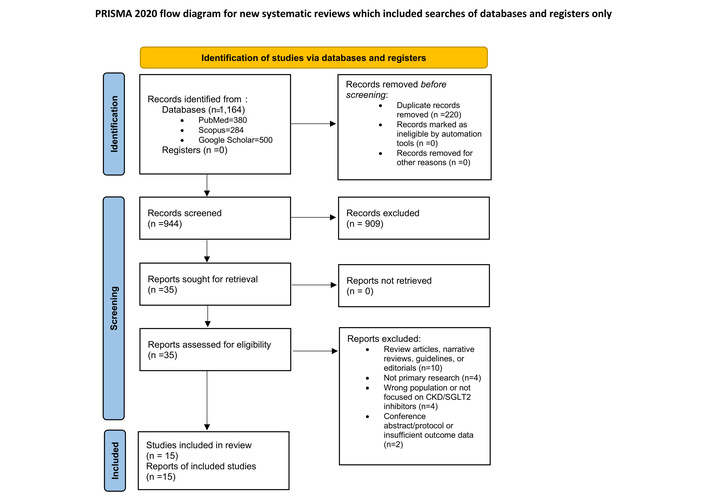
PRISMA 2020 flow diagram of study selection showing the number of records identified, screened, excluded, and included in the final analysis. Adapted from the PRISMA 2020 flow diagram (https://www.prisma-statement.org/prisma-2020-flow-diagram). Accessed July 6, 2026. © 2024–2026 The PRISMA Executive. Distributed under a Creative Commons Attribution (CC BY 4.0) license.
Fifteen primary studies were included in the qualitative synthesis, comprising landmark randomized controlled trials and observational studies, including cohort, cross-sectional, and qualitative designs. The included studies evaluated the renal, cardiovascular, safety, and implementation outcomes of SGLT2 inhibitors in adults with CKD, with or without diabetes. Study characteristics are summarized in Table 1.
Characteristics of the studies included in the qualitative synthesis.
| Study | First author | Country | Study design | Study population | Intervention | Key findings |
|---|---|---|---|---|---|---|
| EMPA-KIDNEY | Herrington et al. | Multinational | Randomized controlled trial | Adults with CKD with or without diabetes | Empagliflozin | Reduced kidney disease progression, cardiovascular death, and all-cause hospitalization. |
| DAPA-CKD | Heerspink et al. | Multinational | Randomized controlled trial | Adults with CKD with or without diabetes | Dapagliflozin | Reduced sustained eGFR decline, kidney failure, and cardiovascular death or hospitalization for heart failure. |
| EMPA-REG OUTCOME | Zinman et al. | Multinational | Randomized controlled trial | Adults with type 2 diabetes and established cardiovascular disease | Empagliflozin | Reduced cardiovascular mortality, hospitalization for heart failure, and progression of kidney disease. |
| CANVAS Program | Neal et al. | Multinational | Randomized controlled trial | Adults with type 2 diabetes at high cardiovascular risk | Canagliflozin | Improved cardiovascular outcomes and reduced progression of albuminuria. |
| DECLARE-TIMI 58 | Wiviott et al. | Multinational | Randomized controlled trial | Adults with type 2 diabetes with or at risk for cardiovascular disease | Dapagliflozin | Reduced hospitalization for heart failure and improved renal outcomes. |
| CREDENCE | Perkovic et al. | Multinational | Randomized controlled trial | Adults with type 2 diabetes and CKD | Canagliflozin | Reduced kidney failure, sustained eGFR decline, and cardiovascular events. |
| Underuse of cardiorenal protective agents | Hao et al. | United States | Cross-sectional study | High-risk adults with type 2 diabetes | SGLT2 inhibitors | Demonstrated substantial underuse of SGLT2 inhibitors among eligible patients. |
| CAREPRO-T2D | Simões de Carvalho et al. | Portugal | Cross-sectional study | Adults with type 2 diabetes | SGLT2 inhibitors | Identified significant underprescription of SGLT2 inhibitors despite guideline eligibility. |
| ATLAS study | Lindhardt et al. | Denmark | Cross-sectional study | Adults with CKD managed in primary care | SGLT2 inhibitors | Highlighted opportunities to improve CKD management and implementation of evidence-based therapies. |
| Kidney outcomes associated with SGLT2 inhibitors | Nagasu et al. | Japan | Retrospective cohort study | Adults with type 2 diabetes | SGLT2 inhibitors versus other glucose-lowering agents | SGLT2 inhibitors were associated with improved kidney outcomes in routine clinical practice. |
| Outcomes in new user cohorts | Layton et al. | United States | Retrospective cohort study | Adults with CKD and type 2 diabetes | SGLT2 inhibitors or GLP-1 receptor agonists | Demonstrated favorable kidney and cardiovascular outcomes with SGLT2 inhibitor therapy. |
| Cardiorenal protective effects in CREDENCE | Charytan et al. | Multinational | Secondary analysis of the CREDENCE trial | Adults with type 2 diabetes and CKD | Canagliflozin | Cardiorenal benefits were consistent regardless of baseline glycemic control. |
| Low use of guideline-recommended cardiorenal protective agents | Marasinghe et al. | Australia | Cross-sectional study | Adults with type 2 diabetes in primary care | Cardiorenal protective therapies | Identified persistent underutilization of guideline-recommended therapies. |
| Factors affecting prescription of SGLT2 inhibitors | Ng et al. | Hong Kong, China | Qualitative study | Primary care physicians | SGLT2 inhibitors | Identified physician-related barriers and facilitators influencing SGLT2 inhibitor prescribing. |
| Real-world prescriptions of GLP-1RAs and SGLT2 inhibitors | Tuccinardi et al. | Italy | Retrospective observational cohort study | Adults with type 2 diabetes | GLP-1 receptor agonists and SGLT2 inhibitors | Prescribing decisions were influenced more by BMI and age than by cardiorenal risk. |
GLP-1: glucagon-like peptide-1; GLP-1RAs: glucagon-like peptide-1 receptor agonists; BMI: body mass index; CKD: chronic kidney disease; eGFR: estimated glomerular filtration rate; SGLT2: sodium-glucose cotransporter-2. The table summarizes the study name, first author, country, study design, study population, intervention, and key findings for the 15 primary studies included in this systematic review. References: [1–15].
Across the included randomized controlled trials, SGLT2 inhibitors consistently demonstrated significant renoprotective effects by slowing CKD progression, reducing sustained declines in estimated glomerular filtration rate (eGFR), and lowering the risk of kidney failure and end-stage kidney disease [1–6]. CREDENCE was the first dedicated kidney outcomes trial to demonstrate that canagliflozin significantly reduced the risk of kidney failure and major cardiovascular events in patients with type 2 diabetes and CKD [3]. These findings were subsequently confirmed by DAPA-CKD, which demonstrated substantial reductions in sustained eGFR decline, end-stage kidney disease, and cardiovascular death or hospitalization for heart failure in patients with and without diabetes [2]. EMPA-KIDNEY further extended these benefits to a broader CKD population, demonstrating significant reductions in kidney disease progression among patients with and without diabetes across a wider spectrum of kidney disease [1]. In addition, a secondary analysis of the CREDENCE trial demonstrated that the renoprotective effects of canagliflozin were largely independent of glycemic control, suggesting that the clinical benefits of SGLT2 inhibitors extend beyond glucose lowering [15]. Collectively, the available evidence consistently supports the use of SGLT2 inhibitors to delay CKD progression and reduce adverse renal outcomes across diverse patient populations [1–6, 13–15]. The major randomized controlled trials evaluating renal outcomes are summarized in Table 2.
Landmark randomized controlled trials evaluating the renal benefits of SGLT2 inhibitors in CKD.
| Study | Population | Primary renal endpoint | Effect estimate | Clinical significance |
|---|---|---|---|---|
| EMPA-KIDNEY | CKD with or without diabetes | Kidney disease progression or cardiovascular death | HR 0.72; 95% CI 0.64–0.82 | Demonstrated renal benefit across a broad CKD population, including patients without diabetes. |
| DAPA-CKD | CKD with or without diabetes | Sustained ≥ 50% eGFR decline, ESKD, or renal/cardiovascular death | HR 0.61; 95% CI 0.51–0.72 | Confirmed substantial renal protection in CKD regardless of diabetes status. |
| CREDENCE | Type 2 diabetes with CKD | ESKD, doubling of serum creatinine, or renal/cardiovascular death | HR 0.70; 95% CI 0.59–0.82 | Established canagliflozin as a renoprotective therapy in diabetic kidney disease. |
| CANVAS Program | Type 2 diabetes at high cardiovascular risk | Sustained 40% eGFR decline, renal replacement therapy, or renal death | HR 0.60; 95% CI 0.47–0.77 | Provided supportive evidence of renal benefit in high-risk type 2 diabetes. |
| DECLARE-TIMI 58 | Type 2 diabetes with or at risk for cardiovascular disease | Renal composite outcome | HR 0.76; 95% CI 0.67–0.87 | Demonstrated favorable renal outcomes in a broad type 2 diabetes population. |
Beyond their renal benefits, SGLT2 inhibitors consistently demonstrated substantial cardiovascular protection across randomized controlled trials. Early cardiovascular outcome trials, including EMPA-REG OUTCOME, CANVAS Program, and DECLARE-TIMI 58, demonstrated significant reductions in heart failure hospitalizations and favorable cardiovascular outcomes in patients with type 2 diabetes at high cardiovascular risk [4–6]. Dedicated kidney outcome trials, including CREDENCE, DAPA-CKD, and EMPA-KIDNEY, further confirmed that these cardiovascular benefits extended to patients with CKD, including those without diabetes, with consistent reductions in hospitalization for heart failure and cardiovascular death [1–3].
Real-world observational studies supported these findings, demonstrating that patients receiving SGLT2 inhibitors experienced favorable cardiovascular outcomes in routine clinical practice [13, 14]. Collectively, the available evidence indicates that SGLT2 inhibitors provide clinically meaningful cardiorenal protection, supporting their use as a foundational therapy in patients with CKD who are at increased cardiovascular risk [1–6, 13–15]. The cardiovascular outcomes of the landmark randomized controlled trials evaluating SGLT2 inhibitors are summarized in Table 3.
Landmark randomized controlled trials evaluating the cardiovascular benefits of SGLT2 inhibitors.
| Study | Population | Primary cardiovascular endpoint | Effect estimate | Clinical significance |
|---|---|---|---|---|
| EMPA-KIDNEY | CKD with or without diabetes | Cardiovascular death or hospitalization for heart failure* | HR 0.84; 95% CI 0.67–1.07* | Supported cardiovascular safety and suggested favorable heart failure outcomes in a broad CKD population. |
| DAPA-CKD | CKD with or without diabetes | Cardiovascular death or hospitalization for heart failure | HR 0.71; 95% CI 0.55–0.92 | Extended cardiovascular benefits to patients with CKD irrespective of diabetes status. |
| CREDENCE | Type 2 diabetes with CKD | Cardiovascular death, myocardial infarction, or stroke | HR 0.80; 95% CI 0.67–0.95 | Demonstrated cardiovascular protection in patients with diabetic CKD receiving standard therapy. |
| EMPA-REG OUTCOME | Type 2 diabetes with established cardiovascular disease | Three-point major adverse cardiovascular events (MACE) | HR 0.86; 95% CI 0.74–0.99 | First landmark trial demonstrating cardiovascular benefit of an SGLT2 inhibitor, with marked reductions in cardiovascular death and hospitalization for heart failure. |
| CANVAS Program | Type 2 diabetes with established cardiovascular disease or high cardiovascular risk | Three-point major adverse cardiovascular events (MACE) | HR 0.86; 95% CI 0.75–0.97 | Confirmed cardiovascular protection with canagliflozin in a broad high-risk population. |
| DECLARE-TIMI 58 | Type 2 diabetes with or at risk for cardiovascular disease | Cardiovascular death or hospitalization for heart failure | HR 0.83; 95% CI 0.73–0.95 | Demonstrated significant reduction in heart failure hospitalization across a broad type 2 diabetes population. |
Overall, SGLT2 inhibitors demonstrated a favorable safety profile across the randomized controlled trials and observational studies included [1–15]. The most reported adverse events were genital mycotic infections and mild volume depletion, which were generally manageable with appropriate patient education and routine clinical monitoring [1–6]. Large randomized controlled trials did not demonstrate an increased risk of acute kidney injury, and an initial decline in eGFR was typically transient and reflected the expected hemodynamic effect of SGLT2 inhibition rather than progressive kidney injury [1–6]. Real-world studies similarly reported that SGLT2 inhibitors were generally well tolerated in routine clinical practice, with no major safety concerns beyond those observed in clinical trials[13, 14]. The principal safety outcomes reported in the landmark randomized controlled trials are summarized in Table 4.
Safety outcomes reported in landmark randomized controlled trials of SGLT2 inhibitors.
| Study | Important safety findings | Clinical interpretation |
|---|---|---|
| EMPA-KIDNEY | Serious adverse events, acute kidney injury, dehydration, hyperkalemia, urinary tract infection, and fracture occurred at similar rates between treatment groups. | Supported the safety of empagliflozin across a broad CKD population. |
| DAPA-CKD | No cases of diabetic ketoacidosis with dapagliflozin; rates of amputation and fracture were similar between treatment groups. | Demonstrated an acceptable safety profile even among patients with advanced CKD and those without diabetes. |
| CREDENCE | No significant increase in amputation or fracture compared with placebo. | Provided reassurance regarding the safety of canagliflozin in patients with diabetic CKD. |
| EMPA-REG OUTCOME | Increased incidence of genital infections; no increase in hypoglycemia, acute kidney injury, diabetic ketoacidosis, fracture, or volume depletion. | Empagliflozin demonstrated a favorable overall safety profile, with genital mycotic infections representing the most consistent adverse event. |
| CANVAS Program | Increased risk of lower-limb amputation; small number of diabetic ketoacidosis events; increased fracture risk reported in CANVAS but not consistently across CANVAS-R. | Although an amputation signal was observed, subsequent trials did not consistently reproduce this finding, suggesting that the overall cardiorenal benefits should be weighed against individual patient risk factors. |
| DECLARE-TIMI 58 | Higher incidence of diabetic ketoacidosis and serious genital infections leading to treatment discontinuation compared with placebo. | Serious adverse events remained uncommon, and the overall safety profile was considered acceptable. |
Despite the well-established renal and cardiovascular benefits of SGLT2 inhibitors, multiple real-world studies have consistently demonstrated suboptimal implementation in routine clinical practice [7–12]. Underprescription among eligible patients with CKD and type 2 diabetes remained common, particularly in primary care settings, despite contemporary evidence supporting their use [7, 8, 10]. Reported barriers included limited clinician familiarity with evolving evidence, concerns about adverse effects, therapeutic inertia, competing clinical priorities, and challenges in coordinating multidisciplinary care [9, 11]. Real-world prescribing analyses further suggested that treatment decisions were frequently influenced by patient characteristics such as age and body mass index rather than cardiorenal risk, highlighting opportunities to improve evidence-based prescribing [12].
Collectively, these findings emphasize the need for continued education, clinical decision support, and multidisciplinary collaboration to facilitate earlier identification of eligible patients and to improve the implementation of guideline-directed SGLT2 inhibitor therapy in primary care [7–12]. The primary care implementation findings from the included real-world studies are summarized in Table 5.
Primary care implementation findings across included real-world studies.
| Study | Setting/Population | Key finding | Implementation implication |
|---|---|---|---|
| Underuse of cardiorenal protective agents | Primary care patients with diabetes in Canada | SGLT2 inhibitor use was lower in patients with cardiorenal comorbidities than in those without comorbidities. | High-risk patients may be missed despite having the strongest indication for cardiorenal protective therapy. |
| CAREPRO-T2D | Adults with type 2 diabetes in Portugal | SGLT2 inhibitors were prescribed to 36.0% of patients with heart failure; SGLT2 inhibitors and/or GLP-1 receptor agonists were prescribed to 36.1% of patients with ASCVD. | Prescribing remained suboptimal despite cardiovascular indications. |
| ATLAS Study | Adults with CKD managed in Danish primary care | Primary care physicians’ awareness of SGLT2 inhibitor cardiorenal benefits was reported, but prescribing remained inconsistent. | Awareness alone may be insufficient; workflow-level interventions may be needed. |
| Low use of guideline-recommended cardiorenal protective agents | Adults with type 2 diabetes in Canadian primary care | 66.3% had a cardiorenal indication, but fewer than 25% of eligible patients were prescribed the recommended cardiorenal-protective therapy. | Indicates a large eligibility-treatment gap in primary care. |
| Factors affecting prescription of SGLT2 inhibitors | Primary care physicians in Hong Kong, China | Barriers included knowledge gaps, risk-benefit concerns, perceptions of professional roles, patient preferences, and system constraints. | Multifaceted interventions should address clinician, patient, and system-level barriers. |
| Real-world prescriptions of GLP-1RAs and SGLT2 inhibitors | Adults with type 2 diabetes in Italy | Prescribing was influenced by cardiorenal markers as well as by sex, body mass index, age, and glycemic patterns. | Risk-based prescribing tools may improve the equitable selection of treatments. |
CKD: chronic kidney disease; SGLT2: sodium-glucose cotransporter-2; GLP-1: glucagon-like peptide-1; GLP-1RAs: glucagon-like peptide-1 receptor agonists; ASCVD: atherosclerotic cardiovascular disease. Summary of prescribing patterns, implementation barriers, and practical implications from included real-world studies evaluating SGLT2 inhibitor use in primary care or routine clinical practice. References: [7–12].
This systematic review synthesized evidence from 15 primary studies evaluating the role of SGLT2 inhibitors in CKD, encompassing randomized controlled trials, observational studies, and implementation-focused research. Collectively, the evidence demonstrates that SGLT2 inhibitors consistently reduce the risk of kidney disease progression and adverse cardiovascular outcomes while maintaining an overall favorable safety profile across diverse CKD populations [1–6]. Beyond confirming their clinical efficacy, the included real-world and primary care studies revealed a persistent gap between the growing evidence supporting SGLT2 inhibitor therapy and its adoption in routine practice, highlighting implementation rather than efficacy as one of the major remaining challenges in optimizing CKD care [7–14].
One of the most important observations from this review is the progressive evolution of evidence supporting SGLT2 inhibitors in CKD. Early cardiovascular outcome trials, including EMPA-REG OUTCOME, CANVAS Program, and DECLARE-TIMI 58, were primarily designed to evaluate cardiovascular safety in patients with type 2 diabetes but consistently demonstrated favorable renal outcomes as secondary endpoints [4–6]. These findings generated the hypothesis that SGLT2 inhibitors exert renoprotective effects beyond glucose lowering, prompting dedicated kidney outcome trials. Subsequently, CREDENCE provided the first robust evidence that SGLT2 inhibitors significantly reduced kidney disease progression in patients with diabetic CKD [3], while DAPA-CKD and EMPA-KIDNEY extended these benefits to broader CKD populations, including individuals without diabetes, thereby substantially expanding the therapeutic role of SGLT2 inhibitors in nephrology [1, 2]. Together, these landmark trials transformed SGLT2 inhibitors from glucose-lowering agents with secondary renal benefits into established cardiorenal therapies for patients with CKD.
Another notable evolution across the landmark kidney outcome trials was the gradual expansion of eligible CKD populations. CREDENCE and DAPA-CKD primarily enrolled patients with albuminuric CKD at high risk for disease progression, whereas EMPA-KIDNEY broadened eligibility to include patients with a wider spectrum of CKD, thereby extending the evidence base to more diverse clinical populations [1–3]. This progression suggests that the renoprotective effects of SGLT2 inhibitors are applicable across a broad range of CKD phenotypes, although differences in trial populations should be considered when interpreting individual study findings [1–3].
The consistent renal and cardiovascular benefits observed across the landmark trials also suggest that the therapeutic effects of SGLT2 inhibitors extend beyond glycemic control. This concept is further supported by the post hoc analysis of the CREDENCE trial, which demonstrated that the cardiorenal benefits of canagliflozin were only minimally attenuated after adjustment for achieved HbA1c, indicating that glucose lowering explained only a small proportion of the observed treatment effect [15]. These findings provide clinical evidence that the renoprotective effects of SGLT2 inhibitors cannot be attributed solely to improvements in glycemic control and instead likely reflect multiple complementary mechanisms. These findings suggest that mechanisms beyond glucose lowering contribute substantially to the observed cardiorenal benefits, although the precise biological pathways were not specifically evaluated in the studies included in this review [1–3, 15]. This observation is further reinforced by the significant renal benefits observed in non-diabetic CKD populations enrolled in DAPA-CKD and EMPA-KIDNEY, where improvements in kidney outcomes occurred despite the absence of diabetes [1, 2].
Although randomized controlled trials established the efficacy of SGLT2 inhibitors under carefully controlled conditions, the included real-world studies suggest that these benefits are largely reproducible in routine clinical practice. Analysis of the Japan Chronic Kidney Disease Database demonstrated slower eGFR decline and a lower risk of adverse kidney outcomes among patients initiating SGLT2 inhibitors compared with other glucose-lowering therapies, supporting the external validity of the landmark clinical trials [13]. Similarly, the multinational new-user cohort study reported favorable kidney and cardiovascular outcomes across diverse healthcare settings, indicating that the cardiorenal benefits of SGLT2 inhibitors extend beyond highly selected trial populations [14]. Together, these findings strengthen the generalizability of the randomized trial evidence and support the effectiveness of SGLT2 inhibitors in routine clinical care, despite the greater clinical heterogeneity and treatment variability encountered in real-world practice.
Despite compelling evidence supporting the cardiorenal benefits of SGLT2 inhibitors, implementation studies consistently demonstrated substantial underutilization across diverse healthcare systems [7–12]. Importantly, the barriers to implementation extended beyond simple physician awareness. Cross-sectional studies from Canada, Portugal, and Denmark documented low prescribing rates even among patients with clear cardiorenal indications, suggesting that evidence alone has not been sufficient to change prescribing behavior [7–10]. Qualitative data from Hong Kong (China) further highlighted that physicians’ uncertainty about glucose-independent benefits, concerns about adverse effects, prior prescribing habits, and healthcare system constraints all contributed to therapeutic inertia [11]. Similarly, a large real-world analysis from Italy demonstrated that prescribing decisions were frequently influenced by patient characteristics such as age and body mass index rather than by cardiorenal risk, indicating that clinical decision-making does not always align with contemporary evidence [12]. Collectively, these findings suggest that improving implementation will require multifaceted interventions that address clinician education, healthcare system barriers, and prescribing behavior, rather than relying solely on publishing additional clinical trial evidence.
The safety findings should be interpreted in the context of implementation, because perceived adverse effects remain an important barrier to prescribing. Across the landmark trials, SGLT2 inhibitors were generally well tolerated, but clinically relevant safety signals varied by study, including increased genital infections in EMPA-REG OUTCOME and DECLARE-TIMI 58, rare cases of diabetic ketoacidosis in DECLARE-TIMI 58, and the amputation signal observed in the CANVAS Program [4–6]. Importantly, later CKD-focused trials provided additional reassurance, with CREDENCE reporting no significant differences in amputation or fracture rates, DAPA-CKD confirming the known safety profile of dapagliflozin, and EMPA-KIDNEY showing similar rates of serious adverse events between treatment groups [1–3]. These findings suggest that safety concerns should prompt careful patient selection, counseling, and monitoring rather than broad avoidance of SGLT2 inhibitors in eligible CKD patients.
The findings of this review have important implications for the management of CKD in both primary and specialty care. As evidence supporting SGLT2 inhibitors has expanded from patients with diabetic CKD to broader CKD populations, timely identification of eligible patients and initiation of therapy have become increasingly important [1–3]. However, implementation studies consistently demonstrate that strong clinical evidence alone has not translated into widespread adoption in routine practice [7–12]. Across diverse healthcare settings, persistent barriers—including knowledge gaps regarding cardiorenal benefits, concerns about adverse effects, prescribing habits, and healthcare system constraints—continue to limit the use of SGLT2 inhibitors among eligible patients [7–12]. These findings underscore the need for implementation strategies that address the barriers identified in the included studies to help bridge the gap between evidence and routine clinical practice.
This systematic review has several strengths. First, it synthesized evidence from multiple study designs, including randomized controlled trials, observational studies, and qualitative implementation research, providing a comprehensive overview of both the efficacy and real-world application of SGLT2 inhibitors in CKD. Second, by integrating evidence from landmark clinical trials with studies evaluating prescribing patterns and implementation barriers, this review extends beyond demonstrating clinical efficacy to examining factors that influence the translation of evidence into routine practice. Finally, the inclusion of recent studies reflecting contemporary guideline-directed use of SGLT2 inhibitors enhances the clinical relevance of the findings and provides an up-to-date perspective on their evolving role in CKD management.
Several limitations should be considered when interpreting the findings of this review. First, the included studies were heterogeneous in study design, patient populations, interventions, and outcome measures, precluding quantitative synthesis via meta-analysis. Second, the evidence base comprised randomized controlled trials, observational studies, and qualitative research, each with inherent methodological strengths and limitations that should be considered when interpreting the overall findings. Third, most implementation studies were conducted in high-income countries with differing healthcare systems, which may limit the generalizability of implementation barriers and prescribing patterns to other healthcare settings. Finally, only English-language studies published during the predefined search period were included, potentially excluding relevant evidence published in other languages or outside the search window. This systematic review was not prospectively registered in PROSPERO or another international registry. In addition, methodological quality assessment using tools such as RoB 2 or ROBINS-I was not performed. Nevertheless, the consistency of findings across diverse study designs and healthcare settings strengthens the overall conclusions of this review.
Future research should focus on strategies to improve the implementation of SGLT2 inhibitors in routine clinical practice. While substantial evidence now supports their cardiorenal benefits, comparatively few studies have evaluated interventions to overcome prescribing barriers and optimize uptake among eligible patients. Future implementation research should assess educational interventions for healthcare providers, health system–level strategies to reduce therapeutic inertia, and approaches to improve patient awareness and acceptance of SGLT2 inhibitor therapy. In addition, studies evaluating long-term effectiveness across broader, more diverse CKD populations, including different healthcare systems and resource settings, would further strengthen the evidence base and facilitate the equitable translation of guideline-directed therapy into clinical practice.
This systematic review demonstrates that SGLT2 inhibitors have fundamentally transformed the management of CKD by providing consistent renal and cardiovascular protection across diverse patient populations while maintaining an overall favorable safety profile. The collective evidence from randomized controlled trials, observational studies, and implementation research supports their role as foundational therapies for patients with CKD, extending beyond their original indication as glucose-lowering agents. Despite these well-established benefits, substantial implementation gaps remain, with therapeutic inertia, knowledge gaps, and healthcare system barriers continuing to limit their use in eligible patients. Addressing these barriers is essential to ensure that the proven benefits observed in clinical trials are translated into routine clinical practice. Future efforts should therefore focus not only on generating additional evidence but also on improving the implementation of existing evidence through targeted interventions that promote equitable and timely access to SGLT2 inhibitor therapy for patients with CKD.
CKD: chronic kidney disease
eGFR: estimated glomerular filtration rate
SGLT2: sodium-glucose cotransporter-2
T2DM: type 2 diabetes mellitus
SN: Conceptualization, Investigation, Writing—original draft, Writing—review & editing, Supervision. SNH: Investigation, Writing—original draft, Writing—review & editing, Methodology. SH: Investigation, Writing—original draft, Writing—review & editing, Validation. All authors read and approved the submitted version.
The authors declare that they have no conflicts of interest.
Not applicable.
Not applicable.
Not applicable.
The data supporting the findings of this study are derived from publicly available published articles included in this systematic review. Additional data extracted and analyzed during the current study are available from the corresponding author upon reasonable request.
Not applicable.
© The Author(s) 2026.
Open Exploration maintains a neutral stance on jurisdictional claims in published institutional affiliations and maps. All opinions expressed in this article are the personal views of the author(s) and do not represent the stance of the editorial team or the publisher.
Copyright: © The Author(s) 2026. This is an Open Access article licensed under a Creative Commons Attribution 4.0 International License (https://creativecommons.org/licenses/by/4.0/), which permits unrestricted use, sharing, adaptation, distribution and reproduction in any medium or format, for any purpose, even commercially, as long as you give appropriate credit to the original author(s) and the source, provide a link to the Creative Commons license, and indicate if changes were made.



View: 766
Download: 12
Times Cited: 0


