Review


Affiliation:
1Pediatric Unit, Department of Surgical Sciences, Dentistry, Gynecology and Pediatrics, University of Verona, 37134 Verona, Italy
ORCID: https://orcid.org/0000-0001-7746-8267

 ,
,
Affiliation:
2Operative Unit of Pediatrics, S. Camillo-Forlanini Hospital, 00152 Rome, Italy
ORCID: https://orcid.org/0000-0001-7223-9692
,
Affiliation:
3Allergy Unit, Buzzi Children’s Hospital-University of Milan, 20157 Milan, Italy
ORCID: https://orcid.org/0000-0003-2750-5810
,
Affiliation:
4Pediatrics Unit, IRCCS Azienda Ospedaliero-Universitaria di Bologna, 40138 Bologna, Italy
ORCID: https://orcid.org/0000-0001-8243-9727
,
Affiliation:
5Section of Pediatrics, Department of Clinical and Experimental Medicine, University of Pisa, 56126 Pisa, Italy
Affiliation:
6Pediatric Unit, Fondazione IRCCS Cà Granda Ospedale Maggiore Policlinico, 20133 Milan, Italy
7Department of Clinical Sciences and Community Health, Università degli Studi di Milano, 20122 Milan, Italy
ORCID: https://orcid.org/0000-0003-3829-4254
,
Affiliation:
1Pediatric Unit, Department of Surgical Sciences, Dentistry, Gynecology and Pediatrics, University of Verona, 37134 Verona, Italy
ORCID: https://orcid.org/0000-0003-1324-4373
,
Affiliation:
5Section of Pediatrics, Department of Clinical and Experimental Medicine, University of Pisa, 56126 Pisa, Italy
Email: diego.peroni@unipi.it
ORCID: https://orcid.org/0000-0002-0234-1373

Explor Med. 2026;7:1001420 DOI: https://doi.org/10.37349/emed.2026.1001420
Received: December 23, 2025 Accepted: April 20, 2026 Published: July 29, 2026
Academic Editor: Paul Zarogoulidis, “General Clinic Euromedica” Private Hospital, Greece
The article belongs to the special issue Asthma in Children: Origins, Endotypes and Future Perspectives
Oxidative stress—an imbalance between reactive oxygen/nitrogen species and antioxidant defenses—contributes not only to the developmental origins of asthma but also to poor control, airway remodeling, and corticosteroid-resistant inflammation in children. Persistent oxidant exposure, nutritional insufficiency, and mitochondrial dysfunction sustain redox imbalance in pediatric asthma, suggesting potential roles for environmental, dietary, and nutraceutical strategies—defined here as natural bioactive compounds providing health benefits beyond basic nutrition, including polyphenols such as curcumin, quercetin, and resveratrol, and essential minerals such as zinc and selenium—that complement standard therapy. To summarize evidence on preventive and therapeutic approaches that modulate oxidative stress in pediatric asthma, focusing on environmental control, antioxidant-rich dietary patterns, single and multi-component nutraceuticals, and mitochondria-targeted interventions. A structured review of PubMed, Scopus, and Embase (1995–2025) identified peer-reviewed English-language epidemiologic studies, mechanistic models, and clinical trials evaluating oxidative stress, antioxidant status, and asthma outcomes in children and, when relevant, adults. Reference lists of major reviews were screened to identify additional studies. Interventions that reduce exposure to air pollutants and tobacco smoke, combined with antioxidant-rich diets such as high fruit/vegetable intake and Mediterranean-style patterns, are consistently associated with improved lung function, fewer symptoms, and reduced inflammation. Clinical trials of single antioxidants (vitamin D, vitamin E, zinc, selenium, magnesium) show modest, context-dependent benefits, primarily in children with baseline deficiencies. Emerging research suggests that multi-component nutraceuticals—including polyphenols and coordinated micronutrient formulations—may enhance redox balance and improve pulmonary or vascular outcomes, though current evidence is limited by small sample sizes and heterogeneity. Experimental data strongly support mitochondria-targeted mechanisms, but pediatric clinical validation remains sparse. Strategies that reduce oxidative burden or strengthen antioxidant defenses appear biologically plausible adjuncts to standard asthma therapy. Further large, biomarker-guided trials are needed to clarify efficacy, identify responsive phenotypes, and determine the role of multi-component approaches relative to single-nutrient supplementation.
Persistent oxidative stress (OS) is now understood to contribute to poor asthma control, airway remodeling, and reduced responsiveness to corticosteroids in children [1, 2]. Standard therapies effectively suppress inflammation but do not correct the underlying oxidative burden generated by pollution, tobacco smoke, diet-related deficiencies, and chronic airway inflammation. As a result, many children continue to experience symptoms and exacerbations despite guideline-based management [3]. Clinical and epidemiologic studies show that low antioxidant status and high oxidant exposure are associated with worse lung function, greater airway inflammation, and higher asthma morbidity [2]. OS also interferes with glucocorticoid receptor (GR) signaling, helping explain variable treatment response and steroid insensitivity in some patients [4]. These findings provide a rationale for adjunctive strategies aimed at reducing oxidant load or strengthening endogenous antioxidant defenses. This review evaluates the clinical evidence for environmental control, antioxidant-rich diets, single-nutrient supplementation, multi-component nutraceuticals, and mitochondria-targeted approaches as complementary strategies to standard asthma therapy. Our aim is to clarify their potential role in improving outcomes by addressing redox imbalance, a mechanism not fully targeted by conventional treatments. Given the persistent oxidative burden in pediatric asthma and its impact on airway biology and treatment responsiveness, it is essential to clarify the pathways through which environmental exposures and antioxidant defenses interact with disease mechanisms. The following section provides the mechanistic foundation for targeted environmental and nutraceutical strategies by summarizing how OS impairs glucocorticoid (GC) signaling, promotes inflammation, and sustains disease activity despite standard therapy.
To inform this review, a structured literature search of PubMed, Scopus, and Embase was conducted covering the period from 1995 to 2025. Peer-reviewed English-language epidemiologic studies, mechanistic models, and clinical trials evaluating OS, antioxidant status, and asthma outcomes in children—and, when relevant, adults—were included. Throughout this review, findings derived directly from pediatric populations are identified as such. Where pediatric evidence is absent or limited, data from adult studies are presented as a mechanistic context or provisional extrapolations and are explicitly labeled accordingly. Clinical recommendations are grounded exclusively in age-appropriate evidence.
Besides pharmacological control of inflammation, effective asthma management requires reducing OS through targeted environmental interventions, as depicted in Table 1. Although environmental interventions can mitigate exposure to external oxidants, persistent endogenous OS within the airways continues to affect intracellular signaling pathways, including those mediating corticosteroid effects, since progressive lung function decline occurs despite anti-inflammatory treatment [5]. This underscores that enhanced antioxidant capacity, rather than lower oxidant exposure alone, confers protection—as demonstrated by Larkin et al. [6], who found that robust host antioxidant defense, not reduced environmental oxidant burden, was the critical factor preventing adult-onset incident asthma. In fact, OS is associated with impaired expression and function of the GR-α, the classical receptor isoform responsible for mediating corticosteroid anti-inflammatory effects, as excessive reactive oxygen species (ROS) promote overexpression of the GR-β isoform, which does not bind corticosteroids and acts as a dominant-negative inhibitor of GR-α, thereby reducing GC responsiveness and contributing to corticosteroid resistance [7, 8]. This redox-induced alteration of the GR signal highlights a crucial limitation of current anti-inflammatory therapy. Asthma management encompasses a spectrum of pharmacological approaches—including bronchodilators, inhaled corticosteroids, and, where indicated, biologic agents—yet a substantial proportion of children continue to experience suboptimal disease control despite optimized standard therapy. Because corticosteroids cannot reverse oxidative damage or restore normal GR-α function, addressing the underlying redox imbalance through targeted antioxidant and nutraceutical strategies represents a biologically plausible adjunctive approach to achieving more complete disease control, complementary to—and not a replacement for—standard pharmacological management.
Environmental control strategies aimed at reducing oxidative stress in asthma.
| Strategy | Main actions | Rationale/Expected benefit |
|---|---|---|
| Reduction of air pollutant exposure | Monitor daily air quality indices; limit outdoor activity on high-pollution days; use indoor HEPA filtration. | Decreases inhaled particulate and gaseous oxidants that trigger airway inflammation and oxidative stress. |
| Elimination of tobacco smoke | Maintain smoke-free homes, cars, and childcare environments. | Removes a potent source of oxidative and inflammatory airway injury; improves overall lung function. |
| Indoor allergen control | Control humidity < 50%; use mite-proof encasings; remove mold and pet dander; avoid high-VOC cleaners. | Reduces allergen-driven inflammation and secondary ROS production. |
| Ventilation and indoor air quality optimization | Ensure adequate ventilation; avoid biomass fuels, incense, and scented products. | Prevents accumulation of indoor oxidants and volatile compounds. |
| Dietary and lifestyle support | Promote antioxidant-rich diets (fruits, vegetables, nuts, olive oil) and regular physical activity. | Enhances endogenous antioxidant defenses and reduces systemic oxidative stress. |
| Public health and urban interventions | Support policies for cleaner transport, reduced industrial emissions, and green spaces around schools. | Lowers long-term population exposure to environmental oxidants and benefits community respiratory health. |
ROS: reactive oxygen species; VOC: volatile organic compounds.
In this context, the OS paradigm offers a unifying mechanistic framework for asthma treatment across all disease stages. Building on this framework, the next section addresses how targeted antioxidant interventions—spanning phytochemicals, trace minerals, vitamin D, and vitamin E—may modulate OS and contribute to comprehensive asthma management.
The following subsections organize the mechanistic evidence for antioxidant and nutraceutical interventions according to the three tiers of prevention. Several compounds—including curcumin, quercetin, resveratrol, zinc, selenium, magnesium, and vitamins D and E—appear across multiple tiers because they operate through distinct, stage-specific mechanisms at each level of disease development, reflecting their pleiotropic biological activity rather than redundancy. Primary prevention targets epithelial barrier integrity and damage-associated molecular patterns (DAMPs)-mediated inflammation before sensitization occurs. The epithelial barrier represents the first line of defense; its disruption releases DAMPs that activate the NLRP3 inflammasome, initiating the allergic cascade.
In vitro in murine and human cell models and confirmed in several rodent disease models, it has been shown that Curcumin directly suppresses NLRP3 inflammasome activation through multiple pathways, including NF-κB suppression, reduction of mitochondrial ROS, prevention of potassium efflux, and disruption of inflammasome assembly, thereby preventing DAMP-mediated inflammation and pyroptosis [9]. In epithelial barrier models, curcumin prevents tight junction disruption by upregulating expression of ZO-1, occludin, and claudin-1, and maintaining membrane integrity under oxidative challenge [10].
Quercetin protects epithelial mitochondrial integrity, preventing ROS-mediated NLRP3 activation. In Caco-2 epithelial and alveolar epithelial models, quercetin inhibits caspase-1 activation and IL-1β/IL-18 secretion. It enhances autophagy, which further blocks ROS generation and inflammatory cytokine release [11]. Well-designed human studies with polyphenols are still required to validate the translational relevance of these mechanistic findings.
Zinc is essential for tight junction protein assembly and epithelial barrier integrity. Zinc deficiency compromises barrier function by reducing ZO-1, occludin, and claudin expression. Zinc depletion can promote NLRP3 inflammasome activation through lysosomal disruption [12].
Selenium deficiency reduces GPx activity, increasing epithelial vulnerability to oxidant injury [13]. Selenium is the catalytic core of glutathione peroxidases (GPx, 1–4), which neutralize hydrogen peroxide and lipid peroxides before they damage barrier membranes [14].
Vitamin D strengthens epithelial tight junctions through vitamin D receptor (VDR)-mediated upregulation of claudins and occludin [15], and its antimicrobial peptide induction (cathelicidin) reduces pathogen-mediated barrier disruption [16]. Prenatal vitamin D sufficiency (> 30 ng/mL) associates with reduced childhood wheeze and asthma incidence [17].
Secondary prevention targets antigen-presenting cell (APC) phenotype, Nrf2-mediated antioxidant responses, and prevention of Th2 polarization after initial antigen exposure but before clinical disease manifests.
In the mouse model, Curcumin shifts dendritic cells (DCs) toward tolerogenic phenotypes by reducing CD80/CD86 costimulatory molecule expression [18] and may promote Treg differentiation and increase the production of IL-10 [19]. In human mast cells (HMC-1 line), curcumin inhibited both mRNA expression and the production of thymic stromal lymphopoietin, a key epithelial-derived cytokine that initiates and amplifies type 2 immune responses in allergic diseases [20].
Quercetin activates the SIRT1/Nrf2/HO-1 signaling axis and reduces OS markers in OVA-induced asthma models. Treatment with quercetin decreases eosinophilia, Th2 cytokines (IL-4, IL-5, IL-13), and airway inflammation while alleviating asthma through inhibition of ferroptosis [21]. Additionally, quercetin has been shown to improve Th1/Th2 balance by suppressing GATA-3 and increasing T-bet expression, thereby reducing allergic airway inflammation and hyperresponsiveness [22]. In allergic rhinitis models, quercetin also restores Treg/Th17 balance by inactivating the NF-κB pathway [23].
In cell model, resveratrol inhibits hypoxia-inducible factor 1-alpha protein accumulation and reduces NF-κB activity through SIRT1-mediated mechanisms [24] and in mice this suppresses the glycolytic pathway in immune cells, particularly reducing the upregulation of glycolytic enzymes and lactate production that drive Th17 cell differentiation, thereby shifting the immune balance toward a less inflammatory phenotype [25].
Zinc regulates DC maturation and promotes tolerogenic DC phenotypes characterized by reduced MHC-II expression and increased expression of immunosuppressive markers enhancing FoxP3+ regulatory T cell development and skewing the immune balance toward Treg expansion while reducing Th17 differentiation [26]. Zinc deficiency impairs DC tolerogenic function, favoring immunogenic responses, as demonstrated by increased MHC class II and costimulatory molecule expression and enhanced T cell activation capacity [27] and causes a shift from Th1 cellular immunity to Th2 humoral responses, impairing cell-mediated immune function and increasing allergy development [12].
Magnesium functions as a natural antagonist of L-type calcium channels in immune cells [28], thereby modulating intracellular calcium concentrations that are critical for immune cell activation and signaling [29]. Through this calcium channel antagonism, magnesium regulates calcium influx, which serves as a key priming signal for immune cells. Elevated intracellular calcium concentrations trigger leukocyte and macrophage activation, stimulate the release of pro-inflammatory cytokines (TNF-α, IL-1β, IL-6), and promote the production of ROS [30]. By antagonizing calcium channels, magnesium thus exerts control over these calcium-dependent immune and inflammatory processes.
Vitamin D promotes Treg differentiation through VDR-mediated FOXP3 induction in cells [31]. In human studies, vitamin D supplementation consistently increases Treg frequency and IL-10 levels but had had no significant effect on serum IgE, blood eosinophils or fractional exhaled nitric oxide (FeNO) [32].
Vitamin E (α-tocopherol) functions as a lipid-soluble antioxidant that terminates lipid peroxidation chain reactions in cell membranes by scavenging peroxyl radicals [33]. In animal and human models under normal and disease conditions, it has been shown that Vitamin E supplementation, particularly α-tocopherol, enhances T cell-mediated immune responses primarily by reducing prostaglandin E2 (PGE2) production in macrophages [34]. This mechanism has been particularly well-documented in aged individuals, where macrophages produce elevated levels of PGE2 due to increased cyclooxygenase (COX) activity. Vitamin E reduces COX activity through post-translational mechanisms rather than by affecting COX2 gene expression or protein synthesis. PGE2 acts as an immunosuppressive lipid mediator that inhibits T cell proliferation and IL-2 secretion; by lowering PGE2 levels, vitamin E restores T cell function [34].
Tertiary interventions address established chronic asthma through mechanisms targeting persistent inflammation, OS, airway remodeling, and steroid responsiveness. In established asthma models, curcumin reduces airway hyperresponsiveness, eosinophilic infiltration, and mucus hypersecretion through Nrf2/HO-1 pathway activation [35]. Its metabolite tetrahydrocurcumin reduces IL-4Rα/Jak1/STAT6 pathway activity [36]. Curcumin acts at a post-translational level by maintaining both histone deacetylase-2 (HDAC2) activity and expression, thereby reversing steroid insensitivity induced by either cigarette smoke extract or OS in monocytes [37]. Curcumin may therefore have the potential to reverse steroid resistance, which is common in patients with chronic obstructive pulmonary disease (COPD) and asthma. In experimental asthma, quercetin mitigates ferroptosis-related airway inflammation, reducing iron overload, M1 proinflammatory macrophage polarization, lipid peroxidation marker malondialdehyde, and distorted mitochondria morphological changes in the lung tissues [38]. In lung injury models, quercetin protects alveolar epithelial cells by inhibiting ferroptosis via the SIRT1/Nrf2/GPx4 pathway [39]. In the allergic rhinitis mouse model, quercetin improves Th1/Th2 and Treg/Th17 imbalance and reduces IgE, IL-17, TGF-β, IL-6, TNF-α, and eosinophilic inflammation [23]. In preclinical airway inflammation and lung injury models, resveratrol has been shown to attenuate endoplasmic reticulum (ER) stress and to reduce apoptosis of epithelial or other airway-relevant cells [40]. It also enhances antioxidant defense systems (including Nrf2 activation and preservation of superoxide dismutase (SOD)/GPx activities) that may interrupt the ROS ↔ ER-stress vicious cycle [41]. In airway disease contexts, resveratrol ameliorates bronchial inflammation, airway hyperresponsiveness, and remodeling in murine models of asthma [42]. Moreover, although GC resistance is a major issue in severe asthma and resveratrol has been shown to improve GC-insensitivity in COPD airway cells through SIRT1–GR signaling [43], direct evidence in steroid-resistant asthma models or patients is lacking. Thus, while resveratrol holds promise as an adjunctive therapy to reduce ER stress and enhance GC responsiveness in airway diseases, further studies are needed to confirm these effects in chronic asthma, especially in the context of steroid resistance. A meta-analysis documented that asthma patients had lower selenium and zinc levels in serum or plasma compared with healthy controls [44], which, together with low vitamin D levels, may be associated with airway inflammation and poor asthma control [45]. Chronic inflammation is associated with depletion of zinc stores, which impairs the function of Cu/Zn-SOD1 and diminishes antioxidant defenses, thereby perpetuating oxidative damage [46].
Selenium is essential for GPx synthesis and activity, which protects against oxidative damage by catalyzing the reduction of hydrogen and lipid hydroperoxides [47]. In this context, asthmatic patients often demonstrate selenium deficiency and reduced GPx activity, suggesting impaired antioxidant capacity in chronically inflamed airways [48]. A study comparing 103 asthmatic patients with 103 healthy controls found approximately two-fold lower serum selenium levels in asthmatic subjects (p < 0.001), with selenium deficiency showing significant inverse correlation with inhaler usage (β = –0.226; p < 0.001) and asthma severity (β = –0.644; p < 0.001). These findings suggest that selenium deficiency may impair antioxidant defenses and contribute to asthma pathophysiology, indicating potential therapeutic benefits of selenium supplementation [49]. In 2,432 eligible adults with asthma, all-cause mortality dropped by 10% for every additional 10 units of blood selenium (μg/L) up to 200 μg/L and then increased with a U-shaped correlation [50].
Magnesium supplementation in CD4+ T cells, isolated from the blood of the acute asthmatic patients, decreases the secretion of Th2 cytokines (IL-4, IL-5, IL-13) while potentially supporting a more balanced Th1/Th2 cytokine profile [51].
Mitochondrial dysfunction represents a pathogenic mechanism operative across all three prevention tiers described above. It is therefore addressed here as a unifying cross-cutting theme, with specific clinical evidence reviewed further in Antioxidant nutraceuticals in asthma: insights from human studies section and Synergistic antioxidant framework: rationale for multicomponent nutraceutical therapy in asthma section. Mitochondrial dysfunction is increasingly recognized as an important pathogenic mechanism in asthma, contributing to OS, impaired cellular bioenergetics, and dysregulated inflammatory responses [52]. Structural and functional mitochondrial abnormalities promote excessive generation of mitochondrial ROS (mtROS), activation of redox-sensitive pathways such as the NLRP3 inflammasome, and the persistence of pro-inflammatory and metabolically altered cellular states within the airways [53]. A growing body of preclinical work suggests that several antioxidants and nutraceutical compounds exert direct mitochondrial-protective effects, including restoration of mitochondrial membrane potential, modulation of respiratory chain activity, and reduction of mtROS [3]. However, these findings derive largely from experimental models, and mitochondrial-targeted antioxidant strategies have only been modestly validated in clinical trials.
Curcumin appears to support healthier mitochondrial function in several experimental models. It helps cells produce new, well-functioning mitochondria, improves the activity of key energy-producing enzymes, and reduces the amount of harmful OS generated inside the mitochondria. Many of these benefits seem to involve activation of the SIRT1–PGC-1α pathway, which is one of the body’s main regulators of mitochondrial quality and energy metabolism and its ability to induce the expression of antioxidant enzymes via Nrf2 [54]. However, curcumin also acts through other cellular mechanisms, and its mitochondrial effects have not yet been confirmed in clinical studies, especially in children.
Quercetin exerts a range of dose- and context-dependent effects on mitochondrial structure and function. At physiologically relevant concentrations, quercetin has been shown in several cell and animal models to activate the SIRT1/PGC-1α pathway, increase the expression of nuclear regulators of mitochondrial biogenesis (PGC-1α, NRF-1, TFAM), and elevate surrogate markers of mitochondrial content such as mtDNA copy number, cytochrome c. In parallel, quercetin can enhance respiratory capacity and ATP generation under conditions of oxidative or inflammatory stress, thereby supporting cellular energy metabolism and stress resilience [55].
Resveratrol is a natural polyphenol that activates the NAD+-dependent deacetylase SIRT1, leading to the deacetylation and activation of PGC-1α, a central regulator of mitochondrial biogenesis. Through this pathway, resveratrol can enhance mitochondrial gene expression, support mitochondrial function, and improve cellular resistance to metabolic and OS [56].
Zinc is an essential cofactor for numerous metalloproteins and contributes to maintaining cellular redox balance and antioxidant defenses. Altered zinc homeostasis—whether deficiency or excess—can disrupt intracellular signaling, promote OS, and impair organelle function, including that of mitochondria. Although zinc imbalance is linked to increased ROS production and to mitochondrial and ER stress in chronic disease contexts, the precise zinc-dependent molecular mechanisms within mitochondrial respiratory pathways, and their relevance to respiratory-disease models, remain insufficiently defined and require further investigation [57].
GPx4 is the principal enzyme known to reduce phospholipid hydroperoxides in biological membranes, and by doing so, contributes to the preservation of mitochondrial inner-membrane integrity and function under OS. Because GPx4 is a selenium-dependent GPx that defends against lipid-peroxide–driven ferroptosis, it is hypothesized that selenium-GPx4 pathways may be relevant in chronic inflammatory disease, though dedicated studies in that domain remain limited [58]. Magnesium is fundamental to mitochondrial bioenergetics: it forms complexes with ATP (Mg-ATP), acts as a cofactor for multiple Krebs-cycle and oxidative-phosphorylation enzymes, and its deficiency impairs mitochondrial energy production [59]. It is therefore plausible that magnesium deficiency might contribute to cellular energy deficits in chronic asthma, although direct mechanistic studies in asthma are lacking. In summary, several antioxidants and minerals act on overlapping pathways that support mitochondrial function and reduce inflammation. Table 2 summarizes shared convergent mechanisms, highlighting where each compound contributes within this common network. Although these effects are primarily derived from cell and animal models, the underlying pathways are conserved across species, making it biologically plausible that similar mechanisms operate in humans. The mechanisms underlying redox imbalance in pediatric asthma, driven by ROS/reactive nitrogen species (RNS) from inflammatory cells and environmental pollutants, along with key targets for antioxidant therapies, are depicted in Figure 1.
Convergent mechanisms of key antioxidants and minerals, based on evidence from cell and animal models, with biologically plausible relevance to humans.
| Mechanism | Curcumin | Quercetin | Resveratrol | Zinc | Magnesium | Selenium (via GPx4) |
|---|---|---|---|---|---|---|
| Nrf2 activation → ↑ antioxidant enzymes | √ Strong | √ Strong | √ Moderate-Strong | √ Moderate | No direct activation | Indirect; form-dependent Nrf2 activation |
| SIRT1/PGC-1α activation → mitochondrial biogenesis | √ Moderate | √ Moderate | √ Strong | Emerging evidence (not a direct activator) | - | - |
| Mitochondrial protection → ↓ ROS, stabilized ΔΨm | √ Strong | √ Strong | √ Strong | Indirect (via Zn homeostasis, MT, Cu/Zn-SOD) | Indirect (ATP synthesis, TCA enzymes) | Strong (GPx4 protection of mitochondrial membranes) |
| NLRP3 inflammasome inhibition | √ Strong | √ Strong | Moderate | Modulatory; context-dependent | Emerging evidence of inhibition | Indirect (not NLRP3-specific) |
| Prevention of ferroptosis (lipid-peroxide-driven cell death) | Context-dependent modulator | Context-dependent modulator | Context-dependent modulator | - | - | Central anti-ferroptotic role (GPx4) |
| Immune metabolic effects (OXPHOS vs. glycolysis)* | Mild-Moderate | Moderate (SIRT1/PGC-1α in macrophages) | √ Strong OXPHOS shift | Limited direct evidence | Supports ATP-dependent immunity | Indirect (via redox balance) |
| Role in mitochondrial energy metabolism | Moderate | Moderate | √ Strong | Indirect support via Zn-dependent enzymes | Essential for ATP synthase & TCA cycle | GPx4 maintains membrane integrity |
Multiple antioxidants share convergent mechanisms: 1) Nrf2 activation (curcumin, quercetin, resveratrol, zinc) inducing coordinated antioxidant enzyme expression; 2) SIRT1/PGC-1α axis activation (curcumin, quercetin, resveratrol) promoting mitochondrial biogenesis; 3) NLRP3 inflammasome inhibition (curcumin, quercetin, zinc) preventing DAMP-mediated inflammation; 4) Immune cell metabolic reprogramming (resveratrol, zinc, magnesium) away from glycolytic pro-inflammatory states. *OXPHO is the metabolic pathway that mitochondria use to generate the majority of cellular ATP (energy) by coupling oxygen consumption to phosphorylation of ADP. OXPHOS is the primary mechanism by which mitochondria generate ATP, producing approximately 26-28 ATP molecules per glucose molecule (compared to only 2 ATP from glycolysis. GPx: glutathione peroxidase; OXPHOS: oxidative phosphorylation; ROS: reactive oxygen species; ΔΨm: mitochondrial membrane potential.
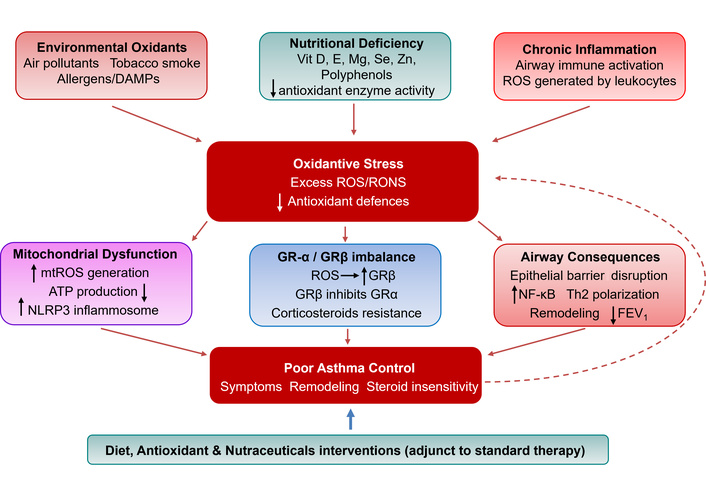
Redox imbalance mechanisms in pediatric asthma and targets for antioxidant intervention. Three categories of upstream triggers—environmental oxidants, nutritional deficiency, and chronic airway inflammation—converge to generate excess reactive oxygen and nitrogen species (ROS/RNOS). This central oxidative burden drives three distinct pathogenic pathways: mitochondrial dysfunction (↑mtROS, NLRP3 activation, ↓ATP); glucocorticoid receptor imbalance (GR-α/GR-β) leading to corticosteroid resistance; and direct airway consequences (epithelial disruption, NF-κB activation, Th2 polarization, remodeling). All three pathways converge to perpetuate poor asthma control through a self-reinforcing feedback loop. Antioxidant and nutraceutical strategies (green box) target multiple nodes of this cascade as adjuncts to standard pharmacological therapy, and never as replacements for it. mtROS: mitochondrial reactive oxygen species.
OS contributes significantly to airway inflammation, remodeling and exacerbation risk in asthma [2]. Nutraceuticals with antioxidant and mitochondrial-protective properties have therefore been investigated as adjunctive therapies in asthma. The following sections examine the clinical evidence for individual nutraceuticals in both children and adults with asthma, organized by their primary mechanism of action: direct antioxidant activity, mitochondrial function support, and pleiotropic anti-inflammatory effects.
The dietary studies reviewed below are discussed in the context of their capacity to modulate OS and antioxidant status. Where evidence derives from adult cohorts, this is explicitly noted; pediatric data are prioritized and presented first.
A cross-sectional study of children found lower antioxidant intake and lower total antioxidant status (TAS) in those with asthma vs. controls [60] (pediatric study). In a study of asthmatic children exposed to Mexico City air pollution, it was found that a higher intake of fruits and vegetables and greater adherence to a Mediterranean-style diet are associated with lower airway inflammation (reduced IL-8) and better lung function (higher FEV1 and FVC). These dietary patterns also appear to buffer the harmful effects of ozone, suggesting that nutrition plays a meaningful protective role in polluted environments [61] (pediatric study). A randomized, double-blind, placebo-controlled 16-week trial investigated whether combining fruit and vegetable concentrates, fish oil, and probiotics could improve asthma control in school-aged children. Among 192 asthmatic participants, the supplement group showed significantly better pulmonary function—higher FEV1, FVC, and FEV1/FVC ratio—as well as reduced use of short-acting bronchodilators and inhaled corticosteroids compared with placebo [62] (pediatric randomized controlled trial [RCT]). In a pediatric trial, increasing fruit/vegetable intake by ~3.5 servings/day, plasma carotenoids rose, and airway reactance improved, although exacerbation rates did not significantly change [63] (pediatric trial). One recent RCT in children with mild-to-moderate asthma (aged 4–15 years) compared usual care vs. usual care + an antioxidant-rich diet (tomato juice + mixed fruit juice) for 8 weeks. The intervention arm showed improved Asthma Control Test (ACT) and Pediatric Asthma Quality of Life Questionnaire (PAQLQ) scores and increased serum lycopene, β-carotene, and ascorbic acid levels compared to control [64] (pediatric RCT). In adults with asthma (NHANES cohort, n ≈ 4,698), higher Composite Dietary Antioxidant Index and lower dietary inflammatory index were significantly associated with lower all-cause mortality in subjects with asthma [65] (adult cohort, NHANES). Another cross-sectional study in severe asthma patients (n = 44) found that lower antioxidant intake and lower plasma TAS correlated with poorer asthma control and longer disease duration [66] (adult study). In patients with asthma, consumption of a diet with moderate to high amounts of soy genistein is associated with better lung function and better asthma control [67] (adult study).
Beyond their individual health benefits, antioxidant-rich dietary patterns—characterized by high consumption of fruits, vegetables, legumes, whole grains, and reduced reliance on animal-source foods—align closely with dietary frameworks associated with lower environmental impact. Plant-dominant diets generate substantially fewer greenhouse gas emissions, require less land and water, and contribute less to biodiversity loss compared with Western meat-heavy dietary patterns [68]. This convergence suggests that dietary recommendations aimed at reducing oxidative burden in children with asthma may simultaneously contribute to planetary health goals. The concept of “co-benefits”—whereby individual nutritional interventions also reduce environmental pollutant load and climate-related stressors (e.g., increased ground-level ozone, wildfire smoke, and aeroallergen exposure associated with climate change)—provides an additional rationale for promoting antioxidant-rich dietary patterns as part of comprehensive asthma management strategies [69].
It is important to distinguish between two distinct clinical contexts for magnesium in asthma. Intravenous magnesium is an established evidence-based intervention for acute severe asthma in children [69, 70], producing rapid bronchodilation through calcium antagonism in airway smooth muscle [71]—this is an acute rescue therapy and is not the subject of this review. By contrast, oral magnesium supplementation (300 mg/day for 2 months) as a long-term adjunctive strategy in children with moderate persistent asthma led to fewer exacerbations, reduced need for inhaled salbutamol, and significantly reduced bronchial hyperreactivity compared with placebo, providing additional benefit beyond inhaled corticosteroids [68] (pediatric RCT). Oral magnesium supplementation appears beneficial and safe in children with moderate to severe asthma [72].
Selenium supplementation in established asthma may reduce inflammatory markers [70] and may improve lung function [71].
Zinc supplementation represents a plausible adjunct to restore antioxidant capacity and modulate immune-effector cell activity in chronic airway disease, through mechanisms detailed in the Redefining asthma treatment: biological plausibility of integrating environmental and antioxidant strategies section. However, direct clinical evidence in asthma remains limited, and further targeted studies are required to confirm these effects in airway-specific inflammation [72–75] (clinical evidence largely from adult or mixed populations).
Thus, although selenium or zinc supplementation is a plausible adjunct to restore antioxidant capacity and modulate immune-effector cell activity in chronic airway disease, further targeted studies are required to confirm these effects in airway-specific inflammation and mast cell-driven pathology. In established asthma, meta-analysis showed that vitamin D supplementation reduces the rate of exacerbations requiring systemic corticosteroids by approximately 25–30%, with benefits primarily observed in patients with baseline vitamin D insufficiency (25-hydroxyvitamin D < 30 ng/mL) (meta-analysis, mixed pediatric/adult populations) [72, 73].
Vitamin D enhances GR function and reduces corticosteroid resistance through anti-inflammatory mechanisms (mechanistic data—see Redefining asthma treatment: biological plausibility of integrating environmental and antioxidant strategies section) [74]. An 8-week double-blind RCT in children with moderate asthma demonstrated that 50 mg/day vitamin E improved FEV1 and FEV1/FVC, suggesting enhanced airway function (pediatric RCT) [75]. In an umbrella review of meta-analyses, there was consistent evidence of a beneficial association between circulating α-tocopherol levels and asthma or wheeze in children in both randomized and observational evidence (pediatric umbrella review) [76]. A randomized study of pomegranate extract (500 mg/day for 8 weeks) in adults with persistent allergic asthma found improved symptoms (day and night breath shortness) and reduced neutrophil and eosinophil counts in the intervention group vs control (adult RCT) [77].
The following combination studies are reviewed with explicit distinction between pediatric and adult populations, focusing on clinical outcomes including airway inflammation markers, lung function, and exacerbation rates. A small-scale pediatric study examined supplementation of a nutraceutical combination (curcumin, resveratrol, soy phospholipids, zinc, selenium, vitamin D) in children with asthma and found a reduction in FeNO over 4 weeks [78]. Importantly, this effect emerged at the end of the high-altitude residency, when FeNO values had already reached a stable plateau from allergen avoidance, indicating that antioxidant supplementation conferred an additional benefit beyond allergen reduction. No significant change in FeNO was observed in the control group, reinforcing that the reduction was attributable to the nutraceutical intervention. In a randomized placebo-controlled design, a multi-component supplementation containing curcumin, resveratrol, zinc, magnesium, selenium, and vitamin D significantly improved endothelial function in obese children [79]. This finding is relevant beyond obesity, because children with asthma also show early vascular abnormalities, including increased carotid artery intima-media thickness, arterial stiffness, and reduced distensibility, indicative of subclinical cardiovascular dysfunction [80]. Since asthma and obesity share systemic inflammation and OS as central mechanisms of endothelial injury, those results suggest that targeted antioxidant and anti-inflammatory supplementation could represent a promising supportive strategy to counteract vascular impairment in asthmatic children as well. Future studies are warranted to evaluate whether similar multi-nutrient interventions may mitigate the endothelial dysfunction documented in pediatric asthma. In a placebo-controlled trial, the combination of beta-glucan extracted from the mushroom Pleurotus ostreatus with vitamin C improved asthma control, reduced respiratory infections, and lowered exacerbations in children with perennial asthma [81]. One observational study assessed the relationship between self-reported antioxidant supplement use and plasma antioxidant status in asthmatic children. The study found significant positive associations between regular supplementation with vitamin A, E, selenium and β-carotene and multiple biomarkers of redox balance in asthmatics with improved total antioxidant capacity, compared to non-supplemented asthmatic children but not in healthy controls, suggesting disease-specific effects [82]. A review of plant-based antioxidants in asthma identified nine randomized trials, though with variable quality and heterogeneity in agents and outcomes. Despite these limitations, the review indicated that plant-based antioxidants could have adjuvant beneficial effects in the management of asthma inflammatory markers, which may help improve asthma-related clinical outcomes [83]. Furthermore, it has been suggested that an approach optimizing multiple micronutrients may have significant short- and even long-term benefits in relation to their multiple and synergic effects (Table 3) [84, 85]. A summary of the key clinical studies organized by intervention type (dietary, single-nutrient, multicomponent), population, study design, intervention, and key findings is reported in Table 4.
Biological effects of different nutritional components.
| Effect/Substances | Vitamin B | Vitamin C | Vitamin D | Vitamin E | Magnesium | Selenium | Zinc | Phytochemicals |
|---|---|---|---|---|---|---|---|---|
| Antiviral activity | - | - | √ | - | √ | √ | √ | √ |
| Immune modulation | √ | √ | √ | √ | √ | √ | √ | √ |
| Anti-inflammatory | √ | √ | √ | √ | √ | √ | √ | √ |
| Auto immunity prevention | - | ? | √ | ? | ? | √ | √ | √ |
| Antioxidant effect | √ | √ | √ | √ | √ | √ | √ | √ |
| Anti-thrombotic effect | - | - | √ | √ | √ | √ | √ | √ |
| Endothelial protective | √ | √ | √ | √ | √ | √ | √ | √ |
| Cytoprotective & organ damage prevention | √ | - | √ | √ | √ | √ | - | √ |
| Antiarrhythmic effect | - | - | √ | - | √ | ? | - | √ |
| Antidepression effect | √ | - | √ | - | ? | ? | √ | √ |
| Microbiome | √ | - | √ | √ | - | ? | ? | √ |
? presents unclear effect.
Summary of key clinical studies on antioxidant and nutraceutical interventions in asthma.
| Ref. | Study/Authors | Population | Design | Intervention | Primary outcome | Key Findings |
|---|---|---|---|---|---|---|
| A. Dietary antioxidant interventions | ||||||
| [82] | Fabian et al. | Pediatric | Cross-sectional | Dietary antioxidant intake assessment | Total antioxidant status (TAS) | Lower antioxidant intake and TAS in asthmatic vs. healthy children |
| [61] | Romieu et al. | Pediatric | Observational | Fruit/vegetable intake; Mediterranean diet adherence | IL-8; FEV1; FVC | Higher F & V intake → ↓ IL-8, ↑ FEV1/FVC; buffers ozone-related harm |
| [62] | Lee et al. | Pediatric | DB-RCT, 16 weeks | F&V concentrates + fish oil + probiotics | FEV1, FVC, and bronchodilator use | ↑ FEV1, FVC, FEV1/FVC; ↓ SABA and ICS use vs. placebo |
| [63] | Berthon et al. | Pediatric | RCT | +3.5 servings F&V/day | Exacerbation rate; airway reactance | ↑ Plasma carotenoids; ↑ airway reactance; exacerbation rate NS |
| [64] | Songnuy et al. | Pediatric | RCT, 8 weeks | Tomato + mixed fruit juice | ACT; PAQLQ; serum antioxidants | ↑ ACT, ↑ PAQLQ; ↑ lycopene, β-carotene, ascorbic acid |
| [65] | Zhang et al. | Adult | Prospective cohort | Composite dietary antioxidant index | All-cause mortality | Higher CDAI and lower DII → ↓ all-cause mortality in asthmatics |
| [66] | Terzi et al. | Adult | Cross-sectional | Antioxidant intake + plasma TAS | Asthma control; disease duration | Lower antioxidant intake and plasma TAS → poorer control and longer disease |
| [67] | Bime et al. | Adult | Observational | Dietary soy genistein | Lung function; asthma control | Moderate-high soy intake → ↑ lung function and asthma control |
| B. Single-nutrient supplementation | ||||||
| [82] | Fabian et al. | Pediatric | DB-RCT, 2 mo | Oral Mg 300 mg/day | Exacerbations, bronchial hyperreactivity, and SABA use | ↓ Exacerbations; ↓ bronchial hyperreactivity; ↓ SABA use vs. placebo |
| [7, 71] | Oakley et al.Gazdik et al. | Mixed | Intervention | Selenium supplementation | Inflammatory markers; lung function | ↓ Inflammatory markers; possible ↑ lung function |
| [72, 73] | Joliffe et al.Wang et al. | Mixed (ped/adult) | Meta-analysis | Vitamin D supplementation | Exacerbation rate (systemic CS) | ↓ Exacerbations ~25–30%; benefit mainly in VitD-insufficient (25-OHD < 30 ng/mL) |
| [75] | Ghaffari et al. | Pediatric | DB-RCT, 8 weeks | Vitamin E 50 mg/day | FEV1; FEV1/FVC | ↑ FEV1 and FEV1/FVC vs. placebo |
| [76] | Xiong et al. | Pediatric | Umbrella review | Circulating α-tocopherol | Asthma/wheeze prevalence | Consistent beneficial association between α-tocopherol and asthma/wheeze in children |
| [77] | Hosseni et al. | Adult | RCT, 8 weeks | Pomegranate extract 500 mg/day | Symptoms: neutrophil/eosinophil counts | ↑ Symptom control: ↓ neutrophil and eosinophil counts |
| C. Multi-Component Nutraceutical Supplementation | ||||||
| [78] | Tenero et al. | Pediatric | Pilot intervention | Curcumin + resveratrol + soy phospholipids + Zn + Se + VitD | FeNO | ↓ FeNO beyond allergen-avoidance plateau; NS in control group |
| [79] | Pecoraro et al. | Pediatric | Placebo-controlled RCT | Curcumin + resveratrol + Zn + Mg + Se + VitD | Endothelial function | ↑ Endothelial function: relevant to vascular dysfunction in asthma |
| [81] | Jesenak et al. | Pediatric | Placebo-controlled trial | β-glucan (Pleurotus ostreatus) + vitamin C | Asthma control; respiratory infections; exacerbations | ↑ Asthma control; ↓ respiratory infections; ↓ exacerbations |
| [82] | Fabian et al. | Pediatric | Observational | Vit A, E, Se, β-carotene (self-reported) | Plasma antioxidant biomarkers | ↑ Total antioxidant capacity in supplemented asthmatics; not seen in healthy controls |
| [83] | Ajaz et al. | Mixed | Systematic review | Various plant-based antioxidants | Inflammatory markers; clinical outcomes | Adjuvant benefit on inflammatory markers; heterogeneity limits conclusions |
Studies are organized by intervention category. Population labels indicate the primary study population; pediatric and adult data are distinguished throughout. ACT: Asthma Control Test; PAQLQ: Pediatric Asthma Quality of Life Questionnaire; RCT: randomized controlled trial.
Asthma involves chronic airway inflammation driven by OS and immune dysregulation. Persistent OS damages airway epithelium, activates redox-sensitive transcription factors (NF-κB, AP-1), and amplifies pro-inflammatory mediators, creating a self-perpetuating cycle of inflammation and airway hyperresponsiveness. This multifactorial pathogenesis requires synergistic micronutrient action for immune and antioxidant homeostasis; thus, multicomponent nutraceutical strategies are biologically and mechanistically plausible as superior to single-antioxidant approaches, consistent with the systems-biology framework suggested by Gombart et al. [86]. In this context, the combination of vitamin D3 and K2 provides complementary anti-inflammatory mechanisms. Vitamin D modulates airway-specific immune responses by downregulating pro-inflammatory cytokines and enhancing epithelial antimicrobial defenses [87], while K2 addresses systemic inflammation through distinct pathways involving lower circulating inflammatory markers [88] and suppressing NF-κB activation and cytokine expression in human immune cells [89]. This dual-target approach is mechanistically superior because vitamin D acts on the immune-epithelial interface while K2 reduces systemic inflammatory burden, and K2 ensures proper calcium metabolism—preventing potential vitamin D-induced vascular calcification [90]. Together, D3 and K2 form a synergistic immunomodulatory pair, impacting inflammatory responses relevant to asthma.
The individual mechanistic contributions of vitamin E, folate, selenium, zinc, magnesium, and polyphenols (curcumin, quercetin, resveratrol) to redox defense and immune modulation have been described in Sections Redefining asthma treatment: biological plausibility of integrating environmental and antioxidant strategies and Antioxidant nutraceuticals in asthma: insights from human studies. Within a multicomponent framework, however, these compounds do not act independently—they operate as an integrated network in which each nutrient amplifies or regenerates the activity of others, as shown in Figure 2. The most clinically relevant example of this synergy is the selenium–vitamin E interaction: vitamin E intercepts lipid peroxyl radicals in cell membranes but is itself oxidized to the tocopheroxyl radical in the process; selenium, through GPx, reduces the hydroperoxide environment that would otherwise allow oxidized vitamin E to accumulate, thereby indirectly facilitating its regeneration and creating an antioxidant defense stronger than either nutrient alone [91, 92] Similarly, polyphenols such as quercetin and resveratrol can regenerate the tocopheroxyl radical back to active vitamin E [93], while zinc and magnesium reinforce enzymatic defenses (Cu/Zn-SOD, GPx) that protect the network from being overwhelmed [94, 95]. This nutrient interdependence mirrors the complex phytochemical matrices of whole foods and provides the mechanistic foundation for the multicomponent approach. The synergistic interactions among these components are summarized in Table 5.
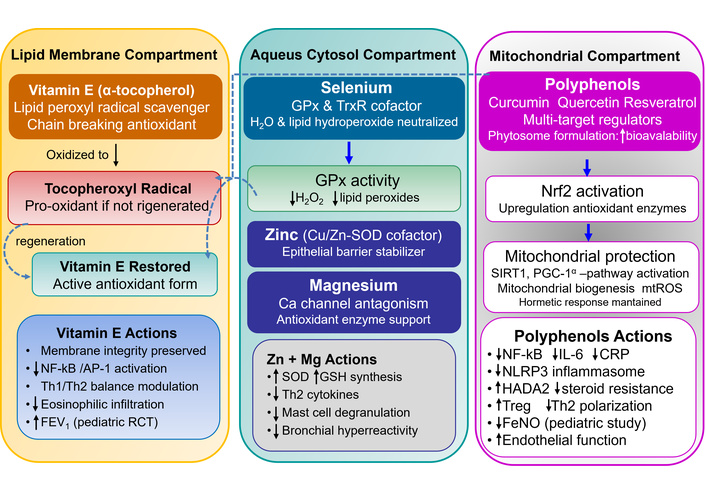
The synergistic antioxidant network underlying multicomponent nutraceutical therapy in asthma. Antioxidants operate within distinct cellular compartments but are functionally interdependent. In the lipid membrane compartment, vitamin E scavenges lipid peroxyl radicals but is itself oxidized to the tocopheroxyl radical—a potentially pro-oxidant species if not regenerated. Selenium (via glutathione peroxidase [GPx]) reduces the hydroperoxide environment that would otherwise trap oxidized vitamin E, thereby indirectly facilitating its regeneration; polyphenols (quercetin, resveratrol, curcumin) provide a complementary regeneration pathway. In the cytosol, selenium supports GPx and thioredoxin reductase (TrxR), zinc maintains Cu/Zn-superoxide dismutase (SOD) activity and epithelial barrier integrity, and magnesium supports enzymatic antioxidant defenses and calcium-dependent immune regulation. In the mitochondrial compartment, polyphenols activate the SIRT1/PGC-1α axis to promote mitochondrial biogenesis, reduce mtROS, and maintain the Nrf2-mediated hormetic response that upregulates endogenous antioxidant enzymes. This cross-compartment interdependence explains why multicomponent formulations provide superior biological protection compared with single-antioxidant supplementation, which leaves other compartments unprotected and risks paradoxical pro-oxidant effects at supraphysiological doses. Clinical outcomes documented in pediatric studies (FeNO reduction [82]; improved endothelial function [83]; improved FEV1 with vitamin E [79]) support the translational relevance of this network model. mtROS: mitochondrial reactive oxygen species; NLRP3: NOD-like receptor protein 3; PGC-1α: peroxisome proliferator-activated receptor gamma coactivator 1-alpha; RCT: randomized controlled trial; SOD: superoxide dismutase.
Advantages of multiple-component antioxidant supplementation.
| Key Advantage | Explanation and underlying mechanisms |
|---|---|
| Multi-target action | Multiple nutraceuticals simultaneously address oxidative stress and inflammation through complementary pathways (e.g., direct reactive oxygen species [ROS] scavenging, enzymatic antioxidant support, transcription factor modulation), providing comprehensive protection that single compounds cannot achieve. |
| Lower effective doses through synergy | Synergistic interactions between components allow for reduced individual compound doses while maintaining or improving efficacy, potentially minimizing side effects and toxicity risks associated with high-dose single-antioxidant supplementation. |
| Broader antioxidant coverage | Combining water-soluble antioxidants (vitamin C, polyphenols) with lipid-soluble antioxidants (vitamin E, carotenoids) provides protection across different cellular compartments—aqueous cytosol, lipid membranes, and organelles—preventing compartment-specific oxidative imbalances. |
| Antioxidant network and regeneration | Vitamin C and polyphenols (quercetin, resveratrol, curcumin) regenerate oxidized vitamin E (tocopheroxyl radical) back to its active form, while selenium indirectly supports this network by maintaining glutathione peroxidase activity and the reduced glutathione pool, creating a self-sustaining protective system. |
| Prevention of pro-oxidant paradox | Balanced combinations prevent the paradoxical pro-oxidant effects that can occur with high doses of single antioxidants, such as vitamin C-mediated Fenton reactions with free iron, vitamin E propagation of lipid peroxidation when not regenerated, and beta-carotene pro-oxidant activity in high-oxygen environments. |
| Preservation of hormetic response through Nrf2 activation | Polyphenols (curcumin, resveratrol, quercetin) directly activate the Nrf2 pathway, stimulating endogenous antioxidant enzyme expression (superoxide dismutase, catalase, glutathione peroxidase), thus preserving rather than suppressing the cell's adaptive stress response capacity that chronic high-dose single antioxidants may blunt. |
| Enzymatic cofactor support | Essential trace minerals—selenium (glutathione peroxidase), zinc (superoxide dismutase), and magnesium (numerous enzymatic reactions)—serve as cofactors that potentiate endogenous antioxidant enzyme systems, amplifying the protective effects of vitamin and polyphenol antioxidants. |
| Enhanced bioavailability and effectiveness | In nature, polyphenols form complexes with Mg2+, which increases their antioxidant effectiveness and bioavailability. Multi-component formulations can replicate these natural synergies found in whole foods |
| Mimics natural food matrices | This approach replicates the complex phytochemical matrices found in fruits, vegetables, and herbs, where antioxidants naturally occur together in balanced proportions optimized by evolutionary processes for maximal biological benefit |
This multi-component approach mimics the complex phytochemical matrices found in whole foods and provides several advantages over single-compound supplementation, including multi-target action addressing OS and inflammation through multiple complementary pathways simultaneously, lower effective doses through synergistic interactions that allow reduced individual compound doses while maintaining efficacy, broader antioxidant coverage by combining water-soluble and lipid-soluble antioxidants across different cellular compartments, and complementary mechanisms whereby one compound upregulates antioxidant enzymes while another directly scavenges free radicals. Furthermore, balanced antioxidant combinations prevent paradoxical pro-oxidant activity that can occur with high doses of a single antioxidant [96, 97]. Supraphysiological doses of a single antioxidant may overly suppress ROS, disrupting redox signaling and impairing Nrf2-dependent homeostasis. Chronic high-dose use of isolated antioxidants that do not activate Nrf2 may also blunt the hormetic response—the adaptive process whereby low-level OS upregulates endogenous defense systems—by preventing the mild ROS signals that normally induce Nrf2-mediated antioxidant enzymes such as superoxide dismutase, catalase, and GPx [98, 99]. This limitation is mitigated in multi-component formulations that incorporate Nrf2-activating polyphenols (curcumin, resveratrol, quercetin), which maintain the adaptive hormetic response while providing direct antioxidant support [100].
Individual antioxidants can also exhibit paradoxical pro-oxidant behavior at supraphysiological doses. High-dose vitamin C can reduce Fe3+ to Fe2+, enhancing hydroxyl radical generation via Fenton chemistry, while vitamin E, after scavenging lipid peroxyl radicals, generates the tocopheroxyl radical that can propagate lipid peroxidation if co-antioxidants are insufficient to regenerate it [96, 97, 101]. Each antioxidant also operates within specific cellular compartments—vitamin E in lipid membranes, vitamin C in aqueous compartments, polyphenols in the cytosol and mitochondria—meaning that reliance on a single compound leaves other compartments unprotected [102]. Multicomponent formulations address all these limitations simultaneously.
Beyond nutrient-nutrient interactions, the clinical case for multicomponent over single-antioxidant supplementation is reinforced by instructive evidence from cardiovascular medicine. Large clinical trials of isolated, high-dose vitamins C and E surprisingly failed to demonstrate treatment benefits for established disease [103, 104]. A notable exception, the EPIC-Norfolk study, revealed an instructive paradox: direct vitamin C supplementation showed no preventive effect on cardiovascular outcomes, whereas vitamin C derived from habitual fruit and vegetable consumption demonstrated significant protection [105]. This divergence reflects a fundamental principle: in whole foods, vitamin C exists within an intricate matrix of complementary phytochemicals—flavonoids, carotenoids, fiber—that work synergistically to enhance its bioavailability and antioxidant recycling.
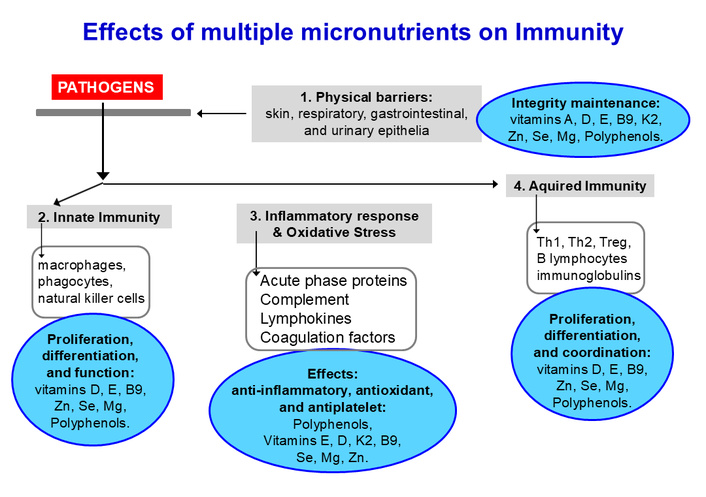
The broader rationale for a multi-component nutraceutical strategy is further reinforced by immunological evidence summarized in Figure 3, where vitamins (A, C, D, E, B6, B12, folate), polyphenols, and trace minerals (zinc, selenium, iron, copper, magnesium) are mapped across every stage of innate and adaptive immunity. As illustrated, no single micronutrient acts in isolation: epithelial barrier integrity, phagocytic function, oxidative-burst capacity, cytokine regulation, antigen presentation, lymphocyte proliferation, and antibody synthesis each rely on distinct but overlapping sets of nutrients that work synergistically to maintain immune competence while limiting excessive inflammation and OS [86]. Consistent with this systems-based organization, multi-nutrient supplementation has been shown to improve immune responses, redox balance, and resistance to infection more effectively than single-nutrient approaches, particularly in chronic inflammatory conditions such as asthma. Together, these observations support favoring synergistic nutraceutical combinations over high-dose monotherapies in disorders involving multi-pathway dysregulation [86].
According to the triage hypothesis proposed by Bruce Ames, modest deficiencies of vitamins and essential minerals—insufficient to cause the classic signs of scurvy, rickets, or beriberi—can nevertheless have profound long-term consequences for aging and chronic disease [106]. When micronutrients are scarce, natural selection is thought to have favored “rationing” mechanisms that allocate the limited vitamin or mineral supply to those proteins and enzymes that are indispensable for immediate survival and reproductive success, at the expense of proteins whose main role is long-term maintenance and repair. In practice, this means that pathways required for blood coagulation, basic energy production, or acute host defense are preferentially supplied, whereas micronutrient-dependent systems involved in genome maintenance, antioxidant defense, mitochondrial quality control, and tissue remodeling may be chronically under-supported. It is worth recalling that modest micronutrient deficiencies, far from being theoretical concerns, are now widespread even in industrialized nations and rarely occur in isolation [86, 107]. Over the past six decades, an alarming decline in food nutritional quality has been documented across fruits, vegetables, and staple crops, driven by progressive soil depletion of essential minerals, intensive agriculture's preference for high-yielding cultivars, the shift from natural to chemical farming, chaotic mineral fertilization practices, and elevated atmospheric CO2 levels [108]. Nutrient-dense traditional crops such as millets and heirloom varieties have been progressively displaced by higher-yielding but nutritionally inferior varieties of wheat, rice, maize, potato, and tomato. This erosion of food quality means that even individuals consuming apparently adequate diets may experience chronic, subclinical deficiencies in multiple micronutrients simultaneously—precisely the scenario in which Ames' triage hypothesis predicts long-term dysfunction in maintenance systems, including those governing antioxidant defense and inflammatory regulation in conditions such as asthma. Additionally, cumulative pesticide residue exposure from conventional produce may further compromise antioxidant status and contribute to OS, though this remains an area requiring dedicated investigation [109]. It should be noted, however, that an individual child's nutritional status is determined not only by the extrinsic quality of food supply but also by intrinsic factors, including gastrointestinal absorption capacity, metabolic demands, genetic polymorphisms affecting nutrient metabolism, and comorbidities that increase micronutrient turnover.
OS is a persistent pathogenic driver in pediatric asthma, influencing airway inflammation, epithelial integrity, mitochondrial function, and corticosteroid responsiveness. The evidence summarized in this review indicates that reducing oxidant exposure and strengthening antioxidant defenses are biologically plausible strategies that may complement, but not replace, standard pharmacological therapy.
Across dietary, nutraceutical, and environmental interventions, the most consistent clinical signal emerges not from isolated antioxidants but from approaches that improve overall antioxidant capacity—whether through antioxidant-rich diets, multi-component formulations, or interventions that support mitochondrial resilience. These strategies appear particularly relevant for children with high oxidative burden, poor nutritional status, or features of corticosteroid insensitivity. Although available trials are small and heterogeneous, the coherence of mechanistic, epidemiological, and early clinical data supports continued investigation. Optimal implementation will require larger, biomarker-guided studies that incorporate measures of redox status, mitochondrial function, and inflammation to identify responders and clarify dose–response relationships. Product quality, bioavailability, and safety profiles—especially for polyphenols and combined nutraceuticals—remain critical considerations in clinical translation.
Childhood asthma reflects a broader vulnerability to oxidative injury during development. Addressing OS in this context may offer benefits that extend beyond respiratory symptom control, potentially influencing long-term trajectories of cardiometabolic, immune, and inflammatory health. Integrating targeted antioxidant and environmental strategies with standard care may therefore represent an opportunity not only to improve asthma outcomes but also to support healthier life-course development. It must be emphasized that the interventions reviewed herein are adjunctive strategies designed to complement—and under no circumstances to replace—guideline-based pharmacological management, including inhaled corticosteroids, bronchodilators, and biologic therapies where indicated. Their integration into clinical practice should always occur within the framework of optimized standard asthma care. Based on current evidence, several practical recommendations can guide clinicians in addressing OS within pediatric asthma care. These are summarized in the Supplementary material below.
COX: cyclooxygenase
DAMPs: damage-associated molecular patterns
DCs: dendritic cells
ER: endoplasmic reticulum
FeNO: fractional exhaled nitric oxide
GC: glucocorticoid
GPx: glutathione peroxidase
GR: glucocorticoid receptor
mtROS: mitochondrial reactive oxygen species
OS: oxidative stress
PGE2: prostaglandin E2
RCT: randomized controlled trial
ROS: reactive oxygen species
SOD: superoxide dismutase
TAS: total antioxidant status
The supplementary material for this article is available at: https://www.explorationpub.com/uploads/Article/file/1001420_sup_1.pdf.
MP: Conceptualization, Writing—original draft, Writing—review & editing, Validation, Visualization. MC: Conceptualization, Writing—original draft, Writing—review & editing, Validation, Visualization. ED: Conceptualization, Writing—original draft, Writing—review & editing, Validation, Visualization. AG: Writing—original draft, Writing—review & editing, Validation. ER: Writing—original draft, Writing—review & editing, Validation. GM: Writing—original draft, Writing—review & editing, Validation. GP: Writing—review & editing, Supervision, Validation, Visualization. DP: Conceptualization, Project administration, Methodology, Supervision, Writing—original draft, Writing—review & editing, Validation, Visualization. All authors read and approved the submitted version.
The authors declare that they have no conflicts of interest.
Not applicable.
Not applicable.
Not applicable.
Not applicable.
Not applicable.
© The Author(s) 2026.
Open Exploration maintains a neutral stance on jurisdictional claims in published institutional affiliations and maps. All opinions expressed in this article are the personal views of the author(s) and do not represent the stance of the editorial team or the publisher.
Copyright: © The Author(s) 2026. This is an Open Access article licensed under a Creative Commons Attribution 4.0 International License (https://creativecommons.org/licenses/by/4.0/), which permits unrestricted use, sharing, adaptation, distribution and reproduction in any medium or format, for any purpose, even commercially, as long as you give appropriate credit to the original author(s) and the source, provide a link to the Creative Commons license, and indicate if changes were made.



Michele Piazza ... Giorgio Piacentini
Hannah Norman-Bruce ... P. Jane McDowell