Original Article


Affiliation:
1Department of Food Science and Technology, College of Food Technology and Human Ecology, Federal University of Agriculture, Makurdi 970001, Nigeria
Email: toteupstar@outlook.com
ORCID: https://orcid.org/0000-0002-5127-0815


 ,
,
Affiliation:
1Department of Food Science and Technology, College of Food Technology and Human Ecology, Federal University of Agriculture, Makurdi 970001, Nigeria
Affiliation:
1Department of Food Science and Technology, College of Food Technology and Human Ecology, Federal University of Agriculture, Makurdi 970001, Nigeria
Affiliation:
2International Centre for Biotechnology (ICB) Under the Auspices of UNESCO, University of Nigeria, Nsukka 410105, Nigeria
Affiliation:
3Department of Food Science and Technology, University of Nigeria, Nsukka, Enugu State 410001, Nigeria
Affiliation:
3Department of Food Science and Technology, University of Nigeria, Nsukka, Enugu State 410001, Nigeria
Affiliation:
4Office of the Executive Assistant to the Governor, Asaba 320001, Delta State Government, Nigeria
Affiliation:
1Department of Food Science and Technology, College of Food Technology and Human Ecology, Federal University of Agriculture, Makurdi 970001, Nigeria
Affiliation:
5Department of Food Engineering, Kombolcha Institute of Technology, Wollo University, Wollo 2080, Ethiopia
Explor Foods Foodomics. 2026;4:1010160 DOI: https://doi.org/10.37349/eff.2026.1010160
Received: August 21, 2025 Accepted: April 15, 2026 Published: June 08, 2026
Academic Editor: Marcello Iriti, Milan State University, Italy
Aim: This study aims to evaluate the nutritional, functional, physical, and sensory properties of flakes produced from white sorghum-okara flour blends.
Methods: Flakes were produced from composite blends of white sorghum and okara at substitution levels of 0–20% okara. White sorghum and soybeans were sourced locally, and flours were prepared using standardized milling and drying techniques. Composite flour blends were processed into flakes through mixing, sheeting, baking, and toasting at controlled conditions. Functional, proximate, amino acid, physical, and sensory attributes were assessed to determine the effects of okara incorporation and identify an optimal formulation.
Results: Increasing okara substitution (0–20%) significantly influenced the properties of sorghum-okara flakes. Bulk density decreased, while gelatinization temperature, water absorption, and swelling index increased. Protein (15.36–22.82%), ash (3.79–6.05%), and fiber (3.30–4.68%) contents increased significantly (p < 0.05), while carbohydrates (67.85–56.32%) contents decreased. Okara incorporation enhanced essential amino acids, including lysine (2.49–3.22 g/100 g), methionine (0.52–1.01 g/100 g), glutamic acid (3.25–4.10 g/100 g), and leucine (1.75–2.46 g/100 g). Phytic acid and tannins decreased, whereas oxalates, lectins, and trypsin inhibitors increased. Physical properties changed progressively, and sensory evaluation indicated good consumer acceptability even at 20% okara inclusion.
Conclusions: Blending white sorghum and okara produced nutrient-rich, ready-to-eat flakes with potential to address protein-energy malnutrition. Although some anti-nutritional factors increased, their levels remained within acceptable ranges and were outweighed by the nutritional benefits.
Breakfast cereals are widely consumed globally, particularly in urban areas, due to their convenience and long shelf life. Traditionally, cereals such as maize, wheat, and oats have been used in breakfast flake production because of their high carbohydrate content, but they contain relatively low levels of fat and protein [1, 2]. However, these cereals are often deficient in essential amino acids like lysine and tryptophan. In contrast, legumes such as soybeans are rich in these amino acids, making them nutritionally complementary to cereals. As a result, this nutritional complementarity has led to growing interest in blending legumes and cereals to improve the overall nutritional profile of food products [3]. Among such legumes, okara, a by-product of soymilk and tofu production, is a nutrient-dense material rich in dietary fiber, protein (28–30%), polyunsaturated fat (8–10%), essential minerals, vitamins, and phytochemicals such as isoflavones and saponins [4, 5]. It contains notable mineral levels per 100 g, including calcium, iron, phosphorus, potassium, and zinc [6]. Despite its nutritional value, large quantities of okara are discarded, burned, or underutilized as animal feed, contributing to environmental challenges [4]. Globally, tofu and soymilk production generate millions of tonnes of okara annually, particularly in Asia [6, 7]. Incorporating okara into cereal-based foods can reduce waste while enhancing nutritional quality [8].
Similarly, sorghum is a major staple crop in Africa and India and an important livestock feed worldwide, yet it remains underutilized in parts of sub-Saharan Africa. It is an energy-rich, naturally gluten-free cereal suitable for individuals with gluten intolerance [9]. Sorghum contains 8–18% protein and 70–80% carbohydrates, along with essential minerals and slowly digestible starch. Its kafirin proteins confer resistance to pests and harsh environments, while high prolamin and lysine contents contribute to grain hardness [9, 10]. Compared with maize, sorghum has higher protein, lower fat, and comparable carbohydrate levels. Its high fiber content and low glycemic response benefit diabetics. Expanding sorghum utilization could also reduce Nigeria’s costly dependence on wheat imports [2, 11, 12].
In light of these factors, recent shifts in lifestyle and dietary habits across sub-Saharan Africa, particularly in Nigeria, have led to a growing demand for convenient, ready-to-eat breakfast cereals. However, conventional maize flakes are low in protein and essential amino acids [13]. To address this, blending white sorghum with valorized okara can improve both nutritional quality and waste reduction [2, 14]. Therefore, this study aims to evaluate the nutritional, functional, physical, and sensory properties of flakes produced from white sorghum-okara flour blends.
White sorghum and soybeans for okara production were obtained from the North Bank Market. Other ingredients, including the emulsifier, sugar, and salt, were purchased from the Wurukum Market, both located in Makurdi, Benue State.
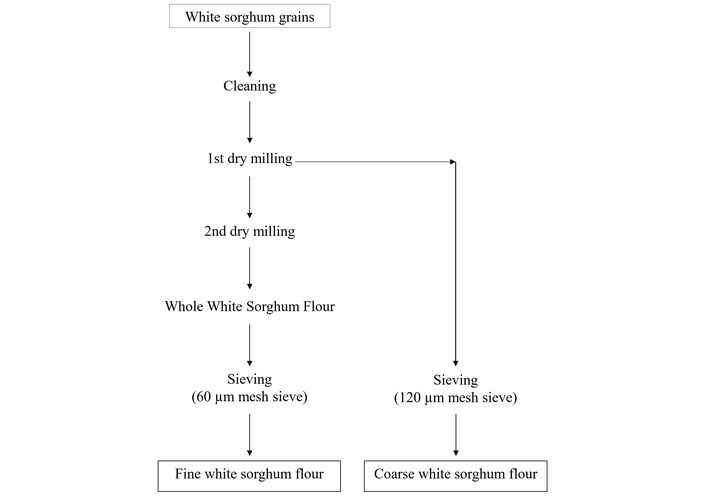
White sorghum grains were cleaned and subjected to dry milling to produce whole and coarse meal flour. The whole flour was sieved using a 60 µm mesh sieve to obtain fine flour. The flours were then stored in high-density polyethylene bags at room temperature (28°C) in preparation for flake production [15]. The process is illustrated in Figure 1.
Soybeans were soaked in water at a soybean-to-water ratio of 1:3 (w/v) for 10 hours at room temperature (28 ± 2°C), with the water changed at the 5th hour to prevent fermentation. The soaked soybeans were dehulled, washed, and ground using a mill with added water to aid grinding. Thermal treatment was applied to reduce the activity of trypsin inhibitors and deactivate lipoxygenase enzymes responsible for undesirable taste [16]. After separating the soybean milk, the wet okara paste was dried in an oven at 60°C for 18 hours until a constant moisture content of 5% was achieved. The dried okara was milled and sieved using a 60 µm mesh sieve to obtain uniform flour. The processing steps are shown in Figure 2.
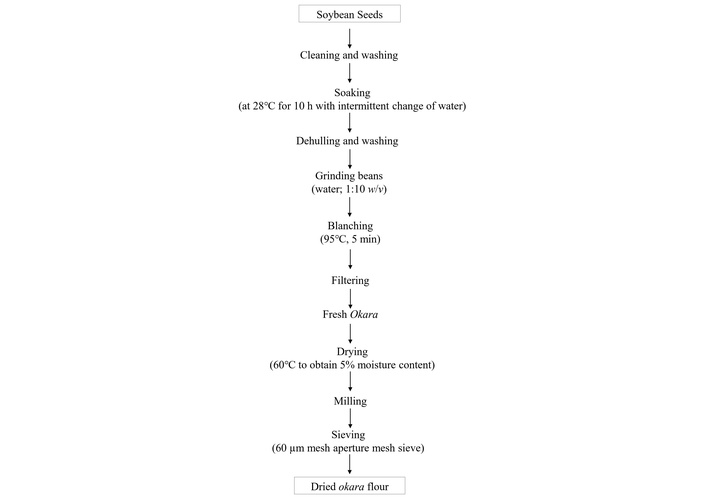
Processing of soybean seeds into okara. Adapted from [16]. © 2020 The Authors. Licensed under a CC-BY.
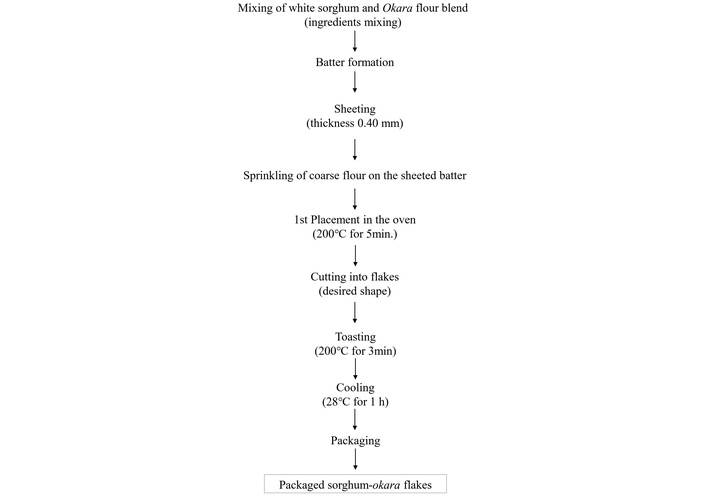
Flake production involved mixing the composite flour (white sorghum and okara) with sugar, salt, emulsifier, baking powder, and water to form a batter. Different amount of water were added to various formulations as shown in Table 1, to achieve similar batter consistency and processability. The batter was spread to a thickness of approximately 0.40 mm on a clean, greased stainless-steel tray, after which 3 g of coarse flour per tray was sprinkled on the surface to enhance texture and crispiness. The batter was oven-dried to a semi-solid state, cut into pieces, and returned to the oven for additional drying and toasting at 200°C for 3 minutes. The finished flakes were cooled and packed in polyethylene bags and stored under ambient conditions (28 ± 2°C, relative humidity 60–65%) until further analysis. The entire production process is illustrated in Figure 3, and the formulation used in preparing the flakes is presented in Table 1.
Percentage (composite flour basis) and weight-based formulation (per 750 g total flour) for sorghum-okara flakes production.
| Sample | White sorghum flour | Okara flour | Salt (g) | Sugar (g) | Water (mL) | Baking powder (g) | ||
|---|---|---|---|---|---|---|---|---|
| (%) | (g) | (%) | (g) | |||||
| A | 100 | 750 | 0 | 0 | 7.5 | 37.5 | 1,000 | 7.5 |
| B | 95 | 712.5 | 5 | 37.5 | 7.5 | 37.5 | 1,062 | 7.5 |
| C | 90 | 675 | 10 | 75 | 7.5 | 37.5 | 1,125 | 7.5 |
| D | 85 | 637.5 | 15 | 112.5 | 7.5 | 37.5 | 1,187 | 7.5 |
| E | 80 | 600 | 20 | 150 | 7.5 | 37.5 | 1,250 | 7.5 |
Functional properties of the flour such as bulk density, gelatinization temperature, water absorption capacity, and swelling index were determined according to AOAC [18] methods. The proximate composition of the flakes (crude protein, fat, ash, moisture, fiber, and carbohydrate) was assessed using AOAC [19] standards. Amino acid profiles were analyzed as per AOAC [19], while anti-nutritional factors including phytic acid, tannins, oxalates, lectins and trypsin inhibitor activity were measured based on AOAC [19]. Mineral content (calcium, potassium, phosphorus, magnesium, iron, and zinc) was evaluated using AOAC [19] procedures. Physical properties such as texture (TA.XTplus Texture Analyzer; Stable Micro Systems, Surrey, UK), color (colorimeter), density, size, and porosity were determined using AOAC [19].
Sensory evaluation of the flakes was conducted with 20 trained panelists using a nine-point hedonic scale (1 = “extremely dislike,” 9 = “extremely like”) to rate aroma, taste, texture, crispness, appearance, and overall acceptability [20]. Each panelist independently scored the samples based on their perception of each attribute.
All experiments were performed in duplicate, and results are presented as mean ± SD. Data were analyzed using SPSS version 20, with one-way ANOVA and Duncan’s multiple range test to identify significant differences at p < 0.05.
The results presented in Table 2 show that the functional properties of sorghum-okara flour blends differed significantly (p < 0.05) among the samples. Parameters such as bulk density, gelatinization temperature, water absorption capacity, and swelling index varied across the different formulations. Samples A, B, C, D, and E represent blends of 100% white sorghum; 95% white sorghum and 5% okara; 90% white sorghum and 10% okara; 85% white sorghum and 15% okara; and 80% white sorghum and 20% okara, respectively. Bulk density progressively decreased from 0.85 g/cm3 in sample A to 0.70 g/cm3 in sample E. Gelatinization temperature increased progressively with higher levels of okara substitution, ranging from 62.47°C in sample A to 76.11°C in sample E. Water absorption increased with higher levels of okara inclusion, ranging from 33.38% in sample A to 40.12% in sample E. The swelling index increased with the incorporation of okara, ranging from 32.63% in sample A to 36.45% in sample E.
Functional properties of sorghum-okara flour blends.
| Parameters | Samples | ||||
|---|---|---|---|---|---|
| A | B | C | D | E | |
| Bulk density (g/cm3) | 0.85 ± 0.01a | 0.82 ± 0.01b | 0.78 ± 0.01c | 0.74 ± 0.01d | 0.70 ± 0.01e |
| Gelatinization temperature (°C) | 62.47 ± 0.05e | 65.47 ± 0.02d | 68.05 ± 0.07c | 72.03 ± 0.04b | 76.11 ± 0.01a |
| Water absorption (% w/w) | 33.38 ± 0.17e | 35.00 ± 0.00d | 36.84 ± 0.02c | 38.08 ± 0.06b | 40.12 ± 0.02a |
| Swelling index (%) | 32.63 ± 0.06e | 33.57 ± 0.04d | 34.8 ± 0.01c | 35.80 ± 0.00b | 36.45 ± 0.03a |
Values are means ± SD duplicate determinations. Values with different superscripts within the same row are significantly different (p < 0.05). Sample A: 100% white sorghum flour and 0% okara flour; sample B: 95% white sorghum flour and 5% okara flour; sample C: 90% white sorghum flour and 10% okara flour; sample D: 85% white sorghum flour and 15% okara flour; sample E: 80% white sorghum flour and 20% okara flour.
The proximate composition of the white sorghum-okara flakes is presented in Table 3. Significant differences (p < 0.05) were observed for protein, ash, moisture, and carbohydrate contents, reflecting the influence of varying proportions of sorghum flour and okara flour. This demonstrates the nutritional impact of incorporating soybean residue into the flakes. The moisture content of the breakfast cereals ranged from 6.61% (sample E) to 7.26% (sample A). The fiber content rose significantly from 3.30% in sample A to 4.68% in sample E. Protein content also increased steadily with higher okara substitution, ranging from 15.36% in sample A (100% sorghum) to 22.82% in sample E (80% sorghum, 20% okara). The fat content also showed a moderate increase, ranging from 2.56% in sample A to 3.53% in sample E. The ash content, an indicator of the total mineral concentration, increased significantly from 3.79% in sample A to 6.05% in sample E. Carbohydrate content showed an inverse trend with okara substitution, decreasing from 67.85% in sample A to 56.32% in sample E.
Proximate composition of sorghum-okara flakes.
| Parameters | Samples (%) | ||||
|---|---|---|---|---|---|
| A | B | C | D | E | |
| Protein | 15.36 ± 0.06e | 18.62 ± 0.02d | 20.04 ± 0.06c | 21.71 ± 0.08b | 22.82 ± 0.06a |
| Fat | 2.56 ± 0.06d | 2.85 ± 0.04c | 3.00 ± 0.00bc | 3.14 ± 0.06b | 3.53 ± 0.11a |
| Ash | 3.79 ± 0.05e | 4.60 ± 0.02d | 5.18 ± 0.04c | 5.73 ± 0.03b | 6.05 ± 0.07a |
| Moisture | 7.26 ± 0.06a | 7.12 ± 0.03b | 7.00 ± 0.00c | 6.87 ± 0.02d | 6.61 ± 0.04e |
| Fibre | 3.30 ± 0.04d | 3.82 ± 0.02c | 3.93 ± 0.04c | 4.16 ± 0.01b | 4.68 ± 0.17a |
| Carbohydrates | 67.85 ± 0.08a | 63.01 ± 0.13b | 60.86 ± 0.06c | 58.40 ± 0.17d | 56.32 ± 0.25e |
Values are means ± SD duplicate determinations. Values with different superscripts within the same row are significantly different (p < 0.05). Sample A: 100% white sorghum flour and 0% okara flour; sample B: 95% white sorghum flour and 5% okara flour; sample C: 90% white sorghum flour and 10% okara flour; sample D: 85% white sorghum flour and 15% okara flour; sample E: 80% white sorghum flour and 20% okara flour. Carbohydrate is determined by difference.
The amino acid composition of white sorghum-okara flakes is presented in Table 4. Increasing okara inclusion resulted in a significant (p < 0.05) increase in amino acid content, which may be attributed to the high-quality protein contributed by okara, a soybean—derived by-product rich in essential amino acids. Lysine content increased from 2.49 g/100 g sample in sample A (100% sorghum) to 3.22 g/100 g sample in sample E (80% sorghum, 20% okara). Similarly, methionine increased from 0.52 g/100 g sample in sample A to 1.01 g/100 g sample in sample E, while cysteine increased from 0.22 g/100 g sample to 0.54 g/100 g sample. Significant increases (p < 0.05) were also observed in leucine (1.75–2.46 g/100 g sample), isoleucine (0.87–1.64 g/100 g sample), valine (1.26–2.05 g/100 g sample), phenylalanine (1.18–1.76 g/100 g sample), and tyrosine (0.66–1.34 g/100 g sample), as the level of okara incorporation increased.
Amino acid profile of sorghum-okara flakes.
| Parameters | Samples (g/100 g) | ||||
|---|---|---|---|---|---|
| A | B | C | D | E | |
| Essential amino acids | |||||
| Histidine | 0.60 ± 0.01e | 0.67 ± 0.01d | 0.72 ± 0.01c | 0.89 ± 0.01b | 1.06 ± 0.01a |
| Isoleucine | 0.87 ± 0.01d | 1.25 ± 0.07c | 1.45 ± 0.07b | 1.48 ± 0.01b | 1.64 ± 0.01a |
| Leucine | 1.75 ± 0.01e | 2.17 ± 0.01d | 2.21 ± 0.01c | 2.34 ± 0.01b | 2.46 ± 0.00a |
| Lysine | 2.49 ± 0.00e | 2.81 ± 0.01d | 3.05 ± 0.01c | 3.12 ± 0.00b | 3.22 ± 0.01a |
| Methionine | 0.52 ± 0.01d | 0.55 ± 0.00c | 0.65 ± 0.01b | 0.67 ± 0.01b | 1.01 ± 0.00a |
| Phenylalanine | 1.18 ± 0.01d | 1.54 ± 0.00c | 1.56 ± 0.01c | 1.74 ± 0.00b | 1.76 ± 0.01a |
| Threonine | 0.35 ± 0.00e | 1.05 ± 0.00d | 1.13 ± 0.01c | 1.25 ± 0.01b | 1.33 ± 0.01a |
| Tryptophan | 1.03 ± 0.01d | 1.44 ± 0.01c | 1.54 ± 0.01b | 1.55 ± 0.01b | 1.76 ± 0.00a |
| Valine | 1.26 ± 0.01d | 1.66 ± 0.02c | 1.76 ± 0.01b | 1.78 ± 0.01b | 2.05 ± 0.00a |
| Non-essential amino acids | |||||
| Alanine | 0.63 ± 0.00e | 1.05 ± 0.01d | 1.13 ± 0.01c | 1.33 ± 0.01b | 1.45 ± 0.01a |
| Arginine | 0.37 ± 0.01e | 0.72 ± 0.01d | 0.81 ± 0.01c | 1.02 ± 0.01b | 1.16 ± 0.00a |
| Aspartic acid | 0.83 ± 0.00e | 1.28 ± 0.01d | 1.34 ± 0.00c | 1.41 ± 0.01b | 1.62 ± 0.01a |
| Cysteine | 0.22 ± 0.01d | 0.24 ± 0.01d | 0.36 ± 0.01c | 0.48 ± 0.01b | 0.54 ± 0.01a |
| Glutamic acid | 3.25 ± 0.07d | 3.62 ± 0.01c | 3.75 ± 0.01b | 3.76 ± 0.00b | 4.10 ± 0.00a |
| Glycine | 0.18 ± 0.00e | 0.23 ± 0.01d | 0.31 ± 0.01c | 0.36 ± 0.01b | 0.58 ± 0.01a |
| Proline | 1.73 ± 0.01d | 2.11 ± 0.01c | 2.13 ± 0.01b | 2.13 ± 0.01b | 2.49 ± 0.01a |
| Serine | 1.42 ± 0.01e | 1.81 ± 0.00d | 1.84 ± 0.00c | 2.03 ± 0.01b | 2.21 ± 0.00a |
| Tyrosine | 0.66 ± 0.01e | 1.11 ± 0.01d | 1.17 ± 0.01c | 1.23 ± 0.00b | 1.34 ± 0.00a |
Values are means ± SD duplicate determinations. Values with different superscripts within the same row are significantly different (p < 0.05). Sample A: 100% white sorghum flour and 0% okara flour; sample B: 95% white sorghum flour and 5% okara flour; sample C: 90% white sorghum flour and 10% okara flour; sample D: 85% white sorghum flour and 15% okara flour; sample E: 80% white sorghum flour and 20% okara flour.
The anti-nutritional composition of the sorghum-okara flakes is presented in Table 5. Phytic acid content decreased significantly (p < 0.05) with increasing okara inclusion, from 3.41 mg/100 g in sample A (100% sorghum) to 2.27 mg/100 g in sample E (80% sorghum, 20% okara). In contrast, oxalate content increased significantly (p < 0.05) with higher okara incorporation, rising from 3.43 mg/100 g in sample A to 5.27 mg/100 g in sample E. Tannin content decreased progressively from 1.77 mg/100 g in sample A to 0.14 mg/100 g in sample E. Lectin levels increased from 65.34 mg/100 g in sample A to 74.00 mg/100 g in sample E, while trypsin inhibitor activity (TIA) also rose from 24.00 to 33.03 mg/100 g.
Anti-nutritional composition of sorghum-okara flakes.
| Parameters | Samples (mg/100 g) | ||||
|---|---|---|---|---|---|
| A | B | C | D | E | |
| Phytic acids | 3.41 ± 0.01a | 3.14 ± 0.00b | 2.88 ± 0.01c | 2.54 ± 0.02d | 2.27 ± 0.08e |
| Oxalate | 3.43 ± 0.04e | 3.76 ± 0.04d | 4.29 ± 0.04c | 4.83 ± 0.04b | 5.27 ± 0.06a |
| Tanins | 1.77 ± 0.09a | 1.36 ± 0.06b | 1.00 ± 0.00c | 0.73 ± 0.04d | 0.14 ± 0.02e |
| Lectin | 65.34 ± 0.02e | 67.46 ± 0.01d | 68.59 ± 0.02c | 71.67 ± 0.02b | 74.00 ± 0.00a |
| TIA | 24.00 ± 0.02e | 26.5 ± 0.01d | 28.00 ± 0.00c | 31.04 ± 0.02b | 33.03 ± 0.00a |
Values are means ± SD duplicate determinations. Values with different superscripts within the same row are significantly different (p < 0.05). Sample A: 100% white sorghum flour and 0% okara flour; sample B: 95% white sorghum flour and 5% okara flour; sample C: 90% white sorghum flour and 10% okara flour; sample D: 85% white sorghum flour and 15% okara flour; sample E: 80% white sorghum flour and 20% okara flour.
The mineral content of the sorghum-okara flakes increased consistently with the level of okara incorporation from sample A to sample E (Table 6). Magnesium increased from 37.40 to 51.79 mg/100 g, iron from 1.63 to 4.14 mg/100 g, potassium from 233.38 to 300.48 mg/100 g, phosphorus from 140.14 to 263.82 mg/100 g, zinc from 0.79 to 1.33 mg/100 g, and calcium from 9.71 to 17.25 mg/100 g.
Mineral composition of sorghum-okara flakes.
| Parameters | Samples (mg/100 g) | ||||
|---|---|---|---|---|---|
| A | B | C | D | E | |
| Magnesium | 37.40 ± 0.03e | 42.57 ± 0.02d | 47.78 ± 0.03c | 49.68 ± 0.11b | 51.79 ± 0.13a |
| Iron | 1.63 ± 0.10e | 2.11 ± 0.01d | 2.51 ± 0.01c | 3.11 ± 0.01b | 4.14 ± 0.06a |
| Potassium | 233.38 ± 0.08e | 248.47 ± 0.04d | 262.64 ± 0.03c | 283.26 ± 0.20b | 300.48 ± 0.11a |
| Phosphorus | 140.14 ± 0.08e | 184.00 ± 0.00d | 222.04 ± 0.01c | 240.59 ± 0.01b | 263.82 ± 0.02a |
| Zinc | 0.79 ± 0.04e | 0.89 ± 0.02d | 1.12 ± 0.00c | 1.19 ± 0.01b | 1.33 ± 0.03a |
| Calcium | 9.71 ± 0.04e | 10.37 ± 0.18d | 12.31 ± 0.06c | 15.11 ± 0.01b | 17.25 ± 0.04a |
Values are means ± SD duplicate determinations. Values with different superscripts within the same row are significantly different (p < 0.05). Sample A: 100% white sorghum flour and 0% okara flour; sample B: 95% white sorghum flour and 5% okara flour; sample C: 90% white sorghum flour and 10% okara flour; sample D: 85% white sorghum flour and 15% okara flour; sample E: 80% white sorghum flour and 20% okara flour.
The physical properties of sorghum-okara flakes (Table 7) exhibited progressive changes with increasing okara substitution from sample A to sample E. Texture increased significantly (p < 0.05) from 2.83 mm in sample A to 3.38 mm in sample E. Colour increased from 0.00 to 5.32 mg/L-Pt. Density increased from 0.12 g/cm3 to 0.16 g/cm3 and the size of the flakes expanded from 1.37 cm to 1.84 cm.
Physical properties of sorghum-okara flakes.
| Parameters | Samples | ||||
|---|---|---|---|---|---|
| A | B | C | D | E | |
| Texture (mm) | 2.83 ± 0.05d | 2.92 ± 0.03cd | 3.00 ± 0.00c | 3.16 ± 0.06b | 3.38 ± 0.04a |
| Colour (mg/L-Pt) | 0.00 ± 0.00d | 4.79 ± 0.01c | 4.97 ± 0.02b | 5.19 ± 0.02a | 5.32 ± 0.03a |
| Density (g/cm3) | 0.12 ± 0.00d | 0.12 ± 0.00d | 0.14 ± 0.00c | 0.15 ± 0.00b | 0.16 ± 0.00a |
| Size (cm) | 1.37 ± 0.05d | 1.56 ± 0.06c | 1.72 ± 0.03b | 1.79 ± 0.01ab | 1.84 ± 0.01a |
| Porosity (%) | 48.67 ± 0.04e | 52.76 ± 0.01d | 58.46 ± 0.03c | 63.59 ± 0.02b | 70.30 ± 0.05a |
Values are means ± SD duplicate determinations. Values with different superscripts within the same row are significantly different (p < 0.05). Sample A: 100% white sorghum flour and 0% okara flour; sample B: 95% white sorghum flour and 5% okara flour; sample C: 90% white sorghum flour and 10% okara flour; sample D: 85% white sorghum flour and 15% okara flour; sample E: 80% white sorghum flour and 20% okara flour.
The sensory evaluation results for the sorghum okara flakes (Table 8) indicate strong overall acceptance across appearance (5.95–6.70), aroma (6.10–6.65), taste (6.40–7.20), crispness (6.20–7.85), and overall liking (6.75–7.40), even with up to 20% okara incorporation.
Sensory attributes of sorghum-okara flakes.
| Parameters | Samples | ||||
|---|---|---|---|---|---|
| A | B | C | D | E | |
| Appearance | 6.55 ± 1.28a | 6.70 ± 1.72a | 6.15 ± 1.93a | 5.95 ± 1.93a | 6.60 ± 1.67a |
| Aroma | 6.10 ± 1.65a | 6.35 ± 1.73a | 6.10 ± 1.71a | 6.25 ± 1.71a | 6.65 ± 1.69a |
| Taste | 7.20 ± 1.28a | 6.40 ± 1.39a | 6.60 ± 1.60a | 6.80 ± 1.82a | 6.95 ± 2.01a |
| Crispness | 7.85 ± 1.27a | 7.00 ± 1.41ab | 6.20 ± 1.91b | 6.40 ± 2.21b | 7.65 ± 1.09a |
| Overall acceptability | 6.85 ± 1.66a | 6.90 ± 1.65a | 6.75 ± 1.77a | 6.80 ± 1.88a | 7.40 ± 1.54a |
Values are means ± SD duplicate determinations. Values with different superscripts within the same row are significantly different (p < 0.05). Sample A: 100% white sorghum flour and 0% okara flour; sample B: 95% white sorghum flour and 5% okara flour; sample C: 90% white sorghum flour and 10% okara flour; sample D: 85% white sorghum flour and 15% okara flour; sample E: 80% white sorghum flour and 20% okara flour.
Bulk density of the flour blends decreased with increasing okara inclusion, likely due to the higher fiber content and lower starch density of okara compared with sorghum. This reduction suggests that the blends are suitable for high nutrient-density foods and may require adjusted packaging and handling due to lower particle compaction [14]. This trend aligns with the findings of Ajanaku et al. [21], who reported similar results for maize-soy and sorghum-soy composite flours, with bulk densities ranging from 0.70 to 0.84 g/cm3. Adebowale et al. [22] observed a different result an increase in bulk density from 0.42 to 1.24 g/cm3 in okara-wheat flour blends as the level of okara incorporation increased. Gelatinization temperature increased with higher okara levels, indicating stronger starch-protein interactions, which could influence the texture and digestibility of products made from these blends [14]. Water absorption capacity and swelling index also increased, reflecting the hydrophilic nature of okara proteins and the balance between damaged and intact starch granules. These properties suggest improved functional performance in food applications, such as enhanced hydration, dough formation, and potential textural benefits [4, 5, 14]. The effects of varying particle size of okara flour were not explored, which may further influence these functional properties.
The moisture content of all the samples was within the recommended limit (≤ 13%), indicating good shelf stability and safe storage potential [23]. Increasing okara substitution reduced moisture, likely due to lower water-binding by okara components compared with starch, and increased porosity that enhanced heat and air penetration during drying. Total starch decreased with higher okara levels, further contributing to reduced structural water retention. This result contrasts with findings by Abogunrin et al. [24] and Ezegbe et al. [2], who reported higher moisture retention in pigeon pea-fortified cereals. Ezegbe et al. [2] attributed the increase to the soluble fiber in pigeon peas, which enhances water-holding capacity during processing. Fiber and protein contents increased significantly with okara inclusion, reflecting the high residual fiber and protein in soybean residue. These changes enhance the nutritional value, supporting digestive health and improving protein quality, making the flakes suitable as functional foods [2, 24, 25]. Similar improvements in fiber content have been reported with the incorporation of soybean derivatives into cereal products [25]. Previous studies have similarly reported enhanced protein content in cereals when legume-based flours were incorporated [2, 24]. For instance, Abogunrin et al. [24] observed only 7.36% protein in maize-based flakes, while Ezegbe et al. [2] reported 10.93–14.30% in maize-pigeon pea flakes. In comparison, the protein content (15.36–22.82%) in sorghum-okara flakes from this study was considerably higher. This supports the view that blending cereals with legumes enhances nutrient density and protein quality, making such products valuable complementary foods. Moderate increases in fat and ash contents were observed, attributable to residual lipids and minerals in okara, providing additional energy and micronutrients without compromising storage stability. Importantly, the fat content of all samples remained within acceptable limits (< 10%) for ready-to-eat cereal products. This indicates that okara addition can improve the energy density of the flakes without compromising storage stability. Carbohydrate content declined with okara addition, which may contribute to a lower glycemic response and improved suitability for health-conscious consumers [3]. According to the USDA, the recommended daily allowances for lysine, methionine, leucine, isoleucine, and valine are 5.8, 2.2, 6.6, 2.8, and 3.5 g/100 g protein, respectively [26]. These recommended daily allowance values are higher than the corresponding values obtained in this study. Nevertheless, the relatively high lysine content observed here is nutritionally important, as legumes help compensate for the lysine deficiency typically found in cereals [26]. Methionine and cysteine, the sulfur-containing amino acids, are often limited in legume-based proteins [27]. Non-essential amino acids, including glutamic acid, proline, and aspartic acid, also increased with okara substitution. These findings align with those of Shuluwa et al. [28], who reported that soybean addition enhanced glutamic acid, proline, and aspartic acid contents in flakes. Overall, the flakes exhibited a favorable amino acid profile, with lysine being the most abundant essential amino acid (2.49–3.22 g/100 g sample) and glutamic acid being the highest among the non-essential amino acids (3.25–4.10 g/100 g sample). The amino acid content of the breakfast cereals from this study was also higher than that of breakfast cereals made from 100% maize or from maize combined with partially defatted peanut and beetroot, as reported by Akor et al. [29].
Phytic acid decreased with increasing okara inclusion, likely due to its lower content in okara and partial degradation during processing, which may enhance mineral bioavailability [30]. Oxalate content increased significantly reflecting the naturally higher levels in soy products, but remained below the reported lethal threshold, suggesting minimal risk to calcium absorption [31, 32]. Decreased in Tannin content with increasing okara inclusion, likely reflecting the lower tannin concentration in okara and the effect of thermal processing, which can denature tannin protein complexes [33]. Lectin content and trypsin inhibitor activities increased with higher okara proportions, consistent with soybean composition, yet their levels remained below harmful limits (~400 mg/100 g), indicating that protein digestibility is unlikely to be substantially impaired [30, 34]. A limitation is that the study did not assess how these anti-nutritional factors interact during digestion, which could further influence nutrient bioavailability.
This progressive increase in mineral composition can be attributed to the mineral-rich nature of okara, a soybean by-product known to contain substantial amounts of calcium, magnesium, phosphorus, potassium, and trace elements such as zinc and iron [5]. The notable rise in iron content from sample A to sample E is particularly significant, as iron deficiency remains a public health concern in populations reliant on cereal-based diets. Similar improvements in iron content have been reported in other studies where okara or legume flours were incorporated into cereal-based products [35]. Potassium and phosphorus enrichment also aligns with the compositional profile of okara and has been observed in fortified bakery and snack products, contributing to improved electrolyte balance and bone health. Although increases in zinc and calcium were comparatively modest, they are still nutritionally relevant, given the low bioavailability of these minerals in plant-based foods. The presence of antinutritional factors such as phytates could reduce mineral absorption, but processing methods like fermentation, germination, and enzymatic treatments have been shown to enhance bioavailability [36]. Overall, these results demonstrate that incorporating okara into sorghum flakes is an effective strategy for enhancing mineral density, consistent with recent findings supporting the valorization of okara as a fortifying ingredient in functional foods [36].
Increased in texture with higher okara incorporation indicate greater firmness. This trend is consistent with previous findings in extruded cereal-based snacks, where increased okara or other fiber-rich legume flours elevated hardness and bulk density while reducing expansion and crispness due to fiber’s restriction of starch gelatinization and bubble growth during extrusion [37]. Colour intensity increased in flakes suggesting a transition towards a darker, more reddish-brown hue with higher okara content. Such changes are attributable to intensified Maillard reactions between amino acids and reducing sugars, as well as the natural pigment concentration from soybean residues, aligning with reports on okara-fortified extrudates and bakery products [25]. Density also increased, implying greater compactness in the final product. This is in agreement with studies indicating that the addition of insoluble dietary fiber, such as that in okara, limits matrix expansion during thermal processing, resulting in denser extrudates [37]. The size of the flakes expanded with higher okara incorporation, which may be due to improved water-binding and structural cohesion conferred by okara’s protein-fiber network. This could enhance dough viscoelasticity and expansion during processing, producing slightly larger flakes. Interestingly, porosity increased markedly from 48.67% to 70.30% despite the higher density and firmness observed. This suggests that the fibrous structure of okara may facilitate steam entrapment during processing, promoting the formation of more air voids within a denser matrix a phenomenon also documented in high-fiber extrudates [37].
The appearance scores had no significant differences among samples, suggesting that okara inclusion did not negatively affect visual appeal. This agrees with findings on okara-enriched gluten-free waffles, which also retained acceptable color and visual properties [38]. Aroma ratings were consistent across formulations, indicating stable olfactory appeal. This aligns with extrusion studies where okara addition did not introduce undesirable odors and was well received in multi-grain snack formulations [25]. Taste scores ranged from 6.40 to 7.20, with all samples rated favorably. This finding is consistent with reports on okara-enriched amaranth-plantain-sorghum products, where moderate okara levels maintained taste acceptability [39]. Crispness showed more variation: sample A (control) recorded the highest value (7.85), while mid-level okara samples (C and D: ~6.2–6.4) were lower, followed by an improvement in sample E (7.65). Similar patterns have been reported in extruded snacks, where higher fiber and protein from okara reduce expansion and crispness, although acceptability improves again when inclusion levels are optimized [25]. Overall acceptability was high for all samples, with sample E (20% okara) achieving the highest score. These results confirm that up to 20% okara substitution does not compromise consumer preference and support previous studies showing durable consumer liking for okara-fortified snacks and baked goods [25, 39].
The study demonstrated that the incorporation of okara significantly improved their nutritional quality, particularly protein, fiber, essential amino acids, and mineral content, without introducing harmful levels of anti-nutritional factors. Among the formulations, flakes produced with 80% white sorghum flour and 20% okara showed the highest overall sensory acceptability. These findings highlight the potential of sorghum-okara flakes as a nutritious, affordable breakfast cereal and a sustainable approach to valorizing soybean by-products. Future studies should focus on optimizing large-scale processing methods, such as extrusion, and evaluating product stability and consumer acceptance during storage.
CSN: Conceptualization, Supervision, Writing—original draft. SJI: Visualization, Writing—original draft. CMBT: Supervision, Writing—review & editing. EOO: Writing—review & editing. CFO: Writing—review & editing. CME: Visualization, Writing—review & editing. OSO: Writing—review & editing. JTM: Writing—review & editing. TAA: Writing—review & editing. All authors have read and approved the submitted manuscript.
The authors declare that they have no conflicts of interest.
The sensory evaluation conducted in this study involved adult volunteer panelists, assessed commercially acceptable food products, and posed no health, psychological, or physical risk to participants. Therefore, formal ethical committee approval was not required according to institutional and national guidelines for minimal-risk food sensory studies.
Informed consent to participation in the study was obtained from all participants.
Not applicable.
The raw data supporting the conclusions of this manuscript will be made available by the authors, without undue reservation, to any qualified researcher.
Not applicable.
© The Author(s) 2026.
Open Exploration maintains a neutral stance on jurisdictional claims in published institutional affiliations and maps. All opinions expressed in this article are the personal views of the author(s) and do not represent the stance of the editorial team or the publisher.
Copyright: © The Author(s) 2026. This is an Open Access article licensed under a Creative Commons Attribution 4.0 International License (https://creativecommons.org/licenses/by/4.0/), which permits unrestricted use, sharing, adaptation, distribution and reproduction in any medium or format, for any purpose, even commercially, as long as you give appropriate credit to the original author(s) and the source, provide a link to the Creative Commons license, and indicate if changes were made.



View: 1331
Download: 34
Times Cited: 0