 Original Article


Affiliation:
1Department of Biochemistry and Molecular Biology, Faculty of Chemical and Life Sciences, Usmanu Danfodiyo University, Sokoto 840004, Nigeria
2Department of Biochemistry, College of Natural and Applied Sciences, Al-Qalam University, Katsina 820001, Nigeria
Email: zaharadeenymuhammad@auk.edu.ng
ORCID: https://orcid.org/0000-0002-1074-7920


 ,
,
Affiliation:
1Department of Biochemistry and Molecular Biology, Faculty of Chemical and Life Sciences, Usmanu Danfodiyo University, Sokoto 840004, Nigeria
ORCID: https://orcid.org/0000-0003-4446-1522
,
Affiliation:
1Department of Biochemistry and Molecular Biology, Faculty of Chemical and Life Sciences, Usmanu Danfodiyo University, Sokoto 840004, Nigeria
ORCID: https://orcid.org/0009-0008-3430-5212
,
Affiliation:
1Department of Biochemistry and Molecular Biology, Faculty of Chemical and Life Sciences, Usmanu Danfodiyo University, Sokoto 840004, Nigeria
ORCID: https://orcid.org/0000-0003-2404-9311
,
Affiliation:
3Department of Biological Sciences, Faculty of Science, Federal University, Birnin Kebbi 860231, Nigeria
Email: yahayatajudeen@gmail.com
ORCID: https://orcid.org/0000-0002-5252-6536
Explor Foods Foodomics. 2026;4:1010158 DOI: https://doi.org/10.37349/eff.2026.1010158
Received: March 08, 2026 Accepted: April 23, 2026 Published: June 07, 2026
Academic Editor: Olga Pardo, University of Valencia, Spain
Aim: Ready-to-use therapeutic food (RUTF) is central to the Integrated Community-Based Management of Acute Malnutrition (ICMAM) but is largely imported, making it costly and inaccessible in developing countries. Consequently, nutrient-rich groundnuts are commonly used in local RUTF formulation; however, their susceptibility to contamination necessitates pretreatment. This study evaluated the effects of various pretreatments on aflatoxin and heavy/trace metals levels and sensory attributes of three groundnut cultivars (SAMNUT-23, SAMNUT-24, and SAMNUT-26) commonly used in RUTF formulation in Sokoto, Nigeria.
Methods: Groundnut consumption was assessed using a structured questionnaire and oral interviews among 800 randomly selected participants (500 adults and 300 children), with intake data collected via a 7-day 24-hour dietary recall. Sensory evaluation was conducted by a 100-member panel using a nine-point hedonic scale, followed by pretreatment and laboratory analyses (anti-nutrients, heavy metals, and aflatoxins) using standard analytical methods.
Results: Sensory evaluation showed that SAMNUT-23 had the highest acceptability (7.57), with superior color, taste, and texture. Normal saline soaking followed by roasting further enhanced sensory qualities, yielding the highest scores for taste (8.00), aroma (7.13), texture (7.26), and overall acceptability (7.86). This pretreatment significantly reduced aflatoxin B1, B2, and G2, as well as anti-nutrients (phytate and oxalate), thereby improving nutritional quality and mineral bioavailability. Heavy metal concentrations (Cd, Cr, Ni, Zn, and Pb) were within FAO/WHO permissible limits. Estimated daily intakes of aflatoxins and heavy metals were below tolerable limits for both children and adults. Although untreated SAMNUT-23 posed a marginal non-carcinogenic risk for children due to Cd exposure [hazard index (HI) > 1], pretreatment reduced all risk indices to safe levels. Margin of exposure values for aflatoxins exceeded 10,000, indicating low public health concern.
Conclusions: Normal saline soaking followed by roasting effectively improves the safety and sensory quality of SAMNUT-23, supporting its suitability for RUTF production.
Undernutrition is a state of inadequate nutrition, or imbalance in an individual’s consumption of nutrients, energy, or micronutrients necessary to maintain optimal growth and development [1]. It is characterized by low height/length-for-age (stunting), low weight-for-age (underweight), low weight-for-length/height (wasting), and micronutrient deficiencies [2].
Undernutrition contributes significantly to the rising morbidity and death rates among vulnerable populations in developing countries, including Nigeria [3]. It accounts for 11.7% of under-5-month mortality and is believed to be the cause of about 2,400 under-5 deaths daily [4]. As of 2023, about 35 million children under five years in Nigeria suffered from undernourishment, of which only 2 out of every 10 children have access to treatment facilities [4, 5]. Nigeria has the highest burden of undernourished children in Africa and the second highest in the world, having a national prevalence of 32% [6]. In the country, the northern region is the most affected, of which northwest alone accounts for at least 1.04 million and 3.37 million cases of severe acute malnutrition (SAM) and moderate acute malnutrition (MAM), respectively [7]. This shows that the disease poses a great threat to the social, economic, and educational development of the region and Nigeria as a whole. Despite this threat, the only available standard treatment procedure for SAM involves the Integrated Community-Based Management of Acute Malnutrition (ICMAM), of which the ready-to-use therapeutic food (RUTF) stands out. RUTF has proven effective in managing SAM in community settings due to its convenience, stability, and ability to promote rapid recovery [8]. However, it is not produced locally, making it inaccessible to many affected children due to high cost and unavailability. Imported RUTF costs around $0.35–0.40 per sachet, equivalent to about ₦525–600 (using the exchange rate as on 17th September, 2025) [9]. Furthermore, the foreign products also face cultural acceptance. For these reasons, United Nations Children’s Fund (UNICEF) is advocating for the replacement of RUTF with cheaper, locally available, and culturally acceptable protein-based food materials. These local materials, mostly legumes, have proven to be equally effective in the management of undernutrition and are less toxic [10, 11].
Legumes such as groundnuts are cuisines commonly consumed in Africa and Nigeria in particular due to their high nutritional value, affordability, and taste [12]. Groundnuts in particular are rich in proteins (25–30%), fats (40–45%), carbohydrate (20–25%), fibre (9.49–18.64%), ash (2.70–3.04%), calorie (460.55–490 kcal/100 g) and other micronutrients [13–15], and so are commonly used in formulating local RUTF. However, groundnuts contain moderate quantities of water, which predisposes groundnut-based RUTF to microbial attack, especially fungal, and heavy metal contaminations [12]. This compromises the safety of groundnut-based RUTF, its effectiveness, and compliance with international standards.
The main safety concern of groundnut-based RUTF involves the production of aflatoxins, a mycotoxin produced by certain filamentous fungi of the genus Aspergillus, especially Aspergillus flavus and Aspergillus parasiticus [12]. Aflatoxin is a known carcinogen and so can increase the risk of several forms of cancer, cirrhosis and other liver diseases, spontaneous abortion, immune suppression, and stunted growth [12]. Furthermore, heavy/trace metal contamination, particularly chromium (Cr), lead (Pb), arsenic (As), cadmium (Cd), and copper (Cu), may induce oxidative stress, limiting absorption of essential minerals, weakening the immune system and causing tissue and organ damage, growth defects, and a reduction in reproductive ability [16]. Thus, appropriate pretreatment, storage, and handling practices are important for minimizing contamination risks and preserving the safety and quality of groundnut-based RUTF products [17].
Despite these safety concerns, available studies on groundnut processing have largely focused on individual techniques such as roasting or thermal treatment, often examine only specific quality parameters. For example, roasting has been shown to significantly reduce aflatoxin levels in peanuts, although the extent of reduction depends largely on temperature and time [18]. Similarly, systematic evaluations of processing methods in nuts indicate that treatments such as roasting, irradiation, or fumigation can decrease aflatoxin concentrations, but these studies generally examine single interventions rather than comparative combinations of pretreatment strategies [19]. Consequently, there is limited comparative information on the effectiveness of different pretreatment methods, particularly soaking under varying conditions and combined soaking-roasting treatments, in simultaneously reducing the levels of aflatoxins and heavy/trace metals, and boosting/maintaining desirable sensory properties of groundnut-based RUTF. This lack of systematic evaluation approach makes it difficult to identify the most appropriate pretreatment approach for groundnuts intended for RUTF production. Furthermore, while our previous study has shown that pretreatment methods significantly influence nutritional and anti-nutritional compositions of groundnuts [15], limited information exists on their effects on sensory acceptability. Such a study becomes necessary considering the widespread use of the local RUTF. This will help reduce unintended fatalities from aflatoxin and heavy/trace metals consumed subconsciously through the food. Therefore, this study aims to evaluate the effectiveness of various pretreatment methods in reducing the levels of aflatoxin and heavy/trace metals, and boosting sensory attributes of three cultivars of groundnuts often used in RUTF formulation in Sokoto, Nigeria. The findings are expected to guide the selection of optimal processing strategies for the locally produced food.
Three groundnut cultivars (SAMNUT-23, SAMNUT-24, and SAMNUT-26) were purchased from Sokoto Central Market, Sokoto State, Nigeria, on 10th February, 2025. The seeds were examined and authenticated by a taxonomist in the Department of Botany, Usmanu Danfodiyo University, Sokoto. As part of the authentication procedure, voucher specimens of the authenticated cultivars were documented under the reference number “UDUH/ANS/0982”, dated 13th February, 2025, and deposited in the university’s herbarium for future reference.
The rate of groundnut consumption in Sokoto was assessed using a structured questionnaire and an oral interview of willing and consenting individuals. The ethical approval (ethical no: SKHREC/086/2025) for the study was granted by the Sokoto Health Research Ethics Committee, Ministry of Health Sokoto, Sokoto State, Nigeria. All procedures were conducted in accordance with the ethical principles outlined in the Declaration of Helsinki for medical research involving human subjects, first adopted in 1964 and most recently amended in October 2024. The assessment was conducted using 500 adults and 300 children not less than 4 years, randomly selected within Sokoto metropolis. Consent to engage the children was obtained from their parents or guardians. Also, prior to the evaluation, each adult participant signed a consent form acknowledging their understanding of the nature of the research. The information on groundnut intake was collected using a 24-hour dietary recall method for 7 consecutive days (1st–7th September, 2025) weekends excluded.
The groundnut seeds were manually sorted to remove broken seeds, insect-infested kernels, and other extraneous materials. Sensory evaluation of the samples was conducted as outlined by Wakhu-Wamunga and Wamunga [20]. A panel of 100 individuals with equal representation of males and females (50 males and 50 females) assessed the samples based on taste, aroma, flavor, and texture using a nine-point hedonic scale, where 1 = dislike extremely, 2 = dislike very much, 3 = dislike moderately, 4 = dislike slightly, 5 = neither like nor dislike, 6 = like slightly, 7 = like moderately, 8 = like very much, and 9 = like extremely. Prior to the evaluation, each participant signed a consent form acknowledging their understanding of the nature of the samples to be tested. The panel for the sensory evaluation consisted exclusively of individuals aged eighteen and above. During the assessment, each panelist was provided with a white tray containing the samples served in disposable plastic bowls, along with bottled water for rinsing the mouth before and between tastings. To ensure blinding, four-digit random codes were assigned to the samples, and the order of sample presentation was randomized for each panelist.
The best-performing cultivar obtained from sensory evaluation was subjected to ten different pretreatment methods to identify the best performing method for reducing aflatoxin and heavy/trace metal levels. These methods include roasting, soaking in various media (10% hot saline, 10% normal saline, distilled water, and hot distilled water), combinations of soaking and roasting, as well as oven drying [13, 21]. Roasting was carried out manually in a clean pan at approximately 150°C for about 15 minutes with continuous stirring until the groundnuts developed a characteristic golden-brown colour. For soaking treatments, the groundnuts were immersed in the respective solutions for 4 hours. The hot saline solution consisted of 10% NaCl solution maintained at approximately 60°C during soaking, while the normal saline solution consisted of 10% NaCl at room temperature.
The effects of these pretreatment methods on nutritional composition (protein quality, carbohydrates, and lipids) and anti-nutritional factors (ANFs) were evaluated in our previous study and reported [15]. This present study focuses on sensory evaluation and subsequent safety assessments. Figure 1 depicts the flowchart of the pretreatment processes.
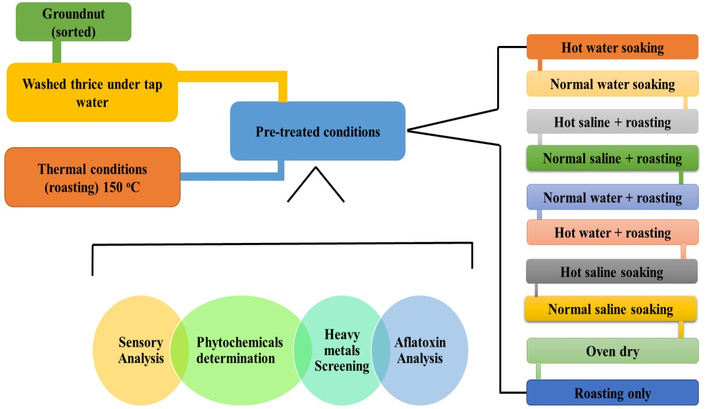
Flowchart of the pretreatment processes (created using Microsoft PowerPoint, 2010).
SAMNUT-23 (the best performing cultivar) was analyzed for the presence of oxalate and phytate (anti-nutrients). The analysis was conducted according to the procedures described by Ijarotimi et al. [22]. All analyses were carried out in triplicate.
The method outlined by Nurudeen et al. [23] was used to determine the levels of heavy/trace metals in the sample. Exactly 5 g of the pre-treated SAMNUT-23 was digested in 20 mL of aqua regia (1:3 HCl/HNO3) until the cessation of brown fume evolution. Five grams (5 g) of the dried sample was weighed in a porcelain crucible and heated at 600°C for 2 hours in a muffle furnace (Gallenkamp, Model OV 880, London, England). The burnt sample was allowed to cool for 1 hour and then digested in 20 mL of aqua regia. The solution was heated on an electric hotplate until the brown smoke vanished. The solution was then filtered using Whatman No. 1 filter paper and made up to 100 mL with distilled water. The solution was then subjected to atomic absorption spectrophotometric (Shimadzu UK) analysis operated according to the manufacturer’s guidelines to obtain the concentrations of heavy/trace metals [Pb, Cd, Cr, nickel (Ni), and zinc (Zn)]. Appropriate blanks and calibration standards were run to ensure accuracy and precision. The analysis was carried out in triplicate.
The mole of phytate or oxalate and heavy/trace metals ratio was determined as previously described [22, 24]. The molar ratio of the phytate or oxalate and heavy/trace metals was obtained by dividing the weight of phytate or oxalate and heavy/trace metals with its atomic weight (phytate: 660 g/mol, oxalate: 126 g/mol, Zn: 65.38 g/mol; Cr: 52 g/mol, Cd: 112.41 g/mol, Ni: 58.69 g/mol, and Pb: 207.20 g/mol) as shown in Equation 1.
Aflatoxin levels were evaluated using high-performance liquid chromatography (HPLC) following the procedure described by Nurudeen et al. [23]. Chromatographic separation was performed using a uBondapak C18 reversed-phase column (250 × 4.6 mm, 5 μm particle size). The mobile phase consisted of acetonitrile and water in a 70:30 (v/v) ratio, filtered through a 0.45 μm membrane, and degassed using ultrasonic treatment before use. Methyl acetate was added to stabilize the mobile phase. The flow rate was set at 2 mL/min, with an injection volume of 5 μL. Specific detection wavelengths were used for identifying the various aflatoxins (B1, B2, G1, and G2) in the groundnut samples. The identity of each analyte was confirmed by comparing its retention time and UV spectrum with those of certified reference standards. Triplicate analysis was run on each sample.
The human health risk assessment procedures used to estimate cancer and non-cancer risks were adapted from the methodology described by Yahaya et al. [16]. The non-cancer risks were obtained from estimated daily intake (EDI), hazard quotient (HQ), and hazard index (HI) of the heavy/trace metals in the groundnuts (Equations 2, 3, and 4, respectively). The cancer risk was estimated from Equation 5.
Where Ci is the concentration of the individual heavy/trace metals in the groundnut samples, GIR represents groundnut ingestion rate in kg·person–1day–1, ABW indicates average body weight, and ORFD means oral reference dose (mg·kg–1day–1). ΣHQ is the summation of the HQs, while CSF means cancer slope factor (mg·kg–1day–1). HQ and HI values above 1 were considered toxic.
The exposure levels of consumers to aflatoxin were determined as described by Adetunji et al. [12]. The quantity of aflatoxins (obtained using questionnaires described earlier) in the groundnut samples was multiplied by the average consumption rate of the nuts in kg/person/day, which was then divided by the ABW of adults in kg. The exposure assessment [probable daily intake (PDI)] was thus calculated using Equation 6. In addition, HQ was computed using Equation 7 while HI was calculated using Equation 8.
Where PDI is probable daily intake for aflatoxins (µg·kg–1·bw·day–1); Ca is concentration of aflatoxins in the groundnuts (µg/kg); ACG is average consumption of groundnuts (kg/day); ABW is body weight for an adult (kg).
The risk of aflatoxin exposure from the groundnut was determined based on the margin of exposures (MOEs) [12, 25]. This was calculated by dividing the benchmark dose lower limit (BMDL) for aflatoxins 170 µg·kg–1·bw·day–1 by aflatoxin exposure (PDI) as shown in Equation 9.
In cases where MOEs were lower than 10,000, a public health concern is indicated which implied that aflatoxin exposures above 0.017 µg·kg–1·bw·day–1 (as obtained by dividing 170 µg·kg–1·bw·day–1 by 10,000) represented a risk of public health concern [12, 25].
The concentrations of heavy/trace metals and aflatoxin in the samples were presented as mean ± standard deviation (SD) using GraphPad Prism 6.01 (GraphPad Software, Inc., San Diego, California, United States). The means obtained were compared with standard values using Student’s t-test and one-way analysis of variance (ANOVA) for multiple comparisons at p < 0.05. The GraphPad was also used to calculate the EDI, PDI, MOE, and HQ values of the heavy metals and aflatoxin. The charts were drawn using Microsoft Excel 2010.
Table 1 shows the demographic information of the adult respondents, including their age, gender, educational status, marital status, and ethnicity. Of the 500 adults that responded, males had the highest participants with 288 (57.6%) individuals while females were 212 (42.4%) in number. Age class 31–35 years had the highest respondents, having 214 (42.8%) individuals while the least fall within the age class 41 and above, comprising 11 respondents (2.2%). In terms of education, 38 respondents (7.6%) had no formal education, 54 (10.8%) respondents had primary education, while 144 (28.8%) and 264 (52.8%) had secondary and tertiary education, respectively. Ethnically, the Hausa group constituted the majority, comprising 250 respondents (50%), followed by the Yoruba ethnic group, with 145 respondents (29%), Fulani with 58 respondents (11.6%), and Nupe and Igbo with 25 (5%) and 22 (4.4%) respondents, respectively. The majority of the respondents identified as married, having 470 (94%) individuals, while 30 respondents (6%) identified as single.
Demographic characteristics of the adult respondents.
| Variable | Categories | Frequency (%) |
|---|---|---|
| Age class (years) | 20–25 | 48 (9.6) |
| 26–30 | 148 (29.6) | |
| 31–35 | 214 (42.8) | |
| 36–40 | 79 (15.8) | |
| 41 and above | 11 (2.2) | |
| Gender distribution | Male | 288 (57.6) |
| Female | 212 (42.4) | |
| Educational status | No education | 38 (7.6) |
| Primary | 54 (10.8) | |
| Secondary | 144 (28.8) | |
| Tertiary | 264 (52.8) | |
| Ethnicity | Hausa | 250 (50) |
| Fulani | 58 (11.6) | |
| Yoruba | 145 (29) | |
| Igbo | 22 (4.4) | |
| Nupe | 25 (5) | |
| Marital status | Married | 470 (94) |
| Widow | 00 (0) | |
| Divorced | 00 (0) | |
| Single | 30 (6) |
Table 2 presents the demographic information of the child respondents. The age distribution indicates that the highest number of participants falls within the 6–8 years age group, comprising 128 children (42.67%), followed by the 8–10 years age group with 103 respondents (34.33%). The 10–12 years age group accounted for 66 children (22%), while the least represented group was the 4–5 years age class with only 3 children (1%). In terms of gender, the study included equal representation of males and females, with 150 male respondents (50%) and 150 female respondents (50%). Regarding current educational status, all the children were enrolled in schools. Ethnic distribution shows that the Hausa group constituted the majority, comprising 205 children (68.33%), followed by the Yoruba with 81 respondents (27%) and the Fulani with 14 respondents (4.67%). The parental status of the children revealed that none of the respondents were orphans, as all 300 children (100%) reported having both parents alive.
Demographic characteristics of the children.
| Variable | Categories | Frequency (%) |
|---|---|---|
| Age in years | 4–5 | 3 (1) |
| 6–8 | 128 (42.67) | |
| 8–10 | 103 (34.33) | |
| 10–12 | 66 (22) | |
| Gender distribution | Male | 150 (50) |
| Female | 150 (50) | |
| Educational status | No formal education | 00 (0) |
| Primary | 300 (100) | |
| Ethnicity | Hausa | 205 (68.33) |
| Fulani | 14 (4.67) | |
| Yoruba | 81 (27) | |
| Igbo | 00 (0) | |
| Parental status | Orphan | 00 (0) |
| Non-orphan | 300 (100) |
Table 3 presents the ABW and corresponding consumption rate of SAMNUT-23 groundnuts among adults and children in Sokoto State. The results indicated that the mean body weight of adults was 60 kg, while that of children was 22.11 kg. The average groundnut intake by adults was 52 g (0.052 kg), while 19.49 g (0.0195 kg) was recorded for children.
Average body weight and average consumption rate of SAMMNUT-23 among children and adults in Sokoto State.
| Adults/Children | Average body weight (kg) | Average groundnut intake |
|---|---|---|
| Adults | 60 | 52 g (0.052 kg) |
| Children | 22.11 | 19.49 g (0.0195 kg) |
The sensory qualities of the three groundnut cultivars are displayed in Figure 2. The hedonic scale test revealed that SAMNUT-23 had the highest acceptability rating score, having 7.57 compared to 6.57 for SAMNUT-24 and 6.43 for SAMNUT-26. Moreover, SAMNUT-23 had the highest sensory scores in terms of color (8.14), taste (6.43), and texture (7.29). The nutritional and ANFs of these cultivars were comprehensively evaluated in our previous study [15], and these data, combined with the current sensory evaluation, were considered in the selection process. For clarity and focus, only sensory results are presented in the current study, as these were the criteria for selection of the most acceptable sample for further studies.
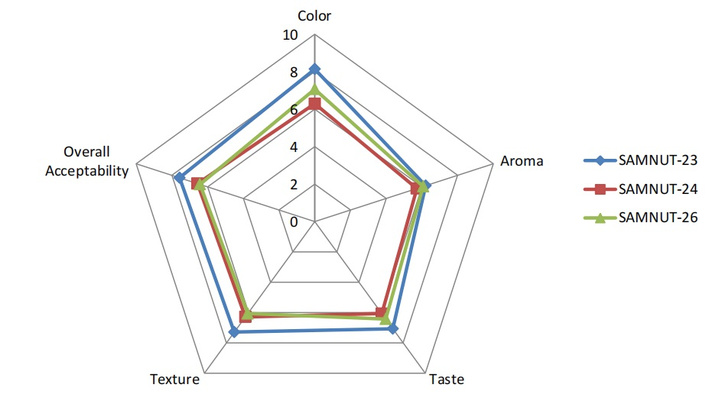
Sensory characteristics of the three groundnut cultivars. Values were presented as mean ± standard deviation of 100 panelists.
Figure 3 shows the sensory qualities of SAMNUT-23 subjected to various pretreatment methods. Compared to untreated SAMNUT-23, there were significant differences (p < 0.05) across appearance, aroma, taste, texture, and overall acceptability. In terms of appearance, the roasted-only SAMNUT-23 had the most appealing color and visual quality, recording the highest score of 7.46. In contrast, the sample soaked in normal water had the least favorable appearance score of 6.06. The combination of normal saline soaking followed by roasting produced the most desirable aroma (7.13), followed by hot saline plus roasting treatment with a score of 7.06. Meanwhile, hot water soaking and normal water soaking recorded the lowest aroma scores of 5.00 and 5.13, respectively. The most preferred taste was observed in normal saline + roasting (8.00) and hot saline +roasting (7.66). Conversely, hot water soaking had the lowest taste score (4.53). Samples subjected to roasting alone and hot saline + roasting shared the highest texture scores (7.33). In contrast, normal water soaking (5.33) and hot water soaking (5.66) recorded the lowest texture ratings, reflecting a softer or less firm consistency due to moisture absorption without adequate drying. In terms of overall acceptability, the hot saline plus roasting and normal saline plus roasting treatment showed no significance difference (p < 0.05) and were the most preferred by the panelists, with an overall acceptability score of 7.93 and 7.86 respectively. Hot water soaking yielded the lowest overall acceptability score of 5.26.
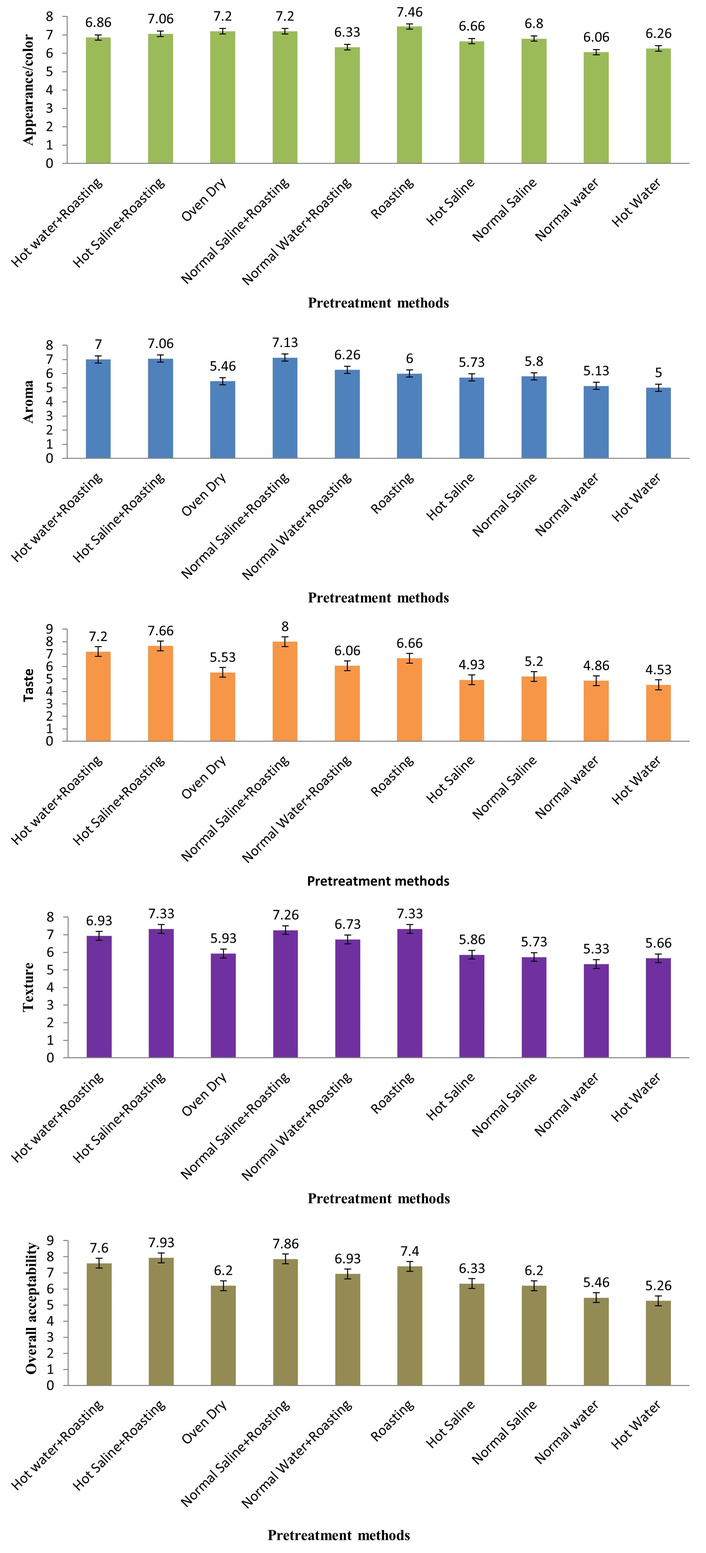
Sensory characteristics of SAMNUT-23 under different pretreatment methods. Values are presented as mean ± standard deviation of 100 panelists.
Furthermore, among all pretreatment methods examined for sensory parameters, the combination of normal saline soaking followed by roasting emerged as the best pretreatment method for enhancing the sensory quality of SAMNUT-23, offering superior scores across taste, aroma, texture, and overall acceptability. Similarly, roasting alone also produced favorable results, particularly for appearance and texture. Hot water soaking was the least effective method, resulting in consistently low scores across nearly all sensory attributes. It is noteworthy that the effects of these pretreatments on nutritional composition and ANFs were comprehensively evaluated in our previous findings [15], and these data, combined with the current sensory evaluation, were considered in the selection process. However, for clarity, only sensory results are presented in the current study, as these were the criteria for selection and further evaluation.
Based on its superior sensory attributes and acceptable nutritional profile, as previously reported by Yusuf et al. [15], normal saline + roasting was selected for further analysis. Figure 4 shows the levels of aflatoxins in SAMNUT-23 subjected to normal saline and roasting. A significant decrease (p < 0.05) was observed in the levels of aflatoxin B1 (0.71 µg/kg), B2 (0.18 µg/kg), and G2 (0.47 µg/kg) for the SAMNUT-23 treated with a combination of normal saline + roasting when compared with untreated SAMNUT-23, which has concentrations of 1.92 µg/kg, 0.76 µg/kg, and 0.89 µg/kg for aflatoxin B1, B2, and G2, respectively. However, a significant increase (p < 0.05) in aflatoxin G1 (0.36 µg/kg) was observed in the normal saline + roasting treated SAMNUT-23 when compared to the untreated SAMNUT-23 (0.09 µg/kg).
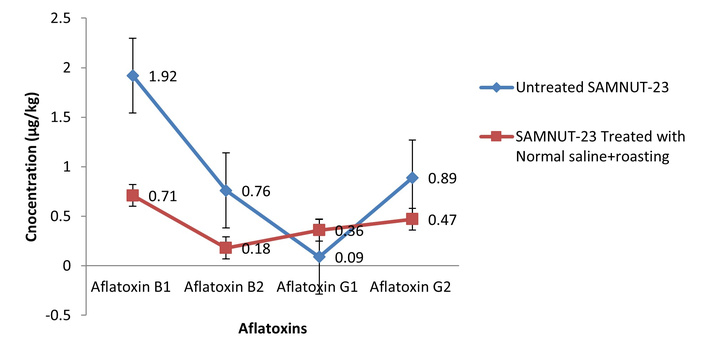
Levels of aflatoxin in SAMNUT-23 before and after treatment with normal saline + roasting.
Table 4 shows the concentrations of oxalate and phytate in treated and untreated SAMNUT-23. The oxalate content of the untreated sample was 0.008 ± 0.001 mg/g, but decreased to 0.002 ± 0.001 mg/g after treatment. The phytate content of the untreated sample was 4.6 ± 0.4 mg/g but decreased to 1.3 ± 0.4 mg/g after pretreatment.
Concentrations of anti-nutrients in treated and untreated SAMNUT-23.
| Anti-nutrient | Untreated SAMNUT-23 (mg/g) | Treated (mg/g) |
|---|---|---|
| Oxalate | 0.008 ± 0.001a | 0.002 ± 0.001b |
| Phytate | 4.6 ± 0.4a | 1.3 ± 0.4b |
Values were presented as mean ± standard deviation of 3 replicates. Values having different superscripts across the column are statistically significant at p < 0.05 (Student’s t-test).
Table 5 shows the concentrations of Pb, Cd, Cr, Ni, and Zn in the treated and untreated SAMNUT-23. Pb was below detection levels (BDL) in either the untreated or treated samples. Cd levels were low in both untreated (0.01 ± 0.00 mg/kg) and treated (0.01 ± 0.00 mg/kg) SAMNUT-23 samples, with no significant difference between them. The concentration of Cr was significantly reduced from 0.05 ± 0.01 mg/kg in the untreated to 0.02 ± 0.01 mg/kg in the treated SAMNUT-23. A significant difference (p < 0.05) was also noticed in Ni concentrations between the untreated (0.04 ± 0.02 mg/kg) and treated (0.03 ± 0.01 mg/kg) SAMNUT-23, while Zn was notably reduced from 0.70 ± 0.00 mg/kg in the untreated to 0.43 ± 0.00 mg/kg in the treated SAMNUT-23. Noteworthily, all the analyzed heavy metals were within the permissible limits set by FAO/WHO [26].
Concentrations of heavy metals and molar ratios of treated and untreated SAMNUT-23.
| Heavy metals | Untreated SAMNUT-23 | Treated SAMNUT-23 |
|---|---|---|
| Pb (mg/kg) | BDL | BDL |
| Cd (mg/kg) | 0.01 ± 0.00a | 0.01 ± 0.00a |
| Cr (mg/kg) | 0.05 ± 0.01a | 0.02 ± 0.01b |
| Ni (mg/kg) | 0.04 ± 0.02a | 0.03 ± 0.01b |
| Zn (mg/kg) | 0.70 ± 0.00a | 0.43 ± 0.00b |
| Phytate:heavy metals (Pb, Cd, Cr, Ni, and Zn) molar ratios | ||
| Phytate:Pb | 0.00 | 0.00 |
| Phytate:Cd | 65.96 | 19.70 |
| Phytate:Cr | 7.18 | 4.00 |
| Phytate:Ni | 9.18 | 3.89 |
| Phytate:Zn | 0.66 | 0.29 |
| Oxalate:heavy metals (Pb, Cd, Cr, Ni, and Zn) molar ratios | ||
| Oxalate:Pb | 0.00 | 0.00 |
| Oxalate:Cd | 0.80 | 0.16 |
| Oxalate:Cr | 0.09 | 0.03 |
| Oxalate:Ni | 0.11 | 0.03 |
| Oxalate:Zn | 0.008 | 0.002 |
BDL: below detection levels; Cd: cadmium; Cr: chromium; Ni: nickel; Pb: lead; Zn: zinc. Values were presented as mean ± standard deviation of 3 replicates. Values having different superscripts across the column are statistically significant at p < 0.05 (Student’s t-test).
The phytate-to-heavy metal molar ratios indicated generally reduced chelation capacity after treatment. The phytate:Cd ratio decreased from 65.96 in the sample to 19.70 in the treated sample. Phytate:Ni decreased from 9.18 to 3.89, and phytate:Cr from 7.18 to 4.00, while phytate:Zn showed a slight reduction (0.66 to 0.29). In the oxalate-to-heavy metal molar ratios, significant reductions were also observed following treatment. A significant decrease was noted in oxalate:Cd ratio (0.80 to 0.16), oxalate:Cr (0.09 to 0.03), oxalate:Zn (0.008 to 0.002), and oxalate:Ni (0.11 to 0.03) ratios. All showed significant decrease (p < 0.05) between the raw and treated SAMNUT-23.
Table 6 reveals that the EDI of aflatoxins (B1, B2, G1, and G2) from both untreated and treated SAMNUT-23 was within the WHO tolerable daily intake (TDI) limits. For children that consumed the untreated SAMNUT-23, the EDI values were B1: 0.002 µg/kg/day, B2: 0.0007 µg/kg/day, G1: 0.00008 µg/kg/day, and G2: 0.0008 µg/kg/day. After pretreatment, these values were reduced to B1: 0.0006, B2: 0.0002, G1: 0.0003, and G2: 0.0004 µg/kg/day. A similar reduction trend was observed in adults, with treated SAMNUT-23 having markedly lower values (B1: 6.15 × 10⁻⁴ µg/kg/day; B2: 1.56 × 10⁻⁴ µg/kg/day).
Estimated daily intake (EDI) of aflatoxins in SAMNUT-23 by children and adults.
| Category | Sample/Ingredients | EDI (µg/kg/day) | |||
|---|---|---|---|---|---|
| B1 | B2 | G1 | G2 | ||
| Children | Untreated SAMNUT-23 | 0.002 | 0.0007 | 0.00008 | 0.0008 |
| Treated SAMNUT-23 | 0.0006 | 0.0002 | 0.0003 | 0.0004 | |
| Adults | Untreated SAMNUT-23 | 1.66 × 10⁻³ | 6.59 × 10⁻⁴ | 7.80 × 10⁻⁵ | 7.71 × 10⁻⁴ |
| Treated SAMNUT-23 | 6.15 × 10⁻⁴ | 1.56 × 10⁻⁴ | 3.12 × 10⁻⁴ | 4.07 × 10⁻⁴ | |
| FAO/WHO [26] | TDI | 0.1 | 0.01 | 0.1 | 0.01 |
WHO: World Health Organization; TDI: tolerable daily intake.
The HQ and HI of aflatoxin from SAMNUT-3 by children and adults are shown in Table 7. The HQ for all aflatoxin types in both children and adults was less than the threshold of 1. For children that consumed untreated SAMNUT-23, the highest HQ was observed in aflatoxin B2 (0.07), followed by B1 (0.02). Treated SAMNUT-23 further lowered these values (B2: 0.02; B1: 0.006). The overall HI for children was 0.099 for the untreated and 0.033 for treated SAMNUT-23, while for adults, the HI was 9.09 × 10⁻² for the untreated and 2.89 × 10⁻² for treated SAMNUT-23.
Hazard quotient (HQ) and hazard index (HI) of aflatoxin in SAMNUT-23 consumed by children.
| Categories | Sample/Ingredients | HQ and HI | ||||
|---|---|---|---|---|---|---|
| B1 (HQ) | B2 (HQ) | G1 (HQ) | G2 (HQ) | HI | ||
| Children | Untreated SAMNUT-23 | 0.02 | 0.07 | 0.0008 | 0.008 | 0.099 |
| Treated SAMNUT-23 | 0.006 | 0.02 | 0.003 | 0.004 | 0.033 | |
| Adults | Untreated SAMNUT-23 | 1.66 × 10⁻² | 6.59 × 10⁻² | 7.80 × 10⁻⁴ | 7.71 × 10⁻³ | 9.09 × 10⁻² |
| Treated SAMNUT-23 | 6.15 × 10⁻³ | 1.56 × 10⁻² | 3.12 × 10⁻³ | 4.07 × 10⁻³ | 2.89 × 10⁻² | |
HQ and HI ≥ 1 indicate a potential health risk; HQ and HI < 1 indicate no risk.
The MOE of B1, B2, G1, and G2 in SAMNUT-23 were shown in Table 8. The MOE values were generally high, indicating low risk levels. For children consuming untreated SAMNUT-23, the MOE for aflatoxin B1 was 8.5 × 10⁴, while a significant increase was observed in the treated SAMNUT-23 (2.83 × 10⁵). Adults showed even higher MOE values for treated SAMNUT-23 (B1: 2.76 × 10⁵, B2: 1.09 × 10⁶). Interestingly, the MOE values were greater than 10,000, indicating that both untreated and treated SAMNUT-23 fall within acceptable safety margins.
Margin of exposure (MOE) of aflatoxin in children and adults consuming SAMNUT-23.
| Category | Sample/Ingredients | MOE | |||
|---|---|---|---|---|---|
| B1 | B2 | G1 | G2 | ||
| Children | Untreated SAMNUT-23 | 8.5 × 10⁴ | 2.43 × 10⁵ | 2.13 × 10⁶ | 2.13 × 10⁵ |
| Treated SAMNUT-23 | 2.83 × 10⁵ | 8.5 × 10⁵ | 5.67 × 10⁵ | 4.25 × 10⁵ | |
| Adults | Untreated SAMNUT-23 | 1.02 × 10⁵ | 2.58 × 10⁵ | 2.18 × 10⁶ | 2.2 × 10⁵ |
| Treated SAMNUT-23 | 2.76 × 10⁵ | 1.09 × 10⁶ | 5.45 × 10⁵ | 4.17 × 10⁵ | |
Table 9 reveals that the EDI of Cd, Cr, Ni, and Zn was higher in untreated SAMNUT-23 when compared to the treated SAMNUT-23 in both children and adults. However, it is worth noting that EDI values for the analyzed metals in both untreated and treated SAMNUT-23 remained within the FAO/WHO [26] TDI limits, indicating no immediate concern of excessive intake.
Estimated daily intake (EDI) of heavy metals in SAMUNUT-23 by children and adults.
| Categories | Sample/Ingredients | EDI (mg/kg/day) | |||
|---|---|---|---|---|---|
| Cd | Cr | Ni | Zn | ||
| Children | Untreated SAMNUT-23 | 1.06 × 10⁻⁴ | 4.49 × 10⁻⁵ | 3.97 × 10⁻⁵ | 6.16 × 10⁻⁴ |
| Treated SAMNUT-23 | 9.70 × 10⁻⁶ | 2.21 × 10⁻⁵ | 2.56 × 10⁻⁵ | 3.81 × 10⁻⁴ | |
| Adults | Untreated SAMNUT-23 | 1.04 × 10⁻⁵ | 4.42 × 10⁻⁵ | 3.9 × 10⁻⁵ | 6.05 × 10⁻⁴ |
| Treated SAMNUT-23 | 9.53 × 10⁻⁶ | 2.17 × 10⁻⁵ | 2.51 × 10⁻⁵ | 3.74 × 10⁻⁴ | |
| FAO/WHO [26] | TDI | 1.83 × 10⁻⁴ | 1.5 × 10⁻² | 5.0 × 10⁻³ | 0.3 |
Cd: cadmium; Cr: chromium; Ni: nickel; Zn: zinc; TDI: tolerable daily intake; WHO: World Health Organization.
Table 10 shows that in children, the HQ for Cd in untreated SAMNUT-23 (1.02) exceeded the safe limit (≥ 1), while other metals (Cr, Ni, Zn) were within the threshold (≤ 1). The HI for untreated SAMNUT-23 in children was 1.04, slightly above the safety threshold, suggesting potential health risk. Interestingly, in the treated SAMNUT-23, all HQ values were within the safety threshold (< 1), and the HI reduced to 0.103, indicating safety. In adults, HQ values for all metals were < 1, with HI values of 0.123 (untreated) and 0.105 (treated), both within safe limits.
Hazard quotient (HQ) and hazard index (HI) of heavy metals in treated and untreated SAMNUT-23.
| Categories | Sample/Ingredients | HQ and HI | ||||
|---|---|---|---|---|---|---|
| Cd (HQ) | Cr (HQ) | Ni (HQ) | Zn (HQ) | HI | ||
| Children | Untreated SAMNUT-23 | 1.02 | 1.49 × 10⁻² | 1.99 × 10⁻³ | 2.05 × 10⁻³ | 1.04 |
| Treated SAMNUT-23 | 9.33 × 10⁻² | 7.37 × 10⁻³ | 1.28 × 10⁻³ | 1.27 × 10⁻³ | 1.03 × 10⁻¹ | |
| Adults | Untreated SAMNUT-23 | 1.04 × 10⁻¹ | 1.47 × 10⁻² | 1.95 × 10⁻³ | 2.02 × 10⁻³ | 1.23 × 10⁻¹ |
| Treated SAMNUT-23 | 9.52 × 10⁻² | 7.23 × 10⁻³ | 1.26 × 10⁻³ | 1.25 × 10⁻³ | 1.05 × 10⁻¹ | |
Cd: cadmium; Cr: chromium; Ni: nickel; Zn: zinc. HQ and HI ≥ 1 indicate a potential health risk; HQ and HI < 1 indicate no risk.
Table 11 revealed that ECRs for Cd, Cr, and Ni were higher in untreated SAMNUT-23 than in treated SAMNUT-23 for both children and adults. Children consuming untreated SAMNUT-23 had ECR values of 6.36 × 10⁻⁴ (Cd), 2.25 × 10⁻⁵ (Cr), and 3.61 × 10⁻⁶ (Ni), whereas lower values (5.82 × 10⁻⁵, 1.11 × 10⁻⁵, and 2.33 × 10⁻⁶, respectively) were in the treated SAMNUT-23. Interestingly, for adults, treated groundnuts also had lower ECR (Cd = 5.71 × 10⁻⁵, Cr = 1.09 × 10⁻⁵, Ni = 2.28 × 10⁻⁶). ECR values for Zn were not available (N/A) in all cases.
Carcinogenic risks (ECRs) of heavy metals in SAMNUT-23 in children and adults.
| Categories | Sample/Ingredients | ECR (mg/kg/day) | |||
|---|---|---|---|---|---|
| Cd | Cr | Ni | Zn | ||
| Children | Untreated SAMNUT-23 | 6.36 × 10⁻⁴ | 2.25 × 10⁻⁵ | 3.61 × 10⁻⁶ | N/A |
| Treated SAMNUT-23 | 5.82 × 10⁻⁵ | 1.11 × 10⁻⁵ | 2.33 × 10⁻⁶ | N/A | |
| Adults | Untreated SAMNUT-23 | 6.24 × 10⁻⁵ | 2.21 × 10⁻⁵ | 3.55 × 10⁻⁶ | N/A |
| Treated SAMNUT-23 | 5.71 × 10⁻⁵ | 1.09 × 10⁻⁵ | 2.28 × 10⁻⁶ | N/A | |
Cd: cadmium; Cr: chromium; Ni: nickel; Zn: zinc.
The study commenced by establishing the sensory qualities of three raw groundnut cultivars (SAMNUT-23, SAMNUT-24, and SAMNUT-26) to determine the best sensory profile for subsequent studies. SAMNUT-23 exhibited the best sensory quality characteristics, with significantly higher sensory scores for taste (6.43), texture (7.29), aroma (6.21), color (8.14), and overall acceptability (7.57) compared to the other cultivars. This finding indicates a clear consumer preference for SAMNUT-23 among the evaluated cultivars. This is consistent with previous reports that varietal differences significantly influence the sensory quality of groundnuts, particularly attributes such as flavor, color, and mouth feel [14]. Previous studies have shown that genetic differences among groundnut cultivars affect lipid composition, which determines flavour development and mouth feel [21]. The moderate acceptability scores observed for SAMNUT-24 and SAMNUT-26 are therefore consistent with reports that improved SAMNUT varieties are generally acceptable but vary in sensory appeal depending on cultivar-specific biochemical attributes. The superior sensory performance of SAMNUT-23 may be attributed to several factors. First, the significantly higher color score suggests a more visually appealing appearance, which is known to strongly influence consumer acceptance of nuts and nut-based products [20]. Second, the higher taste and aroma scores indicate a favourable balance of flavor precursors, such as free amino acids and lipid-derived volatiles, which enhance palatability. Texture also played an essential role, as SAMNUT-23 exhibited a firmer and more desirable mouth feel compared with the other cultivars, an attribute particularly important for RUTF formulations where acceptability by undernourished children is essential. Collectively, these intrinsic qualities established SAMNUT-23 as the preferred cultivar for further evaluation, independent of any pretreatment considerations. This aligns with our previous findings where SAMNUT-23 shows better nutritional profiles, including higher protein, carbohydrate, and acceptable lipid contents, and favorable ANFs [15].
When SAMNUT-23 was subjected to different pretreatment methods, significant differences (p < 0.05) were observed across all the sensory attributes. Overall acceptability scores ranged from 5.26 in hot water soaked samples to 7.93 in samples subjected to combination of hot saline soaking and roasting, suggesting that pretreatment conditions critically determined sensory outcomes. Among all treatments, normal saline soaking combined with roasting consistently produced better sensory scores for taste (8.00), aroma (7.13), texture (7.26), and overall acceptability (7.86), although our previous nutritional analyses had indicated that hot water + roasting had higher protein content and lower ANF especially cyanide, while the normal saline + roasting emerged second [15], it provides a balanced sensory quality that is essential for product utilization, especially foods intended for children with SAM. This highlights the distinction between nutritional optimization and consumer acceptability. To manage this trade-off, a balance was achieved by identifying formulations that met both nutritional adequacy and acceptable sensory thresholds. The final selection of SAMNUT-23 treated with normal saline soaking combined with roasting for further safety analyses reflects both the consistency of cultivar quality and sensory preference.
The significantly higher taste scores observed for the normal saline + roasting treatment can be partly attributed to the presence of sodium chloride, which is known to enhance flavor perception by suppressing bitterness and amplifying desirable taste notes through ion-mediated interactions with taste receptors. Sodium ions increase the sensitivity of taste buds to savoury and roasted flavors, thereby intensifying overall flavor perception even at low salt concentrations [21]. Pretreatment and roasting conditions may significantly influence flavour development and sensory acceptability in peanuts [13]. This mechanistic interaction explains why the saline-treated samples were rated significantly higher in taste compared with water-soaked or untreated counterparts.
Aroma enhancement observed in the saline-treated and roasted samples might be attributed to improved formation of volatile flavor compounds during roasting. Salt has been reported to influence Maillard reaction pathways by altering water activity and protein-sugar interactions, leading to increased production of desirable roasted and nutty aroma compounds [21]. This explains why normal saline + roasting and hot saline + roasting treatments recorded the highest aroma scores, while water-soaked samples, especially hot water soaking, recorded the lowest aroma ratings due to dilution and leaching of aroma precursors.
Texture differences among treatments were also pronounced. Samples subjected to roasting alone or saline soaking followed by roasting exhibited significantly higher texture scores, reflecting a firmer, crispier mouthfeel. This textural improvement can be attributed to effective moisture reduction and structural modification of the groundnut matrix during roasting, which enhances hardness and crunchiness, key determinants of acceptability in tuber and nut-based foods [27]. In contrast, water-soaked samples, especially those soaked in hot water without adequate dehydration, exhibited lower texture scores due to excessive moisture absorption, leading to softening of the cotyledon structure and reduced mechanical resistance.
Appearance scores further supported the superiority of roasting-based treatments. Roasted samples, particularly those without excessive pre-hydration, exhibited more uniform browning and attractive color development, which is strongly associated with consumer preference. Color formation during roasting is largely driven by non-enzymatic browning reactions, which are diminished in excessively hydrated samples due to altered thermal transfer and reduced browning efficiency [13].
Overall acceptability integrates all sensory attributes and is therefore the most robust indicator of consumer preference. The significantly higher overall acceptability score recorded for the normal saline + roasting treatment demonstrates a favourable balance of taste enhancement, aroma development, textural integrity, and visual appeal. Based on the standard sensory acceptance criterion (≥ 7 on the nine-point hedonic scale), this pretreatment method emerged as the most effective for improving the sensory quality of SAMNUT-23. Similar observations have been reported in legume and nut processing studies, where saline-assisted thermal treatments consistently outperform single-step treatments in consumer preference tests [15, 21]. Therefore, normal saline soaking followed by roasting was identified as the optimal pretreatment method for SAMNUT-23 and was consequently selected for subsequent toxicological and risk assessment evaluations.
The significant reduction in aflatoxins (B1, B2, and G2) observed after normal saline combined with soaking shows the effectiveness of this technique in mitigating aflatoxin contamination in SAMNUT-23. This might be due to the combined effect of soaking and thermal treatment. Soaking in normal saline may facilitate the removal of surface-bound aflatoxins through diffusion into soaking medium, roasting at high temperature enhances detoxification through thermal degradation. Similar reductions have been reported, where roasting significantly reduced aflatoxin levels in nuts [19]. In addition, processing techniques involving thermal treatment have been shown to reduce aflatoxin in peanuts [28]. Furthermore, advanced roasting process enhance degradation of aflatoxin B1, highlighting the essential role of high temperature in detoxification [29]. However, the significant increase in aflatoxin G1 after treatment suggests that this technique may have influenced the distribution and detectability of individual aflatoxin fractions. Although majority of studies reported significant reduction in aflatoxin G1, variations among individual aflatoxins have been recorded [30]. This change may also be due to the release of bound aflatoxins or changes in matrix interactions during the soaking and roasting process which may enhance extractability during analysis [30].
The treated and un-treated SAMNUT-23 samples contained tolerable levels of Cd, Cr, Ni, and Zn, while Pb was below detectable limits in both untreated and treated SAMNUT-23. This suggests that the SAMNUT-23 may be ideal for RUTF production. Cr is an essential micronutrient that supports insulin function and metabolism, but at high concentrations, it can predispose humans to health challenges [31]. Ingesting large amounts of Cr can induce acute gut disorder, renal and hepatic problems, especially in children with an already compromised immune system, such as children with SAM [31]. Pb is highly toxic; it can induce oxidative stress, causing DNA, membranes, cellular defense mechanisms, and multi-organ damage [32]. According to the report of the WHO [33], there is no safe blood Pb concentration; even concentrations as low as 3.5 μg·dL–1 may cause cognitive and behavioral abnormalities in children. Interestingly the absence of Pb in SAMNUT-23 suggests that the sample is safe. Zn is a micronutrient that plays a protective role in organisms but can be toxic at a very high amount. In the present study, Zn levels fall within permissible threshold (≤ 40 mg·kg–1), and so may play a protective role when consumed. In particular, Zn may help reduce the levels of other heavy metals in the body, as demonstrated in albino rats exposed to heavy metals [34]. However, at higher concentrations, Zn can cause toxicity in cells, which can often result in the disruption of essential biological functions triggered by blocking protein thiols through mismetallation with other metals [35]. Cd levels fall within the ≤ 2.0 mg·kg–1 acceptable concentrations in the both the treated and un-treated SAMNUT-23 in the present study, and so may not pose significant health effects. However, Ezedom et al. [36] demonstrated that repeated Cd exposure, even at very low concentrations, can alter biochemical, genetic, and renal parameters. Excessive exposure to Cd may be related to liver and kidney damage and osteoporosis as well as various types of cancer, including breast, lung, prostate, nasopharynx, pancreas, and kidney cancers [37]. Furthermore, increased in the concentration of Ni can lead to micronutrient imbalance; it may also cause stomach upset or nausea and in rare cases may cause potential organ damage. Notably, Ni falls even below threshold especially in the treated SAMNUT-23 as recommended by WHO. These findings are consistent with findings that groundnuts cultivated in non-industrial regions often contain heavy metals at concentrations below international safety thresholds [38]. The observed reductions following treatment with normal saline + roasting align with previous studies demonstrating that certain processing techniques may reduce the concentration of certain contaminants through leaching, diffusion, and thermal effects [12]. The absence of Pb is particularly significant, given its neurotoxic effect in children.
The concentrations of oxalate and phytate were significantly reduced in treated SAMNUT-23 compared with the untreated sample. Phytate decreased from 4.6 mg/g to 1.3 mg/g, while oxalate reduced from 0.008 mg/g to 0.002 mg/g. These reductions suggest improved nutritional quality and mineral bioavailability and reduction in anti-nutritional burden following treatment. These reductions align with previous findings that processing decreases anti-nutrients, thereby improving mineral bioavailability in legume-based foods [22, 24]. Correspondingly, the phytate-to-metal and oxalate-to-metal molar ratios were reduced to levels below critical thresholds known to impair mineral absorption. This suggests that residual anti-nutrient concentrations are unlikely to significantly compromise micronutrient bioavailability or exacerbate heavy metal toxicity in the treated product.
The health risk assessment showed that EDI of heavy/trace metals (Cd, Cr, Ni, and Zn) for both children and adults were below TDI limits (< 1.83 × 10⁻⁴, 1.5 × 10⁻², 5.0 × 10⁻³, and 0.3, respectively), which further proved the suitability of the SAMNUT-23, especially the treated SAMNUT-23. However, the HQ and HI for Cd in untreated SAMNUT-23 (1.02 and 1.04 respectively) exceeded the safe limit (≥ 1) in children, primarily due to Cd exposure, suggesting a potential non-ECR while other metals (Cr, Ni, Zn) were within the threshold (≤ 1). Interestingly, following treatment, all HQ values were within the safety threshold (< 1) and the HI reduced to 0.103, suggesting no significant health risk. In adults, HQ values for all metals were < 1, with HI values of 0.123 (untreated) and 0.105 (treated), both within safe limits. Similarly, aflatoxin exposure assessment revealed that EDI, HQ, and HI values for all aflatoxin types were well below risk thresholds for both age groups. MOE values exceeded 10,000 in all cases, indicating low public health concern according to European Food Safety Authority (EFSA) guidelines. These findings corroborate previous studies reporting that appropriate processing of groundnuts significantly reduces toxicological risks associated with aflatoxins and heavy metals [12]. Aflatoxins are highly toxic, fungal metabolites commonly known to adversely affect the health and nutritional status of humans and other animals in various ways. High concentration of aflatoxins is most often found in plants with very nutritive seeds such as maize, nuts, and cereal grains in Africa and cause gastrointestinal infections including vomiting and abdominal pain [12]. The toxin had also been incriminated as a potential mutagenic, carcinogenic, and teratogenic threat to humans [12]. For instance, aflatoxin B1 has a reactive metabolite that interacts directly with DNA; hence, it is assumed that there is no safe dose above zero. The recommendation of Joint FAO/WHO Expert Committee on Food Additives (JECFA) with regard to safe level of aflatoxins in foods is to reduce “As Low As Reasonably Achievable (ALARA)” considering the remarkable genotoxic carcinogenic potential of this toxin [39]. The report of our findings corroborates the report of Oyedele et al. [39], who also reported a high PDI value for groundnut consumers in the humid forest zones of Nigeria.
In conclusion, this study demonstrated that both varietal selection and processing methods play critical roles in determining the sensory quality, safety, and nutritional suitability of groundnuts for therapeutic food applications. Among the three cultivars evaluated, SAMNUT-23 consistently exhibited superior sensory attributes, including taste, texture, aroma, color, and overall acceptability, confirming it as the most preferred cultivar. This superiority is likely linked to its favorable biochemical composition and aligns with existing evidence on the influence of genetic variability on groundnut quality. Pretreatment methods significantly influenced sensory outcomes, with normal saline soaking combined with roasting emerging as the most effective approach. This method achieved the highest overall acceptability by enhancing flavor, aroma, texture, and visual appeal, demonstrating that consumer acceptability is not solely dependent on nutritional composition but also on processing-induced sensory improvements. Although hot water soaking combined with roasting showed slightly better nutritional advantages, the saline-roasting method provided a more balanced profile suitable for practical utilization, particularly in RUTF formulations for children with SAM. Importantly, the selected treatment also improved safety parameters by significantly reducing aflatoxin levels and lowering ANFs such as phytate and oxalate, thereby enhancing mineral bioavailability. Heavy metal concentrations remained within permissible limits, with Pb undetected, further supporting the safety of SAMNUT-23. Health risk assessments confirmed that both treated and untreated samples posed no significant risk to adults, while treatment effectively eliminated potential non-ECRs in children. Overall, the findings establish SAMNUT-23 treated with normal saline soaking followed by roasting as a safe, nutritionally adequate, and highly acceptable candidate for RUTF production. This integrated approach highlights the importance of combining optimal cultivar selection with appropriate processing techniques to achieve both safety and consumer acceptability in food product development.
ABW: average body weight
ACG: average consumption of groundnuts
ALARA: As Low As Reasonably Achievable
ANFs: anti-nutritional factors
ANOVA: analysis of variance
BDL: below detection levels
BMDL: benchmark dose lower limit
Cd: cadmium
Cr: chromium
CSF: cancer slope factor
ECRs: carcinogenic risks
EDI: estimated daily intake
EFSA: European Food Safety Authority
GIR: groundnut ingestion rate
HI: hazard index
HQ: hazard quotient
ICMAM: Integrated Community-Based Management of Acute Malnutrition
JECFA: Joint FAO/WHO Expert Committee on Food Additives
MAM: moderate acute malnutrition
MOEs: margin of exposures
Ni: nickel
ORFD: oral reference dose
Pb: lead
PDI: probable daily intake
RUTF: ready-to-use therapeutic food
SAM: severe acute malnutrition
SD: standard deviation
TDI: tolerable daily intake
UNICEF: United Nations Children’s Fund
WHO: World Health Organization
Zn: zinc
Declaration of generative AI and AI-assisted technologies in the manuscript preparation process: During the preparation of this work, authors used CHATGPT in order to improve grammatical expression and fluency. After using this tool/service, the authors reviewed and edited the content as needed and take full responsibility for the content of the published article.
The authors appreciate the contribution of laboratory staff of the Department of Biochemistry, Department of Biochemistry and Molecular Biology, Usmanu Danfodiyo University, Sokoto, Sokoto State, Nigeria, for the technical assistance provided in the course of this study. The author also acknowledges Al-Qalam University, Katsina, Katsina State, Nigeria, and the Petroleum Technology Development Fund (PTDF) for the support provided.
ZMY: Conceptualization, Data curation, Formal analysis, Methodology, Investigation, Writing—original draft. SGI: Conceptualization, Methodology, Validation, Software. SAI: Project administration, Resources, Supervision, Investigation, Visualization, Funding acquisition. RAU: Resources, Funding acquisition, Visualization, Investigation. TOY: Software, Visualization, Validation, Writing—review & editing. All authors read and approved the submitted version.
The authors declare that they have no conflicts of interest related to this paper.
The authors declare that ethical and professional approval for the study was granted by the Sokoto Health Research Ethics Committee, Ministry of Health Sokoto, Sokoto State, Nigeria bearing the ethical approval number SKHREC/086/2025.
All adult participants have freely given consent to participate in the sensory and groundnut intake assessment of consumers. There were no children below the age of 18 years included in the sensory evaluation. However, for the groundnut intake assessment of consumers, consent to engage the children were obtained from their parents or guardians. All listed participants were approved by the Sokoto Health Research Ethics Committee, Ministry of Health, Sokoto, Sokoto State, Nigeria. Then the participants spontaneously participated in the sensory evaluation as well as the groundnut intake assessment.
Not applicable.
The raw data generated during the study can be obtained upon reasonable request from the corresponding author.
This study was funded by Tertiary Education Trust Fund (TETfund), Nigeria, under the National- Research Fund [NRF-UDUS-2021-012]. The funder had no role in study design, data collection and analysis, decision to publish, or preparation of the manuscript.
© The Author(s) 2026.
Open Exploration maintains a neutral stance on jurisdictional claims in published institutional affiliations and maps. All opinions expressed in this article are the personal views of the author(s) and do not represent the stance of the editorial team or the publisher.
Copyright: © The Author(s) 2026. This is an Open Access article licensed under a Creative Commons Attribution 4.0 International License (https://creativecommons.org/licenses/by/4.0/), which permits unrestricted use, sharing, adaptation, distribution and reproduction in any medium or format, for any purpose, even commercially, as long as you give appropriate credit to the original author(s) and the source, provide a link to the Creative Commons license, and indicate if changes were made.



View: 1081
Download: 34
Times Cited: 0


