Original Article


Affiliation:
1Department of Nutrition and Food Science, University of Ghana, Legon, Accra, Ghana
2Ghana Standards Authority, Accra, Ghana
Email: rosarchie@yahoo.com; roseline.amoah@gsa.gov.gh
ORCID: https://orcid.org/0000-0002-4085-4962


 ,
,
Affiliation:
3Department of Food Science and Technology, Kwame Nkrumah University of Science and Technology, University Post, Kumasi, Ashanti Region, Ghana
ORCID: https://orcid.org/0000-0002-5020-6299
,
Affiliation:
3Department of Food Science and Technology, Kwame Nkrumah University of Science and Technology, University Post, Kumasi, Ashanti Region, Ghana
ORCID: https://orcid.org/0000-0003-3731-2684
,
Affiliation:
4Department of Food Engineering, University of Ghana, Legon, Accra, Ghana.
ORCID: https://orcid.org/0000-0002-7492-1449
,
Affiliation:
5Ghana Standards Authority, Shiashie, Legon-Madina Road, Accra, Ghana
ORCID: https://orcid.org/0000-0003-1831-3008
,
Affiliation:
3Department of Food Science and Technology, Kwame Nkrumah University of Science and Technology, University Post, Kumasi, Ashanti Region, Ghana
ORCID: https://orcid.org/0000-0002-4154-3672
Explor Foods Foodomics. 2026;4:1010150 DOI: https://doi.org/10.37349/eff.2026.1010150
Received: October 14, 2025 Accepted: March 26, 2026 Published: May 21, 2026
Academic Editor: Zhaojun Ban, Zhejiang University of Science and Technology, China
Aim: This study assessed the physicochemical, microbial, aflatoxin, bioactive, and aroma intensities of dried ginger (Zingiber officinale Roscoe) sold on the Ghanaian market to determine its quality and wholesomeness for human consumption.
Methods: Powdered and sliced dehydrated ginger open-sun dried were purchased from different markets and analysed for moisture, total ash, and acid insoluble ash (AIA) using standard methods. The samples were further analysed for microbial quality: aerobic plate count (APC), yeast and mould, Bacillus cereus, faecal coliform, and total aflatoxins to ascertain overall quality. Also, the flavour and bioactive compounds were evaluated using head space solid-phase microextraction (HS-SPME) and solvent extraction methods, respectively.
Results: The moisture content of all sliced samples was significantly higher than that of the powdered ginger, which exceeded the acceptable limit of 12.0% d.b. The APC was in the range of 1 × 10⁶ ± 1 × 10⁶ colony forming unit (CFU)/g to 1.69 × 10⁸ ± 1.77 × 10⁷ CFU/g and yeast and mould, 1.50 × 101 ± 0.21 × 101 CFU/g to 3.40 × 10³ ± 1.41 × 10² CFU/g with 42.9% having faecal coliform > 1.10 × 10³ most probable number (MPN)/g. The yeast and mould of the powdered samples were significantly higher than the sliced samples, and Bacillus cereus was too numerous to count in 50% of the powdered samples. Total aflatoxin content was a maximum of 3.68 ± 0.01 ppb and aflatoxin B1 (AFB1) of 1.64 ± 0.77 ppb, with flavour compounds being mostly sesquiterpenes with α-zingiberene as high as 47.42%. The bioactive compounds isolated were mostly α-zingiberene and gingerol in fractions of 33.72% and 30.82%, respectively.
Conclusions: The high microbial contamination of dehydrated ginger on the market calls for proper monitoring and preservative methods to prevent foodborne illnesses and the use of solar dryers for improved microbial quality.
The use of spices and herbs in the application of foods to add zest and enhance their palatability dates to ancient times. Aside from its application in foods, it plays an important role in ayurvedic medicine as well as home remedies for common ailments [1]. The patronage of common spices such as pepper, ginger, cinnamon, and turmeric has increased due to high demand for natural remedies to mitigate illnesses [1]. Ginger (Zingiber officinale Roscoe) is a very important spice [2, 3] known for its universal use in foods, as a medicine, and as an ingredient in medicines [4, 5]. This spice is a rhizome belonging to the Zingiberaceae family of aromatic plants. Its distinctive pungent taste and odour are attributed to its non-volatile compounds and essential oils, respectively [4, 5]. Also, its medicinal potency is due to its phenolic compounds, such as shogaols, gingerols, and paradols, as well as their derivatives [5, 6]. Ginger possesses anti-inflammatory, anti-microbial, and antioxidant properties [6]. Its anti-inflammatory actions are associated with inhibition of protein kinase B and activation of nuclear factor kappa-light-chain-enhancer of activated B cells (NF-κB), a decline in proinflammatory cytokines, and enhancement in anti-inflammatory cytokines [5, 7]. Since the onset of the COVID-19 global pandemic, the demand for spice has increased due to the lack of a confirmed cure from orthodox medicine; several people have sought natural remedies with known antiviral and anti-inflammatory effects, such as ginger [8]. Ginger functions either in its fresh or preserved form. Consumers prefer the dried form to the fresh for convenience [1]. In the wake of increased patronage, the quality of the spice becomes critical to prevent foodborne illness and general contamination to consumers when used as a spice, medicine, or as an ingredient in medicine [1]. The quality of ginger encompasses, but is not limited to, physicochemical, microbial, and toxin contamination, as well as aroma intensity. There are various drying methods applied to ginger, but in the tropics, most commercial drying methods employed are open-sun drying [4, 9]. Open-sun dried products are associated with high microbial load, substantial colour changes, and contamination by foreign matter, including but not limited to sand, pieces of twigs, and leaves from neighboring flora [10]. Physicochemical parameters of dried ginger (powder or sliced) according to Codex Alimentarius Commission Standards are moisture content, which is important to ensure minimal microbial proliferation during transportation and storage; total ash, which determines the maturity of the produce so that consumers receive enough benefits and not purely fiber or any form of adulteration. The third parameter is acid insoluble ash (AIA), which measures the amount of sand associated with the dried ginger product to ensure consumer safety. Also, other standards consider microbial and aflatoxin quality of ginger. Studies have shown that open-sun dried ginger products recorded a maximum AIA content of 1.03 ± 0.16% dry basis (d.b) which was below the maximum specification of 1.6% d.b; the study concluded that even though open-sun drying has been implicated to be associated with unhygienic issues owning to the fact that it is done in the open environment, the cleanliness or uncleanliness of the drying environment plays a major role. Studies of ginger pretreated differently showed moisture content in the range of 8.7 ± 0.1% to 10.01 ± 0.03% d.b, an ash content in the range of 7.19 ± 0.04% to 7.7 ± 0.08% d.b, and AIA in the range of 0.62 ± 0.01% to 0.98 ± 0.16% d.b, all below the maximum limits stipulated by Codex Alimentarius Commission [10].
The choice of drying method could lead to the proliferation of yeast and mould. Studies show that both solar drying and open-sun drying had higher yeast and mould load of 9.10 × 10⁴ ± 2.83 × 10³ colony forming unit (CFU)/g and 2.05 × 10⁶ ± 1.27 × 10⁵ CFU/g, respectively, compared to 3.60 × 10⁴ ± 1.41 × 10³ CFU/g of the fresh, which could result in aflatoxin development and contamination [10].
Studies have reported Campylobacter sp. and Escherichia coli O157:H7 outbreaks as well as contamination of Salmonella sp. of fresh herbs [11]. Research has also shown fresh ginger to contain high loads of moulds such as Aspergillus flavus, with aflatoxin potential in the dried ginger product [12–14]. The microflora of some spices, such as black pepper, red pepper, white pepper, cumin, coriander, allspice, and ginger, showed the incidence of Staphylococcus aureus, E. coli, Bacillus cereus, Salmonella sp., Aspergillus sp., Penicillium sp., Alternaria sp., Absidia sp., Cladosporium sp., and Rhizopus sp. [4]. These organisms are of great health concern. The authors demonstrated that the open-sun dried ginger harboured aerobic plate counts (APCs) of 1.10 × 10⁹ ± 7.07 × 10⁷ CFU/g and yeast and mould load of 5.0 × 10³ ± 7.07 × 10² CFU/g for ginger, which are very high and can cause foodborne illnesses.
Ginger’s distinctive flavour components are predominantly α-zingiberene, α-curcumene, α-farnesene, β-sesquiphellandrene, β-bisabolene, geranial, neral or citral, and many more [15]. The presence and/or absence of one of these flavour compounds determines the unique flavour of a particular variety as well as the processing methods used, especially the extraction and detection methods [16].
Some studies on the bioactive and flavour compounds of ginger using solar drying and head space solid-phase microextraction with gas chromatography-tandem mass spectrometry (GC-MS/MS) identification (HS-SPME/GC-MS/MS), have isolated mostly sesquiterpenes such as α-zingiberene, β-cubebene, α-farnesene, geranial, β-cedrene, β-carene, and dihydro-α-curcumene [15].
Oven-dried analysis of ginger by HS-SPME detected chiefly α-zingiberene (26.4%), β-sesquiphellandrene (10.2%), β-phellandrene (10.0%), camphene (7.6%), geranial (6.6%), α-curcumene (6.0%), and β-bisabolene (5.4%) [17]. Other related studies using different oven temperatures and drying methods, such as microwave drying, freeze drying, silica gel drying, and vacuum drying, detected similar top 5 volatile compounds with varying concentrations [18]. The bioactive compounds identified were mainly gingerol, α-zingiberene, cis-Z-α-bisabolene epoxide, β-sesquiphellandrene, zingerone, α-himachalene, and α-curcumene for the three different types of solar drying methods used [6].
In the wake of increased patronage of dried ginger on the market, the quality of dried ginger is expected to meet global standards in terms of physicochemical, microbial, aflatoxin, bioactive, and aroma intensity to fulfill its universal functions without causing foodborne illnesses. This study assessed the physicochemical, microbial, aflatoxin, bioactive, and aroma intensities of dried ginger sold in the Ghanaian market to determine its quality.
Powdered and sliced dehydrated ginger samples were purchased from two markets in Ghana: Kejetia Market in the Ashanti Region (6.6987° N, 1.6232° W) and Nima Market in the Greater Accra Region (the largest spice market in Ghana; 5.5810° N, 0.1984° W) within the period of 2018–2019. The samples were packaged in polyethylene bags and transported to the laboratories of the Ghana Standards Authority. The dried ginger purchased from the market originates from Nigeria in split dried form and powdered. The ginger is harvested from October to May annually, sorted to exclude rotten rhizomes, and washed. The washed rhizomes are manually or mechanically split into two halves and spread in a single layer on mats or concrete floors for drying. Drying is done in the open-sun for ten to fourteen days to achieve a moisture content between 7–12%.
The samples included 1 kg each of powdered ginger packaged in polyethylene bags from the Kejetia Market in Kumasi, Ashanti region of Ghana, from two vendors [samples Kejetia Aboabo sample B1 (KAB1) and Kejetia Aboabo sample AB1 (KAAB1)].
In the Nima Market, 1 kg of powdered and sliced ginger samples were collected from twenty vendors. Eight samples, each weighing 1 kg of powdered ginger, were collected, resulting in two composite samples; four samples were collected in a row and handled as one [Nima Powder sample A (NPA) and Nima Powder sample B (NPB)]. In the same way, twelve ginger samples of slices each weighing 1 kg were collected, resulting in 3 composite samples; four samples collected in a row were handled as one sample [Nima Sliced sample A (NSA), Nima Sliced sample B (NSB), and Nima Sliced sample C (NSC)]. All the samples were packaged in polyethylene bags and carried into the laboratories of the Ghana Standards Authority for further preparation.
All sliced dehydrated ginger was milled using Moulinex mill (DPA141/35H-0517R, France) and used for the microbial and physicochemical analysis. The samples used for the HS-SPME/GC-MS/MS and solvent extraction analysis were passed through a sieve size of 1 mm and stored in plastic vials at –18°C until needed.
Moisture cans with their lids were conditioned for 1 h by heating in the hot air oven (Heraeus UT 6200, Thermo Electron Corporation, 63505 Langenselbold, Germany), the cans were then cooled in a desiccator and weighed. About 5 g of the ginger samples was weighed into the can and spread evenly. The cans containing the sample were covered with the lid and heated for three hours at 105°C. The can containing the sample was placed in the desiccator to cool and then reweighed. The percentage moisture content was calculated as below.
Total ash was determined by the Association of Official Analytical Chemists (AOAC) method [19]. Two grams of the ginger sample were weighed into a previously conditioned crucible. The sample was decarbonized on a Bunsen burner and placed in the furnace at 550°C for 3 h. After 3 h, the crucible was cooled in a desiccator, weighed again, and the difference in weight was calculated as the total ash content. An addition of 20 mL of 10% hydrochloric acid (HCl) was added to the total ash and boiled gently for 5–10 min on a hot plate; the resulting sample was quantitatively transferred into a funnel on a beaker containing No. 541 Whatman filter paper. The filter paper containing the sample was washed several times with hot distilled water until the filtrate was free of chloride ions. The filter paper was dried in the oven at 105°C ± 2°C for 30 min. The filter paper containing the AIA was decarbonised on a Bunsen burner and placed in a furnace at 550°C for 1 h. The crucible was cooled in a desiccator and weighed to the nearest 0.1 mg.
The extraction and clean-up together with high-pressure liquid chromatography (HPLC) determination followed the International Organization for Standardization (ISO) 16050:2003 method [20], using a Kobra cell for post-column derivatization. A Shimadzu 20A series coupled with a fluorescence detector with a C-18 column (200 mm × 4.6 mm, 5 µm) was used with Kobra cell (R-Biopharm Rhone). The limit of detection and limit of quantification for total aflatoxin was established at 0.1 ppb, and a recovery rate of G1, G2, B1, and B2 were 64%, 81%, 65%, and 82%, respectively.
The bacterial population was quantified using the spread plate method described in ISO 4833-2:2013 [21], while the yeast and mould populations followed ISO 21527-2:2008 [22].
The faecal coliform in this study was detected and enumerated using the method of ISO 7251:2005 [23] “Microbiology of food and animal feeding stuffs — Horizontal method for the detection and enumeration of presumptive Escherichia coli — Most probable number technique”.
The determination of B. cereus was done following the method of ISO 7932:2004 [24] “Microbiology of food and animal feeding stuffs — Horizontal method for the enumeration of presumptive Bacillus cereus — Colony-count technique at 30 degrees C”.
The volatile components were extracted by HS-SPME with a 100 µm length polydimethylsiloxane (PDMS) fiber column (Supelco, USA) [25]. This fiber, on preliminary analysis, gave an optimum temperature of 50°C at 23 min extraction time for α-zingiberene, α-farnesene, α-curcumene, β-bisabolene, and β-cedrene.
Approximately 1 g of the ginger sample was weighed into a 10 mL amber glass vial. The fiber was manually inserted into the septum of the amber glass vial in the hot air oven at 50°C for 23 min, and allowed for adsorption. After adsorption, the fiber was removed and manually injected into the GC-MS/MS (Varian CP-3800/3380, Walnut Creek, CA 94598, USA).
The GC-MS/MS used to identify the major compounds of dried ginger was a Varian VF-1 MS capillary column (30 m × 0.25 mm) attached to a Varian CP-3800 gas chromatography; a Varian Saturn 2000 spectrometry was used for the separation of the various components. The temperature was 40°C (3 min), 130°C at 7°C/min (3 min), 220°C at 3°C/min (2 min), and 260°C at 10°C/min (5 min). The flow rate of the helium gas was 1 mL/min, and the fiber was introduced and injected at 230°C without split (split off). The compounds were identified by comparing the mass spectra of the chromatographs with built-in libraries and authentic standards. The relative percentage fraction of each component was calculated by comparing its average peak area with the total area on a d.b.
The dehydrated samples stored in vials at –18°C were used for this analysis. Approximately 1 g each of the sample was weighed into a 50 mL conical flask, and 10 mL of ethanol was added. The flasks were cocked with cotton wool and covered with aluminium foil. The set-up was allowed to extract for 24 h at room temperature (23°C ± 2°C). It was then filtered using Whatman’s No. 541 filter paper containing 5.0 g of anhydrous sodium sulfate to remove the excess moisture. The extract was evaporated at 3.5 g, pressure of 140 mbar for 16 min. The resulting oleoresin was washed with 2 mL of hexane and re-couped into a vial.
The major compounds of the dried ginger were identified using gas chromatography coupled to GC-MS/MS, a Varian VF-1 MS capillary column (30 m × 0.25 mm) attached to a Varian CP-3800 gas chromatography, and a Varian Saturn 2000 spectrometry was used for the separation of the various components. The temperature gradient was 40°C (2 min), 220°C at 5°C/min (5 min), and 250°C at 8°C/min (5 min). The flow rate of helium gas was 1 mL/min, and the sample was introduced and injected at 250°C with a 50:50 split. The compounds were identified by comparing the mass spectra of the chromatographs with built-in libraries with authentic standards and new standards of shogaol and gingerol from Supelco, USA. The relative percentage fraction of each component was calculated by comparing its average peak area with the total area on a dry weight basis. The total time was 51.75 min.
The data for all analyses conducted in triplicate were subjected to analysis of variance (ANOVA), SAS® JMP Pro 13 test at P < 0.05 to determine significant differences between treatments for the samples. Multiple range analysis was done using Tukey’s HSD.
The moisture content of the dehydrated ginger from the market ranged from 8.41 ± 0.09% d.b to 13.70 ± 0.06% d.b (Table 1). The results of this study showed that all four samples of powdered ginger, KAAB1, KAB1, NPA, and NPB had a moisture content of less than 11.0%. This meets the specifications of Codex Standard (CXS) 343-2021 Amendment 2022 and ISO 1003:2025 [26, 27] for dried or dehydrated ginger, which requires it to be 12.0% and 11.0% maximum, respectively. The pattern was different for the sliced or split dried ginger, in which all three composite samples recorded above 13.0% d.b relative to a CXS and ISO requirement of not more than 12.0%. The moisture content of a product is a simple way of determining the onset of deterioration of a food product. Depending on the product or matrix, a higher moisture content will increase the proliferation of microorganisms, cause deterioration, and change organoleptic properties. It is also used for economic fraud as a high moisture content increases the weight of the product and consequently the cost of purchase. Among the powdered samples, NPB showed significance (P < 0.05) compared to the others (KAAB1, KAB1, NPA); however, all showed significance to the sliced samples, and within the three sliced samples, there was no significance (Table 1).
Physicochemical analysis of dehydrated ginger on the market of Ghana on a dry weight basis.
| Treatments | Moisture content (%) | Total ash (%) | Acid insoluble ash (%) |
|---|---|---|---|
| KAAB1 | 8.41 ± 0.09d | 7.98 ± 0.17a | 1.69 ± 0.05a |
| KAB1 | 10.07 ± 0.07cd | 4.21 ± 0.00d | 1.67 ± 0.04ab |
| NPA | 9.08 ± 0.23cd | 8.06 ± 0.09a | 1.84 ± 0.12a |
| NPB | 10.24 ± 0.32b | 7.38 ± 0.17b | 1.23 ± 0.19abc |
| NSA | 13.27 ± 0.01a | 6.53 ± 0.03c | 1.00 ± 0.12c |
| NSB | 13.70 ± 0.06a | 6.89 ± 0.02c | 0.89 ± 0.10c |
| NSC | 13.58 ± 0.23a | 7.83 ± 0.14ab | 1.09 ± 0.05bc |
Different letters as superscript in the same column denote significance (P < 0.05). KAAB1: Kejetia Aboabo sample AB1; KAB1: Kejetia Aboabo sample B1; NPA: Nima Powder sample A; NPB: Nima Powder sample B; NSA: Nima Sliced sample A; NSB: Nima Sliced sample B; NSC: Nima Sliced sample C.
The results of total ash revealed that all samples had total ash content of 4.21 ± 0.00% d.b to 8.06 ± 0.09% d.b. The sample NPB was the only sample with higher total ash than the specification of 8.0% d.b for ISO 1003:2025 for non-bleached dehydrated or dried ginger [27]. The specification of 8.0% d.b is the same for unbleached dried ginger for CXS 343-2021 Amendment 2022, and 12.0% d.b maximum for the bleached dehydrated ginger [26]. Among the powdered products, the KAAB1 and NPA were not significant to each other, but both showed significance (P < 0.05) to NSA and NSB. Two of the sliced samples (NSA, NSB) were significant (P < 0.05) compared to all the powdered ginger samples.
The AIA recorded a range of 0.89 ± 0.10% d.b to 1.84 ± 0.12% d.b (Table 1). All four powdered samples had higher AIA compared to the sliced samples, which is expected. However, the values were higher than the requirements of both CXS 343-2021 Amendment 2022 and ISO 1003:2025 of a maximum of 1.5% d.b [26, 27]. The powdered samples were 1.69 ± 0.05% d.b, 1.67 ± 0.04% d.b and 1.84 ± 0.12% d.b for KAAB1, KAB1, and NPA, respectively. Only NPB had AIA within the specification among the powdered samples. All the sliced ginger samples had AIA within the requirement. The AIA of the powdered samples KAAB1 and NPA were significant (P < 0.05) to all the sliced samples (Table 1).
Microbial contamination of foods, including spices and herbs, has been responsible for several foodborne illnesses [28]. Overall, the study enumerated the APC, B. cereus, yeast and mould, and faecal coliforms. It was revealed that APC ranged between 1 × 10⁶ ± 1 × 10⁶ CFU/g to 1.69 × 10⁸ ± 1.77 × 10⁷ CFU/g, which is very high (Table 2). The APC of the powdered samples showed significance (P < 0.05) to each other. On the other hand, all three samples of sliced ginger showed differences in their levels of APC, but it was not significant at P < 0.05. The powdered sample KAAB1 had the least APC load of 1 × 10⁶ ± 1 × 10⁶ CFU/g, with NPB having the highest load of 1.69 × 10⁸ ± 1.77 × 10⁷ CFU/g. B. cereus was not detected in both KAAB1 and KAB1; however, for NPA and NPB, the load was too numerous to count (TNTC), with the sliced dehydrated samples having a load ranging from 1.50 × 10² ± 7.07 × 101 to 3.50 × 10² ± 2.12 × 10² CFU/g, which were all not significant at P < 0.05. Both KAAB1 and KAB1 were significant to NPA and NPB but not to any of the sliced samples.
Microbial quality of dehydrated ginger on the market of Ghana.
| Name of sample | Aerobic plate count (CFU/g) | Bacillus cereus (CFU/g) | Faecal coliform (MPN/g) | Yeast/Mould (CFU/g) |
|---|---|---|---|---|
| KAAB1 | 1 × 10⁶ ± 1 × 10⁶ d | 0.00 ± 0.00 b | < 3 d | 3.45 × 10² ± 3.54 × 101 b |
| KAB1 | 3.40 × 10⁷ ± 2.83 × 10⁶ c | 0.00 ± 0.00 b | > 1.10 × 10³ a | 4.20 × 10² ± 4.24 × 101 b |
| NPA | 8.85 × 10⁷ ± 6.36 × 10⁶ b | TNTC ± TNTC a | > 1.10 × 10³ a | 4.35 × 10² ± 4.95 × 101 b |
| NPB | 1.69 × 10⁸ ± 1.77 × 10⁷ a | TNTC ± TNTC a | > 1.10 × 10³ a | 3.40 × 10³ ± 1.41 × 10² a |
| NSA | 1.40 × 10⁷ ± 1.41 × 10⁶ cd | 3.50 × 10² ± 2.12 × 10² b | 4.60 × 10² b | 1.50 × 101 ± 0.71 × 101 c |
| NSB | 4.30 × 10⁷ ± 2.83 × 10⁶ c | 2 × 10² ± 0.00 b | 1.10 × 10³ a | 3.00 × 101 ± 0.00 c |
| NSC | 3.35 × 10⁷ ± 4.95 × 10⁶ c | 1.50 × 10² ± 7.07 × 101 b | 2.40 × 10² c | 1.50 × 101 ± 0.21 × 101 c |
Different letters as superscript in the same column denote significance (P < 0.05). CFU: colony forming unit; MPN: most probable number; KAAB1: Kejetia Aboabo sample AB1; KAB1: Kejetia Aboabo sample B1; NPA: Nima Powder sample A; NPB: Nima Powder sample B; NSA: Nima Sliced sample A; NSB: Nima Sliced sample B; NSC: Nima Sliced sample C; TNTC: too numerous to count.
The study showed that the dehydrated ginger contained yeast and mould load in the range of 1.50 × 101 ± 0.21 × 101 CFU/g to 3.40 × 10³ ± 1.41 × 10² CFU/g. The powdered sample NPB had the highest load of 3.40 × 10³ ± 1.41 × 10² CFU/g, which was significant to all the other powdered samples as well as the sliced samples. All powdered samples had higher loads than the sliced samples (Table 2).
Faecal coliform contamination of products could be due to the use of contaminated water with faecal matter; this is hazardous to human health. In this study, all samples except KAAB1 were contaminated with faecal coliform in very high loads (Table 2). All the other three powdered samples showed very high loads of > 1.10 × 10³ most probable number (MPN)/g, which were significant at P < 0.05 compared to the other samples. Also, though among the sliced samples, NSB showed high load and significance to NSA and NSC, the load was not > 1.10 × 10³.
The aflatoxin results in this study showed low concentrations, with aflatoxin B1 (AFB1) being below 2.0 ppb and total aflatoxins lower than 5.0 ppb (Table 3).
Aflatoxin quality of dehydrated ginger on the market of Ghana.
| Name of sample | G2 (ppb) | G1 (ppb) | B2 (ppb) | B1 (ppb) | Total aflatoxin (ppb) |
|---|---|---|---|---|---|
| KAAB1 | 0.00 ± 0.00a | 0.00 ± 0.00a | 0.00 ± 0.00a | 0.17 ± 0.08a | 0.24 ± 0.01e |
| KAB1 | 0.00 ± 0.00a | 0.00 ± 0.00a | 0.00 ± 0.00a | 0.16 ± 0.07a | 0.22 ± 0.01e |
| NPA | 0.12 ± 0.06a | 0.79 ± 0.37abc | 0.21 ± 0.07a | 1.64 ± 0.77a | 3.68 ± 0.01a |
| NPB | 0.19 ± 0.14a | 0.41 ± 0.19bc | 0.20 ± 0.10a | 1.49 ± 0.70a | 3.1 ± 0.01b |
| NSA | 0.1 ± 0.05a | 0.61 ± 0.29bc | 0.08 ± 0.03a | 0.64 ± 0.30a | 1.89 ± 0.00c |
| NSB | 0.00 ± 0.00a | 0.09 ± 0.04c | 0.06 ± 0.03a | 0.86 ± 0.40a | 1.35 ± 0.00d |
| NSC | 0.23 ± 0.00a | 1.35 ± 0.00c | 0.18 ± 0.00a | 1.32 ± 0.00a | 3.08 ± 0.00b |
Different letters as superscript in the same column denote significance (P < 0.05). KAAB1: Kejetia Aboabo sample AB1; KAB1: Kejetia Aboabo sample B1; NPA: Nima Powder sample A; NPB: Nima Powder sample B; NSA: Nima Sliced sample A; NSB: Nima Sliced sample B; NSC: Nima Sliced sample C.
All the samples retained a maximum of seven flavour compounds, mostly sesquiterpenes, which accounted for about 99% of the fraction. This study showed that the dehydrated samples did not have a wide variety in the flavour compositions. All samples retained α-farnesene and α-curcumene in the percentage fractions of 11.12–18.31% and 10.07–22.82%, respectively (Table 4, Figure 1). All samples retained α-zingiberene in high amounts of 28.54–47.42%, which is the mark of quality for ginger, except NSB, which retained dihydro-α-curcumene (36.72%) instead. Other flavour compounds, such as β-cedrene was retained by KAAB1, NSB, and NSC as shown in Table 4, while trans-sabinene hydrate was found in NSA and NSC. Flavour compounds such as camphene, β-phellandrene, β-sesquiphellandrene, (+)-epi-bicyclosesquiphellandrene were retained singly by NSC, NSB, NSA, and NPB, respectively.
Flavour compounds of dehydrated ginger on the market (HS-SPME) of Ghana on a dry weight basis extracted with HS-SPME/gas chromatography-tandem mass spectrometry (GC-MS/MS).
| Ret. time (min) | Compound name | Fraction (%) | ||||||
|---|---|---|---|---|---|---|---|---|
| KAB1 | KAAB1 | NPA | NPB | NSA | NSB | NSC | ||
| 9.006 | Camphene | 4.01 | ||||||
| 10.828 | β-Phellandrene | 6.03 | ||||||
| 10.907 | trans-Sabinene hydrate | 5.01 | 5.37 | |||||
| 21.292 | β-Sesquiphellandrene | 12.85 | ||||||
| 22.012 | α-Curcumene | 22.82 | 18.73 | 14.10 | 10.07 | 11.39 | 10.80 | |
| 22.553 | α-Zingiberene | 28.54 | 47.42 | 36.57 | 42.61 | 36.10 | ||
| 22.579 | Dihydro-α-curcumene | 36.72 | ||||||
| 22.827 | Naphthalene | 15.41 | ||||||
| 22.926 | α-Farnesene | 12.96 | 18.31 | 11.12 | 16.99 | 14.77 | 13.27 | |
| 23.051 | β-Bisabolene | 12.55 | 14.42 | 11.24 | 10.42 | |||
| 23.498 | β-Cedrene | 22.01 | 19.31 | 18.91 | ||||
| 23.06 | Isocaryophyllene | 10.53 | ||||||
| 23.178 | (+)-epi-Bicyclosesquiphellandrene | 21.68 | ||||||
HS-SPME: head space solid-phase microextraction; KAB1: Kejetia Aboabo sample B1; KAAB1: Kejetia Aboabo sample AB1; NPA: Nima Powder sample A; NPB: Nima Powder sample B; NSA: Nima Sliced sample A; NSB: Nima Sliced sample B; NSC: Nima Sliced sample C.
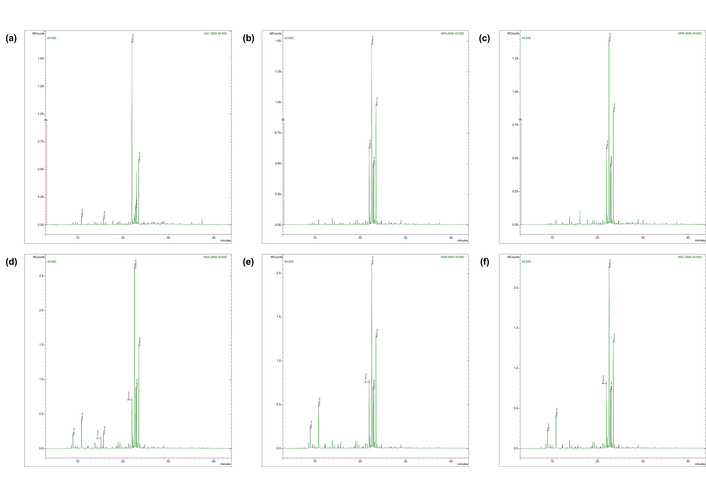
Chromatograms showing the flavour compounds of dehydrated ginger on the market of Ghana using HS-SPME. (a) Chromatograms of the flavour compounds of the powdered sample KAAB1 using HS-SPME; (b) chromatograms of the flavour compounds of the powdered sample NPA using HS-SPME; (c) chromatograms of the flavour compounds of the powdered sample NPB using HS-SPME; (d) chromatograms of the flavour compounds of the composite sliced sample NSA using HS-SPME; (e) chromatograms of the flavour compounds of the composite sliced sample NSB using HS-SPME; (f) chromatograms of the flavour compounds of the composite sliced sample NSC using HS-SPME. KAAB1: Kejetia Aboabo sample AB1; HS-SPME: head space solid-phase microextraction; NPA: Nima Powder sample A; NPB: Nima Powder sample B; NSA: Nima Sliced sample A; NSB: Nima Sliced sample B; NSC: Nima Sliced sample C.
The bioactive compounds of the dehydrated ginger showed a maximum of 29 compounds; both flavour and pungent in nature (Table 5, Figure 2). Quite surprisingly, with solvent extraction, each sample was expected to have isolated several compounds as compared to other studies [6], yet apart from KAB1, all the other samples showed only 5–6 compounds, accounting for approximately 99% of the fractions. These were mainly flavour compounds and, for that matter, sesquiterpenes except gingerol, which is the pungent bioactive compound. The main pungent and phenolic compound, gingerol, responsible for ginger’s characteristic pungency, was isolated in the range of 13.55–30.82% among the six samples that were tested (NSB was not tested for its bioactive compounds). The sample KAB1 isolated the least fraction of 13.55%, with NPB having the highest of 30.82%. Similar work revealed that the solar and sun-dried ginger isolated a slightly higher fraction of 32.49–34.98% [6]. This study isolated α-zingiberene, also in the range of 20.11–33.72%, which is comparatively higher than that of similar work done with 15.77–19.02% [6]. In their work, gingerol and α-zingiberene were the top compounds isolated for all three drying methods, just as in this study, where these two compounds appear in the top three isolated compounds (Table 5). This underscores that these two compounds are the chief compounds responsible for taste and flavour, respectively, in ginger.
Bioactive compounds of dehydrated ginger on the market of Ghana on a dry weight basis using solvent extraction.
| Ret. time (mins) | Compound name | Fraction (%) | ||||||
|---|---|---|---|---|---|---|---|---|
| KAB1 | KAAB1 | NPA | NPB | NSA | NSB | NSC | ||
| 9.938 | 6-Methyl-5-heptene-2-one; | 0.2 | 18.67 | |||||
| 10.392 | Pentanoic acid | 0.75 | ||||||
| 11.574 | trans-Sabinene hydrate | 0.77 | ||||||
| 13.583 | Linalool acetate | 0.4 | ||||||
| 15.543 | Borneol | 1.68 | ||||||
| 16.212 | α-Terpineol | 0.84 | ||||||
| 16.399 | α-Pinene-10-ol or (±)-myrtenol | 0.57 | ||||||
| 17.351 | β-Citral | 1.08 | ||||||
| 18.157 | α-Citral | 1.68 | ||||||
| 20.507 | 3-Allylguaiacol | 3.90 | ||||||
| 21.835 | β-Elemene | 0.65 | ||||||
| 22.159 | α-Cedrene | 0.55 | ||||||
| 22.58 | Caryophyllene | 0.34 | ||||||
| 23.282 | cis-β-Farnesene | 1.01 | ||||||
| 24.003 | Germacrene | 1.65 | ||||||
| 24.247 | α-Zingiberene | 26.76 | 33.72 | 20.11 | 31.48 | 29.68 | ||
| 24.474 | β-Cadinene | 6.07 | ||||||
| 24.488 | α-Farnesene | 13.99 | 15.00 | 10.89 | 13.94 | 13.51 | ||
| 24.616 | β-Bisabolene | 14.99 | 12.61 | 11.30 | 8.20 | 8.96 | 9.65 | |
| 24.919 | β-Cedrene | 23.38 | 17.09 | 17.71 | 18.09 | |||
| 24.963 | β-Sesquiphellandrene | 20.58 | ||||||
| 26.638 | α-Curcumene | 4.09 | 24.62 | 15.47 | 11.77 | 8.02 | 11.55 | |
| 26.89 | trans-Sesquisabinene hydrate | 4.21 | ||||||
| 27.232 | Isoaromadendrene epoxide | 5.89 | ||||||
| 28.619 | β-Copaene-4-α-ol | 4.64 | ||||||
| 29.782 | Xanthorrhizol | 2.0 | ||||||
| 30.833 | di-epi-α-Cedrene epoxide | 1.76 | ||||||
| 35.247 | (E,E)-Geranyl linalool | 0.81 | ||||||
| 41.743 | Gingerol | 13.55 | 20.89 | 30.82 | 16.41 | |||
KAB1: Kejetia Aboabo sample B1; KAAB1: Kejetia Aboabo sample AB1; NPA: Nima Powder sample A; NPB: Nima Powder sample B; NSA: Nima Sliced sample A; NSB: Nima Sliced sample B; NSC: Nima Sliced sample C.
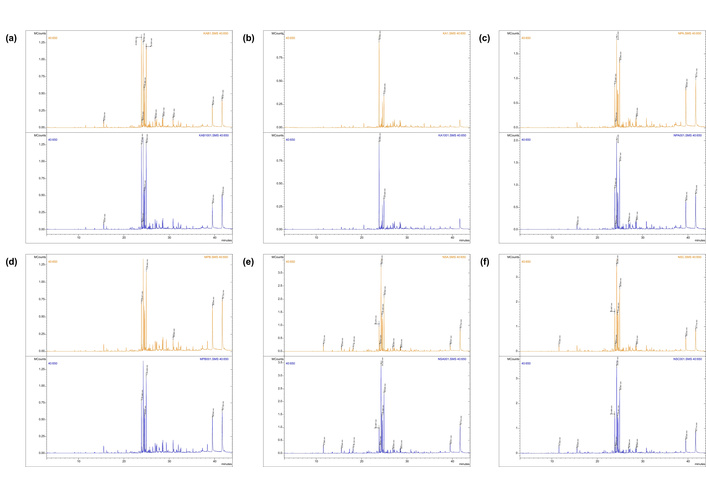
Chromatograms showing the bioactive compounds of dehydrated ginger on the market of Ghana using solvent extraction. (a) Chromatograms of the bioactive compounds of the ethanol extract of the powdered sample KAB1; (b) chromatograms of the bioactive compounds of the ethanol extract of the powdered sample KAAB1; (c) chromatograms of the bioactive compounds of the ethanol extract of the composite powdered sample NPA; (d) chromatograms of the bioactive compounds of the ethanol extract of the composite powdered sample NPB; (e) chromatograms of the bioactive compounds of the ethanol extract of the composite sliced sample NSA; (f) chromatograms of the bioactive compounds of the ethanol extract of the composite sliced sample NSC. KAB1: Kejetia Aboabo sample B1; KAAB1: Kejetia Aboabo sample AB1; NPA: Nima Powder sample A; NPB: Nima Powder sample B; NSA: Nima Sliced sample A; NSC: Nima Sliced sample C.
On the other hand, two of the samples, NPA and NSA, did not isolate gingerol, and KAB1 did not isolate α-zingiberene but β-sesquiphellandrene.
There are various drying methods employed to reduce the moisture content of agricultural products; however, the ginger on the market was dried by the open-sun method for about 14 days, according to the market women. A study indicated the solar-dried samples recorded a moisture content of 8.21 ± 0.06% d.b to 10.03 ± 0.23% d.b while the open-sun dried samples were from 8.57 ± 0.1% d.b to 10.01 ± 0.03% d.b. Their work showed less moisture than the market samples [10]. On the other hand, another study recorded moisture content of 12.19% d.b within 8 h drying using a mixed-mode box-cabinet natural circulation solar dryer [29]. Other studies have recorded moisture content of dehydrated ginger in the range of 5.3–7.8%, using drying methods such as a passive solar dryer, and 17.0–20.0% using the open-sun drying method for two weeks [30].
The total ash content of ginger measures age, or maturation, as well as adulteration. When ginger overmatures, the fiber increases, which can increase the total ash content. Also, processors adulterate powdered ginger for economic gains. Both concrete solar-dried and open-sun dried 9-month ginger analysed showed similar results of a total ash of less than 8.0% d.b [10].
The study showed that the AIA (sand content) in the powdered samples is high and not safe for human consumption. This could be due to the open environment, which underscores the need for a solar dryer.
Fruits, vegetables, spices, and herbs, including ginger, are associated with different microorganisms of health concern. Microbial population of 5 fresh produce purchased from the market namely tomatoes, spinach, cucumber, cantaloupe, and pepper showed an APC in a range of 3.7 ± 1.4 to 5.6 ± 1.1 log10 CFU/g, total coliform (TC) in a range of 3.8 ± 1.6 to 5.4 ± 0.9 log10 CFU/g, and yeast and mould population in a range of 3.2 ± 0.9 to 4.1 ± 0.6 log10 CFU/g [11]. Also, dried spices and herbs have recorded the presence of Salmonella sp., causing salmonellosis due to consumption of foods with these spice additions [31]. Analyses of dried spices and herbs from the United Kingdom, as part of the European Commission (EC 2004a) surveillance of microbial safety, recorded Salmonella contamination in 1.5% (2/132) of production batches and 1.1% (31/2,833) of retail samples [31]. The high population of APC isolated in this study is not different from other work done [32], which showed that fresh ginger rhizomes can harbour bacteria population as high as 9.98 × 10⁹ ± 0.03 CFU/g and oven dried ginger at a temperature of 50–60°C, a load of 7.31 × 10⁶ ± 0.03 CFU/g. On the other hand, another study revealed the microbial content of solar-dried samples (peeled: 2.4 × 10⁴ CFU/g; unpeeled: 2.18 × 10⁵ CFU/g) to be slightly better than that of the sun-dried (3.0 × 10⁴ CFU/g; 2.6 × 10⁵ CFU/g), yet this load is still high [29].
In a work done in the United Kingdom as part of the European Commission (EC 2004a) surveillance of microbial safety, high levels of Bacillus sp., ranging from 1.0 × 10⁵ CFU/g to 6.9 × 10⁹ CFU/g were isolated, which were beyond the acceptable limits of below 103 CFU/g sample. Out of 130 ginger samples analysed, 3.9% had unsatisfactory microbial quality [31, 33]. In this study, KAAB1 and KAB1 had loads that were below the acceptable limits (Table 2). B. cereus, being a gram-positive, spore-forming bacterium, is widely distributed in the environment due to its ubiquitous nature, having spores that are resistant to drying and heating processes. These spores can transform into vegetative forms under suitable conditions, which can cause food poisoning. This group of bacteria is in the top ten for foodborne and waterborne outbreaks [34]. B. cereus strains produce one or more enterotoxins in the intestine or emetic toxin in the food. This then causes two types of poisoning, diarrheal and emetic. Diarrheal enterotoxins are heat-labile and cause symptoms such as abdominal pain and diarrhea, while emetic type is heat-stable and causes nausea and vomiting. Consumption of more than 105 CFU/g cells or spores through food is enough to initiate diarrheal symptoms [34].
The prevalence of B. cereus in 64 samples out of 203 collected from different supermarkets in Turkey, packaged and unpackaged, and 12 out of 25 ginger samples, with mean spore concentrations of 3.0 to 5.7 log10 CFU/g, have been reported [34, 35]. In this study, out of the seven samples collected from the market, 2 samples were not contaminated with the bacteria; out of the five contaminated samples, 3 samples were within the acceptable limits of 103 CFU/g. Notwithstanding, there were 2 samples that recorded load TNTC, and this is a health threat to consumers. Most consumers infuse ginger without the application of heat, and even when heat is applied, the temperature and cooking time may not be adequate to inactivate the bacterial cells. It is stipulated that from 1973 to 2012, nine outbreaks in Europe have been attributed to spices contaminated with B. cereus, which represent 50% of the total outbreaks associated with spices [35].
The yeast and mould load of a product, apart from causing foodborne illnesses, can be very dangerous to human health since its metabolites can produce multiple mycotoxins, some of which are cancerous and immunosuppressive. Several studies have shown contamination of ginger with A. flavus; the most dominant genera of mycoflora with mycotoxigenic potency, in a study of five different spices, Aspergillus with 7 species, followed by Penicillium with 3 species, Fusarium with 2 species, and Mucor with 1 species were the dominants. In their studies, the Aspergillus species had the aflatoxin-producing A. flavus, A. parasiticus, and A. niger; also A. ochraceus, which produces ochratoxin [4, 12–14, 36].
The yeast and mould load in this study is less than the load isolated by some work done with a range of 1.63 × 10⁴ ± 4.35 × 10² CFU/g to 2.05 × 10⁶ ± 1.27 × 10⁵ CFU/g for solar and open-sun dried. On the other hand, the load is comparable to another work done isolating a population in a range of 3.00 × 10² ± 1.41 × 10² CFU/g to 5.00 × 10³ ± 7.07 × 10² CFU/g [4, 10].
The study indicated that all samples were contaminated with faecal matter, as indicated by the detection of faecal coliforms. The contamination could have arisen from irrigation water, run-off water from neighbouring streams, which were contaminated with faecal matter, from the soil, or from the spice handlers. A study showed contamination of ready-to-eat salads from Baghdad with faecal coliform at 35.93% and from the restaurant handlers at 36.58%. The load was a maximum of 4.78 ± 0.27 log10 CFU/g and 3.90 ± 0.23 log10 CFU/g for the ready-to-eat salads and the restaurant food handlers, respectively. This calls for stringent sanitary monitoring as faecal coliform contamination causes gastroenteritis in humans. Their study further isolated two serotypes of E. coli O157:H7, which are faecal coliforms [37]. Likewise, E. coli was detected in selected spices in the Bangladesh market in unpacked samples; however, it was not detected in selected packed spices [38].
Six dried spices from spice shops, markets, and homes in Turkey detected E. coli of a maximum load of 5.60 ± 0.16 log10 CFU/g [39]. With quite minimal processing for spice consumption, most especially in the addition to salads and ready-to-eat meals, the high loads of faecal coliform are of safety concern, and measures are needed to sanitize these spices before consumption. For the sake of convenience, most consumers preferred patronizing the powdered ginger over the sliced, making it of great concern for such high faecal coliform contamination [1].
Concerning the four different microorganism groups that were tested for the dehydrated ginger products on the market, two of the powdered samples showed an association with three, while all other samples were associated with all four. The microbial quality of these products for consumption is not safe.
Despite the association of yeast and mould, the aflatoxin content of these products was low. The most potent, AFB1, was all less than 2.0 ppb, and total aflatoxins were lower than 5.0 ppb (Table 3). Similar work isolated high and comparable yeast and mould load, yet aflatoxins were not detected in the solar and sun-dried ginger. Their samples were dried for only 5 days, and it could be that because storage was not done, the toxins were not developed. The storage period of the samples bought in the market is not known; it is possible that with time, the aflatoxin content could increase [4, 6]; this calls for proper monitoring procedures. Drying food products has been associated with the proliferation of microorganisms, depending on the temperature and humidity conditions. Also, improper storage facilities cause an increase in storage fungi, especially Aspergillus sp. and Penicillium sp., which can produce mycotoxins, of dire health consequences. Usually, these market women store the dried ginger in the market covered with polyethylene bags to prevent wetness from rain. Even the ones with storage rooms do not have conducive storage conditions to prevent fungal growth and, subsequently, toxin production. Other studies have reported aflatoxin levels of ginger purchased from the market around the globe in the range of 4–10 ppb [40, 41]. Conversely, some studies have shown aflatoxin levels higher than the recommended levels in dried ginger, which is 10 ppb. In India, an aflatoxin level of 12.5–25 ppb was observed in dried ginger [42]. Analysis of 25 bottles of ginger capsules (60 capsules/bottle, 625 mg/capsule) purchased from a botanical supplier showed that all the samples were contaminated with aflatoxin levels of 6.2–12.3 mg/kg.
All the samples isolated α-zingiberene, which is the mark of quality for ginger, giving ginger its unique flavour [6]. This was different from the results of another study, which showed the presence of α-zingiberene in only one of several pretreated solar-dried ginger samples with a percentage fraction of 19.38, which is less than that isolated by this study [15]. According to the same study, α-zingiberene was isolated in comparable fractions of 39.64% in the untreated open-sun-dried ginger. Similarly to this study, it was demonstrated that most flavour compounds isolated were sesquiterpenes such as α-farnesene, α-curcumene, dihydro-α-curcumene, β-sesquiphellandrene, among others, in different concentrations [15].
This study isolated the major compounds such as gingerol, α-zingiberene, α-farnesene, and α-curcumene, but in different concentrations; however, zingerone, which is a derivative of gingerol and a phenolic compound, also responsible for pungency, was not isolated in this study [6]. Even though KAB1 isolated about 26 compounds and would have been judged the most supreme since all the flavours and compounds isolated would contribute to its uniqueness, it did not isolate the compound which gives ginger its typical flavour, α-zingiberene, as well as α-farnesene, which is also a sesquiterpene and typical of ginger oils [7].
Comparing the flavour compounds (Table 4) and the bioactive compounds (Table 5), the isolated compounds are quite alike to each other but in different concentrations. Using HS-SPME, which isolates only the flavour compounds, and solvent extraction, which gives the phytochemical composition or bioactive compounds of ginger, the samples altogether isolated α-zingiberene, α-farnesene, α-curcumene, β-sesquiphellandrene, β-cedrene, β-bisabolene, trans-Sabinene hydrate in common. NPA isolated the highest fraction of α-zingiberene by both methods, which is 47.42% and 33.72%, respectively. However, the pattern was not the same for the least fractions. Yet, as expected, the HS-SPME method extracted higher fractions of α-zingiberene than the solvent extraction methodin the various samples. The fractions for α-curcumene did not follow a particular pattern, but they were comparable for the different methods: KAAB1, 22.82%:24.62%; NPA, 18.73%:15.47%; NPB, 14.10%:11.77%; NSA, 10.07%:8.02%; NSC, 10.80%:11.55% for the HS-SPME method and solvent extraction, respectively.
The high moisture content, as indicated, can increase microbial proliferation and alter the organoleptic properties, which can cause foodborne illnesses. The amount of sand in the powdered samples was also not safe for human consumption. Most of the samples showed poor microbial quality in terms of APC, B. cereus, faecal coliforms, and yeast and mould. The contamination of faecal coliforms is prevalent in causing foodborne outbreaks and needs to be monitored. Despite the high levels of yeast and moulds recorded, the level of aflatoxin contamination was minimal and acceptable. This study showed that the flavour components and bioactive components of ginger on the market were similar using both HS-HPME and solvent extraction. Gingerol and α-zingiberene were among the top three phytochemicals isolated for almost all the samples, which indicates good ginger products. The flavour and pungency of the ginger on the market are of high quality for isolating the two main phytochemicals: gingerol and α-zingiberene; however, the microbial and physicochemical qualities must be monitored to prevent foodborne outbreaks. It is recommended that the industry consider solar dryers, which prevent physical contamination and improve the microbial quality of the ginger. Further work using different types of solar dryers for complete quality assessment is encouraged.
A. flavus: Aspergillus flavus
AFB1: aflatoxin B1
AIA: acid insoluble ash
APCs: aerobic plate counts
B. cereus: Bacillus cereus
CFU: colony forming unit
CXS: Codex Standard
d.b: dry basis
E. coli: Escherichia coli
GC-MS/MS: gas chromatography-tandem mass spectrometry
HPLC: high-pressure liquid chromatography
HS-SPME: head space solid-phase microextraction
ISO: International Organization for Standardization
KAAB1: Kejetia Aboabo sample AB1
KAB1: Kejetia Aboabo sample B1
NPA: Nima Powder sample A
NPB: Nima Powder sample B
NSA: Nima Sliced sample A
NSB: Nima Sliced sample B
NSC: Nima Sliced sample C
TNTC: too numerous to count
The authors are very grateful to the management of ISA Lille Catholic University, Food Science Department, Lille, France, and the Ghana Standards Authority for making their laboratory facilities available for this research.
REA: Conceptualization, Methodology, Investigation, Project administration, Writing—original draft, Writing—review & editing, Visualization, Funding acquisition. FDWM: Conceptualization, Project administration, Writing—review & editing, Supervision. IO: Conceptualization, Project administration, Writing—review & editing, Supervision. FKS: Conceptualization, Project administration, Writing—review & editing, Visualization, Supervision. AD: Project administration, Supervision. WOA: Project administration, Formal analysis, Writing—review & editing. All authors read and approved the submitted version.
The authors declare no conflicts of interest for the content published in this manuscript.
Not applicable.
Not applicable.
Not applicable.
Datasets are available on request from the corresponding author.
This project was partly funded by the Ghana Standards Authority, in the form of paid salary while carrying out this research, and the availability of their laboratory for part of the laboratory analyses. The funders had no role in study design, data collection and analysis, decision to publish, or preparation of the manuscript.
© The Author(s) 2026.
Open Exploration maintains a neutral stance on jurisdictional claims in published institutional affiliations and maps. All opinions expressed in this article are the personal views of the author(s) and do not represent the stance of the editorial team or the publisher.
Copyright: © The Author(s) 2026. This is an Open Access article licensed under a Creative Commons Attribution 4.0 International License (https://creativecommons.org/licenses/by/4.0/), which permits unrestricted use, sharing, adaptation, distribution and reproduction in any medium or format, for any purpose, even commercially, as long as you give appropriate credit to the original author(s) and the source, provide a link to the Creative Commons license, and indicate if changes were made.