Review


Affiliation:
1Department of Biosciences, Career Point University, Hamirpur 176041, Himachal Pradesh, India
ORCID: https://orcid.org/0009-0007-1427-8686

 ,
,
Affiliation:
1Department of Biosciences, Career Point University, Hamirpur 176041, Himachal Pradesh, India
2Centre for Green Energy Research, Career Point University, Hamirpur 176041, Himachal Pradesh, India
Email: shubhamkapil143@gmail.com
ORCID: https://orcid.org/0000-0001-7871-3607
 ,
,
Affiliation:
3Department of Chemistry, Career Point University, Hamirpur 176041, Himachal Pradesh, India
4Center for Nanoscience and Technology, Career Point University, Hamirpur 176041, Himachal Pradesh, India
ORCID: https://orcid.org/0000-0002-1555-1791
,
Affiliation:
5Department of Biotechnology, Sri Guru Gobind Singh College, Chandigarh 160019, India
ORCID: https://orcid.org/0000-0002-0465-8075
,
Affiliation:
6Department of Zoology, DAV College, Jalandhar 144008, Punjab, India
ORCID: https://orcid.org/0009-0001-5806-8038
,
Affiliation:
7School of Biological and Environmental Sciences, Shoolini University, Solan 173229, Himachal Pradesh, India
8Cell & Molecular Biology Laboratory, ICAR-Central Potato Research Institute, Shimla 171001, Himachal Pradesh, India
ORCID: https://orcid.org/0009-0008-8608-2735
,
Affiliation:
1Department of Biosciences, Career Point University, Hamirpur 176041, Himachal Pradesh, India
2Centre for Green Energy Research, Career Point University, Hamirpur 176041, Himachal Pradesh, India
ORCID: https://orcid.org/0000-0003-2311-9533
Explor Foods Foodomics. 2026;4:1010149 DOI: https://doi.org/10.37349/eff.2026.1010149
Received: January 07, 2026 Accepted: March 31, 2026 Published: May 19, 2026
Academic Editor: Dong-uk Ahn, Iowa State University, United States
Edible insects are a sustainable food source, due to their high nutritional value and low environmental impact. This review explores how bioinformatics improves the nutritional value and farming efficiency of edible insects, focusing on Tenebrio molitor (mealworms), Hermetia illucens [black soldier fly larvae (BSFL)], and Acheta domesticus (crickets). These insects provide micronutrients like vitamin B12 and iron with 10% to 50% lipids and 30% to 70% protein. Bioinformatics is enhancing the breeding and sustainability of insects, which optimizes nutrient extraction through genomic and metabolomic analyses done by using tools like NCBI and KEGG. For commercial farming, A. domesticus and T. molitor are ideal, while BSFL are excellent in waste recycling. Unlike previous reviews centered primarily on compositional analysis, this review uniquely links genomic and metabolomic bioinformatics approaches with targeted nutritional optimization in edible insect production. Despite these advantages, challenges such as regulatory gaps, high computational costs, consumer demand in Western markets, and acceptance of insect produced products by consumers are still the challenges for their scalability. Insect farming by using bioinformatics reduces environmental impacts and offers a scalable, sustainable solution to global food security. Continued research into cost-effective computational methods and consumer acceptance strategies is essential to introduce insects into food systems. All the data present in review are broadly representative of edible insects, values fall within these intervals but vary according to feed substrate and production system.
The global demand for dietary protein is growing owing to population growth, environmental constraints, and the limitations of conventional livestock production [1, 2]. Plant-based foods for protein are mainly derived from legumes, oilseeds, and cereals, etc., and have long served as major contributors to human protein intake and aimed at improving food system sustainability [3]. Despite their shared sustainability goals, edible insects have emerged as a promising animal-derived protein source due to their high feed conversion efficiency, favorable amino acid profiles, and relatively low environmental footprint. This type of animal and plant derived protein differs substantially in terms of biological conversion pathways, nutritional composition, processing requirements, and consumer acceptance. Edible insects have emerged as a promising animal-derived protein source due to their high feed conversion efficiency, favorable amino acid profiles, and relatively low environmental footprint [4–6]. The world’s population is booming and is forecast to reach 9.7 billion by 2050. There is a need for sustainable food sources enriched with nutritive components, mainly proteins and other like carbohydrates, fats, etc. This puts additional pressure on food systems that are already under stress from resource scarcity and climate change [5]. Conventional livestock farming causes greenhouse gas emissions, water depletion, and deforestation. There is an urgent need for environmentally friendly solutions. As the world deals with the problem of population growth and resource depletion, insects are the well-known sustainable food source having amazing potential. They are the best solution for the problems associated with global food security due to their outstanding nutritional value and substantial environmental advantages. Like traditional livestock, insects not only provide food to people but also reduce the burden on the environment with ensuring a healthier and more environmentally friendly future ahead [7].
The appeal of insects as a food source begins due to their nutritional value. Edible insects contain substantial which is equivalent or more amount of protein, often 40–70% of their dry weight, than that of huge animals’ meat, such as beef, chicken, and pork [5, 8–10]. They are rich in the essential amino acids omega-3 and omega-6 fatty acids, along with a large range of vitamins that include B12, riboflavin, and folate, which are important for human health [5, 10, 11]. In regions of world like Africa, Asia, and Latin America, people have been eating insects for past hundreds of years, providing information for their global acceptance as a food source. In these regions, they are enjoyed as both everyday food and delicacies [10, 12, 13].
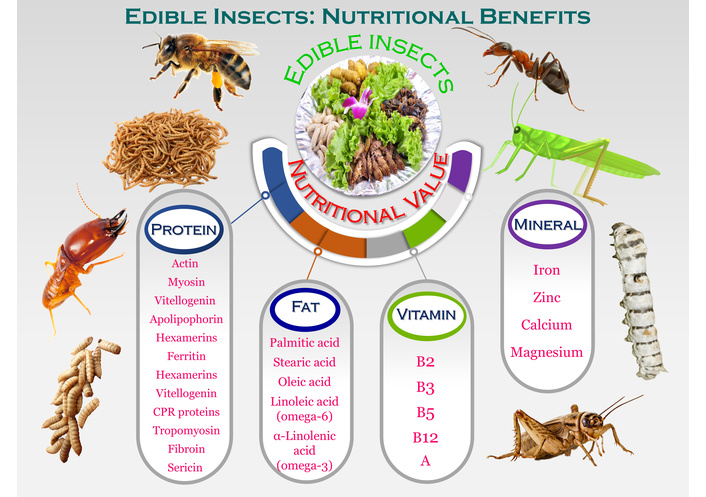
Insects are known as a powerhouse of nutrients because they contain minerals like iron, zinc, calcium, and magnesium. These small creatures, from crickets to silkworms, make a great addition to any diet, especially in particular areas where traditional protein sources are less. They are also an effective solution in regions that are fighting malnutrition [8]. Bioinformatics plays crucial role in removing obstacles in large scale insect farming by optimizing nutritional content and production efficiency through genomic and metabolic analyses.
Insect farming is a game-changer for the environment. Insects turn feed into biomass much more efficiently and need much less land, water, and feed than cows, poultry, or pigs [14, 15]. For example, crickets require six times less feed than cattle to produce the same amount of protein (FCR i.e. feed conversion ratio per kg of live weight gain). They also emit a fraction of the greenhouse gases, far less methane and nitrous oxide than ruminants, making them a climate-smart alternative [14, 16]. Insects produce valuable proteins from organic waste like food scraps and agricultural byproducts [10, 17]. This promotes environmental sustainability and reduces waste that is aligned with circular economy principles, which is not matched in the ways of traditional farming [15]. Insect farming has great potential from an economic standpoint, especially for small scale farmers in developing nations, having low cost for startup and high efficiency. It is a great source of livelihood, which increases the food security [10, 18].
By combining genomics, proteomics, metabolomics, and computational modeling, bioinformatics has fundamentally transformed nutrient extraction and valorization from edible insects [19, 20]. This multidisciplinary framework promotes the sustainable production of insect-derived nutrients while improving nutritional quality and resource efficiency [21]. To develop more adaptable, accurate, and environmentally friendly extraction workflows, artificial intelligence (AI) and machine learning approaches are increasingly being applied to optimize processing parameters and predict extraction outcomes [22, 23]. Due to improvements and new inventions in omics technologies and bioinformatics tools, edible insects are expected to play a substantially larger role in global food systems in the near future [5, 24]. In edible insect research, genomics and pangenomics provide critical insights into genetic diversity, growth potential, stress tolerance, and disease resistance, supporting selective breeding and strain improvement [25]. Transcriptomics captures gene expression changes under different diets, rearing conditions, and developmental stages, thereby linking genotype to phenotype [26]. Proteomics enables the identification of functional proteins involved in digestion, immunity, and nutrient biosynthesis, while metabolomics profiles bioactive compounds, amino acids, fatty acids, and micronutrients that directly determine nutritional value [27]. When integrated, these multi-omics layers allow the identification of regulatory networks governing nutrient conversion efficiency and biomass accumulation [19]. Multi-omics data integration supports practical applications such as precision feed formulation, selective breeding, and optimization of mass rearing conditions for commercially important species such as H. illucens and T. molitor [20, 26]. Advanced computational frameworks, including network analysis, machine learning, and systems biology modeling, are increasingly used to integrate heterogeneous datasets and accurately predict phenotypic outcomes, thereby enhancing the efficiency, safety, and sustainability of edible insect production systems [22, 28].
This review systematically evaluates current nutrient extraction methodologies for edible insects and highlights the contribution of bioinformatics approaches in unlocking their potential as sustainable sources of nutrition, addressing issues like consumer acceptance, standardized processing, and scalable production [29, 30].
Insect farming has positive effect on environment because they need much less land, water, and feed than cattle, poultry, or pigs. They are also converting feed into biomass with high efficiency [14, 15]. For example, crickets need six times less feed than cattle to produce the same amount of protein. They are climate smart alternative creatures that produce fraction of the greenhouse gases, having very low amounts of methane and nitrous oxide [14, 16]. Insect diversity is vast, so it is a suitable option for food and feed. Plant based and lab grown proteins together reduce the dependence on traditional livestock and solve the problems of malnutrition, resource scarcity, and environmental degradation in the future [30]. Insects provide high content of protein, fat, vitamins like A, B12, B2, B3, B5, and minerals compared to traditional sources [5, 11, 31] (Table 1).
Presence of vitamin content of crickets, mealworms, and beef in mg per 100 g dry weight, highlighting insects’ superior nutrient density.
The nutritional value of insects varies species to species, we cannot deny their worth in nutrient profiling, which is essential for human growth [4, 32]. For example, tryptophan and lysine are abundant in proteins obtained from cricket, which is about 60–70% of their dry weight. Tryptophan and Lysine are two essential amino acids that must be obtained from the diet. Both are essential for protein synthesis, lysine is needed for growth, and tryptophan is a neurotransmitter that is a precursor to serotonin, which affects mood, appetite, and sleep [5]. Locusts and silkworms both provide similar proteins [8, 17]. Black soldier fly larvae (BSFL) provide 30–50% fat, balancing both saturated and unsaturated fats, while mealworms provide 30–40% fat, which is higher in unsaturated fats like “omega-3 and omega-6” [18, 33]. Vitamins are also present in insects. Mealworms and Crickets are rich in folate, riboflavin, and B12, which support metabolism and energy [3, 34]. Grasshoppers and ants provide minerals like iron, zinc, and calcium, which improve bone health and immunity in humans [4, 35, 36].
The deal is sealed by farming efficiency. BSFL are sustainability stars due to their power of turning organic waste into protein, while Crickets thrive in controlled environments showing the adaptability of insects [37, 38]. Insects are biologically suitable as both human food and animal feed because many species efficiently convert low value organic inputs into high-protein biomass with environmental advantages compared with conventional livestock. For example, BSFL and mealworms have high protein contents and can be reared on organic by products while reducing environmental impacts relative to traditional feed sources, which makes them promising alternatives to fishmeal and soybean meal in animal diets [39, 40]. Controlled trials and reviews show that insect meals can replace substantial fractions of fishmeal or soy without reducing growth performance in aquaculture and other livestock systems, supporting their utility in animal feed [39–41]. Although insects also provide high-quality protein, essential amino acids, fats, and micronutrients for humans and emit substantially less greenhouse gas per kilogram of protein than conventional livestock, adoption in human diets faces significant barriers, including cultural resistance to entomophagy in many regions, potential allergy, food safety concerns, and costly compliance with regulatory requirements for novel foods [41, 42]. By contrast, feed sectors have been more receptive: regulatory frameworks such as in the European Union (EU) have authorized specific insect species for use in aquaculture, poultry, and pig feeds, enabling larger scale deployment and more favorable economics for feed applications than for direct human consumption at present [43, 44]. This diversity of edible insects is explained in detail in Tables 1, 2, 3, and 4, along with their nutritional value, sustainability, and farming efficiency.
Variability across insect species in terms of protein, lipid, and vitamin content.
| S.NO. | Insect species | Protein content | Lipid content | Vitamins |
|---|---|---|---|---|
| 1 | Crickets (A. domesticus) | 60–70% (dry weight) | 10–20% | High in B12, B2, B3, pantothenic acid, niacin |
| 2 | Mealworms (T. molitor) | 50–55% | 30–40% | B12, B2, pantothenic acid, some vitamin A (carotenoids) |
| 3 | Black soldier fly larvae (H. illucens) | 40–45% | 30–50% | Lower in vitamin B; rich in calcium and phosphorus |
| 4 | Grasshoppers (Caelifera species) | 50–70% | 10–20% | B12, B2, folate, carotenoids |
| 5 | Termites (AVT species) | 30–50% | 25–35% | B1, B2, B12, folate |
| 6 | Honeybees (Apis mellifera) | 40–50% | 25–35% | B1, B2, B12, pantothenic acid |
| 7 | Ants (Formicidae species) | 35–50% | 10–20% | B1, B2, B12, niacin |
| 8 | Silkworms (Bombyx mori) | 40–50% | 10–20% | B1, B2, B3, vitamin E |
Variability across insect species in terms of mineral availability.
| S.NO. | Insect species | Iron | Zinc | Calcium | Magnesium |
|---|---|---|---|---|---|
| 1 | Crickets (A. domesticus) | Present | Present | Present | Absent |
| 2 | Mealworms (T. molitor) | Present | Present | Absent | Present |
| 3 | Black soldier fly larvae (H. illucens) | Present | Present | Present | Absent |
| 4 | Grasshoppers (Caelifera species) | Present | Present | Present | Absent |
| 5 | Termites (AVT species) | Present | Present | Absent | Present |
| 6 | Honeybees (Apis mellifera) | Present | Absent | Present | Present |
| 7 | Ants (Formicidae species) | Present | Present | Present | Absent |
| 8 | Silkworms (Bombyx mori) | Present | Absent | Present | Present |
Variability across insect species in terms of sustainability & farming efficiency.
| S.NO. | Insect species | Sustainability & farming efficiency |
|---|---|---|
| 1 | Crickets (A. domesticus) | Efficient to farm; requires controlled environment for temperature and humidity. Popular in human food applications. |
| 2 | Mealworms (T. molitor) | Highly efficient in converting feed into biomass; low water requirements; suitable for both food and feed production. |
| 3 | Black soldier fly larvae (H. illucens) | Excellent for waste valorization, highly efficient in converting organic waste to protein and fat; sustainable feed source. |
| 4 | Grasshoppers (Caelifera species) | Can thrive in both wild and controlled environments; less commonly farmed for large scale production due to farming challenges. |
| 5 | Termites (AVT species) | Efficient in breaking down cellulose; potential for low-input farming systems; may be challenging to farm at a large scale. |
| 6 | Honeybees (Apis mellifera) | Can be farmed for both honey and larvae; requires careful management; small scale production due to beekeeping challenges. |
| 7 | Ants (Formicidae species) | Can be farmed in controlled environments; some species can be difficult to harvest in large quantities. |
| 8 | Silkworms (Bombyx mori) | Commonly farmed for silk production; larvae are nutritious; challenges include high feed costs and water consumption. |
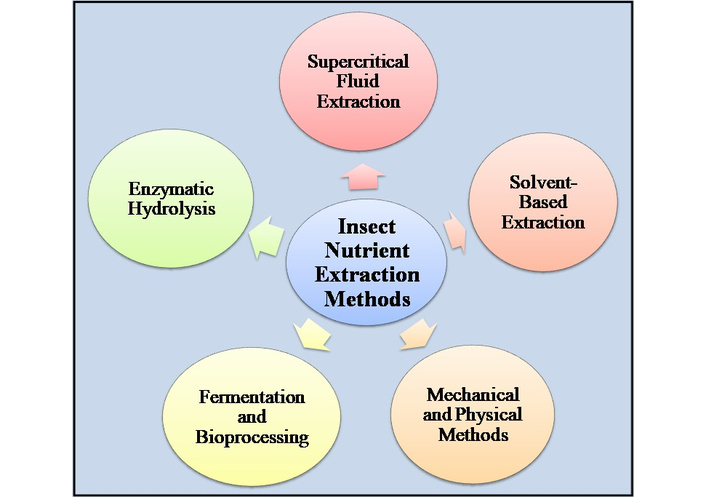
To utilize the full potential of edible insects, researchers need to discover fresh and innovative extraction methods. These new methods for the extraction of nutrients from insects are formed creatively or scientifically and are applicable to various insect species, as shown in Figure 1. In order to ensure quality and scalability for food, we must focus on the techniques that concentrate on isolating proteins, lipids, vitamins, and minerals from insect biomass [45].
The biomass of edible insects is completely mutilated through grinding, pressing, and sieving steps in the mechanical extraction method, instead of using chemicals. This method is helpful in maintaining the concept of environmental sustainability [46]. By using more advanced techniques like ultrasounds and microwave assisted extraction, this method is further enhanced, which help in reducing processing time and energy consumption with sufficient increase in final output [47]. For effective extraction of lipids and oils from insect’s solvent-based extraction method is used, in this method, chemicals like ethanol and hexane are used during the extraction process [38]. Use of supercritical fluid extraction (SFE) method is the greener move in this process because it uses carbon dioxide (CO2) in extraction, helping in reducing waste as well as preserving nutrient quality for a longer time at higher pressure and temperature [34].
In enzymatic hydrolysis, proteases are used to convert proteins and lipases are used to convert fats into biologically active forms. This enzymatic hydrolysis nutrient extraction method provides high efficiency with the preservation of nutritional value of nutrients for a longer time during processing and storage [48]. Another method for the extraction of nutrients from insects, termed biological, dynamic, and ecosystem-like, is fermentation, which uses multiple microbes to alter insect biomass into digestible compounds. In some rare cases, this whole process results in the formation of new bioactive compounds like peptides [35]. The above-mentioned extraction methods have their own advantages and limitations, while there are some challenges and issues for their widespread utilization for nutrient extraction, as shown in Table 5. These are mainly expansive purification, to maintain long time nutrient functionality, optimization of conditions, pathogen reduction, and pilot scale up of heat-labile/stable nutrients, etc. In order to address these challenges and issues, there is a need of continue search and novel innovation in the field of nutrition extraction techniques from insects [46].
Different extraction methods with their advantages and limitations for extraction of nutrients from insects.
| Extraction method | Target insects (examples) | Extraction yield | Protein denaturation | Energy consumption | Advantages | Limitations | References |
|---|---|---|---|---|---|---|---|
| Supercritical fluid extraction (SFE) | H. illucens, T. molitor | Moderate (mainly lipids) | Low | High | Solvent-free, selective extraction preserves protein functionality | High capital and operational costs, limited protein recovery | [102] |
| Solvent-based extraction | A. domesticus, T. molitor | High | Moderate to high | Moderate | High protein yield, established technology | Solvent residues, environmental concerns, protein denaturation | [103] |
| Mechanical & physical methods | H. illucens, grasshoppers | Low to moderate | Low | Low | Simple, cost-effective, scalable | Lower extraction efficiency, limited fractionation | [22, 104] |
| Enzymatic hydrolysis | A. domesticus, H. illucens | High | Low | Moderate | Improved digestibility, bioactive peptide production | Enzyme cost, process optimization required | [27] |
| Fermentation & bioprocessing | T. molitor, crickets | Moderate | Low | Low to moderate | Enhanced protein functionality, flavor, and safety | Longer processing time, strain specificity | [105] |
| Comparative reviews (multiple methods) | Multiple species | Variable | Method dependent | Method dependent | Technology benchmarking, industrial relevance | Lack of standardized KPIs across studies | [106] |
Globally, approximately 2 billion people consume edible insects as part of their diet, as food [31]. When the data were studied continent-wise, insect consumption is reported among nearly 90% of the population in Asia, 95% in Africa, 20% in South America, 5–8% in North America, 30–35% in Australia, and 10–15% in Europe, as shown in Figure 2 [49]. Overall, this corresponds to roughly 25–30% of the world population incorporating insects into their diet.
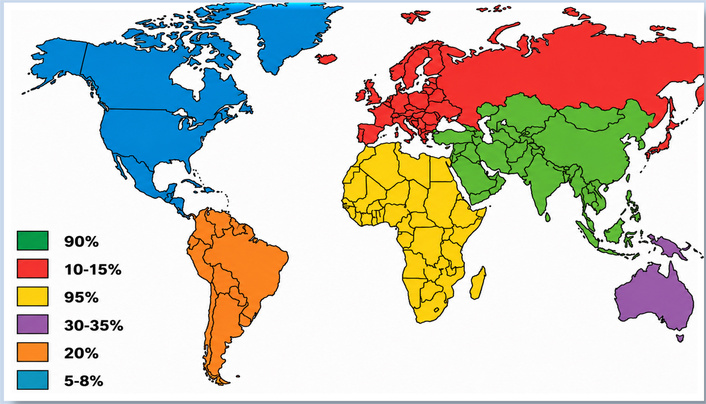
Continent-wise percentage of insect consumption across the world as a regular diet or food source. Global distribution pattern represented by different color-coded regions. Blue: North America (5–8%); Orange: South America (20%); Yellow: Africa (95%); Green: Asia (90%); Red: Europe and Russia (10–15%); Purple: Australia (30–35%).
On the other hand, with respect to species diversity, more than 2,200 insect species have been documented as edible worldwide. The number and type of species consumed vary substantially across different regions of the world [49, 50].
Edible insects contain high amounts of proteins and healthy fats, which makes them a popular and sustainable food option [50, 51]. They contain different types of proteins such as structural proteins (actin and myosin), which help in the formation of muscles and tissues [4], storage proteins (hexamerins, ferritin, and vitellogenin) help in growth of the body and are highly nutritious [52], enzymatic proteins [proteases, amylases, lipases, glutathione S-transferase (GST) and superoxide dismutase (SOD)] which help in digestion, metabolism and antioxidant protection [53] and cuticular proteins (which are associated chitin in the exoskeleton and harder for humans to digest) [54]. Different insects offer different proteins, e.g., crickets provide muscle proteins, hexamerins, ferritin, and antioxidant enzymes, mealworms (T. molitor) provide storage proteins, vitellogenin, cuticular proteins, and digestive enzymes, while silkworm pupae provide silk proteins (fibroin and sericin) along with muscle proteins [4]. Along with protein, insects also contain a mixture of fats, including saturated fats (like palmitic and stearic acids), monounsaturated fats (such as oleic acid), and polyunsaturated fats like omega-6 linoleic acid and omega-3 α-linolenic acid [31, 53]. This composition of proteins and fats of edible insects makes them an environmentally friendly nutritional source of food, as shown in Figure 3.
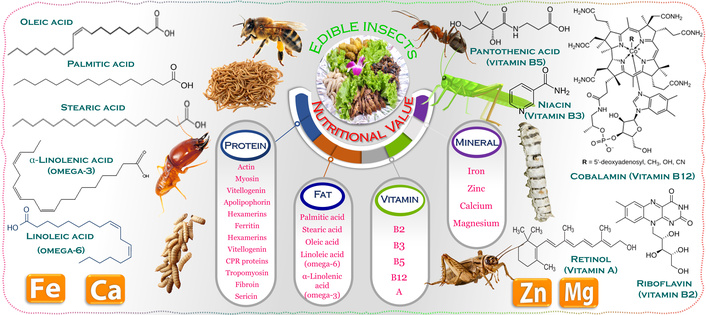
Nutrient profile of edible insects showing key proteins, lipids, vitamins, and minerals with their chemical structures.
Bioinformatics has emerged as a cornerstone of modern biotechnology, answering questions like how edible insects are studied, cultivated, and processed for human consumption. The combination of computational biology with insect farming is a major scientific advancement for fulfill of demand of environmental sustainability and nutrient enriched food at world level. Researchers are now capable of decoding the molecular mechanisms that help in nutrient synthesis and storage in insects by genomic sequencing, proteomic mapping, and metabolomic profiling. By using these steps, researchers can enhance the efficiency, extraction of nutrients like protein, lipid, vitamins, or other available micronutrients, and environmental sustainability of food production through the formation of the best design for nutrient extraction from insects [28, 55].
Bioinformatics makes it possible to investigate the genetic structures that regulate the nutritional potential of edible insects at the genomic level. Researchers can now able to identify and compare genes related to growth regulation or stress resistance across a variety of insect species by platforms like the National Center for Biotechnology Information (NCBI), which contains the expansion of whole genomic data of species. These genes are directly or indirectly associated with the process of biosynthesis of key nutrients like essential amino acids, vitamins, and polyunsaturated fatty acids [55, 56].
Due to their ability to produce higher amounts of protein and an effective rate of feed conversion, species like T. molitor (yellow mealworm) and A. domesticus (cricket) have become model organisms for studying nutrient production [28]. With the help of computational alignment tools, advanced sequencing technologies, and comparative genomics, researchers are able to identify genomic variations across different species of insects that improve metabolic efficiency or nutrient yield. This information is crucial for the formation of selective breeding or genetic optimization programs, which increase the nutritional value and adaptability of insect populations. In order to predict diet, temperature, and rearing conditions that affect metabolic gene expression, this modern algorithm enables the simulation of gene-environment interactions [57].
Understanding the nutritional potential of edible insects requires deeper knowledge of proteomics (the large-scale study of proteins, including their structures, functions, modifications, and interactions). Researchers can characterize thousands of proteins present in insect tissues from their muscle to hard exoskeleton by using databases like UniProt and analytical tools such as STRING [58–60]. This makes it easy to understand the proteins to texture, flavor, digestibility, and nutritional properties in particular insect species. Identification of enzymes that catalyze biochemical transformations during nutrient extraction, such as proteases for protein hydrolysis or lipases for fat breakdown, is also supported by proteomics [61]. A major challenge in insect bioinformatics is the limited availability of high-quality reference genomes for many edible species. While genomes of well-studied insects like T. molitor and Bombyx mori are available and support reliable proteome annotation, most edible insects still lack complete and well-annotated genomes. This makes it difficult to accurately predict protein sequences, assign functions, and conduct reliable in silico digestion or bioactivity analyses, which in turn reduces confidence in computational extraction strategies. Insect genome sequencing has increased substantially overall, but many assemblies remain fragmented, poorly annotated, and broad genomic resources are biased toward pest or model organisms rather than food insects, which limits comprehensive omics studies and cross-species comparisons. These limitations are widely recognized as a bottleneck for applying omics approaches to lesser studied organisms such as edible insects [62, 63].
Designing a better enzyme for different protein compositions for each insect species is now possible due to advancement in computational proteomics, including machine learning based peptide prediction. This method ensures preservation of valuable peptides and bioactive compounds during these extraction processes, along with an increase in nutrient extraction efficiency. Protein folding, post-translational modifications and sub cellular localization (the process of identifying the location of a protein or other molecule within a cell’s various compartments, such as the nucleus, mitochondria or endoplasmic reticulum) all are understand by using technique like tandem mass spectrometry (which examines chemical samples using two or more stages of mass spectrometry with a fragmentation step in between) and bioinformatics databases [64, 65] all of which are essential for determining the good extraction and purification strategies [66].
By discovering biochemical networks that are crucial for nutrient synthesis, transformation, and storage, metabolomics enhanced genomics and proteomics. Researchers can map out the entire metabolic pathways of amino acid, lipid, and carbohydrate metabolism by combining metabolomics data with pathway databases such as KEGG [55, 67]. This method helps in identification of important metabolic bottlenecks and suggests interventions such as modifying pH, enzyme concentration, or temperature to enhance the quality of nutrient extraction and yield [68]. Metabolomics profiling helps in the identification of the compounds that produce flavor and aroma, both of which are critical for the acceptance of insect-based foods by consumers [69]. By understanding the pathways involved in lipid oxidation and amino acid degradation, scientists can eliminate undesirable flavors while preserving the important bioactive compounds. To save money, time, and resources by virtually testing the extraction protocols before they are implemented in the actual lab by incorporating metabolomics data with computer simulations [70].
Integrative multi-omics data analysis provides a systems-level framework for understanding and optimizing edible insect production [19]. By combining genomics, transcriptomics, proteomics, and metabolomics, this approach reveals the complex molecular interactions that govern growth performance, nutrient conversion efficiency, stress tolerance, and nutritional quality in edible insects [27]. Genomic and pangenomic analyses capture intraspecies genetic diversity and identify loci associated with disease resistance and adaptability under mass-rearing conditions, while transcriptomic data link environmental factors and dietary inputs to gene expression patterns [26]. Proteomic profiling elucidates functional proteins involved in digestion, immunity, metabolic regulation, and metabolomic analyses directly characterize bioactive compounds, amino acids, fatty acids, and micronutrients that determine the nutritional value of insect-derived products [27]. The integration of these heterogeneous datasets through systems biology models, network analysis, and machine learning enables the prediction of phenotypic outcomes and supports precision feed formulation, selective breeding, and optimization of rearing conditions [22]. Although challenges remain in data standardization, computational cost, and biological interpretation, integrative multi-omics approaches represent a powerful strategy for enhancing the safety, nutritional quality, and sustainability of edible insect-based food systems [20, 21].
Identification and optimization of enzymes that enable bioconversion is an important part of nutrient extraction by using bioinformatics. Numerous proteases, lipases, and chitinases are listed in databases like MEROPS. These enzymes are essential for converting insect tissues into components that can be extracted [65, 71]. Chitinases degrade the insect exoskeleton to increase protein accessibility, while proteases and lipases break down internal tissues to release peptides and fatty acids [61, 72]. Recently, AI-assisted enzyme discovery advancement using deep learning models to predict enzyme functionality from amino acid sequence data [73]. This speeds up the identification of good catalysts, reducing the need for extensive experimental screening. These enzymes driven approaches help in making good designs for sustainable, low-energy bioprocesses for nutrient extraction, which minimizes the chemical waste and environmental impact [72].
Modern bioinformatics, combined with computational chemistry, data science, and machine learning to enhance nutrient extraction workflows. Tools like AutoDock simulate the interactions between substrate and enzymes to predict binding affinities and reaction rates, for the machine learning framework tool like TensorFlow analyzes experimental datasets for predictions on the optimization of extraction conditions [73–75]. Parameters (such as pH, enzyme concentration, and temperature) can be optimized using predictive algorithms, which reduces the need for costly and time-consuming trials [32]. Recent studies have shown how these models can combine genomics, proteomics, and metabolomics to generate comprehensive data-driven optimization strategies for food development [53]. The convergence of big data analytics with bioinformatics provided the method of extraction that is unprecedented and scalable, to ensure that these methods of extraction can be scaled up to industrial levels with consistency in nutritional integrity [53].
A common nutrient extraction method driven by using bioinformatics may consist of several interconnected stages, as shown in Figure 4.
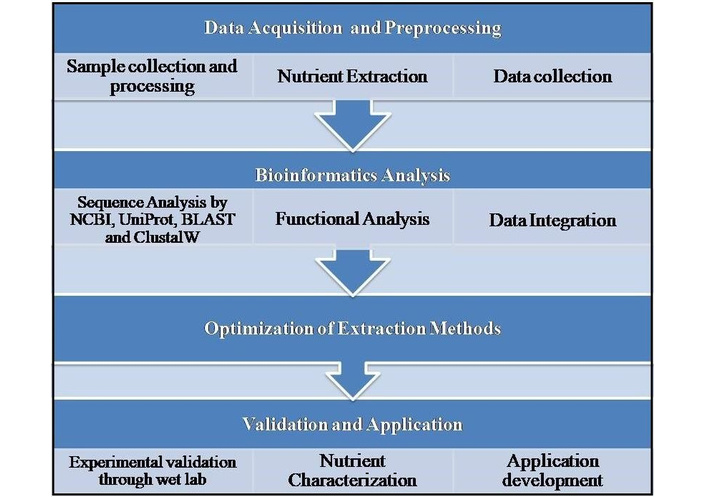
Schematic workflow representing the process for analyzing and predicting nutrient composition in insects using bioinformatics tools. NCBI: National Center for Biotechnology Information.
Retrieving the genomic and transcriptomic data of insect species from NCBI to find the nutrient biosynthesis genes [74].
Using KEGG to map metabolic pathways for lipids and amino acids in order to identify rate-limiting steps [55, 67].
Using the MEROPS and UniProt databases to screen for lipases, proteases, and chitinases [60, 71].
Tools like TensorFlow and AutoDock are used to simulate or optimize the extraction parameters and enzyme performance [73].
Validation step involves the cross checking of findings with UniProt, STRING also includes the checking of experimental data to ensure experimental validation approaches in edible insect nutrient extraction method [53, 61].
Due to improvements and new inventions in omics technologies and bioinformatic tools, edible insects are predicted to play a much larger or more important role in global food systems in the near future. Using molecular level data for practical production will not only improve the food quality but also help in addressing the important problems associated with sustainability and nutrition security. So, it’s not wrong to say that bioinformatics stands right at the forefront of this new nutrient extraction from insects, combining science, technology, and sustainable innovation for improvement.
Edible insects are being viewed as an alternative source of protein that is both sustainable and environmentally advantageous due to their high levels of nutrients. When it comes to the entry of edible insects into Western markets, there are many regulations and safety assessments that must be followed. The food safety and legal regulations associated with edible insects are changing dramatically at this time, especially in the EU region, where edible insects must be treated as a new food and therefore go through structured authorization processes before they can be marketed [5, 76, 77].
Insects are an excellent source of nutrition, containing many things like complete proteins, healthy fats, vitamins, and minerals [5, 76]. While they are a new food source for many people, insects pose some risks as well that need to be managed. The biggest risk is an allergy. Insects are taxonomically related to crustaceans, such as shrimp and lobster, as well as house dust mites. Two examples of these proteins are tropomyosin and arginine kinase, causing allergic reactions resulting in anaphylaxis for individuals who are sensitized. In addition, there has been research showing that there is significant cross-reactivity between the proteins present in shellfish and those found in insects, meaning that if a person has a shellfish allergy also have an allergy to foods made with insects [77, 78]. As a result, regulatory agencies like the European Food Safety Authority (EFSA) require that labels provide adequate information about possible allergic hypersensitivities and should be explicit for consumers who have existing shellfish or dust-mite allergies, but may want to try eating insects [77]. Another safety issue stems from microbiological contamination. Insects can carry pathogenic bacteria, including Salmonella and Listeria, as well as viruses or parasites, and therefore are generally safe to eat if manufactured in a safe environment. However, there is still potential for contamination when hygiene practices during the farming period are violated. Consequently, in order to minimize potential risks associated with microbiological contamination, the sanitation levels upon which insects are raised should be properly managed, harvesting should be done in clean environments, and controlled farming environments should be used. Additionally, processing methods such as boiling, roasting, or drying are effective in reducing microbial loads and ensuring product safety [78, 79].
Another type of potential hazard to food safety is chemical hazards. Insects can concentrate toxic substances in their bodies, including heavy metals like cadmium, arsenic, and also include residues from pesticide application on the feed they eat. Because feed is the main source of chemical contamination, it is important to have strict regulations on feed products and trace all feed products back to the original source in order to protect food safety. Some insect species also have naturally occurring antinutritional factors (e.g., tannins, phytates, and saponins) that can prevent nutrient absorption. However, these compounds can usually be greatly reduced through processing methods, resulting in negligible effects on nutrition [5, 76, 80].
Insect meals and other insect-based foods are subject to different regulations throughout the world. Currently, the EU has the most developed regulations relating to edible insect products. As of May 15, 1997, the EU classifies insect products as ‘novel foods’ because they were not significantly consumed within the EU. Therefore, products made from or that contain insects must be evaluated for safety by the EFSA before being marketed [77, 81]. The European Commission evaluates the results of this scientific assessment and approves the sale of individual insect products worldwide. The approval of products made from insects is by both species of the insect and the type of processed product [77]. Currently, there are four approved species of edible insects in the EU, including T. molitor, Locusta migratoria, A. domesticus, and Alphitobius diaperinus. Examples of the various forms that have been approved include frozen, dried, pastes, and powders. Recent regulatory approvals include frozen and dried formulations from whole T. molitor larvae, which were authorized as novel foods in the EU in 2021 [77]. The continued trend towards allowing specific forms of processed derivatives will help to increase the number of approved products. The transitional provision allowed for products that were previously marketed on or before 1 January 2018 to remain legally available until there was successful completion of a pre-market safety assessment for the product and an application for pre-market approval was submitted no later than 1 January 2019 [77, 81].
Unlike many countries that have specific insect regulation or approval processes, the USA does not have an insect regulation or approval framework. The U.S. Food and Drug Administration (FDA) interprets insects as food under the Federal Food, Drug, and Cosmetic Act (FFDCA), when they are intentionally produced and labeled for human consumption. Food manufacturers must comply with good manufacturing practices (GMPs) to ensure that foods are produced in sanitary conditions. Insects produced in controlled environments should be considered “wholesome food” under the law [76, 81]. Certain types of insects will likely receive generally recognized as safe (GRAS) status, but the majority of companies involved with the production of these products will continue to comply with general food sanitation and hygiene regulations. Regulatory approaches for insect products vary widely from country to country. The EU uses a centralized application process, while Thailand has a national standard for inspecting and certifying all insect products. In contrast to both Europe and Thailand, Singapore has recently allowed several species of insects to be sold commercially, which indicates an overall increase in acceptance of insects as a safe form of food internationally [76–78].
In the future, edible insects will be an essential source of food, feed, and industrial applications, as shown in Figure 5. A. domesticus (crickets) and T. molitor (mealworms) offer high protein alternatives for human diets, while H. illucens (BSFL) offers sustainable animal feed, lowering dependency on soy or fishmeal [82–84]. Anti-inflammatory and antimicrobial properties are provided by nutraceuticals made from insects driven chitin and peptides [85]. By converting waste into protein, BSFL promotes circular economies and lowers methane emissions from landfills [86]. Chitin produced from insects is used to make bioplastics, which reduces plastic packaging waste by up to 30% [87].
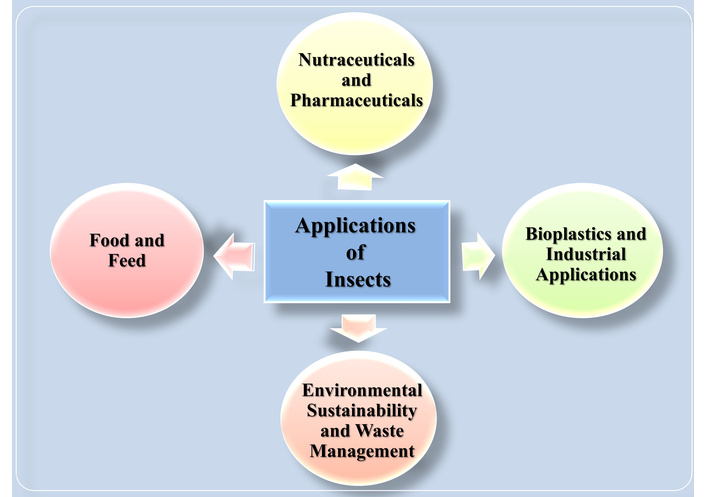
Applications of insects represent their uses in food, health, industry, and sustainability.
There are some technical, cultural, and regulatory challenges in the scaling of the insect production process [18]. According to Sun-Waterhouse et al. (2016) [48] and Dossey et al. (2016) [74], extraction techniques like enzymatic hydrolysis are expensive but there is need of automation and environmentally friendly solutions to become commercially viable. In 1963 Food and Agriculture Organization (FAO) and World Health Organization (WHO) jointly created standardized processes for food production, which are absent in the extraction procedure of nutrients from insects, which leads to inconsistent quality [18, 31]. Cultural barriers and rituals kept consumers’ acceptance very low, but some recent sensory studies and well-known products like protein bars made from crickets have shown some promise in their acceptance at world level [33, 88, 89]. As for a demonstration of bioinformatics-driven extraction, we consider a case study on T. molitor [90]. Using genomic data from NCBI [74], proteases were identified [91] and optimized using TensorFlow [92], resulting in increased protein extraction efficiency over traditional methods [48, 93]. High computational cost, technical hands-on requirement, and regulatory gaps in this whole extraction process limit the scalability [33]. For ensuring food safety and market integration of insects extracted products, the regulatory framework prepared from FAO guidelines [31] is necessary for their global acceptance [18]. Conducting surveys among consumers (e.g., a survey conducted in Western markets shows that 60% consumers are open to insect-based products in the market), sensory the market needs and discovering novel insect products (e.g., insect-based snacks, protein bars, etc.) are further necessary for their acceptance [88, 89]. Table 6 provides a comparison between currently available bioinformatics applications and those that are yet to be developed or are still being developed. This table illustrates how bioinformatics has progressed from traditional approaches (e.g., those based around the analysis of specific data types such as genomics or proteomics using either statistical or alignment-based techniques) to more integrated and advanced approaches (e.g., integration across multiple levels of omics data, the use of AI and real-time processing of data) as well as differences in the computational infrastructure upon which these applications run, the clinical applications of the developed applications and the obstacles or barriers associated with using them. As a result of this comparison, it is easier for the reader to appreciate how the field of bioinformatics is evolving and what direction it is headed towards in the future.
The evolution of bioinformatics: comparing current applications and future perspectives.
| S.NO. | Data type | Current bioinformatics applications | Future approaches |
|---|---|---|---|
| 1 | Data types | Genomics, transcriptomics, proteomics datasets | Multi-omics integration, spatial omics, single-cell omics |
| 2 | Analytical methods | Sequence alignment, statistical modeling, pathway analysis | Artificial intelligence (AI), machine learning (ML), deep learning, predictive modeling |
| 3 | Computational infrastructure | Local servers, Standalone tools | Cloud computing, high-performance computing, automated AI-driven pipelines |
| 4 | Clinical/research application | Biomarker discovery, gene identification, pathway mapping | Precision medicine, real-time diagnostics, personalized therapeutics |
| 5 | Data processing | Batch-based analysis | Real-time data analysis and continuous integration |
| 6 | Major challenges | Data heterogeneity, scalability, reproducibility | Explainable AI, ethical concerns, data privacy and security |
Efficiency and nutrient value of nutrients could further increase by advancement in techniques like genetic engineering, automation, and green technology (e.g., CRISPR-modified H. illucens). Experimental trials shown 10% increase in protein content of BSFL due to CRISPR (a gene-editing technology that allows scientists to precisely modify DNA by using a system based on naturally occurring genome editing systems in bacteria). Industry partnership can standardize the whole process and their waste to protein models can enhance the environmental sustainability [74, 94, 95]. Consumers focused strategies like their interests, sensory research, and innovative products like the introduction of insect formed pasta are essential for market growth in other regions of the world where these insect-based products are not relevant [33, 88, 89].
Edible insects processed using bioinformatics represent a nutritious and sustainable alternative to traditional livestock while helping to address global food security challenges. Their low environmental footprint, together with high protein (30–70%) and micronutrient content, makes them well suited to sustainable food systems. Advances in genomic and metabolomic analyses have enabled bioinformatics approaches to enhance nutritional quality and improve farming efficiency. However, challenges such as consumer acceptance and scalability still remain. This review outlines a roadmap for integrating edible insects into global food systems through bioinformatics, supporting the development of a resilient and environmentally friendly future. Despite their considerable potential, several limitations must still be overcome. Large scale adoption is constrained by high computational costs, a lack of regulatory standardization, ethical concerns surrounding genome editing, and low consumer acceptance. Future research should focus on pangenomic mapping to capture intraspecies genetic diversity and to ensure genetic stability, robustness, and disease resistance in mass-rearing systems. In parallel, the development of AI-driven bioreactors, including digital twin frameworks, will be crucial for real-time monitoring, automation, and accurate prediction of nutritional outputs. Furthermore, ethical gene-drive modeling should be advanced to rigorously evaluate the ecological risks and long-term environmental impacts of CRISPR-modified species, such as H. illucens. Addressing these challenges will require scalable bioinformatics pipelines, internationally harmonized regulatory frameworks, and long-term assessments of environmental impacts. Collectively, these efforts are essential for establishing edible insects as a safe, efficient, and resilient component of future global food systems.
AI: artificial intelligence
BSFL: black soldier fly larvae
EFSA: European Food Safety Authority
EU: European Union
FAO: Food and Agriculture Organization
NCBI: National Center for Biotechnology Information
SFE: supercritical fluid extraction
WHO: World Health Organization
The authors acknowledge the Career Point University, Tikker-Kharwarian, Hamirpur, Himachal Pradesh for providing the requisite platform to complete this review.
NP: Resources, Software, Writing—original draft, Writing—review & editing. S Kapil: Conceptualization, Writing—original draft, Writing—review & editing, Supervision. A Sharma: Conceptualization, Resources, Software, Supervision. VS: Resources, Software, Writing—review & editing. PB: Resources, Software, Supervision. A Saini: Resources, Software. S Kumari: Resources, Software, Supervision. All authors read and approved the submitted version.
The authors declare that they have no known competing financial interests or personal relationships that could have appeared to influence the work reported in this paper.
Not applicable.
Not applicable.
Not applicable.
Not applicable.
Not applicable.
© The Author(s) 2026.
Open Exploration maintains a neutral stance on jurisdictional claims in published institutional affiliations and maps. All opinions expressed in this article are the personal views of the author(s) and do not represent the stance of the editorial team or the publisher.
Copyright: © The Author(s) 2026. This is an Open Access article licensed under a Creative Commons Attribution 4.0 International License (https://creativecommons.org/licenses/by/4.0/), which permits unrestricted use, sharing, adaptation, distribution and reproduction in any medium or format, for any purpose, even commercially, as long as you give appropriate credit to the original author(s) and the source, provide a link to the Creative Commons license, and indicate if changes were made.