 Review


Affiliation:
1Laboratory of Applied Physiology for Health, Performance, and Physical Education (LAPHPE), Higher Institutes of Education of CENSA (ISECENSA), Campos dos Goytacazes RJ 28035-310, Brazil
ORCID: https://orcid.org/0009-0006-9673-6881

 ,
Affiliation:
2Laboratory of Research and Innovation in Sport and Nutrition Sciences (LAPICEN), Federal University of Rio de Janeiro - Macaé Campus (UFRJ-Macaé), Macaé RJ 27930-560, Brazil
ORCID: https://orcid.org/0000-0002-5925-3497
,
Affiliation:
1Laboratory of Applied Physiology for Health, Performance, and Physical Education (LAPHPE), Higher Institutes of Education of CENSA (ISECENSA), Campos dos Goytacazes RJ 28035-310, Brazil
2Laboratory of Research and Innovation in Sport and Nutrition Sciences (LAPICEN), Federal University of Rio de Janeiro - Macaé Campus (UFRJ-Macaé), Macaé RJ 27930-560, Brazil
3Municipal Department of Sports (SEMESP), Municipal Government of Macaé, Macaé RJ 27913-080, Brazil
4Postdoctoral Program in Bioactive Products and Biosciences (PPGProdBio), Federal University of Rio de Janeiro - Macaé Campus (UFRJ-Macaé), Macaé, RJ 27930-560, Brazil
Email: andersonmorales@isecensa.edu.br
ORCID: https://orcid.org/0000-0002-9634-6043

Explor Cardiol. 2026;4:1012127 DOI: https://doi.org/10.37349/ec.2026.1012127
Received: May 28, 2026 Accepted: August 21, 2026 Published: October 26, 2026
Academic Editor: Eugenio Picano, Italian National Research Council, Italy
Modern bodybuilding and aesthetic physique sports have become increasingly associated with cardiovascular morbidity and sudden cardiac death. Although anabolic-androgenic steroids are frequently implicated in bodybuilding-associated cardiotoxicity, contemporary physique-enhancement practices commonly involve complex polypharmacy regimens including growth hormone, insulin, stimulants, thyroid hormones, and diuretics, often combined with extreme dehydration and electrolyte manipulation during contest preparation. This narrative review summarizes the current evidence regarding cardiovascular remodeling, cardiotoxicity, and sudden cardiac death in competitive bodybuilders. Chronic exposure to performance-enhancing substances may contribute to pathological left ventricular hypertrophy, myocardial fibrosis, endothelial dysfunction, thrombogenesis, dyslipidemia, autonomic imbalance, and electrical remodeling. In addition, acute stressors during “peak week,” including dehydration, stimulant use, and electrolyte disturbances, may trigger fatal arrhythmias or ischemic events in susceptible individuals. Autopsy and imaging studies have reported structural and functional cardiac abnormalities consistent with maladaptive remodeling, while recent epidemiological evidence suggests elevated mortality rates among professional bodybuilders. Overall, cardiovascular risk in modern bodybuilding appears to extend beyond isolated anabolic-androgenic steroid exposure and likely reflects a complex interaction between chronic myocardial injury, polypharmacy, metabolic instability, and extreme physiological manipulation practices. Increased cardiovascular awareness and individualized cardiovascular surveillance strategies may help identify high-risk individuals and potentially reduce cardiovascular morbidity and mortality in competitive bodybuilders.
In recent years, the growing number of premature deaths among bodybuilders and physique athletes has intensified public and scientific concern regarding the cardiovascular safety of modern physique enhancement practices. Modern bodybuilding and aesthetic physique sports have undergone substantial transformation over the past decades, evolving from predominantly performance-oriented disciplines into a highly competitive culture centered on extreme muscularity, low body fat levels, and aesthetic perfection. Parallel to this evolution, the widespread dissemination of physique-focused content through social media platforms has contributed to the normalization of increasingly aggressive body enhancement practices among both professional and recreational athletes. Unlike traditional athletic contexts in which performance-enhancing drug use may provide marginal competitive benefits, contemporary bodybuilding environments frequently involve chronic exposure to supraphysiological doses of anabolic-androgenic steroids (AAS), often combined with multiple pharmacological agents in complex polypharmacy regimens lacking established safety profiles or medical supervision [1–4].
Recent epidemiological evidence has intensified concerns regarding the cardiovascular safety of these practices. In the largest cohort study currently available, Vecchiato et al. [2] analyzed 20,286 male bodybuilding athletes over 190,211 athlete-years of follow-up and identified 121 deaths, including 46 sudden cardiac deaths (SCD), which accounted for approximately 38% of all deaths. Among currently competing athletes, the incidence of SCD was 32.83 cases per 100,000 athlete-years. Importantly, professional bodybuilders demonstrated a significantly greater risk of SCD than amateur competitors (HR 5.23; 95% CI 3.58–7.64), with autopsy findings frequently revealing cardiomegaly and ventricular hypertrophy. These findings have raised substantial concern within sports cardiology regarding the long-term cardiovascular consequences of modern physique-enhancement practices [2].
Although AAS abuse remains the primary focus of most discussions involving cardiovascular risk in bodybuilding, emerging evidence suggests that SCD in these athletes cannot be explained exclusively by androgen exposure. Contemporary bodybuilding practices frequently involve the concomitant use of growth hormone (GH), insulin, thyroid hormones, stimulants, clenbuterol, erythropoiesis-stimulating agents, and diuretics, particularly during pre-contest “peak week” phases characterized by severe dehydration and electrolyte manipulation [5–8]. This multifactorial pharmacological and physiological stress may create a unique cardiovascular risk profile involving pathological cardiac hypertrophy, myocardial fibrosis, endothelial dysfunction, thrombogenesis, arrhythmogenic remodeling, autonomic imbalance, and acute electrolyte disturbances [1, 5, 9].
Autopsy studies of bodybuilders who died prematurely have frequently reported cardiomegaly, left ventricular hypertrophy, myocardial fibrosis, intracardiac thrombosis, and structural abnormalities compatible with malignant ventricular arrhythmias [1, 10]. Furthermore, imaging studies and echocardiographic analyses in AAS users have revealed impaired ventricular strain, diastolic dysfunction, increased left ventricular mass, and evidence of adverse cardiac remodeling extending beyond physiological athletic adaptation [11–13]. However, important controversies remain unresolved, including the distinction between physiological and pathological hypertrophy, the reversibility of cardiac alterations following cessation of drug use, and the synergistic impact of polypharmacy and extreme body composition manipulation strategies.
In addition to chronic cardiovascular remodeling, acute contest-preparation strategies may further increase the risk of catastrophic cardiovascular events. Rapid dehydration, sodium restriction, diuretic abuse, and electrolyte shifts have been associated with severe hypokalemia, hyperkalemia, rhabdomyolysis, thrombosis, and fatal arrhythmias [6, 14]. The interaction between chronic myocardial vulnerability and acute metabolic stress may represent a critical mechanism underlying sudden collapse and SCD in competitive bodybuilders.
Importantly, the growing popularity of drug-tested (“natural”) bodybuilding provides an additional perspective for interpreting cardiovascular risk in physique sports. Although intensive resistance training and contest preparation may independently impose physiological stress, natural bodybuilding competitors are generally not exposed to the complex polypharmacy regimens commonly observed in enhanced athletes. This distinction supports the hypothesis that pharmacological exposure, particularly when combined with peak-week practices, may play a central role in the development of severe cardiovascular complications reported in bodybuilding populations.
Therefore, the purpose of this review is to provide a comprehensive overview of the current evidence regarding cardiovascular complications and SCD in modern bodybuilding and physique athletes. Particular emphasis is placed on the multifactorial mechanisms involved in cardiovascular remodeling, arrhythmogenesis, thrombosis, dehydration-related complications, and the emerging role of polypharmacy beyond AAS.
This narrative review was conducted to synthesize current evidence regarding cardiovascular complications, cardiotoxicity, and SCD associated with modern bodybuilding and physique enhancement practices. Literature searches were performed in PubMed, Scopus, Web of Science, and Google Scholar up to June 2026.
The search strategy included combinations of the following terms: “bodybuilding”, “bodybuilders”, “physique athletes”, “anabolic-androgenic steroids”, “performance-enhancing drugs”, “polypharmacy”, “growth hormone”, “insulin”, “thyroid hormones”, “clenbuterol”, “diuretics”, “peak week”, “dehydration”, “electrolyte disturbances”, “cardiac remodeling”, “left ventricular hypertrophy”, “myocardial fibrosis”, “cardiomyopathy”, “sudden cardiac death”, and “cardiovascular risk”. Original research articles, cohort studies, observational studies, autopsy and forensic investigations, case reports, systematic reviews, and narrative reviews were considered. Priority was given to studies directly involving bodybuilders, physique athletes, AAS users, or individuals exposed to performance-enhancing substances. Additional relevant references were identified through manual screening of reference lists from eligible publications. As a narrative review, this study did not follow a formal systematic review protocol, and no quantitative synthesis or formal risk-of-bias assessment was performed. The available evidence was interpreted qualitatively, with particular attention to study design, clinical relevance, and limitations related to confounding, exposure heterogeneity, and causal inference.
The contemporary bodybuilding environment differs substantially from earlier eras of physique competition, not only in the degree of muscular development achieved by athletes but also in the widespread normalization of pharmacological enhancement practices. Advances in social media exposure, digital fitness marketing, and the globalization of physique culture have contributed to the rapid dissemination of extreme aesthetic standards that increasingly influence both competitive and recreational athletes. Platforms such as Instagram, TikTok, and YouTube continuously reinforce hypermuscular body ideals, often portraying pharmacologically enhanced physiques as attainable, desirable, and socially rewarded [3, 4].
This cultural transformation has blurred the distinction between elite competitive bodybuilding and recreational physique enhancement. The use of AAS, once primarily associated with professional bodybuilding, has expanded into recreational gym populations seeking rapid improvements in muscularity, body composition, and social appearance. Importantly, many users are no longer motivated exclusively by competitive success, but rather by aesthetic expectations driven by social validation, online visibility, and body image pressures [3, 15].
Within this environment, polypharmacy has become increasingly common. Modern physique enhancement practices frequently involve the simultaneous administration of multiple compounds, including anabolic steroids, GH, insulin, thyroid hormones, stimulants, clenbuterol, selective androgen receptor modulators (SARMs), and diuretics [5, 16]. These combinations are often used empirically, without medical oversight, and are commonly based on anecdotal recommendations disseminated through online forums, coaches, and social media influencers rather than scientific evidence or clinical safety data.
The progressive escalation of pharmacological exposure appears closely linked to the evolution of aesthetic standards within competitive bodybuilding. Professional categories increasingly reward extreme muscularity combined with exceptionally low body fat levels and pronounced muscular definition, encouraging athletes to pursue progressively aggressive enhancement strategies [2]. This phenomenon may partially explain the markedly higher mortality risk observed among professional bodybuilders compared with amateur competitors [2].
Another important aspect of modern physique culture involves the “peak week” period preceding competitions. During this phase, athletes commonly adopt extreme dehydration protocols, sodium restriction, carbohydrate manipulation, stimulant use, and intensive diuretic administration to maximize muscular definition and vascular appearance [6–8]. Notably, many of these practices are normalized within bodybuilding culture despite the absence of scientific evidence supporting their cardiovascular safety. Although these strategies may transiently improve stage aesthetics, they also create substantial physiological stress, increasing the risk of electrolyte disturbances, hemoconcentration, arrhythmias, thrombosis, and acute cardiovascular collapse [6, 14].
Importantly, the cardiovascular consequences associated with modern bodybuilding likely result not from a single isolated agent but from the cumulative interaction between chronic pharmacological exposure, intense resistance training, repeated weight cycling, severe dietary restriction, dehydration practices, and acute metabolic stress. This multifactorial environment creates a unique cardiovascular phenotype distinct from traditional athletic cardiac remodeling and may contribute to the elevated incidence of SCD observed in competitive bodybuilders [1, 2, 9].
Consequently, understanding the cardiovascular risks associated with modern bodybuilding requires a broader perspective that extends beyond anabolic steroid exposure alone. The interaction between polypharmacy, aesthetic-driven behaviors, and extreme body composition manipulation represents a central feature of contemporary physique enhancement culture and may play a critical role in the development of cardiovascular pathology in this population.
Although AAS remain the cornerstone of pharmacological enhancement in bodybuilding, modern physique athletes are frequently exposed to complex polypharmacy regimens involving multiple classes of performance-enhancing substances administered simultaneously or cyclically. GH, insulin, thyroid hormones, stimulants, clenbuterol, SARMs, and diuretics are commonly incorporated into enhancement strategies aimed at promoting muscle hypertrophy, improving body composition, accelerating fat loss, and optimizing competitive appearance. Available evidence suggests that the use of these adjunctive compounds is particularly prevalent among advanced and competitive bodybuilders, although precise prevalence estimates remain difficult to establish because most available data derive from self-reported surveys and observational investigations. Consequently, while the literature supports the widespread use of polypharmacy within contemporary bodybuilding culture, accurate population-level estimates remain uncertain. This multidrug approach substantially complicates the cardiovascular risk profile of bodybuilders and may contribute to the elevated incidence of cardiovascular morbidity and SCD reported in this population [1, 2, 5, 15, 16].
Among AAS, testosterone esters, nandrolone, trenbolone, methandrostenolone (Dianabol), oxandrolone, and stanozolol are among the most commonly reported compounds in bodybuilding settings. These agents are used to promote muscle hypertrophy, increase training capacity, accelerate recovery, and facilitate favorable changes in body composition. Although reliable exposure data remain limited because of the illicit nature of use, reported bodybuilding regimens frequently involve supraphysiological doses substantially exceeding therapeutic recommendations, often ranging from 300 to more than 1,000 mg per week of combined androgen exposure. Importantly, cardiovascular risk appears to be influenced not only by the specific compound used but also by cumulative dose, duration of exposure, stacking practices, and concomitant use of other performance-enhancing substances. Recent prospective and meta-analytic evidence further suggests a dose-response relationship between AAS exposure and adverse cardiac remodeling, including increases in left ventricular mass and myocardial structural abnormalities [12].
SARMs have also emerged as substances of interest within bodybuilding and physique enhancement communities. Originally developed to promote anabolic effects with potentially reduced androgenic activity, these compounds are increasingly discussed in the context of performance-enhancing substance use. However, their use outside clinical research raises important concerns regarding safety, particularly because long-term human evidence remains limited. Therefore, SARMs should not be considered established safe alternatives to traditional AAS within contemporary physique enhancement practices [3].
The cardiovascular toxicity associated with AAS is well documented and includes pathological cardiac hypertrophy, myocardial fibrosis, endothelial dysfunction, dyslipidemia, hypertension, thrombogenesis, and electrical remodeling [1, 9, 11, 17]. However, contemporary bodybuilding practices increasingly involve the concomitant use of GH, insulin, insulin-like growth factor-1 (IGF-1), thyroid hormones, stimulants, clenbuterol, and diuretics, creating overlapping and potentially synergistic mechanisms of cardiovascular injury [5, 16].
Available evidence suggests that chronic exposure to GH/IGF-1 may contribute to adverse cardiovascular remodeling [18, 19]. Furthermore, concomitant use of GH and AAS has been proposed as a potential contributor to maladaptive cardiac remodeling, although the available evidence remains limited and is derived primarily from observational and mechanistic studies [18, 19].
Insulin misuse represents another increasingly prevalent practice in bodybuilding, particularly during anabolic or “bulking” phases. Although insulin is utilized to enhance nutrient partitioning and glycogen storage, inappropriate administration may result in severe hypoglycemia, metabolic instability, and altered myocardial substrate utilization [5]. Furthermore, insulin resistance induced by chronic AAS exposure may promote escalating insulin dosages, potentially exacerbating metabolic and cardiovascular stress [5].
Thyroid hormones such as triiodothyronine (T3) and thyroxine (T4) may be used during contest preparation to accelerate fat loss and increase metabolic rate. Their misuse, particularly when combined with other performance-enhancing substances, may contribute to additional cardiovascular stress. In this context, AAS exposure has been associated with myocardial ischemia and mechanisms of ischemia-reperfusion injury [20]. The simultaneous use of thyroid hormones with AAS, GH, stimulants, and dehydration strategies may create a particularly hazardous cardiovascular environment.
Stimulants including caffeine, ephedrine, amphetamine derivatives, and clenbuterol are widely utilized to promote thermogenesis, appetite suppression, and enhanced training performance [21]. Clenbuterol, a beta-2 adrenergic agonist frequently misused in physique sports, has been associated with tachycardia, hypertension, hypokalemia, myocardial ischemia, electrocardiographic abnormalities, and elevated cardiac biomarkers [22]. High-dose stimulant exposure may also potentiate arrhythmias in individuals with underlying myocardial fibrosis or hypertrophy induced by chronic AAS use.
Diuretic misuse during pre-contest preparation represents an additional and often underestimated cardiovascular risk factor. Loop diuretics, thiazides, and potassium-sparing agents are frequently employed to reduce subcutaneous water and maximize muscular definition [6, 7]. However, these practices may precipitate severe electrolyte disturbances, including hypokalemia and hyperkalemia, leading to malignant arrhythmias, rhabdomyolysis, acute kidney injury, and sudden cardiovascular collapse [6, 14].
The mechanisms underlying potassium disturbances during contest preparation are multifactorial. Hypokalemia may result from excessive use of loop or thiazide diuretics, gastrointestinal losses, inadequate dietary intake, and intracellular potassium shifts induced by insulin administration or carbohydrate-loading strategies. Conversely, hyperkalemia may occur following inappropriate potassium supplementation, misuse of potassium-sparing diuretics, acute kidney injury, rhabdomyolysis, or severe dehydration-associated metabolic disturbances. Both conditions can significantly alter cardiac electrical activity and increase susceptibility to potentially life-threatening ventricular arrhythmias [6, 14].
Importantly, the interaction between these pharmacological agents remains poorly understood. Most available evidence derives from case reports, autopsy studies, retrospective analyses, and observational investigations, while controlled human studies are scarce due to ethical and legal limitations [1, 10]. Consequently, the independent and synergistic contributions of specific compounds, dosages, and duration of exposure to cardiovascular morbidity remain incompletely characterized.
Nevertheless, current evidence supports the hypothesis that cardiovascular risk in modern bodybuilding cannot be attributed solely to anabolic steroid exposure. Rather, contemporary physique enhancement practices appear to involve a multifactorial network of pharmacological, metabolic, and physiological stressors that may contribute to cardiovascular dysfunction and increased susceptibility to adverse cardiovascular events [1, 5, 9]. This broader perspective may be essential for understanding the increasing reports of premature cardiovascular events and SCD among competitive bodybuilders. Table 1 summarizes common performance-enhancing substances and contest-preparation practices used in modern bodybuilding, highlighting their potential cardiovascular effects and associated clinical consequences.
Common performance-enhancing practices and potential cardiovascular consequences in modern bodybuilding.
| Practice/Substance | Main purpose | Potential cardiovascular effects | Clinical consequences | Evidence type |
|---|---|---|---|---|
| AAS | Muscle hypertrophy | LVH, fibrosis, dyslipidemia | Arrhythmias, cardiomyopathy, SCD | Observational studies, autopsy studies |
| GH/IGF-1 | Anabolism | Cardiac hypertrophy | Diastolic dysfunction, remodeling | Observational studies |
| Insulin | Nutrient partitioning | Metabolic instability | Hypoglycemia, electrolyte disturbances | Observational studies |
| T3/T4 | Fat loss | Tachycardia, sympathetic activation | Arrhythmias, ischemia | Case reports, observational studies |
| Clenbuterol | Thermogenesis | Tachycardia, ischemia | Arrhythmias, ACS | Case reports |
| Diuretics | Water reduction | Hypo/hyperkalemia | VT/VF, SCD | Case reports, observational studies |
| Peak week dehydration | Aesthetic preparation | Hemoconcentration | Thrombosis, SCD | Observational studies |
AAS: anabolic-androgenic steroids; GH: growth hormone; IGF-1: insulin-like growth factor-1; LVH: left ventricular hypertrophy; SCD: sudden cardiac deaths; VT: ventricular tachycardia; VF: ventricular fibrillation. Evidence types reflect the predominant sources available in the current literature and should not be interpreted as formal evidence grading.
Cardiovascular remodeling represents one of the most important pathological consequences associated with chronic exposure to performance-enhancing substances in bodybuilding. Unlike the physiological cardiac adaptations commonly observed in strength-trained athletes, evidence increasingly suggests that modern bodybuilding practices may contribute to maladaptive structural, functional, and electrical alterations capable of substantially increasing cardiovascular morbidity and mortality [1, 9, 11].
The cardiac remodeling observed in chronic AAS users appears to differ substantially from the physiological adaptations commonly described as the “athlete’s heart”. Different exercise modalities are associated with distinct patterns of physiological cardiac remodeling. Endurance training is typically characterized by eccentric remodeling, involving increased ventricular cavity dimensions, whereas resistance training more commonly promotes concentric adaptations characterized by increased wall thickness. In the context of chronic AAS exposure, however, concentric hypertrophy may become exaggerated and accompanied by myocardial fibrosis, impaired ventricular function, and pathological remodeling that extend beyond expected physiological athletic adaptation.
Unlike these physiological adaptations, AAS-associated remodeling may involve disproportionate left ventricular hypertrophy, impaired diastolic function, myocardial fibrosis, and adverse alterations in myocardial mechanics [12, 23, 24].
Recent cardiac magnetic resonance imaging (MRI) evidence [24] has provided additional insight into these structural abnormalities. In particular, late gadolinium enhancement (LGE), a marker of focal myocardial fibrosis, has been reported in some long-term AAS users, suggesting the presence of irreversible myocardial injury and a potential substrate for ventricular arrhythmias. These findings are consistent with autopsy and forensic studies reporting myocardial fibrosis among bodybuilders who experienced SCD [1, 10].
However, not all cardiovascular alterations appear to be permanent. Data from the HAARLEM study suggest that some AAS-associated cardiac abnormalities, including increased left ventricular mass and impaired systolic and diastolic function, may improve after discontinuation of AAS use. Nevertheless, the extent of reversibility remains uncertain, particularly in individuals with prolonged exposure, high cumulative doses, or established myocardial fibrosis [25].
One of the most frequently documented findings in bodybuilders using AAS is left ventricular hypertrophy (LVH). Although resistance training itself may promote physiological increases in cardiac wall thickness, AAS-associated hypertrophy appears qualitatively different from exercise-induced remodeling. Echocardiographic and cardiac imaging studies have reported increased left ventricular mass, impaired diastolic function, reduced ventricular strain, and alterations compatible with pathological remodeling in AAS users [11–13]. Furthermore, autopsy studies consistently reveal cardiomegaly and ventricular wall thickening substantially exceeding expected physiological athletic adaptation [1, 10].
The mechanisms underlying AAS-induced cardiac hypertrophy are multifactorial. Chronic supraphysiological androgen exposure promotes direct myocardial stimulation through androgen receptor activation, increased oxidative stress, altered calcium handling, activation of the renin–angiotensin–aldosterone system, and pro-inflammatory signaling pathways [17, 18]. These processes contribute not only to myocardial hypertrophy but also to progressive interstitial and replacement fibrosis, which may impair both systolic and diastolic function while creating an arrhythmogenic substrate [1, 9].
Myocardial fibrosis appears to represent a particularly important feature of cardiotoxicity in competitive bodybuilders. Histopathological analyses in deceased bodybuilders have frequently reported interstitial fibrosis, focal myocardial necrosis, contraction band injury, and inflammatory infiltrates [1, 10]. Fibrotic remodeling disrupts normal electrical conduction pathways and may increase susceptibility to malignant ventricular arrhythmias, especially during periods of acute physiological stress such as intense resistance exercise, stimulant exposure, dehydration, or electrolyte imbalance [9].
In addition to myocardial remodeling, vascular alterations are increasingly recognized as important contributors to cardiovascular pathology in AAS users. Chronic AAS exposure has been associated with adverse changes in vascular structure and function, including alterations in aortic properties [26]. Marked reductions in high-density lipoprotein cholesterol (HDL-C) and elevations in low-density lipoprotein cholesterol (LDL-C) have also been reported in AAS users [11]. These lipid abnormalities, together with other proposed vascular mechanisms, may contribute to an unfavorable cardiovascular risk profile. Furthermore, AAS exposure has been associated with myocardial ischemia and ischemia-reperfusion injury, potentially contributing to acute coronary events [20].
The prothrombotic effects associated with modern bodybuilding practices further compound cardiovascular risk. Increased platelet aggregation, elevated hematocrit, hemoconcentration, endothelial injury, and altered coagulation pathways may promote thrombogenesis and acute ischemic events [1]. The concomitant use of erythropoiesis-stimulating agents, dehydration strategies, and diuretics during contest preparation may further increase blood viscosity and thrombotic susceptibility.
Electrical remodeling also appears to play a significant role in SCD among competitive bodybuilders. Structural abnormalities such as fibrosis, hypertrophy, and ischemic myocardial injury may interact with autonomic dysfunction and electrolyte disturbances to increase vulnerability to atrial and ventricular arrhythmias [9]. Altered electrocardiographic parameters and impaired heart rate recovery have been observed in AAS users, suggesting potential alterations in cardiac autonomic regulation [27]. Beyond traditional AAS, the increasing use of SARMs among athletes and physique-oriented individuals represents an additional concern. Although these compounds were developed to provide anabolic effects with potentially reduced androgenic activity, evidence regarding their long-term safety remains limited. A systematic review by Vasireddi et al. [28] highlighted the growing misuse of SARMs among athletes and the need for greater attention to their potential adverse effects.
Importantly, cardiovascular remodeling observed in competitive bodybuilders cannot be attributed exclusively to pharmacological exposure. Long-term high-volume resistance training, repeated weight cycling, prolonged caloric restriction, and recurrent contest preparation may also influence cardiac structure, vascular function, autonomic regulation, and metabolic homeostasis. Therefore, bodybuilding-associated cardiotoxicity should be interpreted as a multifactorial process involving the interaction of pharmacological exposure, training-related adaptations, and metabolic stress, potentially contributing to chronic myocardial injury, vascular dysfunction, thrombogenicity, and arrhythmogenic remodeling [1, 5, 9].
An additional limitation of the current evidence base is the marked predominance of male participants. Most available studies investigating AAS use, cardiovascular remodeling, and SCD have been conducted in male bodybuilders, limiting the generalizability of findings to female athletes. Although women generally use lower absolute doses of performance-enhancing substances and represent a smaller proportion of competitive bodybuilding populations, cardiovascular complications including hypertension, dyslipidemia, endothelial dysfunction, and structural cardiac alterations may also occur. However, sex-specific data remain scarce, and further research is needed to determine whether the magnitude, mechanisms, and clinical consequences of cardiovascular remodeling differ between male and female competitive bodybuilders [3, 4, 17].
Although some evidence suggests partial reversibility of cardiac dysfunction following cessation of AAS exposure, persistent abnormalities have also been documented, particularly in long-term users with established myocardial fibrosis [24, 25]. Therefore, early detection and cardiovascular monitoring may be important to reduce morbidity and prevent progression toward irreversible cardiomyopathy and SCD.
However, current evidence remains insufficient to support universal cardiovascular screening protocols specifically for bodybuilding populations. Routine clinical assessment may reasonably include medical history, blood pressure evaluation, lipid profile, hematocrit, renal function, and electrolyte monitoring according to individual exposure history and clinical context. More advanced investigations, including Holter monitoring, exercise testing, myocardial strain analysis, cardiac biomarkers, and MRI, may be considered in selected individuals with symptoms, abnormal findings, substantial exposure histories, or suspected cardiovascular pathology. Further research is needed before evidence-based screening recommendations can be established for this population.
The final days preceding bodybuilding competitions, commonly referred to as “peak week,” represent one of the most physiologically stressful phases within modern physique sports. During this period, athletes frequently implement aggressive nutritional, pharmacological, and hydration manipulation strategies aimed at maximizing muscular definition, vascularity, and stage appearance [6–8]. Although these approaches may transiently enhance aesthetic outcomes, they also create a highly unstable cardiovascular and metabolic environment that may substantially increase the risk of acute cardiovascular events and SCD.
It is important to recognize that contest-preparation strategies may differ substantially between natural and enhanced bodybuilding competitors. Natural bodybuilders typically rely on nutritional manipulation, carbohydrate loading, fluid management, and training adjustments to optimize physique appearance, whereas enhanced competitors may additionally employ AAS, GH, thyroid hormones, stimulants, insulin, and diuretics as part of more complex pharmacological preparation strategies. Consequently, enhanced athletes may be exposed to additional pharmacological and metabolic stressors during peak week due to the use of performance-enhancing substances and aggressive contest-preparation strategies [6].
A central component of peak week preparation involves rapid dehydration. Athletes commonly combine water loading followed by abrupt fluid restriction, sodium depletion, sauna exposure, excessive sweating protocols, carbohydrate manipulation, and intensive diuretic use to reduce subcutaneous water retention [6, 7]. These interventions promote significant reductions in plasma volume, increased blood viscosity, impaired thermoregulation, reduced cardiac preload, and elevated cardiovascular strain [29]. Clinical case reports further illustrate the potential consequences of electrolyte disturbances in bodybuilding. Britschgi and Zünd [30] described hypokalemia and hypophosphatemia in a bodybuilder, while Pfisterer et al. [31] reported severe hypokalemic paralysis following self-medication with triamterene/hydrochlorothiazide. These observations highlight the potential clinical severity of electrolyte disturbances associated with bodybuilding practices.
Diuretic misuse represents one of the most dangerous aspects of contest preparation. Loop diuretics, thiazides, and potassium-sparing agents are frequently administered without medical supervision and often combined with electrolyte supplementation or fluid restriction [14]. This practice may precipitate severe electrolyte disturbances including hypokalemia, hyperkalemia, hyponatremia, and hypomagnesemia, all of which are strongly associated with malignant arrhythmias and sudden cardiac collapse [14, 30, 31].
Several case reports have documented life-threatening complications associated with these strategies. Hyperkalemia-induced electrocardiographic abnormalities, rhabdomyolysis, acute kidney injury, flaccid paralysis, and sudden cardiovascular deterioration have been described in bodybuilders utilizing aggressive dehydration and electrolyte manipulation protocols [14, 30, 31]. In some instances, fatal outcomes have occurred during the final stages of contest preparation, suggesting that acute metabolic instability may act as a trigger superimposed upon pre-existing structural cardiac abnormalities [14].
Dehydration may also substantially increase thrombogenic risk. Reduced plasma volume and hemoconcentration elevate blood viscosity and may amplify the prothrombotic effects already associated with AAS use. This phenomenon becomes particularly concerning in individuals with elevated hematocrit levels secondary to AAS-induced erythrocytosis, potentially increasing susceptibility to thromboembolic events, myocardial infarction, and ischemic stroke [1].
In addition to fluid and electrolyte manipulation, peak week frequently involves intensified stimulant exposure. High doses of caffeine, clenbuterol, ephedrine, and other sympathomimetic agents are commonly used to increase thermogenesis, reduce fatigue, suppress appetite, and enhance vascular appearance [21, 22]. These compounds may further increase heart rate, blood pressure, myocardial oxygen demand, and arrhythmogenic susceptibility, especially in athletes with pre-existing myocardial fibrosis or hypertrophy [9].
Extreme dietary restriction and carbohydrate manipulation may also contribute to cardiovascular instability. Severe caloric restriction, glycogen depletion, and subsequent carbohydrate loading strategies may alter insulin sensitivity, fluid distribution, electrolyte balance, and autonomic regulation [6–8]. Combined with repeated resistance exercise sessions and sleep disturbances commonly observed during contest preparation, these metabolic stressors may further exacerbate cardiovascular vulnerability.
Importantly, many sudden deaths reported in bodybuilders appear temporally associated with periods of intense contest preparation, suggesting that acute physiological stress may play a critical role in triggering fatal events [2]. In this context, peak week should not be interpreted merely as an aesthetic preparation phase but rather as a period of profound cardiovascular and metabolic instability capable of precipitating acute decompensation in susceptible individuals.
Despite the increasing popularity of these practices, scientific evidence regarding their cardiovascular safety remains limited. Most current knowledge derives from case reports, observational studies, and anecdotal practices disseminated within bodybuilding communities [6–8]. Consequently, there remains an urgent need for prospective investigations evaluating the acute cardiovascular effects of dehydration protocols, diuretic use, electrolyte manipulation, and stimulant exposure in competitive bodybuilders.
SCD represents one of the most alarming and clinically significant complications associated with modern bodybuilding and aesthetic physique sports. Recent epidemiological evidence suggests that competitive bodybuilders exhibit substantially higher rates of SCD compared with the general athletic population, highlighting a potential association between contemporary physique-enhancement practices and increased cardiovascular risk [2]. The precise mechanisms underlying SCD in bodybuilders are likely heterogeneous and multifactorial. In some cases, ventricular fibrillation may arise from electrical instability associated with myocardial fibrosis, hypertrophy, or adverse cardiac remodeling, whereas in others, acute ischemic events resulting from accelerated atherosclerosis, thrombosis, or coronary vasospasm may play a more prominent role [1, 9, 10]. Coronary vasospasm has also been proposed as a potential contributor, particularly in the presence of stimulant use, endothelial dysfunction, or impaired coronary vascular reactivity. Additionally, inherited cardiomyopathies, channelopathies, and other pre-existing genetic susceptibilities may act as important confounding factors, potentially increasing vulnerability to fatal arrhythmic events when combined with the cardiovascular stress imposed by performance-enhancing substances and extreme contest-preparation practices. Consequently, the relative contribution of structural, ischemic, electrical, and genetic mechanisms likely varies among individuals and remains incompletely understood [1].
The epidemiological findings reported by Vecchiato et al. [2] provide important population-level evidence supporting concerns regarding cardiovascular risk in bodybuilding. The high proportion of SCD, particularly among professional competitors, suggests that long-term exposure to extreme physique-enhancement practices may contribute to a progressive increase in cardiovascular vulnerability [2].
Superimposed acute stressors, including dehydration, electrolyte disturbances, stimulant use, intense resistance exercise, and metabolic instability during peak week, may subsequently trigger fatal ventricular arrhythmias or acute ischemic events.
Autopsy studies consistently reveal significant structural cardiac abnormalities in deceased bodybuilders. Cardiomegaly, concentric left ventricular hypertrophy, myocardial fibrosis, contraction band necrosis, intracardiac thrombosis, and evidence of previous ischemic injury are frequently reported findings [1, 10]. In some cases, heart weights considerably exceed normal physiological limits, supporting the presence of pathological rather than adaptive cardiac remodeling [10].
Myocardial fibrosis appears particularly relevant in the pathogenesis of sudden death. Fibrotic tissue disrupts normal electrical conduction pathways and increases susceptibility to ventricular tachycardia and ventricular fibrillation [9]. Additionally, chronic myocardial hypertrophy increases oxygen demand while potentially impairing coronary perfusion reserve, creating a substrate vulnerable to ischemia during intense exercise or stimulant exposure.
Acute coronary syndromes have also been documented in young bodybuilders without traditional cardiovascular risk factors [20]. Potential mechanisms include accelerated atherosclerosis, coronary vasospasm, endothelial dysfunction, hypercoagulability, and thrombosis associated with anabolic steroid exposure [1, 20]. Furthermore, elevated hematocrit levels secondary to AAS-induced erythrocytosis, combined with dehydration and hemoconcentration during contest preparation, may further increase thrombotic risk.
Electrolyte disturbances represent another important trigger of fatal arrhythmias in competitive bodybuilders. Severe hypokalemia and hyperkalemia associated with diuretic abuse, sodium manipulation, and dehydration protocols may destabilize myocardial electrical activity and precipitate malignant ventricular arrhythmias [14, 30, 31]. Importantly, these acute metabolic disturbances often occur in individuals with pre-existing structural cardiac abnormalities, potentially amplifying arrhythmogenic susceptibility.
The interaction between chronic pathological remodeling and acute physiological stress may therefore represent the central mechanism underlying SCD in bodybuilding populations. Rather than resulting from a single isolated event, SCD in competitive bodybuilders likely reflects the cumulative effect of prolonged myocardial injury combined with acute cardiovascular destabilization during periods of extreme physiological stress.
Despite increasing reports of premature death among bodybuilders, standardized cardiovascular screening remains limited within many competitive environments. Current evidence suggests that cardiovascular evaluation strategies incorporating electrocardiography, echocardiography, blood pressure monitoring, lipid profiling, and hematological assessment may help identify individuals requiring further clinical evaluation [11–13].
Nevertheless, substantial gaps remain regarding the precise incidence, mechanistic pathways, and predictors of SCD in bodybuilding populations. Prospective longitudinal studies evaluating cardiac remodeling, arrhythmia susceptibility, biomarker profiles, and the long-term effects of polypharmacy exposure are urgently needed to better understand and mitigate cardiovascular mortality risk in modern physique sports.
Figure 1 illustrates potential pathways through which chronic performance-enhancing drug exposure, polypharmacy practices, and acute contest-preparation stressors may contribute to cardiovascular remodeling, electrical instability, and SCD in susceptible individuals. A summary of the principal risk factors and potential cardiovascular consequences represented in this framework is provided in Table 2.
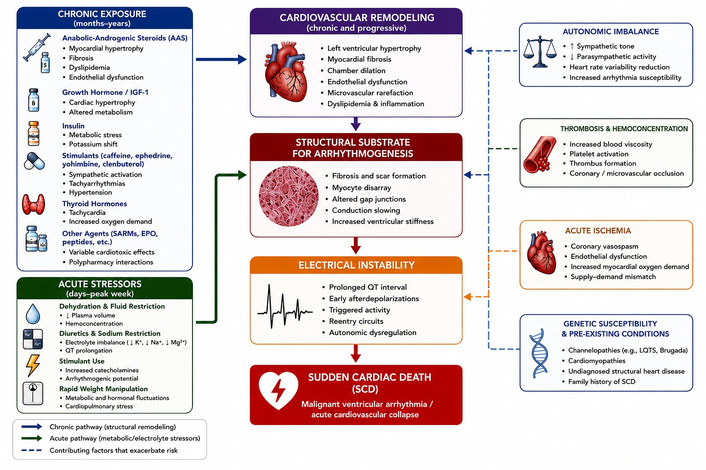
Conceptual model illustrating the proposed pathways linking chronic performance-enhancing substance exposure and acute contest-preparation stressors to cardiovascular remodeling, arrhythmogenesis, and sudden cardiac death in bodybuilding populations. The figure is intended as a conceptual framework based on the available literature and does not imply direct causality or equal contribution of all pathways. AAS: anabolic‑androgenic steroids; IGF-1: insulin-like growth factor-1; SARMs: selective androgen receptor modulators.
Key cardiovascular risk factors, underlying mechanisms, and potential cardiovascular consequences associated with modern bodybuilding practices.
| Risk factor | Mechanism | Potential outcome |
|---|---|---|
| AAS | Fibrosis, LVH | Arrhythmias |
| GH/IGF-1 | Hypertrophy | Remodeling |
| Insulin | Electrolyte shifts | Arrhythmias |
| Diuretics | Hypo-/hyperkalemia | VT/VF |
| Dehydration | Hemoconcentration | Thrombosis |
| Stimulants | Sympathetic activation | Ischemia |
| Genetic susceptibility | Channelopathies, cardiomyopathies | SCD |
AAS: anabolic-androgenic steroids; GH: growth hormone; IGF-1: insulin-like growth factor-1; LVH: left ventricular hypertrophy; VT: ventricular tachycardia; VF: ventricular fibrillation; SCD: sudden cardiac deaths. The table provides a simplified summary of the principal cardiovascular risk factors and potential pathways discussed throughout the review and should not be interpreted as evidence of direct causality.
The growing evidence linking modern bodybuilding practices to cardiovascular morbidity and SCD highlights the urgent need for improved cardiovascular surveillance and preventive strategies in competitive bodybuilders. Given the multifactorial nature of cardiovascular risk in this population, clinical assessment should extend beyond traditional cardiovascular risk stratification and incorporate detailed evaluation of performance-enhancing drug exposure, contest preparation practices, and metabolic stressors [1, 2].
A major challenge in clinical practice is that many bodybuilders appear outwardly healthy, physically conditioned, and asymptomatic despite harboring significant structural and functional cardiac abnormalities. Consequently, reliance exclusively on symptom-based evaluation may fail to identify high-risk individuals before the occurrence of catastrophic cardiovascular events. This concern is particularly relevant because SCD in bodybuilders frequently occurs in relatively young athletes without previously diagnosed cardiovascular disease [2].
A comprehensive cardiovascular evaluation in competitive bodybuilders may include a detailed history regarding AAS use, duration of exposure, dosage patterns, polypharmacy practices, dehydration strategies, stimulant consumption, and prior competition preparation cycles. Importantly, many athletes may underreport or omit performance-enhancing drug use due to stigma, legal concerns, or normalization of these practices within bodybuilding culture [3]. Therefore, clinicians should maintain a high index of suspicion when evaluating athletes with unexplained hypertension, dyslipidemia, erythrocytosis, left ventricular hypertrophy, or arrhythmias.
Resting electrocardiography may provide important initial information regarding conduction abnormalities, ventricular hypertrophy patterns, QT interval alterations, and arrhythmogenic markers [27]. However, electrocardiographic findings alone may underestimate the extent of structural cardiac disease in AAS users. Echocardiography is commonly used to assess ventricular structure and function and may provide useful information in selected bodybuilders with suspected cardiovascular abnormalities [11–13].
Myocardial strain analysis may provide additional information in selected individuals with suspected cardiovascular pathology [12, 13]. However, current evidence remains insufficient to support their routine use as universal screening tools in bodybuilding populations.
Laboratory evaluation should include lipid profile, fasting glucose, liver enzymes, renal function, electrolytes, hematocrit, hemoglobin, inflammatory markers, and cardiac biomarkers when clinically indicated. Elevated hematocrit levels secondary to AAS-induced erythrocytosis may significantly increase thrombogenic risk, particularly during periods of dehydration [1]. Monitoring electrolyte balance becomes especially important during contest preparation phases due to the widespread use of diuretics and fluid manipulation strategies [14].
Ambulatory blood pressure monitoring and Holter electrocardiographic assessment may be considered in selected athletes presenting symptoms, abnormal findings, or significant exposure histories. Exercise stress testing may help identify exercise-induced arrhythmias or ischemic responses in individuals with suspected cardiovascular pathology.
Importantly, cardiovascular screening in bodybuilding populations should ideally not focus solely on disqualification from sport participation but also on harm reduction and early intervention. Many athletes may continue performance-enhancing drug use despite medical advice; therefore, practical strategies aimed at reducing cardiovascular risk may have substantial clinical relevance. These strategies may include education regarding polypharmacy risks, avoidance of extreme dehydration protocols, management of hypertension and dyslipidemia, regular cardiovascular monitoring, and early identification of structural cardiac abnormalities.
From a public health perspective, the increasing prevalence of recreational anabolic steroid use and social media-driven physique enhancement culture extends cardiovascular concerns beyond professional bodybuilding alone [3]. Young recreational athletes and gym users may adopt aggressive enhancement practices without awareness of long-term cardiovascular consequences. Consequently, preventive education targeting gyms, fitness communities, coaches, and online fitness platforms may represent an important strategy to reduce cardiovascular morbidity in this population.
Despite growing awareness regarding bodybuilding-associated cardiotoxicity, evidence-based cardiovascular screening guidelines for competitive bodybuilders remain limited. Future prospective studies are needed to determine optimal screening frequency, identify predictive biomarkers of cardiotoxicity, establish thresholds for intervention, and better characterize the reversibility of cardiovascular abnormalities following cessation of performance-enhancing drug exposure.
Several limitations should be considered when interpreting the evidence presented in this review. First, much of the available literature examining cardiovascular complications in bodybuilding populations consists of observational studies, retrospective analyses, case reports, autopsy investigations, and forensic series, limiting the ability to establish causal relationships. Second, substantial heterogeneity exists regarding AAS regimens, polypharmacy practices, exposure duration, dosage, and training characteristics, making direct comparisons across studies challenging.
Additional limitations include potential selection bias, survivor bias, exposure misclassification, and underreporting of illicit substance use. Furthermore, many studies lack detailed information regarding cumulative drug exposure, concomitant pharmacological agents, and pre-existing cardiovascular risk factors. The current evidence base is also heavily dominated by male participants, limiting the generalizability of findings to female bodybuilders and other physique-sport populations.
Finally, because multiple performance-enhancing substances are frequently used simultaneously, the independent contribution of individual compounds to cardiovascular morbidity and mortality remains difficult to determine. Consequently, although the available evidence supports an association between modern physique-enhancement practices and adverse cardiovascular outcomes, the magnitude of risk attributable to specific substances and mechanisms remains incompletely understood.
Current evidence suggests that cardiovascular risk in modern bodybuilding extends beyond isolated AAS exposure and likely reflects the complex interaction of chronic myocardial remodeling, polypharmacy practices, metabolic instability, and acute contest-preparation stressors. Available data indicate that these factors may contribute to increased susceptibility to arrhythmias, ischemic events, cardiomyopathy, and SCD in susceptible individuals. However, the current evidence base remains largely derived from observational studies, retrospective analyses, autopsy investigations, and case reports, limiting causal inference and precise quantification of risk. Furthermore, substantial heterogeneity in drug regimens, exposure duration, dosage, concomitant substance use, training practices, and contest-preparation strategies complicates interpretation of the available literature and hinders identification of the independent contribution of specific compounds. Despite these limitations, the cumulative evidence raises important concerns regarding the cardiovascular consequences of contemporary physique-enhancement practices. Rather than representing the isolated effect of a single substance, cardiovascular pathology in bodybuilding may emerge from the interaction of multiple chronic and acute physiological stressors acting upon a potentially vulnerable cardiovascular substrate. Future research should prioritize well-designed prospective and longitudinal investigations aimed at better characterizing exposure patterns, cardiovascular outcomes, mechanisms of injury, reversibility of cardiac alterations, and potential preventive strategies. Improved understanding of these factors may contribute to more effective cardiovascular risk assessment, harm-reduction approaches, and evidence-based clinical guidance for bodybuilding populations.
AAS: anabolic-androgenic steroids
GH: growth hormone
HDL-C: high-density lipoprotein cholesterol
IGF-1: insulin-like growth factor-1
LDL-C: low-density lipoprotein cholesterol
MRI: magnetic resonance imaging
SARMs: selective androgen receptor modulators
SCD: sudden cardiac deaths
ATS: Methodology, Writing—original draft. APM: Conceptualization, Methodology, Writing—original draft, Visualization, Writing—review & editing. BGR: Supervision, Writing—review & editing. All authors read and approved the submitted version.
The authors declare no conflicts of interest related to this manuscript.
Not applicable.
Not applicable.
Not applicable.
Not applicable.
The authors received no specific funding for this work.
© The Author(s) 2026.
Open Exploration maintains a neutral stance on jurisdictional claims in published institutional affiliations and maps. All opinions expressed in this article are the personal views of the author(s) and do not represent the stance of the editorial team or the publisher.
Copyright: © The Author(s) 2026. This is an Open Access article licensed under a Creative Commons Attribution 4.0 International License (https://creativecommons.org/licenses/by/4.0/), which permits unrestricted use, sharing, adaptation, distribution and reproduction in any medium or format, for any purpose, even commercially, as long as you give appropriate credit to the original author(s) and the source, provide a link to the Creative Commons license, and indicate if changes were made.



View: 161
Download: 10
Times Cited: 0


