Original Article


Affiliation:
1Department of Haematology and Blood Transfusion, LAUTECH Teaching Hospital, Ogbomoso 212102, Nigeria
Email: ogoizu@gmail.com
ORCID: https://orcid.org/0000-0001-8395-8967


 ,
,
Affiliation:
2Department of Surgery, University of Ilorin Teaching Hospital, Ilorin University of Ilorin Teaching Hospital, Kwara 241102, Nigeria
ORCID: https://orcid.org/0000-0003-4040-6446
,
Affiliation:
2Department of Surgery, University of Ilorin Teaching Hospital, Ilorin University of Ilorin Teaching Hospital, Kwara 241102, Nigeria
Affiliation:
3Department of Surgery, LAUTECH/LAUTECH Teaching Hospital, Ogbomoso 2112102, Nigeria
Affiliation:
4Department of Anesthesia, University of Ilorin/University of Ilorin Teaching Hospital, Ilorin University of Ilorin Teaching Hospital, Kwara 241102, Nigeria
Affiliation:
4Department of Anesthesia, University of Ilorin/University of Ilorin Teaching Hospital, Ilorin University of Ilorin Teaching Hospital, Kwara 241102, Nigeria
ORCID: https://orcid.org/0000-0001-5823-8685
Explor Neurosci. 2026;5:1006146 DOI: https://doi.org/10.37349/en.2026.1006146
Received: May 05, 2026 Accepted: August 12, 2026 Published: August 31, 2026
Academic Editor: Jussi Sipilä, University of Eastern Finland, Finland
Aim: Neuropathic pain (NP) is common in cancer patients, but its relationship with haematological inflammatory markers remains poorly understood. This study explored the association between NP and haematological parameters in Nigerian cancer patients.
Methods: This cross-sectional study enrolled 90 patients with solid tumours from the University of Ilorin Teaching Hospital. Pain severity was assessed using the Numerical Rating Scale, while NP was evaluated with the painDETECT questionnaire. Complete blood count parameters were analysed, and derived inflammatory indices were calculated. Statistical analyses employed chi-square tests, Spearman’s correlation, and binary logistic regression.
Results: NP was present in 21.1% of patients. Significant associations with NP were observed for haemoglobin (p = 0.006), absolute lymphocyte count (p = 0.003), platelet-to-lymphocyte ratio (PLR, p = 0.015), haemoglobin-to-platelet ratio (HPR, p = 0.001), and systemic immune-inflammation index (SII, p < 0.001). Correlation analysis showed NP positively correlated with platelet count (ρ = 0.23, p = 0.029), absolute neutrophil count (ρ = 0.263, p = 0.012), neutrophil-to-lymphocyte ratio (NLR, ρ = 0.248, p = 0.019), SII (ρ = 0.215, p = 0.045), and neutrophil-platelet score (NPS, ρ = 0.248, p = 0.018), while correlating negatively with haemoglobin (ρ = –0.223, p = 0.034). Logistic regression identified haemoglobin, platelet count, absolute lymphocyte count, absolute neutrophil count, NLR, and HPR as independent predictors of NP.
Conclusions: Haematological parameters reflecting systemic inflammation are significantly associated with NP in cancer patients. These readily available indices may serve as useful adjuncts for identifying at-risk patients, particularly in resource-limited settings. Prospective studies are warranted to validate these findings.
Cancer remains one of the leading causes of morbidity and mortality worldwide, with its burden increasingly felt in low- and middle-income countries, including Nigeria. Beyond the direct effects of the malignancy itself, patients with cancer often endure a constellation of debilitating symptoms, among which pain is the most prevalent and distressing. It is estimated that up to 70–80% of patients with advanced cancer experience significant pain, substantially impairing quality of life, functional status, and psychological well-being [1]. While nociceptive pain has been extensively characterized, neuropathic pain (NP) represents a distinct and often underrecognized pain mechanism in the oncologic population.
NP results from direct injury or dysfunction of the somatosensory nervous system, commonly occurring in cancer patients due to tumour infiltration of nerves, nerve compression, or as a consequence of neurotoxic cancer therapies such as platinum-based chemotherapy, taxanes, and radiation [2–4]. Unlike nociceptive pain, NP is frequently refractory to conventional opioids, necessitating the use of adjuvant analgesics such as gabapentinoids, tricyclic antidepressants, and serotonin-norepinephrine reuptake inhibitors [5]. The pathophysiology of NP is complex, involving peripheral and central sensitization, ectopic neuronal activity, and—crucially—a robust neuroinflammatory component. Increasing evidence suggests that systemic inflammation plays a pivotal role in the initiation and maintenance of NP, creating a bidirectional interaction between the immune system and the nervous system [6, 7].
The haematological profile of a patient, comprising parameters such as white blood cell (WBC) count, haemoglobin (Hb), neutrophil count, lymphocyte count, and platelet (PLT) count, serves as a readily available and cost-effective reflection of systemic inflammatory status. In recent years, composite inflammatory indices derived from these basic haematological parameters have gained prominence as surrogate markers of systemic inflammation in various disease states [8–10]. The neutrophil-to-lymphocyte ratio (NLR) and platelet-to-lymphocyte ratio (PLR) have been extensively studied as prognostic indicators in cancer, reflecting the balance between the innate inflammatory response (neutrophils) and adaptive immune regulation (lymphocytes). The systemic immune inflammation index (SII), calculated as PLT × neutrophil/lymphocyte, integrates three major immune cell lineages and has been proposed as a more comprehensive marker of systemic inflammation [11, 12]. Similarly, the neutrophil-platelet score (NPS) and haemoglobin-to-platelet ratio (HPR) have emerged as useful indices in predicting outcomes in malignancies and inflammatory conditions [13, 14].
The rationale linking these haematological indices to NP lies in the central role of inflammation in pain pathogenesis. Neutrophils, as first responders to tissue injury and inflammation, release pro-inflammatory cytokines, chemokines, and reactive oxygen species that can sensitize peripheral nociceptors and promote neuroinflammation. Elevated neutrophil counts, therefore, may reflect heightened systemic inflammatory activity capable of driving NP mechanisms [15]. Conversely, lymphocytes are critical for immune regulation, and a relative lymphopenia—as reflected in elevated NLR—may indicate impaired anti-inflammatory or immunomodulatory capacity, allowing unchecked neuroinflammation [16]. PLTs, beyond their well-established role in haemostasis, are increasingly recognized as key mediators of inflammation, releasing a plethora of pro-inflammatory mediators including serotonin, PDGF, and various chemokines that can modulate neuronal excitability and pain signalling. Thus, the composite indices that capture the interplay between these cell populations may serve as integrated biomarkers of the inflammatory milieu that contributes to NP.
Anaemia, reflected by reduced Hb levels, is common in cancer patients and has been independently associated with pain severity in several studies. The mechanisms linking anaemia to NP are multifactorial and may involve tissue hypoxia, altered oxygen delivery to peripheral nerves, and the systemic inflammatory response that often accompanies cancer-associated anaemia [17, 18]. The HPR, which combines two parameters with opposing inflammatory and functional roles, may offer a nuanced perspective on the balance between oxygen-carrying capacity and inflammatory thrombocytosis.
Despite the growing body of evidence implicating systemic inflammation in NP pathogenesis, studies exploring the direct association between haematological indices and NP in cancer patients remain limited. In the Nigerian context—where cancer burden is rising, resources for comprehensive pain assessment are constrained, and access to advanced diagnostic modalities remains challenging—the identification of simple, cost-effective, and readily available biomarkers for NP could have significant clinical utility. Such biomarkers could facilitate earlier identification of patients at risk for NP, guide targeted therapeutic interventions, and improve pain management outcomes in resource-limited settings.
In this study, we aim to explore the association between haematological parameters—including WBC, Hb, neutrophil count, lymphocyte count, PLT, and composite inflammatory indices such as NLR, PLR, SII, NPS, and HPR—and NP in Nigerian cancer patients. By elucidating these relationships, we hope to contribute to the growing understanding of the inflammatory underpinnings of NP and to identify potential haematological markers that may aid in the risk stratification and management of this challenging pain syndrome in cancer patients.
This cross-sectional study was conducted at the University of Ilorin Teaching Hospital and included adult patients with solid cancers attending the outpatient oncology clinics and palliative care services. The study received ethical approval from the institution’s Ethics Review Committee (UITH/CAT/189/21/384). All participants provided written informed consent after receiving a full explanation of the study. Study participants comprised adult cancer patients attending the institution who met the following eligibility criteria: (i) age 18 years or older; (ii) a confirmed medical diagnosis of cancer; and (iii) adequate cognitive function to complete the questionnaire, as evidenced by the ability to respond to simple orientation questions (e.g., name, age, time of day). Participants were recruited using serial sampling. Eligible patients completed a self-administered questionnaire capturing sociodemographic and clinical characteristics, including age, gender, educational level, occupation, and marital status. Clinical data comprising cancer type, treatment history, social history, comorbidities, and performance status were obtained through medical record review and patient interviews. Of the 126 cancer patients initially recruited, 36 were excluded from the final analysis due to incomplete full blood count results, which. Consequently, the remaining 90 patients with complete data comprised the final study cohort available for statistical evaluation.
Pain severity was assessed using the Numerical Rating Scale (NRS). Based on the NRS scores, participants were categorized into four pain intensity levels: no pain (score of 0), mild pain (scores 1–3), moderate pain (scores 4–6), and severe pain (scores 7–10). Pain was also defined as presenting pain, average pain over 4 weeks, and worst pain over 4 weeks. The painDETECT questionnaire (PD-Q) is a validated screening tool designed to characterize the nature of pain, including its location and temporal pattern. The instrument comprises three preliminary unscored items assessing pain intensity, followed by scored items evaluating pain descriptors: constant pain with minor fluctuations in intensity (score = 0); constant pain with intermittent pain attacks (score = 1); pain attacks with intercurrent pain (score = 1); or pain attacks without intercurrent pain (score = 1). The presence or absence of radiating pain is scored as 2 or 0, respectively. The points assigned to each pain descriptor (e.g., burning, itching, numbness, etc.) were also collected.
Subsequent items assess the qualitative features of pain to identify NP characteristics. Seven questions evaluate symptoms such as burning sensation and electric shock-like pain attacks. Responses are rated on a six-point Likert scale: never (0), hardly noticed (1), slightly (2), moderately (3), strongly (4), and very strongly (5). The total PD-Q score ranges from 0 to 38, with higher scores indicating a greater likelihood of NP. Scores are interpreted as follows: less than 13, unlikely; 13 to 18, possible; and 19 or above, likely. A reliability assessment of the PD-Q with the patients’ responses was done. The Cronbach’s alpha for the questionnaire in the present study was 0.763.
The complete blood count (CBC) was analyzed using a Sysmex KN-21N three-part automated hematology analyzer (Sysmex Corporation, Kobe, Japan). A total of ten CBC parameters were selected for inclusion in this study: Hb (g/dL), WBC count (× 109/L), PLT (× 109/L), absolute neutrophil count (ANC, × 109/L), and absolute lymphocyte count (ALC, × 109/L).
The NLR, PLR, SII, NPS, and the HPR were subsequently derived. NLR was defined as the ANC divided by the ALC; PLR was defined as the absolute PLT count divided by the ALC; SII was defined as the ratio of the total count of neutrophils × total count of PLTs divided by the total count of lymphocytes; and the Hb-PLT ratio was determined by dividing the Hb level by the absolute PLT count. The thresholds used in this study were derived as the mean of the total values. Thus, an NLR cutoff value of 2.19 was employed to distinguish between high-NLR (> 2.19) and low-NLR (≤ 2.19) groups. Similarly, a PLR cutoff of 167.2 was utilized to categorize participants into high-PLR (> 167.2) and low-PLR (≤ 167.2) groups. The SII cutoff was set at 376.5, with high SII (> 376.5) and low SII (≤ 376.5), while the HPR cutoff was 0.042, with high HPR (> 0.042) and low HPR (≤ 0.042). The NPS, being categorical, was placed into 3 prognostic groups, which were low risk (ANC ≤ 7.5 × 10⁹/L and PLTs ≤ 400 × 109/L), intermediate risk (ANC > 7.5 × 10⁹/L or PLTs > 400 × 109/L), and high risk (ANC >7.5 × 10⁹/L and PLTs > 400 × 109/L).
Descriptive statistics were employed to summarize frequencies, percentages, and measures of central tendency for the study variables, including sociodemographic, clinical, and pain-related characteristics. The normality of continuous variables was assessed using the Kolmogorov–Smirnov test. NP scores were dichotomized into two categories: presence of NP (total score ≥ 13) and absence of NP (total score ≤ 12). Associations between groups were evaluated using the chi-square test or Fisher’s exact test, as appropriate, with statistical significance set at p < 0.05.
Bivariate correlation analysis was conducted to examine the relationship between each CBC parameter and the independent variable. Pearson correlation coefficients (r-values) were calculated to determine the strength and direction of these associations. Binary logistic regression analysis was subsequently performed to explore the relationship between various predictor variables and the dependent variable (NP status). Regression coefficients, standard errors, p-values, and 95% confidence intervals (CIs) were derived for each predictor. Variables with a p-value of < 0.05 were considered for inclusion in the multivariate model. All statistical analyses were performed using IBM Statistical Package for the Social Sciences (SPSS), version 26.
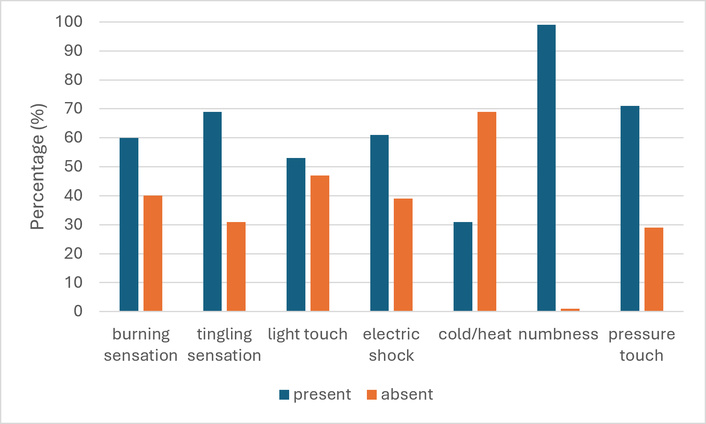
A total of 90 patients were enrolled in this study from an initial 126 patients. All participants provided informed consent and completed all questionnaire items without omission. The mean age of the cohort was 51.83 ± 13.42 years (Table 1). The study population was predominantly female (80%), with a substantial proportion being married (81.1%) and having attained tertiary education (42.2%). The mean NRS score for the presenting pain was 2.66 ± 1.98, with the majority of patients (87.8%) reporting some degree of pain. Mild pain was reported by 57.8% of patients, moderate pain by 27.8%, and severe pain by 2.2%. For average pain, the score was 3.49 ± 2.15, with 51.1% having mild pain, 43.3% having moderate pain, and 3.3% having severe pain. Using the PD-Q, the mean pain score was 8.20 ± 4.80. Based on PD-Q scores, 21.1% of the study population exhibited evidence of NP (score ≥ 13). The majority (> 50%) of the patients had symptoms of NP except for the cold/ heat (31%) symptoms (Figure 1).
Socio-demographic and clinical characteristics of the cancer patients.
| Characteristics | Category | Sample (n) | Percentage (%) |
|---|---|---|---|
| Age | ≤ 52 years | 51 | 56.7 |
| ≥ 53 years | 39 | 43.3 | |
| Mean ± SD (years): 51.83 ± 13.42 | |||
| Gender | Male | 18 | 20.0 |
| Female | 72 | 80.0 | |
| Education | None | 10 | 11.1 |
| Primary | 18 | 20.0 | |
| Secondary | 24 | 26.7 | |
| Tertiary | 38 | 42.2 | |
| Marital status | Married | 73 | 81.1 |
| Single | 1 | 1.1 | |
| Widowed | 13 | 14.4 | |
| Divorced | 3 | 3.3 | |
| Smoking | Never | 87 | 96.7 |
| Previous | 3 | 3.3 | |
| Alcohol | Never | 76 | 84.4 |
| Previous | 10 | 11.1 | |
| Occasionally | 4 | 4.4 | |
| Cancer type | Breast | 60 | 66.7 |
| Others | 30 | 33.3 | |
| Cancer treatment | Chemo | 32 | 35.6 |
| Surgery | 6 | 6.7 | |
| Chemo + surgery | 27 | 30.0 | |
| Chemo + radiation + surgery | 2 | 2.2 | |
| Chemo + radiation | 1 | 1.1 | |
| None | 22 | 24.4 | |
| Body mass index (BMI) | Underweight (Below 18.5) | 3 | 3.3 |
| Normal (18.5–24.9) | 50 | 55.6 | |
| Overweight (25.0–29.9) | 21 | 23.3 | |
| Obesity (30.0 and above) | 16 | 17.8 | |
| Performance status (Karnofsky) | 60 | 5 | 5.6 |
| 70 | 14 | 15.6 | |
| 80 | 29 | 32.2 | |
| 90 | 31 | 34.4 | |
| 100 | 11 | 12.2 | |
| Systolic blood pressure (SBP), mmHg | < 120 | 48 | 53.3 |
| 120–139 | 26 | 28.9 | |
| 140 and above | 16 | 17.8 | |
| Diastolic blood pressure (DBP), mmHg | < 80 | 77 | 85.6 |
| 80–89 | 8 | 8.9 | |
| 90 and above | 5 | 5.6 | |
| Numerical Rating Scale (NRS) current pain | 0 (no pain) | 11 | 12.2 |
| 1–3 (mild pain) | 52 | 57.8 | |
| 4–6 (moderate pain) | 25 | 27.8 | |
| 7–10 (severe pain) | 2 | 2.2 | |
| Mean ± SD: 2.66 ± 1.98 | |||
| Average pain (over 4 weeks) | 0 (no pain) | 2 | 2.2 |
| 1–3 (mild pain) | 46 | 51.1 | |
| 4–6 (moderate pain) | 39 | 43.3 | |
| 7–10 (severe pain) | 3 | 3.3 | |
| Mean ± SD: 3.49 ± 2.15 | |||
| painDETECT questionnaire (PD-Q) score | ≤ 12 | 71 | 78.9 |
| ≥ 13 | 19 | 21.1 | |
Pain management in this cohort was predominantly pharmacological; all patients were receiving analgesic therapy, with the majority (90%) prescribed paracetamol either alone or in combination. NSAID use was 27.8%; weak opioids (dihydrocodeine, tramadol) were utilized by 16.7% of patients, while 34.4% were on strong opioids. Notably, only 7.8% were receiving medications specifically indicated for NP, such as pregabalin.
The haematological parameters showed that Hb was significantly associated with NP (p = 0.006); likewise, the ALC (p = 0.003) and the PLR (p = 0.015) also showed significant associations. The other data are shared in Table 2. The Spearman’s rank correlation test was employed to explore the associations between haematological indices and key pain features, allowing for a bivariate analysis of the CBC parameters against the clinical dimensions of pain. With respect to pain features, none of the CBC parameters showed significant associations with presenting pain, and only the NLR was significantly associated with the average pain in 4 weeks (data not shown). By contrast, a distinct pattern emerged in relation to performance status: PLT, ANC, NLR, PLR, SII, and the HPR all demonstrated significant positive correlations with the Karnofsky performance status (p < 0.05). With regard to the NP symptoms, Hb was significantly correlated with burning sensation, tingling sensation, and electric shock-like pain; PLT were with light touch; ANC was with electric shock-like pain; ALC was with tingling sensation and numbness; NLR was with burning sensation, tingling sensation, and electric shock-like pain; PLR was with tingling sensation and electric shock-like pain; SII was with burning sensation, tingling sensation and electric shock-like pain; NPS was with burning sensation, electric shock-like pain and numbness; HPR was with electric shock-like pain (p < 0.05). The results are shown in Table 3. Correlation analysis showed NP positively correlated with PLT count (ρ = 0.230, p = 0.029), ANC (ρ = 0.263, p = 0.012), NLR (ρ = 0.248, p = 0.019), SII (ρ = 0.215, p = 0.045), and NPS (ρ = 0.248, p = 0.018), while correlating negatively with Hb (ρ = –0.223, p = 0.034) (Table S1).
Association between haematological parameters and neuropathic pain (chi-square).
| Variables | Neuropathic pain occurrence ≤ 12 (%) | Neuropathic pain occurrence ≥ 13 (%) | χ² | p-value |
|---|---|---|---|---|
| Age | ||||
| ≤ 52 | 40 (78.4) | 11 (21.6) | 0.015 | 0.903 |
| ≥ 53 | 31 (79.5) | 8 (20.5) | ||
| Gender | ||||
| Female | 12 (75.0) | 4 (25.0) | 0.177 | 0.674 |
| Male | 59 (79.7) | 15 (20.3) | ||
| Hb (g/dL) | ||||
| ≤ 10.91 | 31 (67.4) | 15 (32.6) | 7.469 | 0.006 |
| >10.91 | 40 (90.9) | 4 (9.1) | ||
| WBC (× 103/μL) | ||||
| ≤ 6.32 | 46 (79.3) | 12 (20.7) | 0.017 | 0.895 |
| > 6.32 | 25 (78.1) | 7 (21.9) | ||
| ANC (× 103/μL) | ||||
| ≤ 3.73 | 50 (80.6) | 12 (19.4) | 0.369 | 0.544 |
| > 3.73 | 21 (75.0) | 7 (25.0) | ||
| ALC (× 103/μL) | ||||
| ≤ 2.15 | 33 (67.3) | 16 (32.7) | 8.604 | 0.003 |
| > 2.15 | 38 (92.7) | 3 (7.3) | ||
| PLT (× 103/μL) | ||||
| ≤ 286.5 | 46 (85.2) | 8 (14.8) | 3.213 | 0.073 |
| > 286.5 | 25 (69.4) | 11 (30.6) | ||
| NLR | ||||
| ≤ 2.19 | 61 (80.3) | 15 (19.7) | 0.554 | 0.457 |
| > 2.19 | 10 (71.4) | 4 (28.6) | ||
| PLR | ||||
| ≤ 167.2 | 48 (87.3) | 7 (12.7) | 5.969 | 0.015 |
| > 167.2 | 23 (65.7) | 12 (34.3) | ||
| SII | ||||
| ≤ 376.5 | 41 (95.3) | 2 (4.7) | 12.390 | < 0.001 |
| > 376.5 | 30 (63.8) | 17 (36.2) | ||
| NPS | ||||
| 0 | 62 (81.6) | 14 (18.4) | 4.795 | 0.091 |
| 1 | 9 (69.2) | 4 (30.8) | ||
| 2 | 0 (0.0) | 1 (100.0) | ||
| HPR | ||||
| ≤ 0.042 | 29 (64.4) | 16 (35.6) | 10.942 | < 0.001 |
| > 0.042 | 42 (93.3) | 3 (6.7) | ||
ALC: absolute lymphocyte count; ANC: absolute neutrophil count; Hb: haemoglobin; HPR: haemoglobin-to-platelet ratio; NLR: neutrophil-to-lymphocyte ratio; NPS: neutrophil-platelet score; PLR: platelet-to-lymphocyte ratio; PLT: platelet; SII: systemic immune inflammation index; WBC: white blood cell.
Spearman correlation between patients’ haematological parameters and NP-associated symptoms.
| Variables | Presenting pain | Average pain | Burning sensation | Tingling sensation | Light touch | Electric shock-like pain | Cold/Heat | Numbness | Pressure touch |
|---|---|---|---|---|---|---|---|---|---|
| Age | |||||||||
| RHOp-value | –0.0600.573 | –0.0550.607 | 0.0920.389 | 0.1090.304 | 0.1120.294 | 0.0030.977 | –0.0340.753 | 0.0660.539 | 0.0670.531 |
| Hb | |||||||||
| RHOp-value | –0.0080.943 | –0.0730.495 | –0.2560.015 | –0.2220.036 | –0.0300.779 | –0.2430.021 | –0.0990.351 | 0.0510.631 | –0.1070.316 |
| WBC | |||||||||
| RHOp-value | 0.1260.235 | 0.0550.604 | –0.0570.590 | –0.0320.763 | 0.1170.271 | 0.1210.255 | 0.0350.743 | –0.1030.336 | –0.0310.775 |
| PLT | |||||||||
| RHOp-value | 0.0310.769 | 0.0680.523 | 0.0980.357 | 0.1210.255 | 0.2200.037 | 0.1560.141 | 0.0310.769 | –0.0600.573 | 0.0630.556 |
| ANC | |||||||||
| RHOp-value | 0.1980.061 | 0.1900.072 | 0.0880.409 | 0.1940.066 | 0.1820.086 | 0.2640.012 | 0.1150.282 | 0.0160.880 | 0.0670.530 |
| ALC | |||||||||
| RHOp-value | –0.0500.639 | –0.1650.120 | –0.1490.162 | –0.2920.005 | –0.0420.697 | 0.1640.123 | –0.0650.543 | –0.2400.023 | –0.1500.158 |
| NLR | |||||||||
| RHOp-value | 0.1720.104 | 0.2330.027 | 0.2180.039 | 0.3110.003 | 0.1760.096 | 0.3330.001 | 0.1610.130 | 0.1370.198 | 0.1670.115 |
| PLR | |||||||||
| RHOp-value | 0.0700.509 | 0.1820.087 | 0.1790.091 | 0.2740.009 | 0.1240.245 | 0.2080.049 | 0.0760.475 | 0.1800.090 | 0.1460.169 |
| SII | |||||||||
| RHOp-value | 0.1410.194 | 0.2090.050 | 0.2260.035 | 0.2700.011 | 0.1890.080 | 0.358< 0.001 | 0.1580.144 | 0.1560.149 | 0.1450.181 |
| NPS | |||||||||
| RHOp-value | 0.0100.922 | 0.0280.793 | 0.2120.045 | 0.1660.117 | 0.1120.292 | 0.2070.049 | 0.0610.565 | –0.3250.002 | 0.0060.955 |
| HPR | |||||||||
| RHOp-value | –0.0040.970 | –0.0630.552 | –0.1800.089 | –0.1710.108 | –0.1650.120 | –0.2330.027 | –0.0940.379 | 0.0380.723 | –0.0930.381 |
ALC: absolute lymphocyte count; ANC: absolute neutrophil count; Hb: haemoglobin; HPR: haemoglobin-to-platelet ratio; NLR: neutrophil-to-lymphocyte ratio; NP: neuropathic pain; NPS: neutrophil-platelet score; PLR: platelet-to-lymphocyte ratio; PLT: platelet; SII: systemic immune inflammation index; WBC: white blood cell.
The Binary logistic regression analysis revealed that Hb (p = 0.01), PLTs (p = 0.014), ALC (p = 0.007), ANC (p = 0.045), NLR (p = 0.021), and HPR (p = 0.003) each independently predicted the presence of NP in the cancer patient cohort (Table 4).
Binary logistic regression showing the association between some haematological parameters and neuropathic pain.
| Variables | p-value | OR | 95% CI |
|---|---|---|---|
| Hb | 0.010 | 4.839 | 1.460–16.041 |
| ANC | 0.045 | 1.239 | 1.004–1.528 |
| ALC | 0.007 | 6.141 | 1.643–22.952 |
| NLR | 0.021 | 1.303 | 1.040–1.633 |
| HPR | 0.003 | 7.540 | 2.011–28.273 |
ALC: absolute lymphocyte count; ANC: absolute neutrophil count; Hb: haemoglobin; HPR: haemoglobin-to-platelet ratio; NLR: neutrophil-to-lymphocyte ratio.
This study sought to explore the association between haematological parameters—including CBC components and derived inflammatory indices—and NP in a cohort of Nigerian cancer patients. The findings reveal that several haematological markers, particularly those reflecting systemic inflammation, are significantly associated with the presence of NP. These results align with the growing body of evidence implicating neuroinflammation in the pathogenesis of NP and suggest that simple, cost-effective haematological indices may serve as useful adjuncts in identifying cancer patients at risk for this debilitating pain syndrome.
The prevalence of NP in this study, as determined by the PD-Q, was 21.1%. This figure is consistent with previous reports in mixed cancer populations, where NP prevalence ranges from 20% to 40%, depending on tumour type, disease stage, and diagnostic criteria employed [19, 20]. The relatively lower prevalence observed in our cohort may reflect the under-recognition of NP in routine clinical practice. Notably, despite this prevalence, only 7.8% of patients were receiving medications specifically indicated for NP, such as pregabalin, underscoring a significant treatment gap that warrants clinical attention.
A central finding of this study is the consistent association between markers of systemic inflammation and NP. In bivariate correlation analysis, PLT, ANC, NLR, PLR, SII, NPS, and HPR all demonstrated significant correlations with NP and its constituent symptoms. These associations persisted in multivariate logistic regression, where Hb, PLTs, ALC, ANC, NLR, and HPR emerged as independent predictors of NP. Collectively, these findings support the hypothesis that systemic inflammation plays a pivotal role in the pathophysiology of NP and some other chronic conditions.
The observed positive correlations between neutrophil-related indices (ANC, NLR, SII, NPS) and NP are biologically plausible. Neutrophils are among the first responders to tissue injury and inflammation, releasing a cascade of pro-inflammatory cytokines which includes IL-1β, tumour necrosis factor-α (TNF-α), and IL-6—as well as chemokines and reactive oxygen species that can sensitize peripheral nociceptors and promote central sensitization with associated hyperalgesia [21–23]. In the context of cancer, tumour-derived factors may further amplify this neutrophilic response, creating a pro-inflammatory milieu conducive to the development and maintenance of NP [24–26]. A recent study demonstrated that inhibiting neutrophil differentiation and maturation can help alleviate inflammatory pain hypersensitivity caused by neutrophils [27]. On the other hand, the NLR, which captures the balance between neutrophilic inflammation and lymphocytic immune regulation, has been extensively studied as a prognostic marker in cancer [9, 28–30]. Our finding that elevated NLR is associated with NP extends this utility, suggesting that the NLR may serve as a dual-purpose biomarker, reflecting both oncologic prognosis and pain phenotype.
PLTs also emerged as key correlates of NP in our study. Elevated PLT and PLR were significantly associated with NP, a finding that aligns with the emerging recognition of PLTs as mediators of neuroinflammation [31]. Beyond their canonical roles in haemostasis and thrombosis, PLTs are increasingly understood to be active participants in inflammatory processes, releasing a rich array of mediators—including serotonin, PLT-derived growth factor (PDGF), and various chemokines—that can modulate neuronal excitability, promote glial activation, and contribute to pain sensitization [32, 33]. Thrombocytosis, commonly observed in malignancy as a paraneoplastic phenomenon [34], may therefore represent not merely a marker of systemic inflammation but an active contributor to NP pathogenesis.
The SII, which integrates PLT, neutrophil, and lymphocyte counts into a composite index, demonstrated significant associations with NP and its symptoms, including burning sensation, tingling, and electric shock-like pain. As a more comprehensive measure of systemic immune-inflammatory status, SII may capture synergistic interactions among these cell populations that are not fully reflected in simpler indices [35]. Our results suggest that SII warrants further investigation as a potential biomarker for NP risk stratification.
Anaemia, reflected by reduced Hb, was significantly associated with NP, with lower Hb levels correlating with greater NP likelihood. This finding is consistent with previous studies linking anaemia to quality of life in cancer patients [36]. The mechanisms underlying this association are multifactorial. Anaemia may contribute to tissue hypoxia, compromising oxygen delivery to peripheral nerves and exacerbating nerve injury. Additionally, anaemia in cancer patients often reflects underlying chronic inflammation, with inflammatory cytokines suppressing erythropoiesis and promoting hepcidin-mediated iron sequestration [37]. Interestingly, painkillers like diclofenac, though they attenuate acute phase reactants, have been shown to amplify the expression of hepcidin in cancer [38]. This could have been another cause of anaemia in our study. Thus, low Hb may serve as a surrogate marker of systemic inflammation rather than a direct cause of NP. The HPR, a composite index combining Hb and PLTs, was among the strongest independent predictors of NP in our regression analysis, suggesting that the interplay between oxygen-carrying capacity and inflammatory thrombocytosis may be particularly relevant to NP pathogenesis.
Interestingly, none of the haematological parameters demonstrated significant associations with presenting pain intensity, suggesting that these markers may be more closely linked to the neuropathic quality of pain, thus reflecting underlying neuroinflammatory mechanisms rather than acute pain severity. This distinction supports the conceptualization of NP as a distinct pain entity with unique pathophysiological underpinnings that may be captured by systemic inflammatory markers.
Several limitations of this study warrant consideration. First, the cross-sectional design precludes any inference of causality. While we observed significant associations between haematological parameters and NP, the temporal relationship between these factors cannot be determined. While biological plausibility supports a mechanistic link based on the known roles of neutrophils, PLTs, and lymphocytes in neuroinflammation, our cross-sectional data cannot distinguish between causal pathways and epiphenomenal associations. Hence, these haematological changes may reflect a greater systemic inflammation from advanced disease or chemotherapy, rather than directly contributing to NP pathogenesis. Longitudinal studies are needed to establish whether haematological indices predict the subsequent development of NP or whether NP itself influences systemic inflammatory profiles. Also, Chemotherapy-induced peripheral neuropathy is a well-established condition, and it is plausible that patients receiving more intensive or neurotoxic regimens (e.g., vinca alkaloids, taxanes) would exhibit both greater haematological perturbations and higher NP prevalence. This is a limitation; thus, we recommend that future studies incorporate detailed chemotherapy histories to distinguish treatment-related effects from inflammation-driven mechanisms.
Second, NP was assessed using the PD-Q, a validated screening tool, rather than the gold standard of nerve conduction studies or quantitative sensory testing. While painDETECT demonstrates good sensitivity and specificity for NP, the absence of confirmatory neurophysiological testing introduces the possibility of misclassification. Future studies incorporating objective measures of nerve function would strengthen the validity of NP diagnoses.
Third, the study was conducted at a single tertiary institution in Nigeria, which may limit the generalizability of findings to other populations with different genetic, environmental, and healthcare contexts.
Fourth, the study did not account for potential confounders such as specific chemotherapy regimens, radiation exposure, or duration of cancer diagnosis, all of which may influence both haematological profiles and NP risk. Additionally, the use of analgesic medications, particularly opioids and adjuvant agents, may have influenced pain reporting and haematological parameters in ways not fully captured by our analysis.
This study demonstrates that haematological parameters, particularly those reflecting systemic inflammation, including PLT, neutrophil count, NLR, PLR, SII, and HPR, are significantly associated with NP in Nigerian cancer patients. These findings support the emerging paradigm that neuroinflammation plays a central role in NP pathogenesis and thus infer that simple, readily available haematological indices may be associated with this challenging pain syndrome. In resource-limited settings where access to specialized pain assessment tools is constrained, such biomarkers could facilitate earlier recognition of NP and guide more targeted therapeutic interventions.
Moving forward, prospective longitudinal studies are required to establish causality and to determine whether haematological indices can predict NP development prior to symptom onset. Additionally, studies incorporating neurophysiological confirmation of NP and examining the effects of anti-inflammatory or immunomodulatory interventions on both haematological parameters and pain outcomes would help to elucidate the mechanistic pathways linking systemic inflammation to NP. Finally, validation of these findings in larger, multicentre cohorts across diverse populations would strengthen the evidence base for incorporating haematological indices into routine clinical risk assessment for NP in cancer patients.
ALC: absolute lymphocyte count
ANC: absolute neutrophil count
CBC: complete blood count
Hb: haemoglobin
HPR: haemoglobin-to-platelet ratio
NLR: neutrophil-to-lymphocyte ratio
NP: neuropathic pain
NPS: neutrophil-platelet score
NRS: Numerical Rating Scale
PDGF: platelet-derived growth factor
PD-Q: painDETECT questionnaire
PLR: platelet-to-lymphocyte ratio
PLT: platelet
SII: systemic immune inflammation index
WBC: white blood cell
The supplementary Table S1 for this article is available at: https://www.explorationpub.com/uploads/Article/file/1006146_sup_1.pdf.
OI: Conceptualization, Methodology, Formal analysis, Validation, Resources, Investigation, Writing—original draft, Writing—review & editing, Project administration, Visualization. IK: Conceptualization, Methodology, Resources, Supervision, Writing—original draft, Project administration. SO: Conceptualization, Methodology, Resources, Supervision, Writing—review & editing, Project administration. TWA: Investigation, Data Curation. OS: Investigation, Data Curation. CCA: Investigation, Data Curation. All authors read and approved the submitted version.
The authors have no conflicts of interest to declare.
This study was performed in line with the principles of the Declaration of Helsinki. Approval was granted by the Ethics Committee of the University of Ilorin Teaching Hospital (UITH/CAT/189/21/384).
Informed consent was obtained from all individual participants included in the study.
Not applicable.
Any additional information that supports the findings reported in this study is available by contacting the corresponding author upon reasonable request.
There was no funding for this work.
© The Author(s) 2026.
Open Exploration maintains a neutral stance on jurisdictional claims in published institutional affiliations and maps. All opinions expressed in this article are the personal views of the author(s) and do not represent the stance of the editorial team or the publisher.
Copyright: © The Author(s) 2026. This is an Open Access article licensed under a Creative Commons Attribution 4.0 International License (https://creativecommons.org/licenses/by/4.0/), which permits unrestricted use, sharing, adaptation, distribution and reproduction in any medium or format, for any purpose, even commercially, as long as you give appropriate credit to the original author(s) and the source, provide a link to the Creative Commons license, and indicate if changes were made.



View: 386
Download: 15
Times Cited: 0