Original Article


Affiliation:
1College of Nursing, Washington State University, Spokane, WA 99202, USA
Email: marian.wilson@wsu.edu
ORCID: https://orcid.org/0000-0002-6308-2571


 ,
Affiliation:
1College of Nursing, Washington State University, Spokane, WA 99202, USA
ORCID: https://orcid.org/0000-0003-3508-5625
,
Affiliation:
1College of Nursing, Washington State University, Spokane, WA 99202, USA
ORCID: https://orcid.org/0000-0002-7259-2549
,
Affiliation:
2South Perry Yoga, LLC, Spokane, WA 99202, USA
ORCID: https://orcid.org/0009-0009-0127-7590
,
Affiliation:
3Performance Physical Therapy, Spokane Valley, WA 99216, USA
ORCID: https://orcid.org/0009-0005-5290-5033
Explor Med. 2026;7:1001435 DOI: https://doi.org/10.37349/emed.2026.1001435
Received: May 27, 2026 Accepted: August 25, 2026 Published: November 04, 2026
Academic Editor: Marco Cascella, University of Salerno, Italy
The article belongs to the special issue Innovative Approaches to Chronic Pain Management: from Multidisciplinary Strategies to Artificial Intelligence Perspectives
Aim: Novel approaches are needed to expand access to non-pharmacological pain management options. This study’s objective was to test and evaluate the acceptability, feasibility, and treatment effects of videoconference-based pain consultations among adults prescribed opioids for chronic pain.
Methods: A one-group pre-post pilot feasibility design was used to recruit adults with a chronic pain diagnosis. Convenience sampling was restricted to United States (U.S.) residents in Washington State. Three videoconference-based 45-minute sessions were offered from participants’ choice of two non-pharmacological modalities delivered by yoga, massage, chiropractic, and physical therapists. Six sessions were offered in total per participant (once weekly for six weeks). Pain intensity/interference, depression, anxiety, pain self-efficacy, thwarted belongingness, spiritual well-being, and opioid misuse were assessed at baseline and post-intervention using online surveys to determine whether improvements could be detected. Data were also captured on recruitment and retention as a measure of feasibility, while session attendance and satisfaction surveys measured acceptability.
Results: Sixteen participants completed 92 treatment modality sessions. Yoga therapy was the most selected option (n = 11), followed by physical therapy (n = 9), massage therapy (n = 8), and chiropractic therapy (n = 4). Attendance was 95% at the scheduled sessions. Significant improvements from baseline to week six were found in pain intensity and interference, depressive symptoms, and thwarted belongingness.
Conclusions: Multidisciplinary virtual pain consultations delivered via videoconferencing technology served as a feasible option to access complementary and integrative therapies. Improvements were detected in pain-related and psychosocial outcomes. Structured virtual approaches may represent a scalable strategy to expand non-pharmacologic treatment options for adults with chronic pain. Protocol for this study was registered a priori through Clinical Trials Network (#NCT05098158).
The prevalence of chronic pain has increased in the United States (U.S.) [1], accompanied by rising pain-related treatment disparities [2]. Approximately 50.2 million adults (20.5%) in the U.S. experience pain on most or every day [3], comparable to rates of chronic pain that are estimated to affect 20% of the population worldwide [4]. North Americans of lower socioeconomic and educational status experience higher rates of chronic pain [1], yet may have less access to potentially helpful treatments [5]. Improving access to non-pharmacological pain management modalities has been recognized as a priority to decrease opioid use and misuse, and reduce human suffering related to poorly managed pain [6]. Worldwide, opioids are the most lethal drug, accounting for the majority of all drug-related deaths [7]. Within the context of an opioid overdose public health crisis, more emphasis has been placed on “complementary and integrative medicine (CIM)” approaches that support a biopsychosocial-spiritual model of pain care [8].
Less use of CIM is associated with lower income, less education, and belonging to underrepresented groups [5]. Novel means of providing access to research-based non-pharmacologic pain therapies like yoga, massage, and mindfulness meditation are needed in order to reduce health disparities [9]. Potentially, increasing availability of such therapies can address the disproportionate harms befalling those in rural underserved communities who have less access to pain management specialists and higher rates of opioid prescriptions and synthetic opioid overdose deaths in the U.S. when compared to urban communities [10]. More liberal access to CIM could also address harms associated with abrupt cessation of opioids that have been noted, such as worsening pain, psychological distress, and suicide [8].
Digital health technologies and telehealth platforms have emerged as important mechanisms for expanding access to multidisciplinary pain care. Digital health interventions such as telehealth consultations, online self-management programs, and remote monitoring technologies have demonstrated potential to improve pain outcomes while enhancing accessibility and patient engagement [11]. Virtual consultations allow clinicians to interact with patients in real time while overcoming geographic, mobility, and transportation barriers. In addition to expanding access, telehealth can support person-centered care by facilitating individualized consultations and shared decision-making between clinicians and patients [12].
However, the rapid expansion of telehealth services has also highlighted the need for clearer clinical guidance regarding how virtual assessments and interventions should be structured to ensure safe and effective care delivery. A recent scoping review of virtual health assessment guidelines concluded that while telehealth adoption has accelerated globally, detailed clinical focused frameworks for conducting comprehensive assessments in virtual environments remain limited [12]. This gap is particularly relevant for complex and chronic conditions, including chronic pain, which requires comprehensive evaluation of physical, psychological, functional, and social components. Empirical studies examining structured, multimodal virtual pain consultations are therefore needed to inform evidence-based telehealth practice. Currently, limited research has examined multidisciplinary, complementary and integrative therapies delivered synchronously via videoconference to adults prescribed opioids.
Aligning with the most recent opioid prescribing guidelines from the U.S. Centers for Disease Control and Prevention (CDC) [13], the COMFORT (Community-engaged Options to Maximize and Facilitate Opioid ReducTion) study was designed to address the need for individualized, multi-modal pain management treatment planning [9]. While some pain education and exercise interventions have been delivered through synchronous telehealth, their effectiveness and safety have not been well-established [14]. Also needed are more studies to better understand patient satisfaction with telehealth for painful conditions [15]. One systematic review found only eight randomized controlled trials of acceptable quality focusing on musculoskeletal conditions; the conclusions were that videoconference or telephone calls alone or in combination with in-person usual care were as effective and safe as usual in-person care [14]. The present study adds to the emerging evidence by testing videoconference-based consultations delivered by practitioners trained in yoga therapy, massage therapy, chiropractic care, and physical therapy for adults prescribed opioids for chronic pain.
The project arose from priorities identified by an opioid task force within a U.S. urban health district that sought to increase access to non-opioid, non-pharmacologic options for pain management as one strategy to reduce opioid-related adverse events. Unique to this research was that recruitment occurred during the coronavirus disease 2019 (COVID-19) [severe acute respiratory syndrome coronavirus 2 (SARS-CoV-2)] pandemic (October 2020–October 2021), providing an opportunity to investigate how telehealth can be used in times of crisis to meet healthcare needs. Details of the study protocol and how it was adapted to a fully virtual environment have been previously published [9].
In designing the COMFORT intervention, we considered national and international guidance related to chronic pain management, opioid prescribing, and telehealth care. Existing recommendations at the time of project development, including the U.S. National Pain Strategy and the Interagency Pain Research Coordinating Committee priorities, emphasized expanding access to multidisciplinary, non-pharmacologic approaches to pain management and reducing reliance on opioid medications [6, 16]. These frameworks support the use of interprofessional, patient-centered interventions that address the physical, psychological, and functional aspects of chronic pain. Subsequent guidelines published after the implementation of this project further reinforce the relevance of this approach. The 2022 U.S. CDC Clinical Practice Guideline for Prescribing Opioids for Pain emphasizes prioritizing non-opioid and non-pharmacologic therapies for chronic pain and encourages individualized, interprofessional treatment strategies [13]. Emerging guidance related to digital health and telehealth practice also highlights the importance of structured virtual assessments and the expanding role of digital nursing and allied health interventions in improving access to chronic pain care [11, 12]. The COMFORT intervention is consistent with these more recent recommendations by integrating multidisciplinary non-pharmacologic therapies with synchronous telehealth consultations to expand access to person-centered pain management for adults with chronic pain. The primary objectives of this pilot study were to evaluate feasibility, acceptability, and treatment effects after a six-week intervention offering telehealth consultations led by yoga therapists, massage therapists, chiropractors, and physical therapists [9]. The research question guiding this study is: What are the feasibility, acceptability, and post-treatment effects of non-pharmacologic pain consultations delivered via telehealth to adults prescribed opioids for chronic pain?
This was a quasi-experimental pilot study using a one-group pretest-posttest design for feasibility testing. Recruitment was restricted to U.S. residents of Washington State due to practitioners’ licensing restrictions. A non-randomized convenience sample was selected of adults with a chronic pain diagnosis who responded to online advertisements or invitations from staff at partnering clinical sites between October 2020 and October 2021. Recruitment also occurred via e-mail messages, university distribution lists, posting flyers, and local news posts.
Eligible participants were at or above 18 years of age with a chronic (non-cancer) pain diagnosis and reported experiencing at least a moderate level of pain intensity considered a minimum of a “5” on a zero to 10 visual analog scale. Participants were also required to have been prescribed an opioid-based medication to help manage their pain. Any individuals who reported having medical and/or psychiatric conditions that may require hospitalization or frequent medication adjustments were excluded, as were any females who were pregnant or expected to become pregnant during the study period. Finally, due to the digital nature of the project, participants were required to have access to a computer or device with internet access for study activities.
After a screening process with a study team member via phone or digital video conference was completed, eligible participants were sent an electronic consent (eConsent) to be completed within the university’s Research Electronic Data Capture (REDCap) instance [17]. Once the completed eConsent was submitted by the participant, they were sent a link to complete a baseline survey via REDCap.
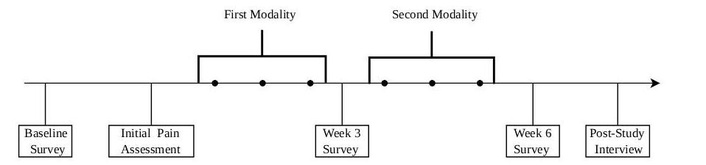
Participants were then scheduled to complete an initial pain assessment that was conducted via a cloud-based videoconferencing platform by a registered nurse using the McCaffery Pain Assessment Tool [18]. Participants were asked to provide a current list of medications including name, dose, and directions. This meeting was also used to set up participants’ videoconferencing accounts and work out any technology challenges. After completion of the assessment, participants were asked to select two of the four modalities for their six consultation sessions, choosing from yoga, massage, chiropractic, or physical therapy. Their preference was recognized to align with person-centered care. The results of the pain assessment were shared with the practitioners prior to their first session using a shared cloud-based project folder. Participants and practitioners worked with the research team to schedule three 45-minute videoconference sessions once weekly for three weeks at times that were convenient for both. After the day and time of the first appointment was agreed upon, researchers would create a private meeting within the university’s Health Insurance Portability and Accountability Act of 1996 (HIPAA)-compliant videoconference platform. During the third week, three 45-minute sessions were scheduled for the participant and practitioner for the second selected modality, allowing for a total of six sessions per participant.
All practitioners were certified or licensed in their specialty, met state regulations for practice, and held liability insurance as required by the university leading the study. Practitioners were given minimal guidance on how to conduct their pain-focused interventions, and sessions were unmonitored. Most had at least some experience delivering an online consultation and met with the principal investigator to review the research and privacy protocols prior to their first session. They were directed to use their clinical judgement during their allotted time with participants doing activities they would normally do in person to the best of their ability, such as asking participants to perform movements to evaluate mobility, posture and gait. Practitioners were encouraged to use their cameras to demonstrate interventions and observe participant responses. They were asked to keep brief clinical notes that could be accessed by the other practitioners before scheduled sessions and the research team to document progress. Fidelity testing was not conducted based on the pilot nature of the project and the expectation that variations could be necessary to adapt a novel intervention.
At baseline, demographic data were collected using REDCap surveys along with valid and reliable measurements common to interventional pain research that were repeated post-intervention at three and six weeks [19]. Primary outcomes included the Numeric Pain Rating Scale as a well-tested 0 to 10 measurement of current pain intensity [20], and the Patient-Reported Outcomes Measurement Information System (PROMIS) pain intensity Short Form 3a [21] and pain interference Short Form 8a [22] to measure pain in the past seven days. Mood was measured with the eight-item Patient Health Questionnaire (PHQ-8) for depressive symptoms [23] and the Generalized Anxiety Disorder-7 (GAD-7) for anxiety symptoms [24]. For all scales, higher values indicate higher symptom burdens.
Secondary exploratory outcomes were captured at baseline and after six weeks in order to detect whether any improvements could be expected. Measures included: PROMIS self-efficacy for managing symptoms and emotions (Short Forms 4a) to measure participants’ self-rated confidence [25]; the nine thwarted belongingness items from the Interpersonal Needs Questionnaire (INQ) used to evaluate relationships and belonging [26]; the Four-Item Spiritual Well-Being Index (4-ISWBI) to capture spiritual quality of life [27]; and the Current Opioid Misuse Measure (COMM) to capture self-reported misuse of opioids [28].
Finally, treatment satisfaction was measured with a post-test survey adapted from the IBM computer usability and satisfaction questionnaires that asked about how easy, convenient, and comfortable the treatment sessions were, with Likert-style items such as “Overall, I am satisfied with how easy it was to participate in this treatment” (1 = strongly disagree; 7 = strongly agree) [29].
After completion of the study protocol, participants were asked to complete a follow-up interview with a member of the study team via videoconferencing that focused on experiences throughout the active study period. Results of these interviews have been previously published [30]. Figure 1 provides a timeline of all study activities over the six-plus-week study. All data were collected between January 2021 and February 2022. Participants were provided a USD 75 gift card payment when all study tasks were completed to compensate for time completing study activities.
De-identified exports of data collected via REDCap were used in the analysis process. Data spreadsheets were used in both Microsoft Excel and SPSS® version 27 to complete the analysis. Counts and frequency statistics were used to describe categorical variables, while mean and standard deviation (SD) were used for numeric variables. All analyses were considered exploratory due to the pilot design with no hypothesis testing. Protocol feasibility was assessed with regard to participant recruitment and retention data, while acceptability was measured in session attendance and self-reported treatment satisfaction. PROMIS measures (pain intensity, pain interference, and self-efficacy for managing symptoms, and self-efficacy for managing emotions) were calculated by converting the sum of the ratings for each scale into a T-score, where a T-score of 50 is equivalent to the U.S. general population average and +/– 10 points is equivalent to the SD [22]. For the remaining measurements, total scores were summed. After confirmation of normality via skewness and kurtosis, to evaluate post-treatment effects, continuous outcomes were assessed using paired t-tests in a pre (baseline)/post (week 6)-analysis with significance level set at .05. Effect sizes were calculated with Cohen’s d and categorized [31]. Cronbach’s alpha was calculated as a measure of internal reliability. Categorical outcomes were assessed via contingency tables and Fisher’s exact test due to the small sample size. Missing data were accounted for using last observation carried forward approach. The Consolidated Standards of Reporting Trials (CONSORT) extension to pilot and feasibility trials method was followed for reporting [32].
A protocol for this pilot study was registered a priori through Clinical Trials Network (#NCT05098158). Washington State University Institutional Review Board (IRB) approval was secured from the principal investigator’s university (IRB #18111) on 7/10/2020. Good clinical and research practices, including those in the Declaration of Helsinki and the Belmont Report, were followed throughout the study period including all requirements within the HIPAA. All participants provided written informed consent via a secure online platform.
The average age of study participants (n = 16) was 60.4 years of age (SD: 10.4; low: 38; high: 75) and was 75% female. All participants, except one, described their race as White and ethnicity as non-Hispanic/Latino(a) (93.7%). Marital status was evenly split and half of the study’s participants reported having a graduate degree. The majority (87.5%) of participants were no longer working with federal health insurance (Medicare) being the primary insurance for over half of the participants (56.2%).
At baseline, all participants, except one (weekly pain), noted they had daily pain, with the average numeric pain scale score of 6.1 (SD: 1.7; range: 6; minimum: 4; maximum: 10). PROMIS pain intensity (mean: 68.3; SD: 6.3) and pain interference (mean: 69.9; SD: 5.5) T-Scores were well above the average adult. The average participant had 4.5 (SD: 1.8) painful medical conditions, with over half reporting five or more (56.2%). All participants (100%) reported back pain, with three-quarters (75%) also reporting arthritis and nerve pain and over half reporting neck pain (62.5%). Additional painful medical conditions included headaches and migraines (50%), post-surgical pain (31.3%), fibromyalgia (18.8%), and complex regional pain syndrome (CRPS)/reflex sympathetic dystrophy (RSD) syndrome (12.5%). One-quarter (25%) of participants also noted “Other” conditions.
Nearly half (43.8%) of the study sample reported having a concurrent mental health disorder, with one participant reporting three diagnoses, and the remaining six participants listing one each. The most common diagnosis was major depressive disorder (31.3%), followed by generalized anxiety disorder (18.8%) and bipolar (6.3%). Full participant characteristics can be reviewed via Table 1.
Study participant characteristics.
| Characteristic | Participants (n = 16) |
|---|---|
| Age in years; mean (SD) | 60.4 (10.4)* |
| Sex at birth; n (%) | |
| Female | 12 (75%) |
| Male | 4 (25%) |
| Race; n (%) | |
| White | 15 (93.7%) |
| American Indian or Alaska Native | 1 (6.3%) |
| Ethnicity; n (%) | |
| Non-Hispanic/Latino(a) | 15 (93.7%) |
| Hispanic/Latino(a) | 1 (6.3%) |
| Ethnicity; n (%) | |
| Married | 4 (25%) |
| Never married | 4 (25%) |
| Widowed | 4 (25%) |
| Divorced | 2 (12.5%) |
| Living with partner | 2 (12.5%) |
| Highest education level; n (%) | |
| Graduate degree | 8 (50%) |
| AA of technician certification | 4 (25%) |
| Bachelor’s degree | 2 (12.5%) |
| Some college | 1 (6.3%) |
| High school diploma or general educational development test | 1 (6.3%) |
| Employment status; n (%) | |
| Disabled | 8 (50%) |
| Retired | 6 (37.5%) |
| Part-time | 2 (12.5%) |
| Insurance coverage; n (%) | |
| Medicare | 9 (56.2%) |
| Private | 4 (25%) |
| Medicaid/State | 2 (12.5%) |
| Veterans administration | 1 (6.3) |
| Mental health disorder diagnosis; n (%) | 7 (43.8%) |
| Number of pain conditions; mean (SD) | 4.5 (1.8) |
| Number of pain conditions; n (%) | |
| 2 or less | 2 (12.5%) |
| 3 | 3 (18.8%) |
| 4 | 2 (12.5%) |
| 5 or more | 9 (56.2%) |
| Pain conditions; n (%) | |
| Back pain | 16 (100%) |
| Arthritis | 12 (75%) |
| Nerve pain | 12 (75%) |
| Neck pain | 10 (62.5%) |
| Headache/Migraines | 8 (50%) |
| Post-surgical | 5 (31.3%) |
| Other | 4 (25%) |
| Fibromyalgia | 3 (18.8%) |
| CRPS/RSD | 2 (12.5%) |
*: Age range: 37 years (low: 38 years of age; high: 75 years of age). CRPS: complex regional pain syndrome; RSD: reflex sympathetic dystrophy; SD: standard deviation.
Over a 12-month course of recruitment taking place during the COVID-19 (SARS-CoV-2) pandemic, 73 individuals were referred to the team, by themselves or study partners, for possible inclusion. The last participant completed the final interview in February 2022. A total of 36 individuals were excluded prior to screening for eligibility due to unsuccessful outreach (n = 22), not being interested (n = 7), disclosure of not being on an opioid-based medication before eligibility screening (n = 6) or living outside of state (n = 1). The remaining 37 individuals were directly assessed for eligibility (Figure 2) with six not meeting study requirements due to not being on an opioid-based medication. Of the 31 individuals sent the consent document, 21 submitted a completed form to the study team via REDCap. Finally, of the 16 participants beginning appointments, 15 completed all study requirements.
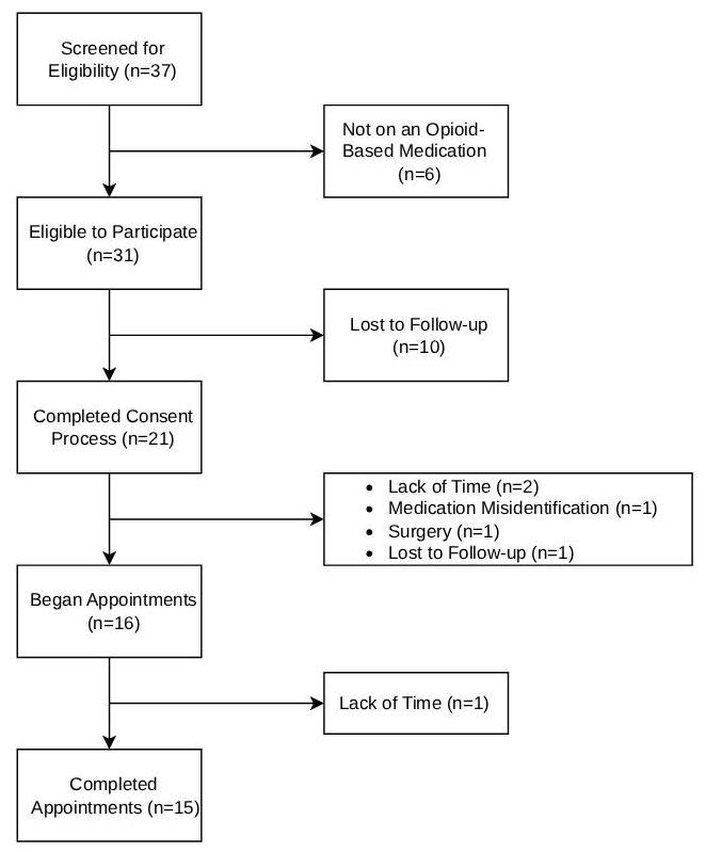
Consolidated Standards of Reporting Trials (CONSORT) flowchart of study participants.
Of the expected 96 total provider-led sessions, participants completed 92 (96% attended). One yoga therapy appointment and three physical therapy appointments were missed. The majority of responses to the post-treatment satisfaction survey showed some level of agreement with the ease of participation in the COMFORT study treatments with “strongly agree” being the most common response (57.1%) followed by “agree” (35.7%) and “somewhat agree” (7.1%). The same response frequency was found when participants were asked about the time commitment required to participate in the treatments. When asked about satisfaction with the support available, two-thirds of participants “strongly agree” followed by “agree” (26.7%) and “somewhat agree” (6.7%). Finally, when asked about their comfort while participating in the study, 80% strongly agreed, with 13.3% agreeing and 6.7% somewhat agreeing. When asked “Did you find anything about this treatment especially useful?” nearly all participants (86.7%) described learning at least one especially useful concept during the study period. Yoga therapy and physical therapy exercises, techniques, and providers were most commonly mentioned as useful. When asked “Is there anything you would change about this treatment if you could?”, six participants (40%) noted potential changes that could be made for future studies. The most commonly reported change was to hold all appointments in person, but other changes included allowing participants to cycle through all four modalities rather than selecting two, providing additional appointments, and improving the scheduling procedures.
Overall, the most commonly selected modality was yoga therapy (34.4%) followed by physical therapy (28.1%), massage therapy (25%), and chiropractic therapy (12.5%). Table 2 describes the full breakdown of modality selections.
Number of participants selecting treatment modality.
| Modality | Number (%) of participants selecting treatment modality | ||
|---|---|---|---|
| First selection (n = 16) | Second selection (n = 16) | Total (n = 32) | |
| Chiropractic therapy | 1 (6.3%) | 3 (18.8%) | 4 (12.5%) |
| Massage therapy | 3 (18.8%) | 5 (31.3%) | 8 (25%) |
| Physical therapy | 3 (18.8%) | 6 (37.5%) | 9 (28.1%) |
| Yoga therapy | 9 (56.2%) | 2 (12.5%) | 11 (34.4%) |
During the study, there was one adverse event that resolved without sequelae. Following completion of a yoga therapy session which included lateral head and neck tilts, the participant noted feeling “queasy.” The primary investigator contacted the participant, who noted they had previous issues with vertigo. The participant continued in the study with no additional problems noted.
All of the primary outcome measurements’ mean values showed numeric improvement across the six-week study period (Table 3). The PROMIS pain intensity and pain interference showed significant reductions. Affective symptoms of depression, assessed by PHQ-8, also showed significant reductions. Also, participants’ feelings of thwarted belongingness significantly decreased over the study period demonstrating improvement. Multiple outcomes showed positive changes that did not reach the level of significance, as indicated by Cohen’s d, such as numeric pain scale score and PROMIS self-efficacy for managing symptoms.
Pre-post changes to study outcomes.
| Variable | Pre-post values (n = 16) | ||||||
|---|---|---|---|---|---|---|---|
| Study time point | α | Pre-post change over study | |||||
| Baseline | Week 6 | Mean difference | 95% CI | p-value | Cohen’s d | ||
| Numeric pain scale; M (SD) | 6.1 (1.7) | 5.4 (1.7) | - | 0.7 | - | 0.111 | 0.424 (small) |
| PROMIS pain intensity; M (SD) | 68.3 (6.3) | 64.4 (6) | 0.89 | 3.9 | 2.3–5.5 | < 0.001 | 1.288 (large) |
| PROMIS pain interference; M (SD) | 69.9 (5.5) | 64.3 (8.3) | 0.96 | 5.6 | 2.2–8.9 | 0.003 | 0.879 (large) |
| PROMIS self-efficacy for managing symptoms; M (SD) | 39.4 (5.2) | 41.2 (5.3) | 0.64 | 1.9 | - | 0.168 | 0.362 (small) |
| PROMIS self-efficacy for managing emotions; M (SD) | 43.4 (6.3) | 44.4 (5.1) | 0.90 | 1.1 | - | 0.456 | 0.191 (none) |
| PHQ-8; M (SD) | 10.7 (5.9) | 7.6 (5) | 0.83 | 3.1 | 0.8–5.3 | 0.011 | 0.729 (medium) |
| PHQ-8 categories; n (%) | - | - | - | - | - | 0.682 | - |
| None (0–4) | 2 (12.5%) | 4 (25%) | |||||
| Mild (5–9) | 7 (43.8%) | 8 (50%) | |||||
| Moderate (10–14) | 3 (18.8%) | 2 (12.5%) | |||||
| Moderately severe (15–19) | 2 (12.5%) | 2 (12.5%) | |||||
| Severe (20–24) | 2 (12.5%) | 0 (-) | |||||
| GAD-7; M (SD) | 5.9 (4.7) | 5.2 (5.2) | 0.84 | 0.8 | - | 0.517 | 0.166 (none) |
| GAD-7 categories; n (%) | - | - | - | - | - | 0.247 | - |
| Minimal (0–4) | 5 (31.3%) | 9 (56.2%) | |||||
| Mild (5–9) | 9 (56.2%) | 4 (25%) | |||||
| Moderate (10–14) | 1 (6.3%) | 1 (6.3%) | |||||
| Severe (15–21) | 1 (6.3%) | 2 (12.5%) | |||||
| Thwarted belongingness (INQ); M (SD) | 27.7 (14.4) | 24.5 (13.5) | 0.92 | 3.2 | 0.8–5.6 | 0.012 | 0.715 (medium) |
| Spiritual well-being index; M (SD) | 15 (4.1) | 13.9 (5) | 0.67 | 1.1 | - | 0.453 | 0.193 (none) |
| COMM; M (SD) | 7.1 (4.9) | 6.8 (4.4) | 0.68 | 0.3 | - | 0.811 | 0.061 (none) |
| COMM categories; n (%) | - | - | - | - | - | 0.999 | - |
| Positive (> 8) | 6 (37.5%) | 5 (31.3%) | |||||
| Negative (< 9) | 10 (62.5%) | 11 (68.8%) | |||||
Continuous variables analyzed using paired t-tests; categorical variables calculated with Fisher’s exact test; all used last observation carried forward. α: Cronbach’s alpha calculated at baseline. CI: confidence interval; COMM: Current Opioid Misuse Measure; GAD-7: Generalized Anxiety Disorder; INQ: Interpersonal Needs Questionnaire; PHQ-8: Patient Health Questionnaire; PROMIS: Patient-Reported Outcomes Measurement Information System; SD: standard deviation.
Participants in this study had a low level of anxiety, indicated by the mean GAD-7 score in the “mild” range for both baseline (pre) and week 6 (post). Also, spiritual well-being scores were high on average, with insignificant change over the study. Mean COMM scores remained fairly constant from baseline to week 6, with an insignificant 0.3 change in scores. At study entry, six participants (37.5%) were above the cutoff score (≥ 9), signifying a “positive” screening for medication misuse behaviors; this reduced to five individuals (31.3%) at the end of the study.
Chronic pain continues to represent a significant global health burden. U.S. population incidence rates of 52 cases per 1,000 per year exceed other chronic conditions, including diabetes, depression, and hypertension [33]. It has been suggested that both prevention and early management of pain would improve these findings [33]. Greater and earlier access to multimodal, multidisciplinary therapies could, potentially, improve pain experiences. The findings of the present pilot study suggest that videoconference-based consultations providing complementary and integrative therapies may represent a feasible and acceptable approach to expanding access to holistic pain management services.
The videoconference intervention tested in this study demonstrated high levels of engagement, with participants attending 96% of the scheduled sessions. The engagement may have been high due to a desire for connection during the pandemic; some participants commented that their usual activities were cancelled to prevent disease spread. Virtual attendance also removed barriers related to transportation, weather, or physical limitations [9]. The dropout rate after consenting (29%) was comparable to other studies of people with pain [34]. Although payment was provided for study completion, it was not dependent on session attendance. Therefore, the piloted online consultations demonstrate a possible, feasible, and acceptable approach to extend holistic pain care options using technology. These findings align with emerging evidence suggesting that telehealth platforms can facilitate meaningful patient-provider interactions while increasing accessibility of care [12]. When implemented thoughtfully, virtual care models may support person-centered approaches by allowing clinicians to tailor consultations to individual patient needs while overcoming traditional barriers to care.
Among the modalities offered in the present study, yoga therapy and physical therapy were the most frequently selected by participants. This could have been due to familiarity with the modalities or a presumption that they would translate to an online session more readily than massage or chiropractic therapies. These findings are consistent with U.S. National Health Interview Survey data indicating that physical therapy and massage are among the most used non-pharmacologic approaches for managing chronic pain [3]. Early access to clinicians such as physical therapists and chiropractors has been associated with improved patient outcomes, reduced disability, and lower healthcare costs for back pain conditions [35]. One review article concluded that there are startlingly few robust studies comparing synchronous telehealth therapies with standard in-person care for chronic low back pain despite this being a common and costly condition [15]. Yet, the existing literature indicates that physical therapists can perform comparable evaluations and interventions during in-person interactions and synchronous telehealth environments. Telehealth consultations may therefore represent one strategy for addressing the growing burden of back-specific pain, while increasing access to specialized care [15].
Some of the noted benefits to telehealth include the ability for real-time interactions that can increase access to health care, particularly for people who live remotely or have mobility or geographic obstacles [36]. Massage therapy would be expected to be less popular in a virtual format due to the hands-on nature of the therapy, but notably, within our sample, about one quarter of all selected sessions were with a massage therapist. This suggests that patients may value educational and self-management guidance from massage therapists even in the absence of direct manual treatment. These findings are consistent with broader literature suggesting that integrative mind-body health approaches can enhance access to holistic pain care and may be perceived as less stigmatizing than conventional “psychological” approaches to chronic pain [36]. The results of this pilot study also align with emerging literature describing the potential of digital health interventions to improve outcomes for individuals with chronic conditions. Recent reviews have highlighted the role of non-invasive digital nursing technologies and telehealth interventions in supporting chronic disease management through enhanced monitoring, patient education, and behavioral support [11]. Such approaches may enable healthcare systems to extend care beyond traditional clinical settings while maintaining patient engagement and continuity of care. Another study during the COVID-19 pandemic explored the utilization of non-pharmacologic pain management techniques among U.S. Veterans, specifically focusing on yoga, chiropractic, and acupuncture [37]. Although that study did not restrict recruitment to those receiving opioids, results were similar to ours in that receptivity was favorable [37]. Similar disadvantages were expressed by participants in terms of participants’ preferences for in-person services when accessible and scheduling or staffing barriers [37]. As noted in previous studies, concerns regarding digital literacy [38], internet connectivity and bandwidth, billing and coding for insurance payments, and scalability in socioeconomically disadvantaged communities would need to be addressed before widespread telehealth adoption [37].
In addition to the quantitative measurements that indicated symptom improvements from our study participants, they also frequently commented that they benefitted from the 1:1 education they received from their practitioners. Digital pain interventions may exert benefit through psychosocial processes including enhanced self-efficacy, cognitive reframing, and social engagement [11]. The reduction in thwarted belongingness observed in our study may reflect increased interpersonal connection between participants and practitioners during individualized virtual consultations. Many indicated that they learned new pain management strategies that had not been offered to them despite many years of medical treatments for their pain and that therapists focused on their specific and unique needs [30]. These findings highlight the importance of patient-provider communication and education in chronic pain management and suggest that telehealth platforms can support meaningful therapeutic interactions when implemented effectively. Our findings were also in alignment with others who have reported that despite pretreatment skepticism about the effectiveness of telehealth, most report to find it “comfortable, effective, and efficient” [14]. Importantly, the ability to deliver multidisciplinary pain management consultations during a period when in-person services were severely restricted demonstrates the potential of telehealth to maintain continuity of care during public health emergencies. Participants reported high levels of satisfaction with the virtual consultations. This aligns with other studies of online consultations for populations with chronic pain and cancer pain [39, 40]. Trusting relationships with practitioners and overall functionality of virtual platforms are key to satisfaction [39]. Although our satisfaction survey centered on ease, convenience, and comfort with the intervention, other measurements could be added in the future to explore aspects of trust [39], care quality and coordination, and satisfaction both of and with practitioners [40].
Overall, the findings from this pilot study suggest that telehealth-based delivery of complementary and integrative therapies may represent a promising approach to expanding access to multidisciplinary pain management. As healthcare systems continue to integrate digital technologies into routine practice, further research is needed to determine how virtual care models can best complement traditional in-person services while maintaining the quality, safety, and person-centered nature of clinical care.
This was a brief six-week pilot study with a small number of participants completing study activities from a single state in the U.S. They may not have represented a general population prescribed opioids for pain, as internet service was required, and most were White, had a college degree, endorsed multiple pain conditions, and were not presently employed. The lack of a controlled design prohibits attribution of positive effects to the intervention versus other pain management interventions. Fidelity was not assured, and not all participants tested all modalities, and the order of exposures varied. A few sessions were completed through voice alone because video was unavailable. We had minimal missing data from only one participant; however, the last observation carried forward method could have had some impact on the accuracy of evaluative measures. Practitioners were unable to use manual therapy techniques or assessments that they would be able to use in person, which may have reduced the evaluation quality and potential benefits. Professional licensing restrictions disallowed telehealth to be conducted outside of any state other than the one where practitioners were licensed, reducing the geographic diversity of participants.
Selection bias and regression to the mean can be addressed in future studies with a control group; however, a double-blinded study design would not be possible given the nature of the intervention. Therefore, future studies may choose to compare telehealth with in-person sessions or against other well-studied non-pharmacologic pain interventions for comparative effectiveness. Studies will require a well-developed intervention with fidelity testing to examine outcomes between different therapists and modalities. Although we collected data at three weeks to capture effects after each modality, we chose to forgo analysis across modalities due to the small sample, unevenly dispersed data, and order effects that would need to be considered because participants had the option to select the sequence of their two chosen modalities; these types of analyses are recommended for future studies.
Our findings indicate that for at least some people, online sessions may be useful and allow for positive change over time. Despite skepticism expressed by some practitioners prior to delivering sessions, they were able to adapt to the virtual environment and accommodate people who had travel or transportation restrictions due to pain. Although the modalities offered in this study are traditionally rooted in physical touch, the experience was able to transcend the limitations of the digital world. Technical struggles such as internet lagging, mastering camera angles, and video-microphone settings added complications to interventions that may not be present in traditional face-to-face settings. Yet, there was no evidence that these created significant hindrances to providing engaging telehealth sessions that were seen as beneficial. From the practitioners’ perspective, they reported that most participants were highly engaged and the telehealth process was convenient, free of distractions, and beneficial for patient education.
Due to the emergence of SARS-CoV-2 and the spread of COVID-19, the project methods were altered to be completely virtual, as detailed elsewhere [9]. In the future, the project team would like to return to the original goal of conducting in-person consultations and comparing them to virtual sessions to determine efficacy. While some studies have found telerehabilitation to be equally effective to in-person physiotherapy in a few limited studies [38], widespread experimentation has not occurred testing a variety of non-pharmacologic therapies among various populations with pain.
Although this pilot study was conducted during the COVID-19 pandemic, the intervention aligned with recommendations that were later reinforced in newer clinical and policy guidelines emphasizing non-pharmacologic, interprofessional and telehealth-based approaches to chronic pain management [12, 13]. At the time of implementation, empirical research examining structured interprofessional telehealth consultations for individuals with chronic pain, particularly those prescribed opioids, remained limited. To our knowledge, few studies have examined the feasibility of delivering synchronous telehealth consultations that integrate multiple complementary and integrative health disciplines for this population. Our team has taken lessons learned from this study into clinical implementation of telehealth pain assessments using a nurse navigator model to assist in patient goal setting [41], and plans are underway to expand virtual yoga therapies within rural communities. More study is needed to determine how to consistently and reliably deliver multimodal, multidisciplinary pain care in an equitable fashion, and examine how this can affect opioid use and harms. Some studies suggest that persons from minoritized racial/ethnic and/or rural communities, and those with lower income, may be less likely to use telehealth [42]. Thoughtful testing and implementation will be necessary to ensure that those with the greatest need for care can access and realize the benefits of technology-based interventions.
In conclusion, virtual sessions using videoconferencing technology served as a feasible option for adults with chronic pain to access complementary and integrative therapies during a global pandemic. Yoga therapy and physical therapy were most commonly selected out of four non-pharmacologic options. Improvements were detected on outcomes important to pain management after six weeks. Future research using randomized designs can control for placebo and confounding effects and further explore barriers to digital health. The findings of this study support the expansion of telehealth services to address inequities in pain care. Telehealth holds promise in widening access to effective non-pharmacologic interventions and improving health outcomes for people with chronic pain.
CDC: Centers for Disease Control and Prevention
CIM: complementary and integrative medicine
COMFORT: Community-engaged Options to Maximize and Facilitate Opioid ReducTion
COMM: Current Opioid Misuse Measure
COVID-19: coronavirus disease 2019
eConsent: electronic consent
GAD-7: Generalized Anxiety Disorder-7
HIPAA: Health Insurance Portability and Accountability Act of 1996
IRB: Institutional Review Board
PHQ-8: Patient Health Questionnaire
PROMIS: Patient-Reported Outcomes Measurement Information System
REDCap: Research Electronic Data Capture
SARS-CoV-2: severe acute respiratory syndrome coronavirus 2
SD: standard deviation
U.S.: United States
The authors wish to acknowledge the participants who made this work possible, along with contributions in planning, recruitment, and clinical expertise from our partners in Spokane, WA including medical director Dr. Jamie Lewis and colleagues at Northwest Spine and Pain Medicine, project manager Heidi Wilson and colleagues at Spokane Regional Opioid Task Force Non-opioid Pain Management Work Group and Spokane Regional Health District, and the medical professionals at CHAS Health. We also are indebted to the skilled practitioners who contributed in planning and administering telehealth consultations, including Kelli Pearson, DC, DeeDee Hoover, LMT, Earl J. Duenas, LMT, and Gianna M. (Bardelli) Bean, E-RYT, YACEP.
MW: Conceptualization, Investigation, Methodology, Data curation, Funding acquisition, Visualization, Writing—original draft, Writing—review & editing. DUE: Data curation, Writing—original draft, Writing—review & editing. RJB: Conceptualization, Data curation, Formal analysis, Methodology, Visualization, Writing—original draft, Writing—review & editing. SVB: Conceptualization, Data curation, Writing—review & editing. DM: Conceptualization, Data curation, Writing—review & editing. All authors read and approved the submitted version.
The authors declare that they have no conflicts of interest.
The COMFORT study was registered a priori through Clinical Trials Network (#NCT05098158) and approved by the Washington State University Institutional Review Board (IRB #18111). This manuscript complies with the Declaration of Helsinki.
Informed consent to participation in the study was obtained from all participants.
Informed consent to publication was obtained from all participants.
The datasets generated and analyzed for this study can be shared upon reasonable request made via email to the principal investigator/corresponding author.
Research reported in this publication was funded by the Rayce Rudeen Foundation and the National Center for Advancing Translational Sciences of the National Institutes of Health [UL1 TR002319]. The content is solely the responsibility of the authors and does not necessarily represent the official views of the affiliations, funding agency, or the National Institutes of Health. The funders had no role in study design, data collection and analysis, decision to publish, or preparation of the manuscript.
© The Author(s) 2026.
Open Exploration maintains a neutral stance on jurisdictional claims in published institutional affiliations and maps. All opinions expressed in this article are the personal views of the author(s) and do not represent the stance of the editorial team or the publisher.
Copyright: © The Author(s) 2026. This is an Open Access article licensed under a Creative Commons Attribution 4.0 International License (https://creativecommons.org/licenses/by/4.0/), which permits unrestricted use, sharing, adaptation, distribution and reproduction in any medium or format, for any purpose, even commercially, as long as you give appropriate credit to the original author(s) and the source, provide a link to the Creative Commons license, and indicate if changes were made.



View: 52
Download: 6
Times Cited: 0
Hyunjoong Kim
Marco Cascella ... Giuseppe Polese
Edoardo Piacentino ... Jean-Pierre Van Buyten
Marco Cascella ... Valentina Cerrone