 Review


Affiliation:
1Department of Medical Laboratory Science, Neuropsychiatric Hospital, Aro, Abeokuta 110101, Ogun State, Nigeria
2Department of Medical Laboratory Science, McPherson University, Seriki Sotayo 110117, Ogun State, Nigeria
ORCID: https://orcid.org/0000-0003-3587-9767

 ,
,
Affiliation:
3Department of Medical Laboratory Services, Federal University of Health Sciences Teaching Hospital, Ila-Orangun 234101, Nigeria
4Department of Digital Health, Global Health Focus Africa, Kigali 0000, Rwanda
5Department of Public Health, Faculty of Medicine and Health Sciences, Hormuud University, Mogadishu BN204, Somalia
Email: uthmanadebayo85@gmail.com
ORCID: https://orcid.org/0009-0000-2000-7451
 ,
,
Affiliation:
6Royal (Dick) School of Veterinary Studies, University of Edinburgh, EH8 9YL Midlothian, UK
7YouthRISE Nigeria, Abuja 900108, Nigeria
ORCID: https://orcid.org/0009-0007-9371-0915
,
Affiliation:
1Department of Medical Laboratory Science, Neuropsychiatric Hospital, Aro, Abeokuta 110101, Ogun State, Nigeria
8Department of Public Health and Maritime Transport, Faculty of Medicine, University of Thessaly, 38221 Volos, Greece
9Department of Public Health, Daffodil International University, Dhaka 1216, Bangladesh
ORCID: https://orcid.org/0000-0002-3809-4271
,
Affiliation:
1Department of Medical Laboratory Science, Neuropsychiatric Hospital, Aro, Abeokuta 110101, Ogun State, Nigeria
10Department of Medical Laboratory Science, Faculty of Basic Medical Sciences, Adeleke University, Ede 232101, Osun State, Nigeria
ORCID: https://orcid.org/0009-0004-6030-0061
,
Affiliation:
11Faculty of Medicine and Health Sciences, SIMAD University, Mogadishu BN00630, Somalia
12School of Global Health, Faculty of Medicine, Chulalongkorn University, Bangkok 10330, Thailand
ORCID: https://orcid.org/0009-0006-5991-4052
,
Affiliation:
1Department of Medical Laboratory Science, Neuropsychiatric Hospital, Aro, Abeokuta 110101, Ogun State, Nigeria
ORCID: https://orcid.org/0009-0008-2544-7606
,
Affiliation:
1Department of Medical Laboratory Science, Neuropsychiatric Hospital, Aro, Abeokuta 110101, Ogun State, Nigeria
ORCID: https://orcid.org/0009-0009-2172-2866
,
Affiliation:
13Seventh Day Adventist Hospital, Asamang 2501, Ghana
14The Royal (Dick) School of Veterinary Studies and the Roslin Institute, University of Edinburgh, EH8 9YL Midlothian, UK
ORCID: https://orcid.org/0000-0002-9836-0834
,
Affiliation:
15Department of Global Health and Development, Faculty of Public Health and Policy, London School of Hygiene & Tropical Medicine, WC1E 7HT London, UK
16Center for University Research, University of Makati, Makati City 1644, Philippines
17Research Office, Palompon Institute of Technology, Palompon 6538, Leyte, Philippines
ORCID: https://orcid.org/0000-0002-2179-6365
Explor Drug Sci. 2026;4:1008177 DOI: https://doi.org/10.37349/eds.2026.1008177
Received: April 17, 2026 Accepted: July 14, 2026 Published: August 18, 2026
Academic Editor: Fernando Albericio, University of KwaZulu-Natal, South Africa, Universidad de Barcelona, Spain
Cannabis sativa has a long history in ethnomedicine, but advances in molecular biology and regulatory shifts have reignited global interest in its therapeutic potential. Cannabinoid research in the 21st century spans molecular pharmacology, clinical applications, and public health integration. This study provides a comprehensive synthesis of the current state of knowledge. This narrative review synthesizes evidence from Scopus, PubMed, and Google Scholar using Medical Subject Headings-based search strategies. Only articles published in English were included, without restrictions on publication year; however, greater emphasis was placed on recent studies to ensure currency, while seminal and historically important publications were included where necessary to provide foundational context. Relevant studies were thematically analyzed and summarized under predefined headings. Major phytocannabinoids have been identified, with Δ9-tetrahydrocannabinol, cannabidiol, and cannabigerol as key therapeutic candidates. Preclinical studies have shown neuroprotective, anti-inflammatory, analgesic, immunomodulatory, and anticancer effects, but clinical translation remains limited by variability, dosing challenges, and inconsistent reproducibility. These effects are mediated through the endocannabinoid system and related receptor networks. Emerging evidence suggests that epigenetic regulation and precision medicine approaches may enhance individualized cannabinoid therapy. However, safety concerns, including cognitive and psychiatric effects, drug interactions, and dependence, require robust pharmacovigilance. Fragmented regulatory frameworks continue to hinder research and equitable access, underscoring the need for standardized formulations, clinician training, and equity-focused integration into health systems. Cannabinoid therapeutics represent a rapidly evolving field with promise in multiple medical domains. Future progress hinges on harmonizing regulations, expanding clinical evidence, and integrating precision medicine, equity, and public health principles to maximize therapeutic benefits while minimizing risks.
Cannabis sativa, an herbaceous species within the family Cannabaceae, is widely recognized under various vernacular names, most notably as marijuana and hemp [1]. Cannabis sativa is one of the earliest known cultivated medicinal plants, with evidence of its use dating back over 10,000 years. It has been used in both traditional medicine and industrial applications. Its diverse phytochemical profile, comprising cannabinoids, terpenoids, and flavonoids, has played a pivotal role in its continued use in ethnomedicine and therapeutic practices across multiple cultures [2]. The classification of Cannabis as a monotypic genus, comprising a single, highly polymorphic species, is widely accepted despite ongoing taxonomic debates regarding the delineation of its varieties. Formerly described species, such as C. indica Lam. and C. ruderalis Janisch. are now considered varieties of C. sativa L., supported by morphological, anatomical, phytochemical, and genetic evidence [3].
In recent decades, renewed interest in Cannabis sativa has emerged, driven by shifting regulatory policies, advancements in scientific research, and the discovery of the endocannabinoid system (ECS), which underscores the plant’s therapeutic potential [4]. The ECS is a sophisticated neuromodulatory network that plays a crucial role in the central nervous system (CNS), influencing synaptic plasticity and mediating adaptive responses to intrinsic and extrinsic stimuli. It consists of cannabinoid receptors (CBRs), endogenously produced cannabinoids (endocannabinoids), and enzymatic machinery responsible for their biosynthesis and degradation. CB1 receptors are the primary mediators of ECS signalling in the brain and are crucial for the regulation of cognition, memory, and mood. Although their expression is highest in the CNS, CB1 receptors are also present in peripheral tissues, including the liver, adipose tissue, pancreas, gastrointestinal tract, and skeletal muscle, where they contribute to metabolic regulation and energy homeostasis, and endocrine function [5, 6]. In contrast, CB2 receptors are mainly expressed on immune cells and glial cells, where they play a significant role in immune modulation and the control of neuroinflammation, especially in the context of neurodegenerative and neuropsychiatric disorders [7].
Beyond CBRs, transient receptor potential (TRP) channels are involved in pain perception, and peroxisome proliferator-activated receptors (PPARs) are nuclear receptors that regulate metabolic and anti-inflammatory pathways. PPARs, particularly PPAR-α and PPAR-γ, are activated by certain endocannabinoid-like lipids and exert neuroprotective and anti-inflammatory effects by modulating gene expression related to lipid metabolism, oxidative stress, and inflammation [8]. Historically, Cannabis sativa has been employed in ethnomedicine to manage various ailments, including rheumatism, epilepsy, asthma, pain, dermatological burns, and obstetric complications [9]. The medicinal and cultural relevance of Cannabis sativa is largely attributed to its psychoactive and non-psychoactive constituents; however, its psychoactive properties have also contributed to its criminalization and sociopolitical controversy during the 20th century [10]. The renewed scientific interest in cannabinoid research stems from the discovery of the ECS and its critical role in maintaining physiological homeostasis, along with the therapeutic potential of both major and minor cannabinoids. Contemporary studies highlight their potential in the treatment of chronic pain, inflammation, neurodegenerative disorders, cancer, and emerging viral illnesses [11].
The global relaxation of legal restrictions has facilitated more rigorous clinical trials and mechanistic studies, accelerating the integration of cannabinoid-based therapies into modern medicine [12]. However, significant challenges remain, particularly regarding the standardization of cannabinoid formulations, as variability in composition and dosing complicates both research and clinical applications [13, 14]. Their safety profiles are inconsistent, with concerns about psychoactive effects, off-target actions, and drug interactions, especially given the diverse pharmacokinetics of different cannabinoids and delivery methods [15]. Risks such as cognitive impairment, psychiatric vulnerability, and increased sensitivity during adolescence are well documented, underscoring the need for evidence-based safeguards and robust regulatory oversight to ensure both efficacy and safety [16]. Additionally, the lack of uniform regulatory frameworks and the challenge of developing functionally selective ligands that maximize therapeutic benefits while minimizing adverse effects further complicate clinical progress [13, 14]. Against this backdrop, this review aims to provide a comprehensive synthesis of the current state of knowledge on this topic. Specifically, it aims to elucidate the molecular mechanisms underlying cannabinoid activity, critically examine the clinical evidence across therapeutic domains, and evaluate the existing regulatory frameworks. By bridging these dimensions, this review seeks to advance understanding of how cannabinoid therapeutics can be safely, effectively, and equitably integrated into contemporary medical practice.
This review provides a comprehensive narrative synthesis of the current evidence on cannabinoid therapeutics. We performed a comprehensive search of PubMed, Scopus, and Google Scholar, updated through June 2025, to identify relevant peer-reviewed articles. To maximize coverage, the search was supplemented by hand-searching the reference lists of selected articles and relevant reviews (Table 1). The search strategy was informed by MeSH and relevant keywords derived from the study aim, including “Cannabis sativa,” “cannabinoids,” “tetrahydrocannabinol,” “cannabidiol,” “endocannabinoid system,” “clinical trials,” “regulatory frameworks,” “formulations,” and “health systems integration,” which were adapted for each database. Boolean operators (AND/OR) and truncations were used to refine the search results.
Summary of the literature search strategy.
| Database | Search period | Search terms | Purpose |
|---|---|---|---|
| PubMed | Updated through June 2025 | “Cannabis sativa,” “cannabinoids,” “tetrahydrocannabinol,” “cannabidiol,” “endocannabinoid system,” “clinical trials,” “regulatory frameworks,” “formulations,” and “health systems integration” | Identification of biomedical and clinical studies |
| Scopus | Updated through June 2025 | “Cannabis sativa,” “cannabinoids,” “tetrahydrocannabinol,” “cannabidiol,” “endocannabinoid system,” “clinical trials,” “regulatory frameworks,” “formulations,” and “health systems integration” | Broad multidisciplinary coverage |
| Google Scholar | Updated through June 2025 | “Cannabis sativa,” “cannabinoids,” “tetrahydrocannabinol,” “cannabidiol,” “endocannabinoid system,” “clinical trials,” “regulatory frameworks,” “formulations,” and “health systems integration” | Supplementary retrieval of recent and grey literature |
We included peer-reviewed studies published in English, with no date limits, but placed greater emphasis on recent studies to ensure currency, while seminal and historically important publications were included where necessary to provide foundational context. Eligible articles addressed at least one of the following: molecular mechanisms, preclinical findings, clinical applications, safety, formulations and delivery systems, regulatory frameworks, or equity and health system integration related to cannabinoids. We excluded non-English publications and conference abstracts lacking sufficient data, and duplicate records.
Titles and abstracts were screened for relevance, followed by a full-text assessment. Only studies directly relevant to the scope of this review were included. The reference lists of key articles were screened to identify additional eligible publications (Table 1).
From each eligible study, we extracted bibliographic details and key methodological and outcome information and organized the evidence into predefined domains aligned with the review objectives. A narrative, thematic synthesis grouped findings under: (1) phytochemistry and molecular mechanisms, including the ECS, therapeutic mechanisms, and advances in epigenetics/molecular targeting; (2) preclinical evidence; (3) clinical applications in neurological and psychiatric disorders, pain and inflammation, oncology and palliative care, gastrointestinal/dermatological and other emerging uses, and special populations; (4) formulations, delivery systems, and bioavailability; (5) safety, toxicology, and risk management; (6) regulatory landscape and policy challenges; (7) integration into health systems and equity considerations; and (8) future directions. Heterogeneity in study designs and outcomes precluded meta-analysis; therefore, the results were narratively summarized within and across themes.
The findings from the included literature were synthesized into an integrated narrative rather than a quantitative meta-analysis. The thematic structure enabled the integration of molecular, clinical, regulatory, and equity perspectives, providing a holistic overview of cannabinoid therapeutics in the 21st century.
Cannabinoids derived from Cannabis sativa possess a wide range of pharmacological properties that extend well beyond their psychoactive effects. These activities are primarily mediated by major phytocannabinoids, including Δ9-tetrahydrocannabinol (THC), cannabidiol (CBD), and cannabigerol (CBG), which interact not only with the ECS but also with multiple molecular targets involved in neurological, immunological, and metabolic regulation [17]. To date, more than 120 phytocannabinoids have been identified in Cannabis sativa, with THC, CBD, and CBG emerging as the most extensively studied compounds due to their significant therapeutic potential across a variety of clinical conditions [18]. Advances in molecular pharmacology, epigenetics, and proteomics have repositioned cannabinoids as multifaceted therapeutic agents with potential roles in neuroprotection, pain management, inflammation, and immunomodulation [19]. Cannabis sativa produces more than 120 phytocannabinoids, most of which are synthesized as acidic precursors, including tetrahydrocannabinolic acid (THCA), cannabidiolic acid (CBDA), and cannabigerolic acid (CBGA). Under conditions of heating or prolonged storage and exposure to environmental factors, these acidic cannabinoids gradually undergo decarboxylation to yield the pharmacologically active neutral forms THC, CBD, and CBG [10, 20]. CBGA is particularly important as the universal biochemical precursor of THCA, CBDA, and cannabichromene acid (CBCA), and is therefore commonly referred to as the “mother cannabinoid” [21]. Upon decarboxylation, CBGA gives rise to the neutral cannabinoid CBG; however, the enzymatic synthesis of THCA, CBDA, and CBCA occurs from CBGA rather than CBG [22].
Each cannabinoid exhibits distinct pharmacodynamic properties. THC acts as a partial agonist of the CB1 and CB2 receptors, modulating cyclic adenosine monophosphate (cAMP) signaling and neurotransmitter release. While CB1 activation is primarily responsible for its psychotropic effects, CB2 activation underpins its immunomodulatory actions, positioning THC as a dual agent in neurological and peripheral disorders [23]. In contrast, CBD is non-intoxicating and interacts with multiple receptor systems, including G protein-coupled receptor 55 (GPR55), transient receptor potential vanilloid type 1 (TRPV1), PPAR-γ, and serotonin receptors, conferring broad therapeutic potential in conditions such as epilepsy, anxiety, and inflammation [24].
CBG demonstrates partial agonism at CB2 receptors, low affinity to CB1, and additional effects through receptor heteromers, with emerging evidence supporting its neuroprotective and gastrointestinal benefits [25]. Recent studies have indicated that cannabinoids influence epigenetic regulation, ion channel dynamics, and mitochondrial function, revealing mechanisms that surpass traditional receptor-ligand interactions. These findings suggest that cannabinoids may exert long-term effects on cellular resilience and metabolic reprogramming, thereby offering new opportunities for precision therapeutics in diseases where classical receptor pharmacology provides only a partial explanation of the clinical effects [26–28]. Beyond the major cannabinoids, minor compounds such as tetrahydrocannabivarin (THCV), cannabichromene (CBC), and cannabinol (CBN) have received increasing attention. Together with terpenes and other phytochemicals, these constituents may contribute to the so-called “entourage effect”, whereby interactions among multiple compounds enhance or modulate therapeutic efficacy [29, 30]. However, despite compelling preclinical findings, the entourage hypothesis remains controversial. While some experimental studies support synergistic interactions [31], evidence from controlled pharmacological and clinical studies has been inconsistent. Recent reviews have highlighted the limited direct clinical evidence supporting the concept and have questioned whether the observed effects reflect true pharmacological synergy or merely additive actions of individual constituents [32, 33]. Notably, rigorous dose-response and receptor-based studies have failed to demonstrate consistent supra-additive synergy in most pain and inflammation models, with current evidence generally favoring additive or modulatory interactions rather than genuine synergy [34, 35]. Distinguishing true pharmacological synergy from additive effects will require further mechanistic and translational investigations.
Building upon the fundamental components of the ECS described above, cannabinoid therapeutics exert their effects through a complex network of receptor-dependent and receptor-independent pathways. In addition to classical CBRs, cannabinoids interact with transient receptor potential channels, GPR55, and nuclear receptors, underscoring the broad physiological influence of endocannabinoid signaling [30, 36, 37]. Collectively, these pathways integrate central, immune, and metabolic processes and contribute to the maintenance of physiological homeostasis. Collectively, the ECS integrates central, immune, and metabolic pathways to maintain homeostasis, making it an attractive therapeutic target for various diseases (Figure 1).
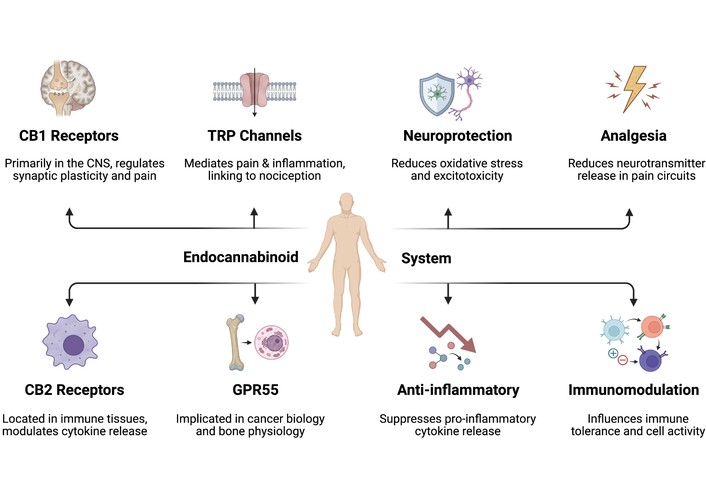
Comprehensive overview of the endocannabinoid system. Created in BioRender. Ahmed, M. M. (2026) https://BioRender.com/ivtjxje.
Neuroprotection: Both THC and CBD have been shown to reduce oxidative stress, mitochondrial dysfunction, and excitotoxicity in preclinical models, thereby conferring neuroprotective effects relevant to neurodegenerative disorders such as Alzheimer’s and Parkinson’s diseases [38, 39]. However, robust human evidence demonstrating disease-modifying effects in these conditions remains lacking.
Anti-inflammatory actions: CB2 activation suppresses pro-inflammatory cytokine release, whereas CBD modulates nuclear factor kappa B (NF-κB) and inflammasome pathways [40].
Analgesia: CB1 activation reduces neurotransmitter release in nociceptive circuits, whereas TRPV1 and GPR55 contribute to peripheral pain modulation [29].
Immunomodulation: Cannabinoids influence immune tolerance and immune cell activity, including T-cell responses and macrophage function, with implications for autoimmune disorders and cancer immunology [41]. In addition to these primary pathways, cannabinoids interact with dopaminergic, serotonergic, and glutamatergic systems, contributing to their effects on mood, cognition, and reward. For instance, CBD’s partial agonism at serotonin 5-HT1A receptors underlies its anxiolytic properties [42], whereas THC’s interaction with dopaminergic circuits provides insight into both its therapeutic potential and its association with psychosis in susceptible individuals [43].
Cannabinoids exert profound epigenetic influences, extending their role beyond receptor binding to the regulation of gene expression (Figure 2). Experimental evidence indicates that cannabinoids modulate DNA methylation, histone acetylation, and non-coding RNA expression, thereby reshaping cellular function. For example, THC exposure alters gene networks involved in synaptic plasticity and psychiatric vulnerability [44], whereas CBD demonstrates potential as an epigenetic modulator, influencing chromatin remodeling and the transcription of anti-inflammatory genes. These findings suggest that cannabinoids not only relieve symptoms but also modify the molecular landscape that drives the disease processes [45]. Beyond epigenetics, proteomic studies have uncovered extensive cannabinoid-induced modulation of neuronal and immune proteins, offering insights into its neuroprotective and immunoregulatory effects [46]. Proteomic mapping highlights altered pathways in oxidative stress, mitochondrial function, and cytokine signalling, which may explain the efficacy of cannabinoids in disorders such as neurodegeneration, chronic pain, and autoimmune diseases. The integration of multi-omics approaches, including transcriptomics, metabolomics, and single-cell sequencing, further refines our understanding of how cannabinoids orchestrate cross-level molecular changes. This systems-level perspective is pivotal for advancing precision medicine strategies, in which cannabinoid formulations can be tailored to an individual’s genetic, epigenetic, and proteomic profile [47, 48].
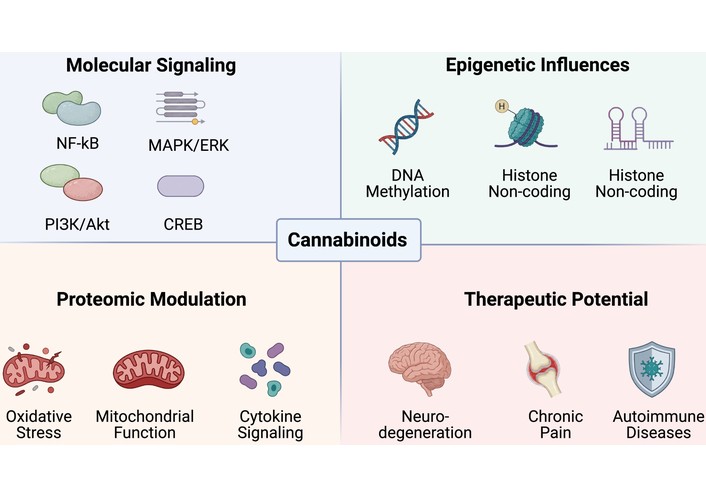
Cannabinoids: molecular mechanisms and therapeutic potential. Created in BioRender. Ahmed, M. M. (2026) https://BioRender.com/zzn5n6e.
At the molecular signalling level, cannabinoids modulate key intracellular pathways, such as NF-κB, mitogen-activated protein kinase/extracellular signal-regulated kinase (MAPK/ERK), phosphoinositide 3-kinase/protein kinase B (PI3K/Akt), and cAMP response element-binding protein (CREB), thereby influencing apoptosis, inflammation, and neuroplasticity. CBD’s regulation of the NF-κB axis, for example, underscores its potential to mitigate chronic inflammatory states, whereas THC’s modulation of CREB-dependent transcription may help explain its dual effects on cognition and mood. Cross-talk with dopaminergic, serotonergic, and glutamatergic systems further broadens their therapeutic scope, linking molecular signalling to behavioural outcomes relevant to psychiatric and neurological conditions [49]. Despite these advances, there are significant challenges. Standardizing cannabinoid formulations, clarifying dose-response relationships, and ensuring safety across diverse populations are essential prerequisites for clinical adoption. Emerging tools, such as CRISPR-based epigenome editing, high-resolution metabolomics, and AI-driven omics integration, hold promise for resolving these uncertainties and advancing precision cannabinoid therapeutics [31, 50].
Preclinical research has been instrumental in clarifying the pharmacological effects of cannabis, providing mechanistic insights, validating molecular targets, and generating proof-of-concept data for its therapeutic applications. Much of this progress has come from in vitro experiments and animal models, which have elucidated the role of the ECS, comprising CBRs, endogenous ligands, and metabolic enzymes, as a central regulator of pain, inflammation, neurodegeneration, mood, and immune responses [14, 23]. Despite these promising findings, translating these results into clinical practice remains challenging because of interspecies differences, disease complexity, and model heterogeneity, which limit their direct applicability to humans. In oncology research, preclinical studies have shown that THC, CBD, and CBG possess anticancer properties, including the induction of apoptosis, inhibition of angiogenesis, and suppression of metastasis in glioma, breast cancer, and colorectal cancer models [51]. In psychiatric research, CB1 activation has been associated with fear extinction and reduced anxiety-like behaviours in mouse models of post-traumatic stress disorder (PTSD), providing compelling support for cannabinoids as potential adjunctive therapies for trauma-related conditions [52].
Preclinical cannabinoid research has also provided valuable mechanistic insights and identified novel therapeutic targets for conditions such as pain, neurodegeneration, epilepsy, cancer, and psychiatric disorders. However, major translational challenges persist, including significant interspecies differences in ECS distribution, which limit the direct applicability of animal findings to humans [53]. Many animal studies use supratherapeutic dosing, raising concerns about the relevance of the observed effects in clinical settings. Additionally, the limited validity of disease models, reproducibility issues, and frequent discrepancies between preclinical and clinical outcomes further hinder the translation to effective human therapies [54]. To address these limitations, there is an urgent need for improved translational frameworks, such as multi-omics profiling, human-derived organoid models, and refined animal systems that better mimic human diseases. Expanding research beyond THC and CBD to include minor cannabinoids, such as THCV, CBN, and CBC compounds, with emerging roles in appetite regulation, sleep modulation, and anti-inflammatory activity, may also enhance therapeutic discovery and clinical relevance [55].
Cannabinoid-based interventions have shown varied clinical efficacy across neurological disorders, with the most substantial evidence in treatment-resistant epilepsy, particularly in syndromes such as Dravet and Lennox-Gastaut syndromes [56]. Randomized controlled trials of CBD have demonstrated significant seizure reduction and improved quality of life in different populations [57–59]. Evidence remains limited or inconclusive for Parkinson’s disease, Huntington’s disease, autism spectrum disorders (ASD), and Tourette syndrome (Figure 3). Small trials and open-label studies suggest possible improvements in tremor, rigidity, or behavioural symptoms; however, methodological limitations prevent firm conclusions [57, 58]. Cannabinoids have been approved in Canada and Europe (e.g., Sativex®) for symptom relief in multiple sclerosis, especially spasticity and neuropathic pain. However, trials have produced mixed results, with modest efficacy and varying tolerability [57, 60, 61]. Human trials for Alzheimer’s disease are lacking. Preclinical studies suggest that cannabinoids may reduce tau hyperphosphorylation and beta-amyloid accumulation, offering a neuroprotective role, although clinical, and mitigate oxidative stress, thereby preserving neuronal integrity and synaptic function [62]. In animal models of Alzheimer’s disease, cannabinoid treatment has also been associated with improvements in learning, memory, and behavioural outcomes, supporting the hypothesis that modulation of the ECS may influence disease progression [63]. However, these encouraging findings have yet to be validated in adequately powered clinical trials, and further translational research is required before cannabinoids can be incorporated into evidence-based management strategies for Alzheimer’s disease.
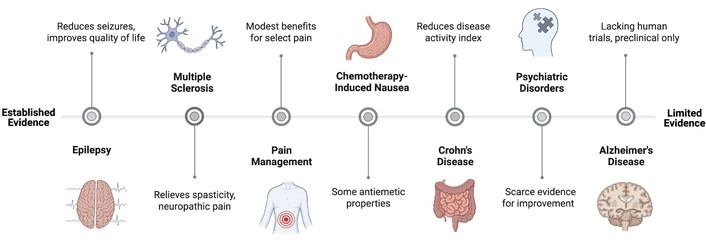
Cannabinoid efficacy ranges from established evidence to inconclusive evidence applications. Created in BioRender. Ahmed, M. M. (2026) https://BioRender.com/c1h8fi2.
CBD’s analgesic effect in neurological conditions, such as migraine and neuropathic pain, is presumed to result from the modulation of serotonin and dopamine pathways. However, the trials remain small and often lack placebo control, with current evidence categorized as preliminary [64].
Although several studies have linked positive psychiatric treatment outcomes to the use of cannabinoids, a systematic review including over 80 studies, including randomized controlled trials, concluded that evidence proving that cannabinoids improve depressive disorders and symptoms, anxiety disorders, attention-deficit hyperactivity disorder, PTSD, or psychosis remains scarce or low [65]. These findings are consistent with those of a more clinically focused systematic review [66]. The main challenges for broader clinical use include legal and regulatory barriers, concerns about long-term safety (especially in children), and the psychoactive effects of certain cannabinoids, such as THC [67]. Consequently, epilepsy remains the only neurological or psychiatric condition for which cannabinoids have achieved regulatory approval and have been incorporated into clinical guidelines [68]. Further high-quality clinical trials are needed to determine the efficacy and safety of cannabis-based therapeutics in other neurological and psychiatric disorders [67].
Systematic reviews and smaller trials have shown modest benefits of cannabinoids for pain management in select populations, such as patients with multiple sclerosis-related spasticity or cancer-related neuropathic pain; however, outcomes often fall short of statistical or clinical significance [69]. A Canadian consensus acknowledges their role as a third-line option for cancer-related neuropathic pain [70]. However, larger trials assessing diverse extracts in varied pain populations are still lacking, and short-term follow-up in most studies limits the interpretation of long-term safety and efficacy [69]. While cannabinoids may provide adjunctive benefits in cancer pain, the evidence is weak for other pain types, such as rheumatic, headache, or fibromyalgia. Adverse effects such as sedation, amnesia, euphoric mood, and confusion are common, raising concerns for vulnerable groups such as older adults [71]. Limited and conflicting evidence exists regarding the opioid-sparing effects of cannabinoids in chronic pain, with some studies reporting modest reductions in opioid use and others demonstrating little or no benefit [72, 73]. Despite continued interest, deficiencies in trial design, small sample sizes, and the heterogeneity of cannabinoid formulations make it challenging to issue strong clinical recommendations [74].
Recent systematic reviews and Randomized Clinical Trials (RCTs) present a nuanced narrative about the antiemetic and orexigenic properties of cannabinoids, such as dronabinol and nabilone, and their use in managing chemotherapy-induced nausea and vomiting (CINV) and HIV-associated anorexia. For instance, a 20-year review of six RCTs concluded that cannabinoids did not consistently improve appetite, oral intake, weight, or chemosensory function in patients with cancer, citing small sample sizes and limited placebo control due to psychoactive side effects as key limitations [75]. Similarly, a synthesis of five studies, mostly comparing cannabinoids to a placebo or megestrol acetate, found only limited efficacy in appetite stimulation, with only one trial demonstrating a significant effect of dronabinol on chemosensory perception and caloric intake [76]. These findings are consistent with the 2023 Multinational Association of Supportive Care in Cancer (MASCC) guideline, which issued a conditional recommendation against the use of cannabinoids for cancer-associated anorexia-cachexia syndrome (CACS) and taste disorders because of low-certainty evidence and insufficient data, rather than evidence of harm [77].
In terms of antitumor activity, the literature reveals a compelling but predominantly preclinical case. Cannabinoids, particularly non-psychoactive agents such as CBD, have been shown to exert antiproliferative, pro-apoptotic, anti-angiogenic, and anti-metastatic effects in in vitro and in vivo models of various cancers [78]. However, clinical evidence remains sparse and inconclusive. A pilot Phase I study involving intratumoral (intracranial) administration of Δ9-THC in nine patients with recurrent glioblastoma demonstrated that the treatment was feasible and well tolerated, with preliminary evidence of reduced tumour-cell proliferation. However, the small, uncontrolled cohort precluded definitive conclusions regarding clinical efficacy or survival benefit. Although this specific approach has not progressed to large confirmatory trials, subsequent clinical development has shifted toward systemic cannabinoid formulations, including nabiximols (THC), which have advanced into Phase II evaluation in combination with temozolomide for recurrent glioblastoma [79]. Overall, while pharmacological targeting of the ECS continues to be explored for potential synergistic effects with conventional therapies, current evidence remains insufficient to support cannabinoids as anticancer agents. As such, their greatest clinical utility currently lies in supportive and palliative care, and future well-designed randomized controlled trials are needed to establish their efficacy, optimal dosing, and safety in oncology [78]. Consequently, the evidence underscores that while cannabinoids are promising for palliative symptom management, their use in oncologic care must remain evidence-guided and critically evaluated in future studies. Future research should prioritize large, rigorously controlled trials to establish the efficacy, optimal dosing, safety, and clinical relevance of these agents in both supportive and curative contexts.
The therapeutic application of cannabinoids in gastrointestinal diseases has been extensively investigated in inflammatory bowel diseases (IBD), particularly Crohn’s disease (CD). Moderate-certainty evidence from small-scale randomized and observational studies indicates that adjunctive cannabinoid therapy may confer clinically relevant reductions in the Crohn’s Disease Activity Index (CDAI) and yield improvements in patient-reported outcomes, such as pain relief and general well-being [80]. However, the current evidence base is insufficient to displace established biologics such as anti-TNF-α agents and vedolizumab, which remain first-line treatments for moderate-to-severe IBD despite their adverse effect profiles and limited efficacy in refractory cases [81]. Importantly, systematic reviews consistently conclude that while cannabinoids may improve symptom control and quality of life in CD primarily through analgesic and anti-emetic mechanisms, there is little evidence for any anti-inflammatory benefit in ulcerative colitis (UC) [82]. Although recent pilot studies have suggested improvements in symptoms and quality of life, these effects have generally not been accompanied by significant changes in objective inflammatory markers or endoscopic indices [83]. Methodological limitations, including inadequate sample sizes, lack of head-to-head trials against standard analgesics, and insufficient post-treatment follow-up, limit its precision and generalizability. Moreover, optimal dosing regimens, long-term safety, and predictors of therapeutic response remain undefined, highlighting the need for rigorously designed multicentre RCTs incorporating genetic, behavioural, and clinical stratification [80].
In dermatology, the evidence base is expanding rapidly, supported by the mechanistic plausibility of the cutaneous ECS, which regulates keratinocyte proliferation, sebaceous gland activity, and local immune responses. Studies have reported that both major CBD and minor CBG and THCV exert anti-inflammatory, analgesic, antipruritic, antimicrobial, and antineoplastic effects in conditions such as psoriasis, atopic dermatitis, acne vulgaris, and chronic pruritus [84, 85]. Clinical benefits have also been documented for targeted applications, including selective CB2 receptor agonists in systemic sclerosis and dermatomyositis, dronabinol in trichotillomania, and sublingual CBD with THC in epidermolysis bullosa-associated pain [86]. Nevertheless, the reliability of these findings is tempered by the high heterogeneity in study design, variable cannabinoid formulations and dosages, and short intervention durations.
Beyond gastrointestinal and dermatological indications, cannabinoid pharmacotherapy is being explored as a potential adjunct treatment for metabolic syndrome (MetS) and its associated pathologies, including obesity, dyslipidaemia, insulin resistance, hypertension, and non-alcoholic fatty liver disease (NAFLD). Preclinical studies and early-phase human trials suggest that CBD may improve glycaemic control, enhance insulin sensitivity, and favourably modulate lipid profiles [87], although these effects remain supported by very low- to low-certainty evidence [88]. Epidemiologic analyses, including population-based cohort studies, have identified significantly lower odds of MetS among current cannabis users, with particularly pronounced associations in non-Hispanic Black individuals (adjusted odds ratio: 0.22, 95% CI: 0.06–0.81) [89]. Mechanistically, the effects of cannabinoids on metabolic function are mediated via CB1 and CB2 receptor signalling, with CB1 antagonism and non-psychotropic cannabinoids counteracting the obesogenic and diabetogenic actions of THC [90].
Cannabinoid therapeutics in special populations, including paediatric, geriatric, and pregnant individuals, present both promising applications and critical safety considerations. In paediatrics, CBD has demonstrated significant efficacy in reducing seizure frequency in treatment-resistant epilepsies, such as Dravet and Lennox-Gastaut syndromes, with sustained tolerability over time [91, 92]. Emerging evidence also supports the potential benefits for CINV, ASD-related irritability, and palliative care symptom relief [89, 93], although systematic reviews underscore an increased risk of adverse events such as somnolence, diarrhoea, elevated liver enzymes, and decreased appetite, particularly at higher doses [89]. In older adults, the use of cannabis for chronic pain, sleep disturbances, anxiety, and chemotherapy-related nausea is rising, with reports of moderate benefits and few serious adverse outcomes [94, 95]. However, age-related pharmacokinetic changes, polypharmacy, and vulnerability to cognitive and motor impairments elevate the risks of dizziness, somnolence, falls, fractures, and drug interactions [96]. Evidence for other geriatric indications, such as dementia-related behavioural symptoms, is inconsistent [97].
Cannabis use during pregnancy and lactation has increased in many regions over the past two decades, often motivated by perceived therapeutic benefits. However, temporal trends appear to vary across jurisdictions, and recent population-based studies suggest that rates may be stabilizing in some settings despite continuing concerns regarding maternal and foetal health outcomes [98]. THC readily crosses the placenta, with foetal concentrations approaching maternal levels, and is secreted into breast milk, exposing the foetus and neonate to biologically active doses that may alter neurodevelopment [87, 88]. Observational studies have linked prenatal exposure to low birth weight, preterm birth, NICU admission, and later-life neurocognitive deficits in attention, memory, and executive function [99, 100], with behavioural alterations such as aggression and anxiety [101]. Confounding factors, including polysubstance use and socioeconomic status, complicate causal inference, and the absence of randomized controlled trials reflects ethical constraints. Clinical practice is further hindered by inconsistent screening, a lack of standardized counselling protocols, and limited clinician confidence [102]. Across these populations, the therapeutic potential of cannabinoids must be balanced against their distinct physiological vulnerabilities, underscoring the need for individualized risk-benefit assessments, cautious initiation, and rigorous long-term safety studies to guide evidence-based use.
The clinical success of cannabinoid therapeutics in the 21st century depends not only on understanding the molecular mechanisms but also on designing formulations and delivery systems that maximize bioavailability, safety, and patient adherence. Owing to their high lipophilicity, poor water solubility, and extensive first-pass metabolism, cannabinoids such as THC and CBD present challenges in achieving consistent dosing. Recent developments in oral, sublingual, inhaled, transdermal, and nanotechnology-based delivery strategies offer novel pathways to overcome these obstacles [103]. Oral administration remains the most common route because of its convenience; however, cannabinoids exhibit low and variable bioavailability because of intestinal degradation and extensive first-pass metabolism [104]. In the fasted state, oral CBD bioavailability is approximately 6–20%, although high-fat meals may increase systemic exposure by two- to four-fold [105]. Sublingual administration, as in tinctures and sprays, provides more rapid absorption and avoids significant hepatic metabolism, although inter-individual variability persists. Inhaled delivery (via smoking or vaporization) achieves the fastest onset (within minutes) and relatively high bioavailability (10–35%), making it suitable for acute symptom management, such as breakthrough pain or nausea [106]. Despite these pharmacokinetic advantages, respiratory safety remains an important consideration. The outbreak of e-cigarette or vaping-associated lung injury (EVALI) highlighted the risks associated with unregulated vaping products, particularly THC-containing formulations adulterated with vitamin E acetate and other contaminants [107]. These events underscore the importance of stringent manufacturing standards, quality control, and post-marketing surveillance to ensure the safety of inhaled cannabinoid products. Transdermal patches and gels provide controlled and sustained cannabinoid release while bypassing gastrointestinal metabolism. This route offers the advantages of steady plasma levels, improved adherence, and reduced psychoactive peaks [108]. However, the lipophilic nature of cannabinoids poses challenges for skin permeation, often necessitating enhancers or lipid-based formulations [109].
Nanotechnology-based systems, including nanoemulsions, liposomes, solid lipid nanoparticles, and polymeric nanocarriers, have emerged as promising strategies for enhancing cannabinoid solubility, stability, and targeted delivery [103]. For example, nanoemulsified CBD beverages show improved absorption compared to oil-based formulations. Lipid-based carriers, such as self-emulsifying drug delivery systems and micelles, enhance gastrointestinal uptake by promoting lymphatic transport, thereby bypassing first-pass metabolism [110]. These technologies hold promise for developing consistent oral formulations suitable for regulatory approval. Despite technological advances, patient adherence remains influenced by palatability, onset of action, dosing convenience, and psychoactive side effects of the drug. For instance, oral oils may have an undesirable taste or delayed effects, while inhaled forms carry a social stigma. The variability in cannabis plant chemotypes further complicates standardization, making regulatory harmonization essential for safe prescribing practices [111]. Importantly, cost and accessibility also shape adherence, as advanced nanoformulations may remain unavailable in low-resource settings. Next-generation delivery systems must integrate precision medicine principles by tailoring formulations to individual patient needs, metabolic profiles, and disease states [112]. Emerging bioinspired technologies, including dissolving microneedle platforms [113], provide additional opportunities for sustained drug release and improved tissue penetration. Recently, biomimetic “tree thorn-inspired” hyaluronic acid-based microneedles have demonstrated effective tissue delivery and prolonged therapeutic activity [114], highlighting the broader potential of advanced transdermal systems that could be adapted for cannabinoid therapeutics.
Recent regulatory changes and increasing cannabis potency have renewed concerns regarding its safety profile, particularly regarding the adverse effects of THC. High-THC formulations, whether through acute or chronic exposure, are associated with impaired cognition, reduced academic and occupational performance, and an elevated risk of accidents [115]. Psychiatric risks, including psychosis, schizophrenia, mood and anxiety disorders, and suicidality, have also been associated with cannabis exposure [116]. THC primarily acts through CB1 and CB2 receptors, influencing neurotransmission, pain regulation, and cardiovascular, gastrointestinal, and hepatic functions [67]. Both THC and CBD undergo hepatic metabolism via cytochrome P450 enzymes, particularly CYP3A4 and CYP2C9, making them prone to significant drug–drug interactions. For example, the co-administration of CYP3A4 inhibitors, such as ketoconazole or macrolide antibiotics, can nearly double plasma cannabinoid concentrations, amplifying psychoactive effects and increasing the risk of hepatotoxicity and sedation [117].
Cannabinoids are contraindicated in patients with severe psychiatric, cardiovascular, renal, or hepatic disorders because of the heightened risk of toxicity. Furthermore, pharmacodynamic interactions with CNS depressants and sympathomimetics may cause additive or synergistic adverse effects [118]. Chronic THC exposure induces tolerance and withdrawal symptoms, such as irritability, insomnia, and appetite loss, lasting 2 to 6 days [119], and long-term use is strongly associated with cannabis use disorder, cognitive impairment, and psychiatric comorbidities [120]. While THC is the principal psychoactive constituent driving dependence risk, CBD is non-intoxicating and may attenuate some of THC’s psychotropic effects, although the evidence remains inconclusive. Both compounds can cause dizziness and fatigue, with THC exerting stronger effects on cognition and psychomotor performance than CBD. For medical purposes, oral formulations are preferred to avoid the harmful by-products of combustion [121]. In addition, interindividual variability driven by genetic polymorphisms in cytochrome P450 enzymes appears to significantly influence susceptibility to adverse effects, highlighting the need for personalized approaches to cannabinoid risk management [122].
The global regulatory framework for cannabinoid therapeutics remains fragmented, complex, and rapidly evolving. Countries such as the United States, Canada, Germany, and Australia have established structured medical cannabis programs, whereas many regions in Africa and parts of Europe continue to operate under restrictive or evolving policies [123–125]. Historically, cannabis was classified as a Schedule I substance under the United States Controlled Substances Act because of its perceived high abuse potential and lack of accepted medical use [126]. This designation created substantial barriers to research, including restricted access to study-grade cannabis, complex Drug Enforcement Administration (DEA) registration procedures, and stringent Food and Drug Administration (FDA) Investigational New Drug (IND) requirements [127]. However, significant regulatory changes have occurred in recent years. In 2026, federal authorities reclassified FDA-approved marijuana-containing products and marijuana regulated under state medical programs to Schedule III, representing an important milestone in reducing research barriers and facilitating access to cannabinoid-based therapies [128]. Furthermore, legislative reforms, including the Cannabidiol and Marijuana Research Expansion Act, have sought to expand scientific investigation, although considerable variability and regulatory inconsistencies persist across states [129].
The European Medicines Agency (EMA) and member states of the European Union (EU) have adopted diverse regulatory approaches. Germany has implemented one of the most comprehensive frameworks, incorporating both medical and recreational cannabis through pharmacies, social clubs, and telemedicine services [130]. In contrast, France has adopted a more cautious approach, with access to medical cannabis maintained through a tightly regulated national programme during its transition toward a permanent regulatory framework [131]. Canada and Australia maintain comprehensive national medical cannabis programs, with Canada also legalizing recreational cannabis use [132, 133]. Recent post-legalization experiences further highlight the evolving nature of cannabinoid regulation and the importance of continuous policy evaluation. In Canada, population-based studies have reported increasing numbers of cannabis-related emergency department visits, hospitalizations, and cannabis use disorder presentations in the years following legalization, reinforcing the need for sustained public health surveillance and ongoing monitoring of health outcomes as regulatory frameworks continue to evolve [134]. Similarly, Germany’s 2024 Cannabis Act, which removed medical cannabis from narcotics legislation and expanded access through prescription-based pathways, represents a major regulatory shift aimed at improving patient access and facilitating research. However, these experiences also emphasize the importance of maintaining robust regulatory oversight, quality assurance, and evidence-based prescribing practices. Collectively, these developments demonstrate that expanded access to cannabinoid-based therapies must be accompanied by effective governance frameworks and continuous assessment of long-term public health outcomes [135]. In Africa, policy development remains relatively nascent. South Africa permits limited medical cannabis use, whereas several other countries focus predominantly on export-oriented cultivation, thereby creating challenges for domestic access, healthcare integration, and research collaboration [124, 136].
Clinical research continues to face substantial obstacles. Cannabis contains more than 100 cannabinoids and numerous terpenes, complicating product standardization, dose optimization, and quality assurance. Designing placebo-controlled trials is particularly challenging because many products are already commercially available through dispensaries and medical programs [137]. Until recently, U.S. researchers were limited to a single DEA-approved cannabis source, restricting the diversity of formulations available for investigation, although subsequent DEA reforms have sought to broaden supply channels [138]. Quality control and Good Manufacturing Practice (GMP) compliance present additional challenges. Implementation of GMP standards requires considerable investment in infrastructure, personnel training, and Standard Operating Procedures, while inconsistent regulatory enforcement across jurisdictions contributes to variability in product safety, composition, and efficacy [139]. Without rigorous oversight, patients may be exposed to contaminants, inaccurate labelling, or inconsistent cannabinoid concentrations [140, 141].
Ethical and legal complexities further complicate the clinical deployment of cannabinoid therapeutics. Many physicians lack formal education and training in cannabinoid pharmacology and therapeutics, contributing to reluctance in recommending or prescribing these products despite increasing patient demand [142]. Although recent regulatory reforms have expanded access, evolving federal and state frameworks continue to create legal ambiguities regarding prescribing practices, dispensing, reimbursement, and physician liability. Additional concerns include paediatric use, psychiatric risks, long-term safety, and obtaining informed consent among vulnerable populations [143]. Finally, stigma associated with historical criminalization and racialized drug policies continues to influence public perception, policy development, and equitable access to cannabinoid-based therapies [144]. Greater international harmonization of regulatory standards, enhanced physician education, and robust pharmacovigilance systems will be essential to support the safe and evidence-based integration of cannabinoid therapeutics into mainstream clinical practice [145].
An emerging challenge involves the rapid proliferation of semi-synthetic and hemp-derived cannabinoids, including Δ8-THC, hexahydrocannabinol (HHC), and related analogues. These compounds have gained popularity because of perceived legal loopholes and widespread online availability, yet their pharmacological profiles, safety, and long-term health effects remain incompletely characterized [146]. The inconsistent regulation of these products across jurisdictions has created additional challenges for quality control, consumer safety, and public health surveillance, highlighting the need for harmonized regulatory frameworks and more rigorous toxicological evaluation [147].
The integration of cannabinoid therapeutics into health systems presents both opportunities and challenges, requiring a balance between scientific evidence, regulatory oversight, and social equity in their use. Safe and effective incorporation depends on robust policy frameworks, standardized formulations, and rigorous quality control. However, regulatory fragmentation, limited physician training, and uneven legal acceptance hinder its consistent implementation [148]. Equity must be embedded holistically throughout the process of developing and applying clinical guidelines, starting at the priority-setting stage and involving individuals with lived health inequities. An early definition of disadvantaged populations is essential for evidence appraisal, subgroup analyses, and implementation strategies. Structured equity approaches remain valuable for efficient, evidence-based, and transparent development [149, 150]. However, limitations in the evidence base, such as poor reporting of sociodemographic factors, scarce subgroup analyses, and epidemiological gaps, highlight the knowledge gaps that must be addressed to ensure equitable access. Ensuring affordability, cultural acceptability, harm reduction, patient education, and surveillance of benefits and risks are key to maximizing the therapeutic value of cannabinoids while minimizing unintended harms and promoting fair distribution of benefits across all populations [137].
The future of cannabinoid therapeutics lies at the intersection of advanced technology, precision medicine, and robust public health frameworks (Figure 4). AI and real-world evidence (RWE) platforms are transforming drug discovery and evaluation by identifying therapeutic targets, optimizing formulations, and simulating patient responses, thereby enabling more precise and personalized treatment strategies [151, 152]. AI-driven tools can accelerate data extraction from the expansion of cannabis literature, guide the design of targeted strains, and enhance adherence through digital cannabis platforms [153]. Complementing this, RWE studies using electronic health records and registries provide critical insights into safety and effectiveness beyond the controlled settings of clinical trials, addressing gaps in generalizability and informing regulatory decision-making [154, 155]. Future research should also incorporate pharmacoeconomic evaluations and health technology assessments to determine the cost-effectiveness of cannabinoid-based medicines relative to standard therapies. Although favourable economic outcomes have been reported for selected indications, such as refractory epilepsy and multiple sclerosis-related spasticity, the available evidence remains limited and heterogeneous [156, 157]. Robust real-world studies will therefore be essential to inform reimbursement decisions and support equitable implementation across diverse healthcare systems [158]. Precision cannabinoid medicine, encompassing individualized dosing and pharmacogenomics, will play a pivotal role in addressing variability in patient responses. Genetic polymorphisms within the ECS and drug-metabolizing enzymes influence pharmacodynamics and pharmacokinetics, offering opportunities to tailor therapies to optimize efficacy and minimize adverse effects [159, 160]. Integrating genetic data with patient history, environmental exposures, and lifestyle factors can advance individualized dosing regimens, particularly for complex conditions such as cancer-related pain [161]. Multi-omics approaches, including genomics, proteomics, metabolomics, and lipidomics, promise to uncover biomarkers and therapeutic targets by elucidating cannabinoid interactions at the system level [162]. Such integration may refine cancer therapies by clarifying the mechanisms of apoptosis, angiogenesis, and metastasis inhibition [163], while also advancing the understanding of neuroprotective effects in neurodegenerative diseases [67]. Conferences and collaborative initiatives, such as the Cannabis Clinical Outcomes Research Conference, are vital for disseminating these findings and fostering interdisciplinary engagement [154].
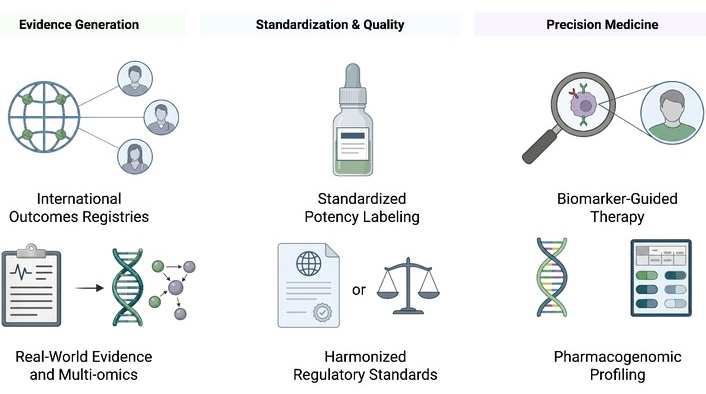
Future directions for the clinical integration of cannabinoid therapeutics. Created in BioRender. Ahmed, M. M. (2026) https://BioRender.com/mj1zvbs.
Finally, public health surveillance and safety monitoring are central to ensuring the responsible integration of cannabinoid therapeutics. Despite the increasing use of medical cannabis, knowledge gaps persist regarding optimal formulations, dosages, and long-term safety [164]. Adverse effects, including cognitive impairment, fatigue, and drug interactions, underscore the importance of standardized post-marketing surveillance [121, 165]. Real-world registries have emerged as valuable tools for addressing these gaps by capturing longitudinal data on treatment effectiveness, adverse events, quality of life, and patient-reported outcomes. For example, the UK Medical Cannabis Registry has provided important RWE across a range of clinical indications, demonstrating improvements in health-related quality of life while facilitating ongoing assessment of safety and tolerability [166]. As regulatory frameworks evolve, particularly following cannabis rescheduling, surveillance systems must be harmonized internationally to safeguard patients and support therapeutic innovation [167]. Together, these future directions of AI integration, precision dosing, multi-omics discovery, and robust safety monitoring offer a roadmap for advancing cannabinoid therapeutics into safe, effective, and equitable medical practice [163].
This narrative review has several limitations that should be acknowledged. First, the literature search was restricted to English-language publications, which may have introduced language bias and excluded relevant studies published in other languages. Second, substantial heterogeneity exists across studies in cannabinoid formulations, chemovars, dosing regimens, routes of administration, and outcome measures, limiting direct comparisons and contributing to variability in reported findings. Third, as a narrative review, this study did not undertake a formal quantitative synthesis or meta-analysis, precluding pooled estimates of efficacy and safety. Fourth, publication bias cannot be excluded, as studies reporting positive findings are generally more likely to be published than those with neutral or negative results. Finally, although extensive preclinical evidence supports many therapeutic applications of cannabinoids, the translation of findings from cellular and animal models to humans remains challenging, and robust clinical evidence is still lacking for several indications. Continued standardization of cannabinoid preparations, together with well-designed clinical trials and long-term real-world studies, will be essential to strengthen the evidence base and support the integration of cannabinoid therapeutics into clinical practice.
Cannabinoid therapeutics have evolved from traditional ethnomedicine to a rapidly advancing field that bridges molecular pharmacology, clinical medicine, and regulatory science. Evidence accumulated over the past two decades highlights their potential in neurological disorders, pain management, inflammation, oncology, and other emerging therapeutic areas. However, clinical translation remains constrained by heterogeneous evidence, safety concerns, formulation challenges, and fragmented regulatory frameworks. The future of cannabinoid therapeutics will depend on generating high-quality clinical evidence, standardizing formulations, strengthening pharmacovigilance systems, and integrating precision medicine approaches to optimize therapeutic responses. Greater international regulatory harmonization, multidisciplinary collaboration, and equitable access strategies will be essential to ensure that the therapeutic promise of cannabinoids is translated into safe, effective, and evidence-based clinical practice.
ASD: autism spectrum disorders
cAMP: cyclic adenosine monophosphate
CBC: cannabichromene
CBCA: cannabichromene acid
CBD: cannabidiol
CBDA: cannabidiolic acid
CBG: cannabigerol
CBGA: cannabigerolic acid
CBN: cannabinol
CBRs: cannabinoid receptors
CD: Crohn’s disease
CINV: chemotherapy-induced nausea and vomiting
CNS: central nervous system
CREB: cAMP response element-binding protein
DEA: Drug Enforcement Administration
ECS: endocannabinoid system
FDA: Food and Drug Administration
GMP: Good Manufacturing Practice
GPR55: G protein-coupled receptor 55
IBD: inflammatory bowel diseases
NF-κB: nuclear factor kappa B
PPARs: peroxisome proliferator-activated receptors
PTSD: post-traumatic stress disorder
RCTs: Randomized Clinical Trials
RWE: real-world evidence
THC: tetrahydrocannabinol
THCA: tetrahydrocannabinolic acid
THCV: tetrahydrocannabivarin
TRPV1: transient receptor potential vanilloid type 1
The authors acknowledge the use of PaperPal AI in the preparation of this manuscript. The tool was employed for purposes including, but not limited to, writing assistance, language editing, improving grammatical accuracy, enhancing the flow and coherence of the text, and refining overall readability. The outputs were carefully reviewed, revised, and refined by the authors, who take full responsibility for the accuracy, originality, and final content of the manuscript. The use of the PaperPal AI tool was strictly limited to linguistic refinement. In addition, BioRender was used solely for the conceptualization and preparation of schematic figures included in this manuscript for illustrative purposes. These figures do not depict primary experimental data and were not used to generate any scientific findings, analyses, interpretations, or conclusions.
TAO: Conceptualization, Investigation, Data curation, Writing—original draft. UOA: Conceptualization, Investigation, Data curation, Writing—original draft, Writing—review & editing. OJO: Conceptualization, Investigation, Writing—original draft, Writing—review & editing. MEOJ: Investigation, Data curation, Writing—original draft. MMA: Investigation, Data curation, Writing—original draft. IN: Investigation, Data curation, Writing—original draft. KBO: Writing—original draft, Writing—review & editing. OBA: Writing—original draft, Writing—review & editing. GE: Investigation and Writing—original draft. DELP: Writing—original draft, Writing—review & editing, Supervision. All authors wrote the first draft of the manuscript and have read and approved the submitted version.
The authors declare that there are no conflicts of interest.
Not applicable.
Not applicable.
Not applicable.
Not applicable.
Not applicable.
© The Author(s) 2026.
Open Exploration maintains a neutral stance on jurisdictional claims in published institutional affiliations and maps. All opinions expressed in this article are the personal views of the author(s) and do not represent the stance of the editorial team or the publisher.
Copyright: © The Author(s) 2026. This is an Open Access article licensed under a Creative Commons Attribution 4.0 International License (https://creativecommons.org/licenses/by/4.0/), which permits unrestricted use, sharing, adaptation, distribution and reproduction in any medium or format, for any purpose, even commercially, as long as you give appropriate credit to the original author(s) and the source, provide a link to the Creative Commons license, and indicate if changes were made.



View: 1176
Download: 31
Times Cited: 0


