7H9: Middlebrook 7H9-based medium supplemented with glucose/glycerol/BSA/Tween; in 7H9a with glucose/BSA/tyloxapol; in 7H9b with cholesterol/BSA/tyloxapol and in 7H9c with dipalmitoyl phosphatidylcholine/BSA/tyloxapol. Mtb: Mycobacterium tuberculosis; MW: molecular weight; GAST-Fe: glycerol-alanine-salts-Tween-iron; BSA: bovine serum albumin; nd: not determined.
The contributions of the National Institutes of Health (NIH) author(s) were made as part of their official duties as NIH federal employees, are in compliance with agency policy requirements, and are considered Works of the United States Government. However, the findings and conclusions presented in this paper are those of the author(s) and do not necessarily reflect the views of the NIH or the U.S. Department of Health and Human Services.
Acknowledgments
The authors would like to thank the American University and the Midwestern University Offices of Research and Sponsored Programs, as well as the Midwestern University College of Graduate Studies, for their support. MIK would like to thank the following students who participated in synthesizing the library of compounds: Alex Lutz, Marika Cohen, and Jason Corsbie.
Author contributions
MIK: Conceptualization, Funding acquisition, Supervision, Investigation, Visualization, Writing—original draft, Writing—review & editing. KA: Methodology, Formal analysis, Investigation, Visualization, Writing—review & editing. HIMB: Conceptualization, Data curation, Investigation, Visualization, Writing—original draft, Writing—review & editing. BJP: Conceptualization, Supervision, Data curation, Formal analysis, Writing—review & editing. All authors read and approved the submitted version.
Conflicts of interest
The authors declare that there are no conflicts of interest.
Ethical approval
Not applicable.
Consent to participate
Not applicable.
Consent to publication
Not applicable.
Availability of data and materials
Data available upon request. Requests for accessing the datasets should be directed to mkonak@american.edu.
Funding
This research was supported in part by the Intramural Research Program of the National Institutes of Health (NIH). The funders had no role in study design, data collection and analysis, decision to publish, or preparation of the manuscript.
Open Exploration maintains a neutral stance on jurisdictional claims in published institutional affiliations and maps. All opinions expressed in this article are the personal views of the author(s) and do not represent the stance of the editorial team or the publisher.
References
Woodhead AJ, Erlanson DA, de Esch IJP, Holvey RS, Jahnke W, Pathuri P. Fragment-to-Lead Medicinal Chemistry Publications in 2022.J Med Chem. 2024;67:2287–304. [DOI] [PubMed]
Hall RJ, Mortenson PN, Murray CW. Efficient exploration of chemical space by fragment-based screening.Prog Biophys Mol Biol. 2014;116:82–91. [DOI] [PubMed]
Erlanson DA, Fesik SW, Hubbard RE, Jahnke W, Jhoti H. Twenty years on: the impact of fragments on drug discovery.Nat Rev Drug Discov. 2016;15:605–19. [DOI] [PubMed]
Kumar A, Chettiar S, Brown BS, Early J, Ollinger J, Files M, et al. Novel chemical entities inhibiting Mycobacterium tuberculosis growth identified by phenotypic high-throughput screening.Sci Rep. 2022;12:14879. [DOI] [PubMed] [PMC]
Ayotte Y, Bernet E, Bilodeau F, Cimino M, Gagnon D, Lebughe M, et al. Fragment-Based Phenotypic Lead Discovery To Identify New Drug Seeds That Target Infectious Diseases.ACS Chem Biol. 2021;16:2158–63. [DOI] [PubMed]
Moreira W, Lim JJ, Yeo SY, Ramanujulu PM, Dymock BW, Dick T. Fragment-Based Whole Cell Screen Delivers Hits against M. tuberculosis and Non-tuberculous Mycobacteria.Front Microbiol. 2016;7:1392. [DOI] [PubMed] [PMC]
Rizet J, Maveyraud L, Rengel D, Guillet V, Publicola G, Rodriguez F, et al. Is Mycobacterial InhA a Suitable Target for Rational Drug Design?ChemMedChem. 2025;20:e202500079. [DOI] [PubMed] [PMC]
Sabbah M, Mendes V, Vistal RG, Dias DMG, Záhorszká M, Mikušová K, et al. Fragment-Based Design of Mycobacterium tuberculosis InhA Inhibitors.J Med Chem. 2020;63:4749–61. [DOI] [PubMed] [PMC]
Prasad MS, Bhole RP, Khedekar PB, Chikhale RV. Mycobacterium enoyl acyl carrier protein reductase (InhA): A key target for antitubercular drug discovery.Bioorg Chem. 2021;115:105242. [DOI] [PubMed]
Kavanagh ME, Chenge J, Zoufir A, McLean KJ, Coyne AG, Bender A, et al. Fragment Profiling Approach to Inhibitors of the Orphan M. tuberculosis P450 CYP144A1.Biochemistry. 2017;56:1559–72. [DOI] [PubMed]
Ahmad Z, Sharma S, Khuller GK. In vitro and ex vivo antimycobacterial potential of azole drugs against Mycobacterium tuberculosis H37Rv.FEMS Microbiol Lett. 2005;251:19–22. [DOI] [PubMed]
Hudson SA, McLean KJ, Surade S, Yang Y, Leys D, Ciulli A, et al. Application of fragment screening and merging to the discovery of inhibitors of the Mycobacterium tuberculosis cytochrome P450 CYP121.Angew Chem Int Ed Engl. 2012;51:9311–6. [DOI] [PubMed]
Katariya MM, Snee M, Tunnicliffe RB, Kavanagh ME, Boshoff HIM, Amadi CN, et al. Structure Based Discovery of Inhibitors of CYP125 and CYP142 from Mycobacterium tuberculosis.Chemistry. 2023;29:e202203868. [DOI] [PubMed] [PMC]
Kavanagh ME, Coyne AG, McLean KJ, James GG, Levy CW, Marino LB, et al. Fragment-Based Approaches to the Development of Mycobacterium tuberculosis CYP121 Inhibitors.J Med Chem. 2016;59:3272–302. [DOI] [PubMed] [PMC]
VanderVen BC, Fahey RJ, Lee W, Liu Y, Abramovitch RB, Memmott C, et al. Novel inhibitors of cholesterol degradation in Mycobacterium tuberculosis reveal how the bacteriumʼs metabolism is constrained by the intracellular environment.PLoS Pathog. 2015;11:e1004679. [DOI] [PubMed] [PMC]
Frank DJ, Zhao Y, Wong SH, Basudhar D, De Voss JJ, Ortiz de Montellano PR. Cholesterol Analogs with Degradation-resistant Alkyl Side Chains Are Effective Mycobacterium tuberculosis Growth Inhibitors.J Biol Chem. 2016;291:7325–33. [DOI] [PubMed] [PMC]
Kavanagh ME, McLean KJ, Gilbert SH, Amadi CN, Snee M, Tunnicliffe RB, et al. Fragment-Based Development of Small Molecule Inhibitors Targeting Mycobacterium tuberculosis Cholesterol Metabolism.J Med Chem. 2025;68:14416–41. [DOI] [PubMed] [PMC]
Nuermberger EL, Martínez-Martínez MS, Sanz O, Urones B, Esquivias J, Soni H, et al. GSK2556286 Is a Novel Antitubercular Drug Candidate Effective In Vivo with the Potential To Shorten Tuberculosis Treatment.Antimicrob Agents Chemother. 2022;66:e0013222. [DOI] [PubMed] [PMC]
Brown KL, Wilburn KM, Montague CR, Grigg JC, Sanz O, Pérez-Herrán E, et al. Cyclic AMP-Mediated Inhibition of Cholesterol Catabolism in Mycobacterium tuberculosis by the Novel Drug Candidate GSK2556286.Antimicrob Agents Chemother. 2023;67:e0129422. [DOI] [PubMed] [PMC]
Fernandes GFS, Thompson AM, Castagnolo D, Denny WA, Santos JLD. Tuberculosis Drug Discovery: Challenges and New Horizons.J Med Chem. 2022;65:7489–531. [DOI] [PubMed]
Bardou F, Raynaud C, Ramos C, Lanéelle MA, Lanŕelle G. Mechanism of isoniazid uptake in Mycobacterium tuberculosis.Microbiology (Reading). 1998;144:2539–44. [DOI] [PubMed]
Raynaud C, Lanéelle M, Senaratne RH, Draper P, Lanéelle G, Daffé M. Mechanisms of pyrazinamide resistance in mycobacteria: importance of lack of uptake in addition to lack of pyrazinamidase activity.Microbiology (Reading). 1999;145:1359–67. [DOI] [PubMed]
Faller M, Niederweis M, Schulz GE. The structure of a mycobacterial outer-membrane channel.Science. 2004;303:1189–92. [DOI] [PubMed]
Beck TN, Lloyd D, Kuskovsky R, Minah J, Arora K, Plotkin BJ, et al. Non-transpeptidase binding arylthioether β-lactams active against Mycobacterium tuberculosis and Moraxella catarrhalis.Bioorg Med Chem. 2015;23:632–47. [DOI] [PubMed] [PMC]
Konaklieva MI, Lutz A, Plotkin BJ. Phenotypic identification of fragments as antivirals.World J Biol Pharm Health Sci. 2025;22:301–13. [DOI]
Leas DA, Wu J, Ezell EL, Garrison JC, Vennerstrom JL, Dong Y. Formation of 2-Imino Benzo[e]-1,3-oxazin-4-ones from Reactions of Salicylic Acids and Anilines with HATU: Mechanistic and Synthetic Studies.ACS Omega. 2018;3:781–7. [DOI] [PubMed] [PMC]
Cee VJ, Volak LP, Chen Y, Bartberger MD, Tegley C, Arvedson T, et al. Systematic Study of the Glutathione (GSH) Reactivity of N-Arylacrylamides: 1. Effects of Aryl Substitution.J Med Chem. 2015;58:9171–8. [DOI] [PubMed]
Movassagh B, Shaygan P. Michael addition of thiols to α,β-unsaturated carbonyl compounds under solvent-free conditions.ARKIVOC. 2006;2006:130–7. [DOI]
Malla TR, Tumber A, John T, Brewitz L, Strain-Damerell C, Owen CD, et al. Mass spectrometry reveals potential of β-lactams as SARS-CoV-2 Mpro inhibitors.Chem Commun (Camb). 2021;57:1430–3. [DOI] [PubMed] [PMC]
Malla TR, Brewitz L, Muntean D, Aslam H, Owen CD, Salah E, et al. Penicillin Derivatives Inhibit the SARS-CoV-2 Main Protease by Reaction with Its Nucleophilic Cysteine.J Med Chem. 2022;65:7682–96. [DOI] [PubMed] [PMC]
Arnold RG, Nelson JA, Verbanc JJ. Recent Advances In Isocyanate Chemistry.Chem Rev. 1957;57:47–76. [DOI]
Serafimova IM, Pufall MA, Krishnan S, Duda K, Cohen MS, Maglathlin RL, et al. Reversible targeting of noncatalytic cysteines with chemically tuned electrophiles.Nat Chem Biol. 2012;8:471–6. [DOI] [PubMed] [PMC]
Chen Z, Wang S, Krsmanovic ML, Castro-Perez J, Gagen K, Mendoza V, et al. Small molecule activation of lecithin cholesterol acyltransferase modulates lipoprotein metabolism in mice and hamsters.Metabolism. 2012;61:470–81. [DOI] [PubMed]
Freeman LA, Demosky SJ Jr, Konaklieva M, Kuskovsky R, Aponte A, Ossoli AF, et al. Lecithin:Cholesterol Acyltransferase Activation by Sulfhydryl-Reactive Small Molecules: Role of Cysteine-31.J Pharmacol Exp Ther. 2017;362:306–18. [DOI] [PubMed] [PMC]
Konaklieva MI, Plotkin BJ. β-Lactams and Ureas as Cross Inhibitors of Prokaryotic Systems.Appl Microbiol. 2023;3:605–28. [DOI]
Prati F, Zuccotto F, Fletcher D, Convery MA, Fernandez-Menendez R, Bates R, et al. Screening of a Novel Fragment Library with Functional Complexity against Mycobacterium tuberculosis InhA.ChemMedChem. 2018;13:672–7. [DOI] [PubMed] [PMC]
Soutter HH, Centrella P, Clark MA, Cuozzo JW, Dumelin CE, Guie M, et al. Discovery of cofactor-specific, bactericidal Mycobacterium tuberculosis InhA inhibitors using DNA-encoded library technology.Proc Natl Acad Sci U S A. 2016;113:E7880–9. [DOI] [PubMed] [PMC]
Strharsky T, Pindjakova D, Kos J, Vrablova L, Smak P, Michnova H, et al. Trifluoromethylcinnamanilide Michael Acceptors for Treatment of Resistant Bacterial Infections.Int J Mol Sci. 2022;23:15090. [DOI] [PubMed] [PMC]
Kos J, Strharsky T, Tosso R, Gutierrez L, Kos D, Jurica J, et al. Trifluoromethylcinnamanilides - Effective dual inhibitors of Mycobacterium smegmatis and Plasmodium falciparum.Bioorg Chem. 2025;154:107957. [DOI] [PubMed]
Krátký M, Volková M, Novotná E, Trejtnar F, Stolaříková J, Vinšová J. Synthesis and biological activity of new salicylanilide N,N-disubstituted carbamates and thiocarbamates.Bioorg Med Chem. 2014;22:4073–82. [DOI] [PubMed]
Aspatwar A, Hammaren M, Parikka M, Parkkila S, Carta F, Bozdag M, et al. In vitro inhibition of Mycobacterium tuberculosis β-carbonic anhydrase 3 with Mono- and dithiocarbamates and evaluation of their toxicity using zebrafish developing embryos.J Enzyme Inhib Med Chem. 2020;35:65–71. [DOI] [PubMed] [PMC]
Milano A, Pasca MR, Provvedi R, Lucarelli AP, Manina G, de Jesus Lopes Ribeiro AL, et al. Azole resistance in Mycobacterium tuberculosis is mediated by the MmpS5-MmpL5 efflux system.Tuberculosis (Edinb). 2009;89:84–90. [DOI] [PubMed]
van Ingen J, Boeree MJ, van Soolingen D, Mouton JW. Resistance mechanisms and drug susceptibility testing of nontuberculous mycobacteria.Drug Resist Updat. 2012;15:149–61. [DOI] [PubMed]
Harada K, Vu QT, Nishimura Y, Takeda T, Hamano H, Minato Y, et al. Trends in nontuberculous mycobacterial disease mortality based on 2000-2022 data from 83 countries.Int J Infect Dis. 2025;158:107932. [DOI] [PubMed]
Karakuş S, Rollas S. Synthesis and antituberculosis activity of new N-phenyl-Nʼ-[4-(5-alkyl/arylamino-1,3,4-thiadiazole-2-yl)phenyl]thioureas.Farmaco. 2002;57:577–81. [DOI] [PubMed]
Hu Y, Li C, Wang X, Yang Y, Zhu H. 1,3,4-Thiadiazole: synthesis, reactions, and applications in medicinal, agricultural, and materials chemistry.Chem Rev. 2014;114:5572–610. [DOI] [PubMed]
Teneva Y, Simeonova R, Valcheva V, Angelova VT. Recent Advances in Anti-Tuberculosis Drug Discovery Based on Hydrazide–Hydrazone and Thiadiazole Derivatives Targeting InhA.Pharmaceuticals (Basel). 2023;16:484. [DOI] [PubMed] [PMC]
Serban G. Synthetic Compounds with 2-Amino-1,3,4-Thiadiazole Moiety Against Viral Infections.Molecules. 2020;25:942. [DOI] [PubMed] [PMC]
Coulson GB, Johnson BK, Zheng H, Colvin CJ, Fillinger RJ, Haiderer ER, et al. Targeting Mycobacterium tuberculosis Sensitivity to Thiol Stress at Acidic pH Kills the Bacterium and Potentiates Antibiotics.Cell Chem Biol. 2017;24:993–1004.e4. [DOI] [PubMed] [PMC]
Ahmed S, Chowdhury S, Gomez J, Hung DT, Parish T. Benzene Amide Ether Scaffold is Active against Non-replicating and Intracellular Mycobacterium tuberculosis.ACS Infect Dis. 2023;9:1981–92. [DOI] [PubMed] [PMC]
Shetye GS, Franzblau SG, Cho S. New tuberculosis drug targets, their inhibitors, and potential therapeutic impact.Transl Res. 2020;220:68–97. [DOI] [PubMed]
Dover LG, Thompson AR, Sutcliffe IC, Sangal V. Phylogenomic Reappraisal of Fatty Acid Biosynthesis, Mycolic Acid Biosynthesis and Clinical Relevance Among Members of the Genus Corynebacterium.Front Microbiol. 2021;12:802532. [DOI] [PubMed] [PMC]

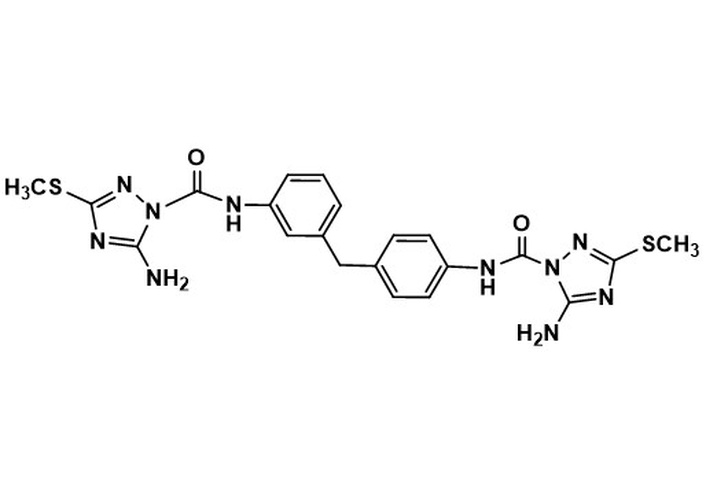 5-amino-N-(3-(4-(5-amino-3-(methylthio)-1H-1,2,4-triazole-1-carboxamido)benzyl)phenyl)-3-(methylthio)-1H-1,2,4-triazole-1-carboxamideMW 510.60LogP 2.68
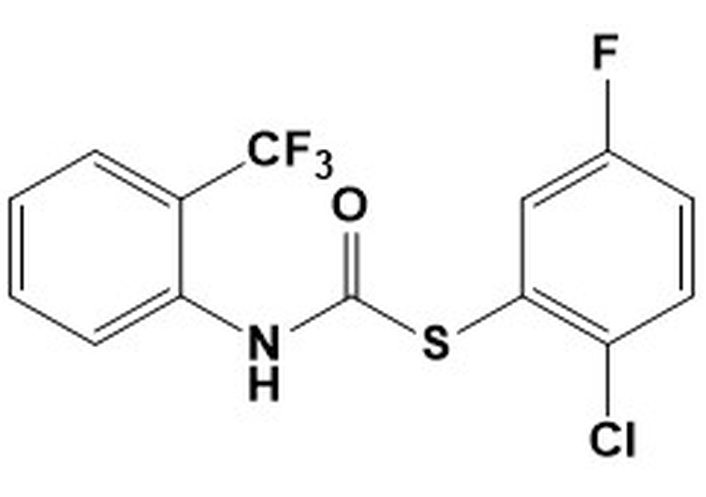 S-(2-chloro-5-fluorophenyl) (2-(trifluoromethyl)phenyl)carbamothioateMW 349.73LogP 5.39
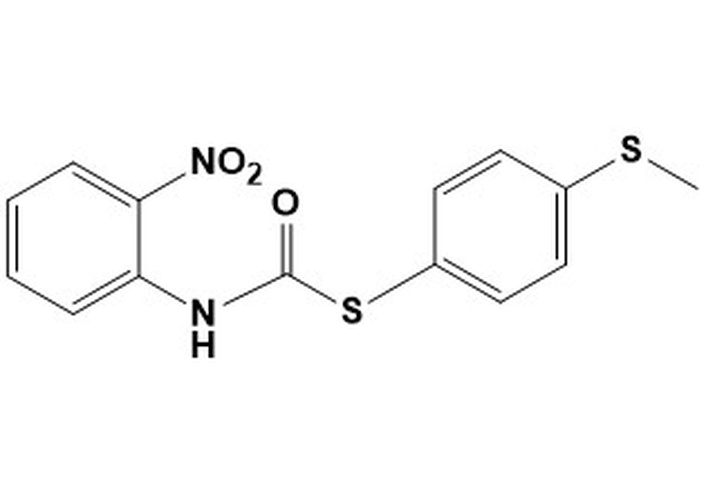 S-[4-(methylsulfanyl)phenyl] (2-nitrophenyl) carbamothioateMW 320.38LogP 4.54
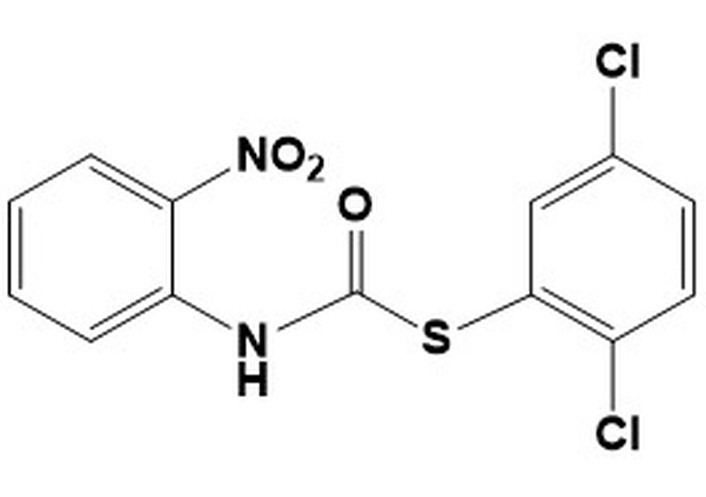 S-(2,5-dichlorophenyl)(2-nitrophenyl) carbamothioateMW 343.18LogP 4.95
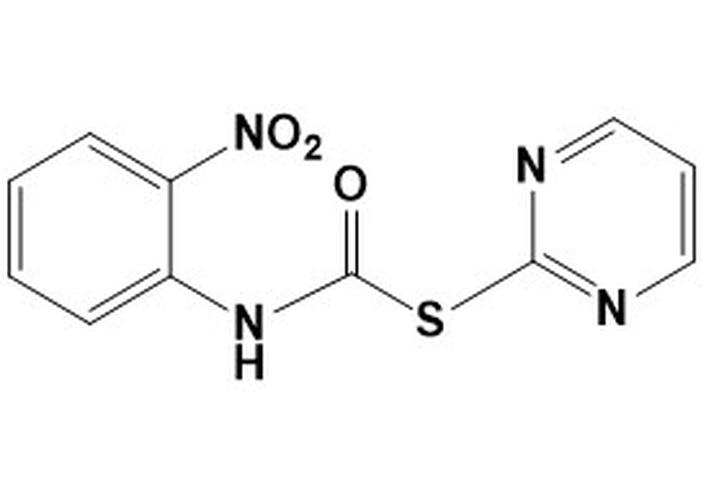 S-pyrimidin-2-yl (2-nitrophenyl) carbamothioateMW 276.27LogP 1.96
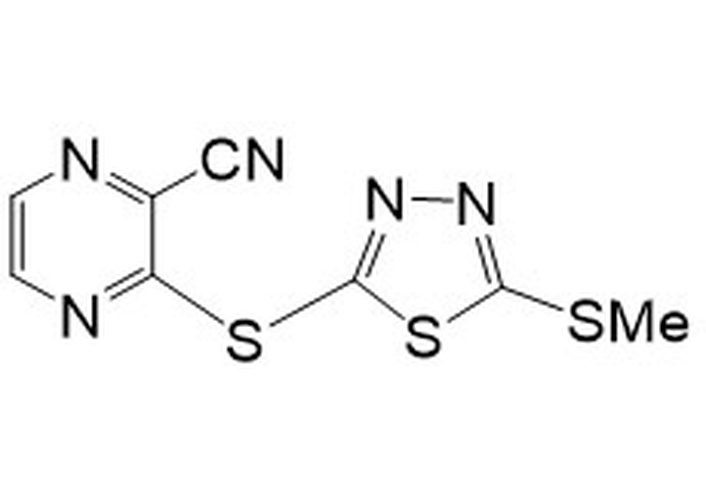 3-((5-(methylthio)-1,3,4-thiadiazol-2-yl)thio)pyrazine-2-carbonitrileMW 267.34LogP 3.53
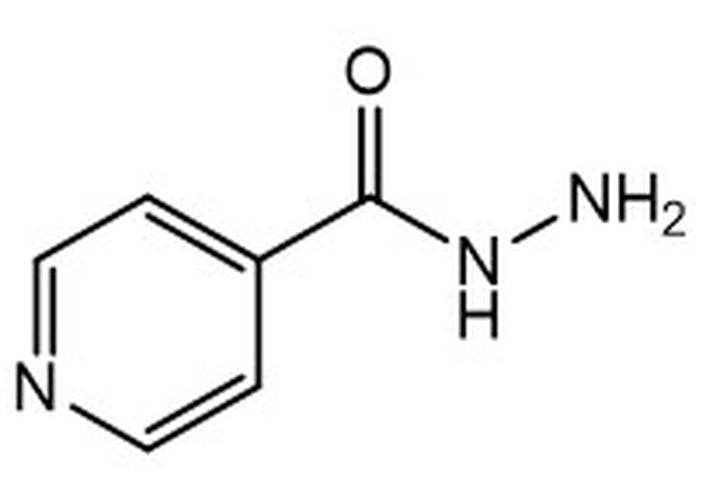 MW 137.17LogP –0.64