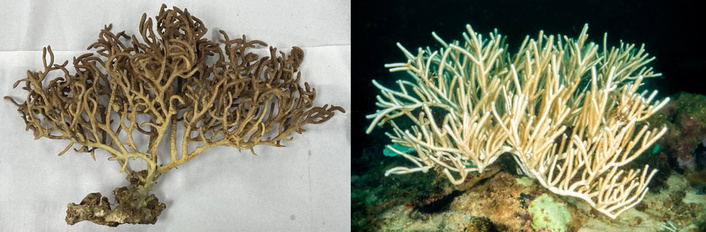
Original Article


Affiliation:
1Marine Science Programme, Faculty of Science and Natural Resources, Universiti Malaysia Sabah, Kota Kinabalu 88400, Malaysia
2Higher Institution Centers of Excellence (HICoE), Borneo Marine Research Institute, Universiti Malaysia Sabah, Kota Kinabalu 88400, Malaysia

Affiliation:
3Spectrometab Biotechnologies Sdn Bhd, Kuala Lumpur 51200, Malaysia
Affiliation:
4Department of Biochemistry, Faculty of Medicine, Universiti Kebangsaan Malaysia, Kuala Lumpur 56000, Malaysia
Affiliation:
2Higher Institution Centers of Excellence (HICoE), Borneo Marine Research Institute, Universiti Malaysia Sabah, Kota Kinabalu 88400, Malaysia
Affiliation:
5Biotechnology Research Institute, Universiti Malaysia Sabah, Kota Kinabalu 88400, Malaysia
ORCID: https://orcid.org/0009-0009-8635-5251
 ,
Affiliation:
5Biotechnology Research Institute, Universiti Malaysia Sabah, Kota Kinabalu 88400, Malaysia
Affiliation:
2Higher Institution Centers of Excellence (HICoE), Borneo Marine Research Institute, Universiti Malaysia Sabah, Kota Kinabalu 88400, Malaysia
Email: dawoodshah@ums.edu.my
ORCID: https://orcid.org/0000-0001-7520-1032

Explor Foods Foodomics. 2026;4:1010199 DOI: https://doi.org/10.37349/eff.2026.1010199
Received: April 20, 2026 Accepted: August 26, 2026 Published: November 08, 2026
Academic Editor: Zuhaib Bhat, SKUAST-Jammu, India
Aim: This study aims to evaluate the antioxidant activities and profile the bioactive compounds of Sinularia sp. collected from the waters of Sabah, Malaysia.
Methods: Total phenolic and flavonoid contents, as well as the antioxidant activity [2,2-diphenyl-1-picrylhydrazyl (DPPH); 2,2'-azino-bis(3-ethylbenzothiazoline-6-sulfonic acid) (ABTS)] of Sinularia sp. methanol extract were evaluated. Additionally, profiling of bioactive compounds was performed using Fourier transform infrared spectroscopy (FTIR), gas chromatography and mass spectrometry (GC-MS), and liquid chromatography-orbitrap-tandem mass spectrometry (LC-orbitrap-MS/MS) approaches.
Results: Sinularia sp. methanol extract contained total phenolic content of 0.053 ± 0.001 mg gallic acid equivalent (GAE)/g and total flavonoid content of 1.78 ± 0.034 mg quercetin equivalents (QE)/g. The antioxidant activities determined by DPPH and ABTS assays showed half-maximal inhibitory concentration (IC50) values of 6.23 ± 0.17 mg/mL and 3.28 ± 0.07 mg/mL, respectively, while the standard ascorbic acid exhibited the highest activity with IC50 values of 0.15 ± 0.01 and 0.08 ± 0.01 mg/mL, respectively. FTIR analysis confirmed functional groups indicative of bioactive compounds, while GC-MS and LC-orbitrap-MS/MS identified 13 and 59 detections, respectively, containing fatty acids, fatty acid esters, alkaloids, steroids, and marine sterols. Interestingly, the key identified antioxidant compounds include vitamin E, docosahexaenoic acid (DHA), and eicosapentaenoic acid (EPA).
Conclusions: In conclusion, Sinularia sp. exhibits promising antioxidant potential. Further studies are required to isolate and characterize active compounds for therapeutic applications.
Soft corals, particularly those within the genus Sinularia, have gained scientific attention due to their remarkable biodiversity and ability to synthesize a wide range of bioactive secondary metabolites. As members of the order Alcyonacea, Sinularia sp. contribute significantly to coral reef ecosystems by enhancing habitat complexity and supporting marine biodiversity [1, 2]. Unlike stony corals, soft corals lack a rigid exoskeleton but possess calcium carbonate sclerites, which provide structural integrity and defense against predators [3].
Sinularia sp. is predominantly distributed in tropical and subtropical marine environments, particularly across the Indo-Pacific region. They are commonly found in the Red Sea, Indian Ocean, and the western and central Pacific, inhabiting various reef substrates at depths ranging from shallow coastal waters (less than 1 meter) to approximately 35 meters [4, 5]. These corals thrive in nutrient-rich waters with moderate light conditions and are often associated with symbiotic zooxanthellae, which contribute to their energy requirements and vibrant pigmentation [6, 7]. Their widespread distribution and adaptability make Sinularia an ecologically significant genus within coral reef ecosystems, serving as habitat and food sources for various marine organisms [4].
Sinularia sp. contains terpenoids, steroids, flavonoids, and phenolic compounds that exhibit potent antioxidant properties [4, 8]. These secondary metabolites serve various ecological functions, such as chemical defense against predators, competition for space, and symbiotic interactions. Antioxidants, particularly phenolics and flavonoids, play a crucial role in neutralizing free radicals, thereby protecting cells from oxidative stress and reducing the risk of chronic diseases, including cancer and neurodegenerative disorders [9]. The antioxidant potential of Sinularia sp. is largely attributed to its ability to inhibit reactive oxygen species and inflammatory pathways, highlighting its potential in pharmaceutical and biomedical applications [4, 10].
Overharvesting could disrupt marine ecosystems, underscoring the need for controlled aquaculture and biotechnological approaches to ensure a stable supply of bioactive compounds without harming natural populations [10]. In this context, bioactive compounds derived from marine sources are important sustainable alternatives for aquaculture, particularly through the identification of novel antioxidant compounds. Although extensive research has been conducted on Sinularia species from various geographical regions, information on species inhabiting Sabah waters is limited. Previously, Sinularia sp. from Tun Mustapha Marine Park, North Borneo, Malaysia was reported to possess secondary metabolites with inhibitory activity against NO production [11]. We hypothesize that Sabah Sinularia sp. contains unique antioxidant compounds despite low phenolic content. Therefore, this study aims to fill that gap by evaluating its antioxidant activity and metabolite profiling using advanced analytical techniques like gas chromatography and mass spectrometry (GC-MS) and liquid chromatography-orbitrap-tandem mass spectrometry (LC-orbitrap-MS/MS). By identifying novel or bioactive compounds, this research can contribute to drug discovery while promoting sustainable utilization of marine resources.
Chemicals and reagents were purchased according to their grade, manufacturer, and country of origin, including HPLC-grade methanol (Sigma-Aldrich, Darmstadt, Germany); Folin–Ciocalteu phenol reagent (R&M Chemicals, Kumpulan Saintifik F.E. Sdn. Bhd., Selangor, Malaysia); gallic acid (Nacalai Tesque, Kyoto, Japan); aluminum chloride (Fisher Scientific, Leicestershire, UK); quercetin (Sigma-Aldrich, St. Louis, USA); 2,2-diphenyl-1-picrylhydrazyl (DPPH) (TCI, Tokyo, Japan); and 2,2'-azino-bis(3-ethylbenzothiazoline-6-sulfonic acid) (ABTS) (Sigma-Aldrich, St. Louis, USA).
The soft coral samples were collected from Sepanggar (6.072540° N, 116.081338° E) (6.072363° N, 116.086584° E), Udar Besar (6.076395° N, 116.085657° E) (6.081392° N, 116.085857° E), Gaya (6.020984° N, 116.002947° E), and Sulug Islands (5.958854° N, 115.997397° E), Sabah, Malaysia, using SCUBA diving between June and October 2024 at depths ranging from 9.7 to 17.9 meters, with a mean collection depth of 13.0 ± 3.2 meters (Figures 1 and 2). Permits for sampling were obtained from the Sabah Biodiversity Centre (SaBC) under license reference number JKM/MBS.1000-2/13 JLD.2 (72). The samples were deposited at the Institut Marin Borneo, Universiti Malaysia Sabah Herbarium, and voucher specimen number IPMB-C 01.00085 was obtained. The samples were washed to remove symbiotic organisms and cut into smaller pieces to enhance surface area. The pieces were then submerged in HPLC-grade methanol and subjected to maceration in an orbital shaker for 72 hours at 27°C. After the first cycle, the mixture was filtered through Whatman filter paper (grade 2 and diameter of 150 mm), and fresh methanol was added for two additional 72-hour maceration cycles. The pooled extracts were concentrated using a rotary evaporator, followed by lyophilization to obtain the crude extract. The final product was stored at –80°C for future analysis.
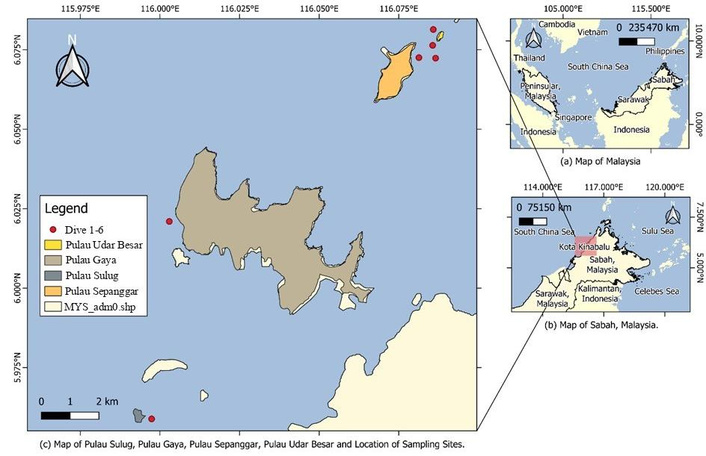
The collection sites of Sinularia sp. marine soft corals were mapped and analyzed using QGIS (Quantum Geographic Information System).
The TPC of soft coral extracts was determined using the Folin–Ciocalteu method, with gallic acid as a standard. A stock solution of soft coral extract (2 mg/mL) was prepared and reacted with the Folin–Ciocalteu reagent. The reaction mixture was incubated in the dark, and absorbance was measured at 743 nm using a ultraviolet-visible (UV-Vis) spectrophotometer. The TPC values were expressed as milligrams of gallic acid equivalent (GAE) per gram of extract [12, 13].
The TFC of the extract was quantified using the aluminum chloride colorimetric method with quercetin as a standard. A stock solution of soft coral extract (2 mg/mL) was prepared and allowed to react with the aluminum chloride reagent mixture. The reaction mixture was incubated in the dark, and absorbance was measured at 510 nm using a UV-Vis spectrophotometer. The TFC values were expressed as milligrams of quercetin equivalents (QE) per gram of extract [12, 13].
The DPPH assay was used to assess the radical scavenging ability of the extract. Serial dilutions of the extract were prepared, and the reaction mixture was incubated in the dark for 30 minutes. Absorbance was measured at 517 nm using a UV-Vis spectrophotometer. The percentage inhibition was calculated, and half-maximal inhibitory concentration (IC50) values were determined [12, 13].
The ABTS assay was used to assess the radical scavenging ability of the extract. Serial dilutions of the extract were prepared, and the reaction mixture was incubated in the dark for 6 minutes. Absorbance was measured at 734 nm using a UV-Vis spectrophotometer. The percentage inhibition was calculated, and IC50 values were determined [12, 13].
Preliminary screening of the bioactive compound class, including alkaloids, anthocyanosides, anthraquinones, flavonoids, phenolic flavonoids, saponins, steroids, tannins, and terpenoids, was carried out using the methanol crude extract (2 mg/mL) of Sinularia sp. Alkaloids were identified by mixing extracts with hydrochloric acid (HCl) and Wagner’s reagent (iodine in potassium iodide solution), where a reddish-brown precipitate indicated positivity. Anthocyanosides were detected by mixing 1 mL of Sinularia sp. extract with 5 mL of 1% dilute HCl, producing a pink color. Anthraquinones were detected by treating 1 mL of the extract with diluted H2SO4, benzene, and ammonia, producing a rose-pink color. Flavonoids were detected by treating 2 mL of Sinularia sp. extract with 1 mL of 2 mol/L sodium hydroxide, producing a yellow color. Phenolic flavonoids were detected by mixing 1 mL of Sinularia sp. extract with 2 mL of 10% lead acetate solution, producing a brown precipitate. Saponins were identified by vigorously shaking 2.0 mL of extract with 2.0 mL of distilled water, with a stable 1.0 cm foam layer, indicating their presence. Steroids were detected by adding chloroform and concentrated H2SO4, producing a red-to-yellow color with green fluorescence. Tannins were detected by adding 1 mL of Sinularia sp. extract and a few drops of 1% diluted HCl to the test tube, producing a red precipitate, and terpenoids were detected by mixing 1 mL of Sinularia sp. extract with 2 mL of chloroform and then, slowly, a few drops of concentrated sulfuric acid, producing a reddish-brown coloration [6, 14].
FTIR analysis was conducted using a PerkinElmer Spectrum 100 FTIR spectrophotometer with a universal attenuated total reflectance (UATR) accessory. The methanol extract was directly applied to the spectrophotometer’s test crystal window for spectral acquisition. Functional groups were identified by comparing absorption bands with reference spectra [15].
The bioactive compounds in the extract were identified using an Agilent 7890A GC system coupled with an Agilent 5975C MS detector. The extract was reconstituted in n-hexane and analyzed under splitless mode. Compound identification was performed using the NIST Mass Spectral Database version 11 [16].
LC-MS analysis was performed using a Dionex Ultimate 3000 UHPLC system with a Thermo Syncronis C18 column. The gradient elution method was applied using water and acetonitrile with 0.1% formic acid. Data analysis was conducted using Thermo Fisher Scientific software [17].
The presence of the compound in plant samples was analyzed by GC-MS using the NIST Mass Spectral Database version 11 for compound identification. LC-orbitrap-MS/MS analysis based on Thermo Fisher Scientific software. TPC, TFC, and antioxidant activities (DPPH and ABTS) were calculated using Microsoft Excel. All experiments were conducted in triplicate (n = 3), and the results are presented as mean ± standard deviation (SD).
The methanol extract of Sinularia sp. yielded 1.07% crude extract. The methanol extract contained a TPC of 0.053 ± 0.001 mg GAE/g extract and a TFC of 1.78 ± 0.034 mg QE/g extract.
The antioxidant activity of Sinularia sp. methanol extract was assessed using the DPPH and ABTS assays at concentrations ranging from 6.25 to 0.097 mg/mL. The results showed an increase in radical scavenging activity with higher extract concentrations (Figures 3 and 4). The IC50 value was determined by plotting radical scavenging activity against extract concentration. The methanol extract, tested using 0.1 µM DPPH solution, exhibited an IC50 value of 6.23 ± 0.17 mg/mL for the DPPH assay and 3.28 ± 0.07 mg/mL for the ABTS assay, respectively (Table 1).
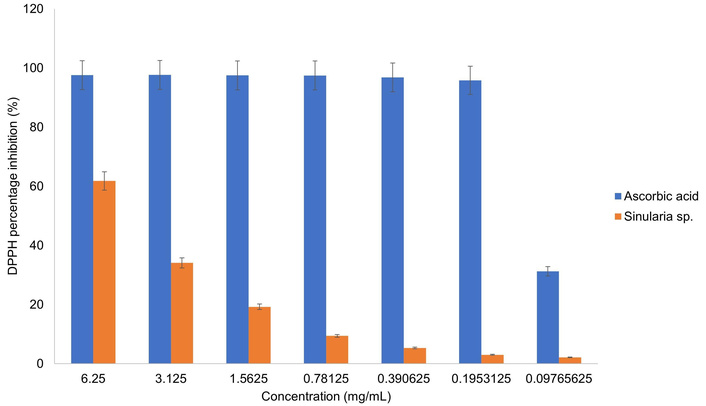
Antioxidant activity of Sinularia sp. methanol extract and ascorbic acid evaluated using the 2,2-diphenyl-1-picrylhydrazyl (DPPH) assay. Concentrations on the x-axis are arranged from highest to lowest.
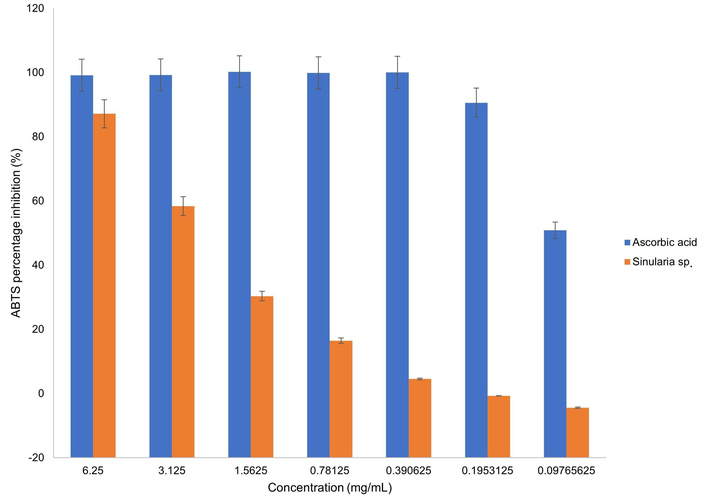
Antioxidant activity of Sinularia sp. methanol extract and ascorbic acid evaluated using 2,2'-azino-bis(3-ethylbenzothiazoline-6-sulfonic acid) (ABTS) assay. Concentrations on the x-axis are arranged from highest to lowest.
Half-maximal inhibitory concentration (IC50) values of Sinularia sp. methanol extract based on DPPH and ABTS assays.
| Antioxidant assay | IC50 (mg/mL) (mean ± SD) |
|---|---|
| DPPH (Ascorbic acid) | 0.15 ± 0.01 |
| DPPH (Sinularia sp.) | 6.23 ± 0.17 |
| ABTS (Ascorbic acid) | 0.08 ± 0.01 |
| ABTS (Sinularia sp.) | 3.28 ± 0.07 |
ABTS: 2,2'-azino-bis(3-ethylbenzothiazoline-6-sulfonic acid); DPPH: 2,2-diphenyl-1-picrylhydrazyl; SD: standard deviation.
The preliminary screening of the methanol extract (2 mg/mL) of Sinularia sp. revealed the presence of alkaloids, anthocyanosides, anthraquinones, flavonoids, phenolic flavonoids, saponins, steroids, tannins, and terpenoids. A strong presence was observed for alkaloids, flavonoids, phenolic flavonoids, saponins, and steroids (Table 2).
Preliminary screening of bioactive compound classes in Sinularia sp. methanol extract.
| Class of bioactive compounds | Presence of compounds in methanol extract |
|---|---|
| Alkaloids | ++ |
| Anthocyanosides | + |
| Anthraquinones | + |
| Flavonoids | ++ |
| Phenolic flavonoids | ++ |
| Saponins | ++ |
| Steroids | ++ |
| Tannins | + |
| Terpenoids | + |
+: Presence; ++: strong presence.
The FTIR spectrum of the methanol extract exhibited distinct absorption bands, each indicative of particular functional groups present within the sample (Table 3). The broad absorption band at 3,282.17 cm–1 suggests the presence of hydroxyl groups (alcohols/phenols). The absorption bands at 2,923.82 cm–1 and 2,852.69 cm–1 correspond to aliphatic methylene groups, characteristic of alkanes. The peak at 1,736.17 cm–1 is attributed to carbonyl stretching vibrations, commonly found in esters. The band at 1,636.30 cm–1 indicates the presence of alkenes due to C=C stretching vibrations (Figure 5).
Identified functional groups in the Fourier transform infrared spectroscopy (FTIR) spectrum of the Sinularia sp. methanol extract based on the reference range.
| Recorded absorption band (cm–1) | Reference range (cm–1) (from highest to lowest) | Functional group | Compound/Class assignment |
|---|---|---|---|
| 3,282.17 | 3,550–3,200 | O–H | Hydroxyl compounds (alcohols, phenols) |
| 2,923.82 | 3,000–2,850 | C–H | Aliphatic methylene (alkanes) |
| 2,852.69 | 3,000–2,850 | C–H | Aliphatic methylene (alkanes) |
| 1,736.17 | 1,750–1,730 | C=O | Carbonyl compounds (esters) |
| 1,636.30 | 1,680–1,620 | C=C | Alkenes stretch vibration |
| 1,378.95 | 1,470–1,350 | C–H | Bending vibration of alkanes |
| 1,105.05 | 1,150–1,050 | C–O | Alcohols, ethers, or ester stretching vibration |
| 1,040.68 | 1,100–1,000 | C–O | Alcohols or ether stretching vibration |
| 613.65 | 650–600 | C–H/C–X | Bending vibration or halo compounds (fingerprint region) |
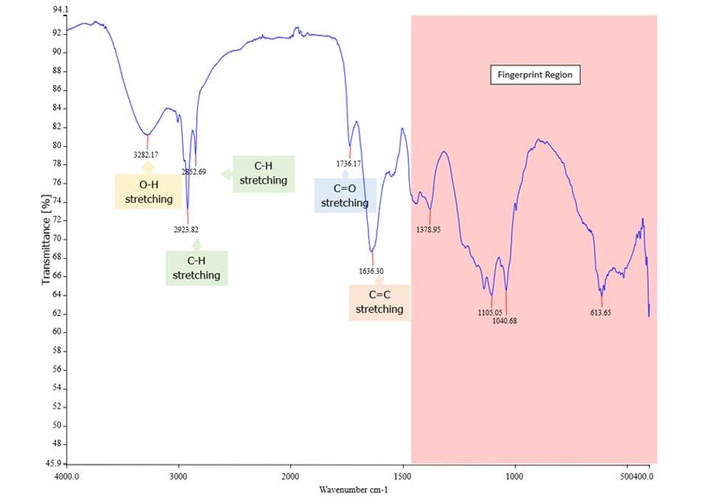
Fourier transform infrared spectroscopy (FTIR) spectrum with the functional groups of the Sinularia sp. methanol extract.
GC-MS analyses of bioactive compounds carried out on the Sinularia sp. methanol extract revealed thirteen (13) compounds of different functional groups, such as alkane, fatty acid ester, phytosterol, steroid, terpene alcohol, and tocopherol. Table 4 and Figure 6 display the identified compounds.
List of compounds detected in the methanol extract of Sinularia sp. by gas chromatography and mass spectrometry (GC-MS) analysis.
| No | Class | Retention time (min) | Compound name | Molecular formula | Molecular weight (Da) | Area percent |
|---|---|---|---|---|---|---|
| 1 | Alkane | 63.70 | Nonadecane | C19H40 | 268.53 | 2.39 |
| 2 | Fatty acid ester | 47.35 | Methyl ester, hexadecanoic acid | C17H34O2 | 270.46 | 0.96 |
| 3 | 53.66 | Methyl stearate | C19H38O2 | 298.51 | 0.97 | |
| 4 | 57.52 | Methyl arachidonate | C21H34O2 | 318.50 | 1.88 | |
| 5 | 59.11 | Methyl eicosapentaenoate | C21H32O2 | 316.48 | 2.21 | |
| 6 | 62.91 | Methyl docosahexaenoic acid (DHA) | C23H34O2 | 342.52 | 0.4 | |
| 7 | Phytosterol | 79.57 | Campesterol | C28H48O | 400.69 | 4.69 |
| 8 | Steroid | 75.62 | Cholest-5,22-dien-3β-ol | C27H44O | 384.66 | 0.44 |
| 9 | 76.75 | Cholesterol | C27H46O | 386.66 | 3.8 | |
| 10 | 78.67 | Ergosterol | C28H46O | 398.68 | 1.02 | |
| 11 | 55.18 | Carvone | C10H14O | 150.22 | 0.93 | |
| 12 | Terpene alcohol | 59.83 | Neodihydrocarveol | C10H18O | 154.25 | 2.29 |
| 13 | Tocopherol | 79.11 | Vitamin E | C29H50O2 | 430.72 | 0.61 |
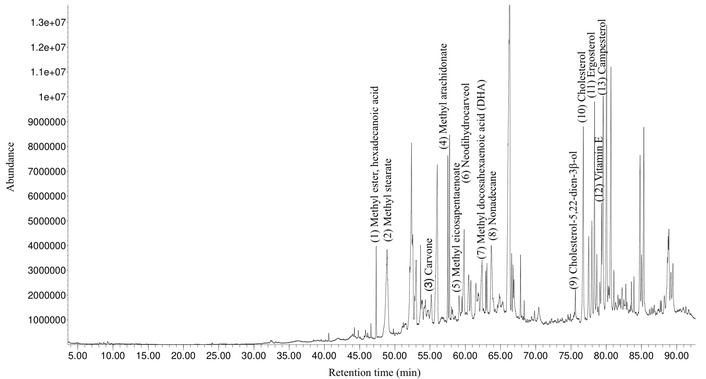
Gas chromatography and mass spectrometry (GC-MS) chromatogram of the methanol extract of Sinularia sp.
Briefly, the methanol extract of Sinularia sp. exhibited a diverse range of compounds across multiple chemical classes, with fatty acid esters (48%) and steroids (14%) being the most abundant. Other identified classes include terpene alcohol (9%), marine sterol (9%), alkane (5%), sesquiterpene (5%), phytosterol (5%), and tocopherol (5%), as shown in Figure 7.
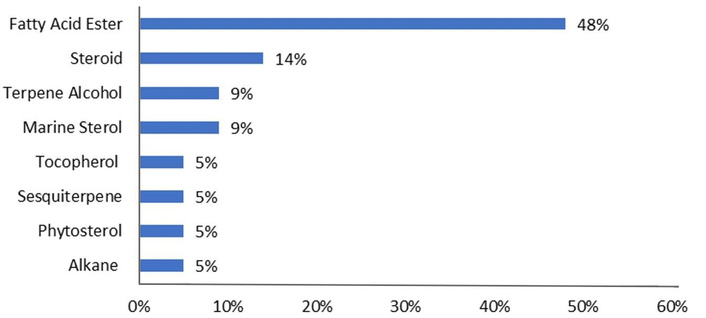
Distribution of chemical classes of compounds detected in the methanol extract of Sinularia sp. by gas chromatography and mass spectrometry (GC-MS) analysis.
LC-orbitrap-MS/MS was used to profile compounds present in the methanol extract of Sinularia sp. These compounds, identified in both positive and negative ionization modes are listed.
The LC-orbitrap-MS/MS analysis identified a total of 48 bioactive compounds across various functional groups. Table 5 and Figure 8 present the detected compounds.
List of bioactive compounds profile in methanol extracts of Sinularia sp. analyzed via positive ionization mode of liquid chromatography-orbitrap-tandem mass spectrometry (LC-orbitrap-MS/MS).
| No | Class | Retention time (min) | Compound name | Molecular formula | Molecular weight (Da) | Mass error (ppm) |
|---|---|---|---|---|---|---|
| 1 | Alkaloid | 0.57 | Trigonelline | C7H7NO2 | 137.04 | 0.27 |
| 2 | 1.69 | Salsolinol | C10H13NO2 | 179.09 | 0.56 | |
| 3 | 3.94 | 6-Methoxyharmine | C12H12N2O2 | 216.09 | 0.7 | |
| 4 | 3.97 | Anatabine | C10H12N2 | 160.10 | 1.4 | |
| 5 | 4.33 | Harman-3-carboxylic acid | C12H12N2O2 | 216.09 | 0.97 | |
| 6 | 4.58 | Tryptoline | C11H12N2 | 172.10 | 1.44 | |
| 7 | 21.47 | Coniine | C8H17N | 127.13 | 1.03 | |
| 8 | Amino acid derivative | 1.06 | L-pyroglutamic acid | C5H7NO3 | 129.04 | 1.51 |
| 9 | 5.84 | N-acetyltryptophan | C13H14N2O3 | 246.10 | 0.11 | |
| 10 | Aromatic aldehyde | 6.07 | 4-Indolecarbaldehyde | C9H7NO | 145.05 | 0.78 |
| 11 | Benzyl derivative | 10.07 | (2R)-2-[4-methoxy-3-(3-methoxypropoxy)benzyl]-3-methylbutanoic acid | C17H26O5 | 310.17 | 0.1 |
| 12 | Carnitine derivative | 1.88 | Propionylcarnitine | C10H19NO4 | 217.13 | 0.78 |
| 13 | Complex lipid derivative | 10.38 | 2-{5-[2-({2-[5-(2-Hydroxybutyl)oxolan-2-yl]propanoyl}oxy)propyl]oxolan-2-yl}propanoic acid | C21H36O7 | 400.24 | –0.11 |
| 14 | Eicosanoid | 11.53 | 15-Hydroxyeicosatetraenoic acid | C20H32O3 | 320.23 | –0.64 |
| 15 | Endocannabinoid | 14.08 | 2-Arachidonoyl glycerol | C23H38O4 | 378.27 | 0.12 |
| 16 | Fatty acid | 0.63 | Docosahexaenoic acid | C22H32O2 | 328.23 | –0.96 |
| 17 | Fatty acid amide | 8.30 | N-arachidonoyl-L-serine | C23H37NO4 | 391.27 | –1.31 |
| 18 | 8.92 | 5(6)-EET ethanolamide | C22H37NO3 | 363.27 | 0.4 | |
| 19 | 10.38 | Oleamide | C18H35NO | 281.27 | –0.42 | |
| 20 | 14.80 | Hexadecanamide | C16H33NO | 255.25 | –0.31 | |
| 21 | 15.65 | Stearoyl ethanolamide | C20H41NO2 | 327.31 | –1.09 | |
| 22 | 16.08 | Stearamide | C18H37NO | 283.28 | 0.19 | |
| 23 | 17.24 | Erucamide | C22H43NO | 337.33 | –0.39 | |
| 24 | Fatty acid derivative | 10.78 | 1,2-Dihydroxyheptadec-16-Yn-4-yl acetate | C19H34O4 | 326.24 | –0.51 |
| 25 | Fatty acid ester | 16.12 | Docosahexaenoic acid methyl ester | C23H34O2 | 342.25 | 0.97 |
| 26 | 15.776 | Eicosapentaenoic acid methyl ester | C21H32O2 | 316.24 | –0.03 | |
| 27 | 5.40 | Hexanoylcarnitine | C13H25NO4 | 259.17 | 0.36 | |
| 28 | 11.57 | Palmitoylcarnitine | C23H45NO4 | 399.33 | –0.47 | |
| 29 | 21.984 | Ethyl palmitoleate | C18H34O3 | 304.24 | –0.34 | |
| 30 | 16.39 | Arachidonic acid methyl ester | C21H34O2 | 318.25 | –0.11 | |
| 31 | Hormone | 3.98 | Melatonin | C13H16N2O2 | 232.12 | 0.11 |
| 32 | Phenethylamine derivative | 2.53 | 3-Methoxytyramine | C9H13NO2 | 167.09 | 0.77 |
| 33 | Phenolic compound | 11.01 | 6-Gingerol | C17H26O4 | 294.18 | –0.63 |
| 34 | Pteridine derivative | 1.61 | Biopterin | C9H11N5O3 | 237.08 | 0.32 |
| 35 | Purine base | 2.31 | Hypoxanthine | C5H4N4O | 136.03 | 1.04 |
| 36 | Purine nucleoside | 2.33 | Inosine | C10H12N4O5 | 268.08 | 0.65 |
| 37 | Pyrimidine base | 1.81 | Thymine | C5H6N2O2 | 126.04 | 1.43 |
| 38 | Pyrimidine derivative | 0.55 | Dihydrothymine | C5H8N2O2 | 128.05 | 0.97 |
| 39 | Sphingolipid derivative | 10.07 | 2-Amino-1,3,4-octadecanetriol | C18H39NO3 | 317.29 | –0.41 |
| 40 | 10.38 | Sphingosine (d18:1) | C18H37NO2 | 299.28 | –0.62 | |
| 41 | 11.37 | N,N-dimethylsphingosine | C20H41NO2 | 327.31 | –0.16 | |
| 42 | Steroid | 11.68 | Dolichosterone | C28H46O6 | 462.33 | –0.67 |
| 43 | 14.20 | 6β-Hydroxytestosterone | C19H28O3 | 304.20 | –0.56 | |
| 44 | Terpenoid | 6.04 | Tetrahydroxyoctahydro-2H-oxecinone | C10H16O5 | 216.09 | –0.09 |
| 45 | Vitamin derivative | 0.92 | Nicotinic acid | C6H5NO2 | 123.03 | 1.07 |
| 46 | 1.01 | Nicotinamide | C6H6N2O | 122.04 | 1.76 | |
| 47 | 15.44 | Ergocalciferol | C28H44O | 396.33 | 0.01 | |
| 48 | 12.83 | 9-cis-Retinal | C20H28O | 284.21 | –0.63 |
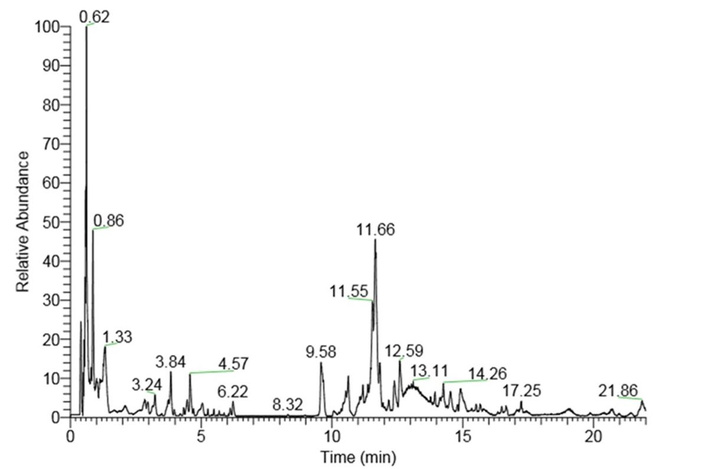
Liquid chromatography-orbitrap-tandem mass spectrometry (LC-orbitrap-MS/MS) chromatogram of methanol extract of Sinularia sp., in positive ionization mode.
The negative ionization mode of LC-orbitrap-MS/MS revealed eleven (11) bioactive compounds. Table 6 and Figure 9 present the identified compounds.
List of bioactive compounds profile in the methanol extract of Sinularia sp. analyzed via negative ionization mode of liquid chromatography-orbitrap-tandem mass spectrometry (LC-orbitrap-MS/MS).
| No | Class | Retention time (min) | Compound name | Molecular formula | Molecular weight (Da) | Mass error (ppm) |
|---|---|---|---|---|---|---|
| 1 | Amino acid derivative | 5.84 | DL-N-acetyltryptophan | C13H14N2O3 | 246.10 | –1.22 |
| 2 | Eicosanoid | 12.63 | 8S-Hydroxy-eicosatetraenoic acid | C20H32O3 | 320.23 | –0.55 |
| 3 | 12.91 | 15-Keto-eicosatetraenoic acid | C20H34O3 | 322.25 | –0.72 | |
| 4 | Fatty acid | 11.56 | (5Z,8S,9R,11Z,14Z)-8,9-Dihydroxy-5,11,14-icosatrienoic acid | C20H34O4 | 338.24 | –0.45 |
| 5 | 12.21 | γ-Linolenic acid | C18H30O2 | 278.22 | –1.49 | |
| 6 | 12.34 | 11,12-Epoxy-(5Z,8Z,11Z)-icosatrienoic acid | C20H32O3 | 320.23 | –0.84 | |
| 7 | 12.67 | Docosahexaenoic acid | C22H32O2 | 328.23 | –0.97 | |
| 8 | 14.18 | Eicosapentaenoic acid | C20H30O2 | 302.22 | –0.97 | |
| 9 | 14.87 | Arachidonic acid | C20H32O2 | 304.23 | –0.95 | |
| 10 | Peptide | 3.24 | Leucylproline | C11H20N2O3 | 228.14 | –1.04 |
| 11 | Terpene | 14.41 | Juniperic acid | C16H32O3 | 272.23 | –0.54 |
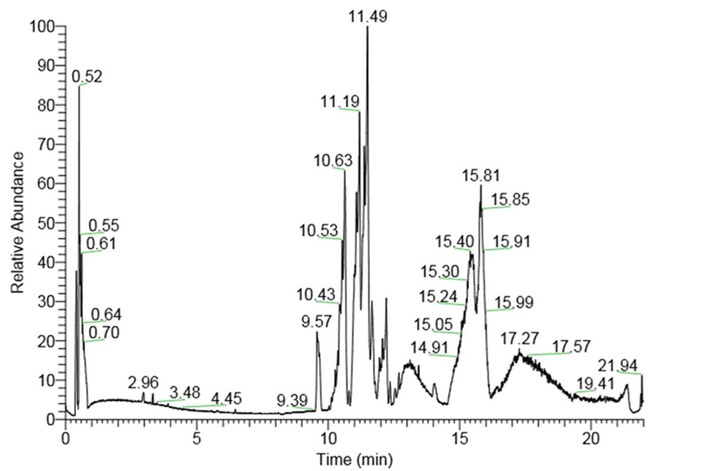
Liquid chromatography-orbitrap-tandem mass spectrometry (LC-orbitrap-MS/MS) chromatogram of methanol extract of Sinularia sp., in negative ionization mode.
LC-orbitrap-MS/MS identified forty-eight (48) and eleven (11) compounds using positive and negative ionization modes, respectively. The positive ionization mode revealed a higher number of compounds with diverse chemical classes. Alkaloids (14.58%) and fatty acid amides (14.58%) were the dominant classes, followed by fatty acid esters (12.5%), vitamin derivatives (8.33%), sphingolipid derivatives (6.25%), pyrimidine derivatives (2.08%), purine derivatives (4%), fatty acids (2.08%), steroids (4.17%), amino acid derivatives (4.17%), and other minor classes contributing 2.08% each (Figure 10).
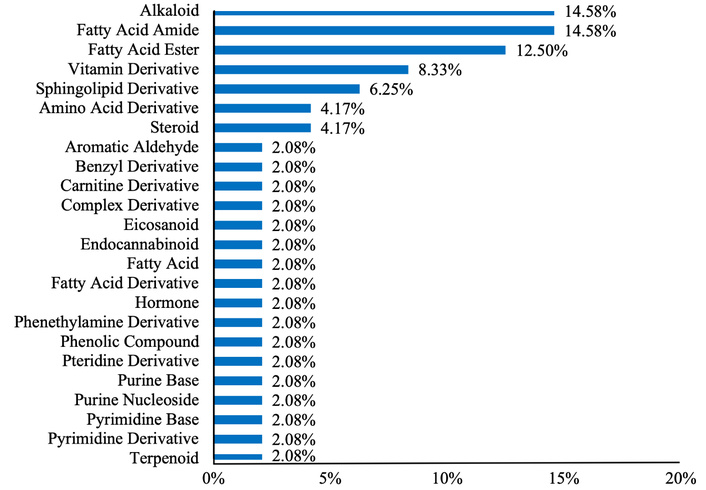
Distribution of chemical class compounds from the methanol extract of Sinularia sp. based on liquid chromatography-orbitrap-tandem mass spectrometry (LC-orbitrap-MS/MS) analysis in positive ionization mode.
The chemical classes identified in the LC-orbitrap-MS/MS positive ionization mode were predominantly alkaloids (14.58%) and fatty acid amide (14.58%) (Figure 10). While in LC-orbitrap-MS/MS negative ionization mode, fewer compounds were detected. The lower detection in negative mode might be due to the predominance of compounds that ionize more efficiently in positive mode, while fewer acidic metabolites are present that readily deprotonate under negative ionization conditions. In LC-orbitrap-MS/MS negative ionization mode, fatty acids were the most abundant, comprising 55% of the total compounds, followed by eicosanoids (18%), terpenes (9%), peptides (9%), and amino acid derivatives (9%) (Figure 11).
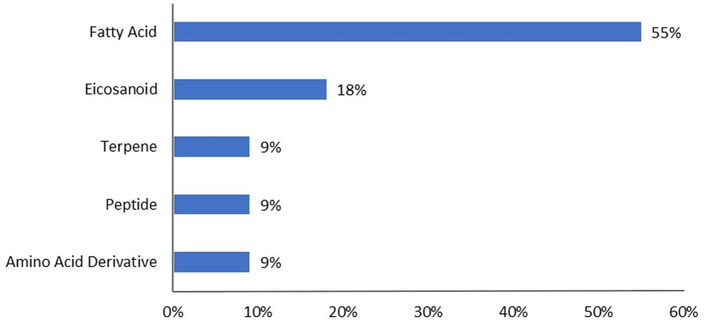
Distribution of chemical class compounds from the methanol extract of Sinularia sp. based on liquid chromatography-orbitrap-tandem mass spectrometry (LC-orbitrap-MS/MS) analysis in negative ionization mode.
Sinularia sp. methanol extract demonstrates the solvent’s efficiency in extracting bioactive compounds. Previous studies have reported that polar solvents generally produced higher extraction yields due to their ability to solubilize a wide range of metabolites [18]. In the present study, methanol extraction facilitated the recovery of phenolic and flavonoid compounds, although the TPC and TFC obtained were relatively low. A similar study by Fauzi et al. [19] reported that the marine soft coral species had low TPC and TFC levels but still exhibited antioxidant activity. This observation suggests that antioxidant potential may not depend solely on high concentrations of phenolics and flavonoids. In addition, Chan et al. [20] reported that marine-derived organisms generally contain lower phenolic contents. Despite relatively low TPC and TFC values, the methanol extract of Sinularia sp. exhibited important antioxidant activity in both DPPH and ABTS assays, indicating the presence of bioactive compounds with radical scavenging potential. Phenolic and flavonoid compounds are known to scavenge and stabilize radicals by interrupting the radical chain reaction [21, 22]. However, the IC50 value in this study is markedly higher than that of Kusmita et al. [23] (0.51 mg/mL), indicating comparatively lower antioxidant potency. The difference in antioxidant potential might be influenced by environmental factors such as collection season and sampling depth [23]. Variations in light intensity and environmental stress at different water depths can affect the production of secondary metabolites in soft corals [24]. In this study, the samples were collected at depths ranging from 9.7 to 17.9 meters (mean depth: 13.0 ± 3.2 meters) during the dry season, whereas Kusmita et al. [23] collected samples at a depth of 2 meters. Several classes of compounds, detected during the preliminary screening, such as alkaloids, terpenoids, and anthraquinones, have been reported to have scavenging activity [25, 26].
To further characterize the bioactive constituents of Sinularia sp., high-resolution analytical techniques such as FTIR [27], LC-orbitrap-MS/MS [28], and GC-MS [20] were employed. FTIR analysis of the methanol extract revealed key functional groups, including O–H stretching vibrations around 3,282.17 cm–1, indicative of phenolic compounds, as well as C–H stretching bands at 2,923.82 cm–1 and 2,852.69 cm–1, which are characteristic of aliphatic methylene groups [29]. The C=O stretching band at 1,736.17 cm–1 may indicate the presence of esterified compounds, possibly including flavonoid glycosides, while the C=C stretch at 1,636.30 cm–1 suggests the presence of alkenic structures, which may be associated with terpenoid compounds [27]. The FTIR findings correlate with the TPC and TFC results, supporting the presence of phenolic and flavonoid-related compounds. These results highlight the extract’s potential bioactivity, particularly in antioxidant mechanisms. Further studies involving chromatographic separation and mass spectrometric analysis are recommended to isolate and characterize the specific compounds responsible for these functional groups [30]. However, because the analyzed sample was a crude extract rather than a purified compound, interpretation of the FTIR spectrum, particularly within the fingerprint region, remains preliminary and limited.
GC-MS analysis identified 13 volatile compounds, including fatty acid esters, steroids, terpene alcohols, and marine sterols, with 62% of these compounds known for their antioxidant, anti-inflammatory, antimicrobial, and anticancer properties [31]. Vitamin E was identified as a notable potential compound known for its strong antioxidant properties, suggesting that it may contribute to the antioxidant activity observed in the DPPH assay. However, phenolic compounds and flavonoids were not detected in the raw extract via GC-MS. This aligns with established literature showing that polar, non-volatile compounds with high boiling points cannot be directly analyzed by gas chromatography without chemical derivatization [32]. This highlights the need for complementary analytical techniques to gain a more comprehensive biochemical profile. Despite this, the presence of other bioactive compounds suggests bioactivity warranting further investigation.
LC-orbitrap-MS/MS analysis identified 48 bioactive compounds in positive ionization mode and 11 in negative ionization mode, including alkaloids, fatty acids, terpenoids, and vitamin derivatives. These data suggested that the specific compound abundance associated with peak area is influenced by species, polarity of the solvent, and retention time of the LC-orbitrap-MS/MS [12, 13]. Compounds such as docosahexaenoic acid (DHA) and eicosapentaenoic acid (EPA) were identified, which are known for their antioxidant, cardiovascular, and anti-inflammatory benefits [33]. However, flavonoids were not detected, which may be attributed to factors such as low concentrations, ion suppression effects, or suboptimal ionization conditions [34]. Despite this limitation, further research on flavonoid extraction, particularly focusing on extraction methods and different ionization polarities, is strongly recommended. The presence of phenolic compounds in modest concentrations associated with TPC analysis further supports the complementary role of these assays in providing a comprehensive biochemical analysis [35]. These identified compounds may have contributed to the observed antioxidant activity.
In conclusion, Sinularia sp. collected from the waters of Sabah, Malaysia, demonstrated measurable antioxidant activity, despite low total phenolic and flavonoid contents. A total of 13 compounds were identified through GC-MS analysis, while LC-orbitrap-MS/MS analyses detected 59 bioactive compounds, respectively. Among the identified bioactive compounds are vitamin E, DHA, and EPA, all of which have previously been associated with antioxidant activity and may contribute to the positive radical scavenging effects observed in the DPPH and ABTS assays. This is the first LC-orbitrap-MS/MS-based report of melatonin, nicotinamide, and DHA/EPA in Sinularia sp. from Sabah. These results show that Sinularia sp. is an understudied marine soft coral that has promise as a source of antioxidant compounds. The detected compounds show potential for pharmaceutical and nutraceutical development and may serve as natural antioxidant supplements for both human and animal health.
The limitations of this study include sample collection conditions, particularly seasonal and water-related factors. Data were collected only from June to October 2024, corresponding to the dry and sunny season. However, the production of secondary metabolites is known to be influenced by environmental conditions and light intensity [24]. Additionally, bioactive profiling revealed the presence of potential antioxidant compounds in soft corals, including vitamin E, DHA, and EPA, based only on crude extracts. No further investigation was conducted on the fractions or chemical structures responsible for the observed radical scavenging activity. Furthermore, no toxicity assessment was performed in this study. Therefore, the toxicity of the identified compounds remains unknown because no in vivo studies were conducted. Lastly, the LC-MS chromatograms revealed several major peaks; however, specific compounds could not be conclusively identified or annotated due to limitations in the available spectral library. Thus, the isolation and characterisation of the individual bioactive compounds, as well as the evaluation of their antioxidant activity using specific in vitro and in vivo bioassays, should be the main goals of future research.
ABTS: 2,2'-azino-bis(3-ethylbenzothiazoline-6-sulfonic acid)
DHA: docosahexaenoic acid
DPPH: 2,2-diphenyl-1-picrylhydrazyl
EPA: eicosapentaenoic acid
FTIR: Fourier transform infrared spectroscopy
GAE: gallic acid equivalent
GC-MS: gas chromatography and mass spectrometry
HCl: hydrochloric acid
IC50: half-maximal inhibitory concentration
LC-orbitrap-MS/MS: liquid chromatography-orbitrap-tandem mass spectrometry
QE: quercetin equivalents
TFC: total flavonoid content
TPC: total phenolic content
UATR: universal attenuated total reflectance
UV-Vis: ultraviolet-visible
This work is part of Jing Wen Wong’s Marine Science Undergraduate Final Year Project (FYP) Dissertation. We express gratitude to Fatin Amira, Wong Fui Jin, and Nur Harhah Sofia, for assisting in the analysis and sampling.
JWW: Data curation, Formal analysis, Writing—original draft. YSY: Formal analysis. JKT: Formal analysis, FAK: Investigation, Writing—review & editing. GR: Writing—review & editing. SS: Writing—review & editing. MDS: Conceptualization, Visualization, Methodology, Formal analysis, Writing—original draft, Funding acquisition. All authors read and approved the submitted version.
The authors declare that there are no conflicts of interest.
Not applicable.
Not applicable.
Not applicable.
The raw data supporting the conclusions of this manuscript will be made available by the authors, without undue reservation, to any qualified researcher.
This research was funded by the National Marine Biodiversity Institute of Korea (MABIK) (Grant code: LPA2007). The funders had no role in study design, data collection and analysis, decision to publish, or preparation of the manuscript.
© The Author(s) 2026.
Open Exploration maintains a neutral stance on jurisdictional claims in published institutional affiliations and maps. All opinions expressed in this article are the personal views of the author(s) and do not represent the stance of the editorial team or the publisher.
Copyright: © The Author(s) 2026. This is an Open Access article licensed under a Creative Commons Attribution 4.0 International License (https://creativecommons.org/licenses/by/4.0/), which permits unrestricted use, sharing, adaptation, distribution and reproduction in any medium or format, for any purpose, even commercially, as long as you give appropriate credit to the original author(s) and the source, provide a link to the Creative Commons license, and indicate if changes were made.



View: 104
Download: 3
Times Cited: 0