 Review


Affiliation:
Department of Life Sciences – Caribbean Centre for Research in Bioscience (CCRIB), Mona Campus, The University of the West Indies, Kingston 007, Jamaica
Email: noureddine.benkeblia@uwi.edu; benkeblia@icloud.com
ORCID: https://orcid.org/0000-0002-7477-2092


Explor Foods Foodomics. 2026;4:1010195 DOI: https://doi.org/10.37349/eff.2026.1010195
Received: February 17, 2026 Accepted: August 27, 2026 Published: October 20, 2026
Academic Editor: Ángel Ríos, University of Castilla, Spain
Addressing postharvest losses (PHL) is seen as an important effort to satisfy food supply and reduce food insecurity. This can be achieved not only by increasing production efficiency, but also by decreasing PHL using the findings of scientific research and innovative technologies such as biotechnology and nanotechnology. These technologies could offer one of the most efficient solutions to solve this problem. During the last decade, developments in nanotechnology, including nanoparticle-based, nanosized, and smart packaging materials, have started finding their way into postharvest science and technology as well as many other fields of food production. Nanotechnology is thought to offer many benefits in preserving the freshness of fruits and vegetables, as well as quality monitoring and assessment during the supply chain and storage. The innovation in nanomaterials and smart packaging, including sensors and nanoparticle-based films, will enhance freshness assessment and monitor perishability more efficiently. This monitoring includes the detection, indication, and control of fresh products’ quality, as well as predicting consumers’ choices. Nevertheless, consumers’ attitude and acceptance of this technology, the migration risk of the nanoparticles to the food matrix resulting in potentially adverse health effects, and cost-effectiveness are the main points requiring more consideration before popularizing the use of these packaging materials in the food sector.
During the last few decades, consumption of fruits and vegetables has increased, and this trend is expected to continue in the next decades. According to the FAO [1], fruit consumption has increased by approximately 25% while vegetable consumption increased by approximately 22%, with some variations observed between different regions of the world.
Most fruits and vegetables are highly perishable. During the postharvest stage, losses are caused by three main factors: (i) mechanical and physical injuries during harvesting and handling, (ii) microbial actions, and (iii) environmental conditions such as temperature, humidity, and gas composition. Postharvest losses (PHL) are extremely hard to estimate; however, based on FAO data, a report from the Natural Resources Defense Council [2] indicated that in the USA, losses of fruits and vegetables totalled 1–30% during production (field not harvested), 3–4% product left in the field after harvesting, and 2–30% during distribution and retail marketing (product removed during packaging). However, it is important to note that these data did not distinguish between fresh and processed forms of the commodities. On the other hand, numerous reports have shown that in developed countries, PHL is mainly due to consumers’ behaviour and strict safety and quality standards. In contrast, in developing countries these losses largely result from poor or inadequate harvesting practices, inefficient or lack of cool storage facilities and/or inadequate transportation [3].
From the farm to the table, PHL are measurable in the postharvest system (PHS) through quantitative and qualitative interconnected activities from harvest through packaging, storage, and the final decision by consumers to eat or discard food. This system requires intensive handling during the various steps of the supply chain. Throughout this journey, shelf-life and freshness decline due to the perishability of fresh crops resulting from the catalytic activities and physiological processes, and spoilage [4].
Since the 20th century, the human population has been increasing rapidly, making interventions in PHL an important component of efforts to provide sufficient food and reduce food insecurity. This is achieved not only by increasing production efficiency but also by decreasing PHL using scientific research findings and innovative technologies such as biotechnology and nanotechnology, which could be one of the best solutions to this problem. Hence, nanotechnology, which consists of using the characteristics of nanoparticles, might be considered an extremely useful and efficient technology in postharvest science as well as in many other food science and agro-industries.
Historically, long before the term nanotechnology was coined, the concepts behind nanotechnology were first introduced by physicist Richard Feynman in 1959, who described how scientists would be able to manipulate and control atoms and molecules; later, the term nanotechnology was coined by Norio Taniguchi. In the 1980s, modern nanotechnology began with the development of the scanning tunnelling microscope (STM) and its capacity for imaging surfaces at the atomic level. However, defining what is “nanotechnology” was not an easy task. At first glance, we might think the term encompasses a huge range of activities [5]. With the development of nanoscale technologies, nanotechnology has received great interest, suggesting that its impact will be greater than expected, and this term will likely describe a new era of world economic growth, even though the conversion of basic discoveries into marketable products will be long and hard but achievable [5, 6].
In 1994, the Royal Society/Royal Academy of Engineering Working Group adopted the following definition on the subject: “Nanotechnologies are the design, characterization, production and application of structures, devices and systems by controlling shape and size at nanometre scale” [7]. According to the National Nanotechnology Initiative (NNI, USA), “nanotechnology is the understanding and control of matter at dimensions between approximately 1 and 100 nanometres, where unique phenomena enable novel applications, and it involves imaging, measuring, modelling, and manipulating matter at this small scale” (https://www.nano.gov) [8].
Presently, nanotechnology is widely used in many areas including agricultural sciences including fertilization, packaging and agro-processing. Besides, potential applications in all aspects of the food sector, food packaging technologies used to extend fresh crops’ shelf-life are one of the promising applications of nanotechnology, which can help in (i) reducing the influence of internal atmosphere, (ii) preserving product quality attributes, and (iii) development of spoilage agents and ensuring food safety [9]. Although significant advances have been made in developing nano-based and nano-sized packaging materials to extend the shelf-life of fresh produce, numerous obstacles are still hindering the wide application and popularization of nano-based materials. The cost of the nanomaterial, lack of reproducibility, chemical incompatibility between the matrix and the nanomaterial, scaling up the process from laboratory to industry, commercialisation of the novel food packaging material, and marketing strategies are among the obstacles to be addressed in order to popularize these types of novel packaging materials.
This paper aims to provide a comprehensive review of current developments in nanotechnology as it applies to fresh crops packaging to preserve their freshness and their quality attributes, with specific focus on its applications to modified atmosphere packaging (MAP). Covered topics include monitoring internal atmosphere changes and packaging conditions, nanoparticle-based materials to preserve freshness and extend shelf life, and how nano-based packaging materials can be used in monitoring and assessing the quality attributes of fresh crops during handling, storage, and marketing.
In postharvest science, one of the most innovative developments is nano-based packaging films, which contribute greatly to smart handling, the management of the value chain, prolongation of the shelf-life of produce, preservation of freshness, safety, and other organoleptic quality attributes [10, 11]. In addition to reducing heavy losses of fresh crops, nano-based packaging materials are considered one of the most interesting approaches to ensuring food security, especially in developing countries where low productivity in the agriculture sector and high PHL are prevalent [12, 13]. During the last two decades, numerous research works have been carried out to develop new nano-based packaging materials that will benefit the value chain and food processing sectors, aiming to enhance freshness and safety, better antimicrobial control, and reduce PHL.
Technically, nanomaterials are added to different types of biopolymers as fillers with particle sizes ranging from 0–100 nm, generally forming nanocomposites [14, 15]. Different types of organic [polysaccharides, polymerics, liposomes, ferritin, virus-like particles (VLPs)] and inorganic nanoparticles such as gold, metal oxide, mesoporus, silica, silver nanoparticles, titanium dioxide (TiO2), silicon dioxide (SiO2), silver, copper monoxide (CuO), zinc monoxide (ZnO), graphene oxide, nano-emulsions and many others which are nanostructured using matrixes starch, cellulose, chitosan, and montmorillonite (MMT) have been or still being developed to manufacture these packaging materials [16–19].
On the other hand, the use of these nano-based materials has different physiological and biological purposes. These packaging materials are developed to control the respiration rate of fresh commodities [20] and control ethylene production [21], a hormone well known to accelerate senescence and deterioration of fruits, particularly climacteric ones. Additionally, these novel packaging materials have also been utilised to control microbial growth and improve the safety of fresh [22] and minimally processed fruits [23].
Fresh fruits and vegetables are living organisms that remain alive after harvesting, requiring O2 for their respiration and other metabolic processes. MAP consists of sealing actively respiring fresh produce in polymeric film packages to alter (or adjust) O2 and CO2 concentration levels within the package atmosphere. The goal is to create an optimal gas composition to maintain freshness and extend shelf-life. Unlike controlled atmosphere (CA), in modified atmosphere (MA) there is no control over the atmospheric composition. Under MA conditions, the initial gas composition is modified by the respiration of the fresh commodity, which is caused by its physiological activity, temperature, relative humidity, and the changes in the concentrations of O2 and CO2 [24–26]. By matching the respiration rate of the packed fresh produce with the film permeability and diffusion of O2 and CO2, MA creates a low O2 and high CO2 concentration atmosphere that positively impacts the metabolism, hence reducing the catalytic activities that accelerate senescence, cause freshness losses, and slow down the activity of decay-causing microorganisms [24]. Later, the concepts of active and smart packaging technologies were developed, offering new opportunities to preserve and extend the shelf-life of fresh commodities. These different packaging materials are versatile and include carbon dioxide emitters/absorbers, oxygen scavengers, moisture and ethylene absorbers, ethanol emitters, flavour releasing/absorbing systems, time-temperature indicators, and antimicrobials [27–30].
Nanotechnology, as an emerging technology, has led to the development of various polymer nanocomposites with numerous applications, including in horticulture. The application of organic/inorganic nanocomposite materials to extend the shelf-life and freshness of fresh crops has been extensively studied in the last decade [31, 32].
The principle of the nano-based packaging materials consists in incorporating fillers of no or low permeability to gases and water vapor than the polymer matrices such as nanoplatelets, and this will enhance the barrier properties of the packaging material. The presence of these fillers results in a longer diffusion rate of O2 and CO2, ultimately improving the barrier properties of a nanocomposite against vapour and gases (Figure 1) [9, 31].
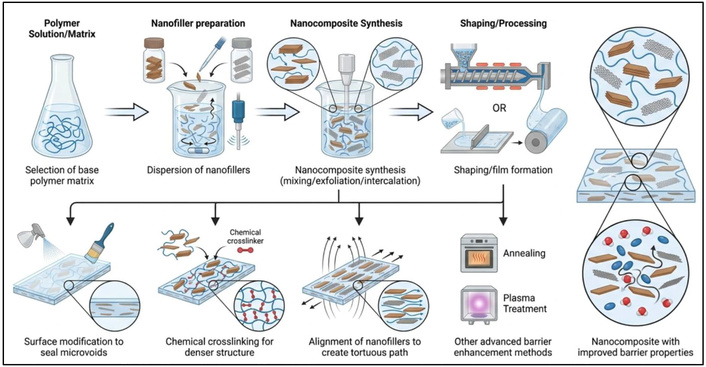
Schematic illustration of the overall procedure for the preparation of nanocomposites and improvement of the barrier properties. The figure was generated using the FigureLabs AI website (https://www.figurelabs.ai/).
So far, nano-ZnO-based materials have been the most experimented with for shelf-life extension and quality preservation of fresh or minimally processed fruits and vegetables [9, 33]. Nano-ZnO-coated polyvinyl chloride (PVC) film significantly reduced the decay rate and suppressed wound-induced ethylene production in fresh-cut apple [34], preserved the hardness and colour of green soybean [35], lowered ethylene production, carbon dioxide and water loss, and preserved the texture of fresh-cut kiwi fruit [36]. It also preserved the hardness and colour, and reduced water loss of carrots [37], reduced weight loss and retained firmness of strawberries [38], and decreased weight loss of minimally processed pomegranate [39]. Besides nano-ZnO-based packaging materials, other nanoparticle-based films have been experimented with as well and have shown promising results. Danza et al. [40] investigated silver nanoparticles (Ag-MMT) alginate-based coating material applied to fresh-cut melon stored at 5°C, and they noted a significant prolongation of shelf-life from 3 days (control) to eleven days (coated samples). Similar results were reported by Jiang et al. [41], who investigated the effects of the same nano-based material on the quality of shiitake mushrooms stored at 4 ± 1°C. The authors noted a significant reduction in weight loss, softening, and browning of the alginate/nano-silver coated mushrooms after 16 days. Sogvar et al. [38] studied fresh-cut “Fuji” apple storage using nano-TiO2-low-density polyethylene (NTLDPE) packaging and noted a higher CO2 and lower O2 atmosphere composition which resulted in maintaining the overall quality and maintaining firmness of the fruit, with lower decay rate and weight loss. In another study, Luo et al. [42] experimented with nano-CaCO3-based low density polyethylene (nano-CaCO3-LDPE) packaging on the quality of fresh-cut Chinese yam, and noted that the experimental packaging significantly inhibited browning and maintained the overall visual quality (OVQ) of the produce during its storage at 10°C. In another study, Shi et al. [43] experimented with a chitosan/nano-silica hybrid film on longan fruit, and the results showed that this packaging material markedly extended shelf-life, reduced browning index by inhibiting PPO (polyphenol oxidase) and POD (peroxidase), and retarded weight loss. Chitosan nanoparticle-based coating films were also tested, and the coating material significantly reduced decay rate, weight loss, respiration rate, and maintained firmness of stored cucumber [44] and Chinese cherry [45]. Several other studies have also been carried out on the use of silver and titanium (Ti) nano-based packaging materials to scavenge ethylene, therefore extending the shelf-life of fresh crops. The results showed that these nano-based films markedly delayed the ripening of kiwi fruit [46], Chinese jujube fruit [47], fresh-cut melon [23], and Enoki mushroom [48], although the results varied depending on the storage conditions and duration.
Indeed, the various positive effects of these nano-based packaging materials result from the proportionally larger surface areas of the nanoparticles compared to their microscale counterparts. This characteristic favours filler-matrix interactions and the performance of the resulting material [33, 49, 50]. Additionally, these properties have been shown to be significantly enhanced when combined with ultrasound [36, 51] and UV [52] treatments; however, this combination has shown some limitations, such as limited penetration and difficulties in controlling operating conditions (see some examples in Table 1). On the other hand, these polymers have been reported to present several challenges, such as their high permeance (high gas and water vapor diffusion) and poor mechanical strength [34, 35, 53, 54]. However, potential solutions to enhance these properties were reported [36, 55], and the novel nanomaterials have enhanced mechanical strength, improved permeance, and an efficient barrier against microorganisms [37, 56].
Examples of types, synthesis methods, applications, crops, and efficiency of some nanomaterials packaging used in postharvest preservation of fresh crops.
| Materials | Synthesis and types | Applications | Effects | References |
|---|---|---|---|---|
| Organics | Chitosan nanoparticles–ChNPs (Ionic gelation method) | Edible coating of fresh crops (e.g., pineapple, banana, coriander, basil) | Shelf-life extension, preserve freshness, and control of microbial growth | [104–107] |
| Nanoemulsion-based (emulsion + ultrasonication, high-pressure homogenization and microfluidization methods) | Edible coating of fresh crops (e.g., apple, tomato, banana) | Preserve freshness, control of microbial growth | [108–113] | |
| Cellulose nanocrystals–CNCs (melting and acid hydrolysis methods) | Edible coating of fresh crops (e.g., pear, nectarine, strawberry) | Control of microbial growth | [114–118] | |
| Lipid–LNs and solid-lipid nanoparticles–SLNs | Edible coating of fresh crops (e.g., guava, tomato) | Shelf-life extension | [119, 120] | |
| Inorganics | Silver-based nanoparticles–AgNPs (co-precipitation, sol-gel and microwave irradiation methods) | Edible coating (apricot, grapes, mulberry leaf) | Shelf-life extension, control of microbial spoilage | [121–126] |
| Titanium dioxide nanoparticles–TiO-NPs (Solvothermal and microwave irradiation methods) | Edible coating (e.g., cucumber, peach, blackcurrant | Shelf-life extension, ethylene decomposition | [127–131] | |
| Copper oxide nanoparticles CuO NPs (co-precipitation, sol-gel and sonochemical methods) | Modified atmosphere packaging (MAP) (e.g., tomato, avocado, mango) | Gas diffusion barrier, control of microbial growth | [132–135] | |
| Zinc oxide nanoparticles–ZnO NPs (co-precipitation and sol-gel methods) | MAP, edible coating (e.g., tomato, banana, mango, strawberry) | Shelf-life extension, control of microbial growth | [136–141] | |
| Graphene oxide–GO | MAP, edible coating (e.g., mango, apple, plum) | Shelf-life extension, control of microbial growth | [142–146] | |
| Carbon nanotubes–CNTs (chemical vapor deposition, arc discharge and laser ablation methods) | MAP, edible coating (e.g., jujube, avocado, litchi) | Shelf-life extension, control of microbial growth | [147–152] | |
| Hybrids | ZnO/CuO nanoparticle-biopolymer-based; chitosan-graphene oxide nanoparticles-beeswaxTiO2/SiO2 nanoparticles–gum arabic (electrospinning, extrusion, LbL assembly, sol-gel mixing and solution-casting/mixing methods) | MAP, edible coating (e.g., guava, sapota, dates) | Shelf-life extension, control of microbial growth | [153–155] |
Fresh fruits and vegetables are extremely perishable, and most commodities decay and spoil within a few days after harvest. This decay occurs more rapidly when handling, transportation, and storage are poor or inadequate. The use of specific packaging materials to slow down the growth and development of spoilage agents was extensively utilised [24]. However, emerging nano-based technology has started to revolutionize food packaging by developing “smart packaging” to optimize storage, control decay, and prevent spoilage of fresh commodities during the postharvest stages. The application of nanocomposite and nanoparticle-based antibacterial packaging, including nanoencapsulation, provides important antimicrobial functions, hence enhancing the quality attributes and safety of fresh and minimally processed produce [9, 30, 57, 58].
Metal nanoparticle-based packaging films made of silver, zinc, aluminium, or other oxides have been investigated [59, 60]. Besides the application of nano-based technologies used in detection of food-borne pathogens and decay-causing microorganisms [61–64], different nano-based antimicrobial packaging films have been tested successfully in preventing microbial growth and decay of fruits and vegetables. These studies demonstrated the antimicrobial activity of silver nanoparticles, since silver has a long history of being used as an antimicrobial additive in food storage applications. For example, lower microbial counts, including mesophilic, psychrophilic, Pseudomonas, yeasts, and moulds, have been noted in alginate/nano-silver coated mushrooms during storage [41]. Similar results were observed on fresh-cut melon coated with Ag-MMT-nanoparticles and stored at 5°C, and this active coating markedly reduced microbial growth [40]; the shelf-life and microbiological quality of carrots were prolonged to more than two months by Ag-MMT packaging film [65].
Nano-ZnO showed similar effects and significantly decreased the microbiological load of stored strawberries [38] and pomegranate [39]. The antimicrobial effects of another nanoparticle-based packaging film, nano-CaCO3-LDPE, also significantly reduced the total bacterial count (TBC), yeast and mould count (YMC), and maintained the quality of fresh-cut Chinese yam during storage at 10°C [42]. Similarly, chitosan nanoparticle-based coating film was tested on cucumber, and results showed that the coating material significantly reduced microbial counts of the stored crop [44].
Indeed, the mechanisms of action and the toxic effects of nanoparticles on microorganisms can be outlined in three aspects: (i) the generation of reactive oxygen species (ROS); (ii) damage to the cell wall and lipid peroxidation of the cell membrane caused by nanoparticle-cell attachment; and (iii) nanoparticle attachment to intracellular organelles and biological macromolecules after damage to the cell membranes (Figure 2) [66–70]. For example, the bacteriostatic effect of ZnO nanoparticles is caused by the slow release of zinc ions, which then react with the proteins of the bacterial cell membrane, ultimately destroying the membrane structure [71]. On the other hand, electrons produced by the holes on the surface of ZnO nanoparticles react with the organic matter of the cell membrane, leading to their deactivation and inhibition of microorganisms [72].
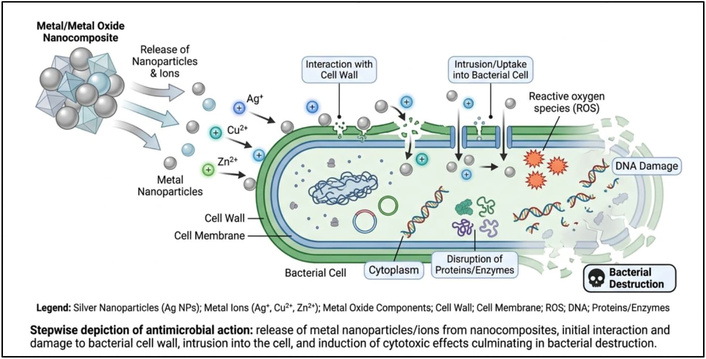
Major mechanisms involved in destroying bacteria when the metal nanoparticles/ions released from metal/metal oxide nanocomposites interact with the cell wall and intrude into the bacterial cell to kill it. The figure was generated using the FigureLabs AI website (https://www.figurelabs.ai/).
In addition to physiological, biochemical, and microbial deteriorations of fresh crops, the detection at the nanoscale of other quality attributes such as firmness and structure provides a deeper understanding of fruits and vegetables’ organoleptic and OVQ traits, therefore assisting in elucidating the mechanisms of changes in the quality attributes during handling, storage, and distribution [73, 74]. Therefore, nanotechnology is significantly transforming the area of monitoring and assessment of fresh crops during storage, transportation, and marketing. The development of “smart packaging” aims to reflect the temporal and dynamic changes in the freshness of fresh fruits and vegetables [26, 30, 75]. Indeed, “smart packaging will likely provide a total packaging solution that on one hand monitors changes in a product or its environment (intelligent), and on the other hand acts upon these changes (active)” [76]. The monitoring of changes in a product or its environment is achieved through specific communication methods such as O2 or CO2 sensors, time-temperature indicators, freshness indicators, or radio-frequency identification (RFID) tags, among other technologies [26, 30, 77, 78].
During the distribution chain, freshness is the main quality attribute of fruits and vegetables. Several studies have investigated the potential applications of nano-based packaging materials to monitor the quality traits of fresh fruits and vegetables. To monitor freshness during the supply chain, different nanosensor-based packaging films have been experimented with [79]. Depending on the type of sensors, some monitor freshness directly by detecting named analytes or metabolites, while others monitor freshness by detecting the deterioration products caused by variation in temperature or storage duration [79, 80]. In food packaging nanotechnology, the most commonly used sensors are those based on single-parameter monitoring, even though dual sensors are also being developed [75]. Among these multiple sensors, freshness sensors based on the monitoring and assessment of catalytic reactions and deterioration of produce, such as carbon dioxide emission [81], ethanol production [82], aldehyde emission [83], and hydrogen sulphide production [84], have been developed. Monitoring the variation of pH caused by decay and using sensor-based packaging as a reliable indicator of the loss of freshness was also experimented with [85–87]. Fresh fruits and vegetables spoilage is caused by internal factors (e.g., quality at harvest, susceptibility to spoilage, poor agricultural practices/poor harvesting practices) or external factors (e.g., temperature, humidity, gas composition in the surrounding atmosphere). During their growth and development, microorganisms produce carbon dioxide, lactic acid and/or ethanol; hence, spoilage can be detected using CO2, pH, ethanol or hydrogen sulphide sensors. In addition to spoilage, some pathogens might also be detected using specific sensors for volatile organic compounds (VOCs), although the prevalence of pathogenic microorganisms in fresh fruits and vegetables is extremely low.
OVQ of fresh fruits and vegetables is the first factor impacting consumers’ attitude towards fresh crops, and this quality is greatly impacted by the postharvest physiology of the produce. Increased respiration, ethylene production, water vapour and weight losses are among the most impacting abiotic stresses of OVQ of fresh commodities during the after harvest. On the other hand, the extensive use of plastics in food packaging is causing environmental problems due to their extremely slow biodegradation. Currently, various polymeric packaging films are being tested for their safety, low cost and requiring less raw material. In order to provide continuous quality monitoring and assessment, sensor-based packaging materials can be used to detect unfavourable elements in the package environment and give an accurate temporal idea of the shelf-life and organoleptic traits of fruits and vegetables during the distribution chain and domestic storage [26, 30, 75]. Hence, different sensor-based packaging films have been developed, including ethylene scavengers [88–90], carbon dioxide absorbers [91, 92], humidity absorbers, and temperature-sensitive packaging [93–96]. These different nano-based biopolymers with different indicators/sensors have been developed and can inform consumers regarding the OVQ changes occurring during the distribution chain and domestic storage. For example, different nano-composite-based packaging materials have been developed to indicate the freshness of stored crops either in stores or at home. Incorporating nanosized metals or ceramics in nano-based packaging materials has been shown to obtain harder and stronger materials and to control heat and gas produced by the handled and stored fruits and vegetables [97, 98]. Presently, studies are focusing on enhancing such thermal stability, mechanical strength, and, more importantly, enhanced gas barrier properties, and effectiveness against the wide variety of postharvest fresh crop pathogens, particularly during marketing and domestic storage where more than 23% of losses are observed. To date, significant progress has been made in developing nano-based packaging materials to monitor OVQ; however, the control of water vapor and ethylene production remains the most challenging factor causing visual effects such as loss of glossiness, shrivelling, water condensation, and/or discoloration. Despite the characteristics of a variety of materials developed, there is still a need for further research to enhance the efficiency of these types of packaging materials during the critical steps from the grocery to the table. Indeed, it might be more urgent to develop enhanced nano-based packaging materials to control ethylene and water vapor rather than the preservation of other quality attributes of fresh fruits and vegetables during this critical stage of the supply chain [99].
By combining active and intelligent packaging and incorporating nano-sized particles, it is crucial to understand consumers’ attitude towards these materials in order to ensure their commercial success [100]. However, the public and most consumers lack awareness and understanding of the nano-based packaging materials, and sometimes even of the existence of nanotechnologies and packaging materials. Unfortunately, scarce research work has been published on this problem to understand the attitude of consumers, their responsiveness, acceptance, and purchase intentions of these types of packaging materials. Baicu et al. [101] investigated the understanding and behaviour of Romanian consumers regarding the use of nanotechnology in food and food packaging. Surprisingly, the results of this study showed that consumers would easily accept nano-based packaging materials for food but would not incorporate nanoparticles in food itself. In another study, van Dijk et al. [102] reported that the attitude of stakeholders was more positive about the application of nanotechnology to medicine but more negative about its application to food and food products.
Besides the scarce studies on consumers’ attitudes, which should be investigated further, these novel packaging materials also require an extensive regulatory framework, particularly toxicological studies and migration of the nanoparticles into the food matrix [103].
During the last decade, nanotechnology and nanoparticle-based films started playing a major role in filling the gaps in packaging material development in smart and intelligent packaging areas aiming to preserve, monitor and assess the quality and extend the shelf-life of fresh crops. Indeed, innovations in this emerging technology are enabling producers, retailers, and consumers to further assess and monitor the freshness of crops during the distribution chain and domestic storage (Figure 3). Recently, numerous and various smart packaging technologies are being developed and integrated into packaging systems to meet the requirements of the food supply chain. This development has started to be useful to the postharvest sector to extend the shelf life, monitor quality and safety, and provide real and timely information about the produce to retailers and consumers. On the other hand, a combination of classic technologies and nanotechnology will be undoubtedly critical in responding to commercial trends towards the development of minimally processed (fresh-cut, ready-to-eat, 4eme gamme) fruits and vegetables which require packaging with specific traits to extend their shelf-life and monitor their organoleptic and microbiological quality attributes due to their higher and rapid perishability.
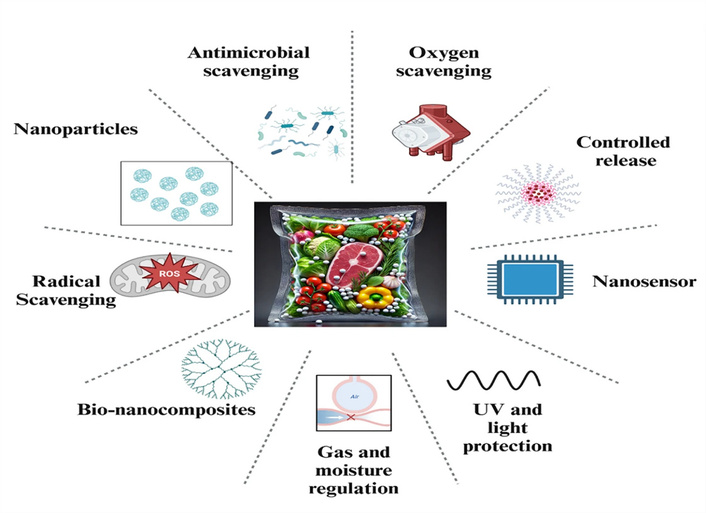
Key functional mechanisms of smart nano-packaging materials across the food chain supply. Reprinted from [156]. © The Author(s) 2026. Licensed under a Creative Commons Attribution-NonCommercial-NoDerivatives 4.0 International License.
Furthermore, nanoparticle-based packaging films rely on the development of sensors technology and other organic and inorganic materials to inform on fresh crops quality, safety, shelf-life and usability. Indeed, sensor technology is showing good prospects within postharvest science and determination of the physiological and microbiological attributes during distribution. However, further developments are still needed to improve their sensitivity, especially to oxygen and carbon dioxide.
Nevertheless, the future of smart packaging to enhance current postharvest packaging technology requires attention to three points. The first important point is that consumers’ acceptance is a major concern to consider because many consumers around the world have developed a certain “phobia” towards “new technologies,” including nanotechnologies, and this attitude may lead to poor or even rejection of these products packed with these nanoparticles and sensors. The second point is the migration risks of the nanoparticles to the food, resulting potentially in adverse health effects, since some nanoparticles have been reported to induce pulmonary inflammation and vascular problems, while their wholesomeness is not fully established and requires further toxicological studies in order to elucidate the risks involved. The third point associated with nanotechnology and smart packaging films is cost effectiveness. The use of nanoparticles and sensors will undoubtedly increase the cost per package, especially during the early phase of product introduction; hence, adaptation of this technology should take into consideration the cost-benefit before its implementation.
MA: modified atmosphere
MAP: modified atmosphere packaging
MMT: montmorillonite
nano-CaCO3-LDPE: nano-CaCO3-based low density polyethylene
OVQ: overall visual quality
PHL: postharvest losses
TiO2: titanium dioxide
ZnO: zinc monoxide
During the preparation of this work, the author(s) used the FigureLabs AI website (https://www.figurelabs.ai/) to create the figures. The authors reviewed and edited the content as necessary and assume full responsibility for the final content of the publication.
NB: Conceptualization, Data curation, Writing—original draft, Writing—review & editing. The author read and approved the submitted version.
Noureddine Benkeblia, who is an Editorial Board Member of Exploration of Foods and Foodomics, had no involvement in the decision-making or the review process of this manuscript.
Not applicable.
Not applicable.
Not applicable.
Not applicable.
Not applicable.
© The Author(s) 2026.
Open Exploration maintains a neutral stance on jurisdictional claims in published institutional affiliations and maps. All opinions expressed in this article are the personal views of the author(s) and do not represent the stance of the editorial team or the publisher.
Copyright: © The Author(s) 2026. This is an Open Access article licensed under a Creative Commons Attribution 4.0 International License (https://creativecommons.org/licenses/by/4.0/), which permits unrestricted use, sharing, adaptation, distribution and reproduction in any medium or format, for any purpose, even commercially, as long as you give appropriate credit to the original author(s) and the source, provide a link to the Creative Commons license, and indicate if changes were made.



View: 43
Download: 5
Times Cited: 0


