
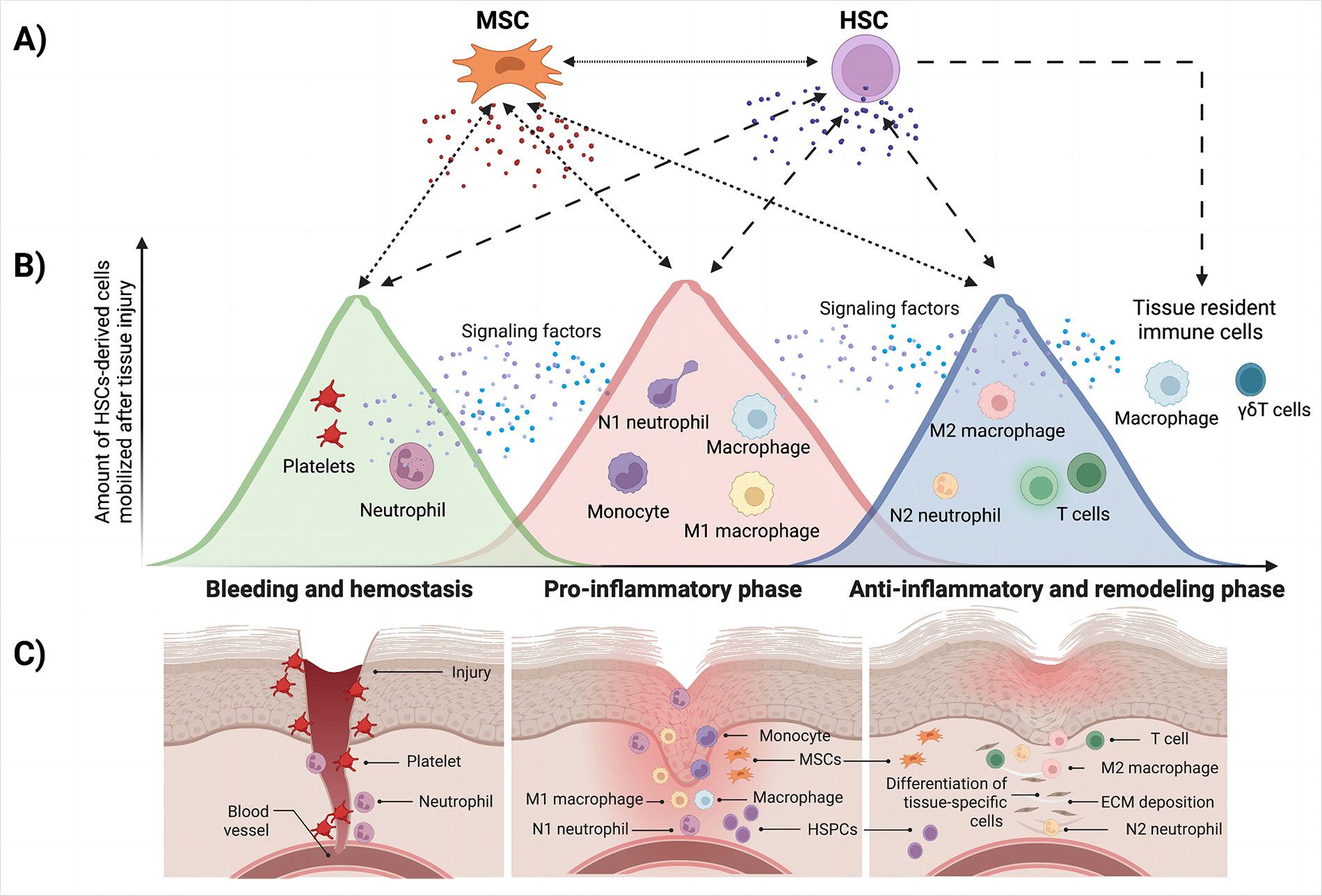
Overview of the critical interactions between adult stem cells, namely MSC and HSC, and effector immune cells during tissue repair. A) MSC has the potential to differentiate into specific-tissue cells, while also regulating the biological functions of HSC. MSC interacts with many effector immune cells in all phases of the regenerative process through cell-to-cell contact or by paracrine signaling. In a process called hematopoiesis, HSC gives rise to all cells of the myeloid and lymphoid lineage, (e.g., platelets, eosinophils, basophils, neutrophils, monocytes, macrophages, T cells, B cells, DCs, NK cells, and others), key players of the immune response required for tissue regeneration. HSC also regulates the functions of MSC; B) the graph summarizes the number of immune cells mobilized after tissue injury per phase of the regenerative process; C) representation of the different phases of the regenerative process highlighting the presence of stem cells and effector immune cells involved with tissue repair and remodeling. ECM: extracellular matrix