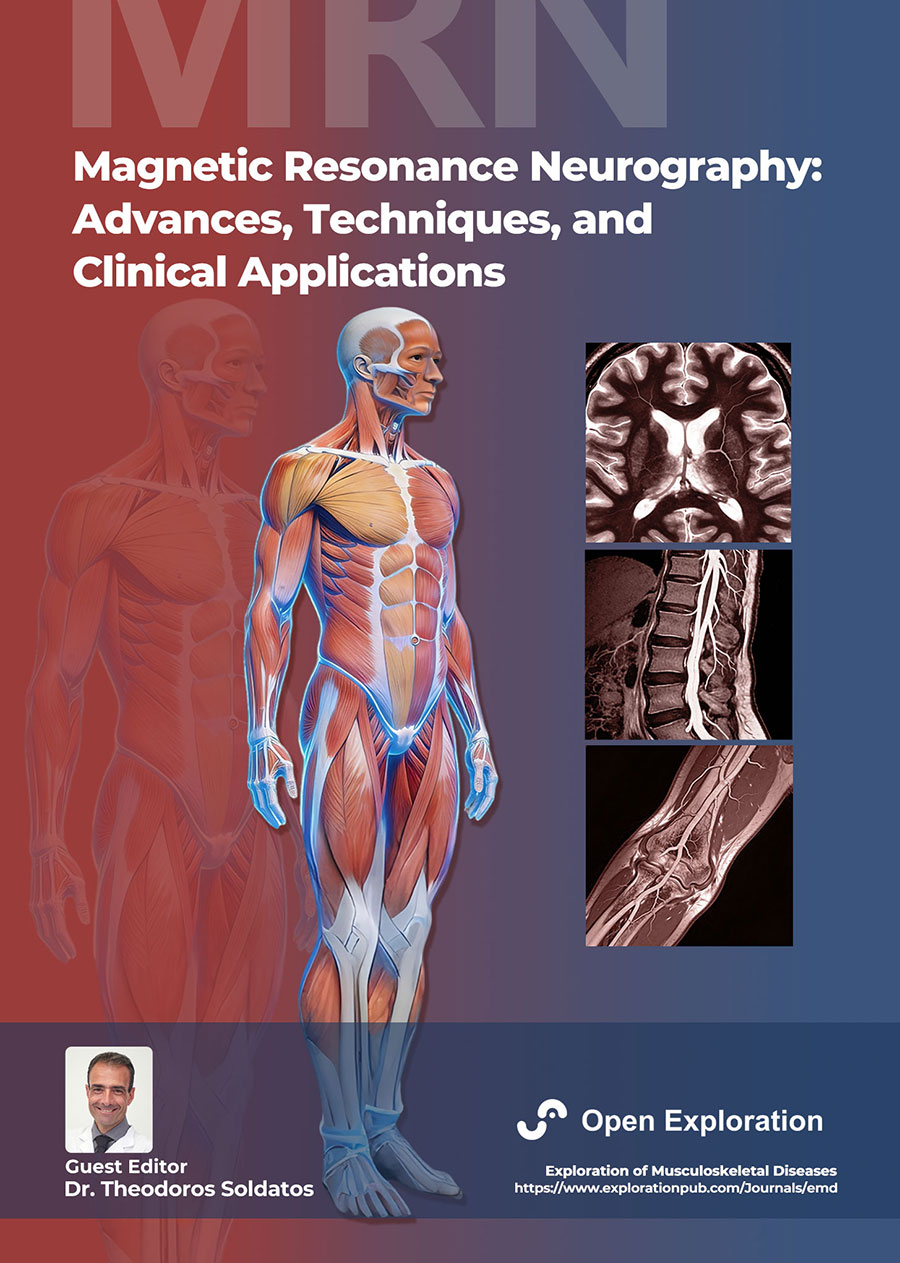
Magnetic Resonance Neurography: Advances, Techniques, and Clinical Applications
Guest Editor
Dr. Theodoros Soldatos E-Mail
IASIS Diagnostic Center, Kalamata, Greece
Research Keywords: Diagnostic radiology, MRI, musculoskeletal radiology
About the Special lssue
Magnetic Resonance Neurography (MRN) has transitioned from a technically challenging research tool to a powerful, indispensable diagnostic method that is fundamentally reshaping the evaluation of peripheral nerves and the complex disorders that affect them. In recent years, rapid advances in MR technology – including ultra-high-resolution 3T and 7T acquisitions, multi-shell diffusion-based sequences, robust T2-optimized fat-suppression methods, and quantitative imaging biomarkers such as DTI metrics – have dramatically improved our ability to visualize nerve architecture, detect subtle pathology, and guide clinical management. Positioned at the critical convergence of musculoskeletal imaging and clinical neurology, MRN stands as the definitive, non-invasive arbiter, offering unprecedented insight into peripheral neuropathies, entrapment syndromes, traumatic injuries, inflammatory conditions, and postsurgical evaluations.
This special issue of Exploration of Musculoskeletal Diseases brings together cutting-edge research, expert reviews, and clinically grounded perspectives that highlight the current state and future direction of MRN. Our aim is to provide a comprehensive forum for radiologists, neurologists, surgeons, and researchers who utilize or study advanced neuroimaging. The contributions in this issue explore the full spectrum of MRN, from fundamental imaging principles, protocol optimization, and emerging techniques (e.g., tractography and high-resolution fascicular imaging) to in-depth analysis of specific disorders, including severe trauma, complex nerve entrapments, and inflammatory neuropathies. Equally important, several articles focus on real-world clinical applications, illustrating how MRN modifies diagnostic thinking, refines differential diagnoses, and influences therapeutic decisions.
As the demand for precise, non-invasive evaluation of peripheral nerve disorders continues to rise, the relevance of MRN becomes increasingly evident. The field is at a pivotal moment: technology is advancing rapidly, clinical adoption is expanding, and research is uncovering new possibilities for functional and microstructural nerve characterization. By synthesizing the latest evidence and highlighting innovative approaches, this Special Issue aims to support clinicians in integrating MRN into practice and to inspire further exploration into its capabilities.
We invite readers to engage deeply with the work presented here and to join the continuing effort to advance Magnetic Resonance Neurography for the benefit of patients and the broader musculoskeletal and neurological communities.
Keywords: Magnetic resonance neurography, peripheral nerve imaging, diffusion imaging, nerve entrapment syndromes, high-resolution MRI, quantitative neuroimaging, peripheral neuropathy, musculoskeletal MRI
Published Articles