Meta-Analysis


Affiliation:
1Research Centre for Applied Sport, Physical Activity and Performance, School of Health Social Work & Sport, University of Lancashire, PR12HE Preston, Lancashire, UK
Email: jksinclair@lancashire.ac.uk
ORCID: https://orcid.org/0000-0002-2231-3732


 ,
,
Affiliation:
2School of Health, Medicine and Life Sciences, University of Hertfordshire, AL10 9AB Hertfordshire, UK
ORCID: https://orcid.org/0000-0003-4632-3764
Explor Musculoskeletal Dis. 2026;4:1007133 DOI: https://doi.org/10.37349/emd.2026.1007133
Received: April 13, 2026 Accepted: June 04, 2026 Published: August 06, 2026
Academic Editor: Shanil Juma, Texas Woman’s University, USA
Background: Osteoarthritis (OA) is a degenerative joint disease marked by pain, stiffness, and functional impairment, with inflammation central to its progression. Polyphenol-rich dark fruits, abundant in anthocyanins, possess antioxidant and anti-inflammatory properties that may mitigate OA-related mechanisms. This meta-analysis synthesized evidence from randomized controlled trials (RCTs) evaluating the effects of dark fruit supplementation on clinical symptoms and inflammatory biomarkers in individuals with OA.
Methods: PubMed, Scopus, Web of Science, and three trial registries (ClinicalTrials.gov, WHO ICTRP, ISRCTN) were searched to September 2025 for RCTs comparing dark fruit supplementation with placebo, usual care, or no intervention. Two reviewers independently screened studies, assessed bias using Cochrane RoB, and evaluated certainty via GRADE (Grades of Recommendation, Assessment, Development and Evaluation). Data were pooled using random-effects models, with Hedges’ g as the standardized mean difference.
Results: Six RCTs (215 participants; 3–16 weeks) investigating knee OA met inclusion criteria. Pooled analyses showed significant improvements in overall symptom severity (Hedges’ g = –0.31; 95% CI –0.57 to –0.05; P = 0.02), physical function (g = –0.34; 95% CI –0.66 to –0.05; P = 0.02), and interleukin-6 (IL-6, g = –0.40; 95% CI –0.79 to –0.01; P = 0.047). Where reported, compliance was generally high, although adherence and adverse-event reporting were incomplete across trials. Evidence certainty was low, with moderate-to-high risk of bias.
Discussion: In the available RCT evidence, which was restricted to knee OA, dark fruit supplementation was associated with small short-term improvements in selected OA symptoms and IL-6. However, findings are limited by low certainty of evidence, short intervention durations, incomplete adherence and adverse-event reporting, and the absence of long-term or structural outcomes; therefore, no conclusions can be drawn regarding disease-modifying effects or longer-term tolerability. Larger, high-quality trials are needed to determine whether polyphenol-rich fruits provide clinically meaningful benefits in OA management.
Osteoarthritis (OA) is a degenerative joint disease characterized by pain, stiffness, and reduced flexibility, often assessed or classified using radiographic imaging [1]. It typically affects the articular cartilage and underlying bone within synovial joints [2]. Symptomatic OA is defined as the coexistence of radiographic OA and symptoms attributable to the disease [3]. As a prevalent chronic condition, OA presents a major clinical and economic challenge, particularly in aging populations. The global burden of OA is substantial, with a rapidly increasing economic impact on healthcare systems [4]. The primary symptoms include joint pain, aching, and stiffness, leading to limitations in mobility and quality of life. Against this background, there is growing interest in accessible adjunctive strategies that may target inflammatory pathways and improve OA-related symptoms. The present review focuses specifically on polyphenol- and anthocyanin-rich dark fruits, which have been proposed as food-based interventions with potential antioxidant and anti-inflammatory properties.
OA is the most common joint disorder globally and the leading cause of walking-related disability among older adults in the United States [5]. It is increasingly recognized as an inflammatory disease of synovial joints, where the associated structural changes negatively impact gait performance and limit physical activity [6]. Epidemiological studies in the United States indicate that OA affects approximately 13.9% of adults aged 25 and older, and 33.6% of those over 65 years [7]. A range of systemic and local biomechanical factors contribute to OA development. Systemic factors include age, gender, race or ethnicity, genetics, obesity, osteoporosis, bone density, and nutrition, while local factors encompass joint injury, occupation, physical activity levels, limb-length discrepancies, neuromuscular function, bone characteristics, and joint space integrity [8]. Among these, obesity, aging, and female gender are the most prominent risk factors [9].
Although OA is a highly prevalent and disabling condition, no pharmacological treatment has been shown to modify the underlying disease mechanisms or alter its natural progression [10]. Current management strategies focus on symptom relief and improving quality of life through therapeutic approaches with minimal adverse effects. Pharmacologic therapies, including oral and topical nonsteroidal anti-inflammatory drugs (NSAIDs) and COX-2 inhibitors, are considered first-line treatments due to their effectiveness in reducing pain and improving function [11]. Intra-articular corticosteroid injections are also frequently used and are generally well tolerated [11], although their effects are often short-lived [12]. For advanced cases, surgical interventions such as joint replacement remain the most effective options for restoring function and improving quality of life [13]. However, long-term use of pharmacological agents is associated with serious adverse effects, including cardiovascular and gastrointestinal complications [14, 15]. Furthermore, these treatments impose considerable financial burdens on healthcare systems and contribute to an overreliance on prescription medications [16]. There is, therefore, a pressing need for OA-specific public health strategies focused on prevention, personalized conservative treatments, and gender-sensitive care models to ensure sustainable management of OA within aging societies.
Inflammation plays a central role in the initiation and progression of OA [17]. Several inflammatory pathways, including the activity of cytokines and matrix metalloproteinases (MMPs), contribute to cartilage degradation and disease advancement [18]. Contemporary OA research increasingly conceptualises OA as a heterogeneous whole-joint disease involving interactions between cartilage, synovium, subchondral bone, mechanical loading, metabolic dysfunction, and chronic low-grade inflammation [19, 20]. In this context, molecular endotypes and biomarkers of inflammatory activity, cartilage matrix turnover, and subchondral bone remodelling are increasingly being investigated to improve patient stratification, monitor progression, and support the development of disease-modifying OA therapies [21–24]. This is relevant to the present review because the included trials assessed not only patient-reported symptoms, but also inflammatory and cartilage-related biomarkers including C-reactive protein (CRP), interleukin-6 (IL-6), tumor necrosis factor-α (TNF-α), IL-1β, IL-10, MMP-3, and MMP-13.
Importantly, elevated levels of inflammatory and cartilage-related biomarkers have been observed in individuals with OA [24–26] and are known to accelerate disease progression [27, 28]. Conversely, anti-inflammatory cytokines such as IL-10 and IL-13 exhibit chondroprotective effects that can help slow OA progression [29, 30]. Given the central role of inflammation, growing attention has been directed toward dietary interventions that modulate inflammatory pathways. Anti-inflammatory dietary patterns, including the Mediterranean and plant-based diets, which emphasize fruits, vegetables, whole grains, and healthy fats, have shown potential to influence inflammatory responses and improve OA symptoms [31, 32]. Evidence supports that these dietary approaches can reduce systemic inflammation independent of weight loss [33], suggesting they may offer a cost-effective strategy for managing OA. However, adherence to such dietary modifications over long periods has proven challenging [34].
Given these challenges, dietary supplementation has emerged as a promising adjunctive or alternative approach for OA management. Nutraceuticals such as glucosamine, chondroitin sulfate, and methylsulfonylmethane have been linked to modest improvements and delayed progression of knee OA [35–37], though clinical benefits depend on pharmaceutical-grade formulations and appropriate dosing [38]. Other nutrients and bioactive compounds have also been investigated in OA. Vitamin D has been evaluated in several randomized controlled trials (RCTs) [39–41], with larger trials reporting no clear benefit for pain, function, stiffness, or structural progression, whereas ginger [42–44] and turmeric-containing formulations [43] have shown some symptom-related benefits in selected studies; overall, the evidence remains heterogeneous and further high-quality trials are needed.
Natural antioxidants and anti-inflammatory compounds have been proposed as promising supplementary strategies for OA due to their potential to reduce inflammation with minimal side effects [44, 45]. Among these, anthocyanins, a subclass of polyphenols abundant in darkly pigmented fruits, have attracted significant attention. These compounds possess potent antioxidant properties [46] and may modulate inflammatory pathways implicated in OA [17]. Randomized intervention studies have demonstrated the efficacy of anthocyanin-rich fruits in alleviating inflammation and oxidative stress across a range of chronic conditions, including cardiovascular disease [47], certain cancers [48], metabolic syndrome [49], dyslipidemia [45, 50], hypertension [51, 52], and inflammatory bowel disease [53]. There is now a growing body of RCTs evaluating their effects specifically in OA, assessing both symptomatic improvements and biochemical markers of disease activity.
Despite increasing interest in polyphenol-rich dark fruits as a therapeutic approach for OA, no systematic review or meta-analysis has yet synthesized the evidence from randomized trials evaluating their effects on OA-related outcomes. Several studies have investigated their impact on pain and other symptomatic measures, as well as on biomarkers reflective of inflammation and cartilage metabolism. A systematic synthesis of this literature is therefore timely and necessary to determine the overall efficacy of these interventions. Accordingly, the core question addressed in this review is whether polyphenol-rich dark fruit supplementation improves OA-related symptoms and inflammatory or cartilage-related biomarkers compared with placebo, usual care, or no intervention. By integrating available RCT evidence, this meta-analysis aims to clarify the potential role of these interventions in OA clinical management and to identify priorities for future research.
This systematic review was conducted and reported in line with the Preferred Reporting Items for Systematic Reviews and Meta-Analyses (PRISMA) guidelines, including the checklist, flow diagram, and accompanying Explanation and Elaboration document [54]. In addition, the Cochrane Handbook for Systematic Reviews of Interventions was consulted to inform the methodological approach [55]. This meta-analysis was registered prospectively via a database of systematic reviews in health-related research (CRD420251148988; https://www.crd.york.ac.uk/PROSPERO/view/CRD420251148988).
Experimental studies limited to RCTs (parallel or crossover designs) assessing the effects of polyphenol-rich dark fruits, including blueberries and tart cherries or their derivatives (e.g., juice, freeze-dried powder, extracts), delivered as dietary supplementation in food or beverage form, were included. Eligible comparators were placebo, no intervention, or usual/standard care for OA. Participants had to be aged 18 years or older with a clinical, radiographic, or self-reported diagnosis of OA at any joint. Trials were required to report at least one of the following outcomes for inclusion: pain, function, or inflammatory biomarkers. Studies were restricted to human participants, published as full-text peer-reviewed articles, and conducted in any setting (e.g., clinical, community, or free-living), with no restrictions on intervention dose, duration, or follow-up. Non-randomized studies, observational designs, case reports, reviews, protocols, animal or in vitro studies, and grey literature without full data were excluded. Our main outcome was the overall severity of OA symptoms. Where outcomes were measured but not reported, authors were contacted, and data were requested.
Electronic databases from inception to September 2025 were searched, including PubMed, Scopus, and Web of Science. The intervention search block intentionally combined named dark-fruit interventions with broader berry-related terms, including “dark berry” and “berries”, to maximise sensitivity while retaining specificity to the review question. Generic terms such as “dietary supplement” and “nutraceutical” were not used as primary intervention terms because these were considered insufficiently specific unless linked to an identifiable dark-fruit intervention, which formed part of the eligibility criteria. The full search strategies for each database are provided in Supplementary material 1 (1007133_sup_1). To ensure completeness, major trial registries, including ClinicalTrials.gov, the WHO International Clinical Trials Registry Platform, and the International Standard Randomised Controlled Trial Number Registry, were explored, as well as forward and backward citation tracking of included articles. All searches were conducted by the same author (JS), and duplicates were removed. Screening of titles and abstracts was undertaken independently by two review authors (JS and LB). Owing to the relatively small number of studies identified, all records were examined by both reviewers, with complete agreement reached (κ = 1.00). An independent reviewer was available to resolve discrepancies, although this was ultimately not required.
Data extraction and recording were guided by the Cochrane Data Collection Form for Interventional Studies [55]. Data from the included studies were extracted using a standardized form developed for this review. Extracted information included: study characteristics such as author, year of publication, country, scope (single- or multi-centre), and trial design; participant characteristics including inclusion criteria, total sample size, baseline numbers per group, age, sex, and BMI (for both intervention and control groups), as well as withdrawals/dropouts, adverse events, compliance, and blinding efficacy; intervention details including type and description of the dark fruit intervention, supplement dietary information, and length of the intervention; outcomes, specifically measures of pain, function, and inflammatory biomarkers. One review author (JS) independently extracted all relevant data, which were checked for accuracy and completeness by a second author (LB). Any disagreements were to be resolved through discussion with a third independent reviewer. In cases of missing or unclear data, attempts were made to contact the corresponding author(s) by email on at least two occasions to obtain the relevant information. If no response was received, the available data were used, and any assumptions or imputed values were clearly documented in the review. Data were only extracted for inclusion if at least two studies included the same measure.
As all of our desired outcomes were continuous in nature, the mean change from baseline to trial endpoint and corresponding standard deviation (SD) were used to calculate the overall effect size, expressed as Hedges’ g (standardized mean difference accounting for small sample bias) as the standardized mean difference (SMD) with 95% confidence intervals (CIs) and P-values, with significance set at P < 0.05. Hedges’ g was selected as the SMD to account for small sample bias, which is particularly relevant in meta-analyses with a limited number of studies [56]. Hedges’ g was interpreted as: < 0.2, trivial; 0.2–0.49, small; 0.50–0.79, moderate; and > 0.8, large [57]. Where the mean and SD changes from baseline to endpoint were not reported, but baseline and final means and SD were available, SD change was calculated using the following equation in accordance with the Cochrane Handbook:
SD change = √ SD baseline2 + SD final2 – (2 × correlation coefficient × SD baseline × SD final)
A correlation coefficient of r = 0.5 was used for these calculations, consistent with prior meta-analyses in musculoskeletal populations where exact correlation values were not reported [58], providing a conservative estimate of variance. For crossover trials, only data from the first phase (pre-cross-over) were used to treat the trial as a parallel-group study, and the mean change and SD were calculated similarly, as recommended by Elbourne et al. [59], to avoid carryover effects. This approach prioritized avoidance of carryover effects but had the effect of reducing the effective sample size contributed by crossover trials, which may have reduced precision for outcomes informed by these studies.
A random-effects meta-analysis was performed using the Paule-Mandel estimator for between-study variance (τ²), given the small number of included studies (≤ 4) and the expected clinical and methodological heterogeneity between interventions and outcomes. The PM method provides more accurate estimation of τ² and robust CIs in small-sample meta-analyses [60]. Exploratory assessments of publication bias were undertaken using funnel plots and Egger’s test. Egger’s test was employed for analyses involving ≥ 3 studies to evaluate small-study effects outcomes [61] (Supplementary material 2, 1007133_sup_2). Visual inspection of funnel plots complemented the statistical assessment.
Statistical heterogeneity was assessed using the I2 statistic, with thresholds interpreted as follows: 0–40% may not be important, 30–60% may represent moderate heterogeneity, 50–90% substantial heterogeneity, and 75–100% considerable heterogeneity [62]. Sensitivity analyses were conducted (for analyses involving ≥ 3 studies) by sequentially omitting individual studies to evaluate their influence on the overall effect estimate (Supplementary material 2, 1007133_sup_2).
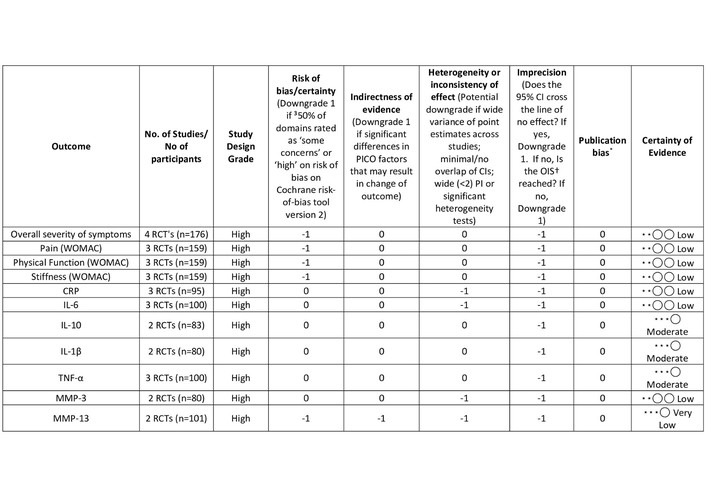
The certainty of the evidence was independently assessed by two review authors (JS and LB) using the GRADE (Grades of Recommendation, Assessment, Development and Evaluation) approach [63]. Studies were evaluated across these key domains to assign an overall certainty rating of high, moderate, low, or very low [63, 64].
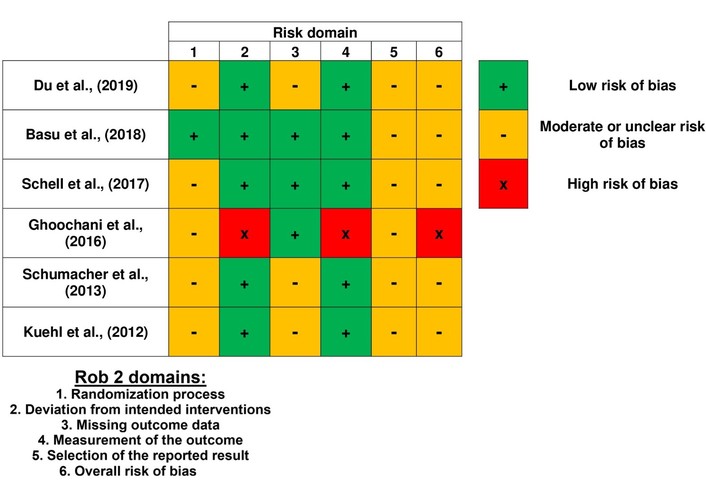
The internal validity, rigour and overall quality of included studies were independently assessed by two review authors (JS and LB) using the revised Cochrane Risk of Bias tool for randomized trials (RoB 2.0) [65]. The RoB 2.0 tool evaluates five key domains: the randomization process, deviations from intended interventions, missing outcome data, measurement of the outcome, and selection of reported results. Each domain was rated as ‘low risk’, ‘moderate or unclear risk of bias’, or ‘high risk’, with the overall study risk of bias determined by the highest risk rating among the domains. Any discrepancies in judgment were resolved through discussion between the two review authors, with a third independent reviewer available if consensus could not be reached [55, 65].
The study selection process is illustrated in the PRISMA flow diagram (Figure 1). The systematic search, covering publications from database inception to September 2025, initially identified 27 records. After removing duplicates, 21 unique studies remained. Title and abstract screening, followed by full-text review, led to the exclusion of 15 studies. Ultimately, 6 studies met the inclusion criteria and were retained for qualitative synthesis, all of which were also eligible for inclusion in the meta-analysis.
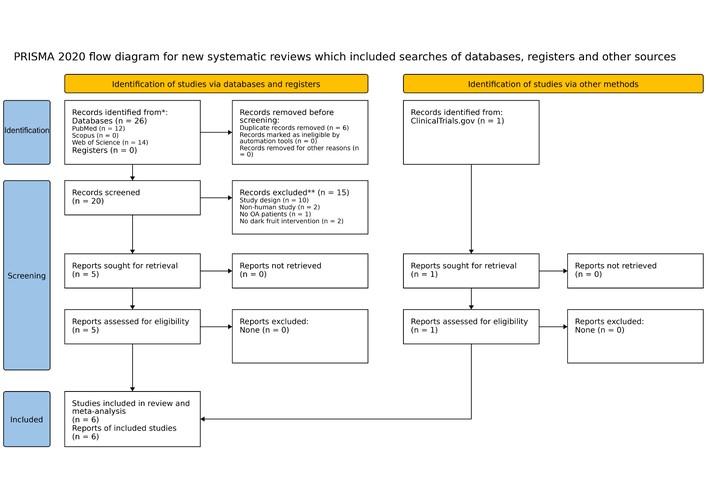
PRISMA-style flow diagram of study selection. Adapted from “The PRISMA 2020 statement: an updated guideline for reporting systematic reviews” by Page MJ, McKenzie JE, Bossuyt PM, Boutron I, Hoffmann TC, Mulrow CD, et al. BMJ. 2021;372:n71 (https://doi.org/10.1136/bmj.n71). CC BY.
Reasons for exclusion from the systematic review and also the meta-analysis were: study design, i.e., the investigation not following an RCT format (n = 10), the study not being performed on human patients (n = 2), no OA patients (n = 1), and the intervention not involving dark fruits (n = 2). SD change data were requested from two studies, but were not available. Therefore, the SD change score was calculated according to the Cochrane Handbook.
Details of the included studies are summarised in Tables 1, 2, and 3. Table 1 outlines the study design, participant demographics, diagnostic criteria, intervention duration, and follow-up information. Table 2 provides a standardised summary of intervention formulation, dose, polyphenol/anthocyanin content, comparator condition, blinding/compliance, and adverse events. Table 3 summarises the primary and secondary outcomes, along with key findings reported by each study. The complete dataset, including detailed inclusion criteria, drop-out numbers, adverse events, and full placebo composition, is provided in Supplementary material 3 (1007133_sup_3).
Characteristics of included studies.
| Author | Year | Country | Study design | N (total) | Intervention arm age (mean ± SD) | Intervention arm % female | Intervention arm BMI (mean ± SD) | OA type/Diagnostic criteria | Duration/Follow-up |
|---|---|---|---|---|---|---|---|---|---|
| Du et al. [66] | 2019 | USA | Randomized parallel, double-blind, placebo-controlled | 63 | 57.7 ± 1.8 | 72.7% | 32.1 ± 1.3 | Self-reported symptomatic knee OA | 16 weeks/no post-intervention follow-up reported |
| Basu et al. [67] | 2018 | USA | Randomized cross-over, double-blind, placebo-controlled; 2-week washout | 17 | 57.0 ± 3.0 | 76.5% | 39.1 ± 1.5 | Radiographic mild-to-moderate bilateral primary knee OA (ACR) | 12 weeks per period; 2-week washout/no post-intervention follow-up reported |
| Schell et al. [68] | 2017 | USA | Randomized cross-over, double-blind, placebo-controlled; 2-week washout | 17 | 57.0 ± 7.0 | 76.5% | 39.1 ± 1.5 | Radiographic mild-to-moderate bilateral primary knee OA (ACR) | 12 weeks per period; 2-week washout/no post-intervention follow-up reported |
| Schumacher et al. [69] | 2013 | USA | Randomized cross-over, double-blind, placebo-controlled; 1-week washout | 58 | 56.7 ± 11.3 | 24.1% | 31.8 ± 6.2 | Mild-to-moderate knee OA; clinical ACR criteria; Kellgren grade 2–3 | 6 weeks per period; 1-week washout/no post-intervention follow-up reported |
| Kuehl et al. [70] | 2012 | USA | Randomized parallel, double-blind, placebo-controlled | 21 | 55.9 ± 9.1 | 100.0% | 31.9 ± 6.7 | Inflammatory OA meeting 1990 ACR classification guidelines | 3 weeks/no post-intervention follow-up reported |
| Ghoochani et al. [71] | 2016 | Iran | Randomized controlled trial (parallel, no placebo) | 39 | 56.7 ± 10.2 | 89.5% | 32.4 ± 4.5 | Knee OA according to ACR criteria; not requiring surgery | 6 weeks/no post-intervention follow-up reported |
Note. For cross-over trials (Basu et al. [67], Schell et al. [68], and Schumacher et al. [69]), participant characteristics are reported for the overall cohort because separate intervention-arm baseline values are not applicable. Duration refers to each treatment period; washout is stated in the Study Design cell. ACR: American College of Rheumatology.
Intervention and comparator details, blinding/compliance, and adverse events.
| Author | Intervention (dose, formulation) | Polyphenol/Anthocyanin content | Comparator | Blinding & compliance | Adverse events |
|---|---|---|---|---|---|
| Du et al. [66] | 40 g freeze-dried whole blueberry powder daily (two 20 g packets/day), reconstituted in water | Not reported | 40 g placebo powder daily, maltodextrin-based and matched for appearance and energy/carbohydrate content | Double-blind; compliance tracked with daily calendars and follow-up calls, but no numeric adherence reported | Not reported |
| Basu et al. [67] | 50 g/day freeze-dried strawberry powder, reconstituted in water | 1,585 mg total polyphenols; 66 mg anthocyanins; 220 mg ellagic acid | 50 g/day matched control powder (75 mg polyphenols; 172 kcal; 38 g carbohydrate; 5 g fibre) | Double-blind cross-over; 2-week washout; compliance 100% for strawberry phase and 97% for control phase; plasma ellagic acid used as an objective compliance marker | None reported |
| Schell et al. [68] | 50 g/day freeze-dried strawberry powder, reconstituted in water | 1,585 mg total polyphenols; 66 mg anthocyanins; 220 mg ellagic acid | 50 g/day matched control powder (75 mg polyphenols; 172 kcal; 38 g carbohydrate; 5 g fibre) | Double-blind cross-over; 2-week washout; compliance 100% for strawberry phase and 97% for control phase; plasma ellagic acid used as an objective compliance marker | None reported |
| Schumacher et al. [69] | 2 × 8 oz/day tart cherry juice blend (> 90% cherry juice mixed with apple juice) | At least 450 mg phenolics and ≥ 30 mg anthocyanins per 8 oz bottle (≥ 900 mg phenolics and ≥ 60 mg anthocyanins/day) | Matched cherry-flavoured placebo beverage (Kool-Aid base; 13° Brix; 31 g sugar/serving) | Double-blind cross-over; 1-week washout; compliance 92% ± 16% for cherry juice and 89% ± 17% for placebo; blinding judged adequate | Cherry phase: 4 AEs (possible cherry allergy, GI symptoms, low back injury, elevated blood glucose); placebo phase: 3 AEs |
| Kuehl et al. [70] | 2 × 10.5 oz/day tart cherry juice (Montmorency), morning and evening | At least 600 mg phenolics and ≥ 40 mg anthocyanins per 10.5 oz bottle | Matched placebo cherry drink (13° Brix), matched for calorie content, flavour, and consistency | Double-blind; treatment assignments concealed until study completion; no numeric compliance data reported | 1 withdrawal during placebo phase due to nausea and diarrhea; no tart cherry-specific adverse event reported |
| Ghoochani et al. [71] | 200 mL/day sugar- and additive-free pomegranate juice | Not reported | Control group maintained usual lifestyle/diet; no placebo beverage | No placebo; no blinding; compliance not reported | Not reported |
Note. For cross-over trials, comparator, compliance, and adverse-event information is summarized across both phases where the publication reported phase-specific data.
Outcomes assessed and summary of main findings.
| Author | Primary outcomes | Secondary outcomes | Main findings (summary) |
|---|---|---|---|
| Du et al. [66] | WOMAC total and subscales (pain, stiffness, difficulty performing daily activities) | Gait spatiotemporal parameters; inflammatory biomarkers (TNF-α, IL-1β, IL-6, IL-10, IL-13, MMP-3, MMP-13, MCP-1); blood pressure; BMI | Blueberry supplementation was associated with significant within-group reductions in WOMAC total score and several subscales, plus improvements in selected gait parameters. However, there were no significant between-group differences in pain, stiffness, or difficulty performing daily activities at any time point, and no significant biomarker changes were demonstrated, apart from non-significant trends for IL-13 and MCP-1. |
| Basu et al. [67] | Systemic inflammatory biomarkers and lipid peroxidation products | Obesity-related hormones; osteocalcin; body weight; waist circumference | Compared with control, strawberry supplementation significantly reduced hs-TNF-α, sTNF-R2, 4-HNE, and conjugated dienes. No significant changes were seen in body weight, waist circumference, obesity-related hormones, or osteocalcin. |
| Schell et al. [68] | Pain outcomes (ICOAP, VAS) and serum inflammation/cartilage biomarkers | HAQ-DI and VAS health | Compared with control, strawberry supplementation significantly reduced constant, intermittent, and total knee pain on ICOAP and improved HAQ-DI. IL-6, IL-1β, and MMP-3 were also significantly lower, while VAS pain, hs-CRP, nitrite, and MMP-8 did not differ significantly between phases. |
| Schumacher et al. [69] | WOMAC total and subscales | Walking time; rescue acetaminophen use; hsCRP; urate; creatinine | WOMAC total, pain, and function improved during tart cherry treatment, and hsCRP declined. However, the between-treatment difference versus placebo for WOMAC was not statistically significant. Walking time, acetaminophen use, urate, and creatinine were unchanged. |
| Kuehl et al. [70] | Inflammatory biomarkers (CRP, IL-6, IL-10, TNF-α) | Pain scores (WOMAC and VAS) | Tart cherry juice was associated with a significant reduction in CRP only after exclusion of one extreme post-test outlier. IL-6, IL-10, and TNF-α did not change significantly. Pain scores were measured, but detailed between-group pain results were not clearly reported in the publication. |
| Ghoochani et al. [71] | WOMAC total score and subscales | MMP-1, MMP-13, and glutathione peroxidase | Within the pomegranate group, WOMAC total score, stiffness, and physical function improved over 6 weeks, but pain did not. Between-group WOMAC differences were not significant. MMP-13 was significantly lower than control at study end, and glutathione peroxidase increased within the intervention group despite baseline imbalance. |
Note. Summary statements prioritize between-treatment interpretation where possible and explicitly distinguish this from within-group change when the original paper did not show a clear between-group effect. WOMAC: Western Ontario and McMaster Universities Osteoarthritis Index.
All six trials were single-centre, randomized controlled studies published between 2012 and 2019, and conducted in either the USA [66–70] or Iran [71]. Study designs comprised both parallel-group [66, 70, 71] and crossover designs [67–69]. With the exception of Ghoochani et al. [71], who utilized usual care as the control group, all adopted double-blind, placebo-controlled methodology.
A total of 215 participants with symptomatic knee OA were enrolled across the studies, with individual sample sizes ranging from 17 to 63 participants. Although our search strategy was designed to capture studies investigating OA at any joint, all included trials specifically examined knee OA. Participant inclusion criteria were generally based on clinical and/or radiographic evidence of OA in line with the American College of Rheumatology (ACR) classification criteria. Age ranges spanned from 30 to 80 years, and most trials recruited participants with either mild to moderate OA [67–69] or symptomatic OA not requiring surgery [66, 70, 71].
Primary outcomes varied but included validated measures of OA symptoms such as the Western Ontario and McMaster Universities Osteoarthritis Index (WOMAC), pain scales, gait parameters, walking performance, and quality of life indices. Secondary outcomes focused on biomarkers of inflammation, oxidative stress, antioxidant status, and obesity-related metabolic markers.
The interventions tested were polyphenol-rich dark fruits administered in a variety of preparations. Du et al. [66] provided 40 g of freeze-dried blueberry powder daily (composition not reported). Basu et al. [67] and Schell et al. [68] each administered 50 g of strawberry powder daily, described as containing 1,585 mg total polyphenols, approximately 66 mg anthocyanins, 220 mg ellagic acid, ~160 kcal, and ~8 g dietary fiber per daily dose. Ghoochani et al. [71] provided 200 mL of sugar- and additive-free pomegranate juice daily (composition not reported). Schumacher et al. [69] supplied two 8-oz bottles of tart cherry juice per day (one bottle equivalent to ~450 mg phenolic compounds expressed as gallic acid equivalents and ≥ 30 mg anthocyanins), while Kuehl et al. [70] used two 10.5-oz bottles of tart cherry juice daily (one bottle equivalent to ~600 mg phenolic compounds and ≥ 40 mg anthocyanins). Intervention durations included 3 weeks [70], 6 weeks [69, 71], 12 weeks [67, 68], and 16 weeks [66].
Reported compliance with the interventions was high (mean = 97 ± 4.6%). Across the three studies that provided compliance data [67–69], two trials reported perfect adherence (100%) to strawberry powder supplementation [67, 68] and one trial reported 92 ± 16% compliance with tart cherry juice [69]. The remaining studies [66, 70, 71] either described compliance monitoring or withdrawals but did not provide extractable quantitative adherence data, or did not report compliance sufficiently for quantitative summary.
Withdrawals and adverse events were inconsistently reported across the included studies. In the tart cherry juice trial by Schumacher et al. [69], five participants withdrew, with four in the intervention group withdrawing due to adverse events: a skin reaction suggestive of cherry allergy, gastrointestinal symptoms with non-compliance, a low back injury requiring NSAID use (confounding WOMAC outcomes), and elevated blood glucose at the end of the treatment phase. Du et al. [66] reported six withdrawals from the intervention group, although reasons and adverse event details were not provided. Ghoochani et al. [71] noted one dropout from the intervention group, again without specifying the reason or whether adverse events were observed. Kuehl et al. [70] reported no withdrawals and did not document any adverse events. Basu et al. [67] and Schell et al. [68] also reported no participant withdrawals and explicitly stated that no adverse events occurred.
Du et al. [66] provided 40 g of maltodextrin powder daily, matching the carbohydrate content, energy, and appearance of freeze-dried blueberry powder, but without blueberries (dietary composition was not reported). Basu et al. [67] and Schell et al. [68] administered 50 g of powder daily, matched for calories and fibre with the strawberry powder, containing 75 mg total polyphenols, 172 kcal, 38 g carbohydrate, and 5 g dietary fibre per daily dose. Ghoochani et al. [71] did not provide a placebo, and control participants followed their usual care. Schumacher et al. [69] supplied two 8‑oz bottles daily, matched for colour, sweetness, and cherry flavour, prepared from black cherry Kool‑Aid mix (≈ 2 g/L) with added sugar and a clouding agent to mimic juice turbidity (31 g sugar per daily dose). Kuehl et al. [70] provided two 10.5‑oz bottles daily, prepared from 2 g unsweetened cherry-flavoured fruit drink per litre of water, with added sugar and a clouding agent to match the tart cherry flavours, colour, and turbidity of the cherry juice (13° Brix; dietary composition was not reported).
Reported compliance with the placebo conditions was high (mean = 94.3 ± 4.6%). Across the three studies that provided compliance data [67–69], two trials reported 97% adherence to the control powder [67, 68] and one trial reported 89 ± 17% compliance with the placebo tart cherry drink [69]. The remaining studies [66, 70, 71] either described compliance monitoring or withdrawals but did not provide extractable quantitative adherence data, or did not report compliance sufficiently for quantitative summary.
Withdrawals and adverse events were also inconsistently reported across the placebo/control groups. In the tart cherry juice trial by Schumacher et al. [69], seven participants withdrew, with three reporting adverse events: meniscal tear symptoms, elevated blood glucose with blurry vision, and increased symptoms necessitating withdrawal. Kuehl et al. [70] reported one withdrawal due to gastrointestinal symptoms. Du et al. [66] noted eight withdrawals from the control group, although reasons and adverse event details were not provided. Ghoochani et al. [71] documented no withdrawals and did not report adverse events. Basu et al. [67] and Schell et al. [68] reported no withdrawals and no adverse events occurred.
Blinding efficacy was formally assessed only by Schumacher et al. [69], where 57% of participants correctly identified the cherry juice during the intervention phase, and 63% correctly identified placebo during the control phase; the authors concluded that blinding was adequate.
Four studies [66, 68, 69, 71] assessed overall symptom severity using validated patient-reported outcome measures. Specifically, overall WOMAC scores were used in three studies [66, 69, 71], while Schell et al. [68] employed the ICOAP (Total Pain) index. Pooled results demonstrated a statistically significant reduction in overall severity of OA symptoms following polyphenol-rich dark fruit interventions compared with placebo (Hedges’ g = –0.309; 95% CI –0.573 to –0.046; P = 0.021), with low heterogeneity (I2 = 0%) (Figure 2a). Egger’s test was non-significant (P = 0.495).
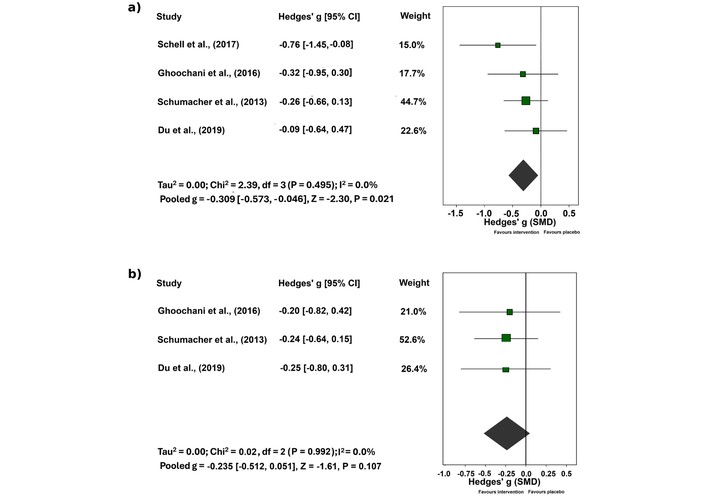
Forest plots for change-from-baseline outcomes comparing dark-fruit interventions with control. a) overall symptoms and b) WOMAC pain (Du et al. [66] (2019), 40 g/day freeze-dried blueberry powder; Schell et al. [68] (2017), 50 g/day freeze-dried strawberry powder; Ghoochani et al. [71] (2016), 200 mL/day pomegranate juice; Schumacher et al. [69] (2013), two 8 oz bottles/day tart cherry juice).
Three studies [66, 69, 71] assessed pain using the WOMAC pain subscale. Data from all three studies favoured the intervention over placebo. The pooled meta-analysis demonstrated a non-significant reduction in pain following polyphenol-rich dark fruit interventions compared with placebo (Hedges’ g = –0.235; 95% CI –0.521 to 0.051; P = 0.107), with low heterogeneity (I2 = 0%) (Figure 2b). Egger’s test was non-significant (P = 0.546).
Three studies [66, 69, 71] assessed joint stiffness using the WOMAC stiffness subscale. Data from Ghoochani et al. [71] and Schumacher et al. [69] favoured the intervention, whilst Du et al. [66] favoured placebo. Pooled analysis indicated a non-statistically significant reduction in stiffness following polyphenol-rich dark fruit interventions compared with placebo (Hedges’ g = –0.195; 95% CI –0.482 to 0.091; P = 0.181), with low heterogeneity (I2 = 0%) (Figure 3a). Egger’s test was non-significant (P = 0.879).
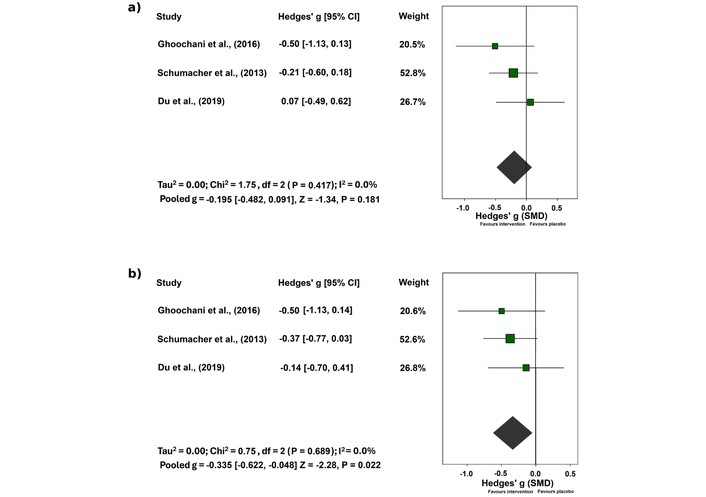
Forest plots for change-from-baseline outcomes comparing dark-fruit interventions with control. a) WOMAC stiffness and b) WOMAC function (Du et al. [66] (2019), 40 g/day freeze-dried blueberry powder; Ghoochani et al. [71] (2016), 200 mL/day pomegranate juice; Schumacher et al. [69] (2013), two 8 oz bottles/day tart cherry juice).
Three studies [66, 69, 71] assessed physical function using the WOMAC physical function subscale. The pooled meta-analysis demonstrated a statistically significant improvement in physical function following polyphenol-rich dark fruit interventions compared with placebo (Hedges’ g = –0.335; 95% CI –0.662 to –0.048; P = 0.022), with low heterogeneity (I2 = 0%) (Figure 3b). Egger’s test was non-significant (P = 0.982).
Three studies [66, 67, 70] assessed TNF-α as a biomarker of inflammation. The pooled meta-analysis demonstrated a non-statistically significant reduction in TNF-α following polyphenol-rich dark fruit interventions compared with placebo (Hedges’ g = –0.145; 95% CI –0.526 to 0.235; P = 0.455), with low heterogeneity (I2 = 12.5%) (Figure 4a). Egger’s test was non-significant (P = 0.160).
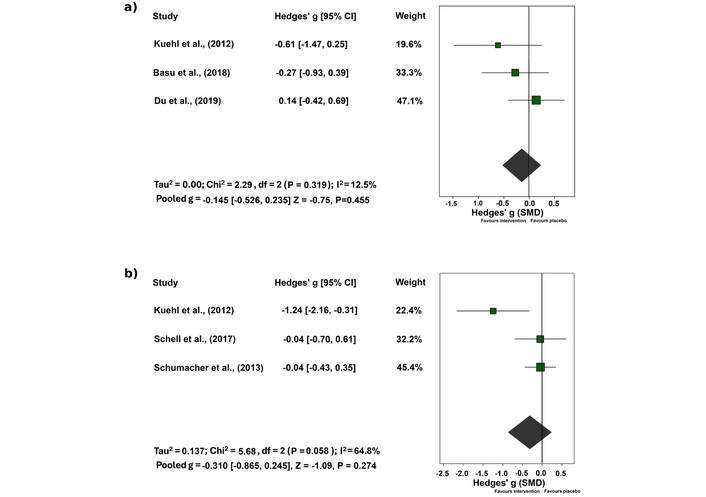
Forest plots for change-from-baseline inflammatory biomarkers comparing dark-fruit interventions with control. a) Tumor necrosis factor-α (TNF-α) and b) C-reactive protein (CRP) (Du et al. [66] (2019), 40 g/day freeze-dried blueberry powder; Basu et al. [67] (2018) and Schell et al. [68] (2017), 50 g/day freeze-dried strawberry powder; Schumacher et al. [69] (2013), two 8 oz bottles/day tart cherry juice; and Kuehl et al. [70] (2012), two 10.5 oz bottles/day tart cherry juice).
Three studies [68, 69, 70] assessed CRP as a biomarker of inflammation. The pooled meta-analysis demonstrated a non-statistically significant reduction in CRP following polyphenol-rich dark fruit interventions compared with placebo (Hedges’ g = –0.310; 95% CI –0.865 to 0.245; P = 0.274), with substantial heterogeneity (I2 = 64.8%) (Figure 4b). Egger’s test was non-significant (P = 0.402).
Three studies [66, 68, 70] assessed IL-6 as a biomarker of inflammation. The pooled meta-analysis demonstrated a statistically significant reduction in IL-6 following polyphenol-rich dark fruit interventions compared with placebo (Hedges’ g = –0.398; 95% CI –0.789 to –0.006; P = 0.047), with substantial heterogeneity (I2 = 80.2%) (Figure 5a). Egger’s test was non-significant (P = 0.565).
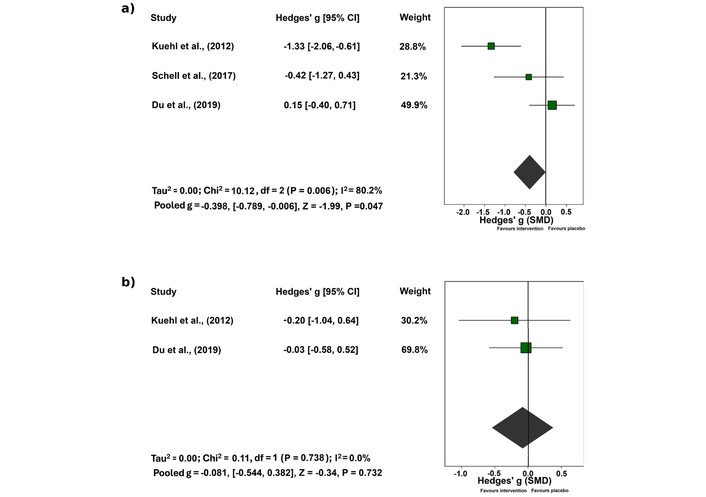
Forest plots for change-from-baseline inflammatory biomarkers comparing dark-fruit interventions with control. a) Interleukin-6 (IL-6) and b) IL-10 (Du et al. [66] (2019), 40 g/day freeze-dried blueberry powder; Schell et al. [68] (2017), 50 g/day freeze-dried strawberry powder; Kuehl et al. [70] (2012), two 10.5 oz bottles/day tart cherry juice).
Two studies [66, 70] assessed IL-10 as a biomarker of inflammation. The pooled meta-analysis demonstrated a non-statistically significant reduction in IL-10 following polyphenol-rich dark fruit interventions compared with placebo (Hedges’ g = –0.081; 95% CI –0.544 to 0.382; P = 0.732), with low heterogeneity (I2 = 0.0%) (Figure 5b).
Two studies [66, 68] assessed IL-1β as a biomarker of inflammation. The pooled meta-analysis demonstrated a non-statistically significant reduction in IL-1β following polyphenol-rich dark fruit interventions compared with placebo (Hedges’ g = –0.204; 95% CI –0.631 to 0.223; P = 0.349), with moderate heterogeneity (I2 = 47.6%) (Figure 6a).
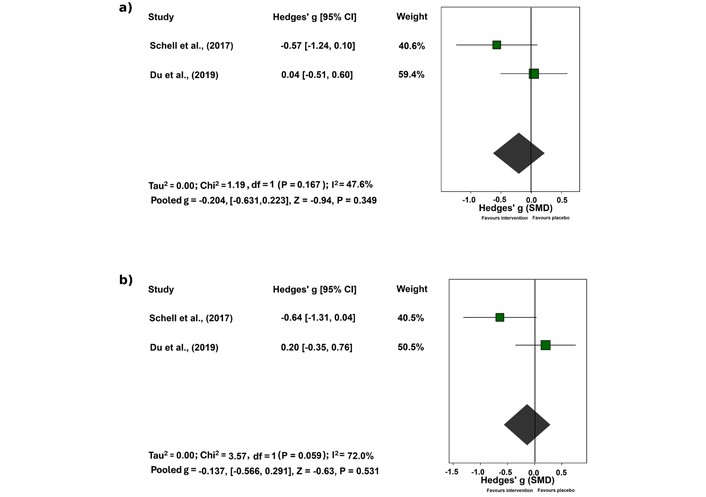
Forest plots for additional change-from-baseline biomarkers comparing dark-fruit interventions with control. a) Interleukin-1β (IL-1β) and b) matrix metalloproteinase-3 (MMP-3) (Du et al. [66] (2019), 40 g/day freeze-dried blueberry powder; Schell et al. [68] (2017), 50 g/day freeze-dried strawberry powder).
Two studies [66, 68] assessed MMP-3 as a biomarker of disease activity. The pooled meta-analysis demonstrated a non-statistically significant reduction in MMP-3 following polyphenol-rich dark fruit interventions compared with placebo (Hedges’ g = –0.137; 95% CI –0.566 to 0.291; P = 0.531), with substantial heterogeneity (I2 = 72.0%) (Figure 6b).
Two studies [66, 71] assessed MMP-13 as a biomarker of disease activity. The pooled meta-analysis demonstrated a non-statistically significant reduction in MMP-13 following polyphenol-rich dark fruit interventions compared with placebo (Hedges’ g = –0.324; 95% CI –0.741 to 0.094; P = 0.128), with low heterogeneity (I2 = 0.0%) (Figure 7).
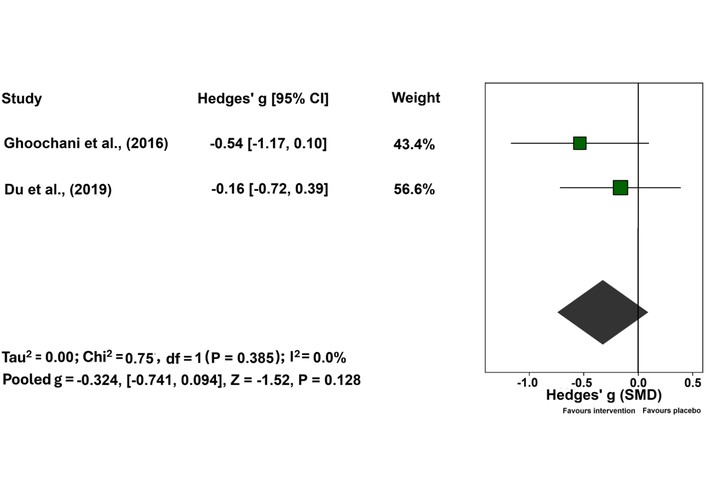
Further searches of ClinicalTrials.gov, the WHO Clinical Trials Registry Platform, and the International Standard Randomised Controlled Trial Number Registry did not identify any ongoing or unpublished trials evaluating polyphenol-rich dark fruit interventions for OA. No studies of relevance were found across these trial registries at the time of searching.
Risk of bias was assessed across the six included studies using the Cochrane RoB 2.0 tool and the RoB 2.0 extension for randomised crossover trials, following recommended guidance. None of the study outcomes were rated as low risk of bias; all were judged to have either moderate/ unclear or a high risk of bias. Summary risk of bias graphs are presented in Figure 8.
The certainty of the evidence was rated as low for overall symptom severity, pain, physical function, stiffness, CRP, IL-6, and MMP-3, moderate for IL-10, IL-1β, and TNF-α, and very low for MMP-13. The main reasons for downgrading the evidence were risk of bias, heterogeneity of effects, and imprecision, including 95% CIs crossing the line of no effect and the optimal information size not being reached for several outcomes. A summary of the GRADE assessments is presented in Figure 9.
The present systematic review and meta-analysis critically evaluated and quantified the effects of polyphenol-rich dark fruit supplementation on clinical and biochemical outcomes in individuals with OA. To our knowledge, this is the first systematic review and meta-analysis to examine the role of polyphenol-rich dark fruits in OA. By synthesising available RCT evidence, this review aimed to provide an integrated understanding of the potential therapeutic utility of these natural compounds and to inform future research and clinical practice. Six RCTs met the inclusion criteria [66–71], all of which investigated knee OA. The interventions varied in duration, formulation, and fruit type, ranging from 3–16 weeks and including blueberry, tart cherry, strawberry, and pomegranate in powder or juice form.
With respect to the primary clinical outcome of overall OA symptom severity, which was assessed across four RCTs [66, 68, 69, 71], polyphenol-rich dark fruit supplementation was associated with a small but statistically significant improvement compared with placebo (g = –0.309). This aligns with prior meta-analytic evidence demonstrating beneficial effects of antioxidant supplementation in knee OA [72], suggesting that dark fruit supplementation may help to alleviate disease-related OA symptoms. Given the major clinical and socioeconomic burden of OA [4], such findings, though modest, may have meaningful implications for patient care and the development of accessible adjunctive therapies. No statistically significant effects were found for WOMAC pain or stiffness subscales, although a small but significant benefit was observed for WOMAC physical function (g = –0.335). Both of these outcomes exhibited low heterogeneity, yet GRADE evaluation indicated low certainty of evidence, and RoB 2.0 assessments identified moderate to high risk of bias across trials. These results therefore suggest potential, but not definitive, therapeutic efficacy of dark fruit supplementation, warranting cautious interpretation. The magnitude of the observed clinical effects should also be considered in patient-centred terms. Although statistically significant, the pooled effects for overall symptom severity and physical function were small, suggesting that any average symptomatic benefit is likely to be modest. Because outcomes were synthesized using SMDs across different clinical scales, and because absolute changes relative to established minimal clinically important differences were not consistently available, it is not possible to determine whether these effects would be clearly perceptible or clinically meaningful for individual patients. The findings should therefore be interpreted as evidence of possible short-term adjunctive benefit rather than as evidence of a large patient-perceived improvement.
In relation to biochemical outcomes, five RCTs [66–70] examined one or more inflammatory biomarkers. For IL-6 specifically, three RCTs [66, 68, 70] provided extractable data, and the pooled meta-analysis demonstrated a small but statistically significant reduction favouring polyphenol-rich dark fruit supplementation compared with placebo/control (g = –0.398). Joint inflammation is present in most individuals with OA [17], and IL-6 is known to play a key role in disease pathophysiology by promoting cartilage degradation and pain via matrix-degrading enzymes and downstream mediators of IL-6 signalling. Elevated IL-6 levels correlate with OA incidence and symptom severity, indicating its importance as a therapeutic target. The reduction in IL-6 observed here suggests that polyphenol-rich dark fruits may influence inflammatory pathways relevant to OA pathophysiology [73, 74]. However, this finding should not be interpreted as evidence of disease modification because intervention durations were short, structural outcomes were not assessed, heterogeneity was substantial (I2 = 80.2%), certainty of evidence was low, and all included studies exhibited moderate risk of bias. The heterogeneity in the IL-6 analysis may plausibly reflect differences between the three contributing interventions: Du et al. [66] used 40 g/day freeze-dried blueberry powder for 16 weeks, with polyphenol/anthocyanin composition not reported; Schell et al. [68] used 50 g/day freeze-dried strawberry powder for 12 weeks, containing 1,585 mg total polyphenols and approximately 66 mg anthocyanins; and Kuehl et al. [70] used two 10.5-oz bottles/day of tart cherry juice for 3 weeks, providing at least 1,200 mg phenolics and 80 mg anthocyanins per day. These differences in fruit type, formulation, bioactive composition, dose, intervention duration, and biomarker assessment context may have contributed to the observed variability in IL-6 effects. Therefore, although the pooled analysis suggests a possible short-term reduction in IL-6, confidence in this estimate is limited.
Taken together, the findings provide limited and preliminary evidence that dark fruit supplementation may influence selected short-term clinical and biochemical outcomes in OA. However, the certainty of the evidence was low for several key outcomes, and moderate-to-high risk of bias across the included trials limits confidence in the pooled estimates. Across included studies, adherence was generally high where reported, and adverse events were relatively infrequent; however, safety conclusions should remain cautious because adverse-event reporting was incomplete, reasons for withdrawal were not always specified, and all trials were small and short in duration. The sugar content of juice-based interventions may also be relevant for individuals with diabetes, metabolic syndrome, or impaired glycaemic control and should certainly be reported systematically in future trials.
While methodological inconsistencies restrict the strength of inference, the convergence of evidence across symptom-related and biochemical endpoints suggests that polyphenol-rich dark fruits may warrant further investigation as an adjunctive nutritional strategy for OA; however, the current evidence is insufficient to support firm clinical recommendations. In light of the increasing emphasis on multimodal management strategies, incorporating nutritional interventions of this nature could enhance symptom control and improve patient well-being. Nevertheless, these promising findings must be substantiated through rigorously designed, adequately powered clinical trials employing standardised measures of efficacy and compliance.
The methodological strengths of this review include adherence to PRISMA and Cochrane guidelines [54, 55], the exclusive inclusion of RCTs, and the combined assessment of both clinical symptoms and inflammatory biomarkers to provide a comprehensive overview of dark fruit supplementation effects in OA. However, several limitations should be acknowledged. Restricting inclusion to English-language studies may have introduced publication bias, and all eligible RCTs investigated knee OA, limiting the generalisability of findings to other OA phenotypes. The small number of studies precluded subgroup analyses, preventing evaluation of the differential effects of specific fruit types, dosages, formulations, polyphenol/anthocyanin content, comparator composition, or intervention duration. This is important because “polyphenol-rich dark fruits” represents a broad intervention category rather than a single standardized product, and the included blueberry, strawberry, pomegranate, and tart cherry interventions may differ in bioactive composition, bioavailability, glycaemic load, adherence, and biological effects.
Reporting of intervention composition and implementation was inconsistent across the included trials. Polyphenol and anthocyanin content was not reported for some interventions, comparator matching varied, one study used usual care rather than a matched placebo, numerical adherence data were unavailable in several trials, and blinding efficacy was formally assessed in only one study. The usual-care study by Ghoochani et al. [71] was the only unblinded, non-placebo-controlled trial and contributed to the pooled analyses for overall symptom severity, WOMAC stiffness, WOMAC physical function, and MMP-13. Leave-one-out sensitivity analyses excluding this study were conducted for outcomes with at least three contributing studies and are reported in Supplementary material 2 (1007133_sup_2); however, this was not possible for MMP-13 because only two studies contributed to that pooled analysis. These factors limit reproducibility, reduce confidence in comparator equivalence, and constrain interpretation of dose-response relationships. Moreover, the number of studies contributing to each meta-analysis was modest, with as few as two trials for some biomarkers. All included RCTs were assessed as moderate to high risk of bias using RoB 2.0, and GRADE assessments indicated very low to moderate certainty of the evidence. Substantial heterogeneity for IL-6, CRP and MMP-3 further reduces confidence in the pooled biomarker estimates and indicates that the observed effects may not be consistent across intervention types, populations or measurement approaches.
Intervention durations were short, ranging from 3 to 16 weeks, which is a major limitation given that OA is a chronic, progressive condition. Consequently, the present findings should be interpreted as short-term effects only and cannot determine whether polyphenol-rich dark fruit supplementation provides sustained symptom relief, long-term safety, or disease-modifying effects. In particular, the included trials did not provide sufficient evidence on structural progression, radiographic or MRI-based outcomes, cartilage preservation, or durability of response after cessation of supplementation. These methodological constraints limit the strength of conclusions that can be drawn from the pooled estimates and highlight the need for more rigorous, longer-duration experimental designs in future investigations.
Future research should prioritise large-scale, well-controlled RCTs with longer intervention periods and post-intervention follow-up to determine whether any clinical or biochemical improvements are sustained. Trials should also include outcomes capable of assessing potential disease-modifying effects, such as radiographic progression, MRI-based cartilage and synovitis measures, joint-space narrowing, and validated biomarkers of cartilage turnover. Given the high heterogeneity and low certainty of the current evidence base, studies must implement robust randomization, allocation concealment, and blinding procedures to reduce bias. Standardization of dosage regimens, polyphenol and anthocyanin quantification, supplement form (juice, powder, or extract), intervention duration, comparator composition, adherence assessment, and core outcome measures is essential to improve comparability across studies and enable dose-response analyses. Future trials should use consistent clinical outcomes, such as WOMAC or KOOS pain and function domains, alongside harmonised inflammatory and cartilage-related biomarker panels. Expanding research beyond knee OA to include other common OA phenotypes is also critical to evaluate whether the observed benefits are joint-specific or generalisable [75].
In addition, future trials should report blinding efficacy, supplement composition, and patient-reported outcomes such as taste, acceptability, and long-term compliance, as these factors may influence treatment adherence and clinical applicability. Currently, dark fruit supplementation is not included in non-surgical management guidelines for OA [76–78]. Integrating cost-effectiveness and patient-centred outcomes into trial design will be vital to guide evidence-based recommendations and support the potential adoption of these nutritional strategies within comprehensive OA management frameworks.
In conclusion, in the available knee OA trials, polyphenol-rich dark fruits were associated with small statistically significant improvements in overall symptom severity, WOMAC physical function, and IL-6 compared with placebo. However, these findings should be interpreted cautiously given the small number of trials, short intervention durations, low certainty of evidence, substantial heterogeneity for some biomarker outcomes, incomplete reporting of intervention composition and adherence, and moderate-to-high risk of bias. The interventions appeared generally well tolerated within the included short-term trials; however, adherence, withdrawals, and adverse-event reporting were incomplete, so tolerability should be interpreted cautiously. Further large-scale, rigorously designed RCTs with longer intervention durations, standardised protocols, comprehensive safety reporting, and clinically interpretable outcome measures are required to determine whether polyphenol-rich dark fruit supplementation provides meaningful adjunctive benefits for people with OA.
ACR: American College of Rheumatology
CIs: confidence intervals
CRP: C-reactive protein
GRADE: Grades of Recommendation, Assessment, Development and Evaluation
Hedges’ g: standardized mean difference accounting for small sample bias
IL-6: interleukin-6
MMPs: matrix metalloproteinases
NSAIDs: nonsteroidal anti-inflammatory drugs
OA: osteoarthritis
PRISMA: Preferred Reporting Items for Systematic Reviews and Meta-Analyses
RCTs: randomized controlled trials
SD: standard deviation
SMD: standardized mean difference
TNF-α: tumor necrosis factor-α
WOMAC: Western Ontario and McMaster Universities Osteoarthritis Index
The supplementary materials for this article are available at: https://www.explorationpub.com/uploads/Article/file/1007133_sup_1.pdf, https://www.explorationpub.com/uploads/Article/file/1007133_sup_2.pdf, and https://www.explorationpub.com/uploads/Article/file/1007133_sup_3.xlsx.
JS: Conceptualization, Methodology, Data curation, Formal analysis, Investigation, Software, Validation, Visualization, Writing—original draft, Writing—review & editing. LB: Conceptualization, Methodology, Supervision, Validation, Writing—review & editing, Project administration. Both authors read and approved the submitted version.
The authors declare that they have no conflicts of interest.
Not applicable.
Not applicable.
Not applicable.
The primary data for this meta-analysis were sourced online from databases listed in the methods. Referenced articles are accessible on PubMed, Scopus, and Web of Science. Additional supporting data are available from the corresponding author upon request.
Not applicable.
© The Author(s) 2026.
Open Exploration maintains a neutral stance on jurisdictional claims in published institutional affiliations and maps. All opinions expressed in this article are the personal views of the author(s) and do not represent the stance of the editorial team or the publisher.
Copyright: © The Author(s) 2026. This is an Open Access article licensed under a Creative Commons Attribution 4.0 International License (https://creativecommons.org/licenses/by/4.0/), which permits unrestricted use, sharing, adaptation, distribution and reproduction in any medium or format, for any purpose, even commercially, as long as you give appropriate credit to the original author(s) and the source, provide a link to the Creative Commons license, and indicate if changes were made.



View: 1177
Download: 15
Times Cited: 0