Review


Affiliation:
1Department of Internal Medicine, Presbyterian Hospital, Albuquerque, NM 87122, USA
ORCID: https://orcid.org/0000-0001-7954-9511

 ,
Affiliation:
2Department of Internal Medicine, University Hospitals Cleveland Medical Center, Cleveland, OH 44195, USA
ORCID: https://orcid.org/0000-0001-9314-5361
,
Affiliation:
3Department of Internal Medicine, University of Toledo, Toledo, OH 43606, USA
ORCID: https://orcid.org/0009-0004-2356-2900
,
Affiliation:
2Department of Internal Medicine, University Hospitals Cleveland Medical Center, Cleveland, OH 44195, USA
ORCID: https://orcid.org/0000-0002-2107-8304
,
Affiliation:
4Sentara Gastroenterology Specialists, Norfolk, VA 23507, USA
5Division of Gastroenterology, Macon and Joan Brock Virginia Health Sciences at Old Dominion University, Norfolk, VA 23501, USA
ORCID: https://orcid.org/0000-0001-7342-6481
,
Affiliation:
5Division of Gastroenterology, Macon and Joan Brock Virginia Health Sciences at Old Dominion University, Norfolk, VA 23501, USA
Email: dajevms@aol.com
ORCID: https://orcid.org/0000-0002-8737-0711

Explor Dig Dis. 2026;5:1005140 DOI: https://doi.org/10.37349/edd.2026.1005140
Received: May 15, 2026 Accepted: August 24, 2026 Published: November 05, 2026
Academic Editor: Jochen Mattner, Universitätsklinikum Erlangen (UKER), Germany
Micro- and nanoplastics (MNPs) have emerged as ubiquitous environmental pollutants, infiltrating terrestrial, aquatic, and atmospheric ecosystems. Recent research highlights a critical, bidirectional relationship between these particles and microbiota, particularly within the gastrointestinal (GI) tract of humans and animals. The gut microbiota, a complex and diverse community of trillions of microbes residing in the human GI tract, plays a critical role in host digestion, metabolism, immune function, and overall health. Disruption of this microbial ecosystem, known as dysbiosis, has been linked to a wide range of diseases. MNP-induced gut dysbiosis also involves complex molecular mechanisms requiring integrative approaches. Multi-omics technologies are essential to identify pathways affected by exposure, including immune responses, oxidative stress, and host-microbe interactions. However, their use in human studies remains limited. Large-scale longitudinal studies combined with multi-omics analyses are crucial to clarify systemic health implications of microplastic exposure and develop mitigation strategies.
Micro- and nanoplastics (MNPs) have become ubiquitous environmental contaminants due to the extensive production, use, and fragmentation of plastics worldwide. These plastic particles, less than 5 mm for microplastics (MPs) and below 100 nm for nanoplastics (NPs), are pervasive in diverse ecosystems, including aquatic, terrestrial, and atmospheric environments. Their widespread presence results in inevitable human exposure mainly through ingestion of contaminated food and water or inhalation of airborne particles. Studies have confirmed that MNPs enter the human body via these routes, accumulating not only in the gastrointestinal (GI) tract but also in systemic tissues such as blood, the brain, and even the placenta, indicating their capacity for translocation beyond initial exposure sites [1–3]. The ingestion route is particularly critical, as MNPs are found to contaminate various foodstuffs and drinking water, while inhalation exposes individuals to airborne particles derived from plastic degradation. Once ingested, MNPs may undergo biotransformation through digestive processes, during which alterations to the particles’ structure occur, and certain gut microbiota potentially facilitate partial biodegradation. This interaction has been linked to shifts in gut microbial composition, where specific bacterial taxa such as Roseburia, Clostridium, and Prevotella show correlations with distinct MP types, although overall gut microbial diversity might not be profoundly disrupted [1–4]. Inhaled MNPs have demonstrated penetration of respiratory barriers to enter systemic circulation, subsequently accumulating in organs like the liver, where they induce metabolic dysfunction and inflammatory responses [5, 6].
Research into the impact of these plastic particles on human health underscores the rationale for investigating their influence on the gut microbiome and overall physiological function. The gut microbiome plays a central role in health, including metabolism, immune function, and neurological signaling. Thus, perturbation of the gut microbiome by MNPs could have broad systemic consequences. Emerging evidence points to MNPs causing oxidative stress, inflammatory reactions, and metabolic disturbances within the gut and other organs. This has been linked to neurodegenerative outcomes resembling Parkinson’s disease, highlighting the potential for plastic particles to affect not only local gut environments but also distant organs through complex gut–brain and gut–liver axes [3, 7, 8].
Given these insights, the investigation of MNP impact on the gut microbiome is imperative. The microbiome’s capacity to harbor plastic-degrading genes suggests an adaptive response, yet the functional consequences for host health remain unclear [1, 2]. Moreover, MNPs may act as carriers of chemical additives and adsorbed environmental contaminants, potentially amplifying their toxic effects [1–3]. Understanding how these particles influence microbial diversity, gut barrier integrity, and systemic inflammatory and metabolic pathways is crucial to elucidate their role in human disease pathogenesis. Such research is especially urgent considering the increasing human exposure to these particles through daily consumption and inhalation. Overall, these factors justify comprehensive studies probing the interactions between plastic pollutants, the gut microbiota, and host health outcomes to inform risk assessment and public health strategies [1–3, 5].
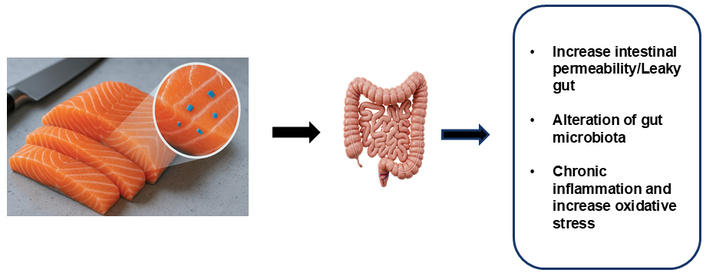
MNPs represent pervasive environmental contaminants that are especially prevalent in food and water and demonstrate an increasing impact on gut microbiome and gut health (Figure 1). Exposure to MPs, particularly polystyrene MPs (PS-MPs), alters gut microbial composition and function, as shown by studies using sequencing and metabolomics. Changes in microbial composition studies in mice and humans show that MP exposure changes gut bacterial diversity and abundance. In animal models, co-exposure to mixed-size MPs altered bacterial and fungal communities more than single-size MPs, suggesting mixture effects on gut microbiota [9]. Common patterns include decreased beneficial bacteria, including Bifidobacteriaceae, Lactobacillales, Ruminococcus, Coprococcus, and Roseburia, which maintain gut homeostasis and produce short-chain fatty acids (SCFAs); increased opportunistic and pathogenic bacterial species, including Enterobacteriaceae, Moraxellaceae, Veillonella, and Helicobacter; and an increased Firmicutes/Bacteroidetes ratio linked to dysbiosis and metabolic disorders [10, 11].
One of the critical toxicities of MNPs is their reproductive toxicity, which has been extensively documented in animal models [12, 13]. PS-NPs have been shown to accumulate in testes, leading to decreased sperm quality, spermatocyte disruption, and testicular damage. The underlying mechanism involves ferroptosis, a form of programmed cell death characterized by iron-dependent lipid peroxidation. Specifically, PS-NPs trigger ferritinophagy (selective autophagic degradation of ferritin) mediated by nuclear receptor coactivator 4 (NCOA4), increasing mitochondrial Fe2+ and reactive oxygen species (ROS) levels [12]. This disrupts the mitochondrial structure and function through downregulation of CISD1, a protein that normally inhibits iron uptake into mitochondria. Pharmacological agents like deferiprone and pioglitazone can mitigate this ferroptosis, highlighting potential therapeutic approaches to counteract PS-NPs toxicity in the male reproductive system [12]. Further, PS-MPs disturb the integrity of the blood-testis barrier (BTB), an essential structure protecting germ cells. Disruption of the BTB allows infiltration of immune cells and environmental toxins into seminiferous tubules, leading to impaired spermatogenesis. These particles also promote oxidative stress, inflammation, autophagy, and intestinal flora alterations, all contributing to reproductive damage. Nonetheless, the precise molecular mechanisms underlying BTB disruption by PS-MPs remain insufficiently understood and warrant further research [14].
Beyond compositional changes, MNPs disrupt critical intestinal functions such as epithelial integrity, leading to increased permeability and downstream effects on increased oxidative stress and inflammation [15]. Such damage to the gut epithelium can compromise barrier functions and potentially facilitate translocation of MNPs or associated polymer toxins. These may promote dysbiosis—a detrimental imbalance in gut microbial communities—and immune cell toxicity. Additionally, impaired barrier integrity facilitates systemic distribution of MNPs and subsequent adverse effects on the brain–gut axis, supporting a growing hypothesis that MNPs-induced gut disruption contributes to neurodegenerative diseases by promoting immune and neurological dysfunction [15]. More specifically, MNPs contributing to microbial dysbiosis and gut inflammation could promote systemic immune activation and neuroinflammation, factors involved in the rising incidence of neurodegenerative disorders such as Alzheimer’s and Parkinson’s diseases [15]. The adverse effects of MNPs are not restricted to controlled animal models; evidence from real-world assessment of wild animals corroborates these findings. Chronic ingestion of MNPs by seabirds was associated with altered gut microbial diversity and composition [16]. Reductions in beneficial commensal bacteria and increases in zoonotic pathogens, antibiotic-resistant bacteria, and plastic-degrading microbes were evident. This suggests that environmentally relevant concentrations and mixtures of MNPs have ecological impacts on gut microbiota that could potentially impair animal health [16]. Similarly, aquatic zooplankton such as Daphnia magna experience altered gut microbial communities and disrupted glucose metabolism following MNPs exposure, leading to impairments in growth, reproduction, and intestinal tissue integrity [17]. These alterations in key aquatic species underscore risks of MP pollution to gut function at multiple trophic levels.
MNPs have been detected in the human digestive tract, confirming exposure through ingestion and inhalation [1]. Despite confirmed exposure, studies show mixed effects on gut microbial composition. An Indonesian population-based study found that MP contamination did not significantly alter gut microbial diversity or gut-health genes, but correlations were observed between MP types and bacterial taxa including Roseburia, Clostridium, and Prevotella, suggesting microbial shifts related to MNP presence [1]. A review of studies in infants, children, and adults reported that MP exposure increased families including bacterial species including Dethiosulfovibrionaceae, Enterobacteriaceae, and Moraxellaceae, while decreasing Bacillota, Bacteroidota, Lactobacillales, and butyrate-producing bacteria including Roseburia and Coprococcus. These alterations were linked with reduced SCFAs, including butyrate, important for gut health [10]. MP-induced microbial shifts could be associated with obesity, GI dysfunction, inflammatory bowel diseases, and cancers, although associations remain preliminary and sometimes contradictory, especially for Lachnospiraceae and Faecalibacterium [10]. Additionally, plastic-degrading genes in human gut microbiomes suggest an adaptive microbial response to MNP exposure [1]. The broader implications of these compositional shifts and microbial adaptations for human health, however, remain poorly understood.
The gap between correlation and causation in linking MNP exposure to alterations in specific gut bacterial taxa such as Bifidobacteriaceae, Lactobacillales, Ruminococcus, Coprococcus, and Roseburia requires rigorous evidence types to substantiate causal claims. Current literature documents associations, often derived from cross-sectional studies, but causality remains challenging due to confounding factors like lifestyle and diet [18]. Lifestyle and diet strongly influence gut microbiota, often confounding associations with MNPs. For example, fiber intake modulates SCFA-producers like Roseburia and Ruminococcus, and probiotic consumption affects Bifidobacteriaceae and Lactobacillales abundance. Studies must rigorously assess and adjust for these factors, ideally using dietary records, metabolomic profiles, or stratified analyses to isolate the MNP effect. Current studies caution that confounding remains a limitation in interpreting altered abundances of these taxa [10, 18].
Currently, evidence mostly describes associations and suggests complex interactions, with confounding by lifestyle and diet often unresolved. Consequently, establishing causal pathways between MNPs and specific bacterial taxa remains an important area for focused research using rigorous methodological designs. The field requires well-designed longitudinal human studies, refined exposure characterization, functional microbiome profiling, and integrated risk assessments to clarify the health impacts of MNP-induced gut microbiota perturbations.
MNP-induced gut dysbiosis involves a complex interplay of oxidative stress, physical damage, microbial shifts, and chemical toxicity, which collectively disrupt intestinal homeostasis and contribute to systemic health disturbances. Studies have shown that ingestion of MNPs can cause damage to the gut through both direct physical and chemical interactions as well as indirect effects mediated by gut microbiota dysbiosis (Table 1).
Different mechanisms of MNP-induced gut dysbiosis.
| Different mechanisms | Pathophysiology |
|---|---|
| Physical mechanical damage |
|
| Oxidative stress and inflammation |
|
| Alteration of microbial composition |
|
| Chemical toxicities |
|
MNP: micro- and nanoplastic.
One key mechanism underlying MNP-induced gut dysbiosis involves the disruption of microbial communities that maintain intestinal homeostasis. Physical disruption of the gut epithelium by MNPs compromises the mucosal barrier, diminishing its protective functions. This microbial imbalance correlates with weakening of the gut barrier, as evidenced by decreased expression of tight junction proteins, which are critical for maintaining the intestinal mucosal barrier’s selective permeability [19].
The altered microbial composition and barrier dysfunction induced by MNPs stimulate innate immune responses and inflammatory signaling cascades in the gut mucosa. Dysbiotic microbes and their products activate pattern recognition receptors (PRRs) such as Toll-like receptors (TLRs), triggering nuclear factor kappa B (NF-κB) and other pro-inflammatory transcription factors. This leads to the release of cytokines and chemokines, mediating local and systemic inflammation that further exacerbates gut dysbiosis and epithelial damage [20]. Additionally, the extent of toxicity depends on the characteristics of the MNPs; for instance, positively charged aminated PS-MNPs exhibited higher toxicity than negatively charged or pristine MNPs. These variations suggest that both the physical properties (size, charge) and chemical composition of MNPs influence the degree of gut dysbiosis and barrier impairment [19].
Machine learning analyses across multiple animal species have further illuminated the patterns of MP effects on gut microbiota. Specific microbial genera, including Lactobacillus, Helicobacter, and Pseudomonas, emerged as potential biomarkers for MP toxicity, reflecting the selective impact on gut microbial composition [21]. The altered gut microbiota not only affects local GI functions but may also impact systemic host metabolism and immunity. Gut bacteria produce metabolites such as SCFAs that are vital for gut health and immunomodulation. A decline in beneficial microbial populations that synthesize such metabolites can impair host metabolic regulation and exacerbate inflammatory responses. Alterations in the balance or diversity of beneficial microbes may have downstream effects on host metabolic pathways and immune status [22–24]. Moreover, MNPs exert chemical toxicity through multiple direct and indirect mechanisms. The particles themselves harbor toxic additives and adsorb environmental pollutants, introducing xenobiotic stress to the gut milieu [25]. These chemicals induce oxidative damage, mitochondrial impairment, and inflammatory signaling, further aggravating dysbiosis and tissue injury [26].
The key pathophysiological consequence of this dysbiosis is impaired intestinal barrier function, which permits translocation of microbial products such as endotoxins into systemic circulation, triggering chronic low-grade inflammation (metabolic endotoxemia) [27, 28]. Concurrently, dysbiosis decreases the production of beneficial microbial metabolites, which alters energy metabolism and favors metabolic endotoxemia-associated diseases such as obesity and type 2 diabetes [29] (Figure 2). This metabolic disruption involves epigenetic modifications and chronic inflammation, underscoring the broad systemic impact of gut microbial imbalance caused by xenobiotic agents including MNPs.
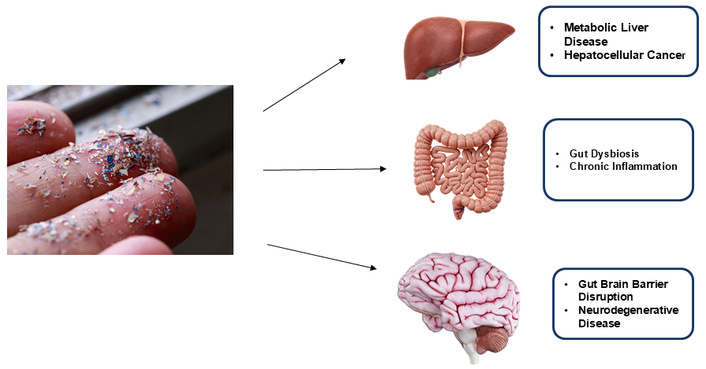
Pathophysiological consequences of MNPs on multiple systems (liver, gut, brain) in the human body. MNPs: micro- and nanoplastics.
The gut–liver axis also emerges as a critical pathway affected by MP-induced dysbiosis. Altered microbial communities and increased gut permeability allow endotoxins and inflammatory mediators to access the portal circulation, promoting hepatic inflammation and contributing to liver diseases such as non-alcoholic fatty liver disease, cirrhosis, and hepatocellular carcinoma [14]. Hence, dysbiosis not only impacts gut-localized pathology but also propagates inflammatory signals to hepatic tissue, exacerbating hepatic inflammation, fibrosis, and neoplasia [30, 31].
At a mechanistic level, multiple stressors induced by MNPs, including oxidative stress, induction of bacterial toxins, and shifts in microbial taxa, promote dysbiosis and its sequelae [32]. The complex interplay between microbial composition changes and host immune-metabolic responses drives the deterioration of intestinal homeostasis and systemic pathologies. However, establishing precise causal relationships remains challenging due to the dynamic nature of the gut microbiota and the complexity of host–microbe interactions in the context of MNP exposure [14].
Overall, MNP-induced gut dysbiosis leads to a cascade of pathophysiological events involving impaired gut barrier function, chronic inflammation, immune dysregulation, metabolic abnormalities, and systemic dissemination of toxic particles and microbial products. These disturbances contribute to GI diseases, metabolic disorders, reproductive disorders, and neurologic impairments. The significance of these findings urges further research to identify precise microbial mechanisms amenable to targeted interventions that may mitigate the adverse health effects of MP exposure [15, 27, 33].
Strategies to mitigate MP-induced gut dysbiosis and intestinal damage involve a multifaceted approach combining environmental, dietary, microbial, and therapeutic interventions. Key measures identified thus far include bacterial modification with probiotics, which are live organisms introduced into the body for beneficial effects, and policies aimed at limiting MNP exposure or aiding in the removal of MNPs from the environment.
Probiotic interventions have emerged as a promising strategy to mitigate MP-induced gut dysbiosis and intestinal damage. Probiotic strains, particularly from the genera Bifidobacterium and Lactobacillus, have demonstrated efficacy in restoring gut microbial homeostasis by adhering to the colonic mucosa, enhancing anti-inflammatory cytokine production, and supporting colonocyte health through metabolic interaction [34, 35]. Notably, Bifidobacterium infantis exhibits the capacity not only to rebalance the microbiome but also to biodegrade polypropylene MNPs under aerobic conditions, using these synthetic polymers as carbon sources and producing biofilm structures that inhibit pathogenic bacteria growth [35]. Furthermore, probiotics have been shown to attenuate inflammatory and oxidative intestinal damage induced by various stressors, including radiation and chemical pollutants, suggesting their broad protective roles in maintaining gut integrity and reducing systemic inflammatory responses [36, 37]. These attributes imply probiotics as both a therapeutic and preventive approach against MP-mediated gut dysfunction.
Parallel to their health benefits, specific bacterial strains have demonstrated significant biodegradation potential for MNPs, offering a novel avenue for environmental bioremediation. Achromobacter xylosoxidans M9, isolated from the gut microbiome of Tenebrio molitor (mealworm) larvae, can degrade PS-NPs rapidly, achieving over 90% reduction in particle size within six days and altering the chemical composition of plastics to facilitate breakdown [38]. The larval gut microbiota synergistically facilitates ultrafast biodegradation of PS-MNPs, generating NPs that are transiently present in gut tissues before being degraded or eliminated [39]. These findings emphasize the potential for harnessing gut-derived and environmental bacteria to advance MP remediation efforts sustainably.
Regarding policy measures, managing MNP pollution requires integrated, multi-tiered strategies due to the pervasive and complex nature of these contaminants. While several countries have implemented bans specifically targeting microbeads, broader legislative efforts addressing the entire MNP spectrum remain limited [40].
While the removal of MNPs from the environment is progressing rapidly, the elimination of MNPs from the human body remains an unresolved scientific challenge, with no currently proven methods. Fish are commonly employed as controlled models to investigate MNPs translocation and clearance. Research indicates that MNPs present in the GI tracts of fish can migrate to muscles and the liver [41]. Smaller fish exhibit a higher concentration of translocated MNPs per gram compared to larger fish, suggesting that size or metabolic rate may influence uptake and distribution [41]. No biomagnification of MNPs was observed, indicating that excretion or growth dilution may reduce MP levels rather than lead to accumulation [41]. Despite translocation, controlled clearance in fish models may prevent significant bioaccumulation. In contrast, human clearance is more complex. While luminal clearance through feces is possible, once MNPs enter tissues or the bloodstream, clearance becomes limited. MNPs may be too large or inert to metabolize or excrete and can trigger immune responses, complicating their elimination [42, 43]. Additionally, effective management frameworks emphasize the reduction of overall plastic waste through the application of the 4Rs—Reduce, Reuse, Recycle, Recover—alongside promoting circular economy models and sustainable alternatives [44] (Figure 3). Enhancing waste treatment technologies and cleaning up environmental compartments, such as using porous concrete filtration systems and urban water management innovations, presents supplementary opportunities to mitigate MP dispersal [45]. Crucially, these technological and regulatory measures must be complemented by public awareness campaigns and international collaboration to address upstream plastic production and downstream pollution [46].
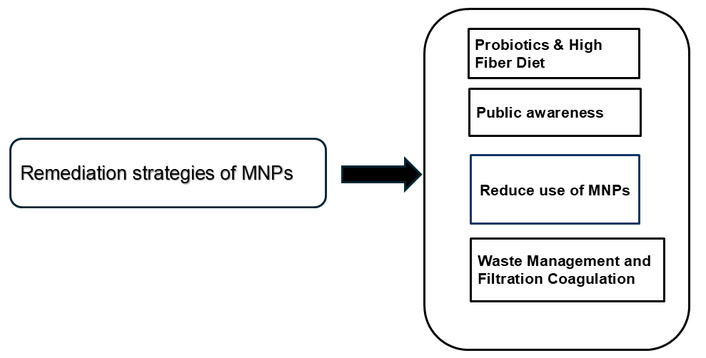
Various protective and remediation strategies of MNPs from contaminated food and water. MNPs: micro- and nanoplastics.
Current research highlights several significant gaps and future directions related to MP-induced gut dysbiosis and toxicity, emphasizing the urgent need for robust clinical data and advanced mechanistic insights. First, while animal studies and in vitro experiments have demonstrated associations between MP exposure and adverse outcomes such as gut microbial imbalance, intestinal inflammation, and systemic toxicity, there is a paucity of well-designed human epidemiological and clinical studies that explicitly quantify the health impacts of MP ingestion or inhalation over time. This limitation hinders the establishment of definitive causal links and dose-response relationships in human populations, underscoring the critical need for large-scale longitudinal exposure assessments to evaluate chronic effects on digestive, respiratory, reproductive, and neurological systems [47, 48].
Second, the complexity of MP toxicity mechanisms calls for integrative application of advanced molecular biology tools to unravel detailed biological pathways. Genomic, transcriptomic, proteomic, and metabolomic techniques have already transformed biomedical research fields such as cancer, cardiovascular disease, and neurodegeneration by enabling comprehensive molecular profiling and biomarker discovery [49–51]. However, such multi-omics approaches remain underutilized in MP research. Employing these methodologies would facilitate elucidation of MP-induced alterations in gut microbiota composition, immune responses, oxidative stress pathways, and neuroinflammatory processes that contribute to systemic pathology, including potential neurodegenerative disease risk [48, 52].
Third, the development of preventive and therapeutic strategies to counteract MP toxicity needs urgent attention, leveraging probiotic interventions and microbial biodegradation approaches which show promise in preliminary studies. Specific probiotic strains like Bifidobacterium infantis have demonstrated both gut microbiome restoration and MP biodegradation capabilities, suggesting a dual role that could be further harnessed in clinical contexts [35]. Nonetheless, without robust clinical trials validating efficacy, safety, optimal strains, dosing regimens, and long-term outcomes, clinical recommendations remain premature. Parallel bioremediation efforts employing gut-derived bacterial strains such as Achromobacter xylosoxidans M9 to degrade PS-MNPs need scale-up and environmental impact assessments before widespread application [38]. Additionally, public health policies must integrate scientific advances to reduce exposure and mitigate harm at population levels [44].
MNPs represent an emerging risk factor for gut dysbiosis, evidenced by alterations in microbial diversity, composition, and function across various organisms. The limited availability of clinical data and the complexity associated with the integration of multi-omics data represent significant obstacles to advancing the understanding of the gut microbiome’s role in health and disease, particularly in relation to interactions with MNPs. Overcoming these challenges by establishing comprehensive clinical cohorts and developing advanced integrative analytical methods will be essential for achieving future breakthroughs and facilitating clinical translation.
BTBs: blood-testis barrier
GI: gastrointestinal
MNPs: micro- and nanoplastics
MPs: microplastics
NCOA4: nuclear receptor coactivator 4
NF-κB: nuclear factor kappa B
NPs: nanoplastics
PRRs: pattern recognition receptors
PS-MPs: polystyrene microplastics
ROS: reactive oxygen species
SCFAs: short-chain fatty acids
TLRs: Toll-like receptors
PD: Conceptualization, Writing—original draft, Writing—review & editing. MS: Conceptualization, Writing—original draft, Writing—review & editing. SR: Conceptualization, Writing—original draft, Writing—review & editing. GH: Conceptualization, Writing—original draft, Writing—review & editing. ECOIV: Conceptualization, Writing—original draft, Writing—review & editing. DAJ: Conceptualization, Writing—original draft, Writing—review & editing. All authors read and approved the submitted version.
The authors declare that there are no conflicts of interest.
Not applicable.
Not applicable.
Not applicable.
Not applicable.
Not applicable.
© The Author(s) 2026.
Open Exploration maintains a neutral stance on jurisdictional claims in published institutional affiliations and maps. All opinions expressed in this article are the personal views of the author(s) and do not represent the stance of the editorial team or the publisher.
Copyright: © The Author(s) 2026. This is an Open Access article licensed under a Creative Commons Attribution 4.0 International License (https://creativecommons.org/licenses/by/4.0/), which permits unrestricted use, sharing, adaptation, distribution and reproduction in any medium or format, for any purpose, even commercially, as long as you give appropriate credit to the original author(s) and the source, provide a link to the Creative Commons license, and indicate if changes were made.



View: 139
Download: 21
Times Cited: 0