 Review


Affiliation:
1Department of Biology, C.T.C., Islamic Azad University, Tehran 1955847781, Iran
2Department of Biotechnology, Aria Vaccine Alborz Company (AVA), Tehran 1464776414, Iran
Email: meisam.akrami@ymail.com
ORCID: https://orcid.org/0000-0002-9075-8397


 ,
,
Affiliation:
2Department of Biotechnology, Aria Vaccine Alborz Company (AVA), Tehran 1464776414, Iran
3Department of Biology, S.R.C., Islamic Azad University, Tehran 1477893855, Iran
ORCID: https://orcid.org/0000-0002-6287-0402
,
Affiliation:
2Department of Biotechnology, Aria Vaccine Alborz Company (AVA), Tehran 1464776414, Iran
4Department of Advanced Technologies in Medicine, Faculty of Science, Tehran Medical Branch, Islamic Azad University, Tehran 1936893813, Iran
ORCID: https://orcid.org/0009-0007-2532-5919
,
Affiliation:
1Department of Biology, C.T.C., Islamic Azad University, Tehran 1955847781, Iran
ORCID: https://orcid.org/0009-0002-8644-4026
Explor Dig Dis. 2026;5:1005134 DOI: https://doi.org/10.37349/edd.2026.1005134
Received: May 04, 2026 Accepted: July 20, 2026 Published: August 26, 2026
Academic Editor: Maria Carlota Londoño, Hospital Clinic Barcelona, University of Barcelona, Spain
Crimean-Congo hemorrhagic fever virus (CCHFV) is a globally distributed, highconsequence zoonotic pathogen whose clinical spectrum extends far beyond hemorrhagic diathesis. Over recent years, mounting evidence has illuminated the central role of hepatic involvement in shaping both acute disease outcomes and potential postinfectious sequelae. The liver functions as a complex immunological organ, critically integrating viral replication dynamics with host innate and adaptive responses. This review synthesizes current knowledge on the hepatic immunopathogenesis of CCHFV, delineating the contributions of direct cytopathic effects and virusinduced inflammatory circuits orchestrated by hepatocytes, Kupffer cells, and liver sinusoidal endothelial cells. We further dissect how viral determinants, particularly genomic diversity within the nucleoprotein and other structural elements, modulate host sensing, immune evasion, and the intensity of liver injury. The potential for long-term hepatic consequences, including the hypothesis-driven risk of hepatocellular carcinoma (HCC), is examined through the lens of chronic inflammation, altered tissue remodeling, and emerging parallels with other viral hepatitides. Despite these advances, critical gaps persist in mapping cell-type-specific viral tropism, mechanistic genotype-phenotype correlations, and the interplay between acute hepatic injury and long-term liver health. We highlight future research priorities that include the application of single-cell and spatial omics, advanced humanized models, and integrated immunovirological surveillance, all poised to resolve outstanding questions and facilitate the rational design of vaccines and therapeutics that provide robust protection while averting immunopathological liver injury. Collectively, this review reframes CCHFV from an acute hemorrhagic threat to a major disruptor of hepatic immune homeostasis, underscoring the need for multidisciplinary approaches to mitigate both immediate and chronic consequences of infection.
Crimean-Congo hemorrhagic fever virus (CCHFV), a tick-borne nairovirus, is one of the most widely distributed viral hemorrhagic fever agents, with endemic circulation across parts of Africa, Asia, the Middle East, and Europe. Human infection can range from a nonspecific febrile illness to severe hemorrhagic disease, vascular instability, coagulopathy, and multi-organ dysfunction. Although CCHFV has traditionally been framed primarily as a hemorrhagic fever virus, increasing clinical and experimental evidence indicates that hepatic involvement is a central determinant of disease severity and outcome [1, 2].
Liver dysfunction in CCHFV infection is commonly reflected by elevated serum aminotransferases, impaired synthetic function, coagulation abnormalities, and histopathological evidence of hepatocellular injury in severe or fatal cases. The liver is not only a metabolic and hemostatic organ but also a highly specialized immunological environment composed of hepatocytes, Kupffer cells, liver sinusoidal endothelial cells, hepatic stellate cells, and infiltrating immune populations. This cellular architecture enables rapid antiviral sensing and immune coordination, but it also renders the liver vulnerable to immune-mediated injury during systemic inflammatory infections [3].
The mechanisms underlying CCHFV-associated hepatic injury remain incompletely defined. Available evidence suggests that liver damage may result from the convergence of direct viral replication, innate immune activation, cytokine-driven inflammation, endothelial dysfunction, and coagulation imbalance. However, causal attribution is complicated by limitations in the available clinical literature, including incomplete reporting of concomitant hepatotoxic exposures such as paracetamol (acetaminophen) and nonsteroidal anti-inflammatory drugs, as well as the scarcity of systematic liver biopsy data in living patients [4].
In addition to acute liver injury, severe inflammatory disruption of the hepatic microenvironment raises broader questions about post-infectious liver health. CCHFV is not classified as an oncogenic virus, and no direct epidemiological association with hepatocellular carcinoma (HCC) has been established. Nevertheless, the intense inflammatory, oxidative, regenerative, and tissue-remodeling responses observed during severe viral liver injury provide a rationale for cautiously examining whether CCHFV-associated hepatic damage could theoretically contribute to pro-carcinogenic microenvironments under specific biological or clinical conditions [5].
In this review, we synthesize current knowledge on the hepatic immunopathogenesis of CCHFV from a translational perspective. We discuss the interplay between viral replication, liver-resident immune responses, endothelial and coagulation disturbances, viral genomic determinants, and vaccine-related implications. We also identify key gaps in the field, including the need for cell type-resolved models, longitudinal survivor studies, integrated viral genomic surveillance, and careful evaluation of drug-related confounders in cases of severe hepatic cytolysis. As summarized in Figure 1, hepatic injury during CCHFV infection is best interpreted as the outcome of a convergent pathogenic process rather than a single linear mechanism. Viral replication within hepatic and immune-resident cellular compartments may initiate innate immune activation, followed by excessive production of pro-inflammatory mediators such as interleukin-6 (IL-6), tumor necrosis factor-α (TNF-α), and type I interferons. This inflammatory amplification can promote immune-cell infiltration, endothelial activation, coagulation imbalance, oxidative stress, and direct or indirect hepatocellular apoptosis and necrosis. However, the clinical attribution of liver injury exclusively to viral cytopathicity should be made cautiously. In many acute cases, aminotransferase elevation may reflect the combined effects of virus-driven immunopathology, systemic hypoperfusion, disseminated intravascular coagulation, and potential drug-related hepatotoxicity, particularly from paracetamol or non-steroidal anti-inflammatory drugs used for fever and pain control. Moreover, because liver biopsy is rarely feasible during the acute hemorrhagic phase due to bleeding risk, direct histopathological confirmation in living patients remains limited. Because acute CCHFV infection may be accompanied by thrombocytopenia and coagulopathy, liver biopsy is often unsafe, further limiting histopathological confirmation. Therefore, Figure 1 should be interpreted as an integrated mechanistic framework that synthesizes currently available molecular, immunological, and clinical evidence rather than as a definitive causal hierarchy.
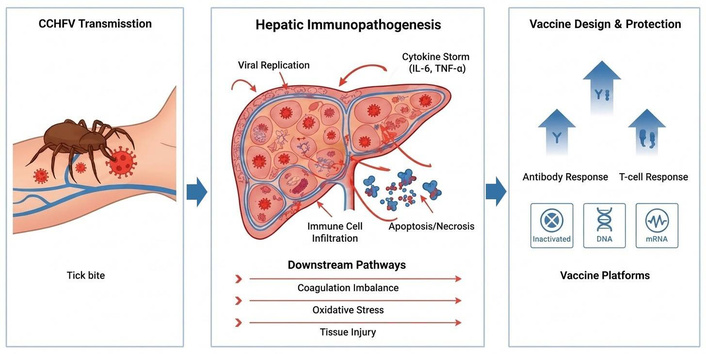
Pathogenesis of Crimean-Congo hemorrhagic fever virus (CCHFV)-induced hepatic injury: from viral transmission to immunopathology and vaccine-mediated protection. This schematic illustrates the multi-stage cascade of CCHFV infection and prevention. The left panel depicts viral transmission into the host via a tick bite. The central panel details the hepatic immunopathogenesis, where viral replication and a robust cytokine storm (involving IL-6 and TNF-α) trigger immune cell infiltration and hepatocellular apoptosis/necrosis; these processes culminate in downstream pathophysiological pathways including coagulation imbalance, oxidative stress, and progressive tissue injury. The right panel outlines host immune defense mechanisms, highlighting antibody- and T-cell-mediated protection alongside current vaccine development platforms (inactivated, DNA, and mRNA). Figure created by the authors.
CCHFV is traditionally recognized as a viral hemorrhagic fever associated with vascular permeability, coagulation abnormalities, and bleeding manifestations. However, increasing clinical and experimental evidence indicates that CCHFV infection extends beyond hemorrhage and involves profound hepatic dysfunction. Elevated serum aminotransferases, hyperbilirubinemia, impaired synthetic function, and coagulation disturbances are frequently observed in severe cases and often correlate with clinical deterioration and fatal outcomes. The liver should therefore be considered a central organ in CCHFV pathogenesis rather than a passive target of systemic illness. As a major metabolic, hemostatic, and immunological organ, the liver integrates antiviral sensing, inflammatory signaling, endothelial regulation, and coagulation control. Hepatocytes, Kupffer cells, liver sinusoidal endothelial cells, hepatic stellate cells, and infiltrating immune cells collectively shape the hepatic response to infection [6].
Nevertheless, the interpretation of liver injury in CCHFV requires caution. Marked aminotransferase elevation may reflect direct viral replication, immune-mediated injury, hypoxic damage, endothelial dysfunction, coagulation disturbance, or exposure to hepatotoxic agents such as paracetamol/acetaminophen and nonsteroidal anti-inflammatory drugs. Moreover, liver biopsy data from living patients remain scarce, and much of the histopathological understanding is derived from fatal cases, autopsy material, or experimental models. Taken together, these observations support a liver-centered view of CCHFV pathogenesis. Understanding how hepatic immune responses contribute to disease severity is essential for refining therapeutic strategies, improving vaccine design, and identifying unresolved questions regarding the short- and long-term consequences of severe CCHFV-associated liver injury [7].
Hepatic injury is a hallmark of severe CCHFV infection and arises from a complex interplay between viral replication, host immune responses, endothelial dysfunction, and dysregulated coagulation pathways. Rather than being attributable to a single pathogenic mechanism, liver damage in CCHFV reflects a multifactorial process in which direct cytopathic effects and immune-mediated injury converge to disrupt hepatic homeostasis [8].
One important contributor to liver pathology is direct viral replication within hepatocytes. Experimental studies using susceptible animal models and in vitro systems suggest that hepatocytes can support productive CCHFV infection. Viral replication within these cells may trigger intracellular stress responses and activate antiviral signaling pathways mediated by pattern-recognition receptors, including RIG-I-like receptors and Toll-like receptors. Activation of these pathways induces transcriptional programs dominated by interferon-stimulated genes (ISGs), which aim to restrict viral propagation. However, excessive or prolonged activation of antiviral and inflammatory responses may also contribute to hepatocellular apoptosis, metabolic dysfunction, and tissue injury. Histopathological observations from severe and fatal CCHFV cases frequently demonstrate hepatocellular degeneration, focal necrosis, and inflammatory infiltration, consistent with a combination of direct viral cytotoxicity and immune-mediated injury [9].
In addition to hepatocytes, liver-resident macrophages, particularly Kupffer cells, play a critical role in shaping the hepatic inflammatory milieu during infection. As sentinel cells of the hepatic immune system, Kupffer cells detect viral components and danger-associated signals released from injured hepatocytes, thereby initiating innate immune responses through the secretion of pro-inflammatory cytokines and chemokines. During severe CCHFV infection, heightened activation of these cells may lead to excessive production of inflammatory mediators such as TNF-α, IL-6, and other cytokines that contribute to systemic inflammation. This cytokine-driven environment amplifies immune-cell recruitment into hepatic tissue and increases the likelihood of collateral tissue damage [10].
Another key component of hepatic injury involves endothelial and sinusoidal dysfunction within the liver microvasculature. Liver sinusoidal endothelial cells are highly responsive to inflammatory signals and may contribute to the propagation of hepatic inflammation during severe infection. Disruption of endothelial integrity can alter sinusoidal blood flow, increase vascular permeability, and promote hepatic congestion and inflammatory-cell infiltration. Furthermore, endothelial activation induces the expression of adhesion molecules and pro-coagulant factors, reinforcing the inflammatory cascade and promoting microvascular disturbances within hepatic sinusoids [11].
Closely linked to endothelial dysfunction is the disturbance of coagulation pathways, which represents a defining feature of severe CCHFV infection. The liver is responsible for the synthesis of most coagulation factors, and extensive hepatocellular damage may therefore impair clotting-factor production. At the same time, systemic inflammation can activate coagulation cascades and promote consumption of clotting factors, creating a pathological state resembling disseminated intravascular coagulation. The resulting imbalance between coagulation and fibrinolysis may further aggravate hepatic injury by promoting microthrombi formation within the hepatic vasculature and exacerbating ischemic damage to hepatocytes. Together, these mechanisms indicate that hepatic injury during CCHFV infection is driven by a dynamic interaction between viral replication and host responses. Direct infection of hepatocytes, exaggerated innate immune activation, endothelial disruption, and coagulation abnormalities collectively generate a pathogenic network that culminates in liver dysfunction and systemic disease manifestations. Understanding these interconnected pathways is critical for developing therapeutic strategies and vaccines that control viral replication while minimizing immunopathology within the liver [12].
Understanding the viral determinants that influence tropism and pathogenicity in CCHFV is crucial for elucidating mechanisms underlying hepatic injury. Among the viral proteins, the nucleoprotein (NP) plays a pivotal role not only in viral replication and assembly but also in modulating host immune responses and tissue-specific tropism. Recent in silico epitope mapping and phylogenetic analyses have revealed that the NP gene segment (S segment) exhibits significant genetic conservation, particularly in regions associated with structural stability, while also harboring hotspots of variability, many of which localize to functional domains involved in immune recognition. This balance between conservation and variability suggests that NP maintains essential roles in viral replication, yet evolves to evade host immune responses, potentially influencing tissue distribution and virulence [13]. A significant layer of complexity in hepatic pathogenesis arises from the considerable genetic diversity observed among circulating CCHFV strains. This genomic variability, particularly within the S and M segments, influences viral fitness, antigenic recognition, and the efficiency of replication within specific hepatic cell types. Understanding how these viral determinants correlate with varying degrees of hepatic injury is crucial, as it suggests that hepatic tropism is not uniform across different viral clades and may necessitate strain-specific approaches in future clinical management [13].
Structural modeling indicates that the highly conserved core regions of NP are critical for encapsidation of viral RNA, while surface-exposed polymorphic sites can modulate interactions with host factors, including immune mediators and cellular receptors. These hotspots of genetic diversity may facilitate immune escape, especially within hepatic tissue, where immune-mediated clearance exerts additional selective pressures. As a result, certain NP variants could preferentially adapt to hepatic cellular environments, contributing to increased pathogenicity and tissue damage [14].
Furthermore, the integration of computational entropy-based analyses (e.g., Shannon entropy) with network analysis of NP sequences across diverse viral isolates points toward a correlation between specific mutations and enhanced replication fitness or immune modulation. Variants harboring these mutations might disrupt the antigenic landscape of NP, allowing sustained viral persistence within hepatocytes, thus exacerbating hepatic injury. The linkage between NP variability and virulence is supported by experimental evidence demonstrating that the hydrophobicity, charge distribution, and structural conformation of NP influence viral replication efficiency and immune evasion. Notably, immunogenic epitopes within the NP display sequence variations across lineages, which may influence host immune recognition and contribute to the variable clinical presentation of CCHF [15, 16].
CCHFV-associated hepatic injury is best conceptualized as the outcome of a multilevel interaction between viral molecular determinants and the hepatic immune microenvironment. Within this framework, the NP represents a particularly important viral component because of its essential role in genome encapsidation, ribonucleoprotein assembly, viral RNA synthesis, and regulation of the replication-transcription cycle. As a highly expressed internal antigen, NP is also a major target of cellular immune recognition and may shape the antiviral T-cell repertoire through conserved and variable epitopes presented by host MHC molecules. Consequently, NP sequence and structural variability may influence not only antigenicity, but also viral replication efficiency, immune visibility, host adaptation, and the kinetics of viral clearance. These properties are especially relevant for CCHFV, a virus characterized by extensive genomic diversity, reassortment potential, and geographically structured lineage variation [17, 18].
Integrating comparative genomics with structural vaccinology provides a powerful strategy for interpreting these viral determinants. Shannon entropy-based variability analysis can identify conserved residues and domains that are likely maintained by functional constraint, as well as hypervariable regions that may reflect immune selection, lineage divergence, or adaptation to distinct vertebrate and tick hosts. When combined with structural epitope mapping, these analyses can clarify whether immunologically relevant epitopes are surface-accessible, structurally constrained, lineage-specific, or embedded within functionally critical protein interfaces. Such information is directly relevant to vaccine and therapeutic design because conserved, immunogenic, and functionally constrained regions may provide more stable targets than highly variable antigenic segments. Conversely, sequence variability in immunologically relevant epitopes may contribute to immune escape and reduced cross-lineage neutralization [19].
These molecular features may have particular relevance in the liver, where CCHFV infection is associated with hepatocellular injury, inflammatory amplification, endothelial dysfunction, and coagulation disturbance. Although direct viral cytopathic effects may contribute to hepatic pathology, accumulating evidence suggests that liver injury in severe CCHF is strongly shaped by immune-mediated mechanisms. Viral replication or antigen persistence in hepatocytes and liver-associated immune cells may activate pattern-recognition receptor pathways, type I interferon responses, inflammasome-associated signaling, and chemokine networks that recruit and activate inflammatory leukocytes. However, if viral immune evasion delays or blunts early antiviral restriction, increased viral burden may intensify downstream cytokine release and tissue damage. In this setting, NP variability may modulate the efficiency of antigen processing, MHC-restricted presentation, and T-cell-mediated clearance, thereby influencing whether the host response remains protective or progresses toward immunopathology [18].
The hepatic microenvironment further amplifies this balance through the activity of Kupffer cells, liver sinusoidal endothelial cells, infiltrating monocytes/macrophages, cytotoxic lymphocytes, and cytokine-producing innate immune populations. Excessive production of pro-inflammatory mediators such as TNF-α, IL-6, IL-1β, and interferon-associated cytokines may promote hepatocellular stress, mitochondrial dysfunction, oxidative injury, apoptosis, necrosis, and barrier disruption at the sinusoidal endothelium. These processes may interact with systemic vascular leakage and coagulation abnormalities, thereby linking molecular viral determinants to the clinical phenotype of severe CCHF. Importantly, this model does not imply that NP variability alone determines hepatic tropism or disease severity; rather, it positions NP and other genomic variants as modulators within a broader network of viral replication, innate immune activation, immune evasion, and host-mediated tissue injury [20].
Figure 2 summarizes this integrated molecular-pathogenic framework. It depicts how CCHFV replication in hepatocytes, NP structural variability, epitope conservation or divergence, immune evasion, and host inflammatory pathways may converge to drive liver injury. This conceptual model also provides a translational rationale for prioritizing conserved viral regions in vaccine design, mapping variable epitopes that may undermine cross-lineage protection, and identifying virus-host interfaces that could be exploited for antiviral intervention. Therefore, Figure 2 links structural and genomic insights with hepatic immunopathogenesis, reinforcing the idea that CCHFV-induced liver injury emerges from the dynamic interaction between viral evolution, tissue-specific host responses, and dysregulated antiviral immunity.
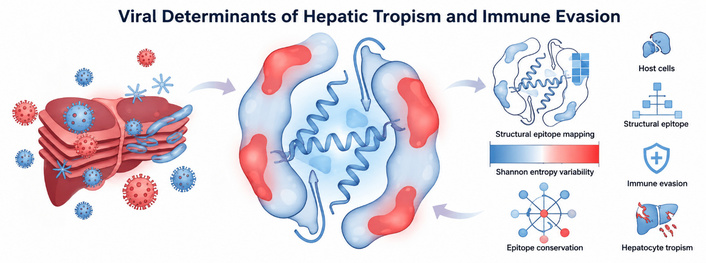
Viral determinants, antigenic variability, and host-interaction features potentially contributing to Crimean-Congo hemorrhagic fever virus (CCHFV) hepatic tropism and immune evasion. This schematic illustrates the conceptual integration of CCHFV-associated hepatic infection with viral protein structural features, epitope distribution, sequence variability, and host-interaction mechanisms. Following infection of hepatic tissue, viral proteins may interact with hepatocytes, resident immune cells, and endothelial compartments, contributing to viral replication, innate immune activation, and downstream liver injury. Structural mapping of viral proteins can help identify exposed or functionally relevant regions that may serve as B-cell or T-cell epitopes. Sequence variability across viral strains, often quantified using Shannon entropy-based approaches, may further indicate regions under immune pressure or sites with potential antigenic diversity. Such variability can influence epitope conservation, immune recognition, immune evasion, and the rational selection of vaccine or diagnostic targets. The figure is intended as a schematic framework linking viral molecular determinants with host-cell interaction and hepatic involvement, rather than as a definitive structural model of all CCHFV proteins or strain-specific variants. Figure created by the authors.
CCHFV-associated hepatic injury likely reflects the combined effects of viral replication, innate immune activation, endothelial dysfunction, and inflammatory amplification across multiple hepatic cell populations. However, the relative hierarchy of infection among hepatocytes, Kupffer cells, and hepatic sinusoidal endothelial cells remains incompletely resolved. To clarify the currently available evidence, Table 1 summarizes the putative roles of these major hepatic cell types in CCHFV tropism, immune activation, and liver injury.
Cell-type-specific contributions to CCHFV-associated hepatic injury.
| Cell type | Main evidence | Dominant role | Injury mechanism | Evidence gap |
|---|---|---|---|---|
| Hepatocytes | Viral antigen/RNA in liver; replication in Huh7 cells | Viral replication and parenchymal stress | Apoptosis, cytopathic injury, transaminase elevation | Quantitative in vivo replication burden unclear |
| Kupffer cells | Antigen detection; macrophage perturbation in models | Cytokine amplification and innate immune activation | TNF/IL-6/IL-1β-driven immunopathology, immune-cell recruitment | Productive replication versus immune sensing unresolved |
| Sinusoidal endothelial cells | Endothelial antigen detection in pathology | Vascular activation and barrier dysfunction | Leakage, hemorrhage, sinusoidal injury, coagulopathy interface | Liver-specific replication hierarchy unclear |
| Infiltrating monocytes/DCs | Mononuclear phagocyte involvement | Systemic immune amplification | Cytokine storm, inflammatory trafficking | Liver-specific contribution not well quantified |
CCHFV: Crimean-Congo hemorrhagic fever virus.
Future studies integrating single-cell RNA sequencing, spatial transcriptomics, viral RNA in situ hybridization, and cell-type-resolved proteomics will be required to distinguish permissive infection from bystander inflammatory activation in the hepatic microenvironment.
The pursuit of an effective vaccine against CCHFV epitomizes the complexity of designing immune interventions for pathogens whose pathology is profoundly host-driven. Unlike viruses with primarily cytolytic mechanisms of tissue injury, CCHFV elicits hepatic damage through a combination of direct hepatotropism and immunopathogenic amplification, raising critical translational questions regarding how vaccineinduced immunity might interact with hepatic immunodynamics [21]. The liver’s role as an immunological hub is particularly relevant in light of the rapid evolution of preventive strategies against CCHFV. Diverse vaccine platforms, including DNA, mRNA, and viral-vectored approaches, are currently under investigation. For these interventions to be effective, they must not only induce systemic humoral and cellular immunity but also foster robust liver-resident memory T-cell responses. Future vaccine development must consider how vaccine-induced immune responses intersect with existing hepatic immunobiology, ensuring that protective immunity is achieved without exacerbating the inflammatory pathways that characterize severe hepatic disease [22].
While vaccine strategies traditionally prioritize the generation of robust antiviral immunity, for viruses like CCHFV, the same effector functions—type I interferon cascades, activated CD8+ T-cells, and proinflammatory cytokine bursts—may overlap mechanistically with pathways responsible for hepatocellular damage. The liver, as an immunometabolic hub, integrates innate sensing (RIG-I, MDA5, TLR3, and TLR7) with systemic cytokine control. Overstimulation of these axes during vaccination or subsequent pathogen encounter could, in principle, amplify hepatic inflammation, challenging the dogma that “more robust immunity” necessarily equates to “greater protection” [23, 24].
Conventional inactivated CCHFV vaccines offer comprehensive antigenic breadth, encompassing NP and glycoproteins (Gc/Gn). Yet, the immunogenic inclusion of NP, while enhancing T-cell priming and cytotoxic clearance potential, concomitantly risks unbalancing hepatocyte-directed immune responses—especially when coupled with potent Th1-biased adjuvants [e.g., CpG, poly(I:C)]. Recombinant subunit and epitope-based platforms thus represent refined paradigms: by integrating entropy-mapped conserved epitopes and excluding hyper-stimulatory immune hotspots, they aim to elicit antiviral protection without incurring hepatic collateral injury [25].
Emerging data suggest that antigen topology the spatial distribution of epitopes within the NP structure dictates not only immunogenic exposure but also endoplasmic reticulum (ER) stress signaling in hepatocytes. This molecular crosstalk between antigenic design and cellular physiology demands safety frameworks transcending conventional immunogenicity metrics [26].
The integration of immunoinformatics and systems immunology heralds a paradigm shift: liverspecific immune risk can now be computationally anticipated before in vivo testing. Entropy-driven conservation mapping, structural epitope clustering, and in silico cytokine network modeling collectively enable predictive profiling of hepatic toxicity. Coupling these analyses with transcriptomic data from infected hepatic tissue creates an immunotoxicologic atlas, a reference for rational antigen selection minimizing downstream inflammatory amplification. Such tools redefine vaccine discovery as an immunoregulatory engineering discipline, centered on achieving optimal signaling resolution between antiviral efficacy and hepatic safety [27].
Understanding hepatic immunopathology extends beyond prophylaxis. Therapeutically, targeting NP-host interactomes and innate sensing crosstalk offers potential for hepato-selective immunomodulation. Recombinant interferon regulatory circuits, Janus kinase modulators, or nanoparticle carriers that localize regulatory payloads to hepatic tissue may mitigate cytokine storms while preserving systemic antiviral resistance. Ultimately, translational vaccine design for CCHFV lies at a delicate equilibrium between sufficient immune activation to curb viral dissemination and precise modulation to prevent hepatic self-injury. This equilibrium mirrors challenges observed in arenavirus and flavivirus vaccine development, underscoring the necessity of integrating virology, immunogenomics, and hepatology in unified translational frameworks [28]. Given the complex immunopathogenesis of CCHFV infection, a central challenge in vaccine development is to achieve a functional immunological equilibrium in which protective antiviral immunity is sufficiently induced without amplifying inflammatory pathways that may contribute to hepatic injury. This balance is particularly important because severe CCHF is not solely determined by viral replication, but also by dysregulated host responses, including excessive cytokine production, endothelial activation, coagulation disturbance, Kupffer cell hyperactivation, and hepatocellular stress. Therefore, vaccine evaluation should extend beyond conventional measures of immunogenicity and incorporate the qualitative nature of the induced immune response, including the magnitude, polarization, durability, and inflammatory tone of vaccine-driven immunity [29].
Different CCHFV vaccine platforms may shape this equilibrium through distinct immunological mechanisms. Inactivated vaccines may present a broad repertoire of viral antigens but can vary in their ability to induce durable cellular immunity depending on formulation and adjuvant selection. NP-based vaccine strategies may favor T-cell-mediated responses because NP contains relatively conserved internal epitopes that can be processed and presented through MHC-dependent pathways, potentially supporting cross-lineage cellular immunity. In contrast, glycoprotein-based formulations, including recombinant Gn/Gc constructs, viral-vectored platforms, and nucleic acid vaccines, may preferentially promote neutralizing antibody responses that restrict viral entry, dissemination, and systemic viral burden. However, the protective value of these responses depends not only on their magnitude but also on their functional quality, including neutralization breadth, Fc-mediated effector functions, CD8+ T-cell cytotoxicity, CD4+ T-cell help, and the balance between Th1-biased antiviral immunity and excessive inflammatory activation [30].
In the hepatic context, this equilibrium has direct pathogenic relevance. Vaccine-induced immune responses that efficiently limit viral replication may reduce antigen burden, dampen innate immune activation, and prevent secondary inflammatory amplification in the liver. Conversely, poorly regulated immune activation, excessive pro-inflammatory cytokine release, or inappropriate adjuvant-driven polarization could theoretically intensify pathways associated with hepatic immunopathology, including Kupffer cell activation, sinusoidal endothelial dysfunction, hepatocyte apoptosis or necrosis, oxidative stress, and coagulation-linked microvascular injury. Although vaccine-associated hepatic immunopathology has not been established as a dominant clinical concern for CCHFV vaccine candidates, this theoretical risk remains important when designing vaccines against a virus whose severe disease phenotype is strongly associated with cytokine dysregulation, vascular injury, and liver dysfunction.
Accordingly, Figure 3 conceptualizes CCHFV vaccine design as a balance between two opposing but interconnected immunological axes: protective antiviral immunity and hepatic immunopathology. On the protective side, the figure highlights neutralizing antibodies, T-cell-mediated viral clearance, type I interferon-associated antiviral states, and controlled Th1-biased responses. On the pathogenic side, it depicts cytokine amplification, Kupffer cell hyperactivation, endothelial perturbation, hepatocellular stress, and inflammatory tissue injury. This framework emphasizes that rational vaccine development should prioritize not only antigen selection and platform efficacy, but also immune calibration: the induction of durable, cross-protective, and functionally coordinated antiviral responses while minimizing the risk of excessive inflammatory signaling in the hepatic microenvironment.
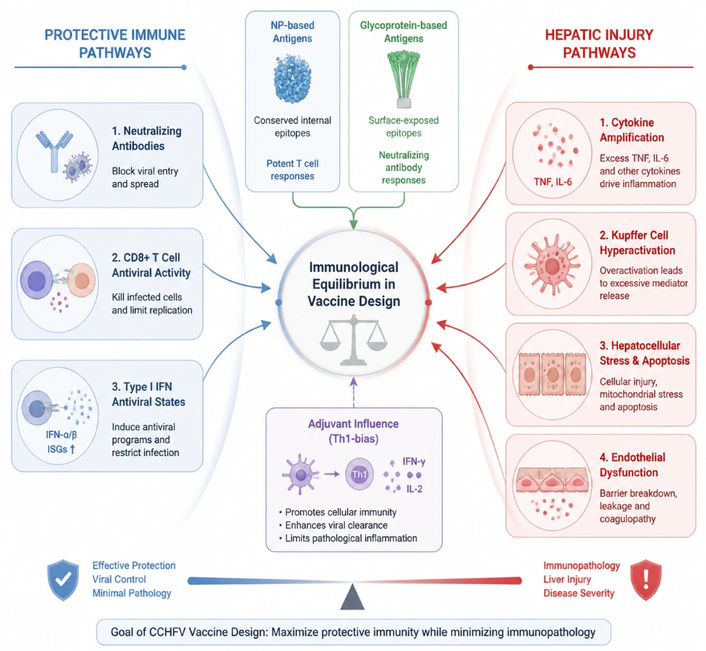
Immunological equilibrium in Crimean-Congo hemorrhagic fever virus (CCHFV) vaccine design: balancing protective immunity and hepatic immunopathology. This schematic illustrates the principal immune pathways associated with vaccine-induced protection and the pathogenic mechanisms that must be avoided during CCHFV vaccine development. Protective responses include neutralizing antibodies against glycoprotein-based antigens, T-cell responses against nucleoprotein (NP)-derived epitopes, and type I interferon-mediated antiviral states. These responses may limit viral entry, replication, and dissemination. In parallel, excessive cytokine amplification, Kupffer cell hyperactivation, hepatocellular stress and apoptosis, and endothelial dysfunction may contribute to hepatic injury and disease severity. The central concept of the figure is that successful vaccine design requires immunological equilibrium: induction of sufficient antiviral immunity while minimizing pathological inflammation, liver injury, and immunopathology. Adjuvant selection, antigen platform, and immune polarization toward a controlled Th1-biased response may be important determinants of this balance. Figure created by the authors.
Severe viral liver injury, characterized by intense inflammation, oxidative stress, and ongoing tissue regenerative signaling, represents a distinct biological state. Although CCHFV is not an oncogenic virus, the persistent inflammatory disruption of the hepatic architecture raises the question of whether, under specific conditions of chronic or recurrent severe injury, this damage could contribute to pro-carcinogenic microenvironments. It must be emphasized that this link remains strictly hypothetical. As noted earlier, the interpretation of severe hepatic cytolysis during infection is often complicated by unmeasured confounders, such as the use of hepatotoxic agents (e.g., paracetamol or NSAIDs) and the scarcity of long-term longitudinal data in survivors. Consequently, any proposed connection between acute CCHFV-associated injury and future malignancy should be viewed with extreme caution until systematic, long-term clinical studies can disentangle virus-driven pathology from drug-induced hepatotoxicity. Beyond acute inflammatory mechanisms, the liver’s response to injury may also involve processes of tissue repair and remodeling. This possibility raises important questions regarding the potential link between severe viral hepatitis caused by emerging pathogens and long-term hepatic complications [16, 31, 32].
At present, there is no direct epidemiological or longitudinal evidence linking prior CCHFV infection to subsequent HCC. No cohort studies, registry analyses, or long-term survivor follow-up investigations have established HCC incidence after CCHFV. Accordingly, the proposed CCHFV-HCC relationship remains speculative and should be interpreted as a hypothesis-generating concept rather than a demonstrated clinical association. Current evidence supports acute hepatic injury during infection, whereas long-term hepatic sequelae in survivors remain poorly characterized. Severe CCHFV infection may be associated with marked hepatocellular injury and elevated transaminases; however, interpretation of these findings should consider potential confounding by concomitant hepatotoxic medications and the limited availability of histopathological confirmation in many reports. Because detailed documentation of paracetamol, acetaminophen, NSAID, and other hepatotoxic drug exposure is not consistently available across published studies, some cases of severe transaminase elevation may be partially influenced by medication-related liver injury [30, 33]. Histopathological confirmation is also limited because liver biopsy is infrequently performed in patients with severe hemorrhagic fever and coagulopathy. Acute hepatocellular damage may be followed by regenerative signaling aimed at restoring liver architecture. Such regenerative responses involve pathways including STAT3, NF-κB, and Wnt/β-catenin, which support hepatocyte proliferation and survival during tissue repair. Persistent or dysregulated activation of these pathways has been implicated in genomic instability, oxidative stress, and aberrant cellular proliferation in chronic liver injury settings, although direct extrapolation to CCHFV infection remains speculative. In this context, viral replication, inflammatory cytokine release, and hepatocyte turnover may generate a transient pro-inflammatory and pro-regenerative milieu; however, comparisons with chronic viral hepatitis should be interpreted cautiously, as the available evidence does not establish a direct oncogenic role for CCHFV. N-acetylcysteine (NAC), when administered in cases of severe hepatitis or acute liver injury, should be interpreted as supportive therapy and does not by itself indicate acetaminophen-related toxicity [34].
CCHFV infection is associated with pronounced systemic and hepatic cytokine responses, including elevated levels of TNF-α, IL-6, IL-1β, and interferons. These mediators play central roles in orchestrating antiviral immunity but simultaneously contribute to hepatocellular stress.
Prolonged exposure to inflammatory cytokines can induce:
mitochondrial dysfunction
reactive oxygen species (ROS) accumulation
DNA damage responses in hepatocytes
ROS-mediated oxidative stress represents a well-recognized driver of hepatocarcinogenesis in chronic liver diseases. Even transient but severe inflammatory insults may leave molecular scars, including epigenetic alterations and DNA damage, that predispose hepatocytes to malignant transformation under permissive conditions [35].
Another hallmark of severe hepatic injury is the activation of hepatic stellate cells. Upon sensing inflammatory cytokines and damage-associated molecular patterns (DAMPs), quiescent stellate cells undergo transdifferentiation into myofibroblastlike cells that secrete extracellular matrix components.
This fibrogenic response is driven by signaling pathways such as:
TGF-β/SMAD
PDGF signaling
matrix remodeling enzymes (MMP/TIMP balance)
Although fibrosis following acute viral hemorrhagic fever has not been extensively characterized, stellate cell activation during severe inflammatory injury could theoretically initiate localized fibrotic niches. Fibrotic microenvironments are known to facilitate oncogenesis through altered extracellular matrix stiffness, growth factor sequestration, and chronic inflammatory signaling [36, 37].
At the molecular level, CCHFV proteins—including the NP—interact with host antiviral sensing pathways and cellular stress responses. Viral replication within hepatocytes can trigger ER stress, unfolded protein responses (UPR), and metabolic dysregulation.
Sustained ER stress has been implicated in the activation of oncogenic signaling networks such as:
PERK-eIF2α pathways
ATF4-mediated transcriptional reprogramming
oxidative stress amplification
These processes may contribute to hepatocyte vulnerability, particularly if compounded by immunemediated cytotoxicity [38].
Despite these mechanistic overlaps, the long-term hepatic consequences of CCHFV infection remain largely unexplored. Key unanswered questions include:
whether survivors of severe CCHFV infection exhibit persistent hepatic inflammation or fibrosis
whether viral proteins induce durable epigenetic or transcriptional alterations in hepatocytes
whether repeated exposure in endemic regions contributes to cumulative liver injury
Addressing these questions will require longitudinal clinical studies, advanced liver organoid models, and integrative multi-omics analyses to determine whether CCHFV-induced hepatic injury represents merely an acute pathological event or a potential contributor to longer-term hepatic remodeling. A major translational challenge in CCHFV vaccinology is that the immune pathways required for protection may partially overlap with the inflammatory pathways implicated in severe disease. This is particularly relevant in the hepatic compartment, where viral replication, innate immune activation, Kupffer cell responses, sinusoidal endothelial dysfunction, cytokine amplification, and coagulation disturbances can converge to produce clinically significant liver injury. As illustrated in Figure 4, rational vaccine design should therefore be guided by a framework that balances protective immune axes against the potential for hepatic immunopathology. On the protective side, neutralizing antibodies targeting viral glycoproteins may reduce viral entry and dissemination, while NP-derived T-cell epitopes may support MHC-restricted recognition of infected cells across genetically diverse viral lineages. Controlled type I interferon signaling and efficient suppression of viral replication may further limit antigen burden and prevent secondary inflammatory escalation. However, if antiviral responses are delayed, insufficiently coordinated, or excessively inflammatory, they may fail to prevent viral expansion while contributing to cytokine release, endothelial perturbation, hepatocyte stress, and coagulation-factor dysregulation [39].
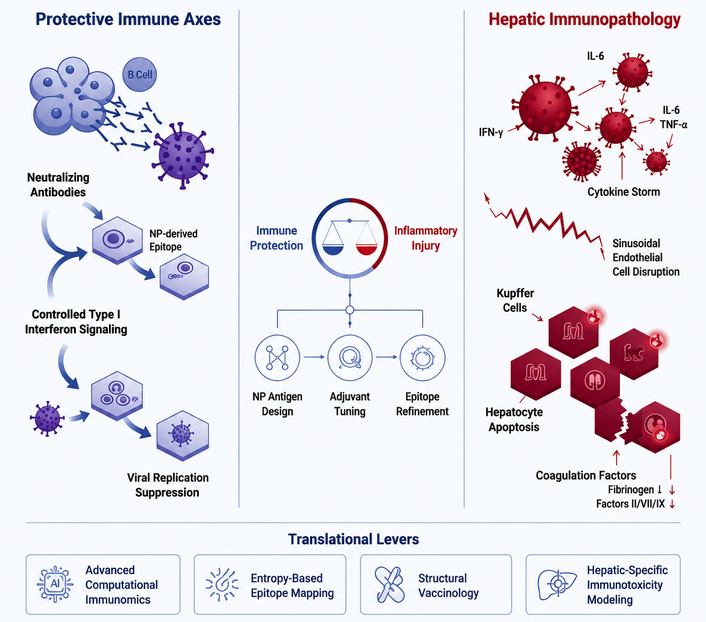
Integrated model of protective immunity versus hepatic immunopathology in CCHFV vaccination. This schematic summarizes the immunological and translational principles that should guide rational CCHFV vaccine design in the context of liver-associated disease. Protective immune axes include neutralizing antibody responses, controlled type I interferon signaling, nucleoprotein (NP)-derived T-cell epitopes, and suppression of viral replication. These responses may limit viral entry, systemic dissemination, antigen burden, and downstream inflammatory amplification. In contrast, excessive or poorly regulated immune activation may contribute to hepatic immunopathology through cytokine storm, Kupffer cell activation, sinusoidal endothelial cell disruption, hepatocyte apoptosis, and coagulation-factor abnormalities, including reduced fibrinogen and factors II, VII, and IX. The central balance represents the need to maximize antiviral protection while minimizing inflammatory injury. Translational levers such as advanced computational immunomics, entropy-based epitope mapping, structural vaccinology, and hepatic-specific immunotoxicity modeling may support the identification of conserved immunogenic targets, optimization of adjuvant selection, refinement of antigen design, and prediction of liver-associated inflammatory risk. Figure created by the authors.
This balance has important implications for antigen selection and platform optimization. Glycoprotein-based vaccine constructs are attractive for eliciting neutralizing antibodies, but their effectiveness may be influenced by antigenic variability, conformational epitope preservation, and cross-lineage breadth. NP-based strategies may offer complementary value by targeting relatively conserved internal epitopes capable of inducing T-cell-mediated immunity; however, the magnitude and inflammatory phenotype of these responses require careful evaluation. Vaccine platforms that promote endogenous antigen expression, such as viral-vectored or nucleic acid-based systems, may enhance cellular immunity but may also induce stronger innate immune activation depending on vector design, dose, and adjuvant context. Conversely, inactivated or recombinant protein vaccines may offer broader or more controlled antigen exposure but often require adjuvant tuning to achieve durable and functionally balanced immunity. Therefore, the success of CCHFV vaccine candidates should be judged by a composite immunological profile rather than by single readouts of immunogenicity [7].
The translational levers shown in Figure 4 provide a strategy for operationalizing this framework. Advanced computational immunomics can prioritize conserved, immunogenic, and population-relevant epitopes by integrating viral sequence diversity, predicted MHC binding, antigen processing, and immune-recognition features. Entropy-based epitope mapping can identify regions under strong functional constraint as well as hypervariable segments that may undermine cross-protective immunity. Structural vaccinology can place these epitopes within the spatial architecture of CCHFV proteins, helping to distinguish conformationally accessible antigenic surfaces from buried or structurally constrained domains. Finally, hepatic-specific immunotoxicity modeling may enable early assessment of whether candidate platforms or adjuvants induce cytokine signatures, endothelial activation, Kupffer cell hyperactivation, oxidative stress, or hepatocellular injury pathways relevant to severe CCHF. Collectively, these approaches support a systems-level strategy in which vaccine candidates are optimized not only for potency and breadth, but also for immunological precision and liver-associated safety.
Despite growing insights into the molecular virology of CCHFV, our understanding of how viral infection interfaces with hepatic immunobiology remains fragmented. The liver is not merely a passive target of viral replication but an active immunological organ whose responses shape systemic disease severity. Future research must therefore transcend descriptive pathology and move toward mechanistic, spatially resolved, and longitudinal frameworks capable of integrating viral genetics, host immunity, and hepatic tissue remodeling. A critical priority lies in resolving hepatic cell-type-specific susceptibility to CCHFV infection. While hepatocytes are widely implicated, accumulating evidence suggests that non-parenchymal cells—including Kupffer cells and liver sinusoidal endothelial cells—may function as amplifiers of inflammation rather than primary replication reservoirs. Single-cell and spatial transcriptomic technologies now enable simultaneous detection of viral RNA, innate immune activation, and inflammatory mediators within intact hepatic architecture. Applying these approaches to CCHFV infection would clarify whether liver pathology is driven predominantly by direct cytopathic effects or by spatially confined immune circuits that propagate systemic cytokine dysregulation [13].
Equally important is the integration of viral genomic diversity into models of hepatic pathogenicity. CCHFV exhibits extensive genetic heterogeneity, particularly within the S segment encoding the NP. Subtle alterations in NP structure may influence host sensing, interferon antagonism, and replication efficiency in hepatocytes. Linking viral genotypes with quantitative measures of liver injury—such as transaminase levels, coagulation factor depletion, and inflammatory biomarkers—could reveal strain-specific pathogenic signatures and explain inter-individual variability in clinical outcomes. Such genotype-phenotype coupling represents a largely untapped dimension of CCHFV research. Experimental modeling of hepatic immunopathology also demands substantial refinement. Traditional animal models incompletely capture human liver immunobiology, limiting their translational relevance. Human liver organoids, co-culture systems incorporating immune cells, and microphysiological liver-on-chip platforms offer unprecedented opportunities to interrogate virus-host interactions under controlled conditions. These systems could be used to dissect how viral proteins perturb hepatocyte metabolism, ER homeostasis, and innate immune signaling, while simultaneously evaluating immunemediated cytotoxicity in a human-relevant context [13].
Beyond acute disease, a major unresolved question concerns the durability of hepatic perturbations following CCHFV infection. Severe inflammatory insults are known to leave lasting molecular imprints on hepatic tissue, including epigenetic reprogramming and altered regenerative trajectories. Longitudinal studies of CCHFV survivors, particularly in endemic regions, are essential to determine whether transient infection results in persistent inflammatory states, fibrotic remodeling, or altered susceptibility to subsequent liver disease. Integrating longitudinal clinical data with multi-omics profiling may reveal whether CCHFV-induced hepatic injury represents a self-limited event or a contributor to long-term hepatic vulnerability [24].
Finally, future progress will depend on the convergence of virological surveillance and host-centric immunological profiling. Coupling real-time viral sequencing with host immune signatures and clinical metadata could enable predictive modeling of disease severity and hepatic involvement during outbreaks. Such integrative frameworks would not only enhance outbreak preparedness but also inform rational vaccine and therapeutic design, ensuring that antiviral immunity is achieved without exacerbating immune-mediated liver injury. Collectively, advancing the field will require a conceptual shift: from viewing CCHFV solely as an acute hemorrhagic pathogen to recognizing it as a virus capable of profoundly perturbing hepatic immune homeostasis. Addressing this paradigm will be central to understanding disease severity, improving translational interventions, and defining the long-term implications of CCHFV infection for liver health. Despite marked genetic diversity among CCHFV lineages, reliable quantitative correlations between viral genotype and hepatic injury severity or clinical outcome have not been established. Disease severity is probably shaped by host factors, viral dose, timing of diagnosis, supportive care, comorbidities, and regional surveillance differences. Accordingly, genotype-based predictions of liver injury or prognosis remain premature [31].
CCHFV presents a complex pathobiology, with hepatic involvement emerging as a critical determinant of disease severity and a potential driver of long-term sequelae. This review has underscored that the liver, far from being a bystander, is a dynamic immunological organ whose dysfunction profoundly impacts systemic hemostasis and immune regulation during CCHFV infection. Our synthesis highlights the intricate interplay between viral replication, particularly within hepatocytes, and the dysregulated innate immune responses orchestrated by resident hepatic immune cells, such as Kupffer cells and sinusoidal endothelial cells. This cellular crosstalk amplifies inflammatory circuits, leading to coagulopathy and contributing to the characteristic hepatic injury observed in severe cases.
Furthermore, we emphasize the potential, albeit hypothesisdriven, for CCHFV infection to instigate molecular changes within the liver that may predispose to chronic conditions, including hepatocarcinogenesis, via pathways involving sustained inflammation and cellular stress. While the direct oncogenic capacity of CCHFV remains speculative, the identified mechanisms of hepatic tissue remodeling warrant further investigation.
Moving forward, resolving these critical knowledge gaps necessitates a concerted push toward higher-resolution mechanistic studies. Advancements in single-cell genomics, spatial transcriptomics, and humanized experimental models will be pivotal in dissecting cell-type-specific tropism and immune signaling within the hepatic microenvironment. Integrating these granular insights with viral genomic surveillance and longitudinal host profiling will illuminate genotype-phenotype correlations and elucidate the long-term trajectory of liver health post-infection. Ultimately, a comprehensive understanding of CCHFV hepatic immunopathogenesis is indispensable for developing effective vaccines and therapeutics that can mitigate acute liver injury and prevent potential chronic sequelae, thereby improving patient outcomes in endemic regions.
CCHFV: Crimean-Congo hemorrhagic fever virus
DAMPs: damage-associated molecular patterns
ER: endoplasmic reticulum
HCC: hepatocellular carcinoma
IL-6: interleukin-6
NP: nucleoprotein
ROS: reactive oxygen species
TNF-α: tumor necrosis factor-α
UPR: unfolded protein responses
Meisam A: Conceptualization, Methodology, Validation, Formal analysis, Resources, Data curation, Supervision, Project administration, Writing—review & editing. Maryam A: Formal analysis, Investigation, Writing—original draft. AA: Writing—review & editing. MJ: Writing—review & editing. All authors read and approved the submitted version.
Meisam Akrami and Maryam Akrami are relatives. The authors declare that there are no conflicts of interest.
Not applicable.
Not applicable.
Not applicable.
Not applicable.
Not applicable.
© The Author(s) 2026.
Open Exploration maintains a neutral stance on jurisdictional claims in published institutional affiliations and maps. All opinions expressed in this article are the personal views of the author(s) and do not represent the stance of the editorial team or the publisher.
Copyright: © The Author(s) 2026. This is an Open Access article licensed under a Creative Commons Attribution 4.0 International License (https://creativecommons.org/licenses/by/4.0/), which permits unrestricted use, sharing, adaptation, distribution and reproduction in any medium or format, for any purpose, even commercially, as long as you give appropriate credit to the original author(s) and the source, provide a link to the Creative Commons license, and indicate if changes were made.



View: 498
Download: 24
Times Cited: 0


