 Review


Affiliation:
1Department of Medicine, University of Toledo, Toledo, OH 43614, USA
ORCID: https://orcid.org/0000-0002-5945-7000

 ,
,
Affiliation:
1Department of Medicine, University of Toledo, Toledo, OH 43614, USA
ORCID: https://orcid.org/0009-0004-2356-2900
,
Affiliation:
2Department of Medicine, Marshall University, Huntington, WV 25701, USA
ORCID: https://orcid.org/0009-0008-1821-0096
,
Affiliation:
3Gastroenterology Division, Department of Internal Medicine, Macon and Joan Brock Health Sciences, Eastern Virginia Medical School at Old Dominion University, Norfolk, VA 23507, USA
Email: dajevms@aol.com
ORCID: https://orcid.org/0000-0002-8737-0711

Explor Dig Dis. 2026;5:1005130 DOI: https://doi.org/10.37349/edd.2026.1005130
Received: April 26, 2026 Accepted: July 06, 2026 Published: August 12, 2026
Academic Editor: Jose C. Fernandez-Checa, Institute of Biomedical Research of Barcelona (IIBB), CSIC, Spain
Obesity is a rapidly growing global health concern. The pathogenesis is complex and cannot be fully explained by lifestyle factors alone. The increasing attention towards this concern has finally been directed towards environmental contributors which may influence metabolic regulation. Microplastics and nano-plastics (MNPs) are ubiquitous environmental pollutants that have recently been detected in food, drinking water, air, and human biological samples, raising concerns about their potential role in metabolic disorders, including obesity. Chronic exposure to MNPs may interfere with metabolic homeostasis through multiple biological pathways. Emerging evidence, including both experimental and animal studies, reports alterations in lipid metabolism, body weight, insulin sensitivity, and inflammatory responses following MNPs exposure. This review synthesizes current evidence linking MNPs to obesity, highlighting key exposure pathways, mechanistic insights, and gaps in existing research. Understanding the metabolic implications of MNPs exposure is essential for advancing obesity research and informing future public health strategies. Further well-designed human studies are needed to clarify causal relationships and guide preventive interventions.
Obesity is a major and rapidly escalating global public health challenge [1]. According to the World Health Organization, approximately one in eight people worldwide was living with obesity in 2022, with prevalence more than doubling in adults and nearly quadrupling in adolescents since 1990 [2]. An estimated 2.5 billion adults were overweight, including 890 million with obesity, while over 390 million children and adolescents aged 5–19 years were affected [2]. Although obesity has traditionally been attributed to excess caloric intake and sedentary lifestyles, these factors alone do not fully explain the sharp global increase observed in recent decades. This has prompted growing interest in environmental contributors that may influence metabolic regulation and energy homeostasis.
Plastic pollution has emerged as a pervasive environmental and public-health concern. Since 1950, more than 8,300 million metric tons of plastic have been produced, with widespread use driven by low cost, durability, and versatility [3]. Environmental degradation of plastics generates microplastics and nano-plastics (MNPs), which are now detected in food, water, air, and human biological samples. Microplastics (MPs) are generally defined as plastic particles ranging in size from 1 micrometer (µm) up to 5 millimeters (mm) in length [4]. Nano-plastics (NPs) refer to even smaller plastic particles with sizes typically below 1 µm (1,000 nm), with some definitions specifying particles approximately between 1 nm and 100 nm, or from 1 nm up to 1,000 nm [4]. Although MPs and NPs share overlapping environmental and metabolic effects, NPs may exhibit different biological behavior because of their smaller size, including greater cellular uptake, tissue penetration, and potential systemic distribution. MPs may also be classified as primary or secondary particles. Primary MPs are intentionally manufactured at microscopic sizes for industrial or commercial use, whereas secondary MPs result from the environmental degradation and fragmentation of larger plastic materials.
Human exposure to MNPs occurs primarily through ingestion, followed by inhalation and, to a much lesser extent, dermal contact. Dietary sources such as seafood, salt, and bottled water contribute substantially to intake, while indoor air and synthetic materials represent additional inhalation pathways (Figure 1) [5].
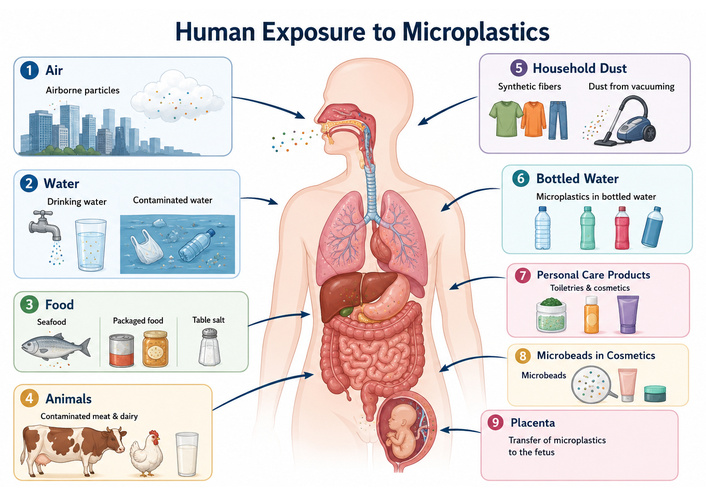
Major pathways of human exposure to microplastics and nano-plastics through ingestion, inhalation, and environmental contact. This figure was generated with the assistance of artificial intelligence (OpenAI DALL-E 3) and reviewed by the authors. No copyrighted materials were used in the creation of this figure.
Emerging evidence suggests that MNP exposure may begin before birth. MNPs have been detected in placental tissue, raising concern that these particles, or their associated chemicals, may cross the maternal-fetal interface and influence fetal development [6]. This pathway is important because prenatal and neonatal periods represent critical windows for metabolic programming. While human evidence directly linking placental MNP exposure to later obesity is still emerging, early-life exposure may plausibly contribute to long-term metabolic vulnerability and therefore warrants further investigation [6].
Several biological mechanisms have been proposed through which MNPs may influence metabolic health. Plastics contain or adsorb chemical additives, including bisphenols and phthalates, that act as endocrine-disrupting chemicals capable of interfering with hormonal pathways regulating adipogenesis, glucose metabolism, and appetite [7]. In addition, experimental studies show that MNP exposure can induce oxidative stress and low-grade inflammation, processes central to obesity and insulin resistance [8]. Emerging evidence also indicates that MNPs may alter gut microbiota composition and function, potentially affecting metabolic signaling, intestinal permeability, and inflammatory responses [9].
Despite these mechanistic insights, evidence directly linking MNP exposure to obesity prevalence or development in humans remains limited. The current data are largely derived from experimental and observational studies [10]. Methodological limitations, including variability in exposure assessment, particle characterization, and outcome measures, further complicate interpretation of the available evidence. This review aims to synthesize the current evidence on the potential relationship between MNP exposure and obesity. The aim of this manuscript is to provide an evidence-based review of the proposed mechanistic and potentially pathogenic adverse effects of MNPs with obesity, while highlighting key uncertainties and research gaps. For consistency, MNPs are used as an umbrella term where appropriate, although individual studies are described using MPs or NPs when that terminology more accurately reflects the original article. The literature included in this narrative review was identified through searches of PubMed, Scopus, and Web of Science databases up to April 2026 using combinations of terms including “microplastics,” “nanoplastics,” “obesity,” “metabolism,” “gut microbiome,” and “metabolic dysfunction.” Both experimental and human studies were reviewed where relevant to the topic. No formal meta-analysis was performed.
Although MNPs are inert, they are ubiquitous environmental contaminants [3]. Notably, emerging evidence suggests that they may interfere with biological systems and have clinical implications. The particles carry chemical additives and adsorbed pollutants that act as endocrine-disrupting chemicals capable of interacting with hormone receptors and altering metabolic pathways linked to glucose and lipid homeostasis [11]. Experimental studies indicate that microplastic exposure can induce oxidative stress and inflammatory responses [12]. These are fundamental processes implicated in the development of metabolic dysregulation and obesity. Systematic reviews indicate that exposure to MNPs can disrupt gut microbial composition, impair short-chain fatty acid production, and modulate immune pathways [13]. These effects are increasingly recognized as contributors to metabolic syndrome and chronic inflammation [13].
A study by Okamura et al. [14] examined how oral exposure to polystyrene MPs affects metabolic and intestinal health in mice, which were fed either a normal diet or a 4-week high‑fat diet. The study used carboxyl-modified fluorescent polystyrene particles measuring approximately 0.45–0.53 µm in diameter. In mice fed a high-fat diet, co-exposure to these MPs was associated with higher blood glucose levels, increased serum lipid concentrations, and higher non-alcoholic fatty liver disease (NAFLD) activity scores compared with a high-fat diet alone. The high‑fat plus MPs group also had increased intestinal permeability, reduced goblet cell numbers, greater inflammatory cell infiltration in the small intestine, and higher expression of genes related to inflammation and fatty acid transport. In addition, gut microbial composition was altered, with a greater relative abundance of the genus Desulfovibrio in the high-fat diet plus MPs group. In murine intestinal epithelial MODE-K cells, combined exposure to MPs and palmitic acid also reduced Muc2 gene expression. Overall, these findings suggest that oral exposure to polystyrene MPs may exacerbate diet-induced intestinal and metabolic disturbances, including glucose dysregulation and metabolic dysfunction-associated steatotic liver disease (MASLD), particularly under high-fat diet conditions.
In animal and cell studies, MNPs have been observed to promote inflammatory signaling, increase hepatic fat accumulation, and disturb glucose regulation [14]. This suggests potential mechanisms by which these particles may influence adiposity and insulin sensitivity [15] (Table 1).
Summary of recent experimental animal and cell studies linking MNPs to metabolic dysfunction and obesity.
| Year | Study | Model | Exposure | Main findings |
|---|---|---|---|---|
| 2022 | Zhao et al. “Polystyrene bead ingestion promotes adiposity and cardiometabolic disease in mice.” [16] | Mice | Polystyrene (PS) beads 0.5 and 5 µm in drinking water for 12 weeks | Accelerated weight gain, increased body fat, hyperglycemia, insulin resistance markers, gut microbiome changes consistent with obesity, and adipogenic gene-expression changes in perivascular adipose tissue. |
| 2022 | Shiu et al. “Dietary exposure to polystyrene nanoplastics impairs fasting-induced lipolysis in adipose tissue from high-fat diet fed mice.” [17] | High-fat diet (HFD) mice; adipocytes in vitro/ex vivo | 60 nm PS nanoplastics | Nanoplastics accumulated in white adipose tissue, reduced beta-adrenergic lipolysis, impaired fasting lipid mobilization, enlarged subcutaneous adipocytes, and increased liver lipid accumulation. |
| 2022 | Huang et al. “Polystyrene microplastic exposure induces insulin resistance in mice via dysbacteriosis and pro-inflammation.” [18] | Mice on normal chow and HFD | PS microplastics (MPs) | Induced insulin resistance and aggravated HFD-induced insulin resistance; associated with gut dysbiosis, inflammation, tissue accumulation, and impaired hepatic insulin signaling. |
| 2023 | Okamura et al. “Oral Exposure to Polystyrene Microplastics of Mice on a Normal or High-Fat Diet and Intestinal and Metabolic Outcomes.” [14] | Mice | Oral PS MPs | MPs with HFD induced metabolic disturbances, such as diabetes and non-alcoholic fatty liver disease (NAFLD). |
| 2023 | Huang et al. “Polystyrene microplastics trigger adiposity in mice by remodeling gut microbiota and boosting fatty acid synthesis.” [19] | Mice | PS MPs | Low/intermediate exposure caused overweight/adiposity, increased appetite, lower activity, altered cecal microbiota, and increased hepatic fatty-acid synthesis; high concentrations caused weight loss, showing non-monotonic effects. |
| 2023 | Du et al. “Combined effects of high-fat diet and polystyrene microplastic exposure on microplastic bioaccumulation and lipid metabolism in zebrafish.” [20] | Zebrafish | 50 µm PS MPs | HFD increased PS accumulation; PS exposure aggravated hepatic lipid accumulation and liver injury and disrupted lipid/energy metabolism genes. |
| 2024 | Zhang et al. “Polystyrene nanoplastics inhibit beige fat function and exacerbate metabolic disorder in high-fat diet-fed mice.” [21] | HFD mice + primary beige adipocytes | PS nanoplastics | Impaired beige adipocyte thermogenic function and worsened systemic metabolic performance in HFD mice. |
| 2024 | Zhai et al. “Long-Term Exposure to Polystyrene Microspheres and High-Fat Diet-Induced Obesity in Mice: Evaluating a Role for Microbiota Dysbiosis.” [22] | HFD mice | Long-term PS microspheres | Reported greater body weight, liver weight, adipose tissue, and serum lipids in HFD mice exposed to PS; evaluated microbiota dysbiosis as a mechanism. |
| 2024 | Zhao et al. “Obesogenic polystyrene microplastic exposures disrupt the gut-liver-adipose axis.” [9] | Mice | 0.5 and 5 µm PS beads in water for 13 weeks | Confirmed potentiated weight gain and adipose expansion; found adipose macrophage changes, altered bile acids, hepatic cholesterol, and nuclear receptor signaling. |
| 2024 | Moon et al. “Microplastic exposure linked to accelerated aging and impaired adipogenesis in fat cells.” [23] | Mice + Human adipose-derived stem cells (hASC) | Oral PS MPs in mice; in vitro hASC exposure | MPs accumulated in mouse white adipose tissue and induced adipose senescence/inflammation; in human adipose-derived cells, MPs impaired adipogenic differentiation. |
| 2024 | Xu et al. “Impact of Microplastic Exposure on Blood Glucose Levels and Gut Microbiota: Differential Effects under Normal or High-Fat Diet Conditions.” [24] | Mice, normal vs. HFD | PS MPs | MP exposure worsened blood-glucose disruption under HFD conditions and altered gut microbiota; less effect under normal diet. |
| 2025 | Kim et al. “Mixtures of polystyrene micro and nanoplastics affects fat and glucose metabolism in 3T3-L1 adipocytes and zebrafish larvae.” [25] | 3T3-L1 adipocytes + HFD zebrafish larvae | Mixed PS micro/nanoplastics | Increased adipogenesis/lipogenesis markers, reduced glucose uptake and insulin signaling in adipocytes; zebrafish showed increased body weight and blood glucose. |
| 2025 | Jhang et al. “Impact of polyethylene terephthalate and polylactic acid nanoplastics on cellular uptake and lipid metabolism in differentiated 3T3-L1 adipocytes.” [26] | 3T3-L1 adipocytes | PET and PLA nanoplastics | PET nanoplastics entered adipocytes and altered lipid handling via AMPK/HSL-mediated lipolysis; PLA did not show the same effect. |
| 2025 | Kou et al. “Polystyrene microplastics impair brown and beige adipocyte function via the gut microbiota-adipose tissue crosstalk in high-fat diet mice.” [27] | HFD mice | PS MPs | Reduced energy expenditure, increased lipid accumulation, impaired BAT/iWAT thermogenesis, worsened gut dysbiosis; microbiota transplantation reproduced lipid/thermogenic effects. |
| 2025 | Shen et al. “Exposure to Nanoplastics During Pregnancy Induces Brown Adipose Tissue Whitening in Male Offspring.” [28] | Pregnant mice and offspring | Gestational PS nanoplastics | Male offspring developed beige adipose tissue whitening, larger white adipocytes, increased lipogenesis, and inhibited lipophagy. |
| 2025 | Hsu et al. “Polystyrene nanoplastics disrupt the intestinal microenvironment by altering bacteria-host interactions through extracellular vesicle-delivered microRNAs.” [29] | Mice, enterocyte model | 100 nm PS nanoplastics orally for 12 weeks | Increased body-weight gain without significant liver weight change; showed intestinal barrier and microbiota mechanisms. |
| 2025 | Han et al. “Chronic Nanoplastic Exposure Promotes the Development and Progression of Metabolic Dysfunction-Associated Steatotic Liver Disease.” [30] | Animal liver/metabolic disease model | Nanoplastics | Chronic NP exposure promoted metabolic dysfunction-associated steatotic liver disease (MASLD) progression. |
| 2026 | Liebgott et al. “A Western-style diet shapes the gut and liver responses to low-dose, fit-for-purpose polystyrene nanoplastics in mice.” [31] | Mice, chow vs. Western diet | approximately 600 nm PS nanoplastics for 90 days | Low-dose PS-NPL exposure increased body-weight gain in a non-monotonic pattern, worsened glucose intolerance in Western-diet mice, and promoted hepatic lipid accumulation. |
Moreover, human-focused evidence has detected MPs and their metabolites in blood, placental tissue, and gastrointestinal samples, suggesting systemic exposure and possible impacts on endocrine and immune biomarkers in humans, although causal relationships with clinical metabolic outcomes remain under investigation [10].
Recent human studies have begun to explore associations between MNP exposure and metabolic indicators. Tu et al. [32] evaluated microplastic levels in human blood and fecal samples and used machine-learning approaches to identify potential factors associated with exposure. The study evaluated demographic, lifestyle, socioeconomic, dietary, environmental, and anthropometric factors as potential predictors of microplastic levels in blood and feces. However, these findings remain observational and should be interpreted cautiously, as they cannot establish causality or determine whether MNP exposure contributes directly to obesity or reflects differences in diet, environment, lifestyle, or other confounding factors.
Emerging research suggests that exposure to MNPs may contribute to metabolic disturbances, including insulin resistance, gut dysbiosis, inflammation, and altered lipid metabolism. However, direct evidence linking MNP exposure to clinically measurable obesity outcomes remains limited [10, 13]. MNPs are pervasive environmental contaminants. This presence raises concerns about chronic, low-dose exposure and downstream metabolic effects (Figure 2).
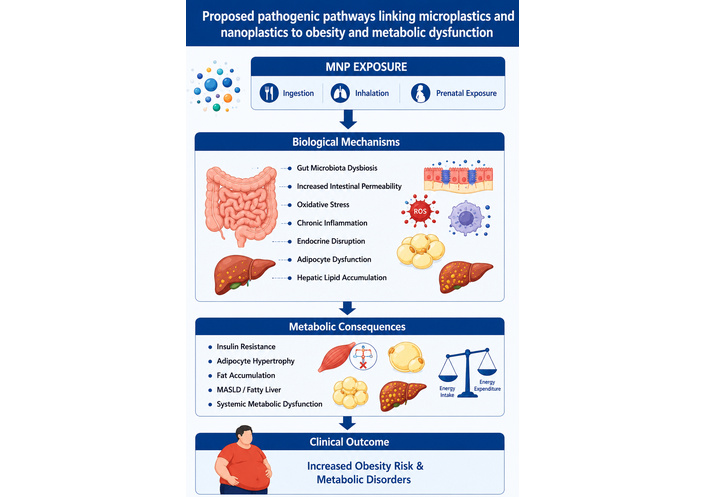
Proposed pathogenic pathways linking MPs and NPs to obesity and metabolic dysfunction. MNPs exposure through ingestion, inhalation, and early-life exposure may contribute to gut microbiota dysbiosis, intestinal barrier disruption, oxidative stress, chronic inflammation, endocrine disruption, adipocyte dysfunction, and hepatic lipid accumulation. These mechanisms may promote insulin resistance, fat accumulation, MASLD, and broader metabolic dysfunction, thereby increasing obesity risk. This figure was generated with the assistance of artificial intelligence (OpenAI DALL-E 3) and reviewed by the authors. No copyrighted materials were used in the creation of this figure. MASLD: metabolic dysfunction-associated steatotic liver disease; MNPs: microplastics and nano-plastics; MPs: microplastics; NPs: nano-plastics.
The current evidence is derived from experimental, animal, and mechanistic studies [3, 33]. However, many experimental studies use controlled exposure conditions and MNP concentrations that may exceed estimated real-world human exposure levels, which may limit direct translation of these findings to chronic human metabolic disease. Collectively, the evidence suggests biologically possible pathways through which MNP particles and associated chemicals may influence fat accumulation, obesity development, and related metabolic dysfunction.
One line of evidence linking MNPs with obesity comes from the impact on the gut microbiome, which is a key regulator of host metabolism, energy balance, and nutrient absorption [15]. A systematic review found that exposure to MNPs can disrupt the composition and diversity of the human gut microbiome, leading to alterations in microbial metabolic functions, changes in short-chain fatty acid production, and modulation of immune pathways [15]. This dysbiosis is characterized by a reduction in beneficial microbial species and an increase in those associated with inflammation, and it has been independently linked to obesity and metabolic syndrome in numerous human studies [15].
Although direct human studies of plastic-induced dysbiosis are limited, these mechanistic changes suggest a pathway through which MNPs exposure could contribute to metabolic dysfunction and increased fat deposition. Experimental animal research further supports this possibility. A study using mouse models, when compared to controls, demonstrated that chronic low-dose exposure to polystyrene MPs altered the gut microbiota and impaired metabolic homeostasis, including effects on energy extraction and glucose metabolism [24].
However, findings across studies remain inconsistent. For example, Xu et al. [24] reported no significant differences in body weight between control and polystyrene microplastic-exposed mice under either normal- or high-fat diet conditions, despite observed effects on glucose metabolism and gut microbiota. Therefore, current evidence more strongly supports MNP-associated metabolic perturbation than direct obesity causation.
These results mirror broader patterns seen in obesity research, where disruptions in the relative abundance of microbial species can promote increased energy harvest from the diet, which was associated with mechanistic adverse effects of low-grade chronic inflammation and perturbations in insulin signaling [15, 34]. Recognizably, these are all risk factors for obesity [18, 19]. Although these findings derive from controlled studies in animals, they provide important mechanistic evidence that MPs can, in fact, influence gut-microbiome-related metabolic processes, which are closely tied to body weight regulation.
Notably, MNPs are also potential carriers for a wide range of chemicals, including plastic additives and breakdown products [3]. These agents often act as metabolism-disrupting agents. Plastic-associated chemicals, such as bisphenol substitutes [e.g., bisphenol S (BPS)], phthalate analogs, and perfluorinated compounds, interact with multiple metabolic pathways [34, 35]. These metabolic pathways include those regulating adipocyte differentiation, insulin sensitivity, lipid metabolism, and energy homeostasis [34, 35]. Importantly, many experimental studies are unable to fully distinguish the biological effects of the plastic particles themselves from those of associated chemical additives or adsorbed contaminants, including phthalates and bisphenols, which may independently contribute to metabolic dysfunction.
Inflammation and oxidative stress, which are key contributors to obesity and metabolic syndrome, have also been connected to microplastic exposure. A review of the related health effects reports that MNPs’ component polymers may induce oxidative stress, weaken antioxidant defenses, and activate pro-inflammatory pathways by increasing reactive oxygen species and lipid peroxidation in exposed tissues [36]. Chronic inflammation, in turn, can impair insulin signaling pathways and lead to adipocyte hypertrophy and macrophage infiltration into adipose tissue [36, 37].
Some experimental studies have begun to link MNPs exposure more directly to markers of metabolic dysfunction. Rodent models have shown that exposure to low doses of polystyrene MPs increases susceptibility to diet-induced metabolic dysfunction and liver disease [38]. These comorbid conditions are often correlated with obesity and insulin resistance [18, 19, 38]. Although the primary outcome in these reports was not obesity, the findings highlight how MNPs exposure can potentially worsen metabolic outcomes.
Mechanistic reviews of the impact of MNPs suggest a potential causal association with endocrine disruption. MNPs and related polymer/chemicals can interact with the endocrine systems, altering hormone production, signaling pathways, and metabolic regulation [36, 39]. These processes are fundamental to nutrient partitioning, appetite control, and energy balance [36, 39]. Endocrine disruption has been recognized as a contributing factor to obesity through its effects on adipogenesis and metabolic hormone regulation [39–41]. Although studies focused specifically on microplastic-induced endocrine disruption in humans are limited, the broader literature on plastic-associated endocrine disruptors (e.g., bisphenols and phthalates) consistently links these chemicals to obesity biomarkers and adiposity measures, particularly with early-life exposure [36, 39–42].
A study by Moon et al. [23] investigated the MNP effect on adipose tissue and adipocyte differentiation using a murine model. Following two weeks of daily oral exposure to fluorescent polystyrene MPs approximately 1.7–2.2 µm in size, these particles accumulated in the white fat tissues. This accumulation triggered signs of cellular aging, evidenced by increased activity of senescence markers (such as SA-β-galactosidase) and elevated expression of proteins associated with aging and DNA damage. At the same time, inflammatory markers including nuclear factor kappa-light-chain-enhancer of activated B cells (NF-κB), interleukin-6 (IL-6), tumor necrosis factor alpha (TNF-α), and cluster of differentiation 68 (CD68) were higher in exposed tissues [23]. These findings suggest that MPs exposure may further promote inflammatory responses within adipose tissue. Similar effects were observed in human adipose-derived stem cells, where MPs were taken up by cells and increased both aging and inflammation signals. Importantly, these particles disrupted the ability of stem cells to differentiate into mature fat cells, as shown by reduced lipid droplet formation and lower levels of key adipogenic markers: peroxisome proliferator-activated receptor gamma (PPARγ), CCAAT/enhancer-binding protein alpha (C/EBPα), and Adiponectin during differentiation. Overall, the findings suggest that environmental MNPs can accelerate aging processes in fat cells, promote inflammation, and impair normal fat cell development. These outcomes raise concerns about long-term metabolic and health effects from widespread plastic exposure.
The evidence at present, however, is not sufficient to definitively link MNPs to obesity. This may be related to challenges in quantifying individual exposure and isolating MNP effects from other confounding lifestyle and genetic factors [10, 13]. Human toxicological and epidemiological studies are still in early stages, with available evidence often limited to surrogate endpoints or mechanistic biomarkers rather than clinical outcome data [10, 13]. These limitations reflect both the novelty of the research field and the technical challenges inherent in microplastic detection and exposure assessment. Although direct, large-scale human evidence linking MNPs exposure to obesity is not yet available, the convergence of mechanistic, animal, and microbiome evidence forms a compelling, biologically plausible framework.
Disruptions in the gut microbiota, propagation of inflammation and oxidative stress, interaction with metabolism-disrupting chemicals, and synergistic effects with dietary factors all point towards an association with pathways by which MNPs could increase obesity risk [3, 15, 36]. Further well-designed human studies are critically needed to clarify these relationships and quantify the true public health impact of MNPs exposure on obesity.
MNPs have become widespread environmental contaminants with potential impacts across biological systems. Emerging research suggests that MNPs may also be an underrecognized pathogenic contributor to obesity and metabolic dysfunction. These tiny particles can reach the gastrointestinal tract, where they interact with gut microbiota, disrupt microbial balance, and induce low-grade inflammation [9, 15]. These adverse effects may contribute to weight gain, insulin resistance, and altered lipid metabolism. Chronic exposure to MNPs may therefore subtly influence energy homeostasis, creating a hidden metabolic burden that compounds traditional risk factors such as diet, physical inactivity, and genetic predisposition.
Given the potential impact of MNPs on metabolic health, minimizing exposure has become a critical component of obesity prevention strategies (Figure 3). Although several exposure-reduction strategies appear biologically and environmentally reasonable, direct evidence demonstrating that these interventions reduce obesity risk or metabolic disease outcomes in humans remains limited. This challenge cannot be addressed through a single measure. It requires a coordinated, multi-pronged approach to protect populations from a largely invisible but increasingly significant contributor to obesity.
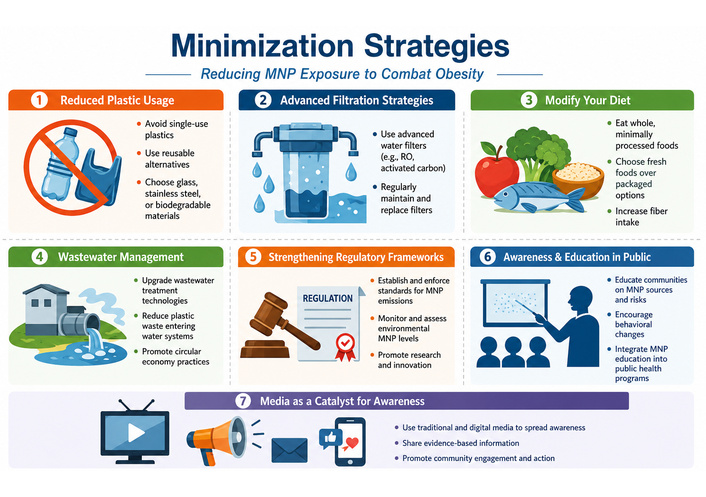
Minimization strategies to reduce MNP. This figure was generated with the assistance of artificial intelligence (OpenAI DALL-E 3) and reviewed by the authors. No copyrighted materials were used in the creation of this figure.
In recent decades, global plastic production has increased substantially. Annual emissions of MPs to the environment are estimated at 10–40 million tonnes and may double by 2040 under business-as-usual scenarios [43]. Once released, MPs can enter food and water pathways and reach the human gastrointestinal tract, where their potential health effects remain under investigation [44].
One of the most impactful policy actions to date has been the European Union’s Single-Use Plastics Directive (EU 2019/904), which came into force on 3 July 2021 [45]. This legislation prohibits the placing on the market of specified single-use plastic products and products made from oxo-degradable plastic [45]. These materials can fragment into MNPs rather than fully biodegrading in the environment. Member States must also pursue measurable reductions in the consumption of other plastic items, promote reusable alternatives, and meet waste-collection and recycling targets for plastic bottles and containers. In the United States, plastic-use policies comprise federal, state, and local measures addressing plastic products and MPs [46].
Policy‑driven reductions in single‑use plastics and materials that readily fragment into MNPs directly lower the pool of precursors capable of entering food, water, and air. Beyond regulatory bans, encouraging the adoption of biodegradable or reusable packaging, promoting producer responsibility schemes, and incentivizing material innovation, such as plant‑based or compostable alternatives, are key strategies to break the cycle of plastic waste generation. Together, these actions reduce the likelihood that plastics will degrade into MNPs that enter the human gastrointestinal system [47].
Conventional treatment systems do not consistently achieve complete MNP removal, and reported efficiencies vary according to the treatment process, particle size and morphology, and analytical method [48, 49]. Installing point-of-use filtration systems, such as ultrafiltration membranes or activated carbon filters, may help reduce MNP exposure through drinking water, although removal efficiency varies by filter type, particle size, and water conditions [50].
Among filtration technologies, reverse osmosis and activated carbon systems are promising approaches for reducing MP, and in some cases NP, concentrations in drinking water, although effectiveness varies by particle size and system design [51]. Incorporating these systems into both residential and municipal infrastructures could substantially decrease human exposure to obesogenic MNPs.
Opting for filtered tap water instead of bottled water can lower annual MNP consumption from approximately 90,000 particles to just 4,000 [52]. In areas with hard water, boiling followed by filtration has been reported to reduce certain MNP concentrations in drinking water, although effectiveness may vary depending on particle size, polymer type, and water composition [53].
Indoor environments also contribute to MNP exposure, which may indirectly influence obesity through chronic inflammation [13, 34]. However, evidence regarding specific household strategies to reduce airborne microplastic exposure remains limited. At a broader level, filtration and environmental-control technologies may help reduce overall human exposure. Their cost, infrastructure requirements, and scalability may, however, limit widespread implementation, particularly in low-resource settings.
Dietary modifications may help reduce exposure to MNPs and support gut defenses against their potential effects. Emphasizing fresh, minimally processed foods and reducing food contact with plastics during storage and heating may help limit unnecessary dietary exposure. Reducing the use of single-use plastic beverage containers may represent a practical strategy to help limit unnecessary MNP exposure. Increasing dietary fiber through fruits, vegetables, legumes, and whole grains may also support gut motility and microbiome health (Figure 4). In addition, agricultural and food-production practices may influence the extent of MNP contamination in edible plants, although evidence quantifying these differences remains limited. Strategies that support gut barrier integrity and reduce oxidative stress, including diets rich in fiber and antioxidant-containing foods, may further promote microbiome resilience and gastrointestinal health [54–57].
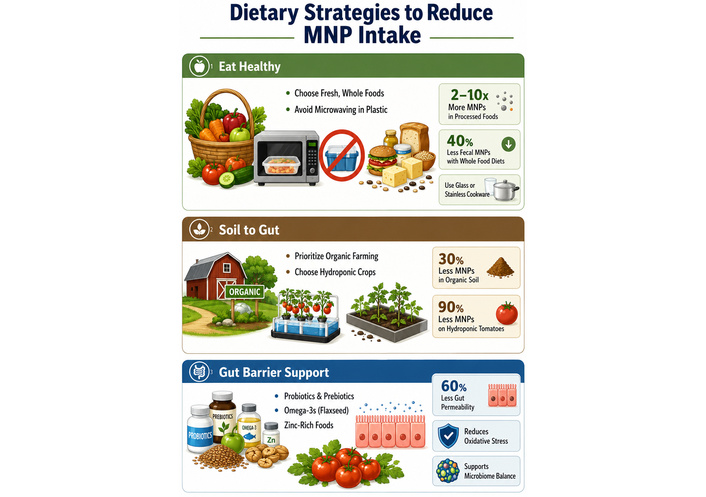
Dietary practices that may reduce exposure to MNPs. This figure was generated with the assistance of artificial intelligence (OpenAI DALL-E 3) and reviewed by the authors. No copyrighted materials were used in the creation of this figure.
Advanced wastewater management plays a vital role in intercepting MPs before they enter rivers, oceans, and, ultimately, human food chains [48, 49]. Traditional wastewater treatment plants are not specifically designed to remove MNPs, but studies show that adding tertiary treatment processes can significantly improve removal efficiency. Plants with tertiary treatment stages have been reported to achieve MNP removal rates of up to approximately 94%, compared with around 88% for systems relying only on primary and secondary treatment [48]. Among the most extensively studied technologies are membrane bioreactors (MBRs) and rapid sand filtration (RSF), both of which have shown substantial capacity to reduce MNPs in effluent [48, 49]. In particular, MBR systems generally outperform conventional treatment processes because fine membranes effectively retain many particulate MNPs, while RSF also contributes meaningfully to removal [48]. Beyond these established methods, emerging green technologies, including nanocellulose- and biopolymer-based materials, show promise, with reported removal efficiencies of up to approximately 98% under experimental conditions [58]. Integrating these advanced methods into existing treatment infrastructure could reduce MNP discharge into natural waters and limit environmental accumulation [48, 49, 58]. However, direct evidence that treatment-related reductions in MNP exposure prevent obesity or other metabolic outcomes remains unavailable.
In our opinion, MNP contamination requires stronger regulatory control at the industrial source. One major obstacle is the absence of a universally standardized definition of MNPs, which has resulted in fragmented global policies. Multiple definitions of MNPs remain in use across institutions and jurisdictions [59].
Within the European Union, nanomaterials are regulated under frameworks like Regulation (EU) 2019/904 and related REACH provisions, which define nanomaterials largely based on particle size (< 100 nm). On the other hand, the U.S. Food and Drug Administration (FDA) evaluates materials primarily according to intended use and safety assessment rather than particle size alone.
Greater international alignment, particularly through the Organisation for Economic Co-operation and Development (OECD) Working Party on Manufactured Nanomaterials (WPMN) Guidance, could improve regulatory consistency and cross-border compliance.
Targeted bans illustrate how policy can reduce the environmental burden of MNPs. The U.S. Microbead-Free Waters Act of 2015 prohibited plastic microbeads in rinse-off cosmetics, significantly lowering primary MPs discharge into waterways [60]. Similarly, the (EU) 2019/904 restricts certain plastic products to reduce environmental fragmentation into secondary MPs [45]. In the food sector, safety reassessment has also prompted regulatory change.
In 2021, the European Food Safety Authority (EFSA) concluded that titanium dioxide (E171) could no longer be considered safe as a food additive, leading to its ban across EU member states [61]. Expanding such precautionary regulatory measures globally may help reduce cumulative MNP exposure and its potential metabolic consequences, including obesity [33, 47, 62]. Addressing MNP exposure will likely require coordinated efforts between governments, regulatory agencies, industry, researchers, and public health systems. Despite growing concern regarding MNP exposure, standardized regulatory limits for MNPs in drinking water and food products remain limited in many regions, including the absence of specific U.S. EPA drinking water standards as of 2026.
Awareness regarding MNP exposure is critical. It is often overlooked as a tool in reducing exposure to MNPs. Many people, even currently, remain unaware that everyday habits, such as frequent consumption of heavily packaged foods, drinking bottled water, or heating meals in plastic containers, can increase cumulative MNPs intake.
Along with the emerging programmatic discussions regarding “healthy diet” and obesity mitigation strategies, raising awareness on MNPs exposure and risks may be synergistic. Increasing awareness through schools, healthcare settings, and community campaigns can empower individuals to make practical changes, like choosing whole foods, using reusable alternatives, and improving indoor air quality.
Clear, evidence-based awareness campaigns and education are essential to avoid fear-based misinformation on MNPs, while highlighting the link between environmental exposures, gut health, inflammation, and metabolic risk. By translating complex science into actionable guidance, public education can shift behaviors at the household level and contribute meaningfully to long-term obesity prevention efforts.
Future research examining MNPs as potential contributors to obesity must urgently shift from isolated laboratory findings toward integrated, real‑world human studies. To date, investigations in cell cultures and animals suggest that MNPs and the chemicals they carry can influence energy balance, fat cell growth, immune responses, and metabolic disturbance, potentially linking plastic exposure with obesity risk, but these early results are far from definitive and require further evaluation.
For example, plastic particles under 10 µm can infiltrate cells and may trigger oxidative stress and disruption in fatty acid metabolism, hinting at mechanisms that could encourage fat accumulation and weight gain in exposed organisms [3]. However, the doses, exposure routes, and biological relevance of such findings require grounding in real‑world human exposure data. It is a gap that has left regulators and scientists without clear exposure-response relationships or safe limits. In addition, publication bias toward positive findings may influence the current literature, while studies reporting negative or null results may be underrepresented. Additionally, reverse causality should be considered in human observational studies, as obesity itself may influence MNP absorption, distribution, retention, or gastrointestinal handling.
Therefore, one crucial direction is establishing rigorous and detailed metabolic profiling to determine the threshold amounts and identifying other patient-specific factors as well as associated demographics to better identify causality links to increases in body mass index, insulin resistance, or dyslipidemia. Additionally, research must prioritize the development of highly sensitive and contamination‑controlled analytical methods capable of identifying and quantifying MNPs within human tissues and biological fluids.
Current challenges in detection have led to debates about whether certain reported findings, such as the presence of MNPs in organs like the brain, might be artifacts of poor controls and methodological limitations, highlighting the need for robust methodologies before biological effects can be reliably interpreted. Another important limitation is that many studies do not fully characterize MNP properties such as particle shape, surface characteristics, or chemical composition, which may influence biological effects and toxicity.
Importantly, current methods for detecting and quantifying MNPs in human tissues remain technically challenging and may be vulnerable to contamination and false-positive results. Thermal methods such as pyrolysis-gas chromatography-mass spectrometry (Py-GC-MS) require caution, as tissue-derived compounds may produce signals overlapping with certain polymers. Therefore, studies reporting systemic MNP distribution should be interpreted cautiously, particularly when contamination controls and validation methods are not clearly described [63].
Moreover, coupled with exposure assessment, mechanistic work in both in vitro and in vivo models should be designed to mimic real human exposure more closely, including the effects of chronic low‑dose ingestion typical of daily life, rather than relying solely on high, artificial doses. These studies should dissect whether effects stem from the physical particles themselves, the chemical additives and adsorbed pollutants they carry, or a combination of both, since many plastic additives such as phthalates and bisphenols are known metabolism disruptors independent of the plastic matrix [33].
Another area of investigation is the evaluation of MNPs’ interaction with the gut microbiome, a critical regulator of metabolism and obesity. Systematic reviews indicate that MNP exposure can lead to microbial dysbiosis, impaired short‑chain fatty acid production, and immune pathway modulation, all of which are proven to cause metabolic syndrome and chronic inflammation. Future research must integrate approaches to determine whether specific microbial shifts precede metabolic disruption and obesity phenotypes, and if interventions that restore microbiome balance might mitigate these effects. This work could also explore whether certain dietary patterns or microbiota compositions confer resilience against MNP-induced metabolic dysregulation. Additionally, specific interventions directed towards MNP-associated dysbiosis, which may be more specifically associated with obesity, are a mitigation strategy that needs to be evaluated.
Furthermore, understanding NPs specifically is essential because their smaller size may allow different biodistribution, cellular uptake, and potentially novel biological effects compared with MPs. There are extremely limited, almost none, studies that examine how these particles interact with intestinal barriers and systemic tissues under realistic exposure scenarios, and whether they alter insulin signaling, adipogenesis, or energy homeostasis in ways relevant to human obesity. These studies would benefit from using advanced imaging and tracing techniques to observe particle translocation and localization in tissues without contamination.
Interdisciplinary collaborations should aim to translate scientific insights into public health policy and prevention strategies. This includes modelling population‑level impacts of MNPs exposure on obesity trends, identifying effective exposure reduction measures, and evaluating whether modifying plastic use, waste management, and food packaging can yield measurable health benefits. Additionally, a shift toward standardized methodologies, human‑relevant exposure assessments, microbiome integration, and mechanistic clarity will be crucial for turning suggestive early findings into clear answers about whether MNPs contribute to the global obesity burden.
Obesity is a multifactorial condition that is fundamentally associated with causal associations with diet, genetics, and physical inactivity. Clearly, however, there is increasing identification of environmental influences which may have a pathogenic role. Among these, MNPs have emerged as contaminants of growing concern. Their pervasive presence in the human food cycle ensures continuous, low-level human exposure. Although research in this field and correlating it with obesity remains relatively new, accumulating experimental and mechanistic evidence suggests that MNPs may interact with biological systems in ways that are relevant to metabolic health. Although MNPs cannot yet be identified as a definitive cause of obesity, the evidence supports their consideration as potential metabolic stressors. Addressing this emerging risk factor may prove essential in understanding and directing the best mitigation strategies for the global obesity epidemic.
Clinicians may also consider discussing practical strategies to reduce unnecessary plastic exposure, such as limiting the use of single-use plastic food containers and minimizing heating of food in plastic materials. In parallel, broader regulatory and public health efforts aimed at reducing environmental plastic contamination may help limit long-term population exposure to MNPs. Future research may also explore whether MNP detection in biological samples such as stool or adipose tissue could serve as a potential marker of exposure or metabolic risk.
BPS: bisphenol S
C/EBPα: CCAAT/enhancer-binding protein alpha
CD68: cluster of differentiation 68
EFSA: European Food Safety Authority
IL-6: interleukin-6
MASLD: metabolic dysfunction-associated steatotic liver disease
MBRs: membrane bioreactors
MNPs: microplastics and nano-plastics
MPs: microplastics
NAFLD: non-alcoholic fatty liver disease
NF-κB: nuclear factor kappa-light-chain-enhancer of activated B cells
NPs: nano-plastics
OECD: Organisation for Economic Co-operation and Development
PPARγ: peroxisome proliferator-activated receptor gamma
RSF: rapid sand filtration
TNF-α: tumor necrosis factor alpha
During the preparation of this work, the authors used ChatGPT (OpenAI) to assist in generating schematic figures and visual illustrations included in the manuscript. After using the tool, the authors reviewed and edited the content as needed and take full responsibility for the content of the publication.
MA: Investigation, Writing—original draft, Writing—review & editing. SR: Conceptualization, Investigation, Writing—original draft, Writing—review & editing. AMZ: Writing—review & editing. DAJ: Conceptualization, Validation, Writing—review & editing, Supervision. All authors read and approved the submitted version.
The authors declare that they have no conflicts of interest.
Not applicable.
Not applicable.
Not applicable.
Not applicable.
Not applicable.
© The Author(s) 2026.
Open Exploration maintains a neutral stance on jurisdictional claims in published institutional affiliations and maps. All opinions expressed in this article are the personal views of the author(s) and do not represent the stance of the editorial team or the publisher.
Copyright: © The Author(s) 2026. This is an Open Access article licensed under a Creative Commons Attribution 4.0 International License (https://creativecommons.org/licenses/by/4.0/), which permits unrestricted use, sharing, adaptation, distribution and reproduction in any medium or format, for any purpose, even commercially, as long as you give appropriate credit to the original author(s) and the source, provide a link to the Creative Commons license, and indicate if changes were made.



View: 1306
Download: 30
Times Cited: 0


