 Systematic Review


Affiliation:
Nutrition and Food Sciences, Texas Woman’s University, Denton, TX 76204, USA
ORCID: https://orcid.org/0009-0009-6223-7824

 ,
,
Affiliation:
Nutrition and Food Sciences, Texas Woman’s University, Denton, TX 76204, USA
ORCID: https://orcid.org/0009-0007-0637-7895
,
Affiliation:
Nutrition and Food Sciences, Texas Woman’s University, Denton, TX 76204, USA
Email: sjuma@twu.edu
ORCID: https://orcid.org/0000-0003-4123-704X

Explor Musculoskeletal Dis. 2026;4:1007138 DOI: https://doi.org/10.37349/emd.2026.1007138
Received: May 24, 2026 Accepted: September 20, 2026 Published: October 15, 2026
Academic Editor: Fuqiang Gao, China-Japan Friendship Hospital, China
Background: Age-related functional decline, frailty, sarcopenia, and disability contribute to loss of independence and financial burden in aging populations. Nuts contain bioactive compounds, including polyphenols, antioxidants, vitamins, minerals, and unsaturated fatty acids that may support musculoskeletal health. This systematic review evaluated the association between nut consumption and musculoskeletal outcomes, including muscle recovery, strength, bone health, frailty, and functional limitations in adults.
Methods: This systematic review was conducted in accordance with PRISMA guidelines and included randomized controlled trials and observational studies. Electronic databases included PubMed, ScienceDirect, Web of Science, Scopus, and Google Scholar, and were searched from inception through January 2026. Eligible studies included those with nut intake, participants aged ≥ 18 years, and reported musculoskeletal outcomes related to muscle function, bone health, frailty, sarcopenia, or disability related measures. Risk of bias was assessed using the Cochrane RoB 2.0 tool for randomized trials and the Newcastle-Ottawa Scale for observational studies.
Results: Seventeen studies met the inclusion criteria, including 9 randomized controlled trials, 1 non-randomized controlled trial, and seven observational studies. Sample sizes ranged from 14 to 71,704 participants. Exercise recovery trials suggested modest benefits of almonds and pistachios on muscle soreness and recovery biomarkers, while walnut supplementation demonstrated improvements in cognition, sleep quality, and balance in older adults. Bone findings were mixed, with walnut consumption showing neutral effects on bone mineral density, while almond studies demonstrated reduced osteoclast activity in mechanistic models. Observational studies consistently linked higher nut intake with lower frailty risk, functional limitations, and sarcopenia incidence in older adults.
Discussion: The findings suggest that regular nut consumption may support musculoskeletal health, particularly muscle recovery and preservation of functional capacity. Heterogeneity across study designs, nut type, intervention duration, and reliance on observational data limits causal inference. Larger, long-term randomized controlled trials are needed to clarify dose-response relationships and clinically meaningful musculoskeletal outcomes. This trial was registered at the Open Science Framework (OSF) as https://doi.org/10.17605/OSF.IO/XNE3Y.
Unlike prevalent health conditions with standard treatment plans, musculoskeletal health and related disorders are often left unaddressed until functional independence is challenged. The integrated function of skeletal muscle, bone, joints, tendons, and ligaments is critical for mobility, independence in activities of daily living, and overall quality of life. Declines in bone mineral density (BMD), along with age-related reductions in muscle mass and strength, clinically defined as sarcopenia, contribute to frailty and disability in older adults. These functional limitations, or declines in musculoskeletal health, create a substantial healthcare burden in older adults [1]. Nutritional strategies that support bone and muscle health may help palliate these changes. Nut consumption is among potential dietary approaches that have gained interest due to nuts’ nutrient density and bioactive compounds beneficial to musculoskeletal health.
Nuts such as pistachios, almonds, and pecans are highest in phytosterols, which may provide cholesterol-lowering and anti-inflammatory effects [2]. Brazil nuts are rich in selenium and phenols, and are a good source of healthy fats, calcium, and magnesium. These compounds work to reduce free radicals responsible for oxidative stress, inflammation, and low-density lipoprotein, and support bone health [3]. As the only tree nut considered an excellent source of the plant-based omega-3 essential fatty acid alpha-linolenic acid (ALA), walnuts are highly recognized for reducing inflammation, supporting cardiovascular and brain health, and for their versatility and nutrient-dense composition [4–6]. Griel et al. [7] found that a diet high in ALA, provided by walnuts and flaxseed oil, significantly reduced bone turnover in middle-aged adults. Another study found that higher total omega-3 levels and ALA levels in red blood cells may be useful predictors for lower hip fracture risk in postmenopausal women [8]. Walnuts, along with almonds, are also rich in potassium, magnesium, and polyphenols. These compounds may help to repair muscles and reduce inflammation after exercise [9, 10]. Potassium plays an important role in maintaining electrolyte balance, muscle membrane excitability, and normal muscle function during and after exercise. Changes in the distribution of potassium ions during intense exercise may contribute to muscular fatigue by altering muscle membrane excitability [9, 11]. Magnesium is needed for energy metabolism and plays a crucial role in muscle relaxation and contraction, while polyphenols help to alleviate post-exercise muscle damage by providing anti-inflammatory and antioxidant benefits [9, 10]. Peanuts have bioactive compounds that promote longevity. A good source of phenolic acids, flavonoids, phytosterols, and coenzyme Q10, peanuts also contain all 20 amino acids, with high amounts of arginine [12]. L-arginine is necessary to keep joints and muscles healthy. L-arginine serves as a precursor for nitric oxide synthesis, which contributes to vasodilation and the regulation of blood flow and may influence skeletal muscle function during exercise [12]. These bioactive compounds, along with the nutrient-dense profile found in nuts, provide a unique nutritional strategy for musculoskeletal health. This makes nuts an ideal component of the everyday diet, not only for the general population or older adults but for athletes seeking nutritional interventions for improved muscle recovery.
Epidemiologic study designs across diverse populations consistently associate higher nut intake with improved functional status, reduced disability risk, and lower prevalence of sarcopenia and frailty [13–16]. Evidence from randomized controlled trials (RCTs) has higher variability. While some studies have found a positive impact of nut consumption on BMD, muscle recovery, and endurance, other studies report mixed effects with varying individual responses [17–20]. The latter suggests that outcomes are heavily influenced by nut type, dosage, study duration, population characteristics, and concurrent interventions.
With increasing longevity of the global population comes a growing burden of sarcopenia, frailty, age-related functional decline, and dependency. With growing interest in food-based strategies to support musculoskeletal health in both athletes and the general population, a thorough review of the existing evidence is warranted. To elucidate the strength of existing evidence and identify priorities for future research, this systematic review critically examines observational and interventional studies on nut consumption and musculoskeletal outcomes, including muscle strength, sarcopenia, frailty, bone metabolism, physical function, and exercise recovery.
This study was conducted in accordance with the Preferred Reporting Items for Systematic Reviews and Meta-Analyses (PRISMA) [21]. The review protocol was registered in the Open Science Framework (OSF) database. Studies were included on the basis of the following inclusion criteria: (1) human adult population (≥ 18 years of age or older), (2) RCTs and observational studies, (3) intervention with any type of nut consumption, with ≥ 2 weeks of intervention for clinical trials, and (4) musculoskeletal outcome. Studies were excluded if they were not written or available in English, full text, or published in a peer-reviewed journal. Studies with interventions that consisted of individual nutrients (e.g., magnesium, vitamin E, omega-3 fatty acids), nut oil, or food patterns only (without nut focus), or included participants with chronic disease were also excluded.
The search strategy was based on the Patient, Exposure, Comparison, Outcome (PECO) framework [P = healthy people; E = (behavioral) nutrition; C = comparison with control non-nut consumers, free of musculoskeletal symptoms; O = chronic musculoskeletal symptoms]. Electronic databases, including PubMed, ScienceDirect, Web of Science, Scopus, and Google Scholar, were searched from inception to January 31, 2026. To find studies of interest, two groups of keywords were combined: “Nuts (exposure)” and “Musculoskeletal (outcome).” Examples of groups of keywords used in the search strategy are detailed in Table S1. Combinations of search terms were tailored to each database to meet their specific search requirements.
Two reviewers (LA and RS) independently confirmed the title and abstract of eligible studies identified according to inclusion and exclusion criteria. Articles that did not meet the outlined criteria or were duplicates were removed. Discrepancies regarding study eligibility were resolved by the third reviewer (SJ). Subsequently, all three authors then reviewed and discussed the eligible studies to confirm relevance and the final selection of full-text articles, with any disagreements resolved through team consensus.
Data were extracted from each study by each reviewer independently (LA and RS) using a predefined categorization system (Table S2), and a data extraction table was created. Discrepancies regarding data extraction were resolved by the third reviewer (SJ). One reviewer (LA) then assessed the table for accuracy and final completion. The data extraction table included study characteristics such as authors, publication year, country, study design and duration, participant data (n, sex, age, cohort description), type of intervention and control, outcome measures and key findings, odds ratio, or confounders.
Validated appraisal tools, appropriate to study design, were used to independently assess the methodological quality and risk of bias of included studies by each reviewer. For RCTs, risk of bias was evaluated using the Cochrane Collaboration Risk of Bias tool (RoB 2.0) [22]. This tool evaluates risk of bias across key areas like randomization, allocation, blinding, attrition, reporting, and any other potential sources of bias. Each key area is rated as low, unclear, or high risk of bias. Based on the ratings, an overall score of poor, fair, or good is assigned to the study. If all key areas receive low risk of bias ratings, the overall score is good. If one or two unclear risks of bias are present, the study receives a score of fair. When three or more unclear risks of bias or 1 high risk of bias rating are present, the study receives a score of poor. For non-randomized trials, the Risk of Bias in Non-randomized Studies of Interventions (ROBINS-I) was utilized to evaluate risk of bias. This tool evaluates a study across seven domains and assigns an assessment of low, moderate, serious, or critical risk of bias [23]. If all domains are judged low, the overall risk of bias is low. If there is a mixture of low and moderate, the overall judgement is moderate risk. If at least one domain receives a judgement of serious, but none of critical, the overall judgment for risk of bias is serious. If one category receives a judgement of critical, the overall risk of bias is assigned critical.
For observational studies, the Newcastle-Ottawa Scale (NOS) was utilized to assess methodological quality [24]. This tool evaluates studies on three criteria: selection of study groups, comparability of groups, and ascertainment of exposure (case-control) or outcome (cohort). Using a star system, studies are graded across nine domains. A higher total score indicates better methodological quality and lower risk of bias. All quality assessments were reviewed and discussed by all three authors to ensure consensus.
A detailed PRISMA flow diagram of the study search process is shown in Figure 1. Initially, 29,163 studies were identified. Before screening, 18,946 studies were removed as duplicates, and an additional 9,841 studies were removed after screening titles and abstracts. The remaining 376 studies were further evaluated to ensure inclusion criteria were met, and publications were available in full text and in English. Overall, 17 studies (10 experimental studies, including 9 RCTs, 1 non-randomized trial, and 7 observational studies) met the eligibility criteria and were included in the final systematic review.
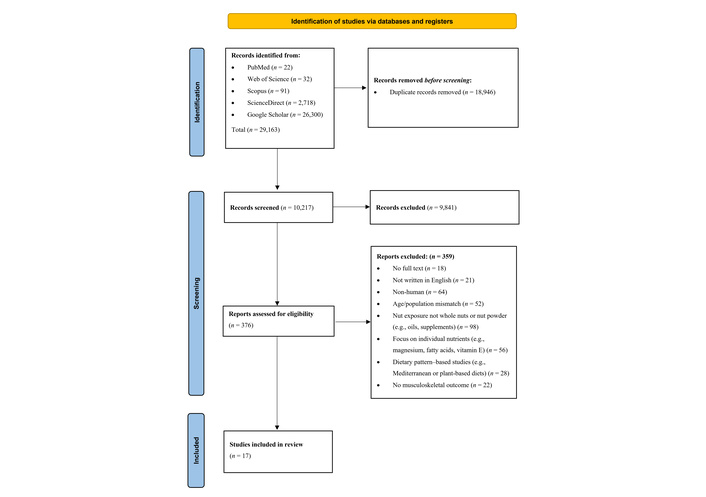
PRISMA 2020 flow diagram for the study selection process. Adapted from [21]. © Author(s) 2021. Distributed under a Creative Commons Attribution (CC BY 4.0) license.
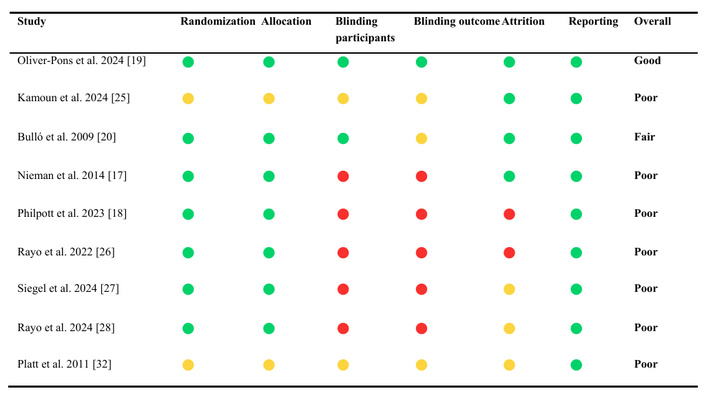
According to the RoB 2.0 tool, of the 9 randomized trials, 7 received an overall score of poor, 1 received a score of fair, and 1 received a score of good (Figure 2). According to the ROBINS-I tool, the one included non-RCT received an overall risk of bias rating of serious (Table S3). According to the NOS tool, 6 studies were deemed high quality with a score of 8/9 or 6/7, with one study receiving a lower rating of 5/7 (Table 1).
Newcastle–Ottawa risk of bias assessment for observational studies (n = 7).
| Author (year), study design | Selection | Comparability | OUTCOME for Cross- Sectional Studies | Total stars | ||||||
|---|---|---|---|---|---|---|---|---|---|---|
| S1 | S2 | S3 | S4 | C1 | C2 | E1/O1 | E2/O2 | E3 | ||
| Wild et al. (2024), Cohort [14] | * | - | * | * | * | * | * | * | * | 8/9 |
| Wang et al. (2023), Cohort [13] | * | - | * | * | * | * | * | * | * | 8/9 |
| Jun and Shin (2024), Cross-sectional [31] | * | - | * | N/A | * | * | * | * | N/A | 6/7 |
| Xu et al. (2025), Cross-sectional [16] | * | - | * | N/A | * | * | * | * | N/A | 6/7 |
| Mazumdar et al. (2025), Cross-sectional [33] | ? | * | * | N/A | * | * | * | * | N/A | 6/7 |
| Feyesa et al. (2025), Cross-sectional [15] | * | - | * | N/A | * | - | * | * | N/A | 5/7 |
| Garrido-Miguel et al. (2021), Cross-sectional [30] | * | * | * | N/A | * | - | * | * | N/A | 6/7 |
Selection: S1 representativeness of the sample; S2 non-respondents’ rate; S3 ascertainment of the exposure; S4 definition of the control. Comparability: C1 study controls for main confounders (age and sex); C2 study controls for any additional potential confounders. Exposure: E1 ascertainment of exposure; E2 same method of ascertainment of cases and controls; E3 non-response rate. Outcome: O1 assessment of outcome; O2 statistical analysis. 1 failed category; high quality, 2 or more failed categories; lower scores.
The data extraction table (Tables 2, 3, and 4) provides a detailed overview of all included studies, including relevant study characteristics and key findings. Nine studies evaluated the effects of nut consumption on muscle outcomes, including muscle strength, endurance, and recovery. Three studies evaluated the effects of nut consumption on bone health, including bone resorption, metabolism, and BMD. Three different studies evaluated the impact of nut consumption on frailty and/or functional limitations in older adults. Study publication years range from 2009 to 2025, and the studies took place in Spain, North Africa, Australia, the United States, Bangladesh, South Korea, China, Brazil, the United Kingdom, and Canada. The included studies had sample sizes ranging from 14 to 71,704, with the largest dataset derived from a US cohort. The studies were small exercise recovery trials, long- term observational studies in older adults, and a small RCT for bone- focused studies.
Data extraction table: characteristics of interventional studies (RCTs & crossover trials, n = 8).
| Authors (Year)Country | Study designDuration | Population (n, M/F/MSC, age) | Intervention (nut type, duration) | Control group | Primary outcomes/Results |
|---|---|---|---|---|---|
| Oliver-Pons et al. (2024);Spain [19] | Randomized controlled2 Years | n = 352, healthy MSC, 63–79 y | Walnut ~15% of total energy (30–60 g) daily | No walnuts and maintain usual diet | No effect on BMD at spine P = 0.632, femoral neck P = 0.653, bone turnover biomarker |
| Kamoun et al. (2024);North Africa [25] | Randomized controlled6 Weeks | n = 20, physically active healthy M, 65 y | Three training sessions per week: concurrent training + ad libitum diet w/ walnut (15 g/d for 6 weeks) | Three training sessions per week: concurrent training + ad libitum diet | Concurrent training, w/ or w/out daily walnut, improved knee strength, support leg standing & sleep quality. Memory & balance improved only in walnut group |
| Bulló et al. (2009);Spain [20] | Parallel RCT 12 Months | n = 202, MSC, 55–80 y | Mediterranean diet + mixed nuts (walnuts (15 g/d), hazelnuts (7.5 g/d), and almonds (7.5 g/d)), Mediterranean + virgin olive oil (15 L for 3 months) | Low-fat diet | Mediterranean diet + mixed nuts ↑ PTH levels in elderly subjects (P = 0.02). No effect on bone biomarkers |
| Nieman et al. (2014);United States [17] | 2 × 2 Crossover randomized controlled2 Weeks | n = 19, physically active healthy M, 27–49 y | Pistachio nut, 3 oz w/ water (1.5 oz) before and (1.5 oz after 1 h) during exercise2-Week washout | Water only 2-Week washout | Pistachio group had 4.8% slower performance (2.84 ± 0.11 & 2.71 ± 0.07 h, P = 0.034) & ↑ oxidative stress markers |
| Philpott et al. (2023); United Kingdom and United States [18] | 3 × 3 Crossover randomized controlled2 Weeks | n = 18, physically active healthy M, 23.1 ± 1.2 y | Pistachio nut: either standard dose (42.5 g/d) or higher dose (85.0 g/d)3-Week washout | No pistachio3-Week washout | Mean quadriceps soreness (non-dominant leg) during exercise recovery ↓ (P < 0.05) in high dose vs. control (mean difference 13 mm; 95% CI: 1–25). No effect on muscle function following modest muscle damage |
| Rayo et al. (2022);United States [26] | 3 × 3 Crossover randomized controlled2 Weeks | n = 27, M athletes, 18–35 y | Pistachio nut: either high dose (3 oz/d) or low dose (1.5 oz/d)3–4-Week washout | No pistachio or other nuts throughout study3–4-Week washout | High dose: lower pain ratings post 72 h recovery & decrease in force production at 120 ◦/s of knee flexion; force was diminished in the other trials |
| Siegel et al. (2024);United Kingdom and United States [27] | 2 × 2 Crossover randomized controlled8 Weeks | n = 25, MSC, 35.1 ± 4.7 y | Raw whole almonds (57 g/d)3-Week washout | Unsalted pretzels, isocaloric amount (86 g/d)3-Week washout | Muscle soreness measured during vertical jump reduced by ~24% (P < 0.05) & improved jump performance in almond vs. control. No effect on leg extension/flexion or blood markers |
| Rayo et al. (2024);United States [28] | 2 × 2 Crossover randomized controlled8 Weeks | n = 26, MSC, 37 ± 6 y | Raw almonds (2 oz/d)4-Week washout | Unsalted pretzels, isocaloric amount4-Week washout | CK reduced post 72 h in almond group (Δ – 50% from peak; P < 0.05), flexion greater, pain lower vs. control. No effect on jump force or other blood markers |
↑: higher or increased; ↓: lower(ed) or reduced; BMD: bone mass density; CK: creatine kinase; MSC: mixed-sex cohort; PTH: parathyroid hormone; RCTs: randomized controlled trials; P < 0.05, statistical significance.
Data extraction table: characteristics of observational studies (prospective cohorts & cross-sectional, n = 7).
| Authors (Year); Country | Study design | Cohort description & size (n) | Exposure definition/Measurement | Follow-up duration | Main finding & adjusted risk estimates (95% CI) | Confounders adjusted in model |
|---|---|---|---|---|---|---|
| Prospective cohorts | ||||||
| Wang et al. (2023);United States [13] | Prospective cohort | NHS, non-frail women ≥ 60 y, n = 71,704 | Nut consumption1 via FFQ & frailty via FRAIL in aging females | FFQ: every 4 y from 1990–2014, FRAIL: every 4 y from 1992–2016 | ↓ Risk of frailty: 5 srvngs/week HR 0.70 (0.64, 0.76) vs. < 1 srvngs/mo group. Peanuts, PB, walnuts: ↓ risk of frailty vs. < 1 serving/mo, adj HRs: 2 srvngs/week peanuts & walnuts = 0.84 (0.74, 0.94) and 0.85 (0.75, 0.97) | Age, calendar periods, smoking, BMI, EI, AHEI-2010 score, medication use, PAL |
| Prospective cohorts | ||||||
| Wild et al. (2024);Australia [14] | Prospective cohort | ASPREE, ≥ 70 y, n = 9,916 | Nut consumption2 via FFQ and DFS3 | 3.9 y | Risk of DFS endpoint 23% ↓ (HR 0.77 [0.61–0.98]) in daily nut consumers vs. no/infrequent nut intake. 2nd quartile nut intake = significant association for healthy lifespan & 29% ↓ risk of DFS endpoint (HR 0.71 [0.51–0.98], P = 0.037) | Age, sex, IRSAD quintile and education, physical capacity, smoking status and alcohol consumption, WC, hypertension, T2DM, depression score, frailty status, self-reported oral health status and dietary quality score |
| Cross-sectional | ||||||
| Feyesa et al. (2025);United States [15] | Cross-sectional | NHANES (2003–2012) | n = 5,807, ≥ 60 y (53.4% F) | Nut consumption4 ia AMPM & functional limitation/severity via PFQ & HRQOL via HRQOL-4 | Nut intake ≥ 6.9 g/day = fewer functional limitations, significant ↓ severity of functional limitation score vs. non-consumers. 19 % ↓ odds of poor physical health, 28% ↓ odds of activity limitations vs. non-consumers | Functional limitations (P = 0.048), ↓ severity of limitations (P = 0.004) & better QOL (OR = 0.81; 95% CI: 0.68, 0.98; P = 0.027, & activity limitations, OR = 0.72; 95% CI: 0.55, 0.95; P = 0.023) |
| Garrido-Miguel et al. (2021);Spain [30] | Cross-sectional | First-year university students, University of Castilla La Mancha, Spain | n = 354, 18–30 y | Frequency of nut consumption5 via FFQ & WC, BMI, %BF, FFM, CRF via PFT, MS via MSI | Nut intake ≥ 5/week = CRF & MSI vs. < 1/week & ↓ WC/height, %BF, but when adjusted for CRF, MSI significance disappeared for WC/height & FFM | Not reported |
| Cross-sectional | ||||||
| Mazumdar et al. (2025);Bangladesh [33] | Cross-sectional | Physically fit adults, face-to-face interview in Southern Bangladesh | n = 959, 18–40 y | Functional food intake (nut category focus5 via survey & self-reported GI & musculoskeletal diseases | Functional food intake associated w/ ↓ risk of GI & musculoskeletal diseases in adults | Nuts weekly OR = 0.59, 95% CI 0.36–0.97; P 0.037 |
| Jun and Shin (2024);South Korea [31] | Cross-sectional | KNHANES VII (2016–2018) | n = 14,844, 19–65+ y | Nut consumption6 (in-person 24-h dietary recall) & low MS via MSI | Older M consumers had 45% ↓ risk & older female consumers had 31% ↓ risk vs. non-consumers | Older male consumers: (OR = 0.55; 95% CI [0.38, 0.79]), older female consumers: (OR = 0.69; 95% CI [0.51, 0.93]) |
| Xu et al. (2025);China [16] | Cross-sectional | CLHLS (2018), face-to-face interviews | n = 14,181, 84.86 ± 11.47 y (55.08% F) | Nut consumption7 and sarcopenia in Chinese older adults | Higher nut consumption = significantly ↓ odds of sarcopenia | OR = 0.62 (95% CI: 0.51, 0.77) |
↑: higher or increased; ↓: lower(ed) or reduced; AHEI-2010: dietary quality index; AMPM: Automated Multiple-Pass Method by U.S. Department of Agriculture, validated dietary recall tool; ASPREE: ASPirin in Reducing Events in the Elderly, longitudinal study; BMI: body mass index; CLHLS: Chinese Longitudinal Healthy Longevity Survey; CRF: Cardio-respiratory fitness; DFS: disability-free survival; EI: Energy intake; FFQ: Food-Frequency Questionnaire, validated tool for dietary recall; FRAIL: Measures Fatigue, Resistance, Ambulation, Illness, Loss of Weight, validated tool to assess frailty in older adults; HRQOL: health-related quality of life; HRQOL-4: Health-Related Quality of Life Questionnaire, validated tool endorsed by CDC, from NHANES Current Health Questionnaire; IRSAD: Index of Relative Socio-economic Advantage and Disadvantage; KNHANES: Korea National Health and Nutrition Examination Survey; MS: muscle strength; MSI: muscle strength index via TKK 5401 GripD digital adaptive grip dynamometer; NHANES: U.S. National Health and Nutrition Examination Survey; NHS: the Nurses’ Health Study; PAL: Physical activity level; PFQ: Physical Functioning Questionnaire by NHANES; PFT: physical fitness test via the Course Navette test; T2DM: type 2 diabetes mellitus. 1) Sum intake of peanuts, peanut butter (PB), walnuts, and other nuts. Separate analysis of peanuts, PB, and walnuts. 2) Type of nut not specified, interpreted as representing total nut intake. 3) Composite measure of survival w/out dementia or major physical disability and was assessed as the first event of death or onset of dementia or persistent loss of one of six basic ADLs or admission to a nursing care facility for physical disability if Katz ADL not administered. 4) Mean intake of almonds, almond butter, Brazil nuts, cashews, cashew butter, hazelnuts, macadamias, pecans, pine nuts, pistachios, walnuts, peanuts, peanut butter from two 24-h dietary recalls. 5) Total intake of nuts (type not specified) per day, week, month. 6) Hazelnuts, acorns, macadamia nuts, chestnuts, Brazil nuts, almonds, ginkgo nuts, pine nuts, cashew nuts, pecans, walnuts, and pistachio nuts) and peanuts. 7) Sum intake of peanuts, peanut butter, walnuts, and other nuts. Separate analysis of peanuts, peanut butter, and walnuts.
Data extraction table: characteristics of ex vivo and non-randomized interventional studies (n = 2).
| Authors (year);Country | Study design and duration | Population (n, M/F/MSC, age) | Intervention (nut type, duration) | Control group | Primary outcomes & results |
|---|---|---|---|---|---|
| Ex vivo | |||||
| Platt et al. (2011);Canada [32] | Ex vivo, not stated | n = 14, MSC, 26.3 ± 8.6 y | 3 Macro = meals (60 g almonds & 97 g white bread, rice, potatoes). 4 baseline blood draws, meal w/in 10 min & blood draw every 15 min for 4 h | N/A | ↓ osteoclast formation & function in vitro; 15% ↓ TRAP activity vs. baseline sera (P = 0.03) |
| Non-randomized interventional | |||||
| Moriguchi Watanabe et al. (2022);Brazil [29] | Open, non-randomized, single-center study, January 2017–September 2018 | n = 32, MSC, 18–60 y | 1 unit of Brazil nut daily for 3 months | N/A | SNP response to Brazil nut & biomarkers of muscle homeostasis. Brazil nut intake GPX1 mRNA expression only in subjects w/rs1050450 CC genotype |
↓: lower(ed) or reduced; MSC: mixed-sex cohort.
A small 6-week trial in physically active elderly men found that concurrent training improved strength in both the control group (concurrent training + ad libitum diet) and walnut group (training + ad libitum diet with walnuts 15 g/day), but the walnut arm showed a greater rise in subjective sleep quality and selective gains in cognition and dual-task balance [25]. One pistachio cycling study found slower time-trial performance under pistachio conditions, while two other randomized crossover trials investigating pistachio consumption during exercise recovery yielded mixed results [17, 18, 26]. The latter two studies noted that a high dose (85 g/day) reduced subjective muscle soreness and partially preserved strength following muscle damage. However, neither study found significant improvements in vertical jump performance or circulating biomarkers of inflammation and damage, such as creatine kinase (CK) and C-reactive protein [18, 26]. Almond trials were somewhat more consistent in findings. One found about 24% lower soreness over the 72-hour recovery window, and another concluded that almonds modestly reduced pain, better maintained muscle strength, and reduced the CK response to eccentric exercise [27, 28]. A study by Moriguchi Watanabe et al. [29] found that intake of one Brazil nut daily attenuated elevations in serum CK and reduced oxidative stress markers in statin-treated individuals, a benefit driven by selenium’s vital role in optimizing antioxidant defense pathways. However, responses to Brazil nut supplementation depended partly on genotype. The efficacy of Brazil nut consumption on selenium status was modulated by host genetics. Regular intake significantly increased GPX1 mRNA expression exclusively in carriers of the rs1050450 CC genotype, whereas carriers of the SELENOP rs7579 GG genotype exhibited consistently lower baseline and post-supplementation mRNA expression [29].
In a cross-sectional study of younger adults (n = 354), the higher the nut consumption (≥ 5 servings/week), the lower the body fat percentage, increased fat-free mass, and reduced waist-to-height ratio compared to the lower category (< 1 portion/week) [30]. Jun and Shin [31] investigated the association between nut consumption and low muscle strength in younger, middle-aged, and older adults. No statistically significant differences were noted between consumers and non-consumers among younger adults or middle-aged adults. However, in older adults, nut consumers had a higher maximal handgrip strength, indicating that nut consumption was associated with a substantially lower risk of low muscle strength. Older male consumers had a 45% reduced risk (OR = 0.55; 95% CI [0.38, 0.79]) and older female consumers had a 31% reduced risk (OR = 0.69; 95% CI [0.51, 0.93]) compared to non-consumers of mixed nuts [31].
The largest RCT investigating nut consumption impact on bone health was a 2-year trial on walnut consumption and found no effect on BMD in healthy older adults [19]. Another study was on the postprandial effect of almonds on human osteoclasts, which showed reduced osteoclast formation and function in vitro [32]. A Bangladesh cross-sectional study also linked weekly nut intake, within a broader functional-food pattern, to lower odds of osteo -related disease (nuts weekly OR = 0.59, 95% CI 0.36–0.97; P = 0.037) [33]. An RCT of older adults investigated whether supplementation of a Mediterranean dietary pattern with mixed nuts, compared to virgin olive oil, negatively influenced bone turnover and acid-base balance [20]. The diet with mixed nuts increased dietary acid load and was associated with a statistically significant rise in parathyroid hormone (PTH) (mean difference 2.63, 95% CI –1.01 to 6.35; P = 0.02). However, no significant effects were observed for urinary bone resorption markers or bone mass outcomes over 12 months [20].
Observational studies consistently associate higher nut consumption with more favorable age-related functional outcomes, frailty risk, disability-free survival, and lower prevalence of functional limitations. A prospective cohort study by Wang et al. [13] in older women found long-term nut intake (peanuts, peanut butter, walnuts, and other nuts) was associated with a statistically significant lower risk of frailty. When compared with the lowest intake group, higher nut consumption was associated with reduced frailty risk in multivariable-adjusted models, with the 5 servings or more/wk. group indicating 20% lower frailty risk. This inverse relationship remained after adjustment for lifestyle and dietary covariates [13]. A prospective cohort study by Wild et al. [14] found similar results investigating relationships between nut consumption and disability-free survival among community-dwelling older adults. There was a statistically significant improvement in disability-free survival with higher nut consumption. Participants in the highest nut-intake category demonstrated a lower risk of incident disability or mortality compared to non-consumers (HR 0.71) [14].
In the National Health and Nutrition Examination Survey (NHANES) cross-sectional study by Feyesa et al. [15], higher nut consumption was associated with lower odds of functional limitations (P = 0.048), lower severity of limitations (P = 0.004) and better quality of life (lower odds of reporting poor physical health, OR = 0.81; 95% CI: 0.68, 0.98; P = 0.027, and activity limitations, OR = 0.72; 95% CI: 0.55, 0.95; P = 0.023) [15]. In a 2025 study of Chinese older adults (mean age 84.86 ± 11.47 years), nut intake was inversely associated with prevalence of sarcopenia. After adjustment for demographics, lifestyle, and dietary covariates, higher nut consumption was associated with significantly lower odds of sarcopenia (OR = 0.62; 95% CI: 0.51, 0.77) [16].
The results of this systematic review indicate that nut consumption may have beneficial effects on musculoskeletal health, particularly in relation to muscle recovery, strength, functional capacity, and reduced risk of frailty. Bioactive compounds in nuts, like polyphenols, antioxidants, and ALA, make them an ideal snack recommendation for nutrition-focused muscle recovery and overall musculoskeletal health. Walnut consumption in the concurrent training trial showed a greater rise in subjective sleep quality and selective gains in cognition and dual-task balance, implying a stronger benefit of walnuts for neuro health than muscle health [25]. The rich source of ALA in walnuts has been shown to be neuroprotective, as well as beneficial for cardiovascular health [6, 34]. While physical training improved muscle strength, the added benefit of walnut consumption can be seen in cognition-related measures (cognition, dual-task balance, sleep quality) rather than muscle growth compared to training alone.
The exercise-recovery studies were more favorable for almonds than for pistachios, but the effects were modest and came from small crossover trials. One pistachio trial reported a 4.8% slower performance time in a 75-km cycling trial compared with the control condition, and no meaningful improvement on inflammatory biomarkers [17]. Researchers postulate that this slower performance with pre-exercise pistachio consumption is attributed to the high short-chain carbohydrate content, particularly raffinose, which remains undigested in the upper gastrointestinal tract. Gut bacteria begin to ferment raffinose, producing gas and causing discomfort while cycling or performing other physical activity. Foods high in short-chain carbohydrates, known as high fermentable oligosaccharides, disaccharides, monosaccharides, and polyols (FODMAP) foods, are linked to an increase in leaky gut, which triggers an immune system reaction to release toxins that can lead to impaired energy production in the muscles and reduce overall performance [35, 36]. In contrast, the other two pistachio studies used pistachio as a recovery rather than before exercise. These studies found reduced muscle soreness in the group with a high pistachio dose versus a low pistachio dose and improvements in recovery markers following eccentric exercise or downhill running protocols in physically active people [18, 26]. Key compounds in pistachios that contribute to recovery are leucine and other essential amino acids for muscle protein synthesis, along with antioxidants that reduce inflammation and attenuate perceived muscle soreness [26]. Taking into consideration that all three pistachio RCTs were 2 weeks in duration, had a small sample size, and the same pistachio dose for the experimental group, these findings suggest that pistachios may be more beneficial in decreasing exercise-induced muscle damage and enhancing recovery, rather than as a fuel source (pre-exercise) for improved performance. Almond trials reported improvements across both studies. One crossover trial found that 2.0 oz/day of almonds modestly reduced pain, better maintained muscle strength, and reduced CK levels after eccentric exercise [28], while another study reported a roughly 24% reduction in soreness over a 72-hour recovery window [27]. Almonds are a rich source of branched-chain amino acids, arginine, vitamin E, and magnesium. It is these essential nutrients, along with polyphenols in almonds, that contribute to a shift in oxylipin metabolism, promoting a reduction in muscle damage and perceived muscle soreness while improving muscle recovery [37].
CK is a key indirect biomarker for assessing muscle strain and recovery. High serum CK levels are indicative of muscle strain, muscle damage, or overtraining. During eccentric exercise, muscle cells experience mechanical stress and localized bursts of reactive oxygen species (ROS), leading to microscopic tears that allow CK to leak into the bloodstream. If serum CK levels peak and then return to normal, this pattern is consistent with the repair of muscle damage. Intracellular CK is important because it catalyzes the transfer of a high-energy phosphate group from phosphocreatine to ADP, rapidly regenerating adenosine triphosphate (ATP) and helping muscle cells restore energy during high-intensity contraction. Oxidative stress can not only damage muscle tissue and increase CK release into the bloodstream but also inactivate intracellular CK by oxidizing its sensitive thiol groups and reducing its ability to regenerate ATP [38, 39]. Glutathione peroxidase 1 (GPX1) is a major intracellular antioxidant enzyme that scavenges hydrogen peroxide and other peroxides. As a selenoenzyme, GPX1 requires selenium to synthesize its active selenocysteine site; therefore, selenium availability may influence its expression and protective capacity [40]. GPX1 activity and serum CK levels may be negatively correlated, particularly under conditions of oxidative stress or muscle damage. When GPX1 activity is low, cells may have insufficient antioxidant protection against ROS, resulting in greater oxidative damage to muscle cells and increased CK release into the blood. Moriguchi Watanabe et al. [29] investigated whether selenium supplementation through consumption of one Brazil nut daily could increase GPx1 activity and thereby reduce elevated serum CK levels in statin-treated individuals. Responses to supplementation and CK levels depended on genetic variation in selenoprotein-related genes (SELENOP variants), suggesting that gene-nutrient interactions influence muscle-related biochemical responses to selenium intake [29]. A limitation of this study is that muscle function and recovery were not directly assessed; therefore, the observed changes in CK cannot be definitively linked to improvements in muscle homeostasis.
The study by Garrido-Miguel et al. [30] associated high nut consumption (≥ 5 portions of 30 g/week) with healthier body composition and better physical fitness. However, the overall results imply that body composition benefits from nut consumption are independent of cardiorespiratory fitness level [30]. This implies that eating nuts improves body composition regardless of fitness levels, whereas overall physical activity remains the primary driver of strength. In the study by Jun and Shin [31], older male adult nut consumers had a 45% reduced risk of low muscle strength, and older female adult nut consumers had a 31% reduced risk [31]. Total protein intake was considered as a variable in one of their regression models to rule out that the beneficial effects on muscle strength were coming from protein intake and not nut consumption. This adjustment still resulted in significant outcomes between nuts and low muscle strength in older men and women. The benefit is attributed to, in part, the monounsaturated fatty acid (MUFA) and polyunsaturated fatty acid (PUFA) sources in nuts. Researchers in this study suggest that the high ratio of MUFA or PUFA to saturated fatty acids in nuts may provide anti-inflammatory benefits, helping to promote and improve muscle function, thereby reducing the onset of sarcopenia. The large data set and validated methods used are strengths of this study. Limitations include no formal diagnosis of sarcopenia, possible reverse causation from the cross-sectional nature of the KNHANES used, and use of one 24-hour recall to measure nut intake [31]. Collectively, data from these studies suggest that nut consumption may primarily benefit muscle recovery through reduced oxidative stress.
The study by Oliver-Pons et al. [19] found that daily walnut consumption for two years had a neutral effect on BMD, with potential beneficial impacts observed only in specific subgroups. This study suggests that walnuts may provide a stronger benefit for cardiovascular risk factors, fitting within the broader context of the WAHA trial, but are a safe dietary strategy that does not compromise bone health. Postprandial serum analysis from an ex vivo study suggests that almond consumption may inhibit osteoclastogenesis, determined by reduced tartrate-resistant acid phosphatase, decreased calcium release, and lower expression of bone-resorption genes in vitro [32]. These findings are mechanistically interesting but serve as surrogate markers and cannot establish direct clinical benefit. While the Bangladesh study did not measure BMD or bone remodeling dynamics directly, it assessed self-reported osteo-related diseases [33]. This study linked weekly nut intake, within a broader functional-food pattern, to lower odds of osteo-related disease. It is important to note that this was a cross-sectional observational study, so causation cannot be ascertained from results. While results from this study are suggestive that functional foods, like nuts, may positively influence bone metabolism and musculoskeletal health, direct evidence for musculoskeletal benefits is limited [33]. In contrast, the Bulló et al. [20] study was a randomized intervention trial that directly assessed bone metabolism and remodeling. Frequent nut consumption is sometimes viewed negatively, as there is a potential impact on the acid-base balance and bone health due to the high dietary acid load produced by certain types of nuts. When blood acid levels rise, the body uses a buffer system to maintain pH. A consequence of this buffer system is increased breakdown of bone to release calcium (an alkaline compound) to neutralize the acid. A primary regulator of this bone breakdown, or resorption, is PTH. While this study did find higher PTH levels in the Mediterranean diet with nuts group, downstream skeletal harm was not observed. This is supported by existing research that refutes the idea that dietary acid load is a major causal driver of osteoporosis or bone loss, referred to as the acid-ash hypothesis [41]. Despite the insufficient evidence to support it, the consensus regarding the acid-ash hypothesis remains split. It should be noted that the overall diet quality of the Mediterranean diet could contribute to the neutral finding of a diet with high dietary acid load.
Of the four studies in this systematic review that focused on frailty and functional limitations, higher nut consumption was consistently associated with more favorable age-related outcomes in older adults. These favorable outcomes include lower risk of frailty and sarcopenia, improved quality of life, fewer functional limitations, and greater likelihood of disability-free survival. Wang et al. [13] found that long-term nut intake was associated with a statistically significant lower risk of frailty in older women. Similar to what other studies in this systematic review have suggested, the proposed mechanisms for this lower risk of frailty include reduced inflammation from phytochemicals, vitamins, minerals, and PUFAS, improving muscle recovery; protein synthesis promotion and protein degradation prevention, mitigating sarcopenia; and nutrient density of nuts providing body composition and cardiovascular benefits, which promotes overall health [13]. The prospective cohort study by Wild et al. [14] further supports these findings and proposed mechanisms, demonstrating that nut consumption was associated with improvement in disability-free survival among community-dwelling older adults [14]. The NHANES cross-sectional study and the Xu et al. [16] study also found notable benefits in higher nut consumption in older populations. The NHANES study found that higher nut consumption resulted in improved quality of life, lower odds of functional limitations, and lower severity of limitations. This study noted an inverse association between nut consumption and prevalence of sarcopenia, even after adjustment for covariates [16]. The overall findings of these studies are consistent with prior and current literature demonstrating benefits of foods high in unsaturated fats and antioxidants, like nuts, on healthy aging, frailty prevention, and functional independence. Despite consistent findings, limitations should be considered. All four studies were observational, with different populations (sex/race), which limits causal inference. It is also impossible to rule out benefits of other lifestyle habits, like higher physical activity levels, greater healthcare access, or a healthier overall diet. Although statistical adjustments were performed in some of the studies, unmeasured confounders cannot be excluded. Self-reported dietary intake introduces potential recall bias and measurement errors, and optimal dosage, frequency, or type of nuts cannot be determined from observational studies. Strengths of the studies include large cohort populations, long follow-up durations, and consistent findings across geographically and culturally diverse populations.
In conclusion, the findings of this systematic review suggest that regular nut consumption may have beneficial effects on musculoskeletal health, through mechanisms related to reduced oxidative stress and inflammation, muscle recovery, and preservation of functional capacity. Of the studies reviewed, pistachios and almonds demonstrated modest benefits for improving muscle soreness and exercise recovery, while walnuts showed greater impact and potential benefit for neuro and cardiovascular health. Findings on bone health were limited and mixed, with walnuts providing a neutral benefit and almond results providing mechanistic insight rather than clinically significant outcomes. However, these findings support that regular nut intake does not adversely affect bone remodeling or skeletal health. Observational studies consistently attributed higher nut intake to a lower risk of frailty, sarcopenia, functional limitation, and improved disability-free survival in older adults. These findings strongly support the potential role of nuts within healthy aging dietary patterns. Polyphenols, anti-inflammatory and antioxidant properties, amino acids, MUFAs and PUFAs, vitamins, and minerals present in nuts collectively contribute to the beneficial outcomes on musculoskeletal health. Reliance on observational data or short-term trials, high heterogeneity, and limited evidence for some outcomes make it difficult to establish optimal intake recommendations, and small study sizes and self-reported data reduce confidence in the causal relationship between nut intake and musculoskeletal health. Larger long-term RCTs are needed to clarify and strengthen dose-response relationships and confirm clinically meaningful musculoskeletal and bone health outcomes. However, currently available evidence suggests that regular nut consumption appears to be safe and a potentially beneficial strategy for supporting muscle recovery, functional independence and healthy aging.
ALA: alpha-linolenic acid
ATP: adenosine triphosphate
BMD: bone mineral density
CK: creatine kinase
GPX1: glutathione peroxidase 1
MUFA: monounsaturated fatty acid
NHANES: National Health and Nutrition Examination Survey
NOS: Newcastle-Ottawa Scale
PTH: parathyroid hormone
PUFA: polyunsaturated fatty acid
RCTs: randomized controlled trials
ROBINS-I: Risk of Bias in Non-randomized Studies of Interventions
ROS: reactive oxygen species
The supplementary tables for this article are available at: https://www.explorationpub.com/uploads/Article/file/1007138_sup_1.pdf.
During the preparation of this work, the author(s) used Elicit AI solely for language editing and grammatical improvement of the manuscript. After using the tool/service, the author(s) reviewed and edited the content as needed and take(s) full responsibility for the content of the publication.
LA: Investigation, Writing—original draft, Writing—review & editing. RS: Investigation, Writing—original draft, Writing—review & editing. SJ: Conceptualization, Writing—review & editing, Supervision. All authors read and approved the submitted version.
Shanil Juma, who is an Editorial Board member of Exploration of Musculoskeletal Diseases, had no involvement in the decision-making or the review process of this manuscript. The other authors declare no conflicts of interest.
Not applicable.
Not applicable.
Not applicable.
The primary data for this article were sourced online from databases listed in the methods. Referenced articles are accessible on PubMed, ScienceDirect, Web of Science, Scopus, and Google Scholar. Additional supporting data are available from the corresponding author upon request.
Not applicable.
© The Author(s) 2026.
Open Exploration maintains a neutral stance on jurisdictional claims in published institutional affiliations and maps. All opinions expressed in this article are the personal views of the author(s) and do not represent the stance of the editorial team or the publisher.
Copyright: © The Author(s) 2026. This is an Open Access article licensed under a Creative Commons Attribution 4.0 International License (https://creativecommons.org/licenses/by/4.0/), which permits unrestricted use, sharing, adaptation, distribution and reproduction in any medium or format, for any purpose, even commercially, as long as you give appropriate credit to the original author(s) and the source, provide a link to the Creative Commons license, and indicate if changes were made.



View: 108
Download: 5
Times Cited: 0


