 Systematic Review


Affiliation:
School of Health Promotion and Kinesiology, Texas Woman’s University, Denton, TX 76204, United States
Email: srana1@twu.edu

 ,
,
Affiliation:
School of Health Promotion and Kinesiology, Texas Woman’s University, Denton, TX 76204, United States
ORCID: https://orcid.org/0000-0003-2821-2868

Explor Digit Health Technol. 2026;4:1011103 DOI: https://doi.org/10.37349/edht.2026.1011103
Received: October 28, 2025 Accepted: June 29, 2026 Published: August 26, 2026
Academic Editor: Pasquale Caponnetto, University of Catania, Italy
Background: Perinatal depression (PD) and postpartum depression (PPD) are leading causes of morbidity in the United States (U.S.). Asian American women, the fastest-growing racial groups in U.S., are disproportionately affected by cultural stigma, language barriers, and limited access to culturally responsive healthcare. This review examines the current methods, evidence gaps, and opportunities to address perinatal and PPD through mobile health (mHealth) applications among Asian American women.
Methods: A scoping review was conducted using PubMed, EBSCOhost, Google Scholar searches following the principles of systematic and rapid review methodology. Articles were included if they addressed Asian American women with PD or PPD, focused on mHealth or telehealth interventions, and peer-reviewed publications from last ten years. A total of 246 articles were identified, from which 25 studies were selected for inclusion. Data were synthesized thematically across six domains.
Results: The sample included observational (24%), qualitative (16%), pilot (12%), RCTs (12%), reviews (24%), protocols (8%), and mixed (4%); Edinburgh Postnatal Depression Scale (EPDS) was most frequently used (68%). mHealth tools with hybrid approaches were widely used regardless of location and systemic barriers. Mindfulness and cognitive behavioral therapy (CBT)-based interventions were effective in reducing depressive symptoms, improving maternal self-efficacy, and enhancing psychosocial outcomes. However, engagement was lower among women with severe depressive symptoms, and mental illness stigmatization limited access to digital tools. Key motivators for uptake included connectivity, feasibility, and adaptability.
Discussion: mHealth interventions demonstrate considerable potential to improve depressive symptoms during perinatal and postpartum periods. However, their implementation and evaluation among Asian American women remain limited. Future interventions should prioritize culturally and linguistically tailored digital platforms, integrate peer and professional support, and align with existing maternal healthcare systems to improve accessibility, engagement, and equity while addressing persistent disparities in maternal mental health.
Depression affects approximately 1 in 10 women of reproductive age and 1 in 8 women with recent live births [1]. Depression diagnoses at delivery have increased sevenfold between 2000 and 2015, underscoring a growing public health concern [2]. Risk factors including a personal or family history of depression, low levels of social support, economic stressors, and limited access to culturally responsive care disproportionately affect women of color and immigrants [1, 3, 4].
Digital mental health tools encompass a wide range of technologies, including web and mobile applications (apps), social media and online forums, virtual reality, robots, internet websites, mobile apps, wearable devices, and emotion-aware chatbots helped promote cognitive, behavioral, and affective change and improve mental health outcomes [5]. Within this broader digital health ecosystem, mobile health (mHealth) represents a key subcategory. According to World Health Organization, mHealth is defined as “medical and public health practice supported by mobile devices, such as mobile phones, patient monitoring devices, personal digital assistants (PDAs), and other wireless devices” [6].
mHealth has been proven effective in delivering psychoeducation, symptom monitoring, cognitive behavioral strategies, and peer support to those experiencing mild to moderate mental health conditions, such as anxiety or depression [7–9]. Key advantages of mHealth include real-time symptom monitoring to treatment progress portable and flexible use, higher acceptance rate, and adherence to treatment. However, despite the benefits, challenges remain, which include a high drop out rate, issues of data security, privacy concerns, low user-friendliness, technical glitches, inconsistent network, and lower engagement of mothers with newborns [8, 10].
Asian American women are one of the fastest-growing racial groups in the United States (U.S.). The U.S. Census Bureau defines “Asian” as a person having origins in the peoples of the Far East, Southeast Asia, or Indian subcontinent, including those from Cambodia, China, India, Japan, Korea, Malaysia, Pakistan, the Philippines, Thailand, and Vietnam [11]. They face a unique set of challenges related to perinatal mental health. They are mostly underrepresented in mental health, women’s health research and have lower participation rates than other racial groups [12, 13]. Emerging data suggest that Asian American women may be less likely to report depressive symptoms, seek mental health services when compared to American White women [12, 14]. Cultural stigma, language barriers, culturally incongruent care, and systemic inequities further compound these challenges. Additionally, many mHealth tools are developed and validated in Western socio-cultural frameworks, which do not adequately reflect the cultural norms, family values, and lived experiences of Asian American subgroups [5]. Despite these disparities, few studies have focused explicitly on perinatal depression (PD) among Asian American subgroups, and even fewer have evaluated interventions tailored to their needs.
mHealth tools offer a promising strategy to reduce barriers and expand access to perinatal mental health support [7, 9]. mHealth tools are often accessible, scalable, and can be adapted for cultural and linguistic relevance, making them particularly useful for reaching underserved populations. This scoping review aims to map the existing literature on mHealth interventions for perinatal and postpartum depression (PPD), with a specific focus on Asian American populations. It highlights current approaches, gaps in evidence, and opportunities for culturally tailored digital mental health support.
This study followed the PRISMA extension for Scoping Reviews (PRISMA-ScR) guidelines. A formal protocol was not prospectively registered. This scoping review adhered to established principles of systematic review and followed a rapid review methodology to efficiently screen and synthesize the literature. Peer-reviewed articles published in English between 2015 and May 2025 were included to capture developments in mobile and digital health technologies within the past decade. Studies were eligible if they focused on (1) Asian American populations, (2) maternal mental health, including PD or PPD, and (3) digital or mHealth interventions such as mHealth or telehealth.
In this review, maternal mental health is defined as the overall psychological and emotional well-being of women during the perinatal period [15]. Conversely, perinatal psychiatric illness refers to clinically diagnosable mental disorders, whether new or current, that occur during pregnancy or within the first year postpartum [16]. Specifically, PD encompasses depressive episodes occurring during pregnancy or within the first 4 to 8 weeks following childbirth [15], whereas PPD involves intense depressive symptoms that manifest after delivery and persist for more than two weeks [1].
Regarding study populations, Asian American participants were defined as individuals of Asian descent residing in the U.S. or those explicitly identified as such by study authors. In contrast, non-U.S. Asian participants were identified based on their specific national or regional backgrounds as reported in the literature. To ensure a comprehensive evidence base, studies were categorized into two overlapping groups: those focusing on Asian Americans and those involving non-U.S. Asian or mixed populations using mHealth interventions for PD or PPD. Studies meeting both criteria were included in both categories to capture both population-specific nuances and broader intervention trends.
Eligible studies included qualitative, quantitative, and mixed-method research with full-text availability. Studies that addressed PD were included to provide a broader understanding of maternal mental health challenges. Articles that focused on general telehealth services were included only if they specifically examined mHealth apps. Conference abstracts, dissertations, theses, and non-peer-reviewed literature were excluded during the initial screening. These criteria were developed a priori to demonstrate methodological rigor.
A scoping review was conducted in May 2025 using PubMed, EBSCOhost, Google Scholar, and manual reference searches following the principles of systematic review and rapid review methodology. The search strategy included combinations of keywords and Medical Subject Headings (MeSH) terms such as “Asian American,” “postpartum depression,” “perinatal depression,” “mHealth,” “mobile health,” and “telehealth”. Boolean operators and truncation symbols (“Asia”[MeSH] OR “Asian”[MeSH] OR “Asian People”[MeSH] OR “Asian American”[tiab] OR “Asian American”[MeSH]) AND (“Depression, Postpartum”[MeSH]) AND (“Telemedicine”[Mesh] OR “Mobile Applications”[MeSH] OR “Smartphone”[MeSH]) were used to refine and expand the search scope.
Out of 246 records identified through database and manual searches, 67 duplicates were removed. Screening the remaining 179 titles and abstracts led to the exclusion of 103 records. A total of 76 articles underwent full-text review, resulting in 25 studies selected for final inclusion. The study selection process is illustrated in Figure 1. Among these, seven focused specifically on Asian American women experiencing depressive symptoms during the perinatal or postpartum periods, and 18 examined mHealth interventions for maternal depression more broadly. The remaining 51 articles were excluded for reasons including a lack of focus targeted at Asian American populations or a primary emphasis on non-mobile platforms, such as general telehealth or in-person therapy.
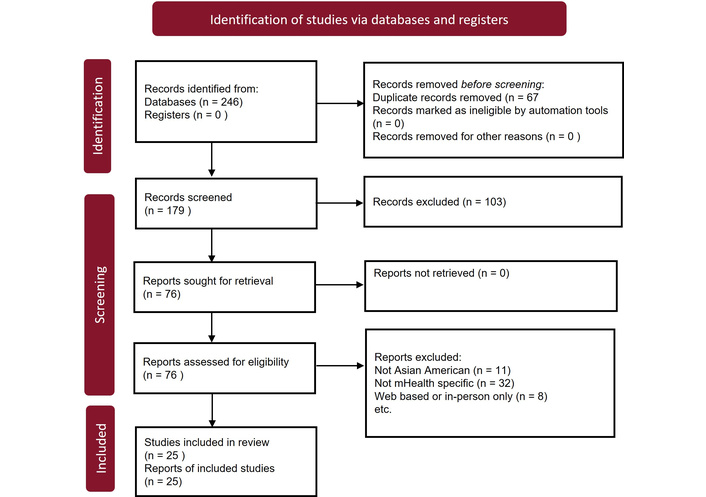
PRISMA flow diagram for the scoping review. Adapted from “PRISMA” (https://www.prisma-statement.org/). This work is licensed under CC BY 4.0.
A standardized data charting form was developed in Microsoft Excel and iteratively refined by the research team to ensure comprehensive and consistent data extraction. In alignment with PRISMA-ScR guidelines, the following variables were charted for each included source: bibliographic information (author, year, country); study characteristics (design, setting); population details (Asian subgroup, sample size, perinatal stage); intervention characteristics (mHealth modality, duration, cultural/linguistic adaptation); and primary outcomes (clinical effectiveness, feasibility, and engagement). Discrepancies were resolved by discussion and consensus.
A total of 246 records were identified through database and manual searches. After removing 67 duplicates, 179 records remained for title and abstract screening. Of these, 103 articles were excluded for reasons including irrelevant study outcome/design (n = 72), non-English publication (n = 1), being published before 2015 (n = 29), or being a dissertation (n = 1). Seventy-six full-text articles were assessed for eligibility. Of these, 51 articles were excluded because they did not target Asian American populations or focused solely on general telehealth, web-based platforms, or in-person therapeutic interventions. The final synthesis included 25 studies: seven focused specifically on Asian American women with depressive symptoms during the perinatal or postpartum period, and 18 examined the use of mHealth interventions for PD/PPD.
Extracted data were synthesized using both descriptive statistics and narrative thematic analysis. Descriptive synthesis included counts of studies by year of publication, study design, perinatal stage, mHealth modality, Asian subgroup representation, and outcome measures. For example, mobile apps and short message service (SMS)/text messaging were the most frequently described mHealth modalities, and Edinburgh Postnatal Depression Scale (EPDS) and Patient Health Questionnaire (PHQ) were the most common outcome measures. Thematic synthesis summarized key patterns in intervention components (e.g., psychoeducation, symptom monitoring, cognitive behavioral therapy (CBT)-informed strategies, peer or coach support), feasibility/acceptability findings, and cultural/linguistic adaptations. Consistent with scoping review methodology, quality appraisal of included studies was not performed, as the primary aim was to map the extent and characteristics of the literature rather than to evaluate study quality or perform meta-analysis. A formal protocol was not registered for this scoping review; however, the study followed the PRISMA-ScR guidelines. Future studies may consider prospective registration to enhance transparency and reproducibility.
Thematic analysis was initiated with the assistance of ChatGPT-5 (OpenAI, [Aug 14 version]) to systematically identify recurring patterns and concepts within the dataset. The purpose of this initial step was to leverage the AI’s ability to process large amounts of textual data efficiently and highlight potential themes for deeper human investigation. The prompt sequence included the following steps: 1) summarize the key findings included in the literature review table and create codes; 2) group similar codes into broader categories; and 3) group categories into major themes. The thematic analysis of the remaining 25 studies revealed six major themes that were then meticulously reviewed, validated, and refined by the researchers: Access; Modality; Effectiveness; Engagement; Social Connectivity; and Implementation. These themes illustrate the factors influencing uptake, effectiveness, and user experiences of mobile, web-based, and telehealth interventions across diverse populations. No AI tools were credited as authors, in accordance with journal AI authorship policies.
This review included 25 sources of evidence. The characteristics of the included studies are summarized in Table 1. The study designs comprised observational studies (n = 6, 24%), systematic reviews or meta-analyses or review study (n = 6, 24%), qualitative studies (n = 4, 16%), pilot studies (n = 3, 12%), randomized controlled trials (n = 3, 12%), study protocols (n = 2, 8%), mixed-method study (n = 1, 4%). The EPDS was the most frequently reported validated outcome measure, appearing in 17 of 25 studies (68%). Other measures included the PHQ in 7 studies (28%) and the Generalized Anxiety Disorder scale (GAD-7) in 2 studies (8%). Other measures reported across the included studies included the Beck Depression Inventory, Beck Anxiety Inventory, Kessler Psychological Distress Scale/Kessler-10, Center for Epidemiologic Studies Depression Scale, Somatic Symptom Scale-8, Insomnia Severity Index, and other study-specific measures.
Characteristics of included studies (n = 25).
| Citation | Study type | Perinatal stage | Population focus/Asian subgroup | Place | Timeline of data collection | Intervention | Outcome measures | Outcome summary (pull out the quotes) |
|---|---|---|---|---|---|---|---|---|
| [17] | Retrospective study | Perinatal (broad) | Mixed group (1.7% Asian American) | United States | 2016–2023 | Telehealth/virtual | EPDS, Generalized Anxiety Disorder scale (GAD-7) | Perinatal intensive outpatient program provided with weekly therapy and medication managementComparison of in-person and telehealth delivery during the COVID-19 pandemic86.9% women diagnosed with depression, no difference between service settings (in-person vs. virtual)Maternal-infant bonding only significantly improved with in-person treatment |
| [14] | Review study | Postpartum | Asian American | United States | 2018 | Mobile application (app) | EPDS, PHQ | Acceptance and intention to use e-mental health interventions by Asian Americans are limitedCultural beliefs against mental illness and seeking servicesCultural values such as “saving face” for mental illnesses. Supernatural and religious causes wrongful actions committed against one’s ancestors/GodMental illness as a sign of weaknessSignificant barriers to mental health service utilization-lack of English proficiencyIncreased resistance towards seeking professional mental health services among Chinese American mothers with PPD |
| [18] | Pilot study | Postpartum | Asian (11.3%) | United States | 2021–2023 | Mobile app; short message service (SMS)/text; telehealth/virtual | EPDS, PHQ-8, Five Facets of Mindfulness Questionnaire, Emotion Regulation Questionnaire | PD most common United States childbearing morbiditiesCentre M high feasibility and acceptabilityReduced depressive symptoms from preintervention to the postpartum periodNormalizing mental health concerns and discussion, decreasing feelings of shame and isolationParticipants expressed a desire to receive this content on their phones via an appRoutine prenatal care delivery systems rarely focus on mental wellness and are not included in maternity care (absence of psychiatric nurse practitioners or psychologists) |
| [19] | Scoping review | Perinatal (broad) | Chinese immigrant | United States | 2023 | SMS/text; telehealth/virtual; telephone/interactive voice response (IVR) | EPDS | Cultural influence, use of social media apps on PD care among immigrant womenSocial media apps are widely accepted to raise awareness of mental health information and means of communication with healthcare providers |
| [20] | Qualitative study | Perinatal (broad) | Chinese immigrant (n = 13) | United States | 2014 | Mobile app; SMS/text | — | Perinatal health information received through social mediaPositive attitude toward using apps, text messaging during the perinatal period, “It’s good to spread mental health information through such social media apps”Many women joined the mothers’ communication groups on WeChat to gain useful parenting tips or encouragement from other womenLanguage barrier, “Trouble telling the doctor about the changes in her mood during the perinatal period. So, it’d be hard for her doctor to understand her condition”Expressed desire to have access to a range of options to learn about PD “Every person has her own preference. When she needs the information, you need to give them choices of how such information is conveyed... (otherwise) the health messages you send out would be disposed of as junk text messages or junk Email”Participants preferred social media apps over text messagingAccessibility to more information to follow, who to follow, when to view it, and greater anonymity |
| [21] | Pilot study | Antenatal | 10.2% (Asian, Native Hawaiian, or Pacific Islander) | United States | 2020–2021 | Mobile app (Healthy Moms App) | PHQ-8 score ≥ 10 | 13.1% screened positive for depression; 37.9% of those with positive screens were referred to behavioral health servicesLanguage barriers among immigrant populations limited access to health care and related information (apps available only in English and Spanish)Services for care coordination, patient education, and referrals were unavailable due to a language barrierApp provided support for those at the highest risk for PD and adverse social determinants of healthThe app was widely used by publicly insured patients at a federally qualified health centre |
| [22] | Cross-sectional study | Perinatal (Broad) | Asian (14.5%) | United States | 2020–2023 | — | International Classification of Diseases, Tenth Revision recorded in the electronic health record | Asian women carried the lowest prevalence, with fewer than 1in10 women diagnosed with perinatal psychiatric illness (PPI)Cultural norms of denying symptoms and reducing contact with healthcare providers made women less likely to report PPI, especially during the COVID-19 pandemic, when anti-Asian racism spikedBarriers to adequate identification include mental health stigma, lack of culturally sensitive assessments of psychiatric symptoms (e.g., somatic symptom measures), and provider bias |
| [23] | Retrospective cross-sectional study | Antenatal | Asian (Chinese)(n = 110,584) | China | 2021–2022 | Mobile app | PHQ-9, GAD-7 | Early pregnancy is one of the significant predictors of antenatal depressive symptoms, with an increased risk of 78.99 timesHigh-level depressive symptoms were 3.4% in the first trimester, decreased to 1.5% in the second trimester, and further to 1.4% in the third trimesterMild depressive symptoms were 10.9% in the first trimester, 6.2% in the second trimester, and slightly rising to 6.3% in the third trimesterContributing factors: lower marital satisfaction, living with parents-in-law, experiencing negative life events, substance use such as drinking and smoking before and during pregnancy, self-employed businesswomen |
| [24] | Protocol-randomised controlled trial | Postpartum | Asian (Japanese)(n = 2,500) | Japan | 2019–2021 | Mobile app (Luna Luna Baby app) | EPDS, Kessler Psychological Distress Scale, Somatic Symptom Scale-8 (SSS-8), ISI, Maternal Anxiety Scale for 4–5-month-old children | A fully automated iCBT programme has the potential to be effective in preventing major depressive episodes among pregnant womenAcceptability, feasibility, appropriateness, fidelity, and satisfaction with the intervention, assessed via self-report surveys at 34 weeks of gestation and by time spent on modules |
| [25] | Qualitative study | PD | Asian (Indian)(n = 16) | India | 2021 | Telephone/IVR | — | Use of local language (recorded information on IVR system used local dialect and colloquial terms)Health promotion materials (episode on stress management, old folk song, helpline for emotional support, advice/counsellingThe majority preferred face-to-face contact to phone-based contact, “The phone content was great, but I prefer sitting and talking my heart out to someone that I know” |
| [26] | Systematic/meta-analysis review | Postpartum | Diverse Background(n = 3,252) | Diverse geography | 2021 | Telehealth/virtual | EPDS, PHQ-9, Beck DepressionInventory, Kessler 10,Depression, Anxiety andStress Scale | Cognitive behavioral therapy (CBT) and telephone-based support were identified as particularly beneficial for treating PPDInterventions like internet-based behavioral activation therapy did not demonstrate significant efficacy |
| [27] | Prospective longitudinal cohort study | Postpartum | Kenyan woman(n = 572) | Kenya | 2022 | Mobile app; SMS/text (mobile WACh NEO, two-way SMS communication intervention) | EPDS | PD (32.9%), postnatal depression (9.1%)Women with PD sent fewer SMS messages to health providers, indicating lower engagement with mHealth interventionsmHealth intervention could provide more tailored messages to women with depressive symptoms to provide better individual support and psychoeducational messages |
| [28] | Randomized controlled trial | Postpartum | Asian (Chinese)(n = 168) | China | 2018–2020 | Mobile app | EPDS, PHQ-9 | Participants had 2.471 times higher odds of a decreased EPDS score from baseline to post intervention in comparison to the control groupCost-effective approach to address mental health issues during pregnancy when resources are limitedSmartphone-based mindfulness training tailored for pregnant women has a substantial effect |
| [29] | Pilot study | Perinatal (broad) | — | United States | 2022 | Mobile app | — | Effectively reduce the incidence of PD by incorporating brief, scalable interventions within standard prenatal careHybrid digital and synchronous approach facilitates flexible participation for diverse populations, systemic barriers such as geographic, socioeconomic, and cultural challenges |
| [30] | Longitudinal study | Postpartum | Asian (Chinese)(n = 150,000) | China | 2021 | Mobile app | EPDS | Successful integration of the mHealth app increased referral success rates for PPD over timeHealth resource allocation and well-informed management systems showed greater improvements, indicating that effective implementation can strengthen health-seeking behaviors among postpartum women in Asian contexts |
| [31] | Qualitative study | Postpartum | Non-indigenous Canadian (Chinese-6, South Asian-3) | Canada | 2021 | Mobile app (web-enabled intervention) | EPDS | Provided information on daily prompts/check-ins, mental health tracking, and self-care information, resources for holistic careValue of connecting to peers and professionals through web-enabled tools, emphasized importance in mental health journeys: “I think just some way of encouraging women whether it be through success stories or a connection with a counsellor, whatever it is, through the app that, um, would just encourage them not to give up and encourage them that it will get better”Future research project to assess the needs of indigenous women and immigrant women who have experienced PPD, representing and understanding the diverse needs of Canadian women |
| [32] | Randomized controlled trial | Postpartum | Asian (Chinese)(n = 130) | China | 2022 | Mobile app | EPDS | A significant decrease in the level of postpartum depressive symptoms among the women who mobile appIncorporation of culturally sensitive features, such as social support, parenting education in app, to tailor the app to meet the needs of Asian American women |
| [33] | Review study | Postpartum | Asian (Chinese) | Chinese | 2019 | Mobile app | EPDS | Existing PPD apps lacked adherence to clinical practice guidelines, comprehensive content, and high user engagementContent of the Chinese clinical practice guidelines, significant for improvised app based on the existing ones |
| [34] | Observational study | Postpartum | Rural veteran women (2.4% Asian) | United States | 2015–2019 | Mobile app | PHQ-9 | Decreased depressive symptoms, increased behavioral activation, and decreased dysfunctional automatic thoughtsProgram and coaches were positively rated, though urban women tended to rate coaches more highly, and rural women spent less time per call with their coachesHigh reach and broad demographic diversity, scalability, and relevance across various racial and ethnic groups |
| [35] | Systematic review | Postpartum | Diverse background | Canada | 2018 | Mobile app; SMS/text | EPDS | mHealth interventions targeting mental health were found to reduce PPD compared to no interventionEvidence insufficient to draw firm conclusions about their impact on other psychosocial outcomes, such as self-efficacy, social support, and postpartum anxiety, due to mixed findings, small sample sizes, and heterogeneity in intervention type |
| [36] | Protocol-randomized controlled trial | Postpartum | Asian (Chinese)(n = 120) | China | 2019 | Mobile app | EPDS | Mobile phone app based CBT on PPD focuses on addressing the shortage and health disparities of mental health resources, stigma of PPD in postpartum women, and the need for postpartum recovery and child care prevents postpartum women from seeking traditional face-to-face CBTOutcome measures include PPD, anxiety, pressure, and parenting sense of competence at 0, 3, and 6 months after the intervention |
| [37] | Qualitative study | Postpartum | White/Caucasian, African American/Black(n = 24) | Online social support group | 2017 | Mobile app (online support group) | — | Online support groups provide a need to communicate to end their sense of isolation. “It was very isolating with my first because I didn’t have any friends who had kids yet. I was the first of my friends to have kids, so I did join a bunch of mom groups on Facebook”Provides a platform to fulfill the desire to gather information from experienced people. “Never really anyone professional, but it’s helpful to hear real people’s experiences”Online social support developed the motivation to reciprocate, “I was able to get support because other people posted that had the same experience... that’s the whole point to be able to share your information so other people can better stay informed about it”Some women lacked motivation to be online, did not have the time and energy to participate (due to underlying PPD symptoms), sharing personal stories with unknown people didn’t feel reliable, and felt inadequate or self-criticism |
| [38] | Systematic review | Postpartum | Diverse background | Diverse geography | 2021 | Mobile app | EPDS, Beck Anxiety Inventory,Center for Epidemiologic Studies Depression Scale | mHealth interventions had a positive effect on social support from partners and healthcare providersSocially disadvantaged pregnant women and mothers with pre-existing health conditions and behaviors, sensitive perinatal issues benefitedmHealth interventions enabled users with tailored needs to their preferences (e.g., cultural, literacy, language preferences) |
| [39] | Mixed-method study | Postpartum | United States population | United States | 2021 | Mobile app; SMS/text | EPDS | Mama Lift Plus digital app acceptable, usable, and feasible for new mothers to address symptoms associated with PPDSuggestion to engage with a healthcare provider via the app at least weeklyText messaging preferred mode of communication |
| [40] | Randomized controlled trial | Postpartum | Non-White (included Black, Chinese, Filipino, Latin American, Greek, and Indigenous)(n = 171) | Canada | 2021 | SMS/text | EPDS | Postpartum text message program effectively improved maternal self-efficacy, especially among first-time mothers (primiparous women)Reduced postpartum anxiety symptoms in both primiparous and multiparous women six weeks postpartumNo significant changes in PPD or perceived social support scores |
EPDS: Edinburgh Postnatal Depression Scale; iCBT: internet-based cognitive behavioral therapy; ISI: Insomnia Severity Index; mHealth: mobile health; PD: perinatal depression; PHQ: Patient Health Questionnaire; PPD: postpartum depression.
Access. Studies identified structural and cultural barriers to care. Language barriers, cultural stigma, and provider bias restricted engagement with interventions among immigrant and minority populations [14, 20–22]. For example, high-risk immigrant women often could not access app-based care coordination or referrals due to limited language options [21], while some preferred app-based services rather than visiting health care providers due to language barriers. mHealth preferences allowed more flexibility to understand their language and to express their mood changes [20]. Similarly, stigma surrounding mental illness as a sign of weakness, the cultural value placed on ‘saving face,’ and superstitions linking it to sinful actions against ancestors or God contribute to reluctance towards seeking professional mental health support and may limit the acceptance of e-mental health interventions [14]. Furthermore, somatic symptom presentation and insufficient culturally sensitive tools limit effective engagement with healthcare providers. These barriers were further exacerbated during the COVID-19 situation when increased anti-Asian racism contributed to reduced access to care [22].
Modality. Digital interventions, specifically mindfulness-based and CBT-based apps, demonstrated efficacy in reducing depressive and anxiety symptoms [17, 18, 26, 28]. Hybrid approaches combining asynchronous digital content with synchronous or in-person support enhanced flexibility and allowed interventions to reach broader, more diverse populations [18, 34]. These hybrid delivery models addressed barriers such as geographic, socioeconomic, and systemic limitations. Systematic review reported blended methods of CBT and telephone-based support as beneficial for treating PPD, while internet-based CBT (iCBT) did not demonstrate significant efficacy [26]. Meanwhile, a study examined a fully automated, smartphone-delivered CBT program aimed at reducing depression before and after childbirth [24]. A study reported large-scale intervention implementation without the need for direct therapist involvement can help prevent major depressive disorders, including early identification of ‘baby blues’ symptoms. Notably, some users expressed a preference for face-to-face interactions alongside digital modalities, indicating the importance of flexible delivery options [20].
Effectiveness. Overall, digital interventions demonstrated efficacy in reducing depressive and anxiety symptoms, and promoting mental health awareness [17, 18, 26, 28]. Mindfulness-based apps and CBT interventions were particularly effective in mitigating perinatal and postpartum depressive symptoms. An iCBT program reported decreased depressive symptoms (F = 61.69, P < 0.001), increased behavioral activation (F = 55.05, P < 0.001), and lower dysfunctional automatic thoughts (F = 29.21, P < 0.001) [34]. A randomized controlled trial, mobile based app study, exhibited significant positive results from pre- to post-intervention, with a modest effect and 4% variability in score, and improved depressive symptoms regardless of the intervention and control group [26]. EPDS scores (F = 23.53, P < 0.001) declined over time in virtual and in-service visiting participants, contributing to decreased depression rates. However, in-person treatment led to improved maternal-infant bonding than the virtual sessions (F = 5.93, P < 0.01), resulting in a moderate treatment effect [17]. Interventions also supported psychosocial outcomes, including enhanced parenting competence and maternal self-efficacy among primiparous women (F = 5.93, P < 0.05) compared to multiparous women (F = 0.413, P = non-significant) and substantial improved social support accounting with approximately 41% of the variation in scores, reflecting a strong effect, however, improvement was mixed in some studies [35, 40].
Engagement. User engagement varied across interventions, influenced by factors such as mental health status, motivation, time constraints, and trust in online platforms [20, 27, 37]. For instance, Chinese immigrant women preferred social media apps over text messaging as the former provided flexibility and freedom to extract information when required [20]. In rural India, women used local, user-friendly language to record information via an interactive voice response (IVR) system for managing PD and adapting coping strategies [25]. Participants generally found the interventions to be feasible, acceptable, and usable, with a preference for culturally tailored content and mobile access [31, 32, 39].
Social connectivity. Digital interventions provided both peer and professional support, which reduced isolation and facilitated knowledge sharing [19, 31, 39]. Personalized content, including daily prompts, tailored messaging, and referral support, improved engagement and encouraged health-seeking behaviors [20, 28, 30]. Mobile apps have helped women with holistic resources such as information on daily check-ins, mental health tracking, and self-care information [31]. Chinese immigrant women viewed social media apps as a valuable tool for communicating with healthcare providers and raising awareness about PD [19]. Meanwhile, the integration of mHealth apps in routine healthcare has increased referral success rates of identified PPD, from 5.89% to 57.39% representing a nearly tenfold improvement in eight years (2014–2022), enhancing health-seeking behaviors among postpartum women in the Asian community [30]. Online support groups and social media features allowed participants to connect with others who shared similar experiences, enhancing motivation and empowerment, while a few lacked online participation due to underlying PPD symptoms, like reluctance to share identity or self-criticism [37].
Implementation. Integration of digital interventions into healthcare systems increased reach, improved referral uptake, and promoted population-level impact [29, 30, 34]. Scalability and cost-effectiveness were important considerations, with several studies noting that brief, structured interventions delivered digitally could extend support to large and diverse populations while overcoming traditional resource constraints [28, 29]. mHealth app-based CBT for PPD helps bridge the gap in mental health resources by addressing the shortage and disparities faced by women, stigmatization around PPD, and challenges of postpartum recovery [28]. Likewise, integration of a brief, scalable intervention into standard prenatal care can help to reduce the incidence of PD effectively [29].
The scoping review identifies digital and hybrid interventions with demonstrated potential to reduce PD and PPD, improve psychosocial outcomes, and expand access to care, particularly for populations facing cultural, linguistic, and geographic barriers. The findings suggest that technology can bridge access gaps for Asian American women facing geographical or stigma-related barriers, but it cannot yet replace the relational benefits of in-person care for bonding and severe pathology.
Despite the availability and accessibility of digital health tools, Asian American women face cultural, linguistic, and structural barriers hindering access to care for their depressive symptoms [14, 20–22]. Although apps provide flexibility and autonomy, cultural perceptions often limit acceptance. These findings underscore the importance of designing culturally and linguistically tailored mHealth tools to ensure inclusiveness across the systematic care among Asian American women. Studies among Asian Indian and Malaysian women underscore the importance of culturally responsive approaches to postpartum mental health care. Among Asian Indian women, depressive symptoms are often perceived as a normal experience after childbirth and are less likely to seek healthcare professionals, highlighting the importance of culturally informed assessment and facilitating early screening, identification, and referral for treatment [41]. These findings complement evidence from Malaysian mothers suggesting that culturally tailored mHealth interventions incorporating localized mental health information and interpersonal communication skills may help address communication barriers and facilitate access to professional mental health support [42]. These findings reinforce that health technologies alone do not reduce the disparities unless the interventions are adapted to meet the cultural, linguistic needs of this women’s group. Privacy concerns and reluctance to disclose identity online [37] have also been identified as barriers to engagement with digital mental health platforms. This underscores the need to integrate privacy protections and culturally sensitive designs into the design and development of more effective mHealth tools. Engagement varied considerably, shaped by factors such as symptom severity, motivation, and trust in digital platforms [20, 27]. Interestingly, women with more severe depressive symptoms were less likely to engage with mHealth [27], suggesting that those at highest risk—early pregnancy, substance abuse during and after pregnancy, lower marital satisfaction [23] may require additional outreach or blended models to sustain participation.
Consistent with previous research, several studies have evidently reported the role of mHealth interventions to reduce prenatal and PPD among women [26, 34]. Similar trends were observed in studies where depressive symptoms declined between the pre- and post-intervention group and the mHealth intervention and control group [43, 44]. In addition to symptom reduction mHealth interventions were associated with improved self-efficacy and fewer challenges in accessing health care [43], similar to the findings with a positive effect on social support from partners and healthcare providers [38, 45]. Digital platforms may therefore play an important role not only in providing therapeutic content but also in fostering peer support and reducing isolation during the perinatal period [19, 31]. This is particularly relevant for the immigrant Asian population where community online platforms and culturally familiar social networks provide emotional support. For instance, for Korean American women, social media platforms and community-based chat rooms serve as critical sources of connection and support [46]. Therefore, the role of social connectedness in maternal mental health echoes to address postpartum social support among the immigrant Asian population that is connected to their cultural roots, values, and serves as a supplementary support tool for women with PPD [47].
However, findings also indicate that in-person care remains critical for aspects of maternal mental health that require relational interaction. For instance, studies have shown that face to face interaction may better support maternal-infant bonding and emotional connection [17]. While virtual mHealth tools may effectively reduce depressive symptoms and increase awareness, they may not fully replicate the relational benefits of in-person interactions [20]. The evidence suggests hybrid delivery combining digital interventions with synchronous support may be most effective in overcoming geographic and systemic barriers [29]. This pattern also suggests the need for human support blended approaches incorporating personalization features to address the needs during pregnancy and postpartum period, based on their health history and social circumstances [48]. In this context, mobile phone app-based CBT offers a scalable approach to addressing barriers in PPD care, including limited access to services, stigma, and postpartum demands [36]. Overall, optimizing maternal mental health outcomes will require integrating scalable digital interventions with personalized, human-centered support.
Integration of digital tools into routine prenatal and postpartum care has shown increased referral uptake and expanded the reach of maternal mental health services [30, 45]. This suggests that embedding mHealth interventions within existing healthcare pathways may facilitate earlier identification of depressive symptoms and improve continuity of care for mothers during the perinatal period. Similarly, training paraprofessionals to provide support for new mothers postpartum highlights another scalable approach to extending maternal mental health care access [45]. However, the effectiveness of these approaches remains constrained by poor adherence to clinical guidelines, insufficient content, and low user engagement [33], underscoring the need for more rigorous, guideline-informed, and user-centered design.
Given scalability and cost-effectiveness, culturally tailored digital interventions may serve as valuable complements to traditional care rather than substitutes for in-person services, particularly in resource-limited settings. Integrating peer and professional support, tailoring content to cultural and individual preferences, and embedding interventions within existing healthcare structures emerge as critical strategies to optimize effectiveness and engagement.
This review identifies important gaps in the development of mHealth tools, which are often designed for general perinatal populations addressing depressive symptoms rather than being culturally and linguistically tailored to the unique needs of Asian American women. A key strength is its specific focus on Asian American women, a population that remains underrepresented in maternal mental health and mHealth research. While much of the existing literature broadly addresses perinatal and PPD, few studies specifically examine the fastest-growing racial group in the U.S. By bringing attention to these disparities, this study strengthens the equity-focused dialogue in maternal mental health research.
The review is limited by the small number of U.S. based studies focused specifically on Asian Americans, often relying on international Asian data that may not reflect the unique immigrant experience in the U.S. Although cultural similarities exist across Asian populations, Asian American women face distinct barriers related to immigration, language access, racial discrimination, and healthcare delivery within the U.S. system. Consequently, concluding international Asian contexts may oversimplify heterogeneity within Asian American communities underscores a critical gap in the current evidence base.
To promote equitable health outcomes, mHealth tools must be embedded within existing healthcare structures and explicitly designed for the lived experiences of Asian American women. While significant literature exists regarding general health interventions for the burgeoning U.S. Asian immigrant population, there is a notable gap in studies addressing mHealth apps for perinatal and PPD in this demographic. This presents an opportunity to address critical questions about how technology can be embedded and leveraged to support maternal mental health care and promote equitable health outcomes among diverse women in the U.S.
apps: applications
CBT: cognitive behavioral therapy
EPDS: Edinburgh Postnatal Depression Scale
GAD-7: Generalized Anxiety Disorder scale
iCBT: internet-based cognitive behavioral therapy
ISI: Insomnia Severity Index
IVR: interactive voice response
MeSH: Medical Subject Headings
mHealth: mobile health
PD: perinatal depression
PHQ: Patient Health Questionnaire
PPD: postpartum depression
PPI: perinatal psychiatric illness
PRISMA-ScR: PRISMA extension for Scoping Reviews
SSS-8: Somatic Symptom Scale-8
U.S.: United States
During the preparation of this work, the author(s) used the ChatGPT-5 (OpenAI, [Aug 14 version]) to systematically identify recurring patterns and concepts within the dataset. After using the tool/service, the author(s) reviewed and edited the content as needed and take full responsibility for the content of the publication.
Esther Gracia, Senior Health Sciences Librarian, for her expertise in literature classification using MeSH terms and for her assistance with reference preparation.
SR: Conceptualization, Investigation, Writing—original draft, Writing—review & editing. RB: Validation, Writing—original draft, Writing—review & editing, Supervision. Both authors read and approved the submitted version.
The authors declare that they have no conflicts of interest.
Not applicable. This study does not include human participants.
Not applicable.
Not applicable.
All relevant data is contained within the manuscript.
Not applicable.
© The Author(s) 2026.
Open Exploration maintains a neutral stance on jurisdictional claims in published institutional affiliations and maps. All opinions expressed in this article are the personal views of the author(s) and do not represent the stance of the editorial team or the publisher.
Copyright: © The Author(s) 2026. This is an Open Access article licensed under a Creative Commons Attribution 4.0 International License (https://creativecommons.org/licenses/by/4.0/), which permits unrestricted use, sharing, adaptation, distribution and reproduction in any medium or format, for any purpose, even commercially, as long as you give appropriate credit to the original author(s) and the source, provide a link to the Creative Commons license, and indicate if changes were made.



View: 756
Download: 20
Times Cited: 0


